











Herpes Simplex & Shingles
Herpes simplex and shingles can both cause clusters of painful blisters, burning, tingling, or sensitive skin. Because the rashes can sometimes look similar, patients often wonder whether they have herpes simplex, genital herpes, a cold sore, or shingles (herpes zoster).
Although these conditions belong to the herpesvirus family, they are caused by different viruses and behave differently.
Herpes simplex virus (HSV) commonly causes recurrent cold sores or genital herpes. Shingles, also called herpes zoster, results from reactivation of the varicella-zoster virus—the same virus that causes chickenpox.
Correct diagnosis matters because antiviral treatment, counseling about transmission, follow-up, and potential complications differ between the two conditions.
If you develop a new painful blistering rash—particularly on the face, around an eye, or on one side of the body—early medical evaluation is recommended.
Herpes Simplex vs Shingles: What Is the Difference?
The names can be confusing because both conditions contain the word “herpes.
”
| Feature | Herpes Simplex | Shingles |
|---|---|---|
| Virus | HSV-1 or HSV-2 | Varicella-zoster virus |
| Common locations | Lips, mouth, genitals, buttocks, surrounding skin | Usually one side of trunk or face |
| Typical appearance | Grouped painful blisters or ulcers | Painful grouped blisters following a nerve distribution |
| Recurrence | Often recurrent | Usually one episode, although recurrence can occur |
| Transmission | Direct skin or mucosal contact; sexual transmission can occur | Does not directly “give someone shingles”; exposed susceptible people may develop chickenpox |
| Early symptoms | Tingling, burning, itching | Pain, burning, tingling, skin sensitivity |
| Main treatment | Antiviral medication when appropriate | Prompt antiviral treatment, particularly early in the illness |
This table is useful as a general guide, but appearance alone is not always enough to distinguish the two.
What Is Herpes Simplex?
Herpes simplex is an infection caused by herpes simplex virus type 1 (HSV-1) or herpes simplex virus type 2 (HSV-2).
HSV-1 commonly causes oral herpes or cold sores, while HSV-2 commonly causes genital herpes. However, either virus can infect the mouth or genital region.
Once acquired, HSV remains in sensory nerves in the body. The virus may remain inactive for long periods and later reactivate, causing another outbreak.
There is currently no treatment that completely removes HSV from the body, but antiviral medications can shorten outbreaks, reduce symptoms, and in some circumstances reduce recurrence and transmission risk.
What Does Herpes Simplex Look Like?
Symptoms vary considerably. Some people carry HSV without ever noticing symptoms.
When symptoms occur, they may include:
- Tingling, burning, itching, or sensitivity before the rash appears
- Small grouped fluid-filled blisters
- Painful shallow ulcers after the blisters break
- Crusting as lesions heal
- Tenderness or burning
- Swollen lymph nodes
- Fever or body aches during some first episodes
Oral herpes commonly affects the lips and surrounding skin, while genital herpes may affect the genital area, anus, buttocks, or nearby skin.
Not every genital blister or ulcer is herpes. Other infections and inflammatory skin diseases can produce similar symptoms, which is why examination—and sometimes laboratory testing—is useful.
Oral Herpes and Cold Sores
Oral herpes is usually associated with HSV-1.
Patients often describe a familiar sequence:
tingling or burning → small blisters → shallow sores → crusting → healing
Cold sores commonly develop along the lip border but can also occur around the nose, chin, or elsewhere on the face.
Some people experience only one noticeable episode, while others have recurrent outbreaks.
Possible triggers for recurrence include illness, emotional or physical stress, sun exposure, local trauma, and other factors that vary between individuals.
Genital Herpes
Genital herpes can be caused by either HSV-1 or HSV-2.
Symptoms may include:
- Painful genital blisters
- Small ulcers
- Burning
- Tingling
- Itching
- Pain during urination
- Tender lymph nodes
- Flu-like symptoms during a first episode
Some infections are extremely mild or completely asymptomatic.
This is important because HSV can sometimes be transmitted even when there are no visible sores. Condoms reduce transmission risk but do not completely eliminate it because HSV may be present on skin that is not covered by the condom.
Does Genital Herpes Mean HSV-2?
Not necessarily.
Both viruses can cause genital infection.
HSV-1 can be transmitted to the genital area, commonly through oral-genital contact. HSV-2 has traditionally been more strongly associated with genital herpes.
Identifying the virus type can sometimes help with counseling because recurrence patterns may differ.
How Is Herpes Simplex Diagnosed?
A dermatologist may strongly suspect herpes based on the appearance and distribution of the lesions.
However, when active blisters or ulcers are present, a sample can be taken from the lesion for laboratory testing.
Testing is particularly useful when:
- This is the first episode
- The appearance is atypical
- The diagnosis is uncertain
- Genital herpes is suspected
- The rash could be shingles
- Previous treatments have not worked
The best opportunity for lesion testing is generally while a fresh blister or ulcer is still present rather than after the area has completely healed.
Blood tests may sometimes detect HSV antibodies, but they have important limitations. A positive antibody result cannot determine exactly when the infection was acquired or who transmitted it. Routine blood screening for herpes is therefore not recommended for everyone without symptoms.
Herpes Simplex Treatment
Antiviral Medication
Common prescription antiviral medications include:
- Acyclovir
- Valacyclovir
- Famciclovir
These medications do not eradicate HSV from the body.
Their goals are to reduce viral replication, shorten outbreaks, relieve symptoms, and—in selected patients—reduce the frequency of future outbreaks.
Treatment strategy can be divided into two main approaches.
Episodic Treatment
Medication is taken when an outbreak begins.
Treatment is generally most useful when started very early, such as during tingling, burning, or the first appearance of lesions.
This approach may suit patients who have relatively infrequent outbreaks.
Suppressive Treatment
Some patients with frequent, severe, troublesome, or psychologically distressing recurrent genital herpes may take antiviral medication daily.
Suppressive therapy can reduce the frequency of outbreaks and may also lower transmission risk, although it does not eliminate transmission completely.
The decision should be individualized according to recurrence frequency, symptoms, relationships, transmission concerns, medical history, and patient preference.
Can Herpes Simplex Come Back?
Yes.
After the first infection, HSV remains in nerve cells and can reactivate later.
Recurrent outbreaks are usually milder than the initial episode. Some patients experience frequent recurrences, while others may go years without another noticeable outbreak.
Recurrence does not necessarily mean that the immune system is weak or that a new infection has occurred.
Is Herpes Simplex Contagious?
Yes.
HSV can spread through direct contact with infected skin or mucosal surfaces.
Transmission risk is highest when blisters, ulcers, burning, or tingling are present, but transmission can also occur when the skin appears normal.
For oral herpes, avoiding kissing and oral sex during an active outbreak reduces transmission risk.
For genital herpes, avoiding sexual contact during outbreaks and using condoms outside outbreaks can reduce—but not completely eliminate—the risk.
Herpes Near the Eye Requires Prompt Evaluation
Herpes simplex can occasionally involve the eye, causing herpes keratitis.
Symptoms may include:
- Eye pain
- Redness
- Light sensitivity
- Excessive tearing
- Discharge
- A gritty sensation
- Blurred vision
Untreated ocular herpes can damage the cornea and threaten vision.
A patient with suspected herpes and new eye symptoms should receive urgent medical assessment rather than treating the condition as an ordinary cold sore.
What Is Shingles?
Shingles, medically called herpes zoster, is caused by reactivation of the varicella-zoster virus (VZV).
This is the same virus that causes chickenpox.
After a person recovers from chickenpox, VZV remains dormant in nerve tissue. Years later it can reactivate and travel along a sensory nerve toward the skin, producing shingles.
What Does Shingles Look Like?
The classic presentation is a painful blistering eruption involving one side of the body.
Before any visible rash develops, patients may notice:
- Burning
- Tingling
- Shooting pain
- Extreme skin sensitivity
- Itching
- An unusual electrical or nerve-like sensation
The rash then develops into clusters of small blisters.
Shingles commonly follows a dermatome, meaning an area of skin supplied by a particular sensory nerve.
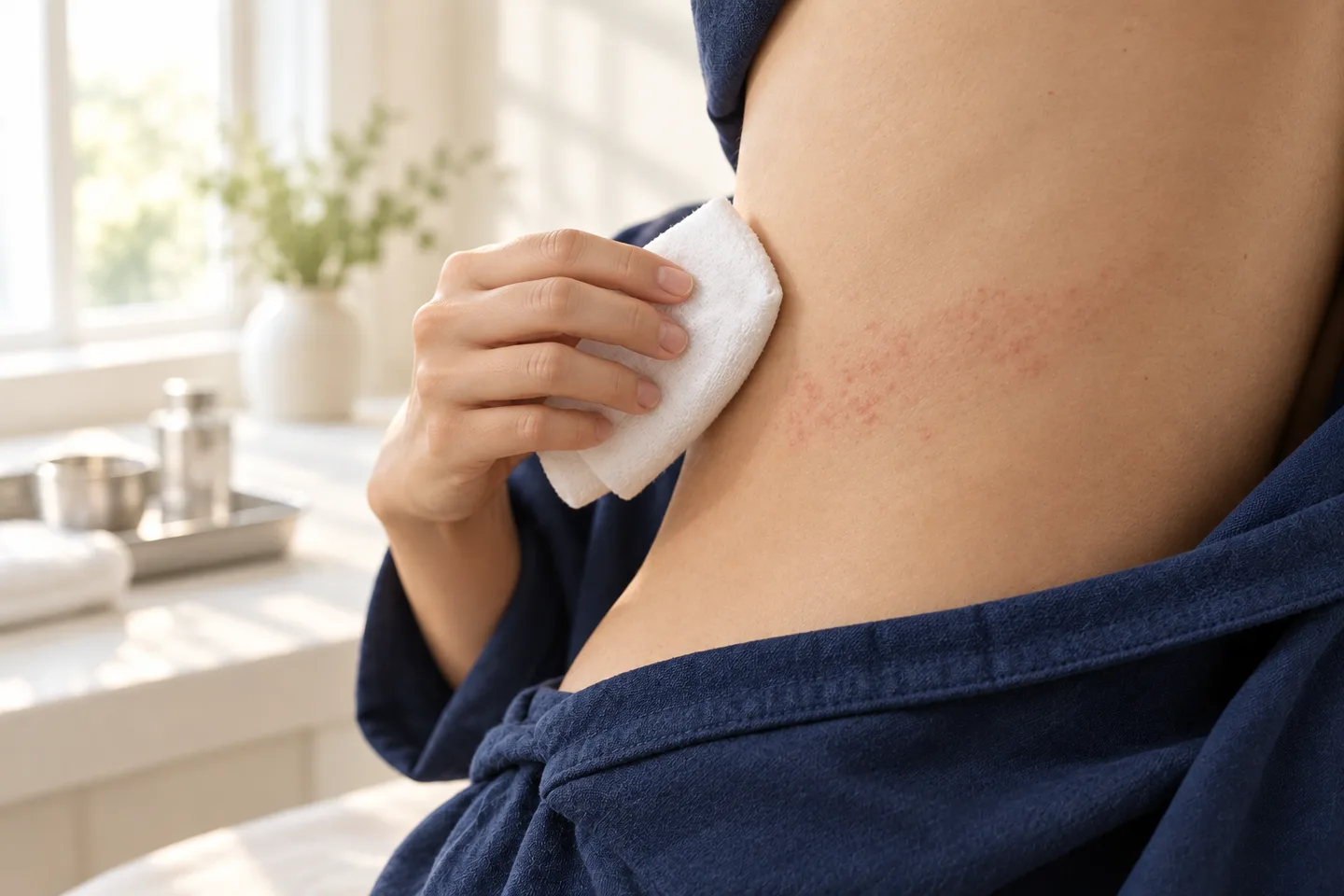
For this reason, the rash often forms a band along one side of the chest, abdomen, back, neck, or face and usually does not cross the body’s midline.
Can Shingles Occur Without a Rash?
Rarely, yes.
Pain caused by VZV reactivation without the typical skin eruption is sometimes called zoster sine herpete.
Because there is no characteristic rash, diagnosis can be much more difficult and other causes of localized nerve pain must be considered.
Who Is More Likely to Develop Shingles?
Anyone who has previously had chickenpox can potentially develop shingles.
Risk increases with age and with conditions or treatments that impair immune function.
Examples include:
- Older age
- Certain cancers
- HIV infection
- Organ transplantation
- Immunosuppressive medications
- Some systemic steroid treatments
Younger healthy adults can also develop shingles, so age alone should not be used to rule it out.
How Is Shingles Diagnosed?
A typical shingles eruption can often be diagnosed clinically based on the combination of:
- Nerve-like pain
- Grouped blisters
- One-sided distribution
- A dermatomal pattern
However, testing may be appropriate if the rash is atypical or if the distinction between shingles and herpes simplex is uncertain.
PCR testing for varicella-zoster virus is the most useful laboratory method for confirming herpes zoster when testing is necessary.
Shingles Treatment
Antiviral Medication
Common antiviral medications used for shingles include:
- Acyclovir
- Valacyclovir
- Famciclovir
Treatment is most effective when started early, particularly within approximately 72 hours after the rash begins. Antiviral therapy can accelerate lesion resolution, reduce the development of new lesions, reduce viral shedding, and lessen acute pain.
This does not mean that a patient who has had shingles for more than 72 hours should simply stay home.
Medical assessment may still be appropriate, especially when:
- New blisters are continuing to appear
- The face or eye is involved
- Pain is severe
- The patient is immunocompromised
- The rash is extensive
- Complications are suspected
Pain Treatment for Shingles
Shingles is more than a skin rash. Much of the pain originates from inflammation and injury involving sensory nerves.
Depending on severity, management may include ordinary pain medication or prescription treatment targeting nerve pain.
Pain that continues after the skin lesions have healed should be discussed with a physician rather than repeatedly treating the skin itself.
What Is Postherpetic Neuralgia?
Postherpetic neuralgia (PHN) is nerve pain that persists after shingles.
Patients may describe:
- Burning
- Shooting pain
- Electric-like pain
- Tingling
- Extreme sensitivity to touch
- Pain caused even by clothing touching the skin
PHN is the most common complication of shingles, and the risk rises with age. It can persist for months and occasionally much longer.
Once PHN develops, the skin may look completely healed even though nerve pain remains.
Shingles Around the Eye: A Medical Priority
Shingles involving the forehead, eyelids, nose, or surrounding facial skin can involve the ophthalmic branch of the trigeminal nerve and may threaten the eye.
Possible complications include inflammation of structures in and around the eye and loss of vision.
A new painful blistering eruption around the eye or upper face should therefore be evaluated urgently.
Do not wait for the rash to spread into the eye before seeking care.
Shingles Around the Ear
Shingles involving nerves around the ear can occasionally cause:
- Severe ear pain
- Blisters around or inside the ear
- Facial weakness
- Hearing changes
- Dizziness
Facial weakness, hearing loss, severe vertigo, or ear blisters require prompt medical evaluation.
Are Shingles Contagious?
The terminology is important.
You do not normally “catch shingles” directly from someone with shingles.
However, a person with active shingles can transmit varicella-zoster virus to someone who is susceptible to chickenpox. That person may develop chickenpox, not shingles.
Transmission risk exists while active blisters are present. Once lesions have completely crusted, the risk drops substantially.
Until the rash has crusted, patients should keep lesions covered when possible, wash their hands after touching the area, and avoid direct exposure to people at particular risk, including susceptible pregnant people, premature or low-birth-weight infants, and severely immunocompromised individuals.
How Long Does Shingles Last?
The blisters generally begin crusting within approximately 7–10 days, and the skin eruption commonly resolves within 2–4 weeks.
Pain may disappear with the rash, persist longer, or evolve into postherpetic neuralgia.
Dark or light marks may also remain temporarily after the inflammation resolves, particularly in Asian and darker skin types.
Persistent discoloration by itself does not necessarily mean the virus is still active.
Skin Care and Aftercare During Shingles
Patients should avoid deliberately breaking or picking blisters.
General supportive care may include:
- Keeping the skin clean
- Wearing loose clothing
- Using cool compresses for discomfort
- Covering lesions with an appropriate non-stick dressing when needed
- Washing hands after touching the rash
- Avoiding scratching
- Resting adequately
Daily gentle skin care is recommended while lesions heal, as shingles lesions typically crust during the first 7–10 days.
Can Shingles Come Back?
Yes.
Although many people experience shingles only once, recurrence is possible.
A second episode does not automatically mean that there is a serious immune disorder, but recurrent, unusually severe, or widespread shingles may warrant evaluation for underlying risk factors depending on the patient’s age and medical history.
Shingles Vaccination
Vaccination can substantially reduce the risk of shingles and its complications.
For example, current CDC recommendations in the United States advise two doses of recombinant zoster vaccine for adults aged 50 years and older and for adults aged 19 years and older who are or will be immunocompromised.
Vaccine recommendations and availability may differ by country. Patients living in Thailand or visiting Bangkok should discuss eligibility, timing, previous shingles episodes, vaccination history, and individual medical conditions with an appropriate healthcare professional.
Having previously had shingles does not necessarily mean that vaccination is no longer relevant.
Herpes Simplex or Shingles: How Can You Tell?
Some patterns are helpful.
Herpes simplex tends to:
- Recur in the same or nearby location
- Cause grouped small blisters
- Affect the lips, genital region, buttocks, or nearby skin
- Cause tingling before lesions appear
- Produce repeated episodes
Shingles tends to:
- Be more painful
- Follow a nerve distribution
- Affect one side of the body
- Form a band or strip
- Cause marked skin sensitivity
- Occur after previous chickenpox infection
However, neither pattern is absolute.
HSV can occasionally appear in unusual locations, while mild shingles can consist of only a few lesions. Laboratory testing can therefore be useful when the distinction matters.
Other Conditions That Can Look Like Herpes or Shingles
Not every cluster of blisters is caused by HSV or VZV.
Possible alternatives include:
- Contact dermatitis
- Impetigo
- Folliculitis
- Insect bites
- Eczema
- Eczema herpeticum
- Hand-foot-mouth disease
- Drug eruptions
- Other genital ulcer diseases
- Some autoimmune blistering disorders
Shingles may sometimes be confused with herpes simplex, impetigo, contact dermatitis, folliculitis, scabies, insect bites, and other inflammatory or infectious skin conditions.
This is one reason why repeatedly treating an undiagnosed blistering rash without examination may delay appropriate care.
When Should You See a Dermatologist?
A new blistering eruption should be assessed relatively promptly when herpes or shingles is suspected because antiviral treatment may be more useful when started early.
Medical evaluation is especially important when:
- This is your first episode
- Diagnosis is uncertain
- The rash is very painful
- Shingles is suspected
- The rash is on the face
- The eye or eyelid is involved
- You have eye pain or light sensitivity
- You develop facial weakness
- The ear is involved
- The rash is spreading widely
- You have fever or feel significantly unwell
- You are immunocompromised
- You are pregnant
- Genital ulcers are present
- Urination becomes difficult
- Lesions are not healing normally
- Pain continues after a shingles rash disappears
- Outbreaks are frequent or significantly affecting daily life A widespread blistering eruption, severe headache, confusion, weakness, significant eye symptoms, or rapidly worsening illness requires urgent medical assessment.
What to Expect During a Dermatology Consultation in Bangkok
A dermatologist will usually begin by examining the pattern, location, and stage of the lesions.
Useful history includes:
- When pain or tingling began
- When the blisters appeared
- Whether the problem has happened before
- Previous episodes of cold sores
- Previous genital herpes
- Previous chickenpox or shingles
- Recent sexual exposure when genital herpes is possible
- Current medications
- Pregnancy
- Immune-suppressing medical conditions or treatments
- Eye, ear, neurological, or systemic symptoms
When active lesions are present and the diagnosis is unclear, a clinician may recommend laboratory testing to distinguish HSV from VZV or other conditions.
For tourists or international patients in Bangkok, telling the doctor how long you will remain in Thailand can help with medication planning, test-result follow-up, and deciding whether additional care should be arranged after travel.
Frequently asked questions
Are herpes simplex and shingles the same disease?
No. Herpes simplex is caused by HSV-1 or HSV-2. Shingles is caused by reactivation of varicella-zoster virus.
They belong to the same broad herpesvirus family but are different infections.
Is every blister on the lip herpes?
No. Cold sores are commonly caused by HSV-1, but other inflammatory and infectious conditions can affect the lips.
Recurrent grouped blisters preceded by tingling are particularly suggestive of herpes simplex.
Can genital herpes be cured?
There is currently no treatment that eliminates HSV completely from the body.
Antiviral medications can shorten outbreaks, reduce symptoms, and help reduce recurrence or transmission in selected patients.
Can herpes spread when there are no sores?
Yes. HSV can sometimes be transmitted when no visible outbreak is present.
Should I get a herpes blood test?
Not automatically.
Blood testing has specific uses but also limitations. If an active lesion is present, testing the lesion itself is often more informative. Routine herpes screening is not generally recommended for most asymptomatic people.
Does a positive herpes blood test tell me when I caught herpes?
No.
It generally cannot determine when infection occurred or who transmitted it.
Is shingles an STI?
No.
Shingles is reactivation of varicella-zoster virus that was already present in the body after previous chickenpox infection.
Can I catch shingles from someone?
You do not directly catch shingles from another person's shingles.
A susceptible person exposed to the virus from shingles lesions may instead develop chickenpox.
Do shingles always occur in older people?
No.
Risk rises with age, but younger adults can develop shingles as well.
Do shingles always cause severe pain?
No. Severity varies.
Some patients experience intense burning or nerve pain, while others have relatively mild discomfort.
Can shingles cross the middle of the body?
Typical localized shingles usually affect one or two adjacent dermatomes and usually does not cross the midline.
An unusually widespread eruption, particularly in an immunocompromised patient, requires medical evaluation.
How quickly should shingles be treated?
Antiviral treatment is most effective when started early, particularly within approximately 72 hours after rash onset.
Patients presenting later should still seek medical advice rather than assuming treatment is no longer worthwhile.
Can shingles cause permanent pain?
It can.
Postherpetic neuralgia can persist after the rash heals and may last months or longer in some patients. Risk increases with age.
Why does my skin still look dark after shingles?
Inflammation can leave temporary post-inflammatory pigmentation, particularly in darker and Asian skin.
A flat residual dark mark without new blisters does not necessarily indicate ongoing viral infection.
Can shingles affect eyesight?
Yes.
Shingles involving the face can involve the eye and potentially threaten vision, so facial or eye-area shingles warrants prompt evaluation.
Can I get shingles more than once?
Yes. Recurrence is possible.
Related conditions
-
Genital Warts Genital Warts Genital warts are benign growths caused by certain types of human papillomavirus (HPV). They can appear on the penis, vulva, groin, scrotum, perineum, around the anus, inside the anal canal, and sometimes on the cervix, vagina or urethral opening.

-
Molluscum Contagiosum Molluscum Contagiosum Molluscum contagiosum is a common viral skin infection that causes small, smooth bumps, often with a characteristic tiny indentation in the center. It can affect children and adults and can spread through direct skin contact, shared personal items, sexual contact, or from one area of the body to another.
-
Viral Warts Viral Warts Viral warts are common skin growths caused by infection with human papillomavirus (HPV). They can develop almost anywhere on the skin, but frequently affect the hands, fingers, feet, knees, face and genital area.