






















Autoimmune Skin Conditions
Autoimmune diseases can affect the skin in many different ways. Some cause rashes or changes in skin color, while others cause hair loss, blisters, ulcers, sensitivity to sunlight, or areas of skin that become unusually thick or hard.
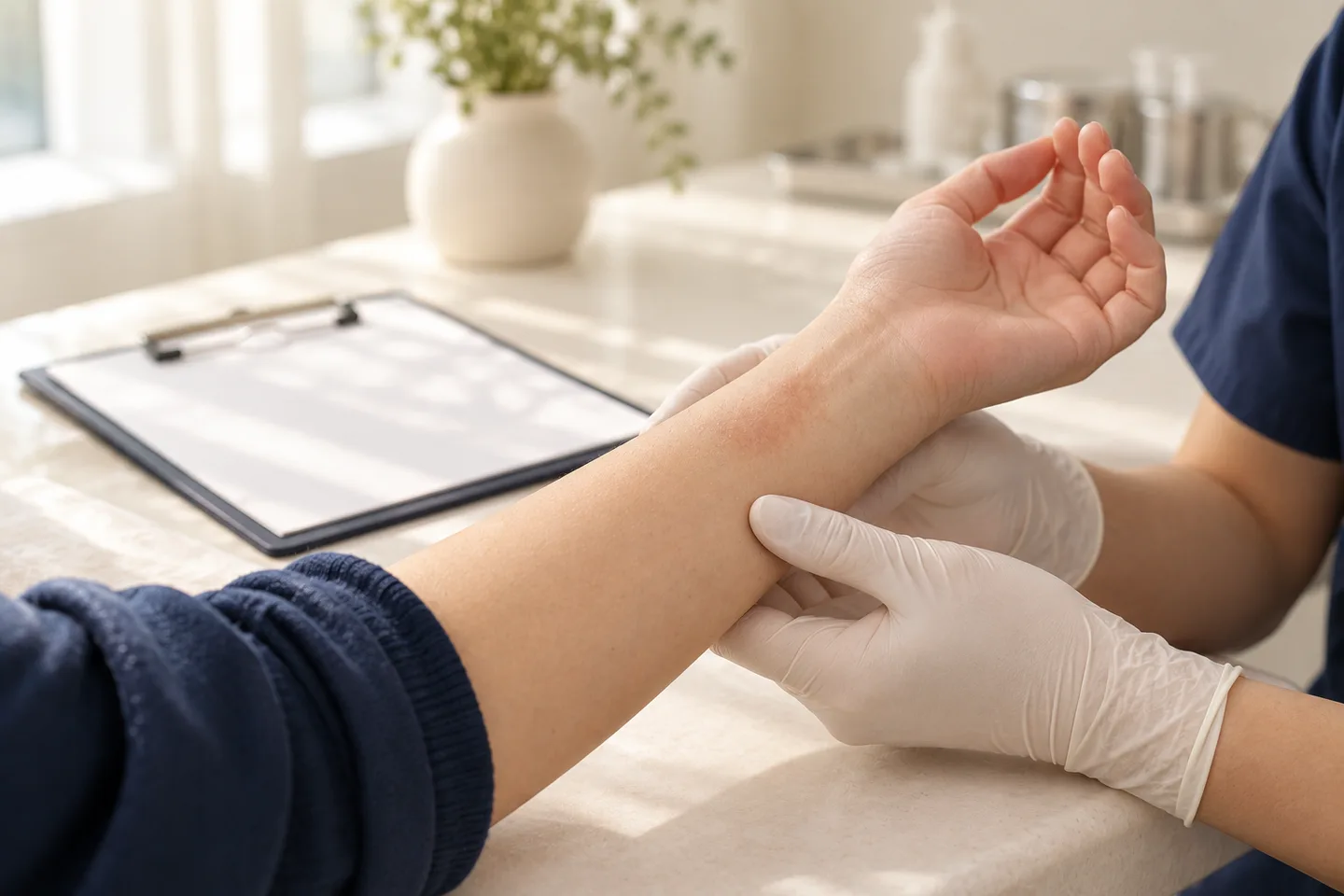
Examples include cutaneous lupus, vitiligo, alopecia areata, morphea, systemic sclerosis, dermatomyositis, pemphigus and bullous pemphigoid.
The important point is that “autoimmune skin disease” is not a single diagnosis.
Some autoimmune conditions remain primarily limited to the skin. Others can involve the joints, muscles, lungs, kidneys, blood vessels or other organs and may require coordinated care between a dermatologist and other specialists.
For patients in Bangkok, including Thai patients, expats, tourists and international patients, a dermatology assessment can help determine whether a persistent or unusual skin problem is autoimmune, inflammatory, infectious, medication-related or caused by another condition.
What Is an Autoimmune Skin Condition?
Normally, the immune system protects the body against infections and other threats.
In autoimmune disease, parts of the immune system mistakenly react against the body’s own cells, tissues or proteins.
When this process affects the skin, the result can look very different depending on which structures are being targeted.
Autoimmune inflammation may affect:
- Epidermis
- Dermis
- Pigment-producing melanocytes
- Hair follicles
- Blood vessels
- Connective tissue
- Collagen
- Structures that hold skin cells together
- Muscles and other tissues beneath the skin
This explains why one autoimmune condition may cause white patches while another causes blisters, hair loss or hardened skin.
What Do Autoimmune Skin Diseases Look Like?
There is no single “autoimmune rash.
”
Possible signs include:
- Persistent red or purple rash
- Rash that worsens after sunlight
- Butterfly-shaped facial rash
- Thick or scaly plaques
- White patches from pigment loss
- Patchy hair loss
- Blisters
- Mouth sores
- Skin ulcers
- Purple discoloration around the eyelids
- Changes over the knuckles
- Hard, tight or thickened skin
- Abnormal sensitivity of fingers to cold
- Changes around the nails
- Unexplained scars or pigment changes
The appearance alone is not always enough to make the diagnosis.
Eczema, psoriasis, fungal infection, drug eruptions, rosacea and other inflammatory skin diseases can sometimes resemble autoimmune disease.
Common Autoimmune and Immune-Mediated Skin Conditions
Cutaneous Lupus Erythematosus
Lupus is an autoimmune disease that can affect many parts of the body.
When lupus affects the skin, it is called cutaneous lupus erythematosus (CLE).
Importantly, someone can have cutaneous lupus without having systemic lupus erythematosus (SLE).
Cutaneous lupus includes several different forms.
Acute Cutaneous Lupus
One of the best-known presentations is the malar or butterfly rash, which develops across the cheeks and bridge of the nose.
Sun exposure can trigger or worsen the rash.
A butterfly-type rash can sometimes be associated with systemic lupus, so it deserves medical assessment rather than simply being treated as sensitive skin or rosacea.
Subacute Cutaneous Lupus
This may cause:
- Ring-shaped lesions
- Red or purple scaly patches
- Sun-sensitive eruptions
It can sometimes resemble eczema, psoriasis or fungal infection.
Discoid Lupus
Discoid lupus can cause thick, inflamed, scaly plaques.
Over time, lesions may leave:
- Scarring
- Dark pigmentation
- Light pigmentation
- Permanent hair loss when the scalp is involved
Early diagnosis is important because established scarring cannot always be reversed.
Cutaneous lupus is often strongly photosensitive. Sun protection therefore plays an important role in management.
Vitiligo
Vitiligo is an autoimmune pigmentary disorder in which the immune system targets melanocytes, the cells responsible for producing skin pigment.
It causes well-defined white patches.
Common areas include:
- Face
- Hands
- Fingers
- Feet
- Elbows
- Knees
- Genital area
- Around the eyes and mouth
Hair within affected skin can sometimes turn white.
Vitiligo is not contagious and does not represent an infection.
However, it can occasionally occur alongside other autoimmune diseases, particularly autoimmune thyroid disease.
Treatment depends on:
- Location
- Extent
- How rapidly it is spreading
- Age
- Duration
- Whether hair in the affected area has lost pigment
Treatment may include topical medication, phototherapy and other targeted treatments depending on the individual case.
Alopecia Areata
Alopecia areata is an autoimmune form of hair loss.
The immune system targets hair follicles, producing sudden areas of hair loss.
Typical alopecia areata causes:
- Smooth round or oval bald patches
- Little or no scaling
- Little or no inflammation visible on the surface
- Sometimes changes in the fingernails
It may affect:
- Scalp
- Beard
- Eyebrows
- Eyelashes
- Other body hair
More extensive forms include alopecia totalis, involving the entire scalp, and alopecia universalis, involving widespread body hair.
Treatment varies substantially depending on disease extent.
Options can include local treatments, intralesional corticosteroids, topical immunotherapy and systemic immune-modulating treatment in selected patients.
Not every patch of hair loss is alopecia areata. Fungal infection, scarring alopecia, traction alopecia and other causes must sometimes be excluded.
Morphea / Localized Scleroderma
Morphea is an inflammatory condition in which excessive collagen develops in localized areas of the skin.
Early lesions may look:
- Pink
- Red
- Purple
- Bruise-like
As the condition progresses, the skin may become:
- Thick
- Hard
- Shiny
- Ivory-colored
- Bound down
Later, pigmentation or skin atrophy may remain.
Some forms are superficial, while others extend into:
- Subcutaneous fat
- Fascia
- Muscle
- Joints
- Bone
Deep or linear morphea can therefore be more than a cosmetic skin problem.
Treatment depends heavily on depth, location and disease activity. Options can include topical medication, phototherapy and systemic immune-modulating therapy for more extensive or deeper disease.
Is Morphea the Same as Systemic Sclerosis?
No.
This distinction is extremely important.
Morphea is also called localized scleroderma, but it does not usually cause the internal-organ fibrosis characteristic of systemic sclerosis.
Systemic sclerosis is a separate autoimmune connective-tissue disease that may affect the:
- Skin
- Blood vessels
- Gastrointestinal tract
- Lungs
- Heart
- Kidneys
A dermatologist may help distinguish localized skin disease from features suggesting systemic sclerosis.
Systemic Sclerosis / Scleroderma
Systemic sclerosis can cause progressive thickening and tightening of the skin.
Possible signs include:
- Tight or shiny fingers
- Swollen fingers
- Raynaud phenomenon
- Fingertip ulcers
- Telangiectasia
- Calcium deposits
- Tight facial skin
- Reduced mouth opening
Raynaud phenomenon means that fingers or toes change color in response to cold or stress, often becoming white, blue and then red.
Systemic sclerosis can also affect internal organs.
For this reason, patients with suspected systemic sclerosis commonly require multidisciplinary evaluation, often involving rheumatology in addition to dermatology.
Dermatomyositis
Dermatomyositis is an autoimmune inflammatory disease that can affect both the skin and muscles.
Characteristic skin findings may include:
- Purple or reddish discoloration around the eyelids
- Swelling around the eyes
- Red-purple bumps over the knuckles
- Rash over the chest or upper back
- Sun-sensitive rash
- Changes around the nail folds
- Scalp inflammation
Some patients develop muscle weakness, especially around the:
- Shoulders
- Upper arms
- Hips
- Thighs
This may make activities such as climbing stairs, standing from a chair, lifting the arms or brushing the hair increasingly difficult.
Dermatomyositis deserves medical evaluation because it can involve more than the skin.
Autoimmune Blistering Diseases
Some autoimmune diseases cause the immune system to attack proteins that normally hold layers of skin together.
This results in blister formation.
Important examples include:
- Pemphigus vulgaris
- Bullous pemphigoid
- Mucous membrane pemphigoid
- Linear IgA bullous dermatosis
- Dermatitis herpetiformis
- Epidermolysis bullosa acquisita
These conditions are uncommon but important to diagnose correctly.
Pemphigus Vulgaris
Pemphigus vulgaris often causes fragile blisters that break easily, leaving painful raw areas.
Mouth involvement is common and may sometimes appear before obvious skin lesions.
Patients may experience:
- Painful mouth erosions
- Difficulty eating
- Fragile skin blisters
- Raw or crusted areas
Diagnosis usually requires skin biopsy and specialized testing such as direct immunofluorescence.
Bullous Pemphigoid
Bullous pemphigoid typically causes very itchy, tense blisters and occurs more commonly in older adults.
Before blisters appear, some patients have weeks or months of:
- Severe itching
- Hives-like lesions
- Eczema-like rash
Because treatment and prognosis differ significantly from ordinary eczema or allergy, persistent unexplained itching followed by blisters should be assessed.
Lichen Planus
Lichen planus is an immune-mediated inflammatory disease that can affect:
- Skin
- Mouth
- Genitals
- Scalp
- Nails
Typical skin lesions may be itchy, flat-topped purple or violaceous bumps.
Oral lichen planus may cause:
- White lace-like patterns
- Red inflamed areas
- Painful erosions
Scalp involvement can sometimes produce permanent scarring hair loss.
Not all forms of lichen planus behave the same way, so treatment depends on the site and severity.
Vasculitis Affecting the Skin
Vasculitis means inflammation of blood-vessel walls.
When small vessels in the skin are affected, patients may develop palpable purpura—purple or red spots that do not disappear when pressed and may feel slightly raised.
Other possible features include:
- Painful red-purple spots
- Blisters
- Ulcers
- Swelling
- Skin necrosis
Vasculitis can sometimes remain limited to the skin, but it may also occur as part of a systemic disease.
Symptoms involving the kidneys, joints, gastrointestinal tract, nerves or lungs can change the urgency and extent of investigation.
Are Psoriasis and Atopic Dermatitis Autoimmune Diseases?
The terminology needs some nuance.
Psoriasis is an immune-mediated inflammatory disease involving abnormal immune activation and accelerated skin-cell turnover.
Atopic dermatitis is also an immune-mediated inflammatory condition, but it is not usually classified in the same way as classic autoimmune connective-tissue diseases such as lupus.
For patients, the practical point is that “immune-related” does not necessarily mean that every inflammatory rash is a classic autoimmune disease.
Correct diagnosis matters because treatment pathways are different.
What Causes Autoimmune Skin Disease?
There is rarely one identifiable cause.
Development of autoimmune disease may involve a combination of:
- Genetic susceptibility
- Immune-system dysregulation
- Environmental factors
- Hormonal influences
- Certain infections
- Medication triggers
- Ultraviolet exposure in photosensitive diseases
For most patients, there is no single action that “caused” the disease.
Can Stress Cause Autoimmune Skin Disease?
Stress can worsen symptoms of some inflammatory and autoimmune diseases, but it is usually not considered the sole cause.
It is important not to dismiss a persistent rash as “stress” without examining the skin and considering other diagnoses.
Can Sunlight Trigger Autoimmune Skin Disease?
Yes, particularly in photosensitive diseases such as cutaneous lupus and dermatomyositis.
UV exposure may trigger or worsen lesions.
Patients with photosensitive autoimmune disease may therefore require strict photoprotection, including appropriate sunscreen, protective clothing and behavioral sun avoidance.
This is particularly relevant for people living in Thailand, where significant UV exposure occurs throughout the year.
Are Autoimmune Skin Diseases Contagious?
No.
Autoimmune skin diseases are not infections and cannot be transmitted by:
- Touching
- Sharing food
- Swimming
- Sexual contact
- Living together
However, infections can sometimes mimic autoimmune skin disease, which is another reason diagnosis is important.
How Does a Dermatologist Diagnose Autoimmune Skin Disease?
Diagnosis usually starts with the clinical pattern rather than ordering every possible autoimmune blood test.
A dermatologist may assess:
- What the rash looks like
- Where it occurs
- Whether it is symmetrical
- Whether sunlight triggers it
- Whether there are blisters
- Whether there is scarring
- Whether hair is falling out
- Whether the skin is becoming hard
- Whether the mouth or genital area is involved
- How long lesions remain
- Medications
- Previous treatments
The dermatologist may also ask about symptoms outside the skin.
Symptoms Outside the Skin That Matter
Important associated symptoms include:
- Joint pain or swelling
- Muscle weakness
- Severe fatigue
- Fever
- Mouth ulcers
- Raynaud phenomenon
- Difficulty swallowing
- Shortness of breath
- Chest symptoms
- Blood in the urine
- Leg swelling
- Neurological symptoms
- Unexplained weight loss
These do not automatically mean systemic autoimmune disease, but they may change the investigation.
Do I Need an ANA Test?
Not everyone with a rash needs an ANA test.
ANA, or antinuclear antibody, can be useful when lupus or another connective-tissue disease is clinically suspected.
However, an ANA result cannot diagnose lupus by itself.
Some healthy people can have positive ANA results, while certain skin-limited autoimmune diseases may not produce the expected systemic antibodies.
Testing should therefore be interpreted together with:
- Symptoms
- Physical examination
- Other blood tests
- Urine tests
- Skin biopsy when appropriate
What Blood Tests May Be Needed?
Testing is individualized.
Depending on the suspected disease, evaluation may include:
- Complete blood count
- Kidney function
- Liver function
- Urinalysis
- Inflammatory markers
- ANA
- ENA antibodies
- Complement levels
- Muscle enzymes
- Thyroid tests
- Disease-specific autoantibodies
Ordering a large “autoimmune panel” without a clinical question can produce confusing results.
Skin Biopsy for Autoimmune Disease
Skin biopsy can be extremely useful when the diagnosis is unclear.
A small sample of affected skin is removed under local anesthesia and examined by a pathologist.
Biopsy may help diagnose conditions such as:
- Cutaneous lupus
- Morphea
- Vasculitis
- Dermatomyositis-associated skin disease
- Autoimmune blistering disorders
- Other inflammatory diseases
The correct biopsy site is important.
For some diseases, the dermatologist may need more than one specimen.
What Is Direct Immunofluorescence?
Direct immunofluorescence (DIF) is a specialized laboratory technique used to look for deposits of antibodies and immune proteins within the skin.
It can be particularly important when diagnosing autoimmune blistering diseases and selected connective-tissue diseases.
The biopsy for DIF may need to be taken from skin beside a fresh lesion rather than from the center of an old blister.
This is one reason biopsy planning matters.
Can a Blood Test Diagnose Autoimmune Blistering Disease?
Certain blood tests can detect circulating autoantibodies and may support diagnosis and disease monitoring.
However, blood testing often complements rather than completely replaces clinical examination, histopathology and direct immunofluorescence.
Treatment of Autoimmune Skin Conditions
There is no single treatment for “autoimmune skin disease.
”
Treatment depends on:
- Exact diagnosis
- Severity
- Body surface area
- Location
- Disease activity
- Scarring risk
- Internal-organ involvement
- Other medical conditions
- Pregnancy plans
- Current medications
The goal may be to:
- Stop active inflammation
- Reduce symptoms
- Prevent new lesions
- Prevent permanent scarring
- Preserve hair or pigment where possible
- Protect mobility
- Prevent internal-organ complications
- Maintain disease control
Topical Corticosteroids
Topical corticosteroids are commonly used for many inflammatory autoimmune skin diseases.
Advantages:
- Reduce inflammation
- Act directly on affected skin
- Useful for localized disease
Limitations:
Long-term or inappropriate use can cause:
- Skin thinning
- Stretch marks
- Visible blood vessels
- Acne-like eruptions
- Pigment changes
Potency and duration therefore depend on the body site and diagnosis.
Topical Calcineurin Inhibitors
Tacrolimus and pimecrolimus can be useful in selected inflammatory skin conditions, particularly where long-term corticosteroid exposure is undesirable.
They do not cause steroid-related skin thinning.
Temporary burning or stinging can occur.
Their role depends on the specific diagnosis.
Intralesional Corticosteroid
Medication can sometimes be injected directly into localized lesions.
This may be considered for conditions such as selected:
- Alopecia areata
- Discoid lupus
- Local inflammatory lesions
Potential adverse effects include local skin thinning or indentation.
Phototherapy
Controlled medical ultraviolet treatment can be useful in selected autoimmune or immune-mediated skin diseases.
Examples include certain cases of:
- Vitiligo
- Morphea
- Alopecia areata
- Other inflammatory dermatoses
However, phototherapy is not appropriate for every autoimmune disease.
In strongly photosensitive diseases such as lupus, ultraviolet exposure may aggravate disease rather than treat it.
This illustrates why the diagnosis must come before the treatment.
Hydroxychloroquine
Hydroxychloroquine is an immune-modulating medication commonly used for cutaneous lupus and systemic lupus.
It may also be considered in selected other autoimmune dermatologic diseases.
Treatment requires appropriate medical assessment and monitoring.
Depending on duration, dose and individual risk, eye screening is important because retinal toxicity is a recognized potential complication.
Systemic Corticosteroids
Oral or intravenous corticosteroids can rapidly suppress inflammation and may be necessary for severe disease.
However, prolonged systemic steroid treatment can cause significant adverse effects.
These may include:
- Infection risk
- Blood glucose elevation
- Blood pressure changes
- Osteoporosis
- Weight gain
- Cataracts
- Adrenal suppression
For chronic autoimmune disease, clinicians often aim to reduce long-term steroid exposure when safer steroid-sparing options are available.
Immunosuppressive and Immunomodulatory Treatment
More significant autoimmune disease may require systemic medications such as:
- Methotrexate
- Mycophenolate mofetil
- Azathioprine
- Ciclosporin
- Dapsone
- Other disease-specific immunomodulators
The correct medication depends heavily on the diagnosis.
These treatments usually require monitoring because they can affect blood counts, liver function, kidney function or infection risk.
Biologic and Targeted Treatments
Modern treatment increasingly includes medications that target specific immune pathways.
Depending on the disease, these may include:
- Biologic therapies
- JAK inhibitors
- B-cell-directed therapies
- Other targeted immunomodulators
Their indications, regulatory approval, availability and insurance coverage vary by disease and country.
They should not be assumed to be appropriate simply because a condition is autoimmune.
Is Autoimmune Skin Disease Curable?
It depends on the disease.
Many autoimmune skin diseases are chronic and are better described as controllable rather than permanently curable.
Patients may experience:
- Remission
- Relapse
- Periods of stable disease
- Flares after triggers
The treatment goal is often to control active disease early enough to prevent irreversible damage.
For example:
- Discoid lupus may cause permanent scarring
- Scalp disease may cause permanent hair loss
- Deep morphea may affect movement
- Severe blistering disease can cause significant complications
- Systemic autoimmune disease may affect internal organs
Can Autoimmune Skin Disease Come Back?
Yes.
Recurrence varies significantly between conditions.
Some diseases alternate between flares and remission.
Treatment may therefore include both:
Induction therapy — controlling active disease
and
Maintenance therapy — reducing the risk of relapse.
Patients should not necessarily stop systemic immune treatment suddenly simply because the skin looks better.
Recovery and Aftercare
Aftercare depends on the diagnosis but may include:
- Gentle skincare
- Moisturizer
- Sun protection
- Wound care
- Avoiding known triggers
- Medication monitoring
- Blood tests
- Photographic monitoring
- Follow-up examinations
- Screening for systemic involvement
For photosensitive conditions, sun protection can be a medical component of treatment rather than purely cosmetic advice.
Autoimmune Skin Disease in Bangkok and Thailand
Bangkok’s climate does not cause autoimmune disease.
However, the environment can influence symptoms.
Important considerations include:
Sun Exposure
Year-round UV exposure can be especially relevant in photosensitive diseases such as lupus and dermatomyositis.
Heat and Sweating
Heat may aggravate itching or discomfort from inflammatory skin disease even when it is not the underlying cause.
Travel
International patients taking immunosuppressive medication may need to consider:
- Medication supply
- Vaccination planning
- Infection risk
- Blood-test monitoring
- Continuity of care
Patients visiting Bangkok for a limited period should bring previous medical records whenever possible.
When Should You See a Dermatologist?
Consider dermatology assessment for:
- Persistent unexplained rash
- Rash that repeatedly returns
- Sun-sensitive rash
- Butterfly-shaped facial rash
- Unexplained white patches
- Sudden patchy hair loss
- Persistent mouth sores
- Unexplained blisters
- Severe itching followed by blisters
- Purple spots or suspected vasculitis
- Skin becoming unusually hard or tight
- Scarring inflammatory lesions
- Unexplained nail-fold changes
- Rash associated with muscle weakness
- Rash associated with joint symptoms
Early assessment is particularly important when there is a risk of permanent scarring, hair loss or deeper tissue involvement.
Warning Signs That Need Prompt Medical Evaluation
Seek prompt medical care if a skin problem is accompanied by:
- Difficulty breathing
- Difficulty swallowing
- Significant muscle weakness
- Rapidly spreading blistering
- Extensive raw or peeling skin
- Severe mouth or eye involvement
- Fever with widespread rash
- Blood in the urine
- Marked leg swelling
- Severe chest symptoms
- New neurological symptoms
- Painful black or necrotic skin
- Signs of serious infection
These symptoms can indicate disease extending beyond a routine skin eruption.
Dermatologist or Rheumatologist: Which Should I See?
For a condition that primarily begins with the skin, a dermatologist is often an appropriate starting point.
Dermatologists can evaluate:
- Rash morphology
- Pigmentation
- Blisters
- Hair loss
- Nail changes
- Skin hardening
and perform procedures such as skin biopsy when necessary.
If findings suggest systemic autoimmune disease, coordinated evaluation may involve a:
- Rheumatologist
- Internist
- Nephrologist
- Pulmonologist
- Neurologist
- Ophthalmologist
- Other relevant specialist
For diseases such as systemic sclerosis, multidisciplinary care is often important because internal organs can be involved.
What to Expect During an Autoimmune Skin Consultation in Bangkok
A useful consultation starts with the history.
Your dermatologist may ask:
- When did the rash begin?
- Is it persistent or intermittent?
- Does sunlight make it worse?
- Does it itch or hurt?
- Does it leave scars?
- Are there blisters?
- Is your hair falling out?
- Do you have mouth ulcers?
- Do your fingers change color in cold weather?
- Do you have joint pain?
- Do you have muscle weakness?
- Do you have fever or fatigue?
- Are you taking new medications?
- Do you already have an autoimmune diagnosis?
- Does anyone in your family have autoimmune disease?
The skin, scalp, hair, nails and mucous membranes may then be examined.
Depending on the findings, the next step may be:
- No additional investigation
- Blood testing
- Urinalysis
- Skin biopsy
- Direct immunofluorescence
- Additional antibody testing
- Imaging
- Referral to another medical specialty
The purpose is not simply to prove that “something autoimmune” is present. It is to establish the specific diagnosis and determine whether the disease is limited to the skin or involves other organs.
What Should International Patients Bring?
If you are an expat, tourist or international patient seeking evaluation in Bangkok, it is useful to bring:
- Previous diagnosis
- Pathology reports
- Previous skin biopsy results
- Blood-test results
- Autoantibody results
- Medication list
- Previous treatment history
- Photographs of earlier flares
- Rheumatology records if applicable
- Allergy history
Photographs can be particularly valuable if the rash comes and goes and is not fully visible on the day of consultation.
The Most Important Step Is Getting the Diagnosis Right
The term “autoimmune skin condition” covers many completely different diseases.
A white patch may represent vitiligo.
A scarring scalp plaque may represent discoid lupus.
A smooth bald patch may represent alopecia areata.
A hard plaque may represent morphea.
A sun-sensitive rash with muscle weakness may suggest dermatomyositis.
A severely itchy blistering eruption in an older adult may raise suspicion for bullous pemphigoid.
These conditions require different investigations and different treatments.
For that reason, the goal of an autoimmune dermatology assessment should not simply be to order an “autoimmune blood panel.
”
A more useful approach is to determine:
- What type of skin lesion is present?
- Does the pattern suggest autoimmune disease?
- Is a skin biopsy needed?
- Are specific blood or antibody tests appropriate?
- Is the condition limited to the skin?
- Are there symptoms suggesting muscle, joint, kidney, lung or other organ involvement?
- Does the patient need multidisciplinary care?
Once the specific diagnosis is established, treatment can be selected according to disease activity, severity and the risk of permanent damage.
Frequently asked questions
What is an autoimmune skin condition?
It is a condition in which abnormal immune activity targets components of the skin or related tissues.
What autoimmune diseases affect the skin?
Examples include cutaneous lupus, vitiligo, alopecia areata, morphea, systemic sclerosis, dermatomyositis and autoimmune blistering diseases.
What does an autoimmune rash look like?
There is no single appearance. It may be red, purple, scaly, blistering, photosensitive, pigment-changing or associated with skin hardening.
Can autoimmune disease cause a facial rash?
Yes. Cutaneous lupus and dermatomyositis are examples, but many common non-autoimmune conditions can also cause facial rashes.
Is a butterfly rash always lupus?
No.
Rosacea, dermatitis and other conditions can sometimes produce redness in similar areas. A true lupus-type rash should be assessed in clinical context.
Can autoimmune disease cause white patches?
Yes. Vitiligo is an autoimmune disorder that causes loss of melanocytes and white patches.
Can autoimmune disease cause hair loss?
Yes.
Alopecia areata is a classic example, while lupus and other inflammatory diseases can also cause hair loss.
Can autoimmune disease cause blisters?
Yes.
Pemphigus, bullous pemphigoid and several related diseases cause autoimmune blistering.
Can autoimmune disease cause itchy skin?
Yes, although itching alone is much more commonly caused by other conditions such as eczema, urticaria, dry skin or infection.
Can autoimmune disease cause skin hardening?
Yes.
Morphea causes localized skin hardening, while systemic sclerosis can cause more extensive skin tightening and may involve internal organs.
Is morphea the same as systemic sclerosis?
No.
Morphea is localized scleroderma and does not usually cause the internal-organ fibrosis seen in systemic sclerosis.
Is vitiligo contagious?
No.
Is lupus contagious?
No.
Are autoimmune skin conditions caused by stress?
Stress may aggravate some diseases but is generally not the sole cause.
Can sunlight trigger autoimmune disease?
UV exposure can trigger skin disease in photosensitive conditions such as lupus.
Does a positive ANA mean I have lupus?
No.
ANA results must be interpreted with symptoms, physical examination and other investigations.
Can I have lupus with a negative ANA?
The interpretation depends on the form of lupus and clinical context. Certain forms of skin-limited lupus may not have the same antibody profile as systemic disease.
Do I need an autoimmune blood test for every unexplained rash?
No.
Testing should be targeted according to clinical findings.
When is a skin biopsy needed?
Biopsy may be useful when the diagnosis cannot be confidently established clinically or when conditions such as lupus, vasculitis, morphea or autoimmune blistering disease are suspected.
What is direct immunofluorescence?
It is a specialized biopsy test that detects immune deposits in the skin and is particularly useful for autoimmune blistering diseases.
Are autoimmune skin diseases curable?
Some can enter long remission, while many are chronic and require ongoing disease control.
Do autoimmune skin conditions always affect internal organs?
No.
Some remain predominantly or entirely cutaneous, while others can be systemic.
Should I see a dermatologist or rheumatologist?
A dermatologist is often a good starting point when the main symptom is a skin rash, blistering, pigment change, hair loss or skin hardening. Rheumatology evaluation may be required when systemic connective-tissue disease is suspected.
Can autoimmune skin disease be treated with steroids?
Corticosteroids are useful for many autoimmune diseases but are not appropriate for every condition, and long-term use has important risks.
Are biologics used for autoimmune skin disease?
Yes, for selected diseases. The appropriate biologic or targeted therapy depends on the specific diagnosis.
Can autoimmune skin disease return after treatment?
Yes. Many autoimmune conditions have periods of remission and relapse.
When should I seek urgent care?
Rapid blistering, widespread skin peeling, severe mouth or eye involvement, difficulty breathing or swallowing, major muscle weakness, kidney symptoms, severe systemic illness or skin necrosis require prompt medical evaluation.
Related conditions
-
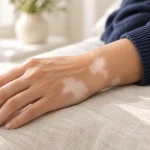
Vitiligo Vitiligo Vitiligo is a chronic condition in which the skin loses pigment because melanocytes—the cells that produce melanin—are damaged or lost. This causes well-defined white or depigmented patches that may appear on the face, hands, feet, around body openings, or almost anywhere on the body.
-
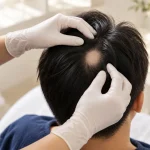
Alopecia Areata Alopecia Areata Alopecia areata is an autoimmune form of hair loss that most commonly causes sudden, smooth, round or oval bald patches on the scalp or beard. It can also affect the eyebrows, eyelashes and other body hair.
-
Rosacea Rosacea Rosacea is a chronic inflammatory skin condition that mainly affects the central face. It may cause persistent redness, frequent flushing, visible blood vessels, acne-like bumps, burning or sensitive skin, and sometimes eye symptoms.

-
Skin Biopsy (การวินิจฉัย / Diagnosis) Skin Biopsy (การวินิจฉัย / Diagnosis) A skin biopsy is a minor medical procedure in which a dermatologist removes a small sample of skin so it can be examined under a microscope. It is one of the most important diagnostic tools in dermatology because many skin conditions cannot be confirmed by appearance alone.