

Intralesional Steroid Injection
Intralesional Steroid Injection is a dermatologic procedure in which a corticosteroid medication is injected directly into a specific skin lesion. The goal is to deliver anti-inflammatory medication to the affected tissue while limiting exposure to the rest of the body.
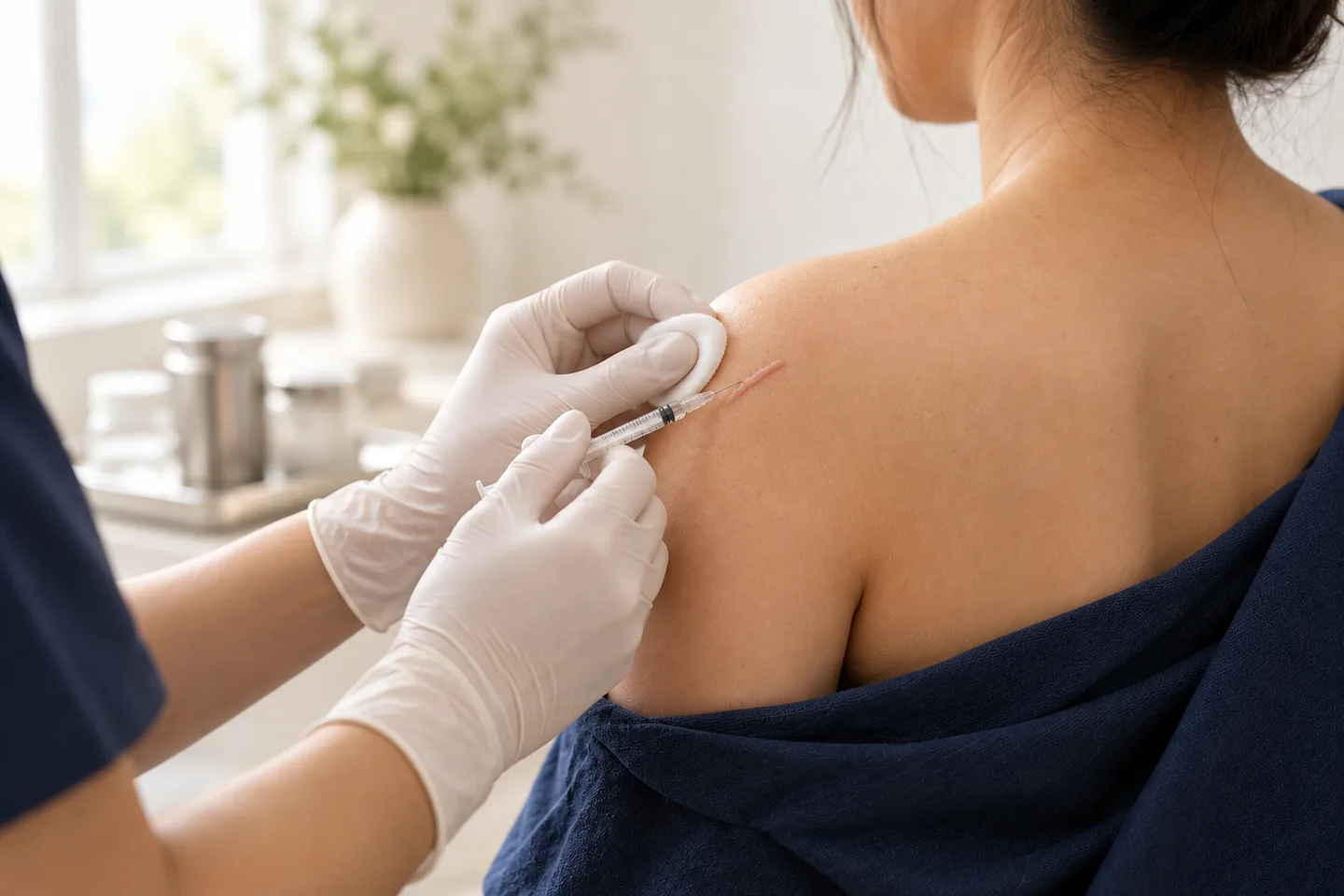
In dermatology, the treatment is commonly used for selected conditions such as Keloid, Hypertrophic Scar, Alopecia Areata, inflamed Acne Cysts, Granuloma Annulare, Lichen Simplex Chronicus, and other localized inflammatory or thickened skin lesions. Triamcinolone acetonide is one of the corticosteroids commonly used for this purpose.
For patients considering Intralesional Steroid Injection in Bangkok, the key questions are not simply whether a steroid injection is available, but whether the diagnosis is correct, whether injection is appropriate for that condition, what concentration and depth are suitable, and whether repeated treatment is likely to be needed.
A practical treatment pathway is:
Dermatology assessment → confirm diagnosis → determine whether Intralesional Steroid Injection is appropriate → select medication concentration and injection technique → follow-up → repeat treatment when clinically indicated
What Is an Intralesional Steroid Injection?
An Intralesional Steroid Injection, also called an Intralesional Corticosteroid Injection, involves injecting corticosteroid directly into a skin lesion.
Unlike an oral steroid, which circulates throughout the body, Intralesional treatment is intended to concentrate medication within a localized area.
The medication commonly used in dermatology is Triamcinolone Acetonide.
Depending on the condition, it may be used at different concentrations and may sometimes be diluted with Normal Saline or Local Anesthetic.
How Does Intralesional Steroid Injection Work?
Corticosteroids suppress inflammation and modify several processes involved in inflammatory and fibrotic skin disease.
Depending on the condition, Intralesional Steroid may help:
- reduce inflammation
- reduce redness and swelling
- reduce excessive collagen activity
- soften raised Scar Tissue
- reduce the thickness of Keloids or Hypertrophic Scars
- suppress local immune activity around affected Hair Follicles in Alopecia Areata
- reduce inflammation in selected Acne Nodules or Cysts
- reduce thickening in certain chronic inflammatory skin lesions
The effect is local rather than simply providing a general anti-inflammatory effect throughout the body.
What Conditions Can Intralesional Steroid Injection Treat?
Intralesional Corticosteroid Injection may be considered for a range of localized dermatologic conditions.
Common examples include:
- Keloid
- Hypertrophic Scar
- Alopecia Areata
- Inflamed Acne Cyst
- Inflamed Epidermoid Cyst in selected cases
- Granuloma Annulare
- Discoid Lupus Erythematosus
- Lichen Simplex Chronicus
- Hypertrophic Lichen Planus
- localized Psoriasis
- Granuloma Faciale
- Cutaneous Sarcoidosis
- Necrobiosis Lipoidica
- Nodular Prurigo
- Hidradenitis Suppurativa lesions in selected situations
The correct indication, concentration, amount, and injection depth differ substantially between conditions.Intralesional Steroid Injection for Keloids
Keloids are raised scars caused by excessive Scar Tissue extending beyond the boundaries of the original injury.
Intralesional Corticosteroids can be injected directly into the Keloid to help reduce inflammation and collagen production.
Treatment may help:
- soften the Keloid;
- flatten part of the raised Scar;
- reduce itching;
- reduce tenderness or discomfort.
However, Keloids can be difficult to treat and recurrence is possible.
Intralesional Steroid may be used alone or as part of a combination treatment strategy, depending on the Keloid’s size, location, thickness, previous treatment, and tendency to recur.
Intralesional Steroid Injection for Hypertrophic Scars
A Hypertrophic Scar is a thick raised scar that generally remains within the boundaries of the original wound.
Intralesional Steroid can help reduce scar thickness and symptoms in selected cases.
Compared with a thick Keloid, a lower concentration may sometimes be appropriate because the required treatment depth and amount depend on the lesion’s characteristics.
Treatment is usually individualized rather than using the same dose for every scar.
Keloid vs Hypertrophic Scar: Why the Difference Matters
Both are raised scars, but they behave differently.
| Keloid | Hypertrophic Scar |
|---|---|
| Extends beyond the original wound | Usually stays within the wound boundary |
| May continue enlarging | May stabilize or improve over time |
| Recurrence can be difficult to control | Often responds more predictably |
| May require combination treatment | May respond to simpler treatment |
A correct diagnosis helps determine whether Intralesional Steroid Injection alone is reasonable or whether other scar treatments should also be considered.
Intralesional Steroid Injection for Alopecia Areata
Alopecia Areata is an autoimmune condition in which the immune system attacks Hair Follicles, causing smooth patches of hair loss.
Intralesional Corticosteroid is an established treatment option for localized, patchy Alopecia Areata, particularly in adults.
The corticosteroid is injected into the affected areas of the scalp, beard, or sometimes eyebrow to suppress the local immune response around Hair Follicles.
When treatment works, hair regrowth may occur, but response varies and recurrence of Alopecia Areata remains possible.
Corticosteroid injections are commonly used for people with a few patches of Alopecia Areata and are usually repeated at intervals rather than given only once.
Does Intralesional Steroid Permanently Cure Alopecia Areata?
No.
The treatment can suppress inflammation within treated areas and may promote hair regrowth, but it does not permanently remove the underlying tendency to develop Alopecia Areata.
Patients may experience:
- complete regrowth;
- partial regrowth;
- little response;
- recurrence in the same area;
- new patches elsewhere.
Treatment should therefore be viewed as management of the disease rather than a guaranteed cure.
Intralesional Steroid Injection for Acne Cysts
Large inflammatory Acne Nodules or Acne Cysts can be painful and may persist for some time.
A small amount of Intralesional Corticosteroid may be injected into selected highly inflamed lesions to reduce inflammation.
Potential benefits include:
- reducing swelling;
- reducing tenderness;
- helping a large inflamed lesion settle more quickly.
However, it is not a replacement for treating the underlying Acne if a patient continues to develop repeated Nodules or Cysts.
Excessive dose or injection too deeply can also increase the risk of Skin Atrophy.
Intralesional Steroid for Inflamed Epidermoid Cysts
An Inflamed Epidermoid Cyst can become red, swollen, and painful when its wall ruptures and Keratin leaks into surrounding tissue.
This does not necessarily mean bacterial infection.
Intralesional Corticosteroid may be considered in selected inflamed Epidermoid Cysts to reduce inflammation.
However, the injection does not remove the Cyst Wall.
Therefore, the Cyst may remain and can become inflamed again later.
If definitive removal is required, Surgical Excision may be considered once inflammation has settled.
Intralesional Steroid Injection for Granuloma Annulare
Granuloma Annulare is an inflammatory skin condition that often produces ring-shaped or grouped papules.
Localized lesions may sometimes be treated with Intralesional Corticosteroid.
Treatment may reduce inflammation and flatten lesions, although spontaneous improvement can also occur in some patients.
The decision to inject depends on:
- location;
- number of lesions;
- symptoms;
- cosmetic impact;
- treatment risk.
Intralesional Steroid for Lichen Simplex Chronicus
Lichen Simplex Chronicus develops when repeated scratching or rubbing causes the skin to become thickened and intensely itchy.
For localized thick plaques that do not respond adequately to appropriate topical therapy and behavioral measures, Intralesional Corticosteroid may sometimes be used.
However, treatment also needs to address the itch-scratch cycle, otherwise the skin may thicken again.
Intralesional Steroid for Hypertrophic Lichen Planus
Hypertrophic Lichen Planus can cause thick, intensely itchy plaques, often on the lower legs.
Intralesional Corticosteroid may be considered for selected thick lesions because topical medication may not penetrate deeply enough.
Because other skin conditions can sometimes resemble Hypertrophic Lichen Planus, diagnosis should be confirmed before repeated injections.
What Steroid Is Used for Intralesional Injection?
One of the most commonly used medications is Triamcinolone Acetonide.
It is available in different concentrations and may be diluted depending on:
- diagnosis;
- lesion thickness;
- anatomical site;
- skin thickness;
- risk of Atrophy.
Examples range from lower concentrations for thinner skin or Alopecia Areata to higher concentrations for thick Keloid scars.
This is one reason Intralesional Steroid Injection should not be treated as a standardized injection where every lesion receives the same strength.
How Much Steroid Is Injected?
The amount varies according to:
- size of the lesion;
- diagnosis;
- concentration used;
- anatomical area;
- depth of the lesion;
- previous response;
- risk of local adverse effects.
Small volumes are injected directly into involved skin, with dosing based on the surface area and type of lesion.
The goal is to deliver enough medication to the target tissue without causing unnecessary steroid exposure to surrounding normal skin.
Why Injection Depth Matters
Injection technique is important.
Intralesional Steroid should generally be placed within the appropriate Dermal level of the lesion rather than unintentionally injected deep into Subcutaneous Fat.
Injection that is too deep or too concentrated can increase the risk of:
- Skin Atrophy;
- Subcutaneous Fat Atrophy;
- visible depression or indentation;
- Hypopigmentation.
Intradermal placement is important because injection into Subcutaneous Tissue can contribute to a visible skin depression.
What Happens During Intralesional Steroid Injection?
The exact technique depends on the condition.
A typical procedure may include:
1. Clinical assessment
The dermatologist confirms the diagnosis and decides whether Intralesional Steroid is appropriate.
2. Cleaning the skin
The treatment site is cleaned with an antiseptic.
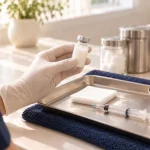
3. Medication preparation
The corticosteroid concentration is selected according to the lesion.
It may be used at its original concentration or diluted.
4. Injection
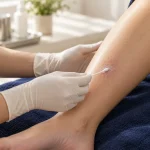
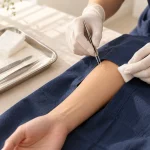
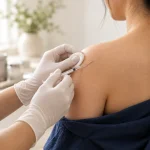
A fine needle is used to inject small amounts into one or multiple points within the lesion.
5. Follow-up
The lesion is reassessed after an appropriate interval to determine whether another injection is needed.
Is Intralesional Steroid Injection Painful?
It can cause brief discomfort.
Patients may feel:
- a needle prick;
- burning or pressure as medication enters the lesion;
- temporary soreness afterward.
Pain can vary considerably by location.
Scalp injections for Alopecia Areata, firm Keloids, and injections around sensitive areas may be more uncomfortable than treatment of some other sites.
Techniques to improve comfort may be considered depending on the clinical situation.
How Often Are Intralesional Steroid Injections Given?
Treatment usually requires spacing between injections rather than frequent repeated dosing.
For many dermatologic indications, injections may be repeated approximately every several weeks depending on the condition and response.
Intervals are commonly around 4–8 weeks for many dermatologic conditions, while repeated injections are approximately every 4–6 weeks for Alopecia Areata.
The correct interval depends on:
- diagnosis;
- response;
- adverse effects;
- steroid concentration;
- treatment site.
How Many Sessions Will I Need?
There is no universal number.
Some lesions may improve after one treatment, while others require multiple sessions.
Factors include:
- type of disease;
- lesion thickness;
- duration;
- anatomical location;
- response to previous injection;
- recurrence tendency.
Keloid treatment often requires a different treatment course from Alopecia Areata or an isolated inflamed Acne Cyst.
How Quickly Does Intralesional Steroid Work?
This depends on what is being treated.
An inflamed Acne Cyst may reduce in swelling relatively quickly, whereas flattening a thick Keloid or achieving hair regrowth in Alopecia Areata takes considerably longer.
For Alopecia Areata, hair regrowth—when the treatment is effective—is generally assessed over weeks to months rather than days.
Patients should therefore avoid comparing treatment timelines between unrelated skin diseases.
What Are the Benefits of Intralesional Steroid Injection?
Potential advantages include:
- medication delivered directly to the lesion;
- relatively small amount of medication compared with systemic steroid therapy;
- useful for localized disease;
- can treat thick lesions that topical medications may penetrate poorly;
- often performed as an outpatient dermatologic procedure;
- no surgical incision for many indications.
However, these advantages do not mean that Intralesional Steroid is the right treatment for every inflammatory lesion.
What Are the Limitations?
Important limitations include:
- not every lesion responds;
- repeated injections may be required;
- recurrence may occur;
- injection can be uncomfortable;
- inappropriate concentration or depth can cause Atrophy;
- treatment does not necessarily address the underlying cause;
- widespread disease may require another treatment approach.
Intralesional injection is generally more suitable for localized disease than extensive skin involvement.
What Are the Side Effects of Intralesional Steroid Injection?
Local adverse effects are the most important concern in routine dermatologic treatment.
Potential side effects include:
- pain;
- bruising;
- bleeding;
- temporary swelling;
- infection;
- Skin Atrophy;
- Subcutaneous Fat Atrophy;
- Hypopigmentation;
- Hyperpigmentation;
- Telangiectasia;
- localized Hair Growth changes;
- Steroid Acne;
- rarely, sterile abscess or allergic reaction.
Skin Atrophy and Hypopigmentation are well-described local complications of Intralesional Triamcinolone.
What Is Steroid-Induced Skin Atrophy?
Skin Atrophy means thinning of the skin or loss of supporting tissue.
After Intralesional Steroid Injection, it may appear as:
- a shallow depression;
- thinner skin;
- visible underlying vessels;
- altered texture;
- indentation around the treatment site.
If steroid spreads into Subcutaneous Fat, deeper Lipoatrophy can occur.
Atrophy may improve over time in some cases, but resolution is not guaranteed to be immediate or complete.
Can Intralesional Steroid Cause a Dent in the Skin?
Yes.
A visible indentation can occur if local Skin or Subcutaneous Fat Atrophy develops.
Risk may increase with:
- higher steroid concentration;
- excessive volume;
- repeated treatment;
- injection too deep;
- treatment of thin skin.
This possibility is especially important when treating facial lesions or cosmetically sensitive areas.
Can Intralesional Steroid Cause Hypopigmentation?
Yes.
Hypopigmentation or lighter skin can develop around the injection site.
Rarely, steroid crystals may spread along lymphatic pathways and produce a linear or branching pattern of Hypopigmentation and Atrophy. Case reports document this uncommon complication following Intralesional Triamcinolone.
The cosmetic significance may be greater in darker skin tones because the contrast is more visible.
Can It Cause Hyperpigmentation?
Pigment change can occur after injection or inflammation.
Although Hypopigmentation is a well-recognized steroid-related effect, Post-Inflammatory Hyperpigmentation may also occur after needle trauma or local inflammation, particularly in darker skin.
The risk depends on individual skin response and the treated condition.
Is Intralesional Steroid Safe for Asian and Darker Skin?
It can be used in patients of all skin tones when medically appropriate.
However, patients with darker skin may notice pigment changes more clearly.
Important cosmetic risks include:
- Hypopigmentation;
- Post-Inflammatory Hyperpigmentation;
- Skin Atrophy;
- visible indentation.
The concentration, injection depth, lesion type, and anatomical site should therefore be selected carefully.
Can Intralesional Steroid Cause Systemic Steroid Side Effects?
For localized dermatologic injections using small amounts, systemic adverse effects are generally much less likely than with prolonged oral or high-dose systemic corticosteroid treatment.
Systemic effects are not expected in most patients receiving small Intralesional doses for localized skin disease.
However, systemic exposure becomes more relevant if unusually large amounts or repeated high doses are used.
Treatment should therefore remain appropriate to the size and extent of disease.
Can Intralesional Steroid Be Injected Into an Infection?
Generally, Intralesional Steroid should not be injected into active skin infection.
Examples include active:
- bacterial infection;
- Herpes Simplex;
- fungal infection.
Injecting corticosteroid into an infected site could suppress the local immune response and potentially worsen infection.
Correct diagnosis is therefore important when a lesion is painful, red, or swollen.
What Should Patients Tell the Dermatologist Before Treatment?
Relevant information may include:
- previous reaction or allergy to Triamcinolone or other medications;
- active infection in the treatment area;
- previous Skin Atrophy after steroid injections;
- history of pigment alteration;
- medications;
- relevant chronic medical conditions;
- pregnancy or breastfeeding when relevant to treatment planning;
- previous injections into the same lesion;
- previous Keloid or scar treatments.
The clinician can then weigh potential benefit against local and systemic risk.
Intralesional Steroid vs Topical Steroid
Both contain corticosteroids but are used differently.
| Intralesional Steroid | Topical Steroid |
|---|---|
| Injected directly into the lesion | Applied onto the skin |
| Higher local concentration within selected tissue | Must penetrate from the surface |
| Useful for thick or localized lesions | Useful for many superficial inflammatory conditions |
| Injection discomfort | No needle required |
| Risk of focal Atrophy or indentation | Risk of Skin Atrophy with excessive prolonged use |
| Usually performed by a clinician | Often used at home according to prescription |
One is not universally stronger or better. The choice depends on the disease.
Intralesional Steroid vs Oral Steroid
Oral Corticosteroids affect the entire body.
Intralesional Corticosteroid is intended to treat a localized lesion directly.
For localized disease, Intralesional treatment can sometimes provide the desired local effect while reducing systemic exposure.
However, widespread or severe inflammatory disease may require a different treatment strategy.
Intralesional Steroid vs Surgery for Keloids
These treatments serve different roles.
Surgical Excision physically removes the Keloid, whereas Intralesional Steroid aims to flatten and soften Scar Tissue.
Surgery alone may be associated with Keloid recurrence in susceptible patients, so Keloid treatment often requires a broader strategy rather than simply cutting out the scar.
Depending on the individual case, options may include:
- Intralesional Corticosteroid;
- Surgical Excision;
- Silicone therapy;
- Pressure therapy;
- Laser;
- Cryotherapy;
- additional Intralesional agents.
The optimal approach depends on location, size, previous recurrence, scar characteristics, and patient preference.
Intralesional Steroid vs 5-Fluorouracil for Keloids
5-Fluorouracil or 5-FU is another medication that can be used Intralesionally for selected Keloids.
It may sometimes be used alone or combined with corticosteroid.
The decision depends on:
- scar thickness;
- previous response;
- recurrence;
- side-effect profile;
- clinician’s treatment plan.
The presence of several available therapies is important because no single Keloid treatment guarantees permanent resolution.
Aftercare Following Intralesional Steroid Injection
After a straightforward injection, extensive wound care is usually unnecessary because there is no surgical incision.
General care may include:
- keep the area clean;
- avoid aggressively rubbing or massaging the injection site unless specifically instructed;
- monitor for increasing redness, swelling, warmth, or discharge;
- avoid picking the injection points;
- follow any condition-specific instructions.
For Keloids, scar-care measures may continue alongside injections.
For Alopecia Areata, other hair-loss treatments may be used depending on the treatment plan.
Can I Shower After Intralesional Steroid Injection?
In most cases, routine washing is possible because the procedure creates only small needle punctures rather than an open surgical wound.
The area should be handled gently immediately after treatment.
Condition-specific instructions should take priority.
Can I Exercise After the Injection?
Normal daily activity is usually possible after a small localized injection.
If the treated area is painful, swollen, or prone to friction, it may be reasonable to avoid activities that repeatedly rub or compress the site temporarily.
Can I Fly After Intralesional Steroid Injection?
A localized Intralesional Steroid Injection does not normally create the same travel considerations as surgical procedures requiring stitches or wound management.
International patients can generally plan travel around treatment more easily, although follow-up may be important if repeated injections are required.
When Should You Contact a Dermatologist After Injection?
Seek medical review if you develop:
- increasing pain rather than gradual improvement;
- progressive redness or warmth;
- Pus or drainage;
- significant swelling;
- fever;
- an unusual allergic reaction;
- marked or progressive Skin Atrophy;
- significant Hypopigmentation;
- unexpected worsening of the treated lesion.
A new change does not always represent a serious complication, but it may require assessment.
What to Expect During a Dermatology Consultation in Bangkok
A consultation for Intralesional Steroid Injection should begin with diagnosis rather than injection.
The dermatologist may assess:
What is the condition?
A Keloid, Hypertrophic Scar, Alopecia Areata, Acne Cyst, Inflamed Epidermoid Cyst, and Granuloma Annulare require different treatment strategies.
Is Intralesional Steroid appropriate?
Not every inflamed or raised lesion should be injected.
What concentration should be used?
Steroid concentration varies according to diagnosis, location, and lesion thickness.
How deep should the medication be injected?
Correct placement helps maximize effect while reducing Atrophy risk.
Will repeat treatment be needed?
Many conditions require more than one session.
Are other treatments needed?
Intralesional Steroid may be only one component of a broader treatment plan.
Intralesional Steroid Injection for Tourists and International Patients in Bangkok
The procedure can be relatively convenient for international patients because it usually does not create a surgical wound or require stitches.
However, patients staying in Bangkok for a short period should consider whether their condition requires repeated treatment.
For example:
- Alopecia Areata may require multiple injection sessions
- Keloid treatment often requires repeated assessment and treatment
- an isolated inflamed Acne Cyst may need only short-term intervention
- recurrent disease may need long-term management rather than one injection
Before treatment, international patients may wish to discuss:
- how many sessions may be needed
- recommended interval between treatments
- whether treatment can continue in another country
- what information should be given to their next dermatologist
- what side effects should prompt medical review
Frequently asked questions
What is an Intralesional Steroid Injection?
It is an injection of corticosteroid directly into a specific skin lesion to create a strong local anti-inflammatory or anti-fibrotic effect.
What steroid is commonly used?
Triamcinolone Acetonide is commonly used in dermatology.
What does Intralesional Triamcinolone treat?
It may be used for Keloids, Hypertrophic Scars, Alopecia Areata, Acne Cysts, Granuloma Annulare, Inflamed Epidermoid Cysts, and several other localized inflammatory conditions.
Can Intralesional Steroid flatten a Keloid?
It may soften and flatten Keloids and reduce symptoms, but several sessions may be required and recurrence is possible.
Does Intralesional Steroid permanently remove Keloids?
No treatment can guarantee permanent removal. Keloids have an underlying tendency to recur.
Can steroid injections treat Hypertrophic Scars?
Yes, selected thick Hypertrophic Scars may respond to Intralesional Corticosteroid.
Can steroid injection regrow hair in Alopecia Areata?
It can stimulate regrowth in selected localized Alopecia Areata by suppressing inflammation around Hair Follicles, but response varies and recurrence can occur.
How often are injections given for Alopecia Areata?
They are commonly repeated at intervals of several weeks according to response.
Can steroid injection treat an Acne Cyst?
Selected large inflamed Acne Nodules or Cysts may be treated with a small Intralesional Corticosteroid injection.
Can it treat an Inflamed Epidermoid Cyst?
It may reduce inflammation in selected cases, but it does not remove the Cyst Wall.
Does Intralesional Steroid Injection hurt?
There may be brief pain, burning, or pressure during injection.
Is Local Anesthesia needed?
Not always. The need depends on the lesion, location, number of injections, and patient comfort.
How long does it take to work?
It varies greatly. An inflamed Acne lesion and a Keloid or Alopecia Areata patch have very different treatment timelines.
How many injections will I need?
There is no fixed number. Some conditions require one treatment, while others need multiple sessions.
Does Intralesional Steroid cause Skin Atrophy?
It can. Skin and Subcutaneous Fat Atrophy are important local risks.
Can steroid injection leave a dent?
Yes. A depression may develop if Atrophy occurs.
Can Intralesional Steroid cause white skin?
Hypopigmentation can occur, particularly when corticosteroid affects Melanocytes or spreads beyond the intended area.
Is Hypopigmentation permanent?
It may improve over time in some patients, but the course varies and complete recovery cannot be guaranteed.
Can it cause dark marks?
Pigment change can occur, including Post-Inflammatory Hyperpigmentation.
Is Intralesional Steroid safe for darker skin?
It can be used, but Hypopigmentation and other pigment changes may be more noticeable.
Can steroid injection cause infection?
Injection itself carries a small infection risk, and corticosteroid should generally not be injected into active skin infection.
Can it be used on an infected cyst?
An active infection should be assessed and managed appropriately rather than automatically injecting corticosteroid.
Can Intralesional Steroid cause systemic steroid side effects?
Systemic side effects are unlikely with the small amounts generally used for localized dermatologic disease, but larger total exposure carries greater potential risk.
Can I shower after Intralesional Steroid Injection?
Usually yes. There is normally only a small needle puncture rather than a surgical wound.
Can I exercise afterward?
Normal activity is usually possible unless the treated area is uncomfortable or likely to be irritated.
Can I fly after treatment?
A small localized injection generally does not prevent air travel.
Is Intralesional Steroid better than topical steroid?
Neither is universally better. Intralesional treatment is useful when concentrated medication needs to be delivered into a localized or thick lesion.
Is Intralesional Steroid the same as oral steroid?
No. Intralesional treatment targets a localized lesion, while oral corticosteroid has systemic effects.
Can tourists receive Intralesional Steroid Injection in Bangkok?
Potentially, yes. The main consideration is whether the condition requires repeated treatment and how follow-up will be arranged.
Related conditions
-
Keloids & Abnormal Scars Keloids & Abnormal Scars A scar is part of the normal healing process after an injury, surgery, acne, piercing, burn or other damage to the skin. Most scars gradually become flatter, softer and less noticeable over time. Some, however, continue to thicken, remain raised, become itchy or painful, or grow beyond the original wound.
-
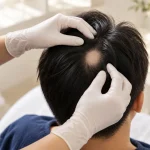
Alopecia Areata Alopecia Areata Alopecia areata is an autoimmune form of hair loss that most commonly causes sudden, smooth, round or oval bald patches on the scalp or beard. It can also affect the eyebrows, eyelashes and other body hair.
-
Male & Female Pattern Hair Loss Male & Female Pattern Hair Loss Male and female pattern hair loss—medically called androgenetic alopecia—is one of the most common causes of gradual hair thinning. In men, it often appears as a receding hairline or thinning at the crown. In women, it more often causes widening of the central part and reduced hair density over the top of the scalp.
-
Acne Acne Acne is one of the most common skin conditions and can affect teenagers and adults alike. It may appear as blackheads, whiteheads, inflamed pimples, or deeper painful nodules and cysts.