






Keloids & Abnormal Scars
A scar is part of the normal healing process after an injury, surgery, acne, piercing, burn or other damage to the skin. Most scars gradually become flatter, softer and less noticeable over time. Some, however, continue to thicken, remain raised, become itchy or painful, or grow beyond the original wound.
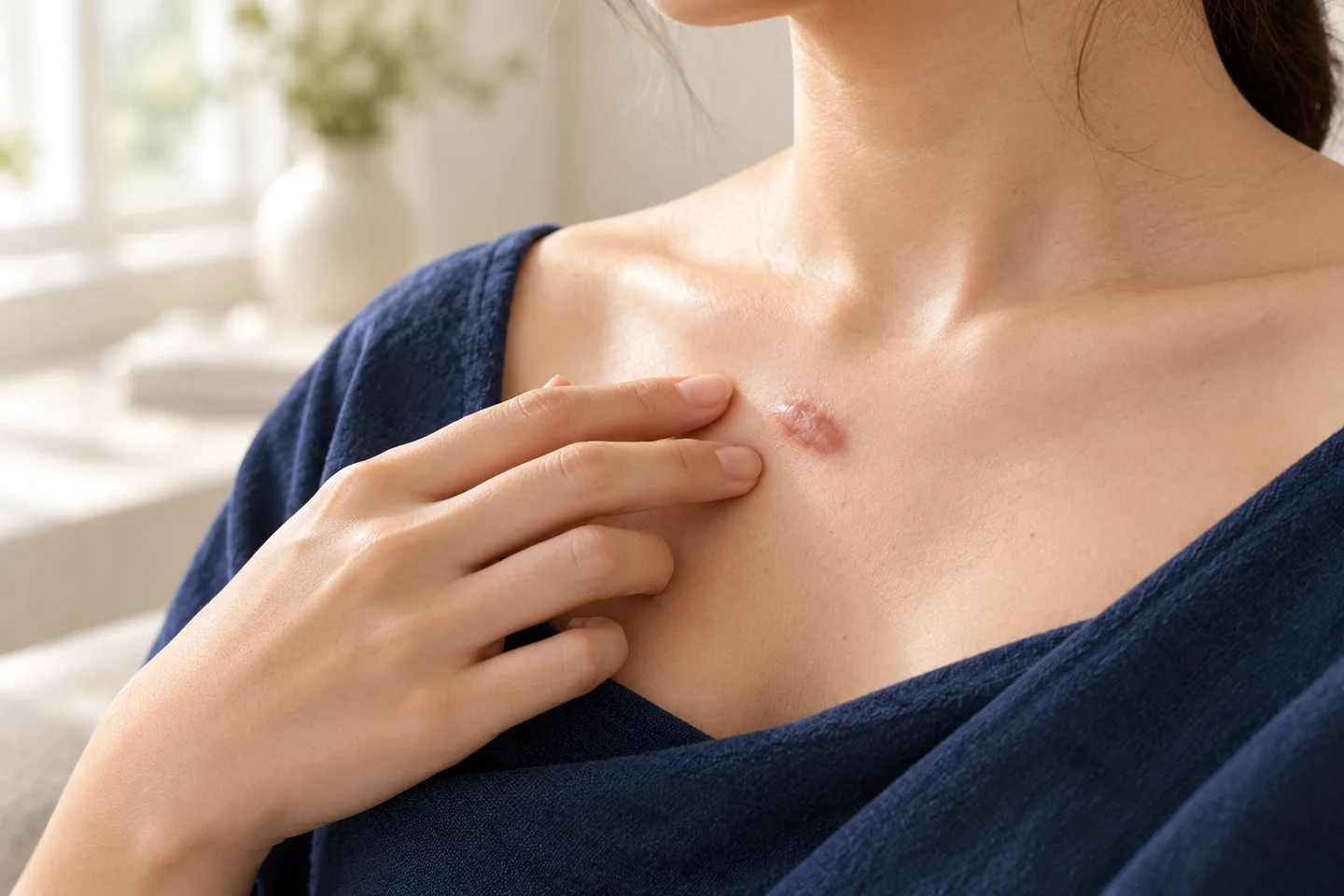
Two important types of raised abnormal scars are hypertrophic scars and keloids. They can look similar, but they behave differently and may require different treatment strategies.
A hypertrophic scar usually remains within the boundaries of the original injury and may gradually improve. A keloid extends beyond the original wound and is more likely to persist or recur after treatment.
Treatment is rarely based on one method alone. Depending on the scar, options may include corticosteroid injections, silicone therapy, pressure treatment, cryotherapy, laser treatment, other injectable medicines and surgery. Keloids are particularly prone to recurrence, so surgery alone is generally not considered the ideal approach.
For patients seeking scar treatment in Bangkok, the first step is to identify what type of scar is present, how active it is, what symptoms it causes, and whether there is a tendency to form keloids.
What Is an Abnormal Scar?
When skin is injured, the body produces collagen and other tissue to repair the wound.
During normal healing, scar tissue usually becomes softer and flatter over time.
An abnormal scar develops when this healing response becomes excessive, prolonged or structurally abnormal.
Raised scars are only one category. Abnormal scars can include:
- Keloids
- Hypertrophic scars
- Depressed or sunken scars
- Contracture scars
- Widened scars
- Pigmented scars
- Red scars
- Scars that remain painful or itchy
- Acne scars
This page focuses primarily on keloids and hypertrophic scars, because they are commonly confused and require careful treatment planning.
What Is a Keloid?
A keloid is an overgrowth of scar tissue that extends beyond the boundaries of the original skin injury.
It may begin after:
- Surgery
- Ear piercing
- Body piercing
- Acne
- Injections
- Burns
- Cuts
- Scratches
- Vaccination
- Insect bites
Other minor skin injuries
In some patients, the triggering injury may have been so small that they do not remember it.
Keloids occur because the healing response produces excessive scar tissue. The exact mechanism is complex and not completely understood.
Keloids are not infectious and cannot spread from one person to another.
What Does a Keloid Look Like?
A keloid usually appears as a firm, raised scar.
It may be:
- Smooth
- Shiny
- Firm or rubbery
- Pink
- Red
- Brown
Darker than the surrounding skin
Occasionally lighter than the surrounding skin
Keloids often continue to enlarge gradually beyond the original wound.
They may also cause:
- Itching
- Tenderness
- Pain
- Tightness
- Burning
- Sensitivity
Discomfort when clothing rubs against the area
Larger scars can occasionally restrict movement depending on their location.
Common Locations for Keloids
Keloids can occur almost anywhere, but certain areas are particularly prone to developing them.
Common locations include:
- Earlobes
- Ears
- Upper chest
- Shoulders
- Upper back
- Jawline
- Neck
Acne-related keloids can develop on the chest, shoulders, back and jawline.
Ear keloids commonly develop after piercing.
What Is a Hypertrophic Scar?
A hypertrophic scar is also a raised scar caused by excessive scar formation.
However, unlike a keloid, a hypertrophic scar typically stays within the boundaries of the original injury.
It may develop after:
- Surgery
- Burns
- Trauma
- Deep cuts
- Wounds under tension
Hypertrophic scars may gradually flatten over time and generally have a better tendency to improve than true keloids.
Keloid vs Hypertrophic Scar: What Is the Difference?
This distinction is one of the most important parts of scar assessment.
| Feature | Keloid | Hypertrophic scar |
|---|---|---|
| Extends beyond original wound | Yes | Usually no |
| May continue enlarging | Common | Less common |
| May improve spontaneously | Less likely | More likely |
| Recurrence after treatment | Common | Generally lower |
| Can follow very minor injury | Yes | Usually follows a clearer injury |
| Treatment can be difficult | Often | Usually more responsive |
A raised scar should therefore not automatically be labelled a keloid.
Correct classification influences treatment and expectations.
Why Do Some People Develop Keloids?
Not everyone forms keloids after an injury.
Several factors appear to affect susceptibility.
Genetic tendency
Keloids can run in families.
A person with previous keloids has a greater chance of forming another one after future skin injury.
Skin pigmentation and ancestry
Keloids can occur in anyone but are more frequently reported in people with more deeply pigmented skin and in people of African, Asian and Hispanic ancestry.
This is particularly relevant in Thailand and other Asian populations, but skin color alone cannot predict who will develop a keloid.
Location of the injury
Some areas of the body are more prone to keloids, especially the chest, shoulders and ears.
Tension on the wound
Areas where wounds are constantly stretched or pulled may be more likely to form thick scars.
Previous keloids
A history of keloid formation is one of the most useful clinical clues when planning future procedures.
Can Acne Cause Keloids?
Yes.
Severe inflammatory acne can result in several types of scars, including depressed scars, hypertrophic scars and keloids.
Keloidal acne scars are especially common on:
- Chest
- Shoulders
- Upper back
- Jawline
Preventing repeated inflammation is important because new acne lesions can create new scars.
Patients with active acne and a known tendency to form keloids may benefit from treating the acne early rather than focusing only on existing scars. Prompt acne treatment is specifically recommended in keloid-prone individuals to reduce additional scarring.
Can Ear Piercing Cause a Keloid?
Yes.
Piercing is a classic trigger for ear keloids.
The scar may initially appear as a small lump around the piercing hole and then gradually enlarge.
It can develop:
- On the front of the earlobe
- Behind the earlobe
- On both sides of the piercing
On cartilage after upper-ear piercing
If a person has already developed a keloid from one piercing, additional piercings carry a risk of producing further keloids.
Can Tattoos Cause Keloids?
Yes, in people who are predisposed.
Tattooing creates repeated small injuries to the skin. In someone with a strong history of keloid formation, these injuries can potentially trigger raised scars.
People who already form keloids should carefully consider elective procedures that intentionally injure the skin, including tattooing and additional piercings.
Can Surgery Cause Keloids?
Yes.
Any surgical incision can potentially heal with an abnormal scar.
The risk depends on:
- Personal tendency to form keloids
- Location of the incision
- Wound tension
- Infection or delayed healing
- Type of surgery
A history of previous keloids should be disclosed before elective surgery whenever possible.
Surgical technique aimed at reducing tension may help reduce the risk of abnormal scarring, although prevention cannot be guaranteed.
Why Does My Scar Itch or Hurt?
Keloids and hypertrophic scars can produce symptoms in addition to their visible appearance.
Common symptoms include:
- Itching
- Tingling
- Tenderness
- Burning
- Pain
- Tightness
These symptoms can sometimes be more troublesome than the cosmetic appearance itself.
An improvement in itching, pain or firmness may occur before the scar becomes visibly flatter.
Can a Keloid Keep Growing?
Yes.
Unlike many normal scars, a keloid may continue enlarging after the original wound has healed.
Growth may be slow and gradual.
Some remain relatively stable, while others continue expanding beyond the original injury.
A rapidly changing mass should still be examined rather than automatically assumed to be a keloid because certain skin tumors and other diseases can occasionally resemble raised scars.
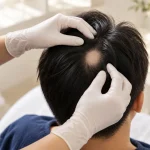
How Do Dermatologists Diagnose Keloids?
Most keloids and hypertrophic scars can be diagnosed through clinical examination.
The dermatologist typically asks:
- What caused the original wound?
- When did the scar start growing?
- Has it grown beyond the original wound?
- Is it still increasing in size?
- Is it itchy or painful?
- Have you developed keloids elsewhere?
- Has the scar been treated previously?
- Did previous treatment make it better or worse?
- Do family members form similar scars?
The scar is then assessed for:
- Size
- Height
- Thickness
- Firmness
- Color
- Symptoms
- Relationship to the original wound
- Location
- Evidence of ongoing inflammation
Does a Keloid Need a Biopsy?
Usually not.
Typical keloids can often be diagnosed clinically.
However, biopsy may be considered if the lesion:
- Appeared without a clear history of injury
- Has an unusual appearance
- Ulcerates
- Bleeds repeatedly
- Grows unusually quickly
- Is significantly different from the patient’s previous scars
- Does not respond as expected to treatment
Some benign and malignant skin tumors can resemble keloids, so an unusual lesion should not automatically be injected or removed without considering the diagnosis first.
Treatment Goals for Keloids
The aim of treatment is usually not simply to “erase” the scar.
More realistic goals include:
- Flattening the scar
- Softening it
- Reducing itching
- Reducing pain
- Reducing redness
- Improving appearance
- Improving movement if the scar causes tightness
- Reducing further growth
- Reducing recurrence after removal
Because keloids have a strong tendency to recur, treatment often requires multiple sessions or a combination of approaches.
Corticosteroid Injections for Keloids
Injecting corticosteroid medication directly into the scar is one of the most widely used treatments for raised scars and keloids.
The medication helps reduce excessive scar activity and collagen production.
It may help:
- Flatten the scar
- Soften the scar
- Reduce itching
- Reduce pain
- Reduce inflammation
Treatment usually requires a series of injections rather than a single session.
Advantages
- Can directly target the scar
- Useful for both symptoms and thickness
- Can be combined with other treatments
- Does not require surgical removal
Limitations
Keloids may not disappear completely.
Some scars respond better than others, and recurrence can occur after improvement.
Possible Side Effects of Steroid Injections
Potential side effects include:
- Skin thinning
- Small visible blood vessels
- Depression or indentation of the skin
- Lightening of skin color
- Changes in pigmentation
- Temporary discomfort during injection
Pigment changes are particularly important when treating darker or Asian skin.
The dose, concentration, injection depth and treatment interval therefore need to be selected carefully.
Other Medicines Injected Into Keloids
In selected resistant scars, other medicines may be injected alone or combined with corticosteroids.
One commonly discussed option is 5-fluorouracil.
It may be used when a scar is difficult to control or when the goal is to reduce the amount of corticosteroid required.
Possible side effects can include:
- Pain during injection
- Redness
- Swelling
- Ulceration
- Pigment changes
Not every patient needs combination injections.
Treatment should be individualized according to the scar’s size, location, previous response and symptoms.
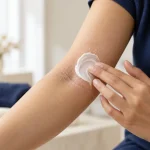
Silicone Gel and Silicone Sheets
Silicone gel or silicone sheets are commonly used for raised scars.
They may help scars become:
- Softer
- Flatter
- Less symptomatic
Silicone is particularly attractive because it is non-invasive and can be used over prolonged periods.
However, it requires consistency.
Scar sheets generally need to remain in contact with the scar for many hours each day over several weeks or months to provide meaningful benefit.
Advantages
- Non-invasive
- Can be used at home
- Useful for new or healing scars
- Generally well tolerated
Limitations
Requires regular prolonged use
Difficult to keep attached to some body areas
Less effective for very large or mature keloids when used alone
Pressure Treatment
Pressure can be useful for selected scars, particularly keloids involving the ears.
Examples include:
- Pressure earrings
- Pressure clips
- Compression garments
Pressure treatment is often used following treatment or surgery to reduce the chance of recurrence.
The main limitation is practicality because pressure devices may need to be worn for many hours each day over several months.
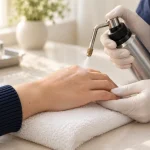
Cryotherapy for Keloids
Cryotherapy uses very cold temperatures to damage and reduce excessive scar tissue.
It may be used alone for selected small keloids or combined with injections.
Potential advantages include:
- Reduction in scar volume
- Softening of raised tissue
- Improved response to subsequent injections
Potential side effects include:
- Pain
- Blistering
- Temporary swelling
- Ulceration
- Lightening or darkening of the skin
Pigment change is particularly relevant in darker skin tones and should be discussed before treatment.
Laser Treatment for Raised Scars
Laser treatment can be useful for selected scars, particularly when redness, thickness or symptoms remain prominent.
Certain vascular lasers can target abnormal blood vessels within red scars and may help:
- Reduce redness
- Reduce itching
- Improve scar texture
- Reduce firmness
Laser is often combined with injections rather than used as the only treatment for established keloids.
Different lasers treat different scar components, so the appropriate device depends on whether the problem is primarily redness, thickness, texture or pigmentation.
Does Laser Completely Remove a Keloid?
Usually not.
Laser treatment can improve specific features of a scar, but a true keloid has a biological tendency toward excessive scar formation.
The goal is therefore usually improvement rather than complete disappearance.
Combination therapy may provide better control than relying on laser alone.
Can Keloids Be Surgically Removed?
Yes, but surgery requires careful planning.
It may seem logical to simply cut the keloid out, but the surgical wound itself creates a new injury.
A new keloid can therefore develop in the same area.
Surgical excision of a true keloid without additional preventive treatment has a high risk of recurrence.
For this reason, surgery may be combined with:
- Corticosteroid injections
- Pressure therapy
- Silicone treatment
- Cryotherapy
- Other adjunctive treatment
- Radiation in carefully selected cases
When Is Keloid Surgery Considered?
Surgery may be considered when:
- The keloid is very large
- The scar causes functional problems
- An ear keloid is bulky or pendulous
Other treatments have not provided sufficient improvement
Reducing the scar volume may allow other treatments to work more effectively
Patients should understand the recurrence risk before proceeding.
Radiation After Keloid Surgery
Radiation therapy can reduce recurrence after surgical removal of selected difficult keloids.
However, radiation exposure has potential short- and long-term risks, so this is not routine treatment for every scar.
It tends to be reserved for carefully selected recurrent or difficult cases after discussion of risks and benefits.
Which Treatment Is Best for a Keloid?
There is no single best treatment for every patient.
Treatment depends on:
- Scar location
- Scar size
- Thickness
- How long it has been present
- Symptoms
- Skin type
- Previous treatment
- History of recurrence
- Whether the scar is still growing
- Whether surgery is being considered
For many established keloids, a combination approach may be more appropriate than relying on one treatment alone.
Early Keloid vs Old Keloid
A newly developing scar may be:
- Redder
- More active
- Itchy
- Growing
- More responsive to early intervention
- An older scar may be:
- Firmer
- Paler
- Less symptomatic
- More stable
This does not mean old keloids cannot be treated, but expectations and treatment choices may differ.
How Long Does Keloid Treatment Take?
Keloid treatment is usually gradual.
Many treatments require repeated sessions over several months.
The interval between treatments depends on:
- Treatment type
- Scar response
- Location
- Side effects
- Scar thickness
It is generally more useful to assess changes in scar height, firmness, symptoms and color over time rather than expecting a dramatic result from one visit.
Can Keloids Come Back After Treatment?
Yes.
Recurrence is one of the defining challenges of keloid treatment.
Even scars that become flatter can enlarge again.
The risk depends on factors such as:
- Scar location
- Individual tendency to form keloids
- Scar size
- Type of treatment
- Whether treatment was combined
- Continued trauma or tension
This is why treatment plans often include follow-up after the scar initially improves.
Can Keloids Be Prevented?
Not all keloids can be prevented, but risk may be reduced.
People who have previously developed keloids should consider avoiding unnecessary skin injury such as:
- Additional piercings
- Tattoos
- Unnecessary cosmetic skin procedures
- Elective surgery when reasonable alternatives exist
When surgery is necessary, inform the surgeon about previous keloids.
Early scar care, appropriate wound management and reducing tension on a healing wound may also be considered depending on the procedure.
What Should I Do After Surgery If I Am Prone to Keloids?
The prevention plan depends on the operation and body site.
Possible strategies may include:
- Careful wound care
- Reducing tension on the wound
- Silicone treatment after the wound has closed
- Pressure treatment in appropriate locations
- Early medical review if the scar begins becoming raised
- Injection treatment when clinically indicated
Patients with a strong keloid history should discuss prevention before elective procedures rather than waiting until a large scar has developed.
Should You Massage a Keloid?
Scar massage can sometimes help with scar stiffness and mobility, particularly during normal scar maturation.
However, massage alone is unlikely to significantly flatten an established large keloid.
It should also not be aggressively performed on:
- Open wounds
- Infected scars
Recently operated areas unless cleared by the treating clinician
The role of massage depends on the stage and type of scar.
Do Scar Creams Remove Keloids?
No topical cream can reliably erase an established keloid.
Silicone-based scar treatments have evidence supporting their use in raised scars, particularly when used consistently.
Many cosmetic scar creams contain moisturizers or plant extracts that may improve skin comfort but should not be expected to remove substantial keloid tissue.
Does Vitamin E Help Keloids?
Vitamin E is commonly marketed for scar treatment, but it has not been shown to reliably eliminate keloids.
Some people also develop irritation or allergic contact dermatitis from topical products.
Evidence-based scar management should therefore not depend on vitamin E alone.
Keloid Treatment in Asian Skin
Scar treatment in Asian skin requires particular attention to pigmentation.
Procedures such as:
- Cryotherapy
- Laser treatment
- Steroid injections
- Surgery
can potentially produce lighter or darker areas of skin.
This does not mean these treatments cannot be used. It means treatment parameters and expectations should take skin type into account.
In Bangkok, this is particularly relevant because dermatologists frequently treat patients with a wide range of Asian and other skin tones.
Dark Marks Around a Scar
Even after the scar becomes flatter, pigmentation may remain.
A scar may therefore improve structurally but still appear darker than surrounding skin.
This is called post-inflammatory hyperpigmentation.
Treatment of the pigmentation is separate from controlling the keloid itself.
Treating color before the scar is stable may not always be the first priority.
Red Scars That Are Not Keloids
A scar can remain red for months after surgery or injury without becoming a keloid.
New scars naturally contain more blood vessels during the healing process.
The important questions are:
- Is the scar becoming thicker?
- Is it growing outside the original wound?
- Is it becoming progressively raised?
- Is it painful or itchy?
- Is redness gradually improving?
Redness alone does not diagnose a keloid.
Depressed Scars Are Different From Keloids
A sunken scar is caused by loss or abnormal remodeling of tissue rather than excessive raised scar formation.
Common examples include depressed acne scars.
Treatments may include:
- Needling
- Fractional resurfacing
- Subcision
- Fillers
- Scar excision
These treatments are fundamentally different from treatments used for keloids.
This is why a general request for “scar treatment” should begin with identifying the scar type.
Burn Scars and Scar Contractures
Deep burns can produce thick scars and sometimes scar contractures.
A contracture occurs when scar tissue tightens and restricts movement.
These scars may require multidisciplinary treatment depending on severity and location.
Functional limitation is an important reason to seek medical assessment rather than treating the scar purely as a cosmetic concern.
When Should You See a Dermatologist for a Scar?
Consider dermatologic assessment if:
- A scar continues growing beyond the original wound
- The scar is becoming progressively thicker
- It is persistently painful or itchy
- It restricts movement
- It repeatedly becomes inflamed
- A scar develops after piercing or acne and continues enlarging
- Previous keloid treatment has failed
- You are considering surgical removal
- You have a history of keloids and are planning another procedure
- You are unsure whether the lesion is actually a scar
- The lesion grows rapidly, bleeds or ulcerates
An unusual or rapidly changing lesion should be evaluated rather than simply assumed to be a keloid.
What to Expect During a Keloid Consultation in Bangkok
A scar consultation should begin by determining the scar type and treatment history.
The dermatologist may ask:
- What caused the scar?
- How old is it?
- When did it begin becoming raised?
- Is it still growing?
- Does it extend beyond the original injury?
- Does it itch or hurt?
- Have you had other keloids?
- Does anyone in your family develop keloids?
- What treatments have already been tried?
- Did the scar recur after surgery?
- Are you planning future surgery or piercing?
The scar may then be assessed for:
- Height
- Width
- Firmness
- Color
- Symptoms
- Activity
- Location
- Previous treatment effects
A treatment plan can then be designed around the main problem—whether that is excessive thickness, pain, itching, redness, recurrence or cosmetic appearance.
For tourists and international patients visiting Bangkok, it is useful to explain how long you will remain in Thailand because some treatments require several sessions and follow-up over months.
Frequently asked questions
What is the difference between a keloid and a hypertrophic scar?
A hypertrophic scar usually remains within the boundaries of the original wound and may gradually flatten.
A keloid grows beyond the original injury and is more likely to persist or recur.
Do keloids go away on their own?
True keloids usually do not completely disappear without treatment.
Some may become less symptomatic or stable, but spontaneous flattening is less common than with hypertrophic scars.
Why did my scar become raised?
Raised scars occur because the healing process produces excessive scar tissue.
Personal genetics, wound location, tension and previous tendency to form keloids can all influence the result.
Why is my keloid itchy?
Keloids can remain biologically active and commonly cause itching, tenderness or discomfort.
Treatment can sometimes reduce symptoms even before the scar becomes visibly flatter.
Can acne cause keloids?
Yes. Inflammatory acne can produce hypertrophic scars and keloids, especially on the chest, shoulders, back and jawline.
Can a piercing cause a keloid?
Yes. Ear piercing is a common trigger in susceptible individuals.
Should I get another piercing if I already have a keloid?
There is a risk of developing another keloid after additional piercing.
People with a strong tendency to form keloids should consider avoiding unnecessary skin trauma.
Can steroid injections flatten a keloid?
They can reduce the thickness, firmness, itching and discomfort of many raised scars.
Several treatment sessions may be required, and recurrence remains possible.
How often are keloid injections needed?
The interval varies according to the medication, scar characteristics and response.
Keloid treatment generally requires a series of sessions rather than one injection.
Are keloid injections painful?
There can be temporary discomfort because keloids are dense and firm.
The degree of pain varies between patients and body areas.
Can steroid injections discolor my skin?
Yes. Skin thinning and lighter pigmentation can occur, particularly in darker skin types.
This is one reason treatment dose and injection technique matter.
Does silicone gel work for keloids?
Silicone gel and silicone sheets can help soften and flatten some raised scars, particularly when used consistently over an extended period.
Does laser remove keloids completely?
Usually not.
Laser can improve redness, thickness and symptoms and is frequently combined with other treatment.
Can you freeze a keloid?
Yes. Cryotherapy can reduce selected keloids and may be combined with injections.
Pigment changes are an important potential side effect, particularly in darker skin.
Can a keloid be cut out?
Yes, but surgery alone carries a substantial recurrence risk because the new surgical wound can form another keloid.
Why did my keloid come back after surgery?
The tendency to produce excessive scar tissue remains even after the original keloid is removed.
Additional preventive treatment is therefore often considered after surgery.
Can keloids become cancer?
Keloids themselves are benign scars and are not considered skin cancer.
However, unusual tumors can occasionally resemble scars, so a rapidly changing, bleeding or atypical lesion should be medically evaluated rather than automatically assumed to be a keloid.
Can keloids be prevented after surgery?
Risk can sometimes be reduced through careful surgical technique, reduced wound tension, silicone or pressure treatment and early treatment if a scar begins becoming raised.
Prevention cannot be guaranteed.
How long does keloid treatment take?
Treatment often takes several months because repeated sessions and gradual scar remodeling are common.
When should I see a dermatologist for a keloid?
Consider evaluation when the scar is growing, painful, itchy, cosmetically distressing, restricting movement, recurring after treatment or when the diagnosis is uncertain.
Related conditions
-
Intralesional Steroid Injection Intralesional Steroid Injection Intralesional Steroid Injection is a dermatologic procedure in which a corticosteroid medication is injected directly into a specific skin lesion. The goal is to deliver anti-inflammatory medication to the affected tissue while limiting exposure to the rest of the body.
-
Acne Scar Treatment Acne Scar Treatment Acne scars are not all the same, and this is the most important thing to understand before choosing treatment.
-
Acne Acne Acne is one of the most common skin conditions and can affect teenagers and adults alike. It may appear as blackheads, whiteheads, inflamed pimples, or deeper painful nodules and cysts.
-
Cryotherapy Cryotherapy Cryotherapy is a dermatologic procedure that uses extreme cold—most commonly liquid nitrogen—to freeze and destroy selected abnormal skin tissue. Dermatologists commonly use it for conditions such as viral warts, actinic keratoses, some seborrheic keratoses, molluscum contagiosum, and selected skin tags.