























Chronic Itch & Rashes
Persistent itching or a rash that keeps coming back can be frustrating because “itch” is a symptom, not a diagnosis.

Some patients have an obvious inflammatory skin condition such as eczema, contact dermatitis, psoriasis or urticaria. Others have fungal infection, scabies, medication reactions or neuropathic itch. Occasionally, chronic generalized itching—especially when there is little or no visible primary rash—can be associated with an internal medical condition involving the liver, kidneys, thyroid, blood or nervous system.
Dermatologists therefore approach chronic itch by asking two important questions:
Is there a primary skin disease causing the itch?
and
If the skin looks relatively normal, could the itch be coming from another medical or neurological cause?
Chronic pruritus is generally defined as itching lasting more than 6 weeks. Current European guidance emphasizes a structured diagnostic work-up because chronic itch can have dermatological, systemic, neurological, psychiatric, mixed or unknown causes.
For Thai patients, expats, tourists and international patients in Bangkok, accurate diagnosis is particularly useful before repeatedly changing creams, taking antihistamines or assuming that every itchy rash is an allergy.
What Is Chronic Itch?
The medical term for itching is pruritus.
It describes the uncomfortable skin sensation that creates an urge to scratch.
When itching persists for more than 6 weeks, it is considered chronic.
Chronic itch can be:
- Localized to one part of the body
- Generalized over many areas
- Associated with a visible rash
- Present on apparently normal skin
- Constant
- Intermittent
- Worse at night
- Triggered by heat, sweating, clothing or other factors
Persistent scratching can eventually create its own skin changes, even when the original problem was not primarily a skin disease.
These secondary changes may include:
- Scratch marks
- Thickened skin
- Darkening
- Crusting
- Bleeding
- Nodules
- Secondary infection
This creates an itch–scratch cycle in which itching causes scratching, scratching damages the skin, and damaged skin becomes even itchier.
What Is the Difference Between Itch and Rash?
A rash is a visible change in the skin.
Itching is a symptom.
You can therefore have:
- An itchy rash
- A rash that does not itch
- Severe itching with almost no visible rash
This distinction is important.
When a dermatologist sees a primary rash, its shape and distribution often provide clues to the diagnosis.
When the only visible changes are scratch marks, the cause may require a broader investigation.
Common Causes of Chronic Itch and Rashes
There is no single “chronic itch disease.
”
The possible causes are broad.
The most useful approach is to classify them into several groups.
1. Dry Skin
Very dry skin, medically called xerosis, is one of the most common causes of persistent itching.
It may cause:
- Fine scaling
- Tightness
- Roughness
- Small cracks
- Itching after bathing
- Increased sensitivity to soap
Dry skin becomes more common with age but can affect anyone.
It can also occur when patients:
- Shower frequently
- Use very hot water
- Use strong soap
- Stay in air-conditioned environments for long periods
- Use exfoliating products excessively
In Bangkok, hot outdoor weather sometimes leads people to shower several times daily, while prolonged indoor air-conditioning may contribute to dryness. Neither Bangkok nor humidity itself is a disease cause, but daily skin-care habits can influence symptoms.
2. Atopic Dermatitis / Eczema
Atopic dermatitis is an inflammatory skin disease associated with impaired skin barrier function.
It commonly causes:
- Dry skin
- Intense itching
- Inflamed patches
- Thickening from chronic scratching
- Recurrent flares
It may affect:
- Face
- Neck
- Elbow folds
- Knee folds
- Hands
- Eyelids
although the pattern varies with age.
Treatment usually requires more than simply suppressing the itch. Skin-barrier repair and control of inflammation are important. Current dermatology guidelines support moisturizers and appropriate anti-inflammatory treatments including topical corticosteroids and steroid-sparing medications.
3. Contact Dermatitis
Contact dermatitis occurs when the skin reacts to something touching it.
There are two main forms:
Irritant contact dermatitis:
Direct skin damage from substances such as soap, detergent, sanitizer, wet work or chemicals.
Allergic contact dermatitis:
A delayed immune reaction to an allergen such as fragrance, preservatives, nickel, rubber chemicals, hair dye or cosmetic ingredients.
Typical patterns include:
- Hand dermatitis
- Eyelid dermatitis
- Facial rash
- Neck rash
- Rash under jewelry
- Occupational dermatitis
When allergic contact dermatitis is suspected, patch testing may help identify the responsible allergen.
4. Seborrheic Dermatitis
Seborrheic dermatitis commonly affects oily areas such as:
- Scalp
- Eyebrows
- Sides of the nose
- Ears
- Beard area
- Chest
It may cause:
- Dandruff
- Flaking
- Redness or discoloration
- Itching
It may coexist with other conditions such as psoriasis.
5. Psoriasis
Psoriasis can itch, although some patients experience relatively little itching.
Typical signs include:
- Well-defined plaques
- Thick scale
- Scalp plaques
- Elbow or knee involvement
- Nail changes
Psoriasis is an immune-mediated inflammatory disease and requires a different treatment approach from eczema or fungal infection.
6. Urticaria / Hives
Urticaria causes raised itchy welts that appear and disappear quickly.
A typical hive usually disappears from the same location within 24 hours.
New lesions may continue appearing elsewhere.
This is very different from eczema or contact dermatitis, which usually remain in the same place for days.
If hives recur for at least 6 weeks, the condition may be chronic urticaria.
7. Fungal Skin Infection
Fungal infections such as tinea can cause chronic itchy rashes.
Possible signs include:
- Expanding circular patches
- More scale around the edge
- Relative clearing toward the middle
- One-sided or asymmetrical distribution
Common sites include:
- Groin
- Feet
- Body
- Scalp
Fungal infection can become difficult to recognize after steroid cream has been used, producing tinea incognito.
If an itchy rash expands despite steroid treatment, fungal infection should be reconsidered.
8. Scabies
Scabies is caused by infestation with a mite.
It often produces:
- Severe itching at night
- Persistent small bumps
- Finger-web involvement
- Wrist rash
- Waistline rash
- Genital itching
- Itching in several household members
Scabies is contagious.
This is an important distinction from eczema, psoriasis and most other chronic itchy skin conditions.
Persistent unexplained night-time itching—especially when household members are also itchy—should prompt evaluation for scabies.
9. Insect Bites and Bedbugs
Repeated exposure to insects can cause persistent itchy bumps.
Possible causes include:
- Mosquitoes
- Fleas
- Bedbugs
- Mites
Individual lesions often last several days rather than disappearing within hours like ordinary urticaria.
For travelers or people who recently moved accommodation in Bangkok, exposure history may be particularly relevant.
10. Drug Reactions
Medication can sometimes cause itching with or without a visible rash.
Possible culprits vary widely and can include:
- Antibiotics
- Pain medications
- Certain blood-pressure medications
- Opioids
- Other prescription drugs
- Supplements
The timing matters.
A drug started shortly before symptoms developed may be more suspicious than medication that has remained unchanged for years, although delayed reactions are possible.
Patients should not stop medically necessary prescription medication without discussing it with the prescribing physician.
Chronic Itch With No Visible Rash
Some of the most challenging patients are those who say:
“My skin is extremely itchy, but there is almost nothing to see.
”
This does not mean the symptom is imaginary.
Chronic itch without a primary skin rash can result from:
- Dry skin
- Systemic disease
- Neuropathic itch
- Medication
- Chronic pruritus of unknown origin
Repeated scratching may eventually create secondary lesions, making the original cause harder to recognize.
European chronic-pruritus guidance recommends considering systemic and neurological causes particularly when no primary skin disease explains the symptoms.
Internal Medical Conditions That Can Cause Itching
Chronic generalized itch can occasionally be associated with internal disease.
Examples include:
- Kidney disease
- Cholestatic liver disease
- Thyroid disease
- Iron deficiency
- Certain blood disorders
- Diabetes
- Some infections
- Selected malignancies
This does not mean that unexplained itch usually indicates cancer or severe internal disease.
Most patients with itchy skin have more common explanations.
However, generalized unexplained itch—particularly without a primary rash—may justify laboratory evaluation based on age, medical history and associated symptoms.
Kidney Disease and Itching
Chronic kidney disease, particularly advanced renal disease and dialysis-associated disease, can cause generalized pruritus.
The skin may appear:
- Normal
- Dry
- Excoriated from scratching
The mechanism is complex and not simply an allergic reaction.
Treatment differs from ordinary eczema or urticaria and may require coordination with the patient’s kidney specialist.
Liver Disease and Itching
Certain liver and bile-flow disorders can cause severe itching.
This is particularly associated with cholestasis, where normal bile flow is impaired.
Patients may initially have itch without a primary rash.
Some report significant itching of the:
- Palms
- Soles
- General body
Any associated jaundice, dark urine, pale stool or systemic symptoms require medical evaluation.
Thyroid Disease
Both overactive and underactive thyroid conditions can sometimes contribute to itching.
Hypothyroidism may also cause very dry skin.
Thyroid testing is not required for every itchy rash but may be considered in persistent generalized itch when clinically appropriate.
Iron Deficiency and Blood Disorders
Iron deficiency can occasionally be associated with generalized itching.
Certain hematological disorders may also produce pruritus.
For this reason, a complete blood count and selected additional investigations may be considered during the evaluation of chronic generalized pruritus when the cause is unclear.
Does Chronic Itch Mean Cancer?
Usually not.
Patients often become worried after reading that itch can occasionally be associated with lymphoma or other malignancies.
Most chronic itching has much more common causes such as:
- Dry skin
- Eczema
- Contact dermatitis
- Urticaria
- Medication
- Scabies
- Neuropathic itch
However, unexplained generalized itch together with symptoms such as:
- Unintentional weight loss
- Persistent fever
- Night sweats
- Significant fatigue
- Enlarged lymph nodes
deserves medical assessment.
Testing should be guided by symptoms and examination rather than performing extensive cancer screening on every patient with itching.
Neuropathic Itch
Not all itching originates directly from the skin.
Damage, irritation or compression of nerves can create chronic itch.
Patients may describe:
- Itching
- Tingling
- Burning
- Pins-and-needles
- Numbness
- Abnormal skin sensitivity
Often there is little visible rash except scratch marks.
Examples include:
Brachioradial Pruritus
Usually affects the outer arms or forearms.
Patients may experience severe localized itch, sometimes associated with abnormal nerve signaling from the cervical spine.
Notalgia Paresthetica
Typically causes itching, tingling or burning around one side of the upper or middle back.
Repeated rubbing may eventually create a darkened patch.
Post-Herpetic Itch
After shingles, some patients develop persistent:
- Itching
- Burning
- Tingling
- Pain
- Numbness
even after the original rash has disappeared.
Neuropathic itch often responds poorly to ordinary antihistamines because histamine is not the main mechanism. Treatments such as gabapentin or pregabalin may be considered for selected neuropathic syndromes under medical supervision.
What Is the Itch–Scratch Cycle?
Scratching provides temporary relief.
Unfortunately, repeated scratching damages the skin barrier and stimulates further inflammation.
The sequence becomes:
Itch → Scratch → Skin damage → More inflammation → More itch
Over time, the skin may become:
- Thick
- Rough
- Dark
- Highly sensitive
This process is called lichenification.
Breaking the itch–scratch cycle is an important part of treatment regardless of the original cause.
Lichen Simplex Chronicus / Neurodermatitis
When the same area is repeatedly scratched or rubbed, a thickened intensely itchy plaque may develop.
This is known as lichen simplex chronicus, sometimes called neurodermatitis.
Common locations include:
- Neck
- Ankles
- Scalp
- Genitals
- Arms
- Legs
Treatment usually involves identifying the initial trigger while actively reducing inflammation and stopping repeated scratching.
AAD notes that controlling scratching is essential because neurodermatitis rarely clears while repeated rubbing continues.
Prurigo Nodularis
Long-standing severe itch and scratching can sometimes lead to multiple firm itchy nodules.
This condition is known as prurigo nodularis or chronic nodular prurigo.
The nodules can become:
- Thick
- Crusted
- Excoriated
- Pigmented
- Extremely itchy
Modern understanding recognizes prurigo nodularis as more than simply a habit of scratching. Complex immune and nerve pathways contribute to the disease.
Patients with numerous persistent itchy nodules should have the diagnosis confirmed before repeatedly using nonspecific anti-itch creams.
Can Anxiety or Stress Cause Chronic Itching?
Stress can significantly worsen itching.
It can amplify:
- Atopic dermatitis
- Psoriasis
- Urticaria
- Lichen simplex
- Chronic pruritus
However, chronic itch should not automatically be labeled psychological simply because tests are initially normal.
The skin, nervous system and brain interact closely.
Psychological stress can worsen a genuine biological itch pathway, while severe chronic itch itself can cause:
- Poor sleep
- Anxiety
- Irritability
- Reduced concentration
- Depression
A comprehensive treatment plan may need to address both the physical disease and the effects of chronic symptoms on sleep and mental wellbeing.
Why Does Itching Become Worse at Night?
Night-time itching is common.
Possible contributors include:
- Increased awareness when resting
- Changes in skin temperature
- Dry skin
- Bedding heat
- Circadian biological changes
- Specific diseases such as eczema or scabies
Night-time itch alone does not diagnose scabies.
However, very intense night itch together with characteristic locations or itchy household contacts makes scabies more suspicious.
Why Does Heat Make Me Itch?
Heat can worsen many itchy conditions.
Sweating and increased skin temperature may aggravate:
- Atopic dermatitis
- Cholinergic urticaria
- Lichen simplex
- Sensitive inflamed skin
For people living in Bangkok, overheating, exercise and sweating may therefore worsen symptoms even though the climate itself is not the underlying cause.
Practical strategies can include:
- Lightweight breathable clothing
- Cooling after exercise
- Lukewarm showers
- Avoiding very hot baths
- Gently removing sweat
- Avoiding prolonged damp clothing
Why Does My Skin Itch After Showering?
Possible reasons include:
- Water that is too hot
- Strong soap
- Excessive bathing
- Dry skin
- Eczema
- Fragrance in body wash
- Contact dermatitis
- Less commonly, aquagenic pruritus or another underlying condition If itch after water exposure occurs without a rash and is severe or persistent, evaluation may be useful rather than simply changing shower products repeatedly.
Chronic Itch in Older Adults
Persistent itching becomes more common with age.
Possible contributors include:
- Reduced skin moisture
- Medications
- Chronic kidney or liver disease
- Neurological disease
- Multiple simultaneous causes
Older patients may have more than one contributor—for example dry skin plus medication plus neuropathic itch.
Treatment therefore needs to be individualized.
Chronic Itch in Asian and Darker Skin
Inflammation is not always bright red.
In Thai, Asian and darker skin tones, itchy inflammatory conditions may appear:
- Brown
- Purple
- Gray
- Darker than surrounding skin
Repeated scratching can produce prominent post-inflammatory hyperpigmentation.
The dark mark can remain after active inflammation has settled.
For this reason, severity should not be judged only by redness.
How Does a Dermatologist Diagnose Chronic Itch?
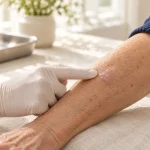
Diagnosis starts with history and a complete skin examination.
A dermatologist may ask:
- When did the itching start?
- Is it localized or generalized?
- Is there a rash before scratching?
- Does each lesion move or remain fixed?
- Is it worse at night?
- Does heat trigger it?
- Does sweating trigger it?
- Does water trigger it?
- Are other household members itchy?
- Did you start new medication?
- Have you changed skincare?
- Do you use fragrance?
- What is your occupation?
- Have you traveled?
- Are there pets?
- Have you stayed in hotels or new accommodation?
- Do you have liver, kidney or thyroid disease?
- Have you lost weight unintentionally?
- Are there fever or night sweats?
- Do you have numbness, tingling or burning?
This information often narrows the diagnosis before any laboratory testing is needed.
Why the Skin Examination Matters
The dermatologist may examine more than the area that feels itchy.
Useful clues may be found on:
- Scalp
- Eyelids
- Hands
- Fingernails
- Finger webs
- Feet
- Groin
- Skin folds
- Back
- Elbows
- Knees
For example:
Hand and eyelid dermatitis may suggest contact allergy.
Finger-web lesions may suggest scabies.
Thick elbow plaques and nail changes may suggest psoriasis.
Circular expanding lesions may suggest fungal infection.
Transient raised welts suggest urticaria.
Do I Need Blood Tests for Chronic Itch?
Not every patient does.
If there is a clear dermatological diagnosis such as eczema or scabies, extensive blood testing may add little.
If generalized itch persists without an obvious primary skin disease, selected tests may be considered.
Depending on the patient’s history, examination and age, investigations can include:
- Complete blood count
- Renal function
- Liver function
- Thyroid function
- Iron studies in selected patients
- Glucose testing where appropriate
- Additional testing guided by symptoms
Current European and British guidance support targeted evaluation rather than ordering every possible investigation in every patient.
Do I Need an Allergy Test?
Usually not automatically.
“Allergy test” can mean several very different investigations.
For example:
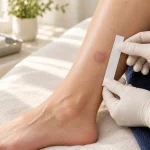
Patch test
Used mainly for allergic contact dermatitis.
Skin prick or specific IgE testing
Used for selected immediate allergies.
Neither test is a universal investigation for all chronic itching.
Testing should be chosen because the history suggests a specific question—not simply because the patient is itchy.
When Is Patch Testing Useful?
Patch testing may be particularly useful when there is recurrent:
- Eyelid dermatitis
- Facial dermatitis
- Hand dermatitis
- Occupational dermatitis
- Cosmetic-related rash
- Hair-dye reaction
It does not diagnose all types of allergy and is not the standard test for ordinary urticaria.
When Is a Skin Scraping Useful?
If fungal infection or scabies is suspected, a dermatologist may consider:
- KOH examination
- Microscopy
- Fungal culture in selected cases
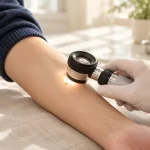
- Scabies scraping or dermoscopic examination
Testing is particularly useful when the rash has already been modified by topical steroid use.
When Is Skin Biopsy Needed?
Most itchy rashes do not need biopsy.
Skin biopsy may be considered when:
- Diagnosis remains unclear
- There is an unusual persistent rash
- Autoimmune blistering disease is suspected
- Cutaneous lymphoma is considered
- Vasculitis is possible
- Treatment has repeatedly failed
- There is a primary lesion suitable for sampling
Biopsying only a scratched erosion often gives nonspecific results. A non-excoriated primary lesion is generally more informative.
How Is Chronic Itch Treated?
There is no single “anti-itch treatment” that works for every cause.
Effective treatment usually has two components:
1. Treat the underlying cause
and
2. Reduce the itch while the skin recovers
The treatment may therefore be completely different for eczema, urticaria, scabies, fungal infection or neuropathic itch.
Moisturizer and Skin-Barrier Repair
Moisturizer is particularly important when dry skin or eczema contributes to symptoms.
Regular application can reduce:
- Dryness
- Cracking
- Irritation
- Skin-barrier damage
Creams and ointments often moisturize better than very light lotions for significantly dry skin.
Fragrance-free formulations are generally preferable for patients with reactive skin.
Bathing and Showering
Helpful measures often include:
- Lukewarm rather than very hot water
- Shorter showers
- Gentle non-soap cleanser
- Avoiding aggressive scrubbing
- Applying moisturizer soon after bathing
These changes can significantly improve xerosis-related itch.
Topical Corticosteroids
Topical corticosteroids are useful when itch is driven by an inflammatory skin disease such as eczema or contact dermatitis.
They are not universal anti-itch creams.
Using steroid on:
- Scabies
- Fungal infection
- Neuropathic itch
without addressing the underlying condition may fail or even complicate the diagnosis.
The strength and duration of steroid treatment should be chosen according to the body area and diagnosis.
Tacrolimus and Pimecrolimus
Topical calcineurin inhibitors can be useful for selected inflammatory skin conditions, particularly in sensitive areas such as:
- Eyelids
- Face
- Skin folds
They reduce inflammation without causing the steroid-type skin thinning associated with prolonged corticosteroid exposure.
Temporary burning or stinging can occur when first applied.
Antihistamines
Antihistamines are extremely useful for histamine-mediated conditions such as urticaria.
They are much less predictably effective for:
- Atopic dermatitis
- Neuropathic itch
- Chronic kidney-related itch
- Many forms of generalized pruritus
This explains why some patients say:
“I tried antihistamines but I’m still itchy.
”
It may simply mean histamine is not the primary mechanism.
Antihistamines are most useful when histamine drives the itch, particularly urticaria.
Treatment for Fungal Infection
Confirmed or strongly suspected fungal infection is treated with antifungal medication.
This may include:
- Topical antifungal treatment
- Oral antifungal medication for selected cases
Steroid alone should generally not be used to treat undiagnosed tinea.
Treatment for Scabies
Scabies requires appropriate antiparasitic treatment.
Close household or sexual contacts may also need treatment depending on exposure.
Clothing, bedding and environmental management may be part of the plan.
Treating only the itch without eliminating the infestation will not solve the underlying problem.
Treatment for Neuropathic Itch
Neuropathic itch often requires a different approach.
Depending on diagnosis, options may include medications affecting nerve signaling such as:
- Gabapentin
- Pregabalin
- Selected antidepressant-class medications
These medications have potential side effects and should be selected based on individual circumstances.
Phototherapy for Chronic Itch
Medical phototherapy can reduce itching in selected conditions.
Examples include:
- Atopic dermatitis
- Psoriasis
- Chronic kidney disease-associated pruritus
- Some forms of chronic pruritus
- Selected cutaneous lymphomas
However, phototherapy is not appropriate for every patient with itching.
It requires repeated controlled UV exposure and should not be confused with unrestricted sunbathing.
Newer Targeted Treatments
Treatment of chronic itchy skin diseases has changed significantly as the biology of itch has become better understood.
Depending on the underlying diagnosis, targeted treatments may affect pathways such as:
- IL-4
- IL-13
- IL-31
- JAK signaling
- Other neuroimmune pathways
These treatments are condition-specific rather than general-purpose “itch injections.
”
Medication approval and availability vary between countries, including Thailand.
Treatment selection therefore depends on a confirmed diagnosis rather than itch severity alone.
Is Chronic Itch Curable?
That depends entirely on the cause.
Some causes can be eliminated.
Examples include:
- Scabies
- Certain fungal infections
- Contact with a specific irritant or allergen
Other conditions are chronic and require control rather than permanent cure.
Examples include:
- Atopic dermatitis
- Psoriasis
- Chronic spontaneous urticaria
- Some neuropathic itch syndromes
Chronic pruritus of unknown origin may require ongoing symptom management even when a comprehensive investigation does not identify one specific cause.
Why Does My Rash Keep Coming Back?
Recurrence may mean:
- The underlying disease is chronic
- A trigger remains present
- Skin-barrier repair is incomplete
- Treatment is stopped too early
- The diagnosis is incorrect
- More than one condition is present
- Steroid has temporarily suppressed rather than treated the cause
- Infection or contact allergy is being missed
Repeatedly changing creams without reconsidering the diagnosis is often less useful than reviewing the entire pattern.
What Should I Avoid While My Skin Is Very Itchy?
Depending on the diagnosis, practical measures may include:
- Very hot showers
- Aggressive scrubbing
- Fragranced products
- Repeated exfoliation
- Tight rough clothing
- Overheating
- Scratching
- Unnecessary use of multiple new skincare products
Keeping fingernails short may reduce skin damage.
Cool compresses may provide temporary relief.
Can I Use Anti-Itch Cream Every Day?
It depends entirely on the ingredient.
Some moisturizers can be used frequently.
Certain anti-inflammatory medications require specific duration and body-site instructions.
Topical antihistamines are generally not recommended for chronic itch because they can themselves cause allergic contact dermatitis.
Patients should avoid repeatedly applying unidentified combination creams containing steroid, antibiotic and antifungal medication without knowing which condition is being treated.
When Should You See a Dermatologist for Chronic Itch or Rash?
Consider dermatology evaluation when:
- Itching lasts longer than 6 weeks
- The rash keeps returning
- You cannot identify the cause
- Symptoms disturb sleep
- Scratching causes bleeding
- The rash is spreading
- Several treatments have failed
- Steroid cream helps temporarily but the rash keeps returning
- You suspect fungal infection
- Several household members are itchy
- You have recurrent eyelid or hand dermatitis
- You have widespread itch without much rash
- You have unusual nodules or thickened itchy skin
- There is persistent scalp or genital itching
- You have associated numbness, tingling or burning
- You are unsure whether allergy testing is necessary
Warning Signs That Need Prompt Medical Assessment
Seek prompt medical evaluation if itching or rash is associated with:
- Fever
- Rapidly spreading painful rash
- Extensive blistering
- Skin peeling
- Significant facial swelling
- Pus or spreading infection
- Yellowing of the skin or eyes
- Dark urine
- Severe unexplained fatigue
- Enlarged lymph nodes
- Unintentional weight loss
- Persistent night sweats
Seek emergency care for:
- Difficulty breathing
- Tongue or throat swelling
- Fainting associated with an allergic reaction
- Rapidly progressive severe skin reaction
- Widespread blistering or skin detachment
A Rash That Does Not Improve With Steroid Needs Reassessment
Topical steroid can reduce inflammation in many diseases.
Because of this, several different rashes may temporarily look better after steroid application.
But that does not prove the rash is eczema.
Persistent or recurrent rash despite steroid may represent:
- Fungal infection
- Scabies
- Contact allergy
- Psoriasis
- Perioral dermatitis
- Another inflammatory disorder
Increasing steroid strength without reassessing the diagnosis can delay appropriate treatment.
What to Expect During a Chronic Itch Consultation in Bangkok
A good chronic-itch consultation often requires more history than patients expect.
The dermatologist may examine the entire skin rather than only the itchy area.
You may be asked about:
- When symptoms began
- Whether a rash appeared before scratching
- Night-time symptoms
- Recent travel
- New hotels or accommodation
- Household members
- Pets
- Work exposure
- Skincare
- Cosmetics
- Hair dye
- Soap and detergent
- Medications
- Supplements
- Previous treatment
- Liver or kidney disease
- Thyroid disease
- Neurological symptoms
- Weight loss
- Fever or night sweats
Depending on the findings, the next step might be:
- Clinical diagnosis alone
- Skin scraping
- Patch testing
- Skin biopsy
- Selected blood tests
- Referral or coordination with another medical specialty
Not every patient requires every investigation.
What Should International Patients Bring?
For expats, tourists and international patients consulting a dermatologist in Bangkok, useful information includes:
- Clear photographs of previous flares
- Photographs before steroid treatment
- Names or photos of medications already used
- Ingredient lists of skincare products
- Previous allergy-test results
- Previous pathology or biopsy reports
- Recent blood-test results if relevant
- A medication and supplement list
- A brief timeline of symptoms
This is particularly helpful when the rash appeared before arriving in Thailand or has already been treated in another country.
The Most Important Step in Chronic Itch Is Finding the Cause
Chronic itch should not be treated as one single disease.
The same symptom can arise from completely different mechanisms.
One patient may have eczema.
Another may have scabies.
Another may have contact allergy.
Another may have neuropathic itch.
And a patient with generalized itching but almost normal skin may need an entirely different medical evaluation.
A useful chronic-itch assessment therefore asks:
Is there a primary rash?
Was the rash present before scratching?
Is the itch localized or generalized?
Does each lesion last hours or days?
Is anyone else at home itchy?
Are medication, products or occupational exposures relevant?
Is this inflammatory, infectious, allergic, neuropathic or systemic?
Are laboratory tests genuinely necessary?
Would scraping, patch testing or biopsy provide useful information?
Treatment works best when directed at the underlying diagnosis rather than simply adding stronger anti-itch medication.
For patients with persistent or recurrent symptoms, establishing the diagnosis is usually more valuable than repeatedly trying different creams without knowing what is being treated.
Frequently asked questions
What is chronic itch?
Chronic itch generally means itching that persists for more than 6 weeks.
Why am I itchy all the time?
Possible causes include dry skin, eczema, contact dermatitis, urticaria, fungal infection, scabies, medication, neuropathic conditions and occasionally internal medical diseases.
Can you have severe itching without a rash?
Yes.
Dry skin, systemic disease and neuropathic itch may cause significant itching even when there is little visible primary rash.
Does chronic itch mean I have an allergy?
No.
Allergy is only one of many possible causes.
Does chronic itch mean cancer?
Usually not.
Most chronic itching has more common dermatological causes, but unexplained generalized itching together with weight loss, fever, night sweats or enlarged lymph nodes warrants medical assessment.
What blood tests are needed for chronic itching?
There is no universal panel.
Depending on the clinical situation, tests may include a complete blood count, kidney function, liver function, thyroid function and selected additional investigations.
Should I have an allergy test?
Only when the history suggests an allergic cause.
Patch testing, skin-prick testing and blood allergy testing answer different clinical questions.
Why do I itch more at night?
Night-time itching can occur with dry skin, eczema, scabies and several other conditions. Heat and reduced distraction at night may contribute.
Why does hot weather make my skin itch?
Heat and sweating may worsen eczema, cholinergic urticaria and other sensitive inflammatory skin conditions.
Does Bangkok's climate cause chronic itching?
No single climate causes chronic itch, but Bangkok's heat, sweating, frequent showering and indoor air-conditioning can aggravate symptoms in some patients.
Why does my skin itch after showering?
Hot water, strong cleansers, dry skin, eczema or contact irritation are common causes.
Persistent severe itch after water exposure may require further evaluation.
Could my soap or skincare be causing the rash?
Yes.
Irritant or allergic contact dermatitis can occur from cleansers, fragrance, preservatives and other ingredients.
Why does steroid cream help but the rash keeps returning?
The underlying trigger may still be present, the condition may be chronic, or the diagnosis may be something other than eczema.
Can fungal infection look like eczema?
Yes.
Tinea can resemble eczema, and steroid treatment can make fungal infection harder to recognize.
How do I know if I have scabies?
Night-time itching, finger-web lesions and itching among household contacts are important clues, but examination may be needed to confirm the diagnosis.
Why is only one spot on my back always itchy?
Localized neuropathic itch such as notalgia paresthetica is one possibility, particularly when there is little primary rash.
Why are my forearms constantly itchy?
Brachioradial pruritus is one possible neuropathic cause, although eczema, sun exposure and other diagnoses should also be considered.
Do antihistamines help all types of itch?
No.
They are particularly useful for urticaria but may provide limited benefit when histamine is not the primary mechanism.
Can I take antihistamines every day?
That depends on the diagnosis, medication and patient's medical history. Regular antihistamines are commonly used for chronic urticaria but are not the correct treatment for every itchy condition.
Does moisturizer help chronic itching?
It can help significantly when dry skin or impaired skin barrier contributes to symptoms.
Is chronic itching caused by stress?
Stress can worsen many itchy disorders, but persistent symptoms should not automatically be attributed to stress without appropriate evaluation.
Can kidney disease cause itching?
Yes, particularly advanced chronic kidney disease.
Can liver disease cause itching?
Yes, particularly cholestatic liver disorders.
Can thyroid disease cause itchy skin?
It can contribute in some patients.
Can iron deficiency cause itching?
Iron deficiency is one of several systemic conditions that may be considered when generalized chronic itch has no obvious skin cause.
Can medication cause chronic itching?
Yes.
Both prescription and over-the-counter medications can occasionally contribute.
Can chronic scratching permanently damage the skin?
Repeated scratching can cause thickening, pigmentation, wounds and secondary infection.
When should I see a dermatologist?
Persistent itching lasting over 6 weeks, recurrent unexplained rashes, severe sleep disturbance, treatment failure or generalized itching without a clear rash are all reasonable reasons for dermatology evaluation.
Related conditions
-
Atopic Dermatitis / Eczema Atopic Dermatitis / Eczema Atopic dermatitis, commonly called eczema or atopic eczema, is a chronic inflammatory skin condition that causes dry, itchy and easily irritated skin. It can affect children and adults and often goes through cycles of improvement and flare-ups.
-
Contact Dermatitis Contact Dermatitis Contact dermatitis is a type of eczema caused by something that touches the skin. It can result from direct irritation or from a delayed allergic reaction to a substance such as fragrance, preservatives, metals, hair dye, rubber, cosmetics, cleaning products or workplace chemicals.

-
Seborrheic Dermatitis Seborrheic Dermatitis Seborrheic dermatitis is a common inflammatory skin condition that causes redness, flaking, greasy or dry scales, and sometimes itching. It most often affects areas with many oil glands, including the scalp, eyebrows, sides of the nose, ears, beard area and upper chest.
-
Psoriasis Psoriasis Psoriasis is a chronic immune-mediated inflammatory disease that most commonly affects the skin, but it can also involve the nails and joints.