





















Bacterial Skin Infections
Bacterial skin infections can range from a small infected hair follicle to cellulitis, a skin abscess, or a rapidly spreading infection requiring urgent hospital treatment.
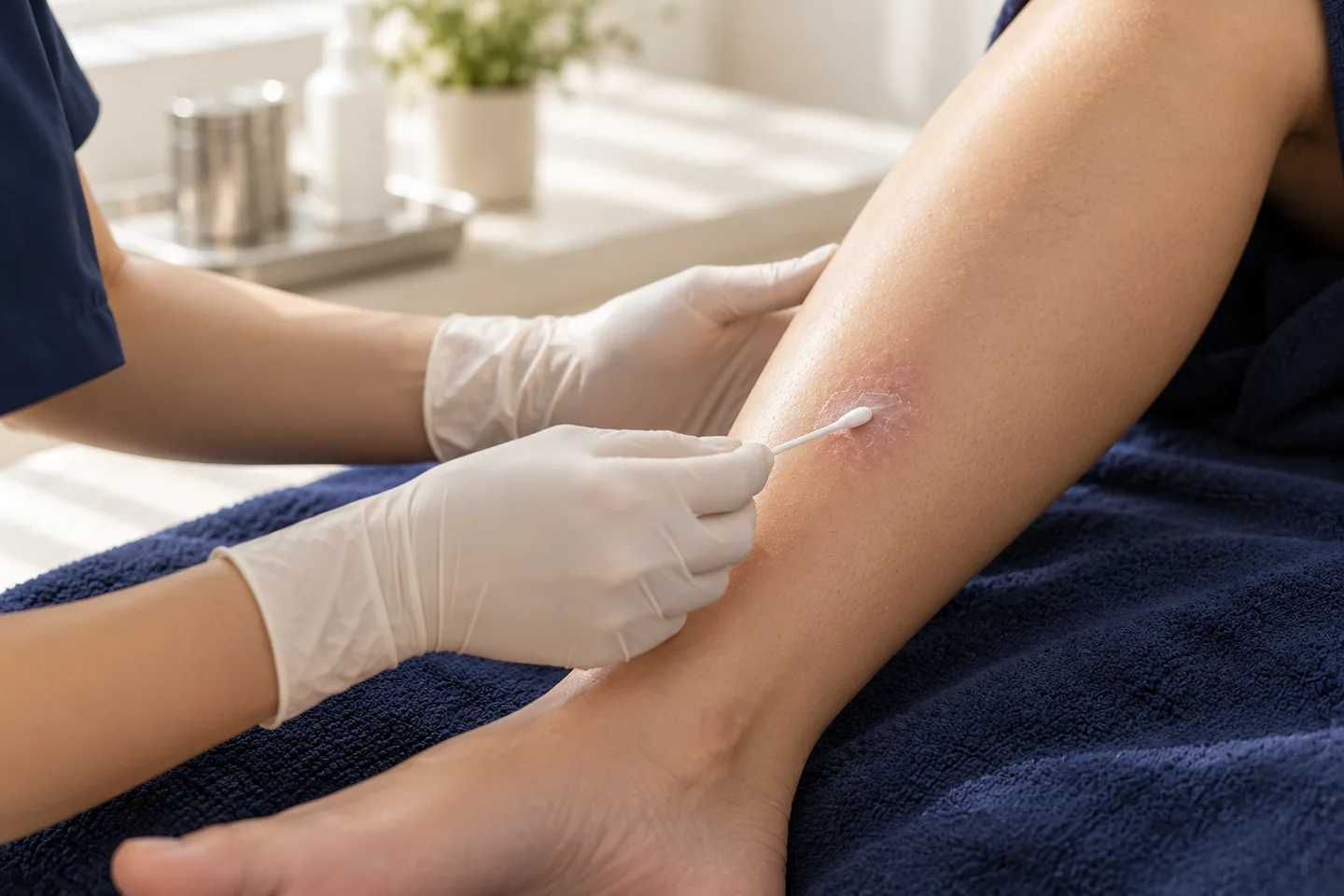
Common signs include redness, warmth, swelling, tenderness, pain, pus, crusting, or rapidly enlarging areas of inflammation. However, not every red or painful rash is bacterial. Fungal infections, eczema, insect-bite reactions, viral infections, contact dermatitis and inflammatory skin diseases can sometimes look similar.
A dermatologist can usually determine the likely diagnosis by examining the skin. In selected cases—particularly recurrent infections, pus-forming lesions, unusual infections, treatment failure or suspected antibiotic resistance—a bacterial culture or other testing may be appropriate.
Most uncomplicated bacterial skin infections can be treated successfully, but rapidly spreading redness, severe pain, fever, chills, extensive swelling, skin discoloration or systemic illness require prompt medical assessment. Cellulitis can occasionally lead to serious complications, while necrotizing soft-tissue infections are medical emergencies.
What Are Bacterial Skin Infections?
Bacterial skin infections occur when bacteria invade the skin, hair follicles or deeper soft tissues.
The skin normally acts as a protective barrier. Bacteria may enter when that barrier is disrupted by:
- Cuts or abrasions
- Scratching
- Insect bites
- Shaving
- Eczema
- Athlete’s foot
- Ulcers
- Surgical wounds
- Tattoos or piercings
- Chronic swelling of the legs
- Other injuries that break the skin
Common bacteria involved in skin infections include Staphylococcus aureus and Streptococcus pyogenes. Other organisms can cause infection depending on the location, exposure, wound type and underlying health conditions.
Bacterial skin infections include several different conditions. The correct treatment depends on which part of the skin is infected and whether pus is present.
Common Types of Bacterial Skin Infections
1. Impetigo
Impetigo is a superficial bacterial infection affecting the outer layers of the skin.
It is especially common in children but can also occur in adults.
Typical lesions may begin as small red bumps or blisters, develop pus, then rupture and form characteristic yellow or honey-colored crusts.
Common areas include:
- Around the nose
- Around the mouth
- Face
- Arms
- Legs
- Areas of scratched or injured skin
Impetigo can be caused by Staphylococcus aureus, Streptococcus pyogenes, or both. Bullous impetigo is associated with toxin-producing strains of Staphylococcus aureus.
Is impetigo contagious?
Yes.
It can spread through direct contact with infected skin or drainage from the lesions. Sharing towels, clothing and other items that come into contact with infected skin can also contribute to transmission.
Covering lesions, appropriate treatment and good hand hygiene help reduce spread.
How is impetigo treated?
Treatment depends partly on the number and extent of lesions.
A small number of localized lesions may sometimes be treated with an appropriate topical antibiotic, while more extensive disease may require oral antibiotics.
The antibiotic should be selected to cover the organisms most likely to be responsible.
2. Folliculitis
Folliculitis means inflammation of a hair follicle.
Bacterial folliculitis commonly appears as small red bumps or pustules centered around hairs.
It may occur on areas such as:
- Scalp
- Beard area
- Chest
- Back
- Buttocks
- Thighs
- Groin
Superficial folliculitis is often itchy or mildly tender. Deeper infection of a follicle can progress to a boil.
Factors that may contribute include friction, sweating, shaving, occlusive clothing and damage to the skin around hair follicles.
However, not every follicular eruption is bacterial. Acne, fungal folliculitis and inflammatory follicular disorders can look similar, so persistent or recurrent cases should be correctly diagnosed before repeated antibiotic treatment.
3. Boils
A boil, medically called a furuncle, is a deeper infection involving a hair follicle and the surrounding tissue.
It usually appears as a:
- Red lump
- Tender or painful bump
- Increasingly swollen lesion
- Pus-filled nodule
- Lump that may eventually drain
Several connected boils can form a larger infected area called a carbuncle.
Boils and abscesses are commonly associated with Staphylococcus aureus, including some infections caused by methicillin-resistant Staphylococcus aureus, often shortened to MRSA.
4. Skin Abscess
A skin abscess is a collection of pus within or beneath the skin.
It may appear as a:
- Painful red lump
- Swollen area
- Warm lesion
- Soft or fluctuant lump
- Bump with a white or yellow center
- Lesion draining pus
An important distinction is that an abscess is not simply cellulitis with pus.
This matters because the primary treatment of many abscesses is drainage rather than antibiotics alone. Infectious Diseases Society of America guidelines identify incision and drainage as the main treatment for uncomplicated skin abscesses and large boils, with antibiotics added according to the severity of infection and the individual patient’s clinical circumstances.
Should you squeeze an abscess yourself?
No.
Squeezing, puncturing or cutting an abscess at home can cause:
- Incomplete drainage
- Bleeding
- Deeper infection
- Additional tissue injury
- Spread of bacteria
- Delay in appropriate treatment
A painful enlarging lump containing pus should be medically assessed.
5. Cellulitis
Cellulitis is an infection involving deeper layers of the skin and underlying soft tissue.
It commonly causes:
- Redness
- Warmth
- Swelling
- Tenderness
- Pain
The affected area may gradually expand. Some people also develop fever, chills or feel generally unwell.
Cellulitis can occur anywhere but frequently affects the legs and feet.
What causes cellulitis?
Bacteria can enter through even small breaks in the skin.
Possible entry points include:
- Cuts
- Cracks
- Scratches
- Ulcers
- Insect bites
- Eczema
- Athlete’s foot
- Surgical wounds
- Tattoos or piercings
Chronic leg swelling, impaired lymphatic drainage and venous disease can also increase the risk of cellulitis and recurrent episodes.
Is cellulitis contagious?
Typical cellulitis itself is generally not considered something that easily spreads from one person to another.
However, bacteria associated with wounds, drainage or other superficial infections may sometimes spread through contact.
6. Erysipelas
Erysipelas is a bacterial infection similar to cellulitis but generally involves more superficial layers of the skin and lymphatic vessels.
It often appears as an acutely red, warm, painful and swollen area that may have a more clearly defined border than typical cellulitis.
Fever and systemic symptoms may occur.
Because cellulitis and erysipelas overlap clinically, the terms are sometimes used somewhat differently between medical systems.
7. Ecthyma
Ecthyma is a deeper form of bacterial infection related to impetigo.
Instead of remaining confined to the superficial skin, infection extends more deeply and may produce crusted ulcers.
Because it affects deeper skin than ordinary impetigo, ecthyma has a greater potential to leave a scar after healing.
Persistent crusted or ulcerated lesions should therefore be evaluated rather than repeatedly treated as a simple rash.
8. Infected Wounds
Cuts, abrasions, surgical wounds, insect bites and other injuries can become secondarily infected.
Signs suggesting infection include:
- Increasing pain
- Increasing redness
- Warmth
- Swelling
- Pus
- Foul-smelling discharge
- Worsening tenderness
- Fever
- Redness spreading away from the wound
Not every healing wound that looks red is infected. Mild redness around a fresh wound may be part of normal inflammation.
The pattern and progression of symptoms are important when determining whether antibiotics or another treatment are necessary.
MRSA Skin Infections
MRSA is a strain of Staphylococcus aureus that is resistant to several commonly used antibiotics.
MRSA can cause:
- Folliculitis
- Boils
- Abscesses
- Infected wounds
- Other skin and soft-tissue infections
A typical MRSA infection may be red, painful, swollen, warm or pus-filled, but MRSA cannot be diagnosed reliably just by looking at the skin.
Laboratory testing of an appropriate specimen is required to determine whether MRSA is present.
This distinction is important because unnecessarily assuming that every boil is MRSA can lead to inappropriate antibiotic use.
Are Bacterial Skin Infections More Common in Bangkok?
Bacterial skin infections occur worldwide.
Bangkok’s warm climate, sweating, friction, frequent outdoor activity and exposure of minor cuts or insect bites can create circumstances in which damaged or irritated skin becomes vulnerable to infection.
Impetigo, for example, can occur in any climate but is recognized as being more common in tropical and subtropical environments.
However, climate alone does not cause a bacterial infection.
An accurate diagnosis remains important because common conditions encountered in Thailand—including fungal infections, eczema, heat-related eruptions, insect-bite reactions and viral infections—may also cause red or itchy skin.
What Can Look Like a Bacterial Skin Infection?
One of the most important parts of a dermatology evaluation is determining whether bacteria are actually responsible.
Conditions that may sometimes resemble bacterial infection include:
- Contact dermatitis
- Eczema
- Insect-bite reactions
- Fungal infections
- Athlete’s foot
- Shingles
- Herpes simplex
- Acne
- Fungal folliculitis
- Inflamed epidermoid cyst
- Gout
- Venous stasis dermatitis
- Allergic reactions
- Inflammatory skin disease
This is one reason why repeatedly taking antibiotics without confirming the diagnosis can be problematic.
For example, an inflamed epidermoid cyst may look infected and contain thick material, but inflammation can occur because the cyst wall has ruptured rather than because bacteria are causing a true infection.
How Does a Dermatologist Diagnose a Bacterial Skin Infection?
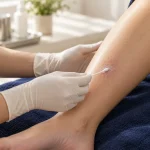
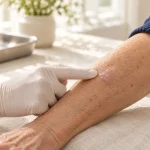
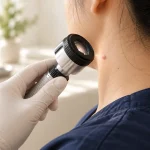
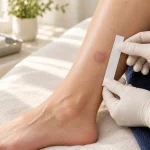
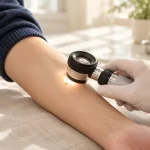
Diagnosis usually begins with a physical examination.
A dermatologist may evaluate:
- Location
- Number of lesions
- Pattern of spread
- Redness
- Warmth
- Swelling
- Presence of pus
- Crusting
- Blisters
- Pain
- Whether a lump is fluctuant
- Signs of an abscess
- Evidence of an underlying skin condition
- Recent wounds or procedures
- Previous antibiotic treatment
The medical history can also be important.
You may be asked about:
- When symptoms started
- Whether redness is spreading
- Fever or chills
- Previous similar infections
- Recent travel
- Swimming or water exposure
- Animal bites
- Insect bites
- Shaving
- Skin injuries
- Surgery
- Diabetes
- Medications affecting immunity
- Hospital admission
- Previous MRSA infection
- Antibiotics recently taken
Does Every Skin Infection Need a Bacterial Culture?
No.
A typical uncomplicated case of cellulitis can usually be diagnosed clinically, and routine cultures are generally not required.
A culture may be more useful when there is:
- Pus or drainage
- A recurrent abscess
- Treatment failure
- Suspected antibiotic resistance
- Severe infection
- Unusual exposure
- Significant immune suppression
- An atypical clinical presentation
For abscesses and carbuncles, culture of pus may help identify the organism and determine which antibiotics are likely to work, particularly in recurrent, complicated or treatment-resistant cases.
Do You Need Blood Tests?
Most localized bacterial skin infections do not require routine blood testing.
Blood tests may become appropriate when the infection is severe or when there is concern about systemic infection, significant immune suppression or another underlying medical problem.
Similarly, imaging is not routinely needed for a straightforward superficial bacterial infection.
Ultrasound or other imaging may occasionally be used when a deeper abscess or other complication is suspected.
Treatment of Bacterial Skin Infections
Treatment depends on the diagnosis.
There is no single antibiotic or procedure that is appropriate for every bacterial skin infection.
Important factors include:
- Type of infection
- Location
- Size
- Depth
- Presence of pus
- Severity
- Fever or systemic symptoms
- Age
- Pregnancy
- Allergies
- Immune status
- Previous antibiotics
- Previous culture results
- Risk of resistant bacteria
Topical Antibiotics
Topical antibiotics may be appropriate for certain small, superficial and localized infections, such as selected cases of impetigo.
They have the advantage of limiting systemic exposure to antibiotics.
However, topical antibiotics are not sufficient for conditions such as significant cellulitis or deep abscesses.
Overuse of topical antibiotics can also contribute to antibiotic resistance or cause contact dermatitis, so they should not automatically be applied to every red bump or wound.
For impetigo, clinical guidance distinguishes between a few localized lesions, which can sometimes be treated topically, and more extensive disease, which generally requires oral therapy.
Oral Antibiotics
Oral antibiotics may be prescribed for infections such as:
- Cellulitis
- More extensive impetigo
- Some infected wounds
- Selected abscesses
- More significant bacterial follicular infections
The antibiotic chosen should reflect the likely organism, local resistance considerations, patient allergies and the clinical severity of infection.
Antibiotics should not be chosen simply because they are perceived as “strong.
”
Using an unnecessarily broad antibiotic can expose patients to side effects and contribute to antimicrobial resistance.
Intravenous Antibiotics
Most uncomplicated skin infections do not require intravenous treatment.
Intravenous antibiotics may be appropriate when infection is severe, particularly when the patient has:
- Significant systemic illness
- Rapidly progressive cellulitis
- Severe immune suppression
- Inability to take oral medication
- Failure of appropriate outpatient treatment
- Concern for deeper infection
- Hemodynamic instability
- A complicated infection requiring hospital care
Clinical guidance notes that most cellulitis can be treated with oral antibiotics, while more serious disease may require intravenous treatment.
Drainage of a Skin Abscess
A pus-filled abscess is different from uncomplicated cellulitis.
When pus has collected in a cavity, simply prescribing antibiotics may not adequately solve the problem.
Incision and drainage is a central treatment for many skin abscesses, carbuncles and large boils.
The procedure generally involves:
- Examining the lesion
- Cleaning the area
- Using local anesthesia when appropriate
- Creating a small opening
- Allowing pus to drain
- Cleaning the cavity
- Providing wound-care instructions
Whether antibiotics are also required depends on the patient’s condition and infection severity.
Should Every Abscess Receive Antibiotics?
Not necessarily.
For certain uncomplicated abscesses, adequate drainage is the most important part of treatment.
Antibiotics are more likely to be required when there are factors such as:
- Fever or systemic illness
- Significant surrounding infection
- Severe symptoms
- Impaired immune defenses
- Failure of initial treatment
- Difficult anatomical location
- Concern about resistant bacteria
Management should therefore be individualized rather than automatically prescribing antibiotics to every abscess.
Antibiotic Resistance and Why Correct Diagnosis Matters
Antibiotic resistance is increasingly important in the management of skin infections.
MRSA is one example of a bacterium that is resistant to several antibiotics.
However, using broader antibiotics without a good clinical reason is not the solution.
Good antibiotic stewardship means:
- Confirming that the problem is likely bacterial
- Distinguishing cellulitis from abscess
- Obtaining cultures when appropriate
- Choosing an antibiotic suitable for the suspected organism
- Adjusting treatment when culture results are available
- Avoiding unnecessary antibiotics
- Completing treatment according to medical instructions
This approach can improve patient care while reducing unnecessary antibiotic exposure.
How Long Does a Bacterial Skin Infection Take to Improve?
Recovery depends on the condition and its severity.
A superficial infection may improve relatively quickly once appropriate treatment begins.
Cellulitis usually requires several days of antibiotic treatment, but redness may not disappear immediately.
An abscess may improve rapidly after effective drainage, although the wound itself may take longer to heal.
The important point is the direction of change.
Pain, swelling and spreading redness should gradually improve rather than continue worsening.
Patients with MRSA-compatible infections or other significant bacterial skin infections should have a clear follow-up plan, particularly if symptoms worsen or fail to improve after treatment begins.
What If Redness Looks Worse After Starting Antibiotics?
A treated infection does not necessarily look completely normal within the first day.
Inflammation can take time to settle.
However, seek reassessment if:
- The red area continues to expand significantly
- Pain is increasing
- Fever develops or persists
- Pus increases
- New blisters develop
- Skin becomes purple, dusky or black
- The patient feels increasingly unwell
- There is no meaningful response to treatment
The diagnosis, antibiotic choice or need for drainage may need to be reconsidered.
Recurring Bacterial Skin Infections
Recurrent infections deserve more than repeated courses of antibiotics.
A dermatologist may look for contributing factors such as:
- Chronic eczema
- Athlete’s foot
- Recurrent scratching
- Chronic leg swelling
- Venous disease
- Skin barrier disruption
- Repeated shaving trauma
- Recurrent boils or abscesses
- Bacterial colonization
- Diabetes or another underlying condition when clinically relevant
- Medications affecting immune function
For recurrent cellulitis of the lower leg, examination and treatment of fungal infection between the toes can be particularly important because cracks and maceration can provide an entry point for bacteria.
How Can Bacterial Skin Infections Be Prevented?
Basic skin and wound care can reduce risk.
- Clean cuts and abrasions promptly.
- Keep wounds appropriately covered while healing.
- Avoid picking or squeezing boils and abscesses.
- Wash hands regularly.
- Avoid sharing razors.
- Avoid sharing towels when someone has a draining infection.
- Shower after activities involving close skin contact.
- Keep eczema controlled.
- Treat athlete’s foot when present.
- Avoid shaving directly across infected skin.
- Clean shared sports equipment and surfaces appropriately.
Clinical best practices specifically advise keeping wounds clean and covered, maintaining good personal hygiene and avoiding shared personal items such as towels and razors as measures that can help reduce MRSA transmission.
When Should You See a Dermatologist?
Consider a medical assessment if you develop:
- A painful red or swollen skin lesion
- Pus or drainage
- A boil that is enlarging
- Recurrent folliculitis
- A suspected abscess
- Crusted lesions suggesting impetigo
- Increasing redness around a wound
- Persistent infection despite treatment
- Recurrent skin infections
- A skin infection after a procedure, tattoo or piercing
- A rash that may be bacterial but the diagnosis is unclear
Early assessment can help distinguish a bacterial infection from conditions that do not require antibiotics.
Warning Signs: When to Seek Urgent Medical Care
Some infections should not wait for a routine dermatology appointment.
Seek urgent medical attention if there is:
- Rapidly spreading redness or swelling
- Severe pain, particularly pain that seems greater than the visible skin changes
- Fever or chills with a worsening skin infection
- Extensive swelling
- Severe weakness or dizziness
- Confusion
- Rapid deterioration
- Purple, dusky or black skin
- Blisters developing over a rapidly worsening infection
- Severe infection around the eye
- Infection in a severely immunocompromised patient
- Signs of sepsis or low blood pressure
Rapid spread, fever and unusually severe pain are particularly important warning signs for necrotizing fasciitis, a rare but life-threatening infection requiring immediate hospital treatment, intravenous antibiotics and surgery.
What to Expect During a Dermatology Consultation in Bangkok
For most bacterial skin infections, the first step is careful examination rather than immediately prescribing an antibiotic.
The dermatologist may assess:
- Whether the lesion is actually bacterial
- Whether infection is superficial or deep
- Whether pus is present
- Whether drainage is required
- Whether cellulitis is present
- Whether the infection is spreading
- Whether a bacterial culture would be useful
- Whether an underlying skin condition contributed to the infection
- Whether outpatient treatment is appropriate
For tourists, expatriates and international patients, it can be useful to bring information about any antibiotics or treatments already received.
If available, bring:
- Medication names
- Recent prescription records
- Previous bacterial culture results
- Allergies
- Relevant medical conditions
- Photographs showing how rapidly the lesion has changed
This can be particularly helpful when treatment was started before arriving in Bangkok.
Frequently asked questions
What does a bacterial skin infection look like?
It may cause redness, warmth, swelling, pain, pus, pustules, crusting or an enlarging tender lump.
However, bacterial infections do not all look the same, and several non-bacterial conditions can appear similar.
How do I know whether a skin infection is bacterial or fungal?
Bacterial infections tend to cause tenderness, warmth, pus or rapidly developing inflammation, while many fungal infections are more slowly progressive and itchy.
These patterns are not absolute. Examination by a dermatologist is useful when the diagnosis is uncertain.
Is cellulitis the same as a skin abscess?
No.
Cellulitis is a spreading infection of the skin and underlying soft tissue without a localized collection of pus.
An abscess is a cavity containing pus.
The distinction is clinically important because cellulitis is primarily treated with antibiotics, whereas an abscess often needs drainage.
Is cellulitis dangerous?
Most cases respond to appropriate treatment.
However, untreated cellulitis can spread and occasionally cause serious infections involving the bloodstream, bone, joints or other tissues.
Can cellulitis spread from person to person?
Typical cellulitis is generally not directly contagious.
However, bacteria associated with infected wounds, pus or superficial infections can sometimes spread through contact.
Does every skin infection need antibiotics?
No.
Some skin problems that appear infected are not bacterial.
Even among bacterial infections, treatment varies. Some localized infections may need topical treatment, cellulitis usually requires systemic antibiotics, and an abscess may primarily require drainage.
Can I buy antibiotics and treat a skin infection myself?
Self-treatment is not recommended when the diagnosis is uncertain.
The wrong antibiotic may fail to treat the infection, cause side effects and contribute to antibiotic resistance.
A painful enlarging abscess may also require drainage rather than antibiotics alone.
Can I squeeze a boil?
Avoid squeezing or puncturing boils yourself.
Manipulation can cause additional tissue damage and may spread infected material.
How do I know if a lump contains pus?
An abscess may feel soft, fluctuant or fluid-filled and sometimes develops a central white or yellow area.
However, deeper abscesses may be harder to identify clinically. Medical examination and occasionally ultrasound can help.
What is MRSA?
MRSA is a type of Staphylococcus aureus resistant to several antibiotics.
It commonly causes boils, abscesses and other skin infections, but you cannot determine whether a lesion is MRSA simply from appearance. Laboratory testing is necessary to confirm it.
Does pus always mean MRSA?
No.
Many bacteria can cause pus.
MRSA is one possibility, but laboratory culture is needed to identify the organism.
Should an abscess be cultured?
Culturing pus can be particularly useful for recurrent abscesses, complicated infections or infections that are not responding as expected.
Guidelines recommend culture of pus from abscesses and carbuncles, although treatment without culture may still be reasonable in some typical uncomplicated cases.
Can eczema cause bacterial skin infections?
Eczema damages the skin barrier and scratching creates small breaks in the skin, increasing the possibility of bacterial infection.
Treating the underlying dermatitis can therefore be an important part of preventing recurrence.
Can athlete's foot lead to cellulitis?
Yes.
Cracks and maceration between the toes can create an entry point for bacteria. Recurrent lower-leg cellulitis is one reason clinicians may examine for and treat athlete's foot.
Why does my skin infection keep coming back?
Possible reasons include chronic skin-barrier damage, eczema, athlete's foot, recurrent abscess formation, bacterial colonization, chronic swelling or another underlying condition.
Repeated infections should be evaluated rather than managed indefinitely with repeated antibiotics.
When is a bacterial skin infection an emergency?
Rapidly spreading swelling or redness, severe disproportionate pain, fever, confusion, low blood pressure, rapidly developing blisters or darkening skin warrant urgent assessment.
These can be warning signs of a serious deeper infection.
Related conditions
-
Fungal Skin Infections Fungal Skin Infections Fungal skin infections are common causes of itchy, scaly, discolored or persistent rashes. They can affect almost any part of the body, including the feet, groin, trunk, scalp and nails.

-
Atopic Dermatitis / Eczema Atopic Dermatitis / Eczema Atopic dermatitis, commonly called eczema or atopic eczema, is a chronic inflammatory skin condition that causes dry, itchy and easily irritated skin. It can affect children and adults and often goes through cycles of improvement and flare-ups.
-
Skin Biopsy (การวินิจฉัย / Diagnosis) Skin Biopsy (การวินิจฉัย / Diagnosis) A skin biopsy is a minor medical procedure in which a dermatologist removes a small sample of skin so it can be examined under a microscope. It is one of the most important diagnostic tools in dermatology because many skin conditions cannot be confirmed by appearance alone.