








Surgical Dermatology
Biopsies, lesion removal, minor skin surgery and procedures — each after a proper assessment.
20 procedures
-
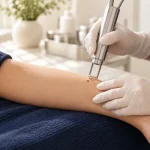
CO2 Laser Removal CO2 Laser Removal CO2 laser removal is a dermatologic procedure used to remove or flatten selected superficial skin growths with high precision. In dermatology, it may be considered for conditions such as skin tags, seborrheic keratoses, selected warts, sebaceous hyperplasia, syringomas, and certain other benign skin lesions. CO2 lasers are also used for resurfacing and scar treatment, although these are different procedures with different treatment settings and recovery.
-
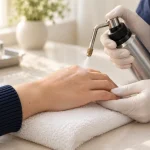
Cryotherapy Cryotherapy Cryotherapy is a dermatologic procedure that uses extreme cold—most commonly liquid nitrogen—to freeze and destroy selected abnormal skin tissue. Dermatologists commonly use it for conditions such as viral warts, actinic keratoses, some seborrheic keratoses, molluscum contagiosum, and selected skin tags.
-
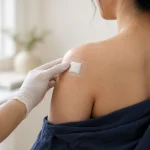
Cyst Excision Cyst Excision A skin cyst is a lump that develops beneath or within the skin. One of the most common types seen in dermatology is the Epidermoid Cyst, sometimes incorrectly called a “sebaceous cyst.
-
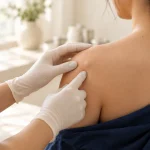
Cysts Cysts A skin cyst is a lump that develops beneath or within the skin. One of the most common types seen in dermatology is the Epidermoid Cyst, sometimes incorrectly called a “sebaceous cyst.
-
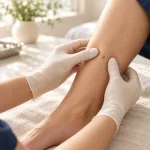
Dermatofibroma Dermatofibroma Dermatofibroma is a common benign fibrous skin nodule, most often found on the lower legs. It is usually firm, small, and brown, tan, pink, or skin-colored. Many Dermatofibromas cause no symptoms and do not require treatment, although some may be tender, itchy, painful, or repeatedly irritated.
-
Electrocautery Electrocautery Electrocautery is a dermatologic procedure that uses heat to destroy selected tissue or control bleeding. In everyday clinical language, the term is often used broadly for several forms of Electrosurgery, although technically they are not identical.

-
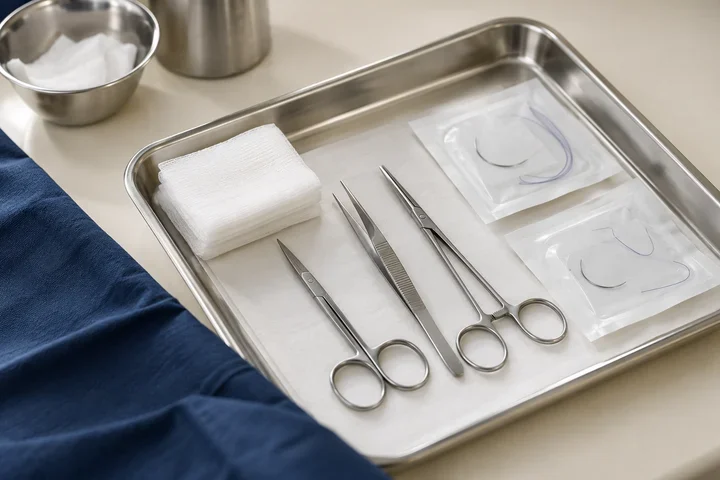
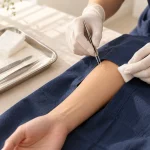
Excisional Biopsy Excisional Biopsy An excisional biopsy means completely cutting out a skin lesion, usually through the full thickness of the skin. The removed tissue is then examined under a microscope.
-
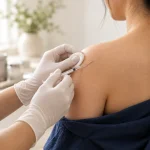
Intralesional Steroid Injection Intralesional Steroid Injection Intralesional Steroid Injection is a dermatologic procedure in which a corticosteroid medication is injected directly into a specific skin lesion. The goal is to deliver anti-inflammatory medication to the affected tissue while limiting exposure to the rest of the body.
-
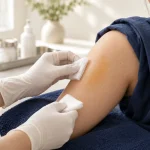
Lipoma Excision Lipoma Excision A lipoma is a benign growth of mature fat cells that usually develops beneath the skin. Most lipomas are soft, slow-growing, movable, and painless. They do not necessarily need treatment. However, Lipoma Excision may be considered when a lump is growing, painful, uncomfortable, cosmetically bothersome, or when the diagnosis is uncertain.
-
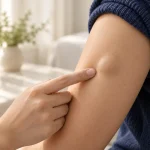
Lipomas Lipomas A lipoma is a benign tumor made of mature fat cells. It usually develops slowly beneath the skin and typically feels soft, rubbery, and movable when pressed. Lipomas commonly occur on the trunk, shoulders, neck, arms, back, abdomen, and thighs. They are not cancer and often do not require treatment.
-
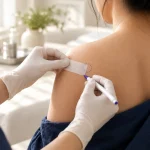
Margin Assessment Margin Assessment Margin assessment is one of the most important parts of skin cancer surgery.
-
Mohs Surgery / Mohs Referral Mohs Surgery / Mohs Referral Mohs surgery, or Mohs micrographic surgery, is a specialized form of skin cancer surgery in which the tumor is removed in stages and the surgical

-
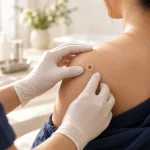
Mole Removal Mole Removal Many growths that patients call “moles” are benign and can be removed because they catch on clothing, become repeatedly irritated, or are cosmetically unwanted. Others may actually be Seborrheic Keratosis, Skin Tag, Wart, Actinic Keratosis, or another skin condition. Occasionally, a lesion that looks like an ordinary mole or growth can represent Melanoma, Basal Cell Carcinoma, SCC, or another skin cancer.
-
Punch Biopsy Punch Biopsy A punch biopsy uses a small circular cutting instrument to remove a cylindrical sample of skin. Unlike a superficial shave biopsy, a punch biopsy generally provides a full-thickness specimen containing the epidermis and dermis and often extending into superficial subcutaneous tissue. This allows the pathologist to examine the architecture of different layers of the skin.

-
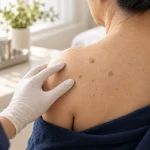
Seborrheic Keratosis Seborrheic Keratosis Seborrheic Keratosis is one of the most common benign skin growths seen by dermatologists. It often appears as a brown, black, or tan spot that looks as though it is "stuck onto the skin.
-
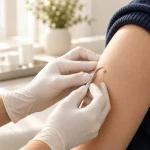
Shave Biopsy Shave Biopsy A shave skin biopsy is a common dermatology procedure used to remove a superficial portion of a skin lesion for examination under a microscope. It is usually performed under local anesthesia during an outpatient dermatology visit and often does not require stitches.
-
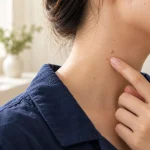
Skin Tags Skin Tags Skin tags, medically called acrochordons, are soft, benign skin growths that commonly develop on the neck, underarms, groin, eyelids, beneath the breasts, and other areas where skin or clothing repeatedly rubs.
-
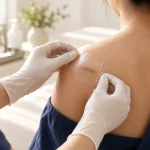
Skin Tumor Excision Skin Tumor Excision Skin Tumor Excision is a minor surgical procedure used to remove selected skin tumors or growths. Depending on the lesion, excision may be performed to treat a benign growth, relieve symptoms, establish a diagnosis, or remove a suspected or confirmed skin cancer.
-
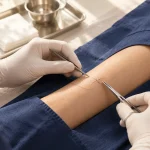
Surgical Excision Surgical Excision Surgical excision is one of the main treatments for skin cancer. During the procedure, the doctor removes the cancer together with a planned amount of normal-looking skin around it. The removed tissue is then examined under a microscope to determine whether cancer cells extend to the surgical edges, known as the margins.
-
Wide Local Excision Wide Local Excision Wide Local Excision (WLE) is a surgical procedure used to remove a confirmed or strongly suspected skin cancer together with a planned margin of normal-looking skin around it. It is especially important in the treatment of melanoma after an initial biopsy has established the diagnosis, and surgical excision is also widely used for selected squamous cell carcinoma (SCC) and basal cell carcinoma.

No conditions found.
Treatment articles
-
Skin Conditions & Rashes Heat Rash in Thailand: Causes, Treatment & Prevention Developing small, itchy bumps while traveling in Thailand is common, particularly during hot and humid weather. You may notice a prickling sensation on your neck, red bumps across your chest, or an irritating rash on your back after spending time outdoors.

-
Skin Conditions & Rashes Sun Rash and Sun Allergy in Thailand: Symptoms, Causes and Treatment Developing an itchy rash after spending time outdoors in Thailand can be confusing. You may notice small red bumps on your arms, an itchy rash across your chest, or raised welts that appear shortly after exposure to sunlight.
-
Skin Conditions & Rashes Developed a Skin Rash While Traveling in Thailand? Common Causes and What to Do Developing a skin rash while traveling in Thailand can be uncomfortable and sometimes worrying, especially when you are unfamiliar with the local climate, insects, plants, or potential infections.


Connect With Our Care Team
Good skin care starts with a conversation
Leave your contact details, and our team will be happy to answer your questions and help arrange a convenient consultation.
Clear Skin Dermatology