














Wide Local Excision
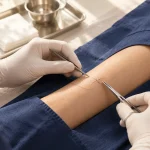
Wide Local Excision (WLE) is a surgical procedure used to remove a confirmed or strongly suspected skin cancer together with a planned margin of normal-looking skin around it. It is especially important in the treatment of melanoma after an initial biopsy has established the diagnosis, and surgical excision is also widely used for selected squamous cell carcinoma (SCC) and basal cell carcinoma.

The purpose of surgery is not simply to remove what can be seen on the surface. Skin cancer cells can sometimes extend microscopically beyond the visible edge of a lesion. The surgeon therefore removes an appropriate surrounding margin, and the excised tissue is sent for histopathology to assess the tumor and determine whether the surgical margins are clear.
For patients considering skin cancer surgery in Bangkok, important questions include: How much skin needs to be removed? Will I need stitches? How large will the scar be? Do I need a skin graft or flap? What happens if the margin is not clear? And how soon can I fly, exercise, swim, or return to work?
This guide addresses those questions in practical detail.
What Is Wide Local Excision?
Wide Local Excision is surgery in which the skin cancer, or the scar from a previous diagnostic biopsy, is removed together with a predetermined margin of surrounding normal-looking skin.
The procedure may also include removal of some tissue beneath the lesion, depending on the cancer type, depth, location, and treatment plan.
The removed specimen is sent to a pathology laboratory, where it is examined under a microscope.
The pathologist assesses factors such as:
- whether residual cancer is present
- the type of tumor
- important histological features
- whether the cancer reaches the surgical edges
- whether deeper margins are clear
A report stating that the margins are clear means that tumor cells were not identified at the examined edges of the specimen.
Why Is Normal-Looking Skin Removed Around a Skin Cancer?
The visible edge of a skin cancer does not always represent its true microscopic boundary.
Cancerous or atypical cells may extend beyond what can be seen with the naked eye.
For this reason, surgeons remove an additional rim of clinically normal-looking skin around the tumor.
This area is called the surgical margin or clinical margin.
The appropriate margin depends on the diagnosis rather than simply using the same distance for every skin cancer.
Is Wide Local Excision the Same as an Excisional Biopsy?
No.
Although the procedures can look similar, their purposes are different.
Excisional Biopsy
An excisional biopsy is primarily performed to establish the diagnosis.
The suspicious lesion is removed, usually with a relatively narrow margin, and sent for histopathological examination.
Wide Local Excision
Wide Local Excision is generally performed after the diagnosis is already known.
The previous biopsy site or remaining tumor is removed again with a treatment margin appropriate for that cancer.
This distinction is particularly important in melanoma.
After melanoma is diagnosed from the initial biopsy, additional surgery is commonly performed to remove a wider area around the biopsy scar.
Which Skin Cancers May Be Treated With Wide Local Excision?
Wide excision or standard surgical excision may be used for several types of skin cancer, although the required margins and surgical strategy are different for each.
Melanoma
Wide Local Excision is a fundamental part of treatment for most localized melanomas.
Once melanoma has been diagnosed by biopsy, additional surgery is usually performed around the biopsy site.
The appropriate margin is primarily determined by the melanoma’s pathological stage and thickness.
Melanoma in Situ
Melanoma in situ means melanoma cells remain confined to the epidermis and have not invaded deeper skin.
Complete surgical removal with an appropriate margin is generally recommended.
Current clinical guidelines advise considering a clinical margin of at least 0.5 cm for stage 0 melanoma, although individual management can differ according to subtype, anatomical location, pathology and specialist assessment.
Certain lesions, particularly lentigo maligna on chronically sun-damaged facial skin, may have less distinct microscopic borders and can require a more individualized surgical approach.
Invasive Melanoma
For invasive melanoma, the recommended Wide Local Excision margin depends on stage and tumor characteristics.
Current clinical guidelines recommend a clinical margin of:
- 1 cm for stage I melanoma
- 2 cm for stage II melanoma
with the margin measured around the histological biopsy scar while accounting for the original melanoma margins.
These are guideline principles rather than a margin that should be selected without reviewing the actual pathology report.
Squamous Cell Carcinoma
Surgical excision remains one of the main treatments for cutaneous SCC.
For an SCC, the amount of normal skin removed depends on whether the tumor is considered low-risk or high-risk.
Features that can affect treatment include:
- tumor size
- anatomical location
- depth
- degree of differentiation
- whether the cancer has returned
- poorly defined borders
- invasion around nerves
- immune suppression
- previous radiation to the area
Surgical treatment remains the most effective treatment approach for most localized SCC.
Some high-risk SCCs may be better suited to Mohs surgery or another specialist surgical approach rather than conventional Wide Local Excision.
basal cell carcinoma
Standard surgical excision is also widely used for basal cell carcinoma.
However, the best technique depends on the tumor subtype, size, anatomical location, border definition, previous treatment and recurrence risk.
For selected high-risk tumors, especially on anatomically sensitive areas of the face, Mohs surgery may provide advantages because the surgical margins are assessed differently.
How Is the Surgical Margin Chosen?
This is one of the most common questions patients ask.
The answer depends on the pathology.
A surgeon should not simply choose the same margin for every lesion.
Factors include:
- melanoma versus SCC versus basal cell carcinoma
- melanoma Breslow thickness
- in situ versus invasive disease
- size of the lesion
- anatomical site
- tumor subtype
- previous biopsy results
- whether the lesion has been treated before
- whether the edges are clearly visible
- high-risk histopathological features
For melanoma, treatment margins are standardized more closely according to stage and thickness.
For keratinocyte cancers such as SCC and basal cell carcinoma, risk stratification plays a major role.
What Is Breslow Thickness?
Breslow thickness is one of the most important measurements in invasive melanoma.
It measures, in millimeters, how deeply the melanoma has invaded into the skin.
This measurement influences:
- melanoma staging
- Wide Local Excision planning
- consideration of sentinel lymph node biopsy
- prognosis
- follow-up recommendations
It should usually be available in the melanoma pathology report.
A patient who has been diagnosed with melanoma elsewhere should therefore bring the complete pathology report rather than only being told verbally that “the mole was melanoma.
”
Does a Bigger Margin Always Mean Better Treatment?
No.
The goal is to remove enough tissue to achieve appropriate cancer control while avoiding unnecessary removal of healthy tissue.
For melanoma, historical approaches sometimes used much wider margins than are generally recommended today.
Current evidence-based guidelines use narrower standardized margins because unnecessarily large excisions increase surgical morbidity without necessarily improving outcomes. Clinical evidence shows that very large margins of 4–5 cm were associated with more adverse events without improved outcomes compared with currently recommended approaches.
This is why a margin should be based on the diagnosis and guideline-supported risk assessment rather than the assumption that wider is always better.
What Happens Before Wide Local Excision?
Before surgery, the treating physician should review the diagnosis carefully.
Important information may include:
- original biopsy report
- pathology slides or pathology review when necessary
- location of the biopsy scar
- photographs taken before biopsy
- melanoma Breslow thickness
- ulceration
- SCC differentiation and risk features
- whether previous surgical margins were involved
- current medications
- allergies
- bleeding history
- immune suppression
- previous skin cancers
If the original lesion has already been removed by biopsy, photographs can sometimes be particularly useful for confirming the correct surgical site.
Should the Pathology Report Be Reviewed Before Surgery?
Yes, particularly for melanoma and unusual or high-risk tumors.
The pathology report determines much of the surgical planning.
For melanoma it may contain information including:
- diagnosis
- Breslow thickness
- ulceration
- mitotic activity
- peripheral margin status
- deep margin status
- pathological stage
- other relevant microscopic findings
If the report is incomplete, ambiguous or inconsistent with the clinical appearance, further pathology review may sometimes be appropriate before definitive surgery.
What Happens During Wide Local Excision?
The exact procedure depends on the tumor and its location, but the general steps are similar.
1. The Surgical Area Is Marked
The surgeon identifies the biopsy scar or remaining tumor and marks the required surgical margin.
2. Local Anesthetic Is Given
Many skin cancer excisions can be performed using local anesthesia.
The patient remains awake but the operative area becomes numb.
Larger or more complex procedures may require other forms of anesthesia depending on the individual case.
3. The Cancer and Margin Are Removed
The surgeon removes the planned area of skin and appropriate underlying tissue.
For melanoma, the procedure generally centers around the original biopsy scar.
4. The Specimen Is Sent for Histopathology
The excised tissue is sent to the pathology laboratory.
The pathologist examines the specimen to determine whether residual tumor is present and whether the surgical margins are clear.
5. The Wound Is Repaired
Depending on the size and location of the surgical defect, the wound may be repaired using:
- direct stitches
- a local skin flap
- a skin graft
- healing naturally without complete closure in selected situations
The reconstruction method depends heavily on anatomy and the size of the defect.
Will I Be Awake During Skin Cancer Surgery?
Many Wide Local Excision procedures can be performed under local anesthesia.
You may feel:
- the initial needle used for local anesthetic
- pressure
- movement
- pulling during suturing
but the surgical area should not feel sharp pain once adequately anesthetized.
More extensive surgery may require a different anesthesia plan.
How Long Does Wide Local Excision Take?
Procedure time varies considerably.
A relatively small excision followed by straightforward stitches can be much quicker than surgery requiring:
- a large excision
- a skin flap
- a skin graft
- surgery near the eye, nose, ear or lip
- multiple surgical sites
- additional procedures
Therefore, a universal surgery duration should not be quoted without assessing the lesion first.
How Is the Wound Closed?
Direct Closure
If there is enough skin mobility, the edges may be brought together directly with stitches.
This usually produces a linear scar.
The final scar is often longer than patients initially expect because an elliptical-shaped piece of skin is typically removed to allow the wound edges to close smoothly.
Local Skin Flap
A skin flap uses nearby skin that remains attached to its blood supply and is moved into the surgical defect.
A flap may be useful when direct closure would create excessive tension or distort an important anatomical structure.
Skin Graft
A skin graft uses skin taken from another part of the body and placed over the surgical defect.
Grafts can be useful for certain defects where direct closure or a flap is not suitable.
Healing Without Immediate Closure
Some selected wounds may be allowed to heal naturally from the base upward.
This approach is known as healing by secondary intention.
It can work well in particular anatomical locations but generally requires more prolonged wound care.
Will Wide Local Excision Leave a Scar?
Yes.
Any procedure that removes full-thickness skin will create a scar.
The final appearance depends on:
- size of the excision
- location
- skin tension
- reconstruction method
- genetics
- wound healing
- infection
- smoking
- sun exposure
- postoperative care
The initial scar often looks more noticeable than the final scar.
Scar remodeling continues for months after surgery.
Why Can the Scar Be Much Longer Than the Original Skin Cancer?
Patients sometimes expect the scar to be similar in length to the diameter of the skin cancer.
That is often not possible.
To close a round surgical defect without creating folds at the ends, surgeons frequently convert it into a longer elliptical shape.
As a result, even a relatively small skin cancer may result in a scar several times longer than the original visible lesion.
That does not necessarily mean that an excessive amount of skin was removed.
What Does “Clear Margin” Mean?
After surgery, the pathologist examines the edges of the specimen.
A clear or negative margin means cancer cells were not identified at the examined surgical edge.
A positive or involved margin means cancer extends to an examined edge.
This distinction is important because residual cancer may remain in the patient if the tumor reaches the surgical margin.
What Happens if the Margin Is Not Clear?
Management depends on:
- cancer type
- which margin is involved
- anatomical location
- previous surgery
- tumor risk
- feasibility of additional surgery
Further excision may be recommended.
In selected cases, treatment could involve Mohs surgery, specialist surgery, radiotherapy or another approach depending on the cancer and clinical circumstances.
A positive margin should therefore be interpreted in the context of the entire pathology report rather than as an isolated phrase.
Is Wide Local Excision the Same as Mohs Surgery?
No.
Both are surgical methods for treating skin cancer, but margin assessment is different.
Wide Local Excision
- The tumor is removed with a predetermined margin.
- The specimen is then processed and examined by pathology.
- The final margin result is generally available later.
Mohs Surgery
- Mohs surgery removes the cancer in stages.
- The margins are microscopically evaluated during the procedure, and additional tissue is removed specifically where cancer remains.
- This allows comprehensive margin assessment while attempting to preserve uninvolved tissue.
Mohs is particularly useful for selected high-risk skin cancers on anatomically important areas or tumors with poorly defined borders.
Wide Local Excision vs Mohs Surgery: Which Is Better?
Neither is universally better.
The appropriate technique depends on the cancer.
For example:
Melanoma: Wide Local Excision remains the standard surgical approach for most invasive melanomas. Mohs is not the routine standard treatment for most invasive melanoma, although specialized approaches may be used for selected early or anatomically difficult lesions.
Low-risk SCC: Standard surgical excision may be appropriate.
High-risk SCC: Mohs may be preferred in selected cases.
basal cell carcinoma: Both conventional excision and Mohs can be appropriate depending on risk and location.
The diagnosis, pathology and anatomical site should guide the decision.
Is Sentinel Lymph Node Biopsy Part of Wide Local Excision?
Not exactly.
Sentinel lymph node biopsy (SLNB) is a separate procedure used in selected patients with melanoma to assess whether melanoma cells have reached the first draining lymph node or nodes.
Whether SLNB should be considered depends mainly on melanoma staging and pathological characteristics.
For example, considering SLNB is recommended for melanoma with a Breslow thickness greater than 1.0 mm, with additional individualized considerations in thinner melanomas with certain risk features.
When indicated, SLNB may sometimes be coordinated with Wide Local Excision during the same operative episode.
Importantly, this decision should be made before definitive wide excision when possible because surgical planning and lymphatic mapping may be relevant.
Does Every Melanoma Need Sentinel Lymph Node Biopsy?
No.
Many thin melanomas do not require it.
The decision depends on features such as:
- Breslow thickness
- ulceration
- melanoma stage
- other pathological risk features
- patient factors
Wide Local Excision and sentinel lymph node biopsy should therefore not be treated as automatically interchangeable parts of melanoma surgery.
Does Wide Local Excision Require Hospital Admission?
Many smaller skin cancer excisions can be performed as outpatient procedures.
Admission may be more likely when surgery is:
- extensive
- performed under general anesthesia
- combined with lymph node surgery
- associated with major reconstruction
- complicated by significant medical conditions
The appropriate setting depends on the individual procedure.
What Should I Tell My Doctor Before Surgery?
Tell your doctor about all medications and supplements you take.
This is particularly important for medicines that affect bleeding, including:
- anticoagulants
- antiplatelet medications
- certain supplements
Do not stop prescribed anticoagulant or antiplatelet medication on your own.
Whether medication needs to be continued, modified or temporarily stopped depends on the drug, the reason it was prescribed and the bleeding risk of the procedure.
Reconstruction guidelines specifically address perioperative medication and anticoagulation considerations because these decisions require individualized risk assessment.
What Happens Immediately After Surgery?
The wound is usually covered with a dressing.
Depending on the procedure, patients may receive instructions concerning:
- wound cleaning
- dressings
- showering
- exercise
- pain management
- bleeding
- swelling
- suture removal
- signs of infection
- pathology results
- follow-up
Written instructions are useful because wound care varies by surgical site and repair technique.
Is Wide Local Excision Painful Afterwards?
Some discomfort is expected.
Pain is often most noticeable during the first few days.
The amount varies according to:
- size of surgery
- anatomical location
- wound tension
- type of reconstruction
- individual pain sensitivity
Pain that becomes progressively worse rather than better deserves reassessment, particularly if accompanied by increasing redness, swelling, warmth, discharge or fever.
How Long Does the Wound Take to Heal?
Healing depends substantially on the location and reconstruction.
A straightforward stitched wound can look healed relatively quickly, although deeper healing continues for weeks.
Skin grafts, larger wounds and wounds allowed to heal naturally may take longer.
Lower-leg surgery can also heal more slowly, particularly in patients with:
- poor circulation
- significant swelling
- diabetes
- smoking
- larger wounds
It is therefore more useful to discuss expected healing for the individual surgical site than to provide one recovery period for every Wide Local Excision.
When Are Stitches Removed?
Suture removal depends on the anatomical location and type of repair.
Some sutures dissolve naturally.
Others require removal during follow-up.
Areas that heal quickly may have stitches removed sooner than areas under significant tension.
Patients traveling internationally should discuss suture removal before surgery so it is clear whether removal will occur in Bangkok or after returning home.
Can I Exercise After Wide Local Excision?
Usually some restriction is advisable, particularly during early wound healing.
Exercise can increase:
- bleeding
- swelling
- wound tension
- risk of stitches pulling apart
Restrictions depend heavily on where the surgery was performed.
For example, a wound on the back or shoulder may be stressed by weight training or certain arm movements, whereas a leg wound may be affected by running.
The surgeon should provide site-specific instructions.
When Can I Swim?
Swimming is usually avoided until the wound has sealed adequately and the risk of contamination is lower.
This is particularly relevant for:
- swimming pools
- seawater
- lakes
- hot tubs
Patients visiting Thailand should consider this when scheduling surgery around a beach or diving holiday.
Can I Fly After Wide Local Excision?
Many patients can travel after smaller procedures, but the answer depends on the surgery.
Consider:
- risk of postoperative bleeding
- wound size
- need for dressing changes
- suture removal
- pathology result timing
- risk of infection
- swelling
- whether further surgery might be needed
For melanoma in particular, leaving Bangkok before the pathology has been reviewed can make follow-up more complicated if margins or staging require additional management.
What Are the Possible Complications?
Potential complications include:
- bleeding
- hematoma
- infection
- wound separation
- delayed healing
- pain
- numbness
- altered sensation
- scar formation
- hypertrophic or keloid scar
- pigment changes
- graft failure
- flap complications
- injury to nearby structures
- recurrence of cancer
The likelihood and importance of each complication depend strongly on the surgical location and complexity.
Numbness After Skin Cancer Surgery
Small sensory nerves can be cut when skin and subcutaneous tissue are removed.
As a result, numbness around the scar is relatively common after some procedures.
Sensation may gradually improve as small nerves recover, although some areas can remain permanently altered.
For surgery involving larger nerves, the clinical implications are more significant and should be discussed before the procedure.
Can Skin Cancer Return After Wide Local Excision?
Yes.
Surgical treatment substantially reduces the risk posed by localized skin cancer when appropriately performed, but no treatment can guarantee that recurrence will never occur.
Recurrence risk depends on:
- cancer type
- tumor stage
- margins
- pathological subtype
- location
- previous recurrence
- immune status
- other high-risk features
Patients with one skin cancer may also develop new, unrelated skin cancers elsewhere, particularly when there is substantial cumulative ultraviolet damage.
This is why follow-up should not focus solely on the surgical scar.
What Does Local Recurrence Look Like?
Changes requiring evaluation around a previous surgical site include:
- a new lump
- persistent scaling
- ulceration
- repeated bleeding
- progressive thickening
- unusual pigmentation
- a growing lesion in or near the scar
These findings are not automatically recurrent cancer, because scars can develop benign changes as well.
However, a changing lesion within or beside a previous skin cancer scar should not be ignored.
Do I Need Follow-Up After Wide Local Excision?
Follow-up depends on the original cancer.
A patient treated for a low-risk basal cell carcinoma may require a different follow-up strategy from someone with melanoma or high-risk SCC.
Follow-up may include:
- examination of the surgical site
- review of the pathology result
- full-body skin examination
- lymph node examination when relevant
- education about self-examination
- sun protection
- monitoring for new skin cancers
Patients with SCC are at increased risk of developing additional skin cancers, and ongoing skin surveillance is recommended after diagnosis.
When Should You Seek Medical Attention After Surgery?
Contact the treating medical team if you develop:
- bleeding that does not stop with appropriate pressure
- rapidly increasing swelling
- severe or worsening pain
- spreading redness
- increasing warmth
- pus or foul-smelling discharge
- fever
- wound separation
- darkening or concerning changes in a flap or graft
Emergency assessment may be necessary for severe bleeding, significant systemic symptoms or other acute complications.
Wide Local Excision on the Face
Skin cancer surgery on the face requires additional planning because both cancer clearance and preservation of function matter.
Important structures include:
- eyelids
- nose
- lips
- ears
- eyebrows
A relatively small cancer can sometimes create a larger defect after an appropriate surgical margin is included.
Depending on the cancer and location, options may include:
- standard excision
- Mohs surgery
- direct closure
- skin flap
- skin graft
- specialist reconstructive surgery
The most cosmetically conservative procedure is not automatically the safest oncological procedure. Cancer control must remain the first priority.
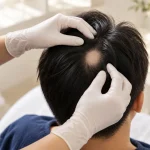
Wide Local Excision on the Scalp
Scalp surgery can be challenging because the skin has limited mobility in many areas.
Closure may require:
- direct suturing
- local flap
- grafting
- healing naturally
The scalp is also a chronically sun-exposed site, so examination of surrounding skin may reveal additional AK, SCC, basal cell carcinoma or other suspicious lesions.
Wide Local Excision on the Back, Chest or Limbs
These areas often allow relatively straightforward elliptical excision and direct closure.
However, wound tension can still be substantial.
Surgery near joints, shoulders or other high-movement areas may require temporary activity restriction to reduce the risk of wound separation or scar stretching.
Wide Local Excision on the Lower Leg
Lower-leg wounds deserve special consideration.
Healing can be slower because circulation, swelling and tissue tension differ from areas such as the face.
Before surgery, important factors include:
- peripheral circulation
- leg swelling
- diabetes
- smoking
- wound size
- medications
- previous healing problems
Patients should receive realistic expectations regarding wound care and recovery.
Wide Local Excision for International Patients in Bangkok
International patients should ideally bring all previous records rather than relying on a brief verbal summary.
Useful documents include:
- original pathology report
- biopsy report
- photographs before biopsy
- operative report if previous surgery was performed
- pathology slide review if available
- medication list
- allergies
- previous skin cancer history
- imaging or lymph node investigations if relevant
For melanoma, the full pathology report is particularly important because surgical planning may depend on Breslow thickness and other histological findings.
Planning Skin Cancer Surgery During a Short Visit to Bangkok
If you are visiting Thailand temporarily, consider the complete surgical pathway rather than only the operation date.
You may need time for:
Consultation → pathology review → surgical planning → surgery → wound review → final pathology → suture removal → further treatment if required
This is particularly important because occasionally the final pathology identifies:
- residual tumor
- involved margins
- unexpected high-risk features
- a need for further surgery or specialist assessment
Patients planning to leave Thailand shortly after surgery should have a clear plan for receiving pathology results and obtaining follow-up care abroad.
What to Expect During a Skin Cancer Surgery Consultation in Bangkok
A proper consultation should begin with confirming exactly what is being treated.
The dermatologist or surgeon may review:
The Diagnosis
Is it melanoma, SCC, basal cell carcinoma, SCC in situ or another lesion?
The Pathology
What did the biopsy show?
The Surgical Margin
How much additional skin needs to be removed, and why?
The Surgical Defect
How large is the expected wound after removing the required margin?
Reconstruction
Can the wound be stitched directly, or is a flap or graft likely?
Risks
What are the realistic risks of bleeding, infection, scarring, wound problems or recurrence?
Recovery
When can you shower, exercise, travel, swim and return to work?
Pathology Follow-Up
When and how will the final pathology result be reviewed?
This conversation should occur before surgery whenever practical rather than explaining these issues only after the procedure.
Frequently asked questions
What is Wide Local Excision?
Wide Local Excision is surgery that removes a skin cancer or previous biopsy site together with a planned margin of surrounding normal-looking skin.
Why do I need another surgery if my melanoma was already removed by biopsy?
A diagnostic biopsy is usually designed to establish the diagnosis. Once melanoma is confirmed, additional surgery is usually performed with a wider treatment margin.
Is Wide Local Excision used for melanoma?
Yes. It is the standard surgical treatment for most localized melanomas.
How wide is the margin for melanoma?
It depends primarily on melanoma stage and thickness. Current guideline-based margins generally range from approximately 0.5 cm for selected melanoma in situ to 1–2 cm for invasive melanoma depending on stage.
Is a 2 cm melanoma margin always necessary?
No. The appropriate margin depends on stage and pathology.
Does a wider margin improve survival?
Using a wider margin than recommended does not automatically improve outcomes and can increase surgical morbidity.
What is Breslow thickness?
It is the measured depth of invasive melanoma and is an important factor in staging and treatment planning.
Is Wide Local Excision used for SCC?
Yes. Surgical excision is widely used for localized SCC, although high-risk tumors may require Mohs surgery or another specialist approach.
Is Wide Local Excision used for basal cell carcinoma?
Yes. Standard excision is commonly used for many basal cell carcinomas.
Is Wide Local Excision the same as Mohs surgery?
No. Wide Local Excision uses a predetermined margin, while Mohs surgery evaluates margins in stages during the procedure.
Which is better: Mohs or Wide Local Excision?
It depends on the cancer type, location and risk characteristics.
Will I need general anesthesia?
Not necessarily. Many skin cancer excisions can be performed under local anesthesia.
Will I need stitches?
Many wounds are closed with stitches, but some require a flap, graft or healing without complete closure.
Will I have a scar?
Yes. Full-thickness skin surgery produces a scar.
Why is the scar longer than the original cancer?
A circular defect often needs to be converted into an elliptical wound for smooth direct closure.
What is a clear surgical margin?
It means cancer cells were not identified at the examined edges of the removed specimen.
What does a positive margin mean?
It means cancer cells extend to an examined surgical edge, which may indicate residual tumor remains.
What happens if the margin is positive?
Further treatment may be required, often additional surgery, although management depends on the tumor and location.
Is the tissue always sent to pathology?
Skin cancer excision specimens should undergo appropriate histopathological evaluation to assess the diagnosis and margins.
How long do pathology results take?
Turnaround time varies by laboratory and case complexity, so it should be confirmed with the treating facility.
How long does surgery take?
It depends on tumor size, location and reconstruction.
How long does Wide Local Excision take to heal?
Healing time varies by wound size, anatomical site and type of closure.
When are stitches removed?
Timing depends on the anatomical site and type of sutures.
Can I shower after surgery?
Usually yes at an appropriate stage, but wound-specific instructions should be followed.
Can I exercise after Wide Local Excision?
Activity restriction is often recommended initially, especially when movement would place tension on the wound.
Can I swim after skin cancer surgery?
Swimming is generally avoided until the wound has healed adequately.
Can I fly after surgery?
Often yes after smaller procedures, but timing should consider wound care, pathology results and potential need for further treatment.
Can I drink alcohol after surgery?
This depends on the procedure, medications and individual health circumstances and should be discussed with the treating physician.
Should I stop aspirin before surgery?
Do not stop aspirin or other prescribed blood-thinning medication without medical advice.
Should I stop anticoagulant medication?
Not without discussing it with the prescribing physician and surgeon.
Can the cancer come back after Wide Local Excision?
Yes. Recurrence is possible, although risk varies substantially according to cancer type and tumor features.
Can another skin cancer appear elsewhere?
Yes. A previous skin cancer increases the importance of continued skin surveillance.
Do I need a full-body skin check after skin cancer surgery?
It is often appropriate, particularly for patients with melanoma, SCC, substantial sun damage or multiple previous skin cancers.
Do I need sentinel lymph node biopsy for melanoma?
Only selected melanoma patients require consideration of SLNB. It depends mainly on tumor thickness, stage and pathological features.
Is sentinel lymph node biopsy done during Wide Local Excision?
When indicated, the two procedures may sometimes be coordinated during the same operation.
Can tourists have Wide Local Excision in Bangkok?
Potentially, but the schedule should allow for surgery, wound care, pathology results, possible suture removal and further management if needed.
What should I bring if my biopsy was performed overseas?
Bring the pathology report, original photographs if available, previous surgical reports, medication list and any melanoma staging information.
What if I cannot see where the original melanoma was biopsied?
Tell the treating doctor before surgery. Original clinical photographs, biopsy records and anatomical documentation can be important for correct site identification.
Can Wide Local Excision be done on the face?
Yes, but reconstruction and cancer type require careful planning because facial tissue preservation and function are important.
When should Mohs surgery be considered instead?
Mohs may be appropriate for selected high-risk SCC or basal cell carcinoma, especially tumors in anatomically critical sites, recurrent cancers or lesions with poorly defined borders.
Related conditions
-
Melanoma Melanoma Melanoma is a serious type of skin cancer that develops from melanocytes, the cells that produce pigment in the skin. Unlike most basal cell carcinomas and many cutaneous squamous cell carcinomas, melanoma has a greater potential to spread to lymph nodes and other organs if it becomes invasive.
-
Squamous Cell Carcinoma Squamous Cell Carcinoma Squamous cell carcinoma, often abbreviated as SCC, is a common form of skin cancer arising from squamous cells in the epidermis, the outer layer of the skin. It frequently develops on chronically sun-exposed areas such as the face, scalp, ears, lips, forearms and backs of the hands, although it can occur elsewhere.
-
Basal Cell Carcinoma Basal Cell Carcinoma Basal cell carcinoma (BCC) is a common type of skin cancer that usually grows slowly and is most often found on sun-exposed skin. Although BCC rarely spreads to distant parts of the body, it can continue growing into surrounding skin and deeper structures if left untreated. Treatment is therefore recommended after the diagnosis is confirmed.
-
Surgical Excision Surgical Excision Surgical excision is one of the main treatments for skin cancer. During the procedure, the doctor removes the cancer together with a planned amount of normal-looking skin around it. The removed tissue is then examined under a microscope to determine whether cancer cells extend to the surgical edges, known as the margins.