















Face & Neck Tightening
Loose skin around the cheeks, jawline and neck is one of the most common age-related aesthetic concerns. However,
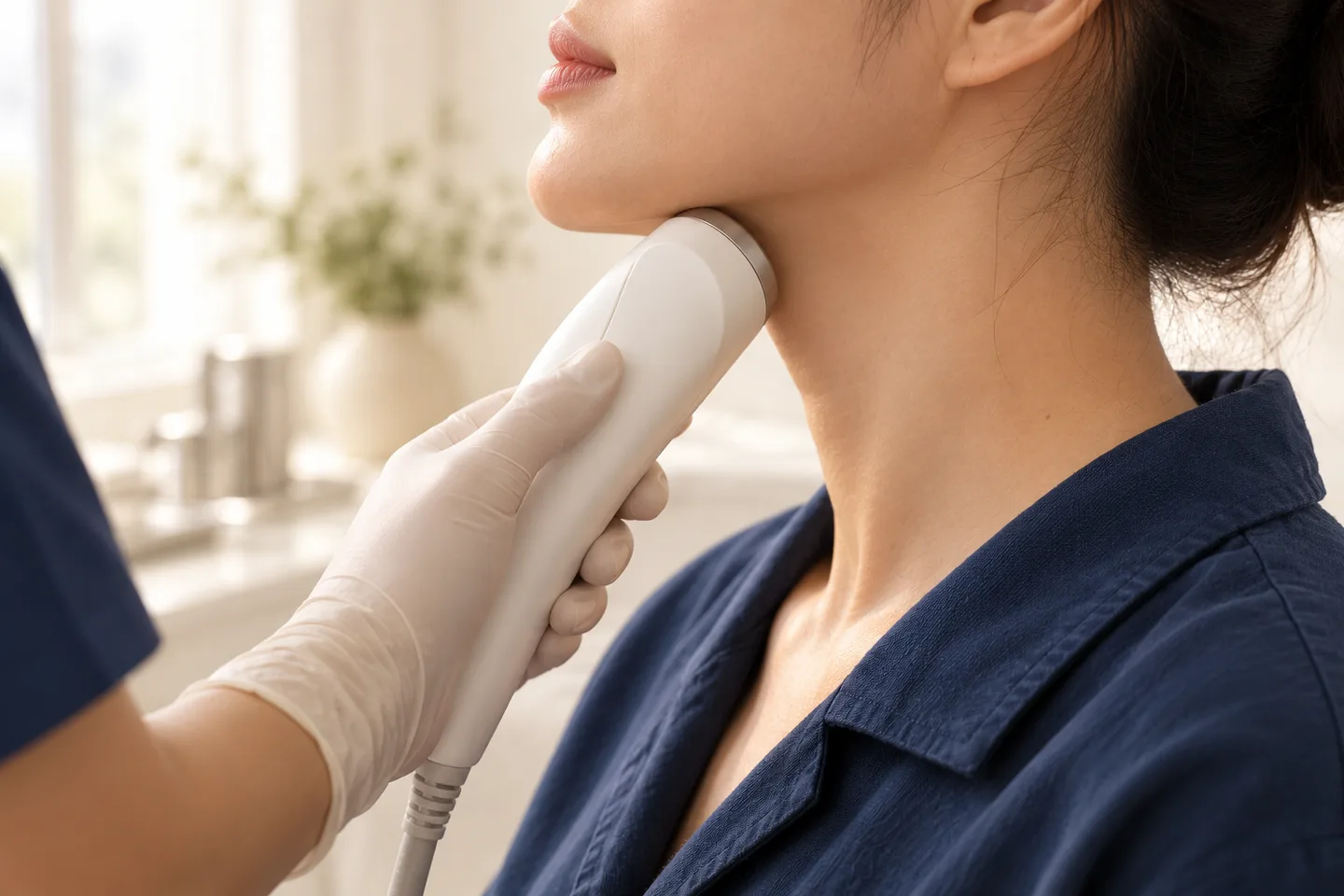
“skin tightening” is not a single treatment, and not every poorly defined jawline is caused by loose skin.
Facial and neck aging involves several layers: skin, collagen, fat, muscle, supporting tissues and bone. A blurred jawline may result from mild skin laxity, jowling, submental fat, loss of cheek support, a recessed chin—or several factors together.
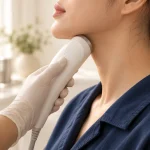
Non-surgical face and neck tightening treatments generally use controlled energy, such as microfocused ultrasound or radiofrequency (RF), to heat selected tissue layers and stimulate remodeling. They can provide meaningful but usually modest improvement in appropriately selected patients. They should not be presented as equivalent to a surgical facelift or neck lift.
The most important step is therefore not choosing a machine. It is determining what is actually causing the loss of facial or neck definition.
What Is Face & Neck Tightening?
Face and neck tightening refers to non-surgical or minimally invasive treatments intended to improve tissue firmness, skin laxity and facial or neck definition.
Common concerns include:
- early jowling
- reduced jawline definition
- mild cheek laxity
- loose skin under the chin
- neck laxity
- fine lines and crepey neck skin
- age-related loss of facial firmness
- mild brow laxity
Different treatments work at different tissue depths and through different mechanisms.
Some primarily heat the dermis to stimulate collagen remodeling.
Others deliver energy deeper into supporting tissue.
Some treatments combine tightening with improvement in skin texture.
This distinction matters because the best treatment for fine, crepey skin may not be the best treatment for deeper facial laxity.
Why Does the Face and Neck Become Loose?
Skin laxity is part of normal aging and is usually benign.
It does not occur because of one single process.
Loss and Remodeling of Collagen
Collagen provides structural support to the skin.
With aging, collagen production and organization change, contributing to thinner, less resilient skin.
Sun exposure accelerates this process.
Changes in Elastin
Elastic fibers help skin return to its original position after stretching.
Age and chronic ultraviolet exposure can damage this elastic framework, contributing to laxity and wrinkling.
Changes in Facial Fat
Facial fat is divided into different compartments.
With age, these compartments can lose volume, change shape or shift relative to surrounding structures.
This may contribute to:
- flatter cheeks
- deeper folds
- jowling
- changes in jawline definition
Changes in Bone
The facial skeleton also changes with age.
Changes in the jaw, chin, midface and orbital region can reduce structural support for overlying tissues.
Gravity and Tissue Descent
Supporting tissues gradually change over time, allowing soft tissue to descend.
This contributes to jowls and changes in the lower face and neck.
What Makes Skin Laxity Worse?
Factors that can contribute to premature or more noticeable laxity include:
- increasing age
- cumulative sun exposure
- smoking
- genetics
- substantial weight loss
- repeated weight fluctuation
- loss of facial volume
- changes in skin quality
Sun protection remains important even when procedural treatment is being considered because energy-based tightening does not stop ongoing photoaging.
Face Tightening and Neck Tightening Are Not Exactly the Same
Although the face and neck are often treated together, their anatomy differs.
The face contains complex layers of:
- skin
- fat compartments
- facial muscles
- ligaments
- blood vessels
- nerves
- underlying bone
The neck additionally contains:
- thin skin
- subcutaneous fat
- the platysma muscle
- salivary glands
- major nerves and vessels
- thyroid and deeper neck structures
This is why treatment depth, energy placement and patient selection matter.
A treatment protocol should not simply apply identical settings to every part of the face and neck.
What Does Facial Skin Laxity Look Like?
Patients may notice:
- cheeks beginning to descend
- less defined jawline
- early jowls
- skin that feels less firm
- deeper folds around the mouth
- lower-face heaviness
- changes in facial shape
- mild brow descent
However, not all of these are caused primarily by loose skin.
For example, a poorly defined jawline can result from facial fat or a recessed chin even when skin laxity is minimal.
What Does Neck Laxity Look Like?
Age-related neck concerns may include:
- loose skin
- fine wrinkles
- crepey texture
- horizontal neck lines
- vertical neck bands
- fullness under the chin
- loss of jaw-to-neck definition
These problems have different causes.
For example, vertical bands may involve the platysma muscle, while fullness under the chin may come from fat rather than loose skin.
Treating every neck concern with a “tightening machine” therefore does not address the underlying anatomy.
Is My Jawline Problem Really Loose Skin?
This is one of the most important questions before treatment.
A poorly defined jawline can result from:
Skin and Soft-Tissue Laxity
Tissue has gradually loosened or descended.
Jowling
Soft tissue has shifted downward around the mandibular border.
Submental Fat
Fat beneath the chin can obscure the jaw-to-neck angle.
Facial Fat Distribution
Lower-face fullness can reduce jawline definition.
Chin Projection
A short or recessed chin can make the lower face and neck appear less defined.
Masseter Size
Large masseter muscles can create a wider lower face.
Bone Structure
Jaw and chin anatomy strongly influence the underlying contour.
Many patients have a combination of these factors.
A correct diagnosis is therefore more useful than simply choosing the strongest available tightening treatment.
How Does a Dermatologist Assess Face and Neck Laxity?
Assessment should include both the skin and deeper facial anatomy.
The clinician may evaluate:
- skin quality and thickness
- degree of laxity
- cheek position
- jowling
- jawline
- chin projection
- facial volume
- submental fat
- neck skin
- platysma activity
- facial asymmetry
- previous fillers
- previous energy-based treatments
- scars or previous surgery
The face should ideally be examined from the front, oblique and profile views.
Photographs can help document baseline anatomy and evaluate subsequent changes.
The central question should be:
Is the problem actually laxity, and if so, which tissue layer is contributing most?
Non-Surgical Face & Neck Tightening Options
There is no single best technology for every patient.
Common approaches include:
- microfocused ultrasound
- non-invasive radiofrequency
- radiofrequency microneedling
- selected laser-based treatments
- injectable or other treatments when the apparent laxity is actually caused by another anatomical problem
- surgical lifting when laxity is too advanced for non-surgical treatment
Understanding the differences is more useful than comparing treatment names alone.
Microfocused Ultrasound for Face & Neck Tightening
Microfocused ultrasound uses focused acoustic energy to create controlled thermal zones at predetermined tissue depths.
The resulting tissue response can stimulate collagen remodeling and gradual tightening.
It is commonly considered for areas such as:
- brow
- cheeks
- lower face
- jawline
- under the chin
- neck
Systematic reviews support improvement in mild-to-moderate facial laxity in appropriately selected patients. Importantly, patient-reported improvement may be relatively modest, and studies have used different devices, treatment parameters and outcome measures.HIFU and Microfocused Ultrasound: Are They the Same?
The terminology can be confusing.
HIFU generally refers to high-intensity focused ultrasound.
Microfocused ultrasound (MFU) describes systems designed to create small, controlled thermal coagulation zones at specific depths for aesthetic treatment.
Different ultrasound devices may vary in:
- energy delivery
- treatment depth
- transducer design
- imaging capability
- treatment protocols
- regulatory indications
Therefore, the word “HIFU” alone does not tell you exactly what treatment you are receiving.
When comparing treatments, it is more useful to ask which device is being used, how it delivers energy and why that technology is appropriate for your anatomy.
How Does Ultrasound Tighten the Skin?
Focused ultrasound delivers energy beneath the skin without intentionally removing the surface layer.
At selected depths, the energy produces controlled heating.
This triggers a tissue-repair response that includes collagen remodeling.
The effect therefore develops gradually rather than producing an immediate surgical-type lift.
It is noted that non-invasive ultrasound tightening generally produces modest lifting and tightening, with improvement developing over the following months.
When Do Ultrasound Tightening Results Appear?
Some patients may notice an early change, but collagen remodeling takes time.
Improvement typically develops gradually over the following months rather than overnight.
Research evaluating microfocused ultrasound commonly assesses outcomes around 90 to 180 days after treatment, reflecting the delayed nature of tissue remodeling.
Patients planning treatment before a wedding, holiday or other event should therefore not assume that the final result will be visible immediately.
Who Is a Good Candidate for Ultrasound Tightening?
It tends to be most appropriate for patients with mild-to-moderate laxity who want a non-surgical treatment and understand that the result is usually more subtle than surgery.
Possible treatment concerns include:
- early jowling
- mild lower-face laxity
- reduced jawline definition related to laxity
- mild submental laxity
- neck laxity
- selected brow laxity
Patients with severe loose skin may see limited improvement because energy-based treatment cannot physically remove excess skin.
Evidence reviews similarly suggest that increasing degrees of laxity reduce the likelihood of a noticeable response.What Are the Limitations of Ultrasound Tightening?
Ultrasound cannot:
- remove large amounts of loose skin
- reproduce a surgical facelift
- correct major skeletal problems
- replace lost facial volume
- reliably eliminate significant jowls
- correct every double chin
- stop future aging
A patient with significant tissue descent may require a different treatment strategy.
Is Ultrasound Tightening Painful?
Discomfort varies between individuals, treatment areas, devices and energy settings.
Patients may describe:
- heat
- tingling
- brief sharp sensations
- tenderness over bony areas
A systematic review found microfocused ultrasound to be moderately painful overall, although tolerability varies substantially between studies and treatment protocols.
Pain should not automatically be interpreted as evidence that a treatment is “working better.
”
Side Effects of Ultrasound Tightening
Common temporary effects can include:
- redness
- swelling
- tenderness
- soreness
- bruising
- altered sensation
Less common complications have included burns and nerve-related symptoms. Therapeutic ultrasound devices can cause burns and nerve damage when used for aesthetic applications, depending on the technology and treatment circumstances.
Treatment should therefore be planned according to anatomy rather than simply maximizing energy.
Radiofrequency for Face & Neck Tightening
Radiofrequency uses electrical energy to generate controlled heat within tissue.
Unlike ultrasound, which uses acoustic energy, RF produces heat through electrical resistance within tissues.
Controlled heating can stimulate:
- collagen remodeling
- new collagen formation
- changes in tissue firmness
Systematic reviews have reported improvement in facial and neck laxity, elasticity and overall appearance following various RF treatments, although technologies and study protocols differ considerably.
Not All Radiofrequency Treatments Are the Same
“RF” describes a type of energy, not one standardized procedure.
Radiofrequency systems may differ in:
- monopolar or bipolar delivery
- electrode configuration
- treatment depth
- temperature monitoring
- energy level
- cooling systems
- whether needles are used
This makes simple comparisons such as “RF versus HIFU” less straightforward than they may appear.
The exact device, treatment depth, tissue target and clinical goal matter.
Monopolar Radiofrequency
Monopolar RF delivers radiofrequency energy between a treatment electrode and a return electrode.
Depending on the system, it can produce volumetric heating within deeper tissue.
It is commonly used with the aim of improving:
- facial firmness
- jawline definition
- skin laxity
- selected neck laxity
The treatment response develops progressively as tissue remodeling occurs.
Bipolar Radiofrequency
Bipolar RF passes energy between electrodes positioned relatively close together.
The energy distribution differs from monopolar systems and is generally more localized.
Different bipolar systems have different depths and clinical applications.
Therefore,
“bipolar RF” alone is not enough information to predict treatment outcome.
Radiofrequency Microneedling
RF Microneedling uses small needles or electrodes that enter the skin and deliver radiofrequency energy below the surface.
This differs from completely non-invasive RF.
Because the needles deliver energy directly into the skin, RF Microneedling may be used when the treatment goal includes:
- skin texture
- fine wrinkles
- acne scars
- selected degrees of laxity
However, it should not automatically be considered the best treatment for deep facial lifting.
Treatment depth and purpose differ from technologies designed primarily to heat deeper tissue.
RF Microneedling: Important Safety Information
RF Microneedling is a medical aesthetic procedure and is not risk-free.
Safety communications have been issued after receiving reports of serious complications associated with certain uses of RF Microneedling devices. Reported complications included burns, scarring, fat loss, disfigurement and nerve damage, with some cases requiring medical or surgical treatment.
This does not mean that every RF Microneedling treatment is unsafe. It means that patient selection, device choice, treatment depth, energy parameters and operator training matter.
Aggressive treatment should not be assumed to produce a better result.
Ultrasound vs Radiofrequency: Which Is Better?
There is no universal winner.
The answer depends on:
- tissue depth being targeted
- degree of laxity
- skin thickness
- facial fat
- treatment area
- desired result
- previous treatments
- tolerance for discomfort and downtime
| Feature | Focused Ultrasound | Radiofrequency |
|---|---|---|
| Energy | Acoustic ultrasound | Electrical RF energy |
| Main goal | Deeper controlled thermal treatment and tightening | Tissue heating and collagen remodeling |
| Surface injury | Usually none | Depends on system |
| Needles | No | No for conventional RF; yes for RF Microneedling |
| Results | Gradual | Gradual |
| Best candidate | Selected mild-to-moderate laxity | Depends heavily on RF technology |
| Surgical equivalent? | No | No |
Rather than asking “Which machine is strongest?” a more useful question is:
Which tissue needs to be treated, and which technology can target it appropriately?
What About Combining Ultrasound and Radiofrequency?
Combination treatment may be reasonable in selected patients when different technologies are addressing different anatomical or skin concerns.
For example, one treatment may target deeper laxity while another focuses more on dermal texture or firmness.
However, combining procedures is not automatically superior.
More energy does not necessarily mean more tightening.
Potential disadvantages include:
- increased discomfort
- increased swelling
- greater cost
- overlapping treatment effects
- increased risk of unwanted tissue injury
- unnecessary treatment
Each component should have a clear purpose.
Can Skin Tightening Reduce Jowls?
It can improve early or mild jowling in selected patients, particularly when laxity is an important component.
However, jowls are not simply “loose skin.
”
They can reflect:
- tissue descent
- facial fat distribution
- loss of cheek support
- changes in bone
- skin laxity
Moderate or advanced jowls may respond only partially to non-surgical tightening.
Surgical lifting provides greater physical repositioning of descended tissue and may be more appropriate when the problem is substantial.
Can Skin Tightening Sharpen the Jawline?
Sometimes.
If reduced jawline definition is primarily caused by mild laxity, tightening may improve the contour.
But a poorly defined jawline may instead be caused by:
- submental fat
- a recessed chin
- broad masseters
- lower-face fullness
- bone structure
- advanced jowling
In these cases, tightening alone may produce limited change.
Can Skin Tightening Treat a Double Chin?
Not necessarily.
A double chin can result from:
- submental fat
- loose skin
- chin position
- neck anatomy
- platysma
- combinations of these factors
Skin tightening primarily targets laxity.
If excess fat is the main problem, a treatment designed only to tighten skin may not provide the expected contour change.
Can Skin Tightening Reduce Facial Fat?
Some energy-based technologies can affect subcutaneous fat depending on the device, depth, temperature and treatment parameters.
This can sometimes be desirable when treating appropriate areas.
However, unintended facial fat loss can also be undesirable.
Facial fat provides volume and structural support. Excessive loss may contribute to:
- hollow cheeks
- temporal hollowing
- a more aged appearance
- accentuation of facial contours
- asymmetry
The goal should therefore not automatically be to heat or reduce as much fat as possible.
Can Skin Tightening Lift the Cheeks?
Non-surgical tightening may create modest improvement in cheek position or firmness in selected patients.
It cannot physically reposition substantial amounts of descended tissue in the way surgery can.
A patient who feels that their cheeks have “dropped” may also have age-related volume loss.
In that situation, tightening alone may not address the entire problem.
Can Skin Tightening Lift the Brows?
Selected ultrasound or RF treatments may produce subtle improvement in brow position when mild tissue laxity is present.
However, brow position is also influenced by:
- forehead anatomy
- facial muscles
- eyelid structure
- bone
- age-related tissue descent
Significant brow or upper-eyelid drooping may require other approaches.
Can Skin Tightening Improve Neck Lines?
It depends on the type of line.
Fine, Crepey Lines
Improving dermal quality and collagen may help selected fine wrinkles.
Horizontal Neck Lines
These can occur even in younger patients and may relate to skin folding, anatomy and repeated movement. Tightening alone may not eliminate them.
Vertical Neck Bands
These often involve the platysma muscle.
A treatment targeting skin collagen may therefore not fully correct prominent muscular bands.
Correctly identifying the type of neck line helps avoid treating the wrong structure.
Face & Neck Tightening for Asian Skin
Energy-based tightening can be performed in Asian skin, but treatment should still be individualized.
One potential advantage of non-ablative tightening treatments is that they do not necessarily remove the epidermis in the same way as ablative resurfacing procedures.
However, Asian patients can be susceptible to Post-Inflammatory Hyperpigmentation (PIH) after inflammatory or energy-based procedures.
Risk depends on the technology, treatment intensity, skin response and individual pigmentation tendency.
Patients with a history of PIH should tell their dermatologist before treatment.
Does Skin Tightening Help Wrinkles?
Sometimes, but wrinkle type matters.
Fine lines associated with collagen loss may improve as skin quality and firmness improve.
However:
Expression wrinkles caused mainly by muscle movement may respond better to treatments targeting muscle activity.
Deep static wrinkles may require resurfacing, structural correction or combination treatment.
Volume-related folds may require evaluation of facial support rather than tightening alone.
“Wrinkle treatment” and “skin tightening” therefore overlap but are not identical.
Face & Neck Tightening vs Botulinum Toxin
These treatments work differently.
Skin Tightening
Primarily targets tissue laxity and collagen remodeling.
Botulinum Toxin
Primarily reduces activity of selected muscles.
For example, a patient with early jawline laxity may benefit from a tightening approach, while someone with a wide lower face from large masseter muscles has a different problem.
Neither treatment should automatically replace the other.
Face & Neck Tightening vs Dermal Fillers
Again, the mechanism is different.
Tightening Treatments
Aim to improve tissue firmness and remodeling.
Dermal Fillers
Add volume or structural support.
If a patient has significant volume loss, tightening skin alone may not restore the missing structural support.
Conversely, repeatedly adding filler to a face where the primary issue is laxity may create excessive volume without adequately addressing tissue descent.
Treatment should match the anatomical problem.
Face & Neck Tightening vs Laser Resurfacing
Laser resurfacing primarily targets skin quality rather than deep facial lifting.
Depending on the laser, it may improve:
- fine lines
- texture
- sun damage
- selected pigmentation
- acne scars
Some laser treatments also produce collagen remodeling and tightening, but their main role may differ from deeper ultrasound or RF technologies.
Patients with both laxity and poor skin texture may require a staged approach.
When Is a Facelift or Neck Lift More Appropriate?
Non-surgical tightening works best when expectations match what the technology can realistically achieve.
Surgery may be more appropriate when there is:
- substantial jowling
- significant lower-face tissue descent
- considerable loose neck skin
- advanced neck laxity
- significant excess skin
- desire for a degree of lifting that non-surgical treatment cannot provide
It is specifically noted that non-invasive and minimally invasive tightening cannot produce the same results as surgical procedures such as a facelift or neck lift.
Recognizing this limitation is important for informed treatment decisions.
Who Is a Good Candidate for Non-Surgical Face & Neck Tightening?
A typical candidate may have:
- mild-to-moderate laxity
- early jowling
- reduced jawline definition related to laxity
- mild neck laxity
- realistic expectations
- preference for limited downtime
- no major contraindication to the proposed technology
A patient with very little laxity may see only a subtle change.
A patient with severe laxity may not achieve enough improvement to justify the treatment.
Patient selection is therefore central to treatment success.
Who May Not Be a Good Candidate?
Treatment may need to be postponed, avoided or modified in patients with factors such as:
- active infection in the treatment area
- open wounds
- significant inflammatory skin disease in the area
- certain implanted electrical or metallic devices, depending on technology
- altered sensation in the treatment area
- previous surgery affecting local anatomy
- certain medical conditions
- pregnancy, depending on the elective treatment and device guidance
- unrealistic expectations
Contraindications vary significantly between devices.
The safety criteria for one RF or ultrasound system should not automatically be applied to every other system.
What Should You Tell Your Dermatologist Before Treatment?
Tell your clinician about:
- previous facelift or neck surgery
- previous threads
- previous fillers
- botulinum toxin
- previous ultrasound or RF treatments
- facial implants
- dental or metallic implants when relevant
- pacemaker or implanted electrical devices
- altered facial sensation
- previous facial nerve problems
- tendency to develop abnormal scars
- history of PIH
- current skin infection or inflammation
- medications
- pregnancy or breastfeeding
Previous aesthetic treatments can alter anatomy and affect future treatment planning.
What Happens During a Face & Neck Tightening Consultation in Bangkok?
A useful consultation should begin with an anatomical assessment rather than immediately recommending a device.
The dermatologist or treating clinician may assess:
- facial proportions
- skin thickness and quality
- degree of laxity
- cheek position
- jowling
- jawline
- chin projection
- submental fat
- neck skin
- platysma activity
- previous treatment history
The clinician should then explain:
- what is causing the concern
- whether tightening is actually appropriate
- which tissue should be targeted
- what degree of improvement is realistic
- alternatives
- expected discomfort and recovery
- important complications
- when results should be assessed
This is more informative than simply comparing treatment names or shot counts.
Does More Energy Mean Better Tightening?
No.
This is an important misconception.
Energy-based treatment involves producing a controlled tissue response.
Too little treatment may not produce the desired effect, but excessive or poorly placed energy can cause injury.
Depending on the technology, complications can include:
- burns
- prolonged pain
- altered sensation
- nerve injury
- scarring
- unwanted fat loss
- contour irregularity
The goal is therefore appropriate energy at the appropriate depth, not the highest possible setting.
Recovery After Face & Neck Tightening
Recovery varies according to technology.
For many non-invasive treatments, patients can return to routine activities relatively quickly.
Temporary effects may include:
- redness
- swelling
- tenderness
- soreness
- tingling
- bruising
- temporary altered sensation
RF Microneedling may have more visible short-term skin effects because needles enter the skin.
Patients should ask about the expected recovery for the exact treatment being proposed rather than assuming all tightening procedures have “no downtime.
”
Aftercare
Aftercare depends on the technology and treatment intensity.
General recommendations may include:
- use gentle skincare while the skin is sensitive
- avoid unnecessary irritation
- use broad-spectrum sunscreen
- avoid excessive heat or strenuous activity if advised
- do not aggressively massage a painful or swollen treatment area unless instructed
- follow device-specific instructions provided by the treating clinician
Patients who undergo a procedure that disrupts the skin surface may require more specific wound and skincare instructions.
When Should You Contact a Doctor After Treatment?
Contact the treating clinician if you develop:
- increasing rather than improving pain
- significant blistering
- burns
- progressive swelling
- persistent numbness
- new muscle weakness
- marked facial asymmetry
- skin breakdown
- signs of infection
- unexpected contour changes
More serious or rapidly progressing symptoms require prompt medical assessment.
RF Microneedling deserves particular attention because serious complications including burns, scarring, fat loss and nerve injury have been reported.
How Long Do Face & Neck Tightening Results Last?
There is no universal duration.
Results depend on:
- technology
- treatment parameters
- age
- degree of laxity
- skin quality
- anatomy
- lifestyle
- future aging
- weight changes
Collagen remodeling develops gradually, but normal aging continues afterward.
Claims that a non-surgical treatment “permanently lifts” the face should therefore be interpreted cautiously.
How Many Sessions Are Needed?
This depends heavily on the technology.
Some ultrasound or RF treatments are designed around a single session followed by reassessment.
Other technologies may use a treatment series.
Some patients benefit from additional ultrasound or RF treatments, while laser-based tightening may require several sessions.
The number of sessions should therefore be based on the specific technology and patient response rather than a universal package.
Can Face & Neck Tightening Be Repeated?
Often yes, but repeat treatment should be based on clinical need rather than an arbitrary schedule.
Before repeating treatment, the clinician should reassess:
- current laxity
- previous response
- previous adverse effects
- facial volume
- skin thickness
- changes in anatomy
- whether the same treatment is still appropriate
Repeated energy treatment without reassessing tissue changes is not necessarily beneficial.
Face & Neck Tightening for Tourists and International Patients in Bangkok
Non-surgical tightening is attractive to international patients because many treatments require relatively little downtime.
However,
“little downtime” does not mean “no possibility of complications.
”
Before treatment in Bangkok, international patients should ask:
- What technology is being used?
- What tissue is being targeted?
- Why is this treatment appropriate for my anatomy?
- What improvement is realistic?
- When will results become visible?
- What side effects are expected?
- What complications require medical attention?
- When should follow-up occur?
- What should I do if a problem develops after leaving Thailand?
If possible, avoid scheduling an unfamiliar procedure immediately before a major event or departure when follow-up would be difficult.
How to Choose a Face & Neck Tightening Treatment in Bangkok
Do not choose solely based on:
- the largest number of shots
- the highest energy
- the newest device
- the strongest treatment
- the cheapest package
- dramatic marketing photographs
Instead, ask:
What is causing my concern?
Is it actually loose skin?
Which tissue depth needs treatment?
Why is this technology appropriate?
What can it realistically improve?
What will it not improve?
What are the important risks?
What happens if I have a complication?
A device is only one part of treatment. Patient selection, anatomical assessment, treatment planning and appropriate parameters are equally important.
Frequently asked questions
What is face and neck tightening?
It refers to treatments intended to improve skin or soft-tissue laxity and increase facial or neck definition without necessarily requiring surgery.
What is the best treatment for face tightening?
There is no single best treatment. The appropriate choice depends on the degree and depth of laxity, facial anatomy, skin quality and desired result.
What is the best treatment for neck tightening?
It depends on whether the problem is loose skin, fine wrinkles, platysma bands, fat, or significant tissue descent.
Does HIFU really tighten the face?
Focused ultrasound can produce modest tightening in appropriately selected patients with mild-to-moderate laxity. It does not reproduce a surgical facelift.
Is ultrasound or RF better for skin tightening?
Neither is universally better. They deliver different forms of energy and may target tissue differently. Device design, anatomy and treatment goals matter.
What is monopolar RF?
It is a type of radiofrequency treatment that passes RF energy between a treatment electrode and a return electrode, producing controlled tissue heating.
Is RF Microneedling the same as RF tightening?
No. RF Microneedling uses needles to deliver energy into the skin, while non-invasive RF systems deliver energy without needles.
Is RF Microneedling safe?
It can be performed safely, but serious complications have been reported with certain uses, including burns, scarring, fat loss and nerve damage.
Can skin tightening remove jowls?
It may improve early jowling, but significant jowls often involve deeper tissue descent and may respond incompletely to non-surgical treatment.
Can skin tightening sharpen my jawline?
It can help when mild laxity is contributing to poor definition. It will not correct every cause of an indistinct jawline.
Can HIFU remove a double chin?
A double chin can result from fat, skin laxity or anatomy. Tightening treatment alone may not correct significant excess fat.
Can tightening treatment cause facial fat loss?
Some energy treatments can affect fat depending on treatment depth and parameters. Unwanted facial fat loss is a potential concern with inappropriate treatment.
Does skin tightening work for the neck?
It can improve selected cases of mild-to-moderate neck laxity, but severe loose skin may require surgery for a substantial result.
Can skin tightening treat neck bands?
Prominent vertical bands may come from the platysma muscle rather than skin laxity, so tightening the skin alone may not fully correct them.
When will I see results?
Results generally develop gradually as tissue remodeling occurs. Depending on the treatment, meaningful changes may take several weeks to months.
How many treatments will I need?
It depends on the technology and individual response. Some treatments are performed once before reassessment, while others use a series.
Is face tightening permanent?
No. Treatment may stimulate remodeling, but normal aging continues.
How painful is skin tightening?
Pain varies by technology, area and treatment parameters. Ultrasound can cause deeper brief discomfort, while RF experiences vary significantly between systems.
How much downtime is needed?
Many non-invasive treatments have limited downtime, but redness, swelling, soreness, bruising or altered sensation can occur.
Can I have skin tightening while visiting Bangkok?
Potentially yes, but tourists should consider recovery and access to follow-up before scheduling treatment.
When should I choose a facelift instead?
If you have substantial jowling, major tissue descent or significant loose face or neck skin, surgical evaluation may provide a more realistic option.
Related conditions
-
Facial Contouring Facial Contouring Facial contouring is not one treatment. It is an approach to improving facial proportion, definition and balance by identifying which anatomical structures are responsible for the appearance a patient wants to change.
-
Botulinum Toxin Botulinum Toxin Botulinum toxin injections are commonly used to soften dynamic facial wrinkles—lines caused mainly by repeated muscle movement—and can also be used in selected patients to modify facial contour by reducing the activity or bulk of specific muscles.

-
Dermal Fillers Dermal Fillers Dermal fillers are injectable treatments used to restore facial volume, soften selected folds and wrinkles, enhance facial contours, and improve the proportions of specific facial features.
-
Fractional RF Fractional RF Fractional RF is a minimally invasive dermatology treatment used to improve atrophic acne scars, enlarged pores, and uneven skin texture by delivering controlled radiofrequency energy into the skin.