



























Male & Female Pattern Hair Loss
Male and female pattern hair loss—medically called androgenetic alopecia—is one of the most common causes of gradual hair thinning. In men, it often appears as a receding hairline or thinning at the crown. In women, it more often causes widening of the central part and reduced hair density over the top of the scalp.
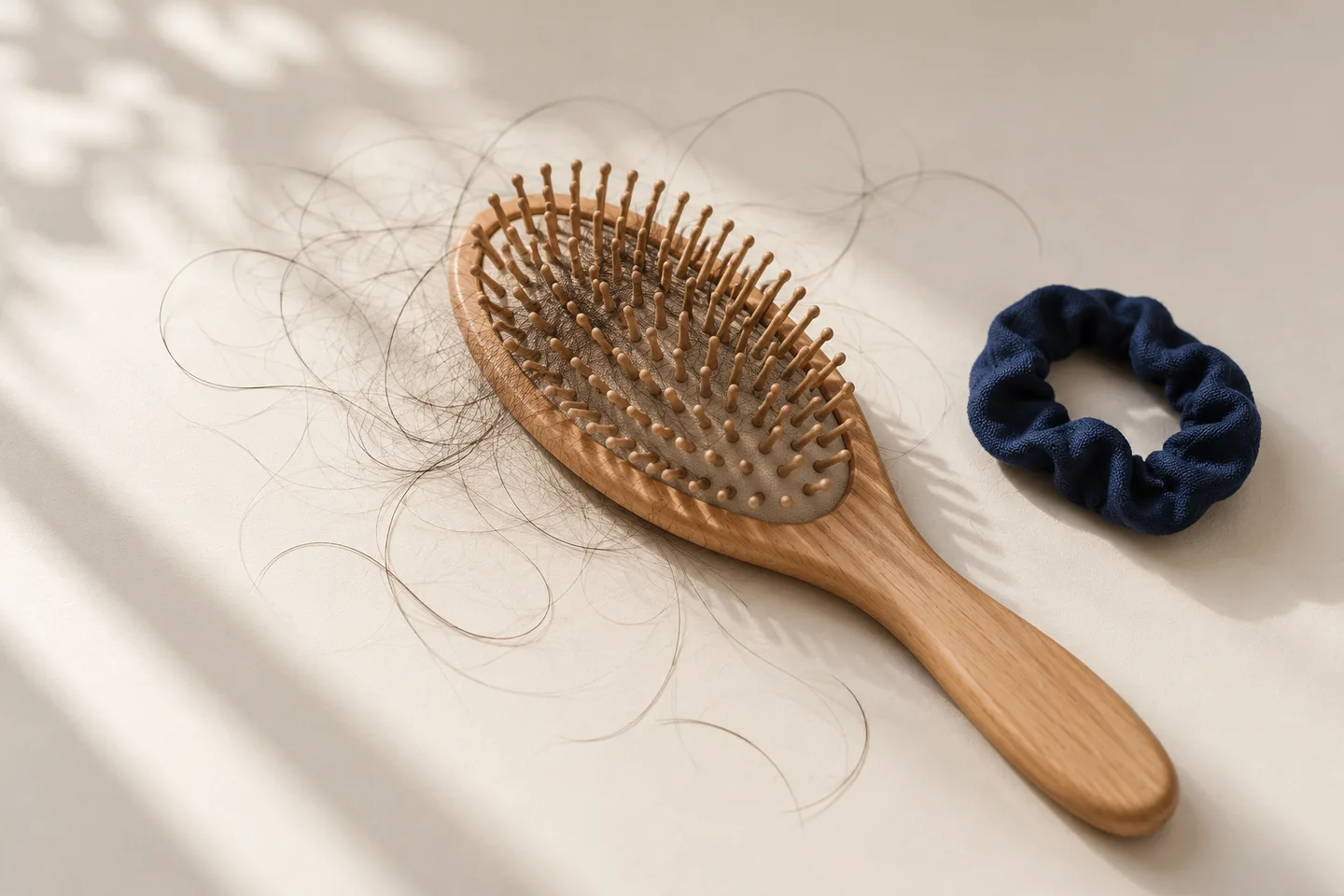
Pattern hair loss develops because genetically susceptible hair follicles gradually become smaller, producing hairs that are progressively thinner and shorter. It usually progresses slowly over years. Treatment cannot guarantee complete restoration of lost hair, but early diagnosis and appropriate long-term treatment can often help slow further thinning and improve hair density.
An important first step is making sure the diagnosis is actually pattern hair loss. Telogen effluvium, iron deficiency, thyroid disease, alopecia areata, scalp inflammation, medication-related shedding, and scarring alopecia can sometimes look similar and require different treatment.
What Is Pattern Hair Loss?
Androgenetic alopecia is a progressive form of non-scarring hair loss influenced by genetics and hormonal sensitivity.
The affected follicles undergo a process called miniaturization. Instead of producing thick terminal hairs, they gradually produce finer, shorter hairs. Over time, scalp coverage decreases even though the follicles may still be present.
This process occurs differently in men and women.
Male Pattern Hair Loss
Male pattern hair loss typically affects:
- The temples
- Frontal hairline
- Top of the scalp
- Crown or vertex
The hairline may gradually recede into an M-shaped pattern, while the crown becomes progressively thinner. These areas can eventually merge in more advanced cases.
Female Pattern Hair Loss
Female pattern hair loss generally causes:
- Widening of the central hair part
- Reduced density over the top of the scalp
- Diffuse thinning behind the frontal hairline
- A smaller ponytail or noticeable loss of hair volume
The frontal hairline is often relatively preserved, although some women develop thinning around the temples. Complete baldness is much less typical than in advanced male pattern hair loss.
What Causes Male and Female Pattern Hair Loss?
Pattern hair loss results from a combination of genetic susceptibility and hormonal influences.
In male pattern hair loss, genetically susceptible follicles are particularly sensitive to dihydrotestosterone (DHT), a hormone produced from testosterone by the enzyme 5-alpha-reductase.
DHT gradually shortens the growth phase of susceptible follicles and contributes to progressive miniaturization.
The hormonal mechanism in women is more complex. Genetics remain important, but female pattern hair loss does not always mean that a woman has excessive testosterone or another hormonal disorder.
Is Pattern Hair Loss Inherited from Your Mother’s Side?
Not exclusively.
The genetics of androgenetic alopecia are complex and involve multiple genes. A person may inherit susceptibility from the mother’s side, father’s side, or both.
Having a parent with pattern hair loss increases the likelihood, but the pattern, severity, and age of onset can differ substantially between family members.
At What Age Does Pattern Hair Loss Begin?
Male pattern hair loss can begin surprisingly early. Some men develop noticeable recession or thinning in their late teens or twenties, although progression varies considerably.
Female pattern hair loss becomes more common with increasing age, particularly around and after menopause, but younger women can also develop it.
Hair thinning at a young age should not automatically be assumed to be androgenetic alopecia. Other causes may need to be considered.
Signs of Male Pattern Hair Loss
Common signs include:
- Gradually receding temples
- An increasingly high frontal hairline
- Thinning at the crown
- Reduced density over the top of the scalp
- Fine, short hairs replacing previously thicker hairs
- Increasing scalp visibility under bright light or when the hair is wet The change usually occurs gradually rather than as sudden heavy shedding.
Signs of Female Pattern Hair Loss
Common signs include:
- Widening of the central part
- Increased scalp visibility on the top of the head
- Reduced overall hair volume
- A thinner ponytail
- Progressive thinning behind the frontal hairline
- Increasing numbers of fine hairs mixed with normal thicker hairs Some women first notice the problem when looking at photographs taken several years apart rather than noticing dramatic daily shedding.
Female pattern hair loss is usually progressive, although its speed may fluctuate over time.
Pattern Hair Loss vs Hair Shedding
This distinction is extremely important.
Pattern hair loss primarily involves progressive follicular miniaturization.
Telogen effluvium, on the other hand, causes increased shedding because a larger-than-usual proportion of hairs enter the resting phase of the hair cycle.
Telogen effluvium may follow:
- Significant illness
- High fever
- Surgery
- Rapid weight loss
- Major dietary changes
- Childbirth
- Severe psychological or physical stress
- Certain medications
- Nutritional deficiencies
Patients can also have both conditions simultaneously.
For example, a woman may have early female pattern hair loss but suddenly notice much heavier shedding after illness, weight loss, or iron deficiency. Treating the trigger for telogen effluvium does not necessarily eliminate the underlying pattern hair loss.
How Dermatologists Diagnose Pattern Hair Loss
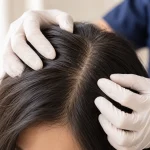
Diagnosis starts with the history and scalp examination.
A dermatologist may evaluate:
- Pattern and distribution of thinning
- Hairline changes
- Amount of shedding
- Family history
- Duration and rate of progression
- Recent illness or surgery
- Weight loss or restrictive diets
- Pregnancy or childbirth
- Medications and supplements
- Menstrual irregularities
- Acne or increased facial/body hair
- Symptoms such as scalp itching, burning, pain, or scaling
The scalp examination is particularly important because some forms of inflammatory or scarring alopecia require much earlier intervention.
Trichoscopy
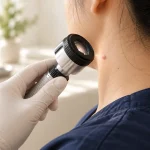
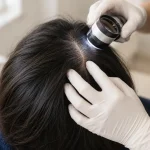
Trichoscopy is magnified examination of the hair and scalp using a dermatoscope or similar optical device.
Pattern hair loss typically shows variation in hair shaft diameter because some follicles are producing thick hairs while miniaturized follicles produce much finer hairs.
Other findings can include increased numbers of single-hair follicular units and fewer follicles containing multiple thick hairs.
Trichoscopy can also help differentiate androgenetic alopecia from conditions such as telogen effluvium, alopecia areata, and some forms of scarring hair loss.
Do I Need Blood Tests for Hair Loss?
Not everyone with classic pattern hair loss needs extensive blood testing.
Tests may be appropriate when the history suggests another contributing cause.
Depending on the individual patient, evaluation may include tests related to:
- Iron status
- Thyroid function
- Anemia
- Nutritional deficiencies
- Hormonal abnormalities
For women, hormonal evaluation may be considered particularly when hair thinning occurs together with symptoms such as:
- Irregular menstrual cycles
- New or excessive facial hair
- Significant acne
- Difficulty becoming pregnant
Female pattern hair loss can sometimes occur with conditions involving increased androgen levels, including polycystic ovary syndrome (PCOS).
Routine testing of every vitamin and hormone is not necessarily helpful.
Ferritin, Iron and Hair Loss
Iron deficiency can contribute to hair shedding, but it is important not to assume that every case of pattern hair loss is caused by low iron.
If iron deficiency is suspected, laboratory testing can help determine whether supplementation is appropriate.
Taking iron when there is no deficiency is not recommended simply because someone is losing hair. Excessive iron supplementation can be harmful. Clinical guidelines advise using iron, zinc, or other supplements only when a deficiency has actually been identified.
When Hair Loss May Not Be Pattern Hair Loss
Patients should seek dermatological assessment when hair loss is accompanied by features that are unusual for uncomplicated androgenetic alopecia.
These include:
- Sudden severe shedding
- Completely bald patches
- Broken hairs
- Significant scalp redness
- Thick scale
- Pustules
- Crusting
- Pain or burning
- Loss of eyebrows
- Loss of eyelashes
- Smooth shiny areas without visible follicular openings
- Rapidly expanding areas of hair loss
These findings may suggest another diagnosis, including alopecia areata, fungal infection, inflammatory scalp disease, or scarring alopecia.
Some scarring forms of hair loss can permanently destroy follicles, making early diagnosis particularly important.
Treatment of Male & Female Pattern Hair Loss
Treatment should be individualized according to:
- Whether the patient is male or female
- Severity and duration of hair loss
- Age
- Pregnancy plans
- Medical conditions
- Other medications
- Scalp condition
- Treatment preferences
- Tolerance for potential side effects
The realistic goal is usually to preserve existing follicles, reduce progression, and improve density where follicles remain capable of producing hair.
Completely restoring an advanced bald area with medication is much less likely.
Topical Minoxidil
Topical minoxidil is one of the most established treatments for androgenetic alopecia and is used for both male and female pattern hair loss.
It can help:
- Reduce progression of hair loss
- Increase hair shaft thickness
- Improve hair density
- Stimulate some follicles to produce stronger hairs
Topical minoxidil is FDA-approved for pattern hair loss in both men and women.
How Long Does Minoxidil Take to Work?
Hair grows slowly.
Meaningful assessment usually requires several months, and some patients need approximately 6–12 months before they can judge their response properly.
Taking photographs with consistent lighting, angle, hair length, and hairstyle can be more useful than judging the scalp every day.
Does Minoxidil Cause Initial Shedding?
Some patients notice increased shedding during the first several weeks after starting minoxidil.
This can occur because hairs transition through their growth cycle as treatment takes effect. It is noted that temporary increased shedding may occur during the first weeks of treatment, particularly in women.
However, prolonged or severe shedding should be evaluated rather than automatically attributed to minoxidil.
Side Effects of Topical Minoxidil
Possible side effects include:
- Scalp irritation
- Itching
- Dryness
- Scaling
- Redness
- Unwanted facial hair if medication repeatedly contacts the face Application technique and formulation can sometimes influence tolerability.
What Happens If I Stop Minoxidil?
Pattern hair loss is a chronic condition.
If minoxidil is helping maintain hair density and treatment is stopped, its benefits gradually disappear and the underlying hair loss process generally resumes.
This is an important point for patients to understand before starting treatment.
Oral Minoxidil
Low-dose oral minoxidil is increasingly used by dermatologists for some patients with pattern hair loss, particularly when topical treatment is inconvenient, irritating, or insufficient.
However, oral minoxidil for hair loss is generally an off-label treatment, meaning that its use for hair loss is not the original approved indication for the medication.
Potential side effects can include:
- Excess facial or body hair
- Ankle or leg swelling
- Light-headedness
- Changes in blood pressure
- Increased heart rate or palpitations
Because minoxidil was originally developed as a blood-pressure medication, oral treatment requires appropriate medical assessment rather than self-prescribing based on an online hair-loss regimen.
Finasteride for Male Pattern Hair Loss
Finasteride reduces conversion of testosterone to DHT by inhibiting 5-alpha-reductase.
It is an established prescription treatment for male pattern hair loss and can help slow further miniaturization. Some men also experience improved hair density.
Treatment is generally long term.
If finasteride is effective but then discontinued, the protective benefit gradually disappears and genetic hair loss resumes.
Possible Side Effects of Finasteride
Potential adverse effects should be discussed before starting treatment.
Reported effects include:
- Reduced libido
- Erectile dysfunction
- Ejaculatory changes
- Breast tenderness or enlargement
- Mood-related symptoms in some patients
Not every patient develops side effects, but they should not be dismissed when making a treatment decision.
Finasteride in Women
Finasteride is not routine first-line treatment for most women with female pattern hair loss.
Dermatologists may sometimes consider anti-androgen treatments in selected women, but treatment decisions depend heavily on age, hormonal status, pregnancy potential, and medical history.
Finasteride and other medications that interfere with androgen pathways require particular caution in anyone who is pregnant or could become pregnant because of fetal risks.
Spironolactone for Female Pattern Hair Loss
Spironolactone has anti-androgen effects and is commonly used off-label for selected women with female pattern hair loss.
It may be particularly relevant when hair thinning occurs with signs of androgen excess such as:
- Acne
- Increased facial or body hair
- Polycystic ovary syndrome
It is not appropriate for every patient.
Medical history, kidney function, blood pressure, medications, and pregnancy potential may influence whether spironolactone is suitable.
Dutasteride and Other Anti-Androgen Treatments
Dutasteride inhibits both major forms of 5-alpha-reductase and lowers DHT more strongly than finasteride.
It is sometimes used off-label for androgenetic alopecia in selected patients.
Because regulatory approval, evidence, side-effect considerations, and pregnancy precautions differ between treatments, the choice should be individualized rather than assuming that a stronger DHT-lowering medication is automatically better.
Pregnancy and Hair-Loss Medication
Pregnancy plans are especially important when treating female pattern hair loss.
Certain hair-loss medications should not be used during pregnancy because of potential risks to fetal development.
It is advised to avoid minoxidil during pregnancy and breastfeeding, and anti-androgen medications require specific pregnancy precautions.
Patients planning pregnancy should tell their dermatologist before beginning treatment rather than stopping or changing medication without medical advice later.
Platelet-Rich Plasma (PRP)
PRP involves collecting the patient’s blood, concentrating the platelet-containing portion, and injecting it into areas of hair thinning.
Evidence suggests PRP may improve hair density in some patients with androgenetic alopecia, but treatment protocols vary and results are not uniform.
It is better viewed as an adjunctive treatment rather than a guaranteed alternative to established medical therapy. Current dermatology literature suggests that treatments such as PRP, microneedling, and low-level light therapy may be most useful in combination with appropriate medical treatment.
Multiple treatment sessions are usually required.
Microneedling
Microneedling creates controlled micro-injuries in the scalp and has been studied as an adjunct to hair-growth treatment.
Some patients use it in combination with topical therapy.
Potential adverse effects include:
- Temporary redness
- Tenderness
- Bleeding
- Irritation
- Infection if performed improperly
More aggressive treatment does not necessarily produce better hair growth.
Low-Level Light and Laser Therapy
Low-level light devices have been studied for androgenetic alopecia.
Some devices have regulatory clearance, and evidence suggests they may produce modest improvements in selected patients. However, responses vary, long-term use is usually required, and device quality differs considerably.
Patients should be cautious of marketing claims promising dramatic permanent regrowth.
Hair Transplantation
Hair transplantation can provide cosmetic restoration for selected patients when adequate donor hair is available.
Modern procedures generally transfer follicles from areas that are relatively resistant to androgenetic alopecia—usually the back or sides of the scalp—to thinning areas.
However, transplantation does not stop the underlying genetic hair-loss process.
Patients may therefore still need medical treatment to protect the surrounding non-transplanted hair.
A transplant may be less suitable when:
- Hair loss is still rapidly progressing
- Donor density is poor
- Hair loss is very diffuse
- An inflammatory or scarring alopecia is active
- Expectations exceed what available donor follicles can achieve A correct diagnosis should come before surgery.
Do Hair Vitamins Treat Pattern Hair Loss?
Not usually.
Hair supplements are useful when they correct a genuine deficiency, but taking more vitamins does not override the genetic and hormonal mechanisms responsible for androgenetic alopecia.
For example, iron or zinc supplementation may be appropriate when laboratory testing demonstrates deficiency. Taking excessive supplements when levels are normal can cause adverse effects.
Biotin deficiency itself is uncommon, and high-dose biotin can also interfere with certain laboratory tests.
Do Shampoos Stop Male or Female Pattern Hair Loss?
No shampoo can reverse follicular miniaturization on its own.
Shampoos can still be useful for treating associated scalp conditions such as:
- Seborrheic dermatitis
- Dandruff
- Excess scale
- Scalp irritation
Improving scalp health can make treatment easier and hair appear healthier, but shampoo should not be presented as a substitute for evidence-based treatment of androgenetic alopecia.
Can Diet Reverse Pattern Hair Loss?
A balanced diet supports normal hair growth, but genetic hair loss generally cannot be reversed simply by changing diet.
Nevertheless, inadequate calorie intake, rapid weight loss, low protein intake, or specific nutritional deficiencies can cause additional shedding.
This is particularly relevant in patients who notice sudden hair loss after:
- Crash dieting
- Major weight reduction
- Bariatric surgery
- Restrictive diets
- Prolonged illness
In these situations, correcting the additional cause may reduce shedding, while the underlying androgenetic alopecia may still require separate treatment.
How Long Does Treatment Take?
Pattern hair loss should be approached in months and years, not days or weeks.
Patients often become discouraged because photographs on social media make hair-loss treatment appear much faster than it really is.
A reasonable clinical approach involves:
- Establishing the diagnosis.
- Starting an appropriate treatment plan.
- Taking standardized baseline photographs.
- Monitoring side effects and adherence.
- Reassessing after several months.
- Adjusting treatment if necessary.
Minoxidil and other medical therapies commonly require approximately 6–12 months for meaningful assessment.
Can Completely Bald Areas Grow Hair Again?
The likelihood decreases as follicles become severely miniaturized over many years.
Treatment generally works better when follicles are still producing thin hairs than after an area has remained smooth and bald for a prolonged period.
This is one reason early recognition and treatment can be valuable.
However, no medication should be advertised as guaranteeing restoration of completely bald scalp.
Does Pattern Hair Loss Come Back After Treatment?
Pattern hair loss does not behave like an infection that is permanently cured after a short course of medication.
The genetic tendency remains.
Most effective treatments therefore need to be continued to maintain their benefits.
If treatment is discontinued, hair loss generally progresses again toward the pattern it would otherwise have followed.
Male vs Female Pattern Hair Loss
| Feature | Male Pattern Hair Loss | Female Pattern Hair Loss |
|---|---|---|
| Medical name | Androgenetic alopecia | Female pattern hair loss / androgenetic alopecia |
| Typical hairline | Frontal and temple recession | Usually relatively preserved |
| Crown thinning | Common | Possible |
| Central part widening | May occur | Very common |
| Complete bald areas | Possible in advanced disease | Unusual |
| DHT involvement | Strongly established | More complex |
| Minoxidil | Common treatment | Common treatment |
| Finasteride | Established option | Selected patients only |
| Anti-androgen therapy | Less commonly required | May be considered in selected women |
| Pregnancy considerations | Not applicable to patient pregnancy | Essential when selecting medication |
When Should You See a Dermatologist for Hair Loss?
Consider dermatological evaluation if:
- Your hairline is progressively receding
- Your central part is becoming wider
- Your scalp is becoming more visible
- You are shedding much more than usual
- Hair loss started suddenly
- You have bald patches
- Your scalp is red, painful, itchy, or heavily scaly
- You are losing eyebrows or eyelashes
- You notice areas of smooth or shiny scalp
- You are developing hair loss at a young age
- Hair loss is worsening despite treatment
- You are considering oral medication
- You are considering PRP, devices, or hair transplantation
- You are uncertain whether your diagnosis is androgenetic alopecia Earlier diagnosis can be particularly useful because maintaining miniaturized follicles is often easier than attempting to restore advanced hair loss later.
What to Expect During a Hair-Loss Consultation in Bangkok
A dermatology consultation for hair loss should be more than simply looking at the scalp and prescribing minoxidil.
The dermatologist may discuss:
- When thinning began
- Whether hair loss is gradual or sudden
- Family history
- Recent illnesses
- Weight loss or dietary changes
- Medications and supplements
- Medical conditions
- Pregnancy and childbirth history
- Menstrual cycles
- Acne or unwanted facial hair
- Hair-care practices
- Previous hair-loss treatments
The scalp is then examined for the distribution of hair loss, miniaturization, inflammation, scale, scarring, and signs of alternative diagnoses.
Trichoscopy may be used when appropriate.
Blood tests may be recommended when another cause of hair loss is suspected, rather than automatically performing the same laboratory panel for every patient.
For expats, tourists, and international patients receiving hair-loss treatment in Bangkok, it is useful to tell the dermatologist how long you will remain in Thailand because many treatments require months of follow-up and monitoring.
Frequently asked questions
Is male pattern hair loss the same as androgenetic alopecia?
Yes. Male pattern hair loss is the common name for androgenetic alopecia in men.
It usually produces progressive recession at the temples, thinning at the crown, or both.
Is female pattern hair loss caused by high testosterone?
Not necessarily.
Many women with female pattern hair loss do not have abnormally high androgen levels.
Hormonal testing may be appropriate when hair loss occurs with acne, excess facial hair, irregular periods, or other signs suggesting androgen excess.
Can male pattern baldness be cured?
There is currently no treatment that permanently removes the genetic tendency to androgenetic alopecia.
Available treatments aim to slow progression, preserve existing hair, and improve density.
Can female pattern hair loss be reversed?
Some miniaturized follicles can respond to treatment, especially when treatment begins relatively early.
The amount of improvement varies between individuals, and complete restoration cannot be guaranteed.
What is the best treatment for pattern hair loss?
There is no single treatment that is best for everyone.
Topical minoxidil is one of the most established options for both men and women. Other treatments depend on sex, medical history, pregnancy considerations, severity, and individual preferences.
Is minoxidil lifelong?
If minoxidil is working and maintaining hair density, continued use is generally required to maintain that benefit.
Stopping treatment usually results in gradual loss of the improvement.
Can minoxidil make my hair fall out initially?
Temporary increased shedding can occur during the first several weeks after starting treatment.
Persistent or severe shedding should be discussed with a dermatologist rather than automatically assuming it is normal.
Does oral minoxidil work better than topical minoxidil?
Not necessarily for every patient.
Oral minoxidil can be useful in selected patients but is an off-label treatment for hair loss and introduces systemic side effects that topical treatment generally does not.
The choice should therefore be individualized.
Does finasteride permanently stop male pattern baldness?
No.
Finasteride can slow progression while it is being taken, but the underlying genetic condition remains.
Hair loss generally resumes after treatment is stopped.
Can women take finasteride?
It may be considered in selected women by a dermatologist, but it is not appropriate for everyone and requires particular precautions regarding pregnancy.
Does shaving the head make hair grow back thicker?
No.
Shaving cuts the hair shaft above the skin. It does not change the follicle underneath the skin or reverse miniaturization.
Does frequent shampooing cause baldness?
Normal shampooing does not cause androgenetic alopecia.
Hair seen in the shower is usually hair that had already entered the shedding phase.
Can stress cause male or female pattern hair loss?
Stress does not usually create androgenetic alopecia by itself.
However, physical or psychological stress can trigger telogen effluvium, creating additional shedding in someone who already has pattern hair loss.
Can low iron cause hair loss?
Iron deficiency can contribute to hair shedding.
However, iron deficiency and androgenetic alopecia are separate diagnoses and can occur independently or together.
Should I take biotin for thinning hair?
Not routinely.
Supplements are most appropriate when a genuine deficiency has been identified. More supplementation does not necessarily mean more hair growth.
When should I start treating pattern hair loss?
Treatment tends to have greater potential while follicles are still present and producing miniaturized hairs.
For this reason, evaluation at an early stage is generally preferable to waiting until extensive bald areas have developed.
SEO Strategy
Related conditions
-
Excessive Hair Shedding Excessive Hair Shedding Seeing more hair than usual in the shower, on your pillow, or in your hairbrush can be alarming. However, excessive hair shedding is not always the same as permanent hair loss.
-
Alopecia Areata Alopecia Areata Alopecia areata is an autoimmune form of hair loss that most commonly causes sudden, smooth, round or oval bald patches on the scalp or beard. It can also affect the eyebrows, eyelashes and other body hair.
-
Scalp Disorders Scalp Disorders Scalp disorders are a common reason people seek dermatology care. Symptoms may include itching, flaking, redness, scaling, pimples, pustules, scalp pain, crusting, hair shedding or patchy hair loss.
-
Seborrheic Dermatitis Seborrheic Dermatitis Seborrheic dermatitis is a common inflammatory skin condition that causes redness, flaking, greasy or dry scales, and sometimes itching. It most often affects areas with many oil glands, including the scalp, eyebrows, sides of the nose, ears, beard area and upper chest.