



Molluscum Contagiosum
Molluscum contagiosum is a common viral skin infection that causes small, smooth bumps, often with a characteristic tiny indentation in the center. It can affect children and adults and can spread through direct skin contact, shared personal items, sexual contact, or from one area of the body to another.
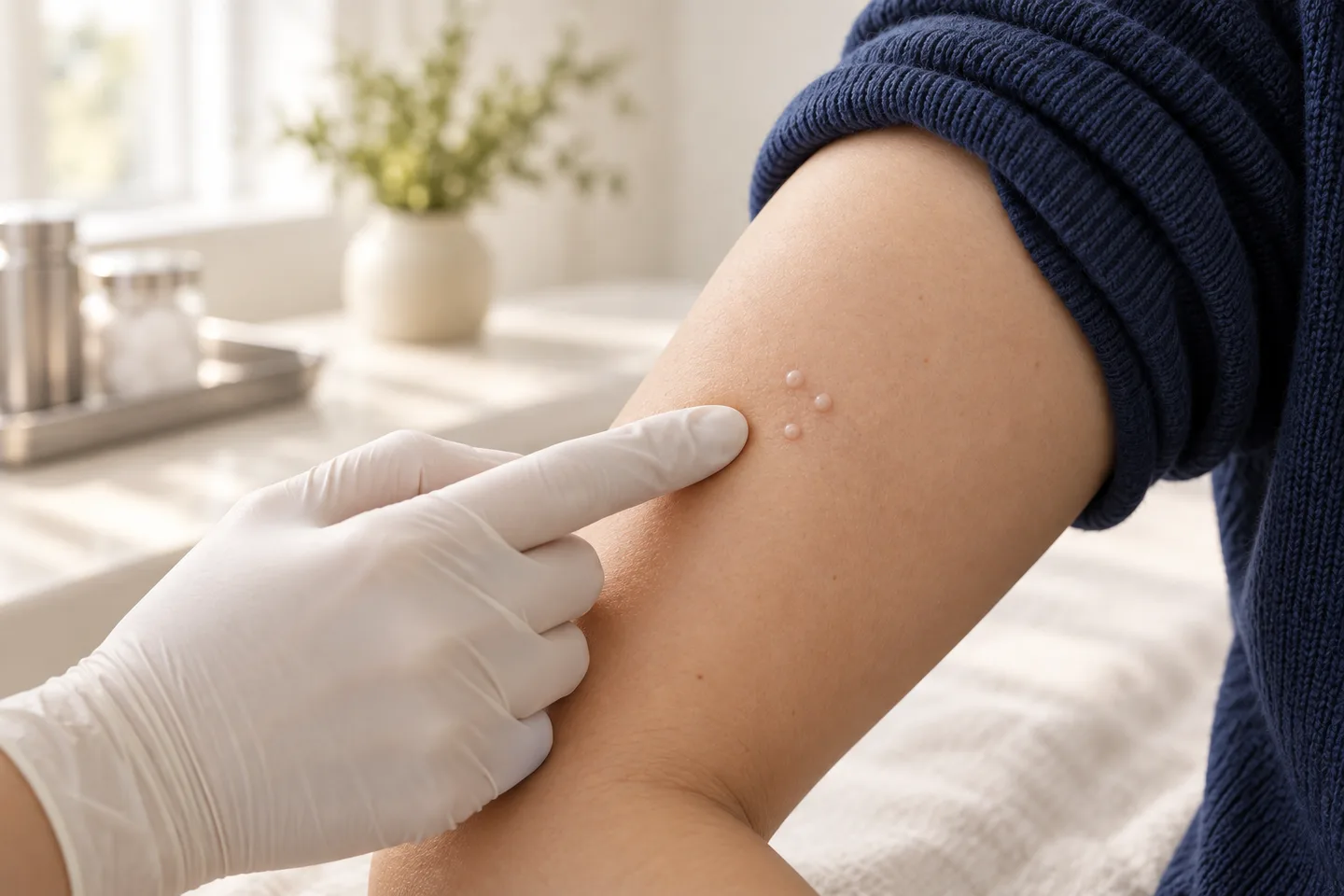
Although molluscum contagiosum is usually harmless and may eventually disappear without treatment, some patients develop persistent, spreading, itchy, inflamed, or cosmetically bothersome lesions.
In adults, bumps around the genital area deserve particular attention because molluscum contagiosum can be transmitted through sexual contact and can sometimes resemble genital warts or other skin conditions.
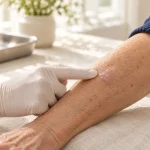
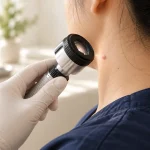
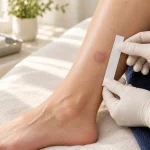
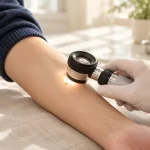
A dermatologist can usually diagnose molluscum by examining the skin and can discuss whether observation or active treatment is more appropriate.
What Is Molluscum Contagiosum?
Molluscum contagiosum is a superficial skin infection caused by the molluscum contagiosum virus, which belongs to the poxvirus family.
The infection produces small raised bumps called mollusca. Typical lesions are:
- Round or dome-shaped
- Smooth and firm
- Skin-colored, pearly, white or pink
- Usually a few millimeters in diameter
- Often painless
- Frequently characterized by a small depression or “dimple” in the center A white, waxy or cheese-like material may be present inside the bump, but patients should not squeeze or extract it themselves. Manipulating the lesion can irritate the skin, cause infection and potentially spread the virus to surrounding areas.
Molluscum contagiosum is benign and is not skin cancer.
What Does Molluscum Contagiosum Look Like?
A typical molluscum lesion is a small, smooth bump with a central indentation, medically known as umbilication.
Some people develop only a few lesions, while others develop clusters.
The bumps may appear on the:
- Face
- Neck
- Arms
- Trunk
- Abdomen
- Armpits
- Inner thighs
- Groin
- Genital area
The palms and soles are usually spared.
Lesions are commonly painless but can sometimes become itchy, red, swollen or irritated.
Interestingly, redness and inflammation around an established molluscum lesion do not always mean bacterial infection. In some cases, inflammation occurs as the immune system begins reacting against the virus.
However, increasing pain, warmth, significant swelling, spreading redness, pus or fever should be medically evaluated.
What Causes Molluscum Contagiosum?
Molluscum contagiosum is caused by infection with molluscum contagiosum virus.
The virus infects the superficial layers of the skin and can spread between people or from one area of an infected person’s skin to another.
How Does Molluscum Contagiosum Spread?
Transmission can occur through:
Direct Skin-to-Skin Contact
Touching molluscum lesions can transfer the virus to another person.
Shared Personal Items
Transmission may occur through contaminated objects such as:
- Towels
- Clothing
- Razors
- Sports equipment
- Shared bathing items
Scratching or Picking
Scratching a lesion and then touching another part of the body can spread the infection. This process is known as autoinoculation.
Shaving and Hair Removal
Shaving directly over molluscum lesions can create tiny injuries and spread viral material along the shaved area.
For this reason, shaving, waxing and other hair-removal procedures over active lesions should generally be avoided until the area has been assessed.
Sexual Contact
In adults, molluscum contagiosum around the genital, pubic, inner-thigh or lower abdominal area may be acquired through intimate skin-to-skin contact.
Genital molluscum should be assessed by a healthcare professional because several other conditions can cause bumps in this area.
Molluscum Contagiosum in Children
Molluscum contagiosum is particularly common in children.
Many otherwise healthy children develop a small number of bumps that eventually disappear as their immune system clears the infection.
Treatment is therefore not automatically necessary.
However, treatment or dermatological evaluation may be appropriate when:
- Lesions are numerous or spreading
- The child repeatedly scratches them
- Molluscum aggravates eczema
- Lesions frequently become irritated
- Lesions are cosmetically distressing
- The diagnosis is uncertain
- The lesions are in sensitive locations
Treatment decisions in children should also consider discomfort. A procedure that is straightforward for an adult may be unnecessarily painful or frightening for a young child.
Molluscum Contagiosum and Eczema
Children and adults with atopic dermatitis (eczema) may be more susceptible to molluscum contagiosum.
Dry, itchy skin encourages scratching, which can disrupt the skin barrier and facilitate spread of the virus.
Some patients also develop an itchy eczema-like rash surrounding their molluscum lesions. This is sometimes called molluscum dermatitis.
Managing the surrounding dermatitis can therefore be an important part of treatment rather than focusing only on destroying individual bumps.
Molluscum Contagiosum in Adults
Adults can develop molluscum contagiosum as well.
When lesions occur on areas such as the arms, trunk or face, transmission may have occurred through ordinary skin contact or contaminated objects.
When lesions are concentrated around the:
- Genitals
- Pubic region
- Groin
- Inner thighs
- Lower abdomen
sexual transmission becomes an important possibility.
This does not automatically mean that every adult with molluscum has a sexually transmitted infection, because the virus can spread in other ways.
However, genital lesions should be professionally evaluated.
Is Genital Molluscum Contagiosum an STI?
Molluscum contagiosum is not exclusively a sexually transmitted infection, but in adults, lesions in the genital region are often transmitted through intimate skin-to-skin contact.
The appearance can sometimes be confused with:
- Genital warts caused by HPV
- Folliculitis
- Skin tags
- Pearly penile papules
- Fordyce spots
- Other benign genital lesions
Less commonly, other infections may also need to be considered depending on the appearance and clinical history.
Because treatment differs considerably between these conditions, accurate diagnosis is more important than trying to identify genital bumps from photographs online.
Molluscum Contagiosum vs Genital Warts
Patients frequently confuse molluscum contagiosum with genital warts.
They are caused by different viruses.
Molluscum contagiosum is caused by a poxvirus and usually produces smooth, rounded bumps with a central indentation.
Genital warts are caused by certain types of human papillomavirus (HPV) and more commonly have a rough, irregular, flat or cauliflower-like surface.
However, real lesions do not always have textbook appearances.
If you have new or unexplained genital bumps, particularly after sexual contact, examination by a doctor is more reliable than self-diagnosis.
Is Molluscum Contagiosum Dangerous?
For most healthy children and adults, molluscum contagiosum is a benign, self-limited infection.
It does not turn into cancer.
The main problems are usually:
- Transmission to other people
- Spread to other parts of the body
- Itching
- Dermatitis
- Cosmetic concern
- Secondary bacterial infection after scratching
- Persistent lesions
Molluscum can behave differently in people with weakened immune systems. Lesions may become unusually numerous, large, persistent or difficult to treat.
Extensive or atypical molluscum in an adult may therefore warrant further medical evaluation.
How Is Molluscum Contagiosum Diagnosed?
Dermatologists can usually diagnose molluscum contagiosum through clinical examination.
The characteristic smooth, dome-shaped lesion with central umbilication is often enough to establish the diagnosis.
Additional testing is usually unnecessary.
Occasionally, further examination or a small skin sample may be considered when:
- The appearance is unusual
- The diagnosis remains uncertain
- Lesions do not respond as expected
- Another skin disease needs to be excluded
This can be particularly useful for unusual genital lesions or atypical lesions in immunocompromised patients.
Does Molluscum Contagiosum Need Treatment?
Not necessarily.
In otherwise healthy people, molluscum contagiosum can eventually resolve spontaneously as the immune system recognizes and clears the virus.
This process can take months and occasionally considerably longer.
Observation may therefore be reasonable when:
- There are only a few lesions
- They are not bothersome
- They are not rapidly spreading
- The diagnosis is clear
- The patient is comfortable waiting
The disadvantage is that lesions remain contagious while they are present, and new lesions can develop during the waiting period.
Treatment may be considered when lesions are persistent, spreading, symptomatic, cosmetically bothersome or located in the genital area.
Molluscum Contagiosum Treatment Options
There is no single treatment that is ideal for every patient.
A dermatologist considers factors including:
- Patient age
- Number of lesions
- Location
- Skin type
- Presence of eczema
- Pain tolerance
- Previous treatment
- Immune status
- Risk of pigmentation or scarring
Treatment is aimed at removing or destroying visible lesions while minimizing unnecessary skin injury.
1. Cryotherapy
Cryotherapy uses liquid nitrogen to freeze individual molluscum lesions.
The treated area may become:
- Red
- Swollen
- Tender
- Blistered
- Crusted
The crust subsequently separates as the skin heals.
Advantages
- Quick office procedure
- Useful when there are a limited number of lesions
- No surgical incision is required
Limitations
- Can sting or hurt
- Multiple sessions may be necessary
- Not ideal for some young children or patients with numerous lesions
- Temporary light or dark marks can develop after treatment
- Scarring is possible, although uncommon when appropriately performed Post-inflammatory pigmentation is particularly relevant in Asian and darker skin types, so treatment intensity and lesion location should be considered carefully.
2. Curettage
Curettage involves physically removing individual molluscum lesions with a small medical instrument.
It can provide immediate removal of selected lesions.
Advantages
- Direct removal
- Useful for isolated lesions
- Can be effective in cooperative older children and adults
Limitations
- Can be uncomfortable
- Local anesthetic may be required
- Minor bleeding can occur
- Pigmentation or scarring is possible
- Usually impractical for very large numbers of lesions
Patients should not attempt curettage or extraction themselves at home.
3. Cantharidin
Cantharidin is a blistering medication that can be carefully applied to individual lesions by a healthcare professional.
It causes a controlled blistering reaction that helps eliminate the treated lesion.
Availability and regulatory approval vary between countries, so patients in Thailand should discuss whether an appropriate formulation is available with their dermatologist.
Possible reactions include blistering, irritation, tenderness and temporary pigmentation.
4. Topical Treatments
Certain topical medications can be used in selected patients to create a controlled inflammatory reaction that encourages clearance of the lesion.
Depending on the patient and lesion location, options discussed by dermatologists may include agents such as:
- Potassium hydroxide
- Tretinoin
- Other keratolytic or irritating topical treatments
These treatments must be used carefully because excessive application can cause dermatitis, burns or post-inflammatory pigmentation.
They are particularly unsuitable for unsupervised use on sensitive areas such as the eyelids or genital skin.
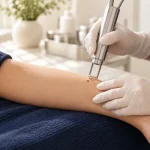
5. Laser and Other Procedural Treatments
Laser treatment has been described for selected or difficult-to-treat cases of molluscum contagiosum.
It is generally not necessary for routine uncomplicated molluscum, because simpler approaches or observation are sufficient for many patients.
A dermatologist can determine whether a procedural treatment offers a meaningful advantage in an individual case.
What About Imiquimod?
Imiquimod has historically been used for several viral skin conditions.
However, evidence has not demonstrated reliable benefit for routine molluscum contagiosum in children, and major medical guidance does not recommend it as a standard pediatric treatment.
This is a useful example of why treatments for genital warts should not automatically be assumed to work equally well for molluscum contagiosum.
Which Molluscum Treatment Is Best?
The best treatment depends on the individual patient rather than simply choosing the strongest procedure.
For example:
A young child with many painless lesions:
Observation may be preferable to repeated painful procedures.
An adult with several genital lesions:
Confirming the diagnosis and considering active treatment is usually appropriate.
A patient with a few isolated lesions:
Cryotherapy or another lesion-directed treatment may be reasonable.
A patient with extensive eczema and molluscum:
Controlling the eczema and reducing scratching may be just as important as treating individual lesions.
A patient with unusually extensive or large lesions:
The dermatologist may need to investigate whether there is an underlying reason for the atypical presentation.
What Happens After Molluscum Treatment?
Recovery depends on the treatment used.
After destructive treatments such as cryotherapy or curettage, patients may develop temporary:
- Redness
- Swelling
- Tenderness
- Small blisters
- Crusting
- Darkening or lightening of the skin
Avoid picking the treated area.
Follow the dermatologist’s wound-care instructions and allow crusts to separate naturally.
Sun protection can also be useful on exposed treated areas, particularly for patients prone to post-inflammatory hyperpigmentation.
Can Molluscum Come Back After Treatment?
Yes.
Removing visible lesions does not necessarily mean that every infected area has already become visible.
New bumps may appear later because some lesions were still in their incubation period at the time of treatment.
This does not necessarily mean that treatment failed.
Patients should monitor the skin and return for reassessment if new lesions continue to appear.
It is also possible to become infected again after a previous infection has cleared.
How to Stop Molluscum Contagiosum From Spreading
While lesions remain present:
- Avoid scratching or picking them
- Wash your hands after touching affected skin
- Do not share towels or razors
- Avoid shaving directly over the lesions
- Keep lesions covered when close skin contact is likely
- Avoid sharing clothing that directly contacts affected skin
- Manage eczema and dry skin to reduce scratching
- Do not attempt to squeeze out the center of the lesion
For swimming, covering lesions with waterproof dressings and avoiding shared towels or swimming equipment can reduce transmission risk.
Children with molluscum do not generally need to be excluded from school solely because of the infection.
Can I Pop Molluscum Contagiosum?
You should not pop, squeeze or cut molluscum lesions yourself.
The central material contains viral particles.
Trying to remove it at home can:
- Spread the virus
- Cause bleeding
- Introduce bacterial infection
- Produce unnecessary inflammation
- Increase the risk of pigmentation and scarring
Professional treatment uses controlled techniques designed to limit damage to surrounding skin.
When Should You See a Dermatologist?
Consider seeing a dermatologist when:
- You are unsure whether the bumps are molluscum
- Lesions are rapidly increasing
- Lesions occur around the genitals
- Lesions are close to the eyes
- The bumps are persistently itchy or irritated
- You have significant eczema around the lesions
- Lesions become painful or appear infected
- Molluscum persists and is bothersome
- You are concerned about scarring or pigmentation
- Previous treatments have not worked
- You have a weakened immune system
- An adult develops unusually large, numerous or widespread lesions Seek medical attention sooner if there is significant pain, pus, fever or rapidly spreading redness around a lesion, as these can suggest secondary bacterial infection.
What to Expect During a Dermatology Consultation in Bangkok
A consultation for suspected molluscum contagiosum usually begins with examination of the affected skin.
The dermatologist may ask:
- When the lesions first appeared
- Whether new lesions are developing
- Whether they itch or hurt
- Whether other household members have similar bumps
- Whether you have eczema
- Whether you have tried any previous treatments
- Whether you have medical conditions or medications affecting immunity For genital lesions, the doctor may also ask relevant questions about sexual exposure because this information can help distinguish molluscum from other genital conditions.
After examination, the dermatologist can determine whether treatment is necessary and discuss the most appropriate options based on the number, location and appearance of the lesions.
For international patients or tourists visiting Bangkok, it is helpful to tell the dermatologist how long you will remain in Thailand. Some treatments require follow-up sessions, while others may be more practical when only a short stay is possible.
Frequently asked questions
Is molluscum contagiosum an STD?
Not always. Molluscum spreads through direct skin contact and contaminated objects as well as intimate contact. However, genital molluscum in adults is commonly associated with sexual transmission and should be medically evaluated.
Is molluscum contagiosum caused by HPV?
No. Molluscum contagiosum is caused by a poxvirus. Genital warts are caused by human papillomavirus (HPV).
Is molluscum contagiosum dangerous?
It is usually a benign skin infection in otherwise healthy people. Patients with weakened immune systems can develop more extensive or persistent disease.
Does molluscum contagiosum go away by itself?
Yes. The immune system can eventually clear molluscum without treatment, although this may take many months and occasionally longer.
How long is molluscum contagiosum contagious?
A person can potentially transmit molluscum while active lesions remain on the skin.
Should molluscum contagiosum be treated?
Not every case requires treatment. Treatment may be appropriate when lesions are spreading, symptomatic, persistent, cosmetically bothersome or located around the genitals.
Can adults get molluscum contagiosum?
Yes. Molluscum can occur at any age. Genital or groin lesions in adults are frequently transmitted through intimate skin contact.
Can molluscum contagiosum spread by shaving?
Yes. Shaving across lesions can spread the virus to nearby skin. Avoid shaving directly over active molluscum lesions.
Can molluscum contagiosum spread through towels?
Yes. Sharing towels, clothing and other objects that contact infected skin can contribute to transmission.
Can I squeeze molluscum bumps?
No. Squeezing or cutting the lesions can spread the virus and increase the risk of bacterial infection, inflammation, pigmentation and scarring.
Does cryotherapy work for molluscum contagiosum?
Cryotherapy can destroy individual molluscum lesions and is commonly used in appropriate patients. It can cause temporary pain, blistering, crusting and pigment changes, and more than one treatment may be required.
Does molluscum leave scars?
Untreated molluscum usually resolves without significant scarring. Scratching, secondary infection and aggressive treatment can increase the risk of scars.
Why are my molluscum bumps suddenly red?
Inflammation can sometimes occur when the immune system begins responding to molluscum. Redness alone therefore does not always mean infection. Increasing pain, warmth, pus, fever or rapidly spreading redness should be evaluated.
Should genital molluscum be treated?
Medical evaluation is recommended for genital lesions. A doctor should first confirm that the bumps are actually molluscum and not genital warts or another condition. Treatment is commonly recommended for genital molluscum.
Can I get molluscum contagiosum again?
Yes. Previous infection does not guarantee lifelong immunity, so reinfection is possible.
Related conditions
-
Genital Warts Genital Warts Genital warts are benign growths caused by certain types of human papillomavirus (HPV). They can appear on the penis, vulva, groin, scrotum, perineum, around the anus, inside the anal canal, and sometimes on the cervix, vagina or urethral opening.
-
Viral Warts Viral Warts Viral warts are common skin growths caused by infection with human papillomavirus (HPV). They can develop almost anywhere on the skin, but frequently affect the hands, fingers, feet, knees, face and genital area.
-
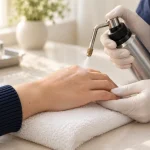
Cryotherapy Cryotherapy Cryotherapy is a dermatologic procedure that uses extreme cold—most commonly liquid nitrogen—to freeze and destroy selected abnormal skin tissue. Dermatologists commonly use it for conditions such as viral warts, actinic keratoses, some seborrheic keratoses, molluscum contagiosum, and selected skin tags.
-
CO2 Laser Removal CO2 Laser Removal CO2 laser removal is a dermatologic procedure used to remove or flatten selected superficial skin growths with high precision. In dermatology, it may be considered for conditions such as skin tags, seborrheic keratoses, selected warts, sebaceous hyperplasia, syringomas, and certain other benign skin lesions. CO2 lasers are also used for resurfacing and scar treatment, although these are different procedures with different treatment settings and recovery.