



Viral Warts
Viral warts are common skin growths caused by infection with human papillomavirus (HPV). They can develop almost anywhere on the skin, but frequently affect the hands, fingers, feet, knees, face and genital area.
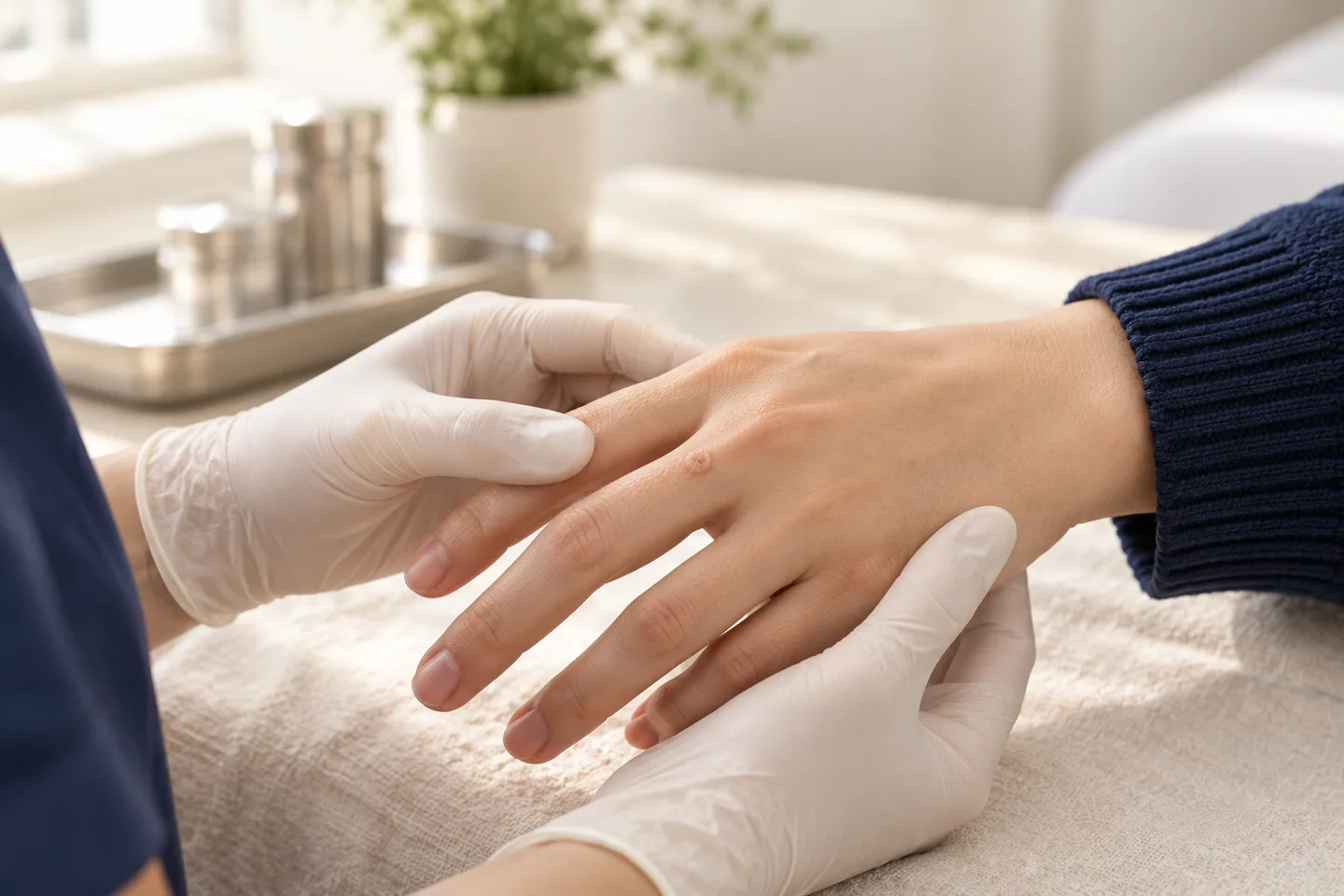
Most ordinary skin warts are benign. However, they can spread to other areas, pass between people, become painful or interfere with walking and daily activities. Some lesions that look like warts may also represent other skin conditions and occasionally require medical evaluation before treatment.
Treatment depends on the type of wart, location, number, size, duration, previous treatment and the patient’s immune status. Options may include salicylic acid, cryotherapy with liquid nitrogen, chemical treatments, immune-based treatments, electrosurgery, curettage or laser treatment in selected cases.
For patients in Bangkok—including Thai patients, expats, tourists and international patients—the first step is confirming that the lesion is actually a wart before choosing a removal method.
What Is a Viral Wart?
A viral wart, medically called a verruca, is a benign growth caused by HPV infection of the skin or mucous membranes.
HPV enters through tiny disruptions in the skin and infects cells in the epidermis, the outer layer of the skin.
This can cause the skin to become:
- Thickened
- Rough
- Raised
- Flat
- Keratotic or hard
- Occasionally painful
Different HPV types tend to produce different patterns of warts.
The HPV types responsible for ordinary hand and foot warts are generally different from the HPV types most commonly associated with genital warts or HPV-related cancers.
Are Viral Warts Contagious?
Yes.
Warts can spread through direct skin contact and, in some situations, indirectly through contaminated surfaces or objects.
They can also spread from one area of your own body to another. This is called autoinoculation.
Transmission is more likely when the skin barrier is damaged.
Examples include:
- Picking a wart
- Biting nails
- Shaving over a wart
- Scratching
- Small cuts
- Repeated friction
- Walking barefoot in shared wet environments
However, touching someone with a wart does not mean that you will definitely develop one.
Whether a wart develops depends partly on exposure, the HPV type, skin-barrier disruption and the person’s immune response.
What Causes Warts?
Warts are caused by human papillomavirus (HPV).
There are many HPV types.
Some preferentially infect ordinary skin and cause common or plantar warts. Others infect the anogenital area.
This distinction matters because the term HPV covers a large family of viruses rather than one single infection.
How Does HPV Enter the Skin?
HPV can enter through tiny breaks that may be too small to see.
Examples include skin damage from:
- Shaving
- Nail biting
- Picking
- Friction
- Scratches
- Cuts
- Macerated wet skin
- Repetitive trauma
Once infected, it may take time before a visible wart develops.
Types of Viral Warts
Common Warts — Verruca Vulgaris
Common warts are usually rough, firm bumps.
They commonly occur on:
- Fingers
- Hands
- Knuckles
- Knees
- Elbows
They may have a cauliflower-like or irregular surface.
Tiny dark dots may sometimes be visible within the wart. These are usually thrombosed or clotted small blood vessels rather than “wart roots.
”
Plantar Warts — Verruca Plantaris
Plantar warts occur on the soles of the feet.
Because body weight pushes them inward, they may appear flatter than hand warts and can become covered by thick callus.
They may cause pain while:
- Walking
- Running
- Exercising
- Standing for long periods
Several plantar warts can sometimes cluster together, producing a mosaic wart.
Plantar Wart vs Corn or Callus
This is a very common diagnostic problem.
A plantar wart may:
- Interrupt normal skin lines
- Contain tiny dark dots
- Have an irregular surface
- Hurt when pressure is applied from certain directions
A corn or callus is caused primarily by pressure or friction rather than HPV.
Because treatment is different, persistent painful lesions on the sole should be correctly diagnosed before repeated wart treatment.
Flat Warts — Verruca Plana
Flat warts are usually:
- Small
- Smooth
- Slightly raised
- Skin-colored, pink or light brown
They may occur in larger numbers.
Common locations include:
- Face
- Forehead
- Hands
- Arms
- Legs
Shaving can sometimes spread flat warts along the shaved area.
Filiform Warts
Filiform warts are narrow, finger-like or thread-like growths.
They often occur around:
- Eyelids
- Nose
- Mouth
- Beard area
- Neck
Because facial skin is more cosmetically sensitive, self-treatment with strong wart-removal acids is generally not recommended.
Periungual Warts
Periungual warts develop around the fingernails or toenails.
They can be particularly difficult to treat.
Large or persistent periungual warts may:
- Distort the nail
- Affect the nail fold
- Become painful
- Spread around multiple fingers
Nail biting and picking can contribute to spread.
Treatment near the nail matrix requires care because excessive tissue destruction can potentially damage nail growth.
Genital Warts
Genital warts, also called condyloma acuminata, are caused by sexually transmitted HPV infection.
They can occur around:
- Penis
- Vulva
- Groin
- Perineum
- Scrotum
- Perianal area
- Anal canal
- Vagina
- Cervix
- Urethral opening
They may appear as:
- Small skin-colored bumps
- Flat papules
- Multiple clustered lesions
- Pedunculated growths
- Cauliflower-like lesions
Some are very small and difficult to identify without examination.
Are Genital Warts the Same HPV That Causes Cancer?
Usually not.
The HPV types responsible for most genital warts are considered low-risk or non-oncogenic HPV types.
HPV types associated with cervical, anal and other HPV-related cancers are generally different high-risk types.
However, having a visible genital wart does not replace appropriate cervical cancer screening or other clinically indicated HPV-related screening.
Does Having Genital Warts Mean My Partner Was Unfaithful?
No.
This is an important misconception.
HPV can remain clinically silent for a long time, and genital warts can appear months or even longer after infection.
It is usually impossible to determine exactly when HPV was acquired or which partner originally transmitted it.
A diagnosis of genital warts therefore does not prove recent sexual transmission or infidelity.
Are Genital Warts Dangerous?
Most genital warts themselves are benign.
However, genital lesions should be diagnosed correctly because several conditions can resemble them.
These include:
- Pearly penile papules
- Fordyce spots
- Skin tags
- Molluscum contagiosum
- Seborrheic keratosis
- Condyloma lata from secondary syphilis
- Other benign genital growths
- Precancerous or malignant lesions in selected cases
This is one reason genital lesions should not automatically be treated as HPV without examination.
Warts in Children
Viral warts are common in children.
Typical locations include:
- Hands
- Fingers
- Knees
- Feet
Some disappear spontaneously as the immune system recognizes and suppresses the infection.
Treatment decisions depend on:
- Age
- Symptoms
- Location
- Number
- Spread
- Pain
- Child’s ability to tolerate treatment
Painful procedures are not always necessary for small asymptomatic warts.
Why Do Some People Get Many Warts?
The immune response to HPV differs between individuals.
Extensive or persistent warts can occur in otherwise healthy people.
However, unusually numerous, severe or treatment-resistant warts may sometimes occur in people with impaired immunity.
Relevant situations can include:
- Immunosuppressive medication
- Organ transplantation
- Certain immune disorders
- HIV infection
- Some cancer treatments
This does not mean that everyone with recurrent warts has an immune disorder.
Clinical context matters.
Can Warts Disappear Without Treatment?
Yes.
The immune system can eventually recognize HPV-infected cells, and some warts disappear spontaneously.
Others may:
- Remain unchanged
- Increase in size
- Increase in number
- Spread to nearby skin
- Persist for a long time
Observation may therefore be reasonable for selected small, asymptomatic warts.
Treatment becomes more attractive when warts are painful, spreading, cosmetically bothersome or persistent.
How Does a Dermatologist Diagnose a Wart?
Most warts can be diagnosed by clinical examination.
A dermatologist looks at:
- Surface texture
- Shape
- Location
- Skin lines
- Vascular dots
- Number of lesions
- Distribution
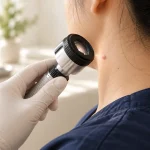
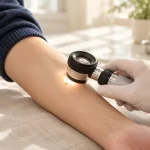
Dermoscopy may sometimes help.
For plantar lesions, gentle paring of thick surface keratin can sometimes make characteristic features easier to see.
Do Warts Need a Biopsy?
Usually not.
Biopsy may be considered when:
- The diagnosis is uncertain
- The lesion looks unusual
- It is growing unexpectedly
- It bleeds repeatedly
- It is ulcerated
- It is unusually pigmented
- It is hard or fixed
- Standard treatment repeatedly fails
- The patient is immunocompromised
- Skin cancer or another condition needs to be excluded
For genital warts, atypical pigmented, indurated, fixed, bleeding or ulcerated lesions deserve particular attention.
Can Skin Cancer Look Like a Wart?
Yes.
Certain skin cancers and precancerous lesions can occasionally resemble a wart.
Examples include some forms of:
- Squamous cell carcinoma
- Keratoacanthoma
- Verrucous carcinoma
- Other keratotic tumors
A lesion should not simply be repeatedly frozen because it “looks like a wart” if it behaves atypically.
Warning signs include:
- Rapid growth
- Spontaneous bleeding
- Persistent ulceration
- Significant pain
- Unusual pigmentation
- Hardening
- Fixation to underlying tissue
- Failure to respond as expected
In these situations, diagnosis should be reconsidered and biopsy may be appropriate.
Viral Wart Treatment
There is no single best treatment for every wart.
Treatment depends on:
- Wart type
- Location
- Size
- Number
- Duration
- Patient age
- Pain tolerance
- Previous treatment
- Scarring risk
- Pigmentation risk
- Immune status
The goal is to remove HPV-infected tissue while minimizing damage to normal skin.
Importantly, destroying a visible wart does not guarantee immediate elimination of HPV from the surrounding tissue. This helps explain why recurrence can occur.
Salicylic Acid
Salicylic acid is one of the most established treatments for common and plantar warts.
It gradually removes keratinized wart tissue.
It may be particularly useful for:
- Common warts
- Plantar warts
- Selected flat warts away from cosmetically sensitive areas
Treatment usually requires repeated application over time.
Advantages
- Can be used at home
- Non-invasive
- Useful for many ordinary warts
- Can sometimes be combined with office treatment
Limitations
- Requires consistency
- Works gradually
- Can irritate normal skin
- Not appropriate for every body site
It should not be casually applied to the face or genital area.
People with diabetes, neuropathy or poor circulation should seek medical advice before self-treating foot lesions.
Cryotherapy With Liquid Nitrogen
Cryotherapy freezes wart tissue using extremely cold liquid nitrogen.
It is one of the most commonly used office treatments for viral warts.
It can be used for:
- Common warts
- Plantar warts
- Flat warts in selected locations
- Filiform warts
- Selected genital warts
The dermatologist applies liquid nitrogen directly to the wart.
The freezing causes controlled tissue injury, after which the treated wart may blister, crust and gradually separate.
Does Cryotherapy Hurt?
It can.
Patients commonly experience:
- Stinging
- Burning
- Pain during freezing
- Tenderness afterward
The degree depends on the wart’s location, size and freezing intensity.
Plantar and periungual warts can be particularly uncomfortable.
What Happens After Cryotherapy?
The treated area may become:
- Red
- Swollen
- Tender
- Blistered
- Darker
- Crusted
A blister after freezing is often an expected treatment reaction rather than a complication.
The crust or damaged wart tissue then gradually separates as the skin heals.
How Many Cryotherapy Sessions Are Needed?
Many warts require repeated treatments rather than a single session.
The number of sessions varies considerably according to:
- Wart size
- Location
- Duration
- Thickness
- Immune response
- Previous treatment
Plantar and periungual warts can be particularly persistent.
Side Effects of Cryotherapy
Possible effects include:
- Pain
- Blistering
- Crusting
- Temporary swelling
- Hyperpigmentation
- Hypopigmentation
- Rare scarring
Pigment changes are particularly relevant in Asian and darker skin types.
Chemical Wart Treatment
Certain acids can chemically destroy wart tissue.
Depending on the wart type and location, treatments may include:
- Salicylic acid
- Trichloroacetic acid (TCA)
- Other professionally selected keratolytic or destructive agents Concentration and technique matter.
Strong acids can burn normal skin and should not be applied casually.
Curettage and Electrosurgery
Selected warts can be physically removed using curettage, electrosurgery or a combination.
Advantages
- Can remove visible wart tissue quickly
- Useful for selected larger or resistant lesions
Limitations
- Local anesthesia may be required
- Wound care is needed
- Bleeding can occur
- Pigment change is possible
- Scarring is possible
- Recurrence can still occur
Removing the visible wart does not necessarily mean HPV has immediately disappeared from the surrounding skin.
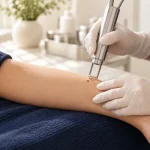
Laser Treatment for Warts
Laser may be considered for selected warts, particularly lesions that are:
- Resistant
- Extensive
- Difficult to treat by other methods
- Located in certain anatomically challenging areas
Different laser systems destroy wart tissue through different mechanisms.
Advantages
Laser can provide controlled destruction of visible wart tissue and may be useful in selected resistant cases.
Limitations
- May require local anesthesia
- Wound care may be needed
- Pain is possible
- Pigmentation can occur
- Scarring is possible
- Warts can recur
Laser should therefore not automatically be considered “better” than cryotherapy or other established treatments.
Treatment should be selected according to the individual lesion.
CO₂ Laser for Warts
CO₂ laser is an ablative laser that vaporizes tissue.
It can be used to physically remove selected warts.
It may be considered for:
- Larger warts
- Resistant lesions
- Multiple clustered lesions
- Selected genital warts
- Lesions where rapid physical removal is desirable
Potential disadvantages include:
- Open wound after treatment
- Bleeding
- Pain
- Downtime
- Post-inflammatory pigmentation
- Hypopigmentation
- Scarring
- Recurrence
Appropriate smoke evacuation and infection-control precautions are important when ablating HPV-associated lesions because viral material can be present in procedure-generated plume.
Is Laser Better Than Cryotherapy for Warts?
Not necessarily.
Cryotherapy may be practical for smaller common warts.
Laser or surgical destruction may be useful for selected larger, extensive or treatment-resistant lesions.
Other patients may be better treated with topical therapy.
The best option depends on the lesion—not simply on which technology is newest.
Immunotherapy for Warts
Some difficult warts are treated by stimulating the immune system to recognize HPV-infected cells.
Approaches may include topical or intralesional immunotherapy depending on the wart type and clinical setting.
These treatments are generally considered for selected persistent or multiple warts rather than being necessary for every patient.
Imiquimod
Imiquimod is a topical immune-response modifier.
It has an established role in selected external anogenital warts and is used in some other circumstances under medical supervision.
It works differently from destructive treatments because it stimulates local immune activity rather than simply burning or freezing tissue.
Expected local reactions may include:
- Redness
- Irritation
- Erosion
- Burning
- Crusting
More inflammation does not always mean better treatment, and severe reactions should be reviewed.
Genital Wart Treatment
Genital warts require a different treatment approach from ordinary hand or foot warts.
Options for external anogenital warts can include physician-applied treatments such as:
- Cryotherapy
- TCA/BCA
- Surgical removal
- Electrosurgery
- Laser
Patient-applied prescription options can include selected medications such as:
- Imiquimod
- Podofilox
- Sinecatechins
The appropriate treatment depends on:
- Location
- Number
- Size
- Pregnancy status
- Immune status
- Patient preference
- Previous treatment
There is no single treatment that is best for every genital wart.
Can I Use Ordinary Wart Remover on Genital Warts?
No.
Over-the-counter salicylic-acid wart removers intended for hands or feet should not be used on genital skin.
Genital skin and mucosal surfaces require different treatment.
Does Removing a Genital Wart Cure HPV?
Not necessarily.
Treatment removes or destroys visible warts, but it does not guarantee immediate eradication of HPV infection.
This is why genital warts can recur after apparently successful treatment.
Can Genital Warts Come Back?
Yes.
Recurrence is common, particularly in the period after treatment.
This does not automatically mean that the patient has been reinfected by a partner.
HPV may persist in clinically normal-appearing surrounding tissue.
Do I Need an HPV Test If I Have Genital Warts?
HPV testing is generally not used to diagnose visible genital warts, because it does not confirm the diagnosis or determine how the wart itself should be treated.
HPV testing has different established uses, particularly in cervical cancer screening and management.
Should My Partner Be Tested for HPV?
Routine HPV testing of the sexual partner simply because one partner has genital warts is generally not recommended.
Partners may already share HPV despite having no visible lesions.
However, examination may be appropriate if the partner develops lesions, and sexual-health evaluation or testing for other sexually transmitted infections may be appropriate depending on individual risk.
Do Condoms Prevent Genital HPV?
Condoms can reduce the risk of HPV transmission but do not provide complete protection.
HPV can infect genital skin not covered by a condom.
HPV Vaccination and Warts
HPV vaccination can prevent infection with important HPV types associated with genital warts and HPV-related cancers.
However:
HPV vaccination is preventive—it does not remove an existing wart or treat an HPV infection that is already present.
Vaccination may still be relevant depending on age, previous vaccination and individual circumstances.
Warts During Pregnancy
Treatment requires special consideration during pregnancy.
Some medications used for genital warts are not recommended during pregnancy.
Genital warts can also enlarge or become more prominent during pregnancy.
Patients who are pregnant or planning pregnancy should tell their clinician before using any prescription or over-the-counter wart treatment.
Can I Cut a Wart Off Myself?
This is not recommended.
Cutting, burning or aggressively picking a wart can cause:
- Bleeding
- Infection
- Scarring
- Spread to nearby skin
- Delayed diagnosis if the lesion was not actually a wart
Does Picking a Wart Make It Spread?
It can.
Picking can create tiny injuries and transfer HPV-containing material to surrounding skin or other body areas.
Avoid:
- Picking
- Biting
- Cutting
- Scratching
- Shaving directly over warts where possible
Should I Cover a Wart?
Covering selected warts can reduce picking and may reduce direct contact with other people.
Occlusion can also be used alongside certain wart treatments.
However, prolonged moisture can irritate surrounding skin, so covering should be appropriate to the lesion and treatment plan.
Can I Swim If I Have a Wart?
Having an ordinary wart does not necessarily mean swimming is prohibited.
However, HPV may spread more easily when skin is wet or damaged.
Practical precautions include:
- Covering the wart when practical
- Wearing footwear in communal changing areas
- Not sharing towels
- Avoiding picking the wart
- Keeping open post-treatment wounds clean
After destructive treatment such as cryotherapy, laser or curettage, swimming may need to be avoided temporarily until the skin barrier has healed.
Can I Go to the Gym With Warts?
Usually yes, but sensible hygiene helps reduce spread.
Avoid sharing:
- Towels
- Razors
- Nail equipment
- Personal skin-care tools
Covering exposed warts when practical and cleaning shared equipment are reasonable precautions.
Can Shaving Spread Warts?
Yes.
A razor can create microtrauma and potentially spread HPV along the shaved area.
This is particularly relevant with flat warts on the face or legs and genital warts in shaved areas.
Avoid shaving directly across active warts where possible.
Can Warts Leave Scars?
The wart itself usually does not cause a scar.
Scarring is more likely after:
- Aggressive picking
- Deep destructive treatment
- Infection
- Surgery
- Repeated trauma
Treatment should therefore balance wart destruction against cosmetic outcome.
Can Wart Treatment Cause Dark Marks?
Yes.
Post-inflammatory hyperpigmentation (PIH) can occur after cryotherapy, laser, acids, electrosurgery or other destructive procedures.
This is especially relevant in Thai and other Asian skin types.
Hypopigmentation, or lighter skin, can also occur after aggressive treatment.
Why Does My Wart Keep Coming Back?
Possible reasons include:
- Residual HPV-infected tissue
- Incomplete wart destruction
- Reinoculation to nearby skin
- Persistent local infection
- Location that is difficult to treat
- Impaired immune response
Recurrence does not necessarily mean that treatment was performed incorrectly.
Why Are Plantar Warts So Difficult to Treat?
Plantar warts can be difficult because:
- They develop under thick skin
- Pressure pushes them inward
- Callus can cover the lesion
- They may be longstanding
- Mosaic warts involve larger areas
- Aggressive treatment can make walking painful
Treatment sometimes requires a combination of keratolytic therapy and office-based procedures.
Why Are Warts Around the Nail Difficult to Treat?
Periungual warts are challenging because they can extend around or beneath the nail.
Aggressive destruction risks damaging:
- Nail fold
- Nail bed
- Nail matrix
This can potentially affect nail growth.
When Should You See a Dermatologist for a Wart?
Consider medical evaluation if:
- You are unsure whether it is a wart
- The lesion is on the face
- It is in the genital area
- It is around the nail
- It is painful
- It bleeds
- It changes rapidly
- It becomes ulcerated
- You have many warts
- Warts are spreading
- Home treatment has failed
- The wart repeatedly returns
- You have diabetes or poor circulation
- You are immunocompromised
- You are pregnant
- You are considering destructive treatment in a cosmetically sensitive area
Warning Signs: When a “Wart” May Need Biopsy
A lesion deserves further assessment if it:
- Grows rapidly
- Bleeds without trauma
- Becomes persistently ulcerated
- Is unusually hard
- Becomes fixed
- Develops irregular pigmentation
- Causes unexplained persistent pain
- Does not respond to appropriate wart treatment
- Behaves differently from the patient’s other warts
Not every rough bump is a viral wart.
What to Expect During a Wart Consultation in Bangkok
A dermatologist will usually examine:
- Location
- Number
- Size
- Surface
- Duration
- Symptoms
- Previous treatments
You may be asked:
- How long has it been present?
- Is it growing?
- Are new lesions appearing?
- Does it hurt?
- Does it bleed?
- Have you tried salicylic acid?
- Have you had cryotherapy before?
- Has it returned after treatment?
- Are you taking immunosuppressive medication?
- Do you have diabetes?
- Are you pregnant?
- For genital lesions, are there other sexual-health concerns? Most straightforward warts do not require blood tests.
Biopsy is generally reserved for lesions where diagnosis is uncertain or the behavior is atypical.
Treatment can then be selected according to the specific wart rather than applying the same procedure to every lesion.
Wart Treatment Should Start With the Correct Diagnosis
Most viral warts are benign, but there is no single treatment that is best for every patient.
A small common wart on a finger is different from:
- A painful plantar wart
- Multiple flat facial warts
- A periungual wart
- A recurrent genital wart
- A large resistant wart
- A suspicious wart-like tumor
Before treatment, useful questions include:
- Is this actually a viral wart?
- What type of wart is it?
- Where is it located?
- Is it spreading?
- Is it painful?
- Has previous treatment failed?
- Is the patient at increased risk of scarring or pigmentation?
- Is the patient immunocompromised?
- For genital lesions, is additional sexual-health assessment appropriate?
- Does the lesion have any features that require biopsy rather than destruction?
Once these questions are answered, treatment can be selected from observation, topical therapy, cryotherapy or other procedures according to the individual lesion.
The aim is not simply to “burn off” every bump. It is to remove the wart effectively while minimizing unnecessary pain, scarring, pigment changes and recurrence.
Frequently asked questions
What causes viral warts?
Viral warts are caused by human papillomavirus (HPV).
Are warts contagious?
Yes. HPV can spread through skin contact and can also spread to another part of your own body.
Are all warts sexually transmitted?
No.
Common hand, foot and facial warts are not generally considered sexually transmitted infections.
Genital HPV is transmitted primarily through sexual skin-to-skin contact.
Are hand warts the same as genital warts?
They are both caused by HPV, but usually involve different HPV types and require different clinical management.
Can touching a wart give me HPV?
Transmission is possible, but contact does not guarantee that a wart will develop.
Can I spread my own wart to another part of my body?
Yes. This is called autoinoculation.
Can shaving spread warts?
Yes, especially flat or genital warts.
Are the black dots in a wart the roots?
No. They are usually tiny thrombosed blood vessels.
Do warts have roots?
Not in the way commonly described. Warts grow within the epidermis rather than having a plant-like root.
Can a wart disappear naturally?
Yes. Some warts disappear as the immune system suppresses the infection.
How long does a wart last?
Duration varies considerably. Some disappear spontaneously, while others can persist for long periods.
Should every wart be treated?
No. Observation can be reasonable for selected small, asymptomatic warts.
What is the best treatment for a wart?
There is no single best treatment for every wart. Location, type, size, number and previous treatment all matter.
Does salicylic acid work for warts?
Yes. It is an established treatment for common and plantar warts but requires consistent use.
Can I use salicylic acid on my face?
Self-treatment with strong wart acids on facial skin is generally not recommended.
Can I use salicylic acid on genital warts?
No. Ordinary over-the-counter wart removers should not be used on genital skin.
Does freezing remove warts?
Cryotherapy can successfully destroy wart tissue, but multiple sessions may be required.
Does cryotherapy hurt?
It can cause burning, stinging and temporary pain.
Is blistering after wart freezing normal?
A blister can be an expected reaction after cryotherapy.
How long does a frozen wart take to heal?
Healing varies by location and treatment intensity. Crusting or blistering typically resolves as new skin forms underneath.
How many cryotherapy sessions will I need?
It varies. Many warts need repeated treatment.
Can cryotherapy cause dark spots?
Yes. Hyperpigmentation or hypopigmentation can occur, particularly in darker skin.
Is laser better than cryotherapy?
Not necessarily. Treatment should be chosen according to the wart rather than assuming laser is superior.
Can CO₂ laser remove warts?
It can physically destroy selected warts, particularly resistant or larger lesions, but recurrence remains possible.
Can a wart come back after laser?
Yes.
Can warts return after treatment?
Yes, because treatment removes visible wart tissue but may not immediately eliminate HPV from surrounding skin.
Why does my plantar wart keep returning?
Plantar warts are often thick, deep within keratinized skin and exposed to repeated pressure, making treatment more challenging.
Can warts spread at swimming pools?
Transmission may occur in shared environments, particularly where skin is wet or damaged, although direct contact and individual susceptibility also matter.
Can I exercise with a wart?
Usually yes, unless the wart or a recent treatment wound makes exercise painful or risks damaging the area.
Should I cut my wart off?
No. This increases the risk of bleeding, infection, scarring and spread.
Can a wart be skin cancer?
Most warts are benign, but some skin cancers can resemble warts. A changing, bleeding, ulcerated, hard or treatment-resistant lesion should be assessed.
Are genital warts cancer?
Most genital warts are benign and are usually caused by HPV types different from the high-risk types most strongly associated with cancer.
Does genital wart treatment cure HPV?
Treatment removes visible lesions but does not guarantee eradication of HPV.
Can genital warts come back?
Yes.
Does having genital warts mean my partner cheated?
No. HPV can remain clinically silent, and the timing of infection usually cannot be determined.
Should my partner get an HPV test?
Routine HPV testing of a partner solely because one person has genital warts is generally not recommended.
Does a condom prevent HPV?
Condoms reduce transmission risk but cannot completely prevent HPV because uncovered genital skin can carry the virus.
Does the HPV vaccine treat existing warts?
No. HPV vaccination prevents new infections with vaccine-covered HPV types but does not treat an existing wart.
Should I get an HPV vaccine if I have already had warts?
Vaccination may still be appropriate depending on age, vaccination history and individual circumstances, but it will not remove an existing wart.
Can pregnant women be treated for genital warts?
Treatment is possible, but some wart medications should not be used during pregnancy. Treatment must be selected accordingly.
Related conditions
-
Genital Warts Genital Warts Genital warts are benign growths caused by certain types of human papillomavirus (HPV). They can appear on the penis, vulva, groin, scrotum, perineum, around the anus, inside the anal canal, and sometimes on the cervix, vagina or urethral opening.
-
Cryotherapy Cryotherapy Cryotherapy is a dermatologic procedure that uses extreme cold—most commonly liquid nitrogen—to freeze and destroy selected abnormal skin tissue. Dermatologists commonly use it for conditions such as viral warts, actinic keratoses, some seborrheic keratoses, molluscum contagiosum, and selected skin tags.
-
Skin Tags Skin Tags Skin tags, medically called acrochordons, are soft, benign skin growths that commonly develop on the neck, underarms, groin, eyelids, beneath the breasts, and other areas where skin or clothing repeatedly rubs.