










Melasma & Pigmentation
Melasma and facial pigmentation are among the most common reasons people seek dermatology care for uneven skin tone.
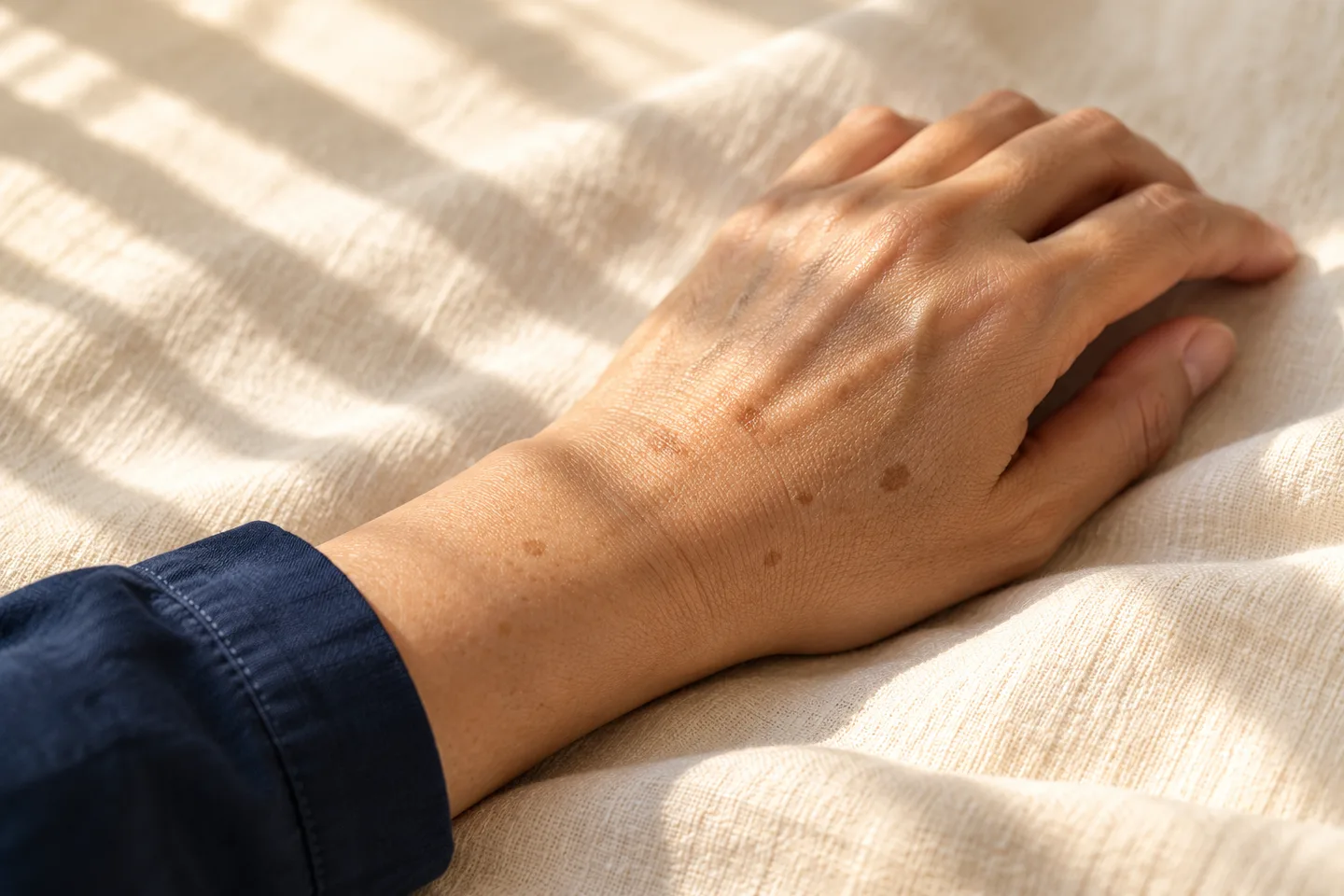
The challenge is that not every dark patch is melasma.
Brown or gray-brown facial pigmentation may represent:
- Melasma
- Post-inflammatory hyperpigmentation
- Sun spots or solar lentigines
- Freckles
- Acquired dermal pigmentation
- Hori nevus
- Drug-induced pigmentation
- Pigmentation following acne, eczema or cosmetic irritation
These conditions behave differently and do not always respond to the same treatment.
Melasma itself is a chronic, recurrent pigmentary disorder that commonly appears as symmetrical brown or gray-brown patches on the cheeks, forehead, upper lip, nose or jawline. Sunlight, visible light, hormones, genetics and other biological factors contribute to the condition.
For Thai patients, expats, tourists and international patients in Bangkok, the most important first step is therefore not choosing a laser. It is determining what type of pigmentation is actually present and what is driving it.
What Is Melasma?
Melasma is an acquired condition in which pigment-producing cells called melanocytes become overactive and produce excess melanin.
It usually causes flat, irregular brown or gray-brown patches rather than individual raised lesions.
Typical characteristics include:
- Symmetrical pigmentation
- Gradual onset
- No scale
- Usually no itching or pain
- Darkening after sun exposure
- Recurrence after successful treatment
Melasma most often involves the face but can occasionally affect other sun-exposed areas.
The condition is benign and does not become skin cancer.
However, because it is visible and often recurrent, it can significantly affect confidence and quality of life.
What Does Melasma Look Like?
Typical melasma appears as irregular areas of brown or gray-brown pigmentation.
Common patterns include:
Centrofacial Melasma
Usually affects:
- Forehead
- Cheeks
- Nose
- Upper lip
- Chin
Malar Melasma
Mainly affects:
- Upper cheeks
- Nose
Mandibular Melasma
Mainly affects:
- Jawline
- Lower cheeks
Some patients have a mixture of these patterns.
Is Melasma the Same as Hyperpigmentation?
No.
Hyperpigmentation is a broad term meaning that an area of skin has become darker.
Melasma is one specific type of hyperpigmentation.
Other causes include:
- Post-inflammatory hyperpigmentation
- Solar lentigines
- Freckles
- Drug pigmentation
- Dermal melanocytosis
- Hori nevus
- Pigmentation from chronic inflammation
This distinction matters because the treatment for melasma is not automatically the correct treatment for every dark spot.
What Causes Melasma?
Melasma develops through several interacting mechanisms rather than one single cause.
Important contributors include:
- Ultraviolet exposure
- Visible light
- Genetic susceptibility
- Hormonal influences
- Pregnancy
- Hormonal contraception
- Hormone replacement therapy
- Chronic sun exposure
- Inflammation
- Oxidative stress
- Changes in blood vessels and the dermal environment
Modern research increasingly views melasma as more than simply excess surface pigment. Changes involving the dermis, blood vessels and chronic photodamage may also contribute.
Sun Exposure and Melasma
Sun exposure is one of the most important triggers.
Both ultraviolet radiation and visible light can stimulate pigment production.
This is one reason melasma often:
- Darkens after outdoor activity
- Worsens during sunny seasons
- Returns after treatment
- Becomes difficult to control without daily photoprotection
For patients living in Bangkok, year-round UV exposure means sun protection is part of treatment rather than an optional cosmetic step.
Does Visible Light Matter?
Yes.
Visible light can aggravate melasma, particularly in people with medium to darker skin tones.
For this reason, tinted sunscreens containing iron oxides may provide additional benefit beyond standard ultraviolet protection. The American Academy of Dermatology recommends considering tinted sunscreen with iron oxides for patients with melasma.
Hormones and Melasma
Hormonal influences are important in some patients.
Melasma may appear or worsen during:
- Pregnancy
- Use of estrogen/progestogen-containing contraception
- Hormone replacement therapy
This is why melasma has historically been called the “mask of pregnancy.
”
However, not every patient has a hormonal trigger, and men can also develop melasma.
Is Melasma Caused by Pregnancy?
Pregnancy can trigger melasma because of hormonal changes.
In some patients pigmentation improves after pregnancy, while in others it persists.
Treatment choices during pregnancy are more limited because several medications commonly used for pigmentation are not appropriate.
Sun protection and gentle skincare become particularly important.
Is Melasma Hereditary?
Genetics appears to contribute.
Many patients report family members with similar facial pigmentation.
However, having a family history does not mean melasma is inevitable.
Environmental factors—especially light exposure—still play an important role.
Can Heat Make Melasma Worse?
Many patients notice worsening after:
- Outdoor heat
- Cooking
- Exercise
- Sauna
- Hot environments
Heat itself is less clearly established than ultraviolet and visible light, but vascular and inflammatory mechanisms may contribute in susceptible patients.
The practical point is that repeated overheating may worsen facial flushing and pigmentation in some individuals, particularly when combined with sun exposure.
Does Stress Cause Melasma?
Stress is sometimes reported as a trigger, but it is not considered the primary cause.
Melasma is a biological pigmentary disorder with complex hormonal, inflammatory, vascular and environmental influences.
Stress may contribute indirectly in some patients but should not be used as the sole explanation.
Types of Melasma
Melasma can be described according to where excess pigment is located.
Epidermal Melasma
Pigment is mainly located in the epidermis, the upper layer of skin.
It often appears darker brown and may show clearer enhancement under Wood’s lamp.
This type generally has a better potential response to topical treatment.
Dermal Melasma
Pigment is located deeper within the dermis.
It may look:
- Light brown
- Gray
- Blue-gray
Treatment is usually more difficult.
Mixed Melasma
This contains both epidermal and dermal pigment.
It is common and often responds only partially to treatment.
The distinction is not always perfect, but it helps explain why some pigmentation clears relatively easily while other areas remain resistant.
What Is Post-Inflammatory Hyperpigmentation?
Post-inflammatory hyperpigmentation, or PIH, is darkening that develops after inflammation or skin injury.
Common triggers include:
- Acne
- Eczema
- Contact dermatitis
- Insect bites
- Burns
- Picking pimples
- Aggressive cosmetic treatments
- Laser irritation
- Chemical peels
- Skin infection
PIH is especially common and persistent in Asian and darker skin tones.
It is different from melasma.
A patient can also have melasma and PIH at the same time, which makes treatment more complicated.
Melasma vs Post-Inflammatory Hyperpigmentation
Melasma tends to be:
- Symmetrical
- Facial
- Gradually developing
- Related to sun and hormonal triggers
PIH tends to follow the exact locations of previous inflammation.
For example:
Acne leaves brown spots where pimples were.
Eczema leaves pigmentation where the rash occurred.
A burn leaves pigmentation in the treated area.
This distinction is important because treating the active inflammation is essential before trying to lighten the remaining pigment.
What Are Sun Spots?
Solar lentigines are flat brown spots caused by cumulative sun exposure.
They are often called:
- Sun spots
- Age spots
- Liver spots
They commonly affect:
- Face
- Hands
- Forearms
- Shoulders
Unlike melasma, sun spots are usually discrete individual lesions rather than broad symmetrical patches.
They may respond differently to pigment-targeting procedures.
Freckles vs Melasma
Freckles are usually:
- Smaller
- More discrete
- Strongly influenced by genetics
- Darker after sun exposure
Melasma forms larger irregular patches.
Patients may have both conditions at the same time.
Hori Nevus vs Melasma
Acquired bilateral nevus of Ota-like macules, often called Hori nevus, can resemble melasma.
It often appears as small blue-gray or slate-gray spots on both cheeks.
The pigment is deeper in the dermis, so treatment differs from ordinary epidermal melasma.
Mistaking Hori nevus for melasma can lead to disappointing treatment.
Drug-Induced Pigmentation
Some medications can cause pigmentation.
Depending on the drug, pigmentation may be:
- Facial
- Diffuse
- Blue-gray
- Brown
- Limited to specific areas
A complete medication history is therefore useful when pigmentation appears unexpectedly.
Patients should not stop medically necessary medication without discussing it with the prescribing physician.
Why Is Melasma Commonly Difficult to Treat?
Melasma is difficult because it is not simply “extra pigment sitting on top of the skin.
”
Its biology can involve:
- Overactive melanocytes
- Ultraviolet exposure
- Visible light
- Hormones
- Dermal changes
- Blood vessels
- Inflammation
- Oxidative stress
Removing pigment without controlling these triggers may give temporary improvement followed by recurrence.
This is why repeated aggressive laser treatments without long-term photoprotection and maintenance therapy can be disappointing.
Can Melasma Be Permanently Cured?
There is currently no treatment that guarantees permanent cure.
Melasma is better viewed as a chronic condition that can usually be controlled and improved.
Even after good clearance, recurrence can occur after:
- Sun exposure
- Visible light exposure
- Hormonal changes
- Pregnancy
- Treatment discontinuation
Long-term management is therefore often necessary.
How Is Melasma Diagnosed?
Most cases are diagnosed clinically.
A dermatologist evaluates:
- Color
- Pattern
- Symmetry
- Distribution
- Border
- Previous inflammation
- Hormonal history
- Medication history
- Sun exposure
- Previous procedures
Additional tools may occasionally help.
Wood’s Lamp Examination
Wood’s lamp uses ultraviolet A light to highlight changes in pigmentation.
It may help assess:
- Extent of pigmentation
- Epidermal pigment
- Border of lesions
- Some differential diagnoses
Epidermal pigmentation may become more obvious under Wood’s lamp, whereas deeper dermal pigmentation may show little enhancement.
Wood’s lamp findings are interpreted together with the clinical examination rather than used alone.
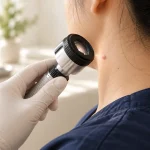
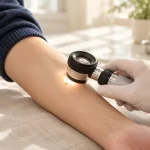
Dermoscopy
Dermoscopy allows magnified examination of pigment patterns.
It can sometimes help distinguish:
- Melasma
- Lentigines
- Dermal pigmentation
- Other pigmentary disorders
It may also help assess vascular components and pigment depth.
Is Skin Biopsy Needed?
Usually not.
Melasma has a characteristic appearance in most patients.
Biopsy may occasionally be considered when:
- Diagnosis is unclear
- Pigmentation is unusual
- Another skin disease is suspected
- A persistent lesion has atypical features
Do I Need Blood Tests?
Most patients with straightforward melasma do not require routine blood tests.
Testing may be considered if the clinical history suggests:
- Hormonal disorder
- Thyroid disease
- Medication-related disease
- Another underlying medical condition
Pigmentation alone is not a reason to order a broad laboratory panel.
When Is a Dark Spot Not “Just Pigmentation”?
Most pigmentation disorders are benign.
However, a new or changing pigmented lesion deserves assessment if it shows features such as:
- Rapid growth
- Marked asymmetry
- Irregular border
- Multiple colors
- Bleeding
- Ulceration
- Persistent crusting
- Significant change compared with other moles
- A new solitary dark spot that continues to evolve
These features are different from typical symmetrical facial melasma.
A suspicious pigmented lesion should not simply be treated with a pigment laser or whitening cream before diagnosis.
How Is Melasma Treated?
Good melasma treatment is usually layered rather than based on one procedure.
A typical strategy may involve:
- Photoprotection
- Gentle skin-barrier care
- Topical pigment-suppressing treatment
- Selected oral treatment when appropriate
- Procedures for resistant cases
- Maintenance treatment to reduce relapse
Recent consensus recommendations continue to place topical therapy and photoprotection as first-line management, with oral treatments and procedures added selectively rather than automatically.
Sunscreen Is Part of Melasma Treatment
Sunscreen is one of the most important components of melasma management.
Patients should consider:
- Broad-spectrum UVA/UVB protection
- SPF 30 or higher
- Consistent daily use
- Reapplication when outdoors
- Water resistance when sweating or swimming
- Physical shade and hats
For pigmentation-prone patients, tinted sunscreen containing iron oxides can also help reduce visible-light exposure.
In Bangkok, sunscreen should generally be viewed as a daily treatment rather than something used only at the beach.
Why Sunscreen Alone May Not Be Enough
Sunscreen helps prevent worsening and recurrence but often does not remove established pigment by itself.
It works best as the foundation of a broader treatment plan.
Without photoprotection, however, other treatments are much less likely to give durable improvement.
Hydroquinone
Hydroquinone is one of the most established topical treatments for melasma.
It works mainly by inhibiting tyrosinase, an enzyme involved in melanin production.
Advantages include:
- Strong clinical experience
- Useful for epidermal pigmentation
- Can be combined with other treatments
Limitations include:
- Irritation
- Dryness
- Contact dermatitis
- Rebound pigmentation if misused
- Rare exogenous ochronosis with inappropriate prolonged use, particularly high-concentration or unsupervised use Hydroquinone is usually used for defined treatment periods rather than indefinitely without monitoring.
Triple-Combination Cream
A well-established melasma treatment combines:
- Hydroquinone
- Tretinoin
- A topical corticosteroid
This is often called triple-combination therapy.
The ingredients work in different ways:
Hydroquinone reduces melanin formation.
Tretinoin increases skin turnover and enhances penetration.
The corticosteroid reduces irritation and inflammation.
Triple-combination therapy remains an important first-line prescription option in appropriate patients.
Potential limitations include:
- Irritation
- Peeling
- Dryness
- Steroid-related side effects if misused
- Need for medical supervision
Tretinoin
Tretinoin can improve pigmentation by increasing epidermal turnover and influencing pigment transfer.
Potential side effects include:
- Redness
- Peeling
- Burning
- Dryness
- Increased sensitivity
Starting too aggressively can create irritation and potentially worsen pigmentation in pigmentation-prone skin.
Retinoids are generally avoided during pregnancy.
Azelaic Acid
Azelaic acid can be useful for both pigmentation and acne-prone skin.
Advantages include:
- Pigment-reducing effect
- Anti-inflammatory properties
- Often useful when acne and PIH coexist
- Non-hydroquinone option
Possible side effects include temporary:
- Stinging
- Burning
- Dryness
Cysteamine
Cysteamine is another topical depigmenting treatment used for melasma and hyperpigmentation.
It may be useful for patients looking for a non-hydroquinone option.
Potential limitations include:
- Odor
- Irritation
- Need for regular application
- Gradual rather than immediate improvement
Kojic Acid and Other Depigmenting Agents
Other topical ingredients that may be used alone or in combination include:
- Kojic acid
- Thiamidol
- Tranexamic acid
- Vitamin C
- Arbutin
- Niacinamide
- Other tyrosinase-inhibiting ingredients
Evidence is stronger for some agents than others.
Cosmetic ingredients should not automatically be assumed equivalent to prescription treatment.
Tranexamic Acid for Melasma
Tranexamic acid, or TXA, has become an important treatment option for selected melasma patients.
It appears to affect several pathways involved in pigmentation, inflammation and vascular signaling.
It can be used in different forms, including:
- Topical
- Oral
- Intradermal approaches described in the literature
Oral tranexamic acid is generally used off-label for melasma, meaning melasma is not its original approved indication.
Oral Tranexamic Acid
Oral TXA can improve melasma in appropriately selected patients, particularly when standard topical treatment is insufficient.
Potential advantages include:
- Useful for resistant or recurrent melasma
- Can be combined with topical treatment
- May reduce both pigmentary and vascular components
But it is not appropriate for everyone.
Who Should Be Cautious With Oral Tranexamic Acid?
A careful medical history is essential because TXA affects fibrinolysis and may increase concern around thrombosis in susceptible patients.
It should generally be avoided or carefully reconsidered in patients with factors such as:
- Previous blood clot
- Deep vein thrombosis
- Pulmonary embolism
- Active thromboembolic disease
- Significant thrombotic risk
- Certain clotting disorders
- Use of combined hormonal contraception in relevant situations
- Previous hypersensitivity to tranexamic acid
A clinician may need to review other risk factors before prescribing.
Oral TXA should not simply be taken as a cosmetic supplement without medical assessment.
Does Tranexamic Acid Cure Melasma?
No.
It may reduce pigmentation, but recurrence can occur after stopping treatment.
Photoprotection and maintenance therapy remain important.
Chemical Peels for Melasma
Superficial chemical peels may help remove excess epidermal pigment and improve skin turnover.
Examples described in melasma treatment include:
- Glycolic acid
- Salicylic acid
- Jessner-type peels
- Selected superficial TCA peels
Potential advantages include:
- Can improve superficial pigment
- May improve texture simultaneously
- Can be used as part of combination treatment
Limitations include:
- Irritation
- Peeling
- Redness
- Post-inflammatory hyperpigmentation
- Risk of worsening melasma if too aggressive
Peels should therefore be selected carefully in Asian skin and darker skin types.
Is There Downtime After a Chemical Peel?
It depends on peel depth.
Superficial peels may cause:
- Mild redness
- Dryness
- Flaking
- Temporary sensitivity
Deeper peels have greater downtime and higher pigmentary risk.
For melasma, aggressive peeling is not automatically better.
Microneedling for Melasma
Microneedling creates controlled microscopic channels in the skin.
It may be used:
- Alone in selected cases
- To support topical delivery
- In combination protocols
Potential advantages include limited thermal injury compared with some energy-based devices.
Possible risks include:
- Redness
- Irritation
- Infection
- PIH
- Scarring if performed too deeply or improperly
- Reactions if inappropriate products are introduced into the skin Microneedling should not be viewed as a guaranteed melasma cure.
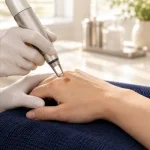
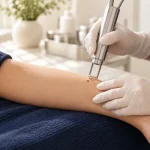
Laser Treatment for Melasma
Laser is one of the areas where patients need particularly realistic expectations.
Melasma can improve after laser treatment, but it can also:
- Recur
- Become darker
- Develop PIH
- Develop mottled hypopigmentation
- Become more difficult to manage after repeated aggressive procedures For this reason, lasers are generally better considered adjunctive or later-line treatments, not automatic first-line treatment for every patient.
Q-Switched Nd:YAG and “Laser Toning”
Low-fluence 1064-nm Q-switched Nd:YAG treatment has been widely used for melasma, particularly in Asia.
Potential advantages include:
- Relatively low downtime
- Can lighten pigmentation in selected patients
- Often tolerated by darker skin types when carefully performed Important limitations include:
- Requires multiple sessions
- Relapse is common
- Repeated treatment can cause mottled hypopigmentation
- Over-treatment can worsen pigmentation
The goal should not be to repeatedly “blast away” pigment.
Picosecond Laser
Picosecond lasers deliver very short pulses that create more photoacoustic and less prolonged thermal energy compared with some older technologies.
They may help selected pigmentation disorders and certain cases of melasma.
However:
- Results vary
- Multiple sessions may be needed
- Recurrence remains possible
- PIH can still occur
- There is no single laser that is universally superior for all melasma patients Current systematic reviews show laser treatment can improve melasma overall, but study results remain heterogeneous and relapse remains an important limitation.
Fractional Laser
Fractional lasers create microscopic treatment zones.
Both ablative and non-ablative fractional devices have been studied.
They may help certain resistant cases or be used for laser-assisted drug delivery.
Possible risks include:
- Redness
- Swelling
- Crusting
- PIH
- Recurrence
- Worsening melasma
Fractional treatment should therefore be carefully selected in darker Asian skin.
IPL for Melasma
Intense pulsed light may improve pigmentation in selected patients.
However, it creates significant heat and light exposure.
Melasma can recur or worsen after treatment, particularly in patients with darker skin or active disease.
IPL should not automatically be treated as a routine first choice for melasma.
Can Laser Make Melasma Worse?
Yes.
This is one of the most important things patients should understand.
Excessive heat or inflammation can stimulate melanocytes and produce:
- Rebound pigmentation
- Post-inflammatory hyperpigmentation
- Darker melasma
Repeated aggressive laser toning can also cause mottled hypopigmentation, where small areas of the skin become abnormally lighter.
That is why a treatment that is appropriate for an isolated sun spot may not be appropriate for diffuse melasma.
Is More Powerful Laser Better?
No.
For melasma, aggressive energy does not automatically produce better long-term results.
Because melasma is highly reactive to inflammation, treatment must balance pigment removal against the risk of triggering more pigmentation.
What About Lasers for Other Pigmentation?
This is where correct diagnosis becomes especially important.
A laser may be quite effective for a discrete solar lentigo but inappropriate as the first treatment for active melasma.
Likewise:
- Hori nevus involves deeper dermal pigment
- PIH requires control of inflammation
- Melasma requires long-term photoprotection
- Suspicious pigmented lesions require diagnosis before cosmetic removal There is no universal “pigmentation laser” that treats all brown spots in the same way.
What Is the Best Treatment for Melasma?
There is no single best treatment for everyone.
A practical approach is often:
Step 1: Confirm the diagnosis
Determine whether the pigmentation is actually melasma, PIH, sun spots, Hori nevus or another condition.
Step 2: Control triggers
Especially:
- UV exposure
- Visible light
- Skin irritation
- Hormonal factors where relevant
Step 3: Start topical therapy
Depending on the patient, this may include:
- Hydroquinone
- Triple-combination therapy
- Azelaic acid
- Retinoids
- Cysteamine
- Other pigment-suppressing agents
Step 4: Assess response over time
Melasma usually requires weeks to months, not a few days.
Step 5: Add treatment selectively
For resistant disease, options may include:
- Oral tranexamic acid in suitable patients
- Chemical peels
- Microneedling
- Selected laser/light procedures
Step 6: Maintenance
Once pigmentation improves, the goal shifts to preventing relapse.
How Long Does Melasma Treatment Take?
Melasma treatment is gradual.
Patients should usually think in terms of months, not days.
Some topical regimens may begin showing improvement after several weeks, but a meaningful assessment often takes longer.
Procedures also usually require multiple sessions.
A good plan should include a defined review point rather than continuing the same treatment indefinitely without assessing whether it is helping.
Why Does My Melasma Keep Coming Back?
Recurrence is extremely common.
Common reasons include:
- Sun exposure
- Visible light
- Stopping sunscreen
- Hormonal changes
- Stopping maintenance treatment
- Skin irritation
- Overly aggressive procedures
- Melasma’s underlying chronic biology
Recurrence does not necessarily mean previous treatment was useless.
It means maintenance is part of managing a chronic condition.
What Is Maintenance Treatment?
After melasma improves, a dermatologist may reduce treatment intensity rather than stop everything immediately.
Maintenance may involve:
- Consistent sunscreen
- Tinted visible-light protection
- Gentle skincare
- Non-irritating pigment-control ingredients
- Intermittent prescription therapy in selected patients
The goal is to keep melanocyte activity under control while minimizing long-term treatment side effects.
Melasma and Skin Irritation
Irritation itself can worsen pigmentation.
This is especially important in Asian and darker skin.
Common problems include using several active ingredients simultaneously:
- Strong retinoid
- AHA
- BHA
- Scrub
- Vitamin C
- Hydroquinone
- Whitening cream
- Peels
If the skin becomes red, burning or inflamed, post-inflammatory hyperpigmentation may be added on top of the original melasma.
More active ingredients are not always better.
A Simple Skincare Strategy for Melasma-Prone Skin
A basic routine usually focuses on:
Morning
- Gentle cleanser
- Selected pigment treatment if prescribed
- Moisturizer if needed
- Broad-spectrum sunscreen
- Tinted sunscreen/iron oxide when appropriate
Evening
- Gentle cleansing
- Prescribed topical treatment
- Moisturizer
Treatment can become more complex later if necessary.
Starting with too many active products often creates unnecessary irritation.
Melasma During Pregnancy
Pregnancy-associated melasma is common.
Treatment is more conservative because several standard medications should be avoided.
For example, topical retinoids are generally avoided during pregnancy, and treatment choices should be reviewed individually.
The safest foundation is usually:
- Sun protection
- Tinted mineral or otherwise pregnancy-appropriate sunscreen
- Gentle skincare
- Pregnancy-compatible topical options if needed
Patients who are pregnant, trying to conceive or breastfeeding should always tell their dermatologist before treatment.
Can Melasma Be Treated During Breastfeeding?
Some treatments may be compatible while others require caution.
The decision depends on:
- Medication
- Body area
- Amount used
- Infant exposure
- Individual medical circumstances
A treatment that was used before pregnancy should not automatically be restarted without review.
Does Diet Affect Melasma?
There is no established “melasma diet” that reliably clears pigmentation.
Patients generally do not need to eliminate:
- Gluten
- Dairy
- Seafood
- Coffee
- Spicy food
unless another medical condition requires it.
A balanced diet and general health are appropriate, but restrictive diets should not be presented as a cure.
Do Vitamins Cure Melasma?
No vitamin supplement has been proven to permanently cure melasma.
Vitamin C and other antioxidants may be used topically or in combination regimens, but they are not substitutes for photoprotection and evidence-based treatment.
Is Glutathione Effective for Pigmentation?
Glutathione is commonly marketed for skin lightening.
Some studies have examined oral and topical formulations, but evidence and product quality vary considerably.
It should not be represented as a guaranteed or permanent treatment for melasma.
Safety is also influenced by route of administration and product quality.
What About “Whitening Creams” Bought Online?
Unregulated whitening products are an important concern.
Some products may contain undeclared:
- Potent corticosteroids
- Hydroquinone
- Mercury
- Other active substances
Chronic use can lead to:
- Skin thinning
- Acne
- Visible blood vessels
- Rebound pigmentation
- Exogenous ochronosis
- Other complications
Patients should be particularly cautious with creams that produce extremely rapid whitening without a clear ingredient list.
Melasma in Asian Skin
Melasma is particularly relevant in Asian skin because pigmentation tends to be visually prominent and post-inflammatory hyperpigmentation can occur after irritation.
This affects treatment selection.
Aggressive laser settings, deep peels or excessive combination therapy may lead to greater pigmentary complications.
For Thai patients, treatment should therefore aim not only to lighten pigmentation but also to avoid creating new inflammation.
Melasma in Bangkok’s Climate
Bangkok presents several practical challenges:
- Strong UV exposure
- Outdoor sunlight throughout the year
- Heat
- Sweating
- Frequent transitions between outdoor heat and air conditioning
- High daily incidental light exposure during commuting
This does not mean Bangkok “causes” melasma.
However, these factors make consistent photoprotection and practical skincare especially important.
For example, someone who applies sunscreen at 7 AM but spends significant time outdoors later in the afternoon may need to think about reapplication rather than relying on one morning application.
Can Melasma Be Removed in One Laser Session?
Usually not.
Claims that chronic melasma can be permanently removed in one session should be treated cautiously.
One session might temporarily lighten pigment in selected cases, but melasma’s underlying biology remains.
Durable management generally requires:
- Photoprotection
- Topical treatment
- Maintenance
- Carefully chosen procedures when appropriate
When Should You See a Dermatologist for Melasma or Pigmentation?
Consider dermatology assessment when:
- Pigmentation is new
- The diagnosis is unclear
- Pigmentation is spreading
- Treatment has not worked
- Pigment keeps returning
- You are considering laser treatment
- You have been using whitening cream long term
- You developed pigmentation after a cosmetic procedure
- You have mixed acne and pigmentation
- You are pregnant or planning pregnancy
- You are considering oral tranexamic acid
- The pigmentation is blue-gray rather than brown
- You have a single unusual changing dark lesion
When Should a Pigmented Lesion Be Checked Promptly?
A dermatologist should evaluate a lesion that:
- Changes rapidly
- Bleeds
- Ulcerates
- Develops several colors
- Has an irregular shape
- Grows progressively
- Looks very different from other spots
- Becomes persistently painful or crusted
These features are not typical of ordinary melasma.
A suspicious lesion should be diagnosed before any cosmetic pigment-removal procedure.
What to Expect During a Melasma Consultation in Bangkok
A useful pigmentation consultation should first establish the diagnosis.
A dermatologist may ask:
- When did the pigmentation start?
- Was it related to pregnancy?
- Are you taking hormonal contraception?
- Which medications do you take?
- Does sun exposure worsen it?
- Have you had previous laser treatments?
- Have you used hydroquinone?
- Have you used steroid-containing whitening creams?
- Does your skincare sting or irritate your skin?
- Did the pigmentation follow acne or dermatitis?
- Does pigmentation return after treatment?
- Are there individual sun spots mixed with melasma?
The examination may assess:
- Pigment color
- Depth
- Distribution
- Symmetry
- Background redness
- Signs of irritation
- Acne or inflammation
- Possible Hori nevus
- Sun damage
Wood’s lamp or dermoscopy may be used when helpful.
The resulting plan may involve topical therapy alone, combination treatment, selected procedures or simply correcting an incorrect diagnosis.
What Should International Patients Bring?
For expats, tourists and international patients seeking pigmentation treatment in Bangkok, useful information includes:
- Photographs before previous treatment
- A timeline showing when pigmentation developed
- Names or photographs of creams used
- Previous laser treatment records
- Previous peel or microneedling history
- Medication list
- Hormonal medication history
- Previous tranexamic acid use
- Previous adverse reactions
- Information about pregnancy or contraceptive use where relevant This can help prevent repeating procedures that previously worsened pigmentation.
Good Melasma Treatment Starts With the Correct Diagnosis
When someone has facial pigmentation, the first question should not be:
“Which laser should I use?”
The better questions are:
Is this actually melasma?
Is there post-inflammatory pigmentation as well?
Are there sun spots or Hori nevus mixed in?
Is the pigment mainly epidermal, dermal or mixed?
Is sunlight or visible light being adequately controlled?
Is skincare causing irritation?
Would topical treatment be sufficient?
Is oral tranexamic acid appropriate and medically safe?
Would a peel or laser add enough benefit to justify the risk?
What maintenance plan will reduce recurrence?
Melasma management works best when it is approached as a chronic pigmentary disorder requiring long-term control, rather than simply a collection of brown pigment that needs to be removed.
For many patients, the foundation remains with careful photoprotection and appropriate topical treatment. Procedures can be useful, but they should be selected according to the diagnosis, skin type, pigment depth, previous treatment and risk of post-inflammatory hyperpigmentation.
Frequently asked questions
What is melasma?
Melasma is a chronic pigmentary condition that causes symmetrical brown or gray-brown facial patches.
Is melasma dangerous?
No. Melasma itself is benign, but unusual or changing pigmented lesions should be evaluated separately.
Is melasma a type of hyperpigmentation?
Yes.
Hyperpigmentation is a broad category, while melasma is one specific diagnosis.
What causes melasma?
The cause is multifactorial and includes UV exposure, visible light, hormones, genetics and other inflammatory and vascular mechanisms.
Is melasma caused by hormones?
Hormonal factors can contribute, particularly during pregnancy or with some hormonal medications, but not every case is hormone-driven.
Can men get melasma?
Yes.
Although more common in women, melasma can occur in men.
Is melasma permanent?
It can persist for years and frequently recurs, but treatment can significantly reduce its appearance in many patients.
Can melasma be cured?
There is no treatment that guarantees permanent cure.
The goal is long-term control.
Does sunscreen really help melasma?
Yes.
Photoprotection is one of the foundations of treatment and relapse prevention.
Should I use tinted sunscreen?
Tinted sunscreen containing iron oxides may provide additional visible-light protection, which can be especially helpful in melasma-prone darker skin.
What SPF should I use for melasma?
Broad-spectrum SPF 30 or higher is generally recommended, together with adequate application and reapplication.
What is the difference between melasma and PIH?
Melasma typically causes symmetrical facial patches, whereas PIH follows inflammation such as acne, eczema or cosmetic irritation.
Can acne cause pigmentation?
Yes.
Inflammatory acne commonly causes post-inflammatory hyperpigmentation.
What is Hori nevus?
Hori nevus causes bilateral blue-gray facial spots from pigment located deeper in the dermis and can be mistaken for melasma.
Can Wood’s lamp diagnose melasma?
It can help assess pigment distribution and extent but should be interpreted together with clinical examination.
Do I need a skin biopsy?
Usually not.
Biopsy is reserved for unclear or atypical pigmentation.
What is the best cream for melasma?
There is no single best cream for everyone. Options include hydroquinone, triple-combination therapy, azelaic acid, retinoids, cysteamine and other pigment-modulating agents.
Is hydroquinone safe?
It can be effective when used appropriately, but prolonged or inappropriate use may cause irritation and other complications.
Can I use hydroquinone forever?
Continuous unsupervised long-term use is generally not recommended.
Treatment schedules and maintenance should be individualized.
What is triple-combination cream?
It combines hydroquinone, tretinoin and a topical corticosteroid and is an established treatment for melasma.
Does tretinoin help pigmentation?
Yes, it can improve epidermal pigmentation, but irritation is possible.
Does azelaic acid treat melasma?
It can help and is also useful when acne and pigmentation coexist.
What is tranexamic acid for melasma?
Tranexamic acid is a medication that affects pathways involved in pigmentation and can be used topically or orally in selected patients.
Is oral tranexamic acid safe for everyone?
No.
A history of thrombosis and other clotting risks must be considered before prescribing it.
Is tranexamic acid FDA-approved for melasma?
Oral tranexamic acid is used off-label for melasma rather than being originally approved specifically for this indication.
Does tranexamic acid permanently cure melasma?
No.
Pigmentation may recur after treatment.
Can chemical peels treat melasma?
Superficial peels may help selected patients but can cause irritation and PIH if too aggressive.
Can microneedling treat melasma?
It may be used as an adjunct in selected cases, but it is not a guaranteed cure.
Does laser treat melasma?
Lasers can improve melasma in selected patients, but relapse, PIH and worsening are possible.
What is laser toning?
It usually refers to repeated low-fluence pigment-laser treatment, commonly with Q-switched Nd:YAG technology.
Is laser toning safe?
It can be useful in carefully selected patients, but repeated treatment can cause rebound pigmentation or mottled hypopigmentation.
Is picosecond laser better for melasma?
Not universally.
It may be useful in selected cases, but no laser is clearly best for every patient.
Can laser make melasma darker?
Yes.
Heat and inflammation from procedures can trigger post-inflammatory pigmentation or worsen melasma.
Why does melasma come back after laser?
Laser reduces visible pigment but may not permanently switch off the biological mechanisms causing melasma.
How long does melasma treatment take?
Usually months rather than days.
Can pregnancy melasma disappear?
It may fade after pregnancy, but some patients continue to have persistent pigmentation.
Can I treat melasma while pregnant?
Some treatments are avoided during pregnancy, so the regimen should be reviewed individually.
Does food cause melasma?
There is no specific food proven to cause ordinary melasma.
Should I avoid gluten or dairy?
Not routinely unless there is another medical reason.
Do vitamins cure melasma?
No vitamin supplement has been proven to permanently cure melasma.
Does heat worsen melasma?
Some patients report worsening with heat, but UV and visible light are better-established triggers.
Why does melasma worsen in Bangkok?
Strong year-round UV exposure and significant daily light exposure can make melasma more difficult to control if photoprotection is inconsistent.
When should I see a dermatologist for facial pigmentation?
You should consider assessment if the diagnosis is unclear, treatment is failing, pigmentation keeps returning, you are considering laser or oral medication, or a pigmented lesion is changing.
Related conditions
-
Melasma Melasma Melasma is a common acquired pigmentation disorder that causes symmetrical brown, gray-brown, or sometimes darker patches, most often on the cheeks, forehead, nose, upper lip, and jawline.

-
Post-inflammatory Hyperpigmentation Post-inflammatory Hyperpigmentation Post-inflammatory hyperpigmentation (PIH) is the flat brown, dark brown, or grayish discoloration that remains after inflammation or injury to the skin. It commonly follows acne, eczema, insect bites, burns, scratching, irritation, and some dermatologic procedures.
-
Sun Spots Sun Spots A sun spot is a common term for a flat brown mark that develops on sun-exposed skin. In dermatology, many of these spots are solar lentigines—benign areas of increased pigmentation associated with cumulative sun exposure.

-
Pigment Laser Pigment Laser Pigment Laser is a general term for laser systems designed to target melanin, the pigment responsible for many brown, gray, blue, or black skin lesions.