

Post-inflammatory Hyperpigmentation
Post-inflammatory hyperpigmentation (PIH) is the flat brown, dark brown, or grayish discoloration that remains after inflammation or injury to the skin. It commonly follows acne, eczema, insect bites, burns, scratching, irritation, and some dermatologic procedures.
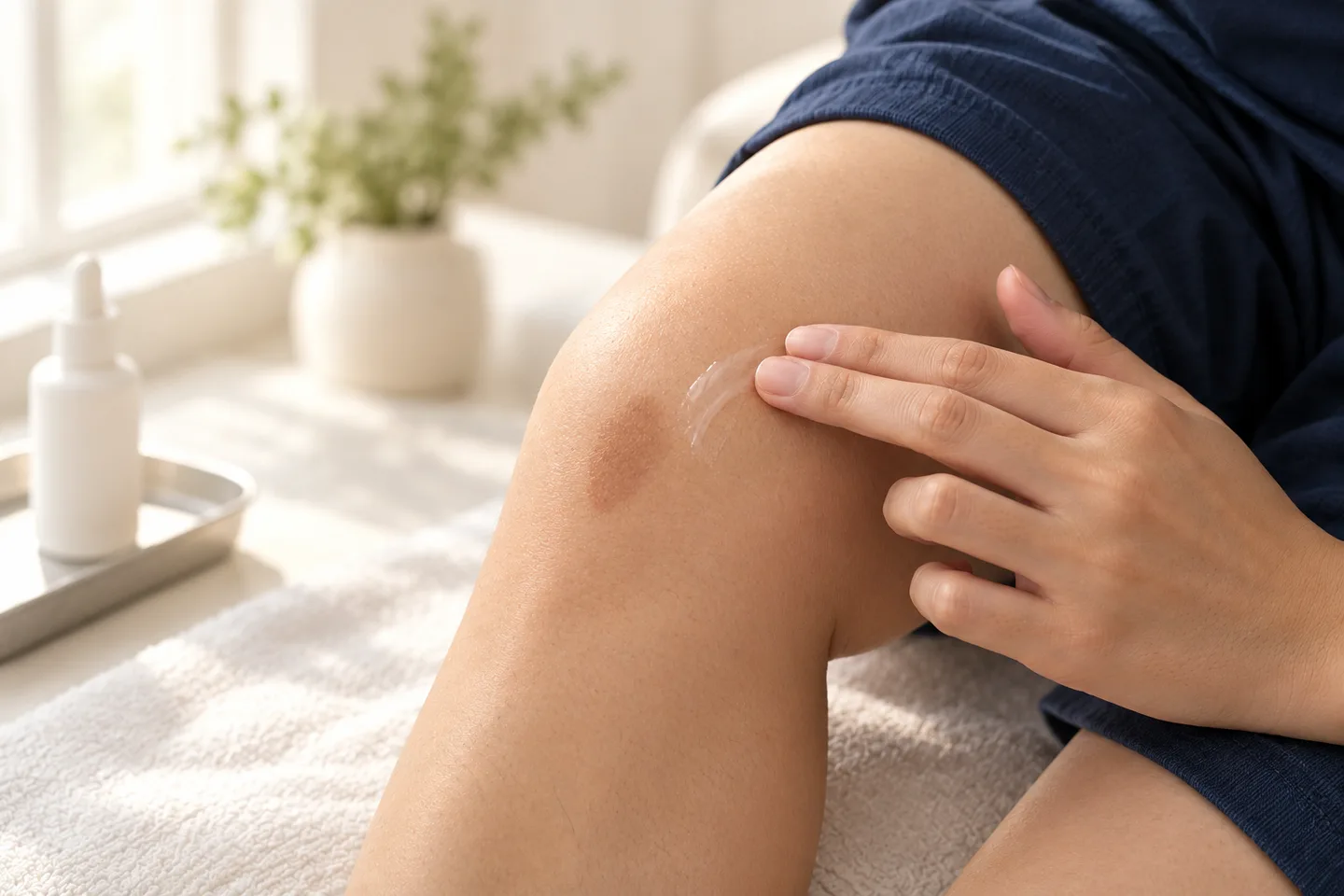
PIH is especially relevant in Thai and other Asian skin because darker skin tones tend to develop more noticeable and persistent pigmentation after inflammation. Importantly, PIH is not the same as an acne scar: PIH changes skin color but does not create a permanent depression or raised scar.
For patients looking for PIH treatment in Bangkok, the most useful principle is:
Control the cause of inflammation first, protect the skin from light, and then treat the remaining pigment.
Trying to remove pigment aggressively while acne, eczema, irritation, or another inflammatory condition remains active can lead to more inflammation—and potentially more pigmentation. Reviews of PIH treatment therefore place control of the underlying condition and photoprotection at the foundation of treatment.What Is Post-Inflammatory Hyperpigmentation?
Post-inflammatory hyperpigmentation is excess pigmentation that develops after the skin has been inflamed or injured.
During inflammation, signals released in the skin can stimulate melanocytes—the cells responsible for producing melanin—to produce or distribute more pigment.
The resulting melanin may remain mainly within the epidermis, the superficial layer of skin, or may extend deeper into the dermis.
This difference helps explain why some dark marks fade relatively quickly while others remain for much longer. Deeper pigment can appear gray, blue-gray, or gray-brown and is generally more difficult to treat.
What Does PIH Look Like?
PIH usually appears as a flat area of discoloration where inflammation previously occurred.
Depending on skin tone and pigment depth, it may appear:
- Light brown
- Medium brown
- Dark brown
- Gray-brown
- Blue-gray
The shape often follows the original inflammatory lesion.
For example, acne-related PIH may appear as multiple small brown marks where pimples have healed, while eczema may leave larger irregular patches.
PIH itself is usually flat. If you can feel a depression, indentation, thickening, or raised area, another process such as scarring may also be present.
What Causes PIH?
Almost any condition that produces sufficient skin inflammation can leave pigmentation behind.
Common causes include:
Acne
Acne is one of the most important causes of facial PIH.
Inflamed papules, pustules, nodules, and cysts can all leave dark marks after they resolve.
Picking or squeezing acne increases inflammation and can increase the likelihood of both pigmentation and scarring. It is recommended to treat active acne and pigmentation together rather than focusing only on the marks.
Eczema and Dermatitis
Atopic dermatitis, contact dermatitis, and other inflammatory rashes can leave brown or gray discoloration after the active rash settles.
In this situation, treating pigment without controlling the dermatitis can become counterproductive because irritation from pigment treatments may reactivate inflammation.
Insect Bites
Mosquito bites and other insect reactions can leave persistent dark spots, particularly if they are scratched repeatedly.
Skin Injury
Cuts, burns, abrasions, scratching, and other trauma can result in PIH.
Cosmetic and Dermatologic Procedures
PIH can also develop after:
- Laser treatment
- IPL
- Chemical peels
- Microneedling
- Cryotherapy
- Hair removal
- Procedures that produce significant irritation or inflammation
A recent systematic review focusing on skin of color found that procedures themselves—including laser and other energy-based treatments—were among reported triggers of PIH.
This creates an important paradox:
Some procedures used to treat pigmentation can also cause pigmentation if they create too much inflammation.
Why Is PIH More Important in Asian and Thai Skin?
PIH can occur in any skin tone.
However, it tends to be more noticeable and persistent in people with more active baseline pigmentation, including many Asian skin types. Reviews consistently identify skin of color as being more susceptible to PIH and emphasize the need for cautious treatment.
This does not mean that Thai or Asian patients cannot undergo lasers, chemical peels, or other procedures.
It means that treatment should take into account:
- Baseline skin tone
- Tendency to develop PIH
- History of melasma
- Recent tanning
- Current inflammation
- Skin barrier condition
- Treatment energy and depth
- Sun exposure
- Previous reactions to procedures
For pigmentation treatment, more aggressive does not automatically mean more effective.
PIH After Acne
One of the most common situations is:
Pimple → inflammation settles → flat dark mark remains
This is acne-related PIH.
A common mistake is treating only the dark marks while new acne continues to develop.
If a patient develops three new inflammatory pimples while three old marks are fading, the overall pigmentation problem may appear unchanged.
For this reason, effective management usually addresses both:
Active acne + existing pigmentation
It is specifically recommended to use this approach for acne in darker skin tones.
PIH vs Acne Scars: What Is the Difference?
They are not the same condition.
PIH
PIH is primarily a color change.
The skin surface remains relatively flat.
It may gradually fade with time and can often be accelerated with appropriate treatment.
Acne Scars
True acne scars represent structural changes in the skin.
They may include:
- Ice-pick scars
- Boxcar scars
- Rolling scars
- Raised scars
- Keloids
If the problem is mainly pigmentation, procedures designed for structural acne scars may be unnecessary.
If the problem is mainly depressed scars, pigment-lightening creams alone will not rebuild the missing skin structure.
Many patients have both acne scars and PIH, so distinguishing the two is important before treatment.
PIH vs Post-Acne Redness
Not every mark left after acne is brown.
Some patients develop predominantly red or pink marks after acne. These are often referred to as post-inflammatory erythema (PIE).
Broadly:
PIH = predominantly pigment-related brown or gray discoloration
PIE = predominantly vascular/red discoloration
The distinction matters because pigment-targeting treatment may not be the best treatment for persistent redness.
Patients can also have both at the same time.
PIH vs Melasma
PIH and melasma can both produce brown facial pigmentation, but they are different conditions.
PIH
Usually follows a recognizable event such as:
- Acne
- Rash
- Irritation
- Injury
- Procedure
The pigmentation often corresponds to the location of the previous inflammation.
Melasma
More often appears as symmetrical patches on areas such as:
- Cheeks
- Forehead
- Upper lip
- Nose
- Jawline
Melasma is influenced by genetics, hormones, ultraviolet radiation, visible light, and other factors.
A patient can also have melasma and PIH simultaneously.
This is particularly important before laser treatment because a treatment aimed aggressively at PIH may aggravate underlying melasma in a susceptible patient.
PIH vs Sun Spots
Sun spots, or solar lentigines, result mainly from cumulative sun exposure.
They typically appear as individual, relatively well-defined brown spots on sun-exposed skin.
PIH, in contrast, appears after inflammation or injury.
History is therefore very useful:
Was there a pimple, rash, burn, bite, irritation, or procedure in exactly this location before the dark mark appeared?
If yes, PIH becomes more likely.
Is PIH Dangerous?
PIH itself is benign.
It is a pigmentary response to inflammation and is not skin cancer.
However, not every brown or dark lesion is PIH.
A dermatologist should evaluate a lesion that:
- Appears without an obvious inflammatory cause
- Is growing
- Changes shape
- Develops several colors
- Has an irregular border
- Bleeds spontaneously
- Repeatedly crusts
- Becomes persistently painful
- Does not heal
- Looks very different from surrounding spots
A single changing dark lesion should not automatically be assumed to be “PIH” and treated with bleaching products or laser.
How Is PIH Diagnosed?
PIH is often diagnosed from the combination of history and clinical examination.
A dermatologist may consider:
- What happened before the pigmentation appeared?
- Was there acne, eczema, injury, or a procedure?
- How long has the pigmentation been present?
- Is the pigmentation brown, gray, or blue-gray?
- Is it flat?
- Is there still active inflammation?
- Does the patient have melasma?
- What treatments have already been tried?
- Has laser or skincare previously made pigmentation worse?
PIH is usually diagnosed clinically, although biopsy can occasionally be necessary when the diagnosis remains uncertain.
Does PIH Go Away on Its Own?
It can.
Unlike a true acne scar, PIH is not necessarily permanent. Flat post-acne PIH can fade over time, although this may take considerable time.
How quickly it fades varies substantially.
Factors include:
- Depth of pigment
- Skin tone
- Severity of the original inflammation
- Repeated inflammation
- UV exposure
- Picking or scratching
- Continued acne
- Skin irritation
- Treatments being used
Superficial brown pigmentation generally behaves differently from deeper gray or blue-gray pigmentation.
Therefore, it is better to think in terms of gradual improvement rather than promising that PIH will disappear within a specific number of weeks.
What Is the Best Treatment for PIH?
There is no single best treatment for every patient.
Treatment usually has four components:
1. Stop the source of inflammation
2. Prevent further darkening
3. Use appropriate topical pigment treatment
- Consider procedures only when their potential benefit outweighs the risk of creating additional inflammation
A recent systematic review found that multiple treatments can improve PIH in skin of color, but evidence varies and no treatment reliably produces complete clearance for everyone. Importantly, laser treatment itself occasionally worsened PIH.
Step 1: Treat the Underlying Cause
This is often the most important part of treatment.
If PIH is caused by acne
Control the acne.
Depending on severity, treatment may involve:
- Topical retinoids
- Benzoyl peroxide
- Azelaic acid
- Other topical medications
- Oral medication when medically appropriate
If PIH is caused by eczema
Control the eczema and repair the skin barrier.
If PIH is caused by irritation
Identify and stop the irritating product or procedure.
If PIH follows scratching
Treat the underlying itch.
A pigment treatment that repeatedly irritates the skin while the original inflammation continues is unlikely to be an efficient strategy.
Step 2: Sun Protection
Photoprotection is a fundamental part of PIH management.
Ultraviolet exposure can make existing pigmentation darker and interfere with improvement.
Daily broad-spectrum sunscreen is recommended for exposed PIH.
A systematic review examining PIH prevention in skin of color also found sunscreen to be the most consistently successful preventive strategy among the approaches studied.
For patients living in Bangkok or traveling in Thailand, photoprotection is particularly relevant because significant UV exposure can occur during ordinary daily activities.
Useful measures include:
- Broad-spectrum sunscreen
- Adequate application
- Reapplication during prolonged outdoor exposure
- Hats
- Shade
- Protective clothing
- Avoiding intentional tanning
Step 3: Topical Treatment
Topical therapy is usually the starting point for established PIH, particularly when the pigmentation is superficial.
Options may include:
- Hydroquinone
- Azelaic acid
- Retinoids
- Cysteamine
- Tranexamic acid
- Niacinamide
- Vitamin C
- Other pigment-modulating ingredients
Recent reviews continue to support topical therapy and photoprotection as first-line approaches, while emphasizing individualized treatment and the limitations of current evidence.
Hydroquinone for PIH
Hydroquinone reduces melanin production by inhibiting an enzyme involved in pigment formation.
It is one of the established treatments for hyperpigmentation.
It may be particularly useful for epidermal, brown PIH.
Limitations include:
- Irritation
- Dryness
- Redness
- Rebound or worsening pigmentation if the skin becomes inflamed
- Problems associated with inappropriate prolonged use
Hydroquinone should therefore be used according to an appropriate treatment plan rather than continuously without supervision.
Azelaic Acid for PIH
Azelaic acid is particularly useful when pigmentation occurs together with acne.
It can help address both:
- Acne-related inflammation
- Post-acne pigmentation
This makes it a useful option for patients who are still developing new pimples while trying to fade old marks.
Azelaic acid is included among established topical approaches for PIH.
Retinoids for PIH
Topical retinoids can:
- Increase epidermal cell turnover
- Help acne
- Gradually improve uneven pigmentation
They can therefore be particularly useful when acne and PIH occur together.
However, irritation is important.
Excessive redness, peeling, or dermatitis can create additional inflammation and potentially worsen pigmentation.
A clinical review of retinoids in skin of color emphasizes early treatment while also managing irritation appropriately.
Cysteamine for PIH
Cysteamine is a topical depigmenting agent that can be considered for hyperpigmentation.
Recent reviews include it among emerging or established alternatives for PIH, particularly for patients in whom other pigment treatments are unsuitable.
As with other topical treatments, response is gradual rather than immediate.
Tranexamic Acid for PIH
Tranexamic acid is increasingly used in pigment treatment, including topical formulations.
Emerging evidence suggests a possible role in PIH, but treatment protocols and evidence are less established than for some traditional therapies.
Importantly, oral tranexamic acid is not simply a cosmetic skincare supplement. It has systemic effects and medical contraindications, including considerations related to thrombosis risk, and should only be considered after appropriate medical assessment.
Niacinamide for PIH
Niacinamide may be useful as part of a pigment-control skincare routine.
It can support the skin barrier and influence pigment transfer within the epidermis.
It is generally more appropriate as part of a broader regimen than as a stand-alone solution for severe or deep PIH.
Vitamin C for PIH
Vitamin C can be incorporated into skincare for uneven pigmentation.
It may provide antioxidant and pigment-modulating effects.
However, a persistent dark mark should not be expected to disappear simply from adding vitamin C serum.
It is better viewed as a supportive ingredient than a guaranteed treatment.
Can Chemical Peels Treat PIH?
Yes, superficial chemical peels can be considered in selected patients.
Examples may include:
- Glycolic acid
- Salicylic acid
- Other superficial peeling agents
Potential advantages:
- Improve superficial pigmentation
- Treat broader areas
- May simultaneously help acne or texture depending on the peel
Limitations:
- Irritation
- Redness
- Peeling
- PIH
- Rare hypopigmentation or scarring with inappropriate treatment
This creates the same problem seen with lasers: a procedure intended to improve PIH can worsen it if it creates excessive inflammation.
Systematic reviews therefore generally position peels as an adjunct or later option rather than an automatic first-line treatment for PIH in darker skin.
Can Laser Treat PIH?
Yes—but laser treatment for PIH requires careful patient selection.
This is one of the most important points for patients searching for a “PIH laser.
”
PIH is produced by inflammation.
Laser creates a controlled form of skin injury or pigment disruption.
Therefore:
Laser can improve PIH in selected patients, but it can also create or worsen PIH.
A systematic review of PIH treatments in skin of color found improvement with laser treatment in many participants, but also documented cases of worsening pigmentation. The authors concluded that evidence remains limited and variable.
What Laser Is Best for PIH?
There is no universally best laser.
The decision depends on:
- Pigment depth
- Skin tone
- Cause of PIH
- Location
- Melasma tendency
- Previous laser response
- Recent tanning
- Active inflammation
- Desired downtime
Potential approaches may include selected pigment-targeting lasers, fractional devices, or other energy-based treatments.
But the question should not begin with:
“Which laser is strongest?”
A better question is:
“Does this pigmentation need a laser at all?”
Picosecond Laser for PIH
Picosecond lasers can target pigment using extremely short pulses.
They may be considered in selected cases of persistent pigmentation.
However,
“picosecond” does not automatically mean:
- No PIH risk
- No downtime
- Suitable for every skin tone
- Better than topical therapy
- Suitable for active acne or dermatitis
The wavelength, settings, skin type, diagnosis, and treatment technique all matter.
Q-Switched Laser for PIH
Q-switched lasers are another pigment-targeting technology sometimes used for hyperpigmentation.
As with picosecond lasers, treatment must be conservative in PIH-prone skin.
Repeated or overly aggressive treatment can itself produce:
- Increased pigmentation
- Uneven pigmentation
- Hypopigmentation
- Irritation
Laser treatment should therefore be individualized rather than performed simply because pigmentation is visible.
Fractional Laser for PIH
Fractional lasers are primarily used for indications such as:
- Acne scars
- Skin texture
- Photoaging
- Selected pigmentation problems
They are not automatically the first treatment for isolated PIH.
This is especially important when a patient has:
PIH + acne scars
Fractional treatment may be useful for the structural scars, but the inflammation produced by resurfacing can temporarily worsen pigmentation.
The treatment plan therefore needs to decide which problem should be prioritized and how aggressively the skin can safely be treated.
Microneedling and PIH
Microneedling creates controlled micro-injuries in the skin and is more commonly used for acne scars and texture.
If a patient has both acne scars and PIH, microneedling may be considered as part of a broader scar-treatment strategy.
However, it should not automatically be viewed as the primary treatment for simple flat pigmentation.
As with other procedures, overly aggressive treatment or poor aftercare can lead to additional inflammation.
PIH After Laser: Why Did My Skin Become Darker?
PIH can develop after laser because laser produces inflammation.
This can happen after procedures intended to treat:
- Pigmentation
- Acne scars
- Pores
- Hair
- Tattoos
- Skin resurfacing
- Other cosmetic concerns
A systematic review specifically examining PIH prevention in skin of color found that most included cases involved laser-induced PIH, highlighting that this is a clinically relevant complication in Asian skin.
If pigmentation develops after laser, repeatedly applying stronger laser treatment immediately is not necessarily the best response.
The skin may first need:
- Time to recover
- Photoprotection
- Reduction of inflammation
- Gentle skincare
- Appropriate topical pigment treatment
Should PIH Be Treated Aggressively?
Usually not.
PIH treatment is often a balance between accelerating pigment clearance and avoiding new inflammation.
This is particularly important in patients who:
- Have darker skin
- Have melasma
- Develop PIH easily
- Recently tanned
- Have sensitive skin
- Have active acne
- Have eczema
- Recently underwent another procedure
In pigment-prone skin:
The treatment itself should not become the next cause of pigmentation.
Skincare for PIH
A complicated skincare routine is not always better.
A practical routine often centers on:
Morning: gentle cleansing, pigment treatment if appropriate, moisturizer, sunscreen.
Evening: gentle cleansing, prescribed pigment/acne treatment, moisturizer.
The exact products depend on the underlying cause.
For example, someone with acne-related PIH may benefit from a different regimen than someone who developed PIH after eczema or laser.
Ingredients to Be Careful With
When treating PIH, irritation matters.
Using several strong products simultaneously can produce dermatitis and worsen pigmentation.
Be cautious about combining too many:
- Retinoids
- AHAs
- BHAs
- Strong exfoliants
- Scrubs
- At-home peels
- High-concentration acids
More active ingredients do not necessarily produce faster improvement.
Should You Scrub Dark Spots?
No aggressive scrubbing is recommended.
PIH is not dirt or dead pigment sitting on top of the skin.
Repeated friction can create inflammation and potentially make pigmentation darker.
This is particularly relevant for pigmentation on areas that already experience friction, such as the neck, underarms, thighs, or body folds.
PIH on the Body
PIH does not only occur on the face.
Common body locations include:
- Back
- Chest
- Arms
- Legs
- Underarms
- Groin
- Buttocks
- Areas affected by insect bites or folliculitis
The cause should be considered carefully.
For example, dark spots on the back may follow acne or folliculitis, while underarm pigmentation may be influenced by irritation, shaving, friction, dermatitis, or other conditions.
Not all body pigmentation should automatically be diagnosed as PIH.
How Long Does PIH Take to Fade?
There is no universal timeline.
Superficial brown PIH may fade progressively, while deeper gray or blue-gray pigmentation can persist considerably longer.
Ongoing inflammation, UV exposure, picking, repeated acne, and skin irritation can all slow improvement.
The goal of treatment is usually to accelerate natural pigment clearance while preventing new pigmentation.
Can PIH Be Removed Completely?
Some PIH can eventually clear very well.
However, complete clearance cannot be promised.
Persistent pigmentation may occur when:
- Pigment is deeper
- Inflammation was severe
- The patient continues to develop acne or dermatitis
- Sun exposure continues
- Treatments repeatedly irritate the skin
A recent systematic review found that complete clearance was not consistently achieved across available treatments, reinforcing the need for realistic expectations.
Can PIH Come Back?
The exact same pigmentation may fade, but new PIH can develop whenever new inflammation occurs.
For example:
New acne → new inflammation → new PIH
Therefore, long-term prevention often depends more on controlling the trigger than repeatedly treating individual dark marks.
PIH Treatment for Tourists and International Patients in Bangkok
For patients visiting Bangkok from abroad, treatment should consider the travel schedule.
Important questions include:
- How long will you remain in Bangkok?
- Are you traveling to the beach afterward?
- Will you have significant sun exposure?
- Can you follow a topical regimen after returning home?
- Does the proposed procedure require follow-up?
- Do you have a history of PIH after laser?
- Do you have active acne or melasma?
Thailand’s climate and outdoor travel plans can make photoprotection challenging.
For someone heading directly to a beach holiday, starting an aggressive pigment procedure immediately beforehand may not be the most practical strategy.
What to Expect During a PIH Consultation in Bangkok
A useful consultation should identify why the pigmentation developed, not simply select a laser.
A dermatologist may assess:
- Distribution and color of pigmentation
- Whether the lesion is truly PIH
- Acne
- Acne scars
- Eczema or dermatitis
- Melasma
- Sun spots
- Other pigmented lesions
- Skin tone
- Depth of pigmentation
- History of PIH
- Previous procedures
- Current skincare
- Current medications
- Pregnancy or breastfeeding when relevant
- Sun exposure
- Travel plans
- Desired downtime
The treatment plan can then address both the cause and the pigmentation.
When Should You See a Dermatologist?
Consider dermatologic evaluation when:
- Pigmentation is persistent or worsening
- New acne continues to create dark marks
- You are unsure whether the marks are PIH or acne scars
- Pigmentation developed after laser or another procedure
- Over-the-counter products repeatedly irritate your skin
- You have PIH together with melasma
- You are considering laser or chemical peels
- A dark lesion is changing, bleeding, crusting, or looks different from your other marks
- Pigmentation appeared without a clear cause
For a single unusual dark lesion, establishing the diagnosis is more important than immediately trying to lighten it.
PIH Treatment Options: Quick Comparison
Treatment Often considered for Advantages Important limitations
Sun protection Most PIH Helps prevent worsening Does not rapidly remove existing pigment
Hydroquinone Selected epidermal PIH Established pigment treatment Irritation and inappropriate prolonged use are concerns
Azelaic acid Acne + PIH Addresses acne and
pigmentation
Improvement is gradual
Retinoids Acne + PIH Treat acne and support pigment
turnover
Irritation can worsen PIH
| Cysteamine | Selected pigmentation | Alternative topical option | Requires consistent use |
|---|---|---|---|
| Tranexamic acid | Selected pigmentation | Emerging option | Evidence and formulations vary |
| Niacinamide | Mild pigmentation/supportive skincare | Generally gentle | Usually not enough alone for significant PIH |
| Chemical peels | Selected superficial PIH | Can treat a broader area | Can themselves cause PIH |
| Pigment laser | Selected resistant PIH | Can target pigment | Can worsen PIH |
| Fractional laser | Scars/texture with associated pigmentation | May address structural skin concerns | Not first-line for simple PIH |
| Microneedling | Mainly scars/texture | Useful when structural scars coexist | Not primarily a pigment treatment |
Tranexamic acid Selected pigmentation Emerging option Evidence and formulations vary
Niacinamide Mild pigmentation/supportive skincare Generally gentle Usually not enough alone for
significant PIH
Chemical peels Selected superficial PIH Can treat a broader area Can themselves cause PIH
Pigment laser Selected resistant PIH Can target pigment Can worsen PIH
Fractional laser Scars/texture with associated pigmentation May address structural skin concerns
Not first-line for simple PIH
Microneedling Mainly scars/texture Useful when structural scars
coexist
Not primarily a pigment treatment
Frequently asked questions
What is post-inflammatory hyperpigmentation?
PIH is flat brown, dark brown, or gray discoloration that develops after skin inflammation or injury.
Is PIH the same as an acne scar?
No. PIH is primarily a change in color. Acne scars involve structural changes such as depressions or raised scars.
Why does acne leave dark spots?
Acne inflammation stimulates pigment production. The pigmentation can remain after the pimple itself has healed.
Why do I get dark marks after every pimple?
Some skin types respond strongly to inflammation by producing additional melanin. More inflammatory acne also increases the likelihood of visible PIH.
Does squeezing pimples make PIH worse?
It can. Picking and squeezing increase inflammation and can contribute to both pigmentation and scarring.
Is PIH permanent?
Not necessarily. Many marks gradually fade, but the process can be slow, particularly when pigment is deeper.
How long does PIH take to fade?
There is no fixed timeline. Depth of pigment, skin tone, continued inflammation, sun exposure, and treatment all influence recovery.
Does sunscreen help PIH?
Yes. Photoprotection is a core component of PIH treatment and prevention.
What is the best cream for PIH?
There is no single best product. Options include hydroquinone, azelaic acid, retinoids, cysteamine, tranexamic acid, and other pigment-modulating treatments.
Does hydroquinone treat PIH?
Yes, hydroquinone is an established treatment for selected PIH, particularly superficial pigmentation.
Does azelaic acid help PIH?
Yes. It can be particularly useful when PIH occurs together with acne.
Does tretinoin help PIH?
Topical retinoids can improve acne and pigmentation over time, but irritation should be minimized.
Does niacinamide help PIH?
It may support improvement of uneven pigmentation and the skin barrier, although significant PIH often requires a broader treatment plan.
Does vitamin C help PIH?
It may be useful as a supportive pigment-modulating ingredient but should not be expected to rapidly clear established PIH by itself.
Can laser remove PIH?
Laser can improve selected PIH, but it can also worsen pigmentation, especially in pigment-prone skin.
What is the best laser for PIH?
There is no universally best laser. Treatment depends on pigment depth, skin tone, cause, melasma tendency, and previous reactions.
Is picosecond laser good for PIH?
It may be considered in selected patients, but it is not automatically preferable to topical treatment and still carries a risk of pigment alteration.
Can Q-switched laser treat PIH?
It can be used in selected cases, but overly aggressive or repeated treatment may worsen pigmentation.
Can Fractional CO2 treat PIH?
Fractional CO2 is more commonly used for resurfacing and acne scars. It is not generally the first choice for simple PIH and can itself provoke pigmentation in susceptible skin.
Can microneedling treat PIH?
Microneedling is mainly used for structural concerns such as acne scars. It may be part of a combined plan when scars and PIH coexist but is not automatically required for flat pigmentation.
Can chemical peels help PIH?
Yes, superficial peels may help selected cases, but they can also cause additional PIH if they produce excessive inflammation.
Why did I develop PIH after laser?
Laser creates controlled inflammation. In pigment-prone skin, this inflammatory response can stimulate excess melanin production.
Should I laser PIH again if the first laser made it darker?
Not automatically. The diagnosis, inflammation, treatment settings, and skin condition should first be reassessed.
Can PIH become darker in the sun?
Yes. UV exposure can worsen existing pigmentation, which is why photoprotection is important.
Is PIH common in Asian skin?
PIH can occur in anyone but tends to be more prominent and persistent in darker and many Asian skin types.
Can Thai skin be treated for PIH?
Yes. Treatment should account for baseline pigmentation, history of PIH, melasma, active inflammation, and the risk of treatment-induced pigmentation.
Can PIH and melasma occur together?
Yes. This can make treatment more complex because inflammation from procedures may aggravate melasma.
What is the difference between PIH and melasma?
PIH follows inflammation or injury. Melasma usually develops in characteristic symmetrical facial patterns and has different contributing factors.
What is the difference between PIH and PIE?
PIH is mainly brown or gray pigmentation. PIE is mainly persistent red or pink discoloration after inflammation.
Can eczema cause PIH?
Yes. Inflammatory dermatitis can leave pigmentation after the active rash resolves.
Can insect bites cause PIH?
Yes, especially when the reaction is inflamed or repeatedly scratched.
Can waxing or hair removal cause PIH?
Yes. Irritation or inflammation following hair removal can lead to pigmentation in susceptible skin.
Can skincare cause PIH?
Yes. Overuse of acids, retinoids, scrubs, or other irritating products can cause dermatitis followed by pigmentation.
Should I exfoliate PIH every day?
Aggressive or excessive exfoliation is not recommended. Irritation can worsen pigmentation.
Can I scrub PIH away?
No. PIH represents melanin within the skin, not dirt on its surface.
Can PIH come back?
New PIH can develop whenever new inflammation occurs.
Can PIH be completely removed?
Some cases clear very well, but complete clearance cannot be guaranteed.
Should acne or PIH be treated first?
Usually both should be addressed together, with particular priority given to controlling active acne so that new pigmentation stops forming.
Can tourists have PIH treatment in Bangkok?
Yes, but treatment should take into account sun exposure, travel plans, follow-up, and whether a procedure is appropriate immediately before a beach holiday.
Related conditions
-
Acne Acne Acne is one of the most common skin conditions and can affect teenagers and adults alike. It may appear as blackheads, whiteheads, inflamed pimples, or deeper painful nodules and cysts.
-
Adult Acne Adult Acne Getting acne in your 20s, 30s, 40s or later can be frustrating—especially if you thought breakouts were something you would leave behind after your teenage years.
-
Acne Scar Treatment Acne Scar Treatment Acne scars are not all the same, and this is the most important thing to understand before choosing treatment.
-
Post-Acne Redness Post-Acne Redness Post-acne redness refers to flat red or pink marks that remain after an inflamed pimple has healed. Dermatologists often call this post-inflammatory erythema (PIE) or post-acne erythema (PAE).