


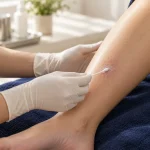


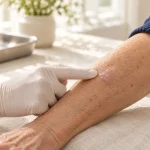
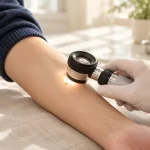
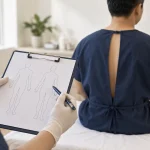


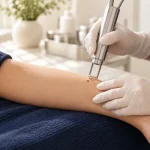





Body Skin Tightening
Loose skin on the abdomen, upper arms, thighs, knees, buttocks or other body areas can develop with aging, pregnancy, weight loss, sun exposure or changes in skin elasticity. However,
“loose skin” is not always a single problem.
Some patients mainly have skin laxity. Others have excess fat, cellulite, stretch marks, reduced muscle tone or substantial redundant skin. These concerns may look similar but require different treatment approaches.
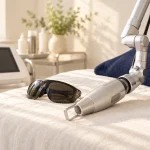
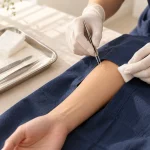
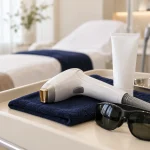
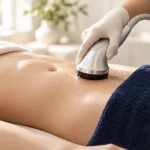
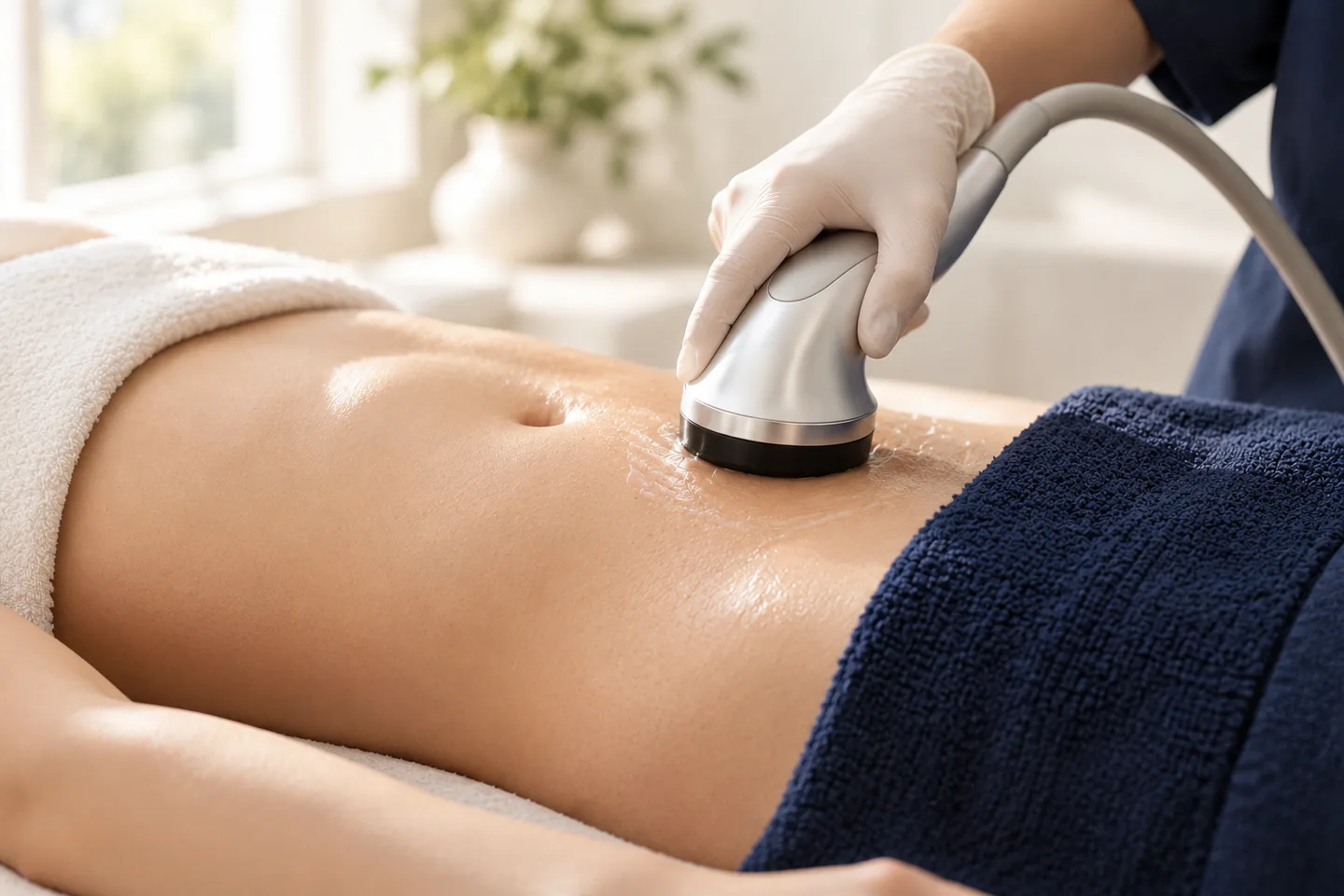
Non-surgical body skin tightening usually relies on controlled energy—most commonly radiofrequency (RF), focused ultrasound, selected laser systems, or minimally invasive RF technologies—to heat specific tissue layers and stimulate collagen remodeling. These treatments can improve mild-to-moderate laxity in appropriately selected patients, but they cannot remove large amounts of excess skin or reproduce the result of surgical body lifting. Non-invasive tightening typically produces gradual, generally modest tightening, while surgery remains more appropriate for substantial loose skin.
The first step is therefore not choosing a machine. It is determining whether the concern is truly loose skin, how severe it is, and which tissue needs treatment.
What Is Body Skin Tightening?
Body skin tightening refers to non-surgical or minimally invasive treatments intended to improve the firmness and appearance of lax skin outside the face.
Common treatment areas include:
- abdomen
- upper arms
- inner thighs
- outer thighs
- knees
- buttocks
- flanks
- back
- décolletage or chest
- hands
Different technologies target different tissue depths.
Some primarily heat the dermis, where collagen is located.
Others heat deeper connective tissue or subcutaneous tissue.
Some minimally invasive systems deliver energy through needles beneath the skin.
For this reason,
“body tightening” should not be treated as a single standardized procedure.
What Causes Loose Skin on the Body?
Body laxity usually results from several factors acting together.
Aging and Collagen Loss
Collagen provides structural support to the skin.
With age, collagen production and organization change, while elastic fibers also become less effective.
The result can be thinner, less resilient skin that does not retract as easily.
Sun Exposure
Repeated ultraviolet exposure contributes to collagen and elastin damage.
This is especially relevant on chronically exposed areas such as:
- arms
- chest
- shoulders
- hands
Sun-damaged skin may have a combination of laxity, wrinkles, pigmentation and rough texture rather than laxity alone.Weight Loss After significant weight loss, the skin may not completely contract around the smaller body volume.
The degree of residual loose skin depends on factors such as:
- amount of weight lost
- age
- genetics
- duration of previous obesity
- skin quality
- smoking
- sun damage
After major weight loss, redundant skin can be substantial enough that non-surgical tightening provides only limited improvement. Surgical removal may be more appropriate in these cases.Loose Skin After Pregnancy
Pregnancy stretches both the abdominal skin and deeper abdominal structures.
After delivery, some patients develop:
- loose abdominal skin
- stretch marks
- residual abdominal fat
- separation of the abdominal muscles
- altered abdominal contour
These are different problems.
A tightening device may improve mild skin laxity but will not necessarily correct rectus diastasis, significant excess skin or an abdominal hernia.
Patients considering abdominal tightening should therefore have the anatomy assessed rather than assuming that all post-pregnancy abdominal changes are caused by loose skin.
Genetics
Some people naturally have thinner skin, less elastic connective tissue or a greater tendency toward laxity.
This partly explains why two people of similar age and body weight may develop very different degrees of loose skin.
Smoking
Smoking contributes to premature skin aging and impaired collagen function.
It may therefore contribute to poorer skin quality and reduced elasticity.
Weight Fluctuation
Repeated cycles of weight gain and loss can repeatedly stretch the skin.
Over time, this may contribute to laxity, particularly around the abdomen, arms and thighs.
Is It Really Loose Skin?
This is one of the most important questions before treatment.
Patients often describe an area as “loose” when the actual problem is a mixture of several concerns.
Skin Laxity
The skin itself is less firm and may wrinkle, fold or hang slightly.
Excess Fat
Subcutaneous fat can create fullness that makes the overlying skin appear less tight.
Cellulite
Cellulite causes dimpling because fibrous connective bands pull the skin downward while fat pushes upward.
It is not simply loose skin.
Stretch Marks
Stretch marks represent structural changes within the skin after rapid stretching.
Skin tightening may improve surrounding quality in some patients but should not be presented as a reliable way to completely remove stretch marks.
Reduced Muscle Tone
Poor abdominal or gluteal muscle tone changes body contour, but this is not the same problem as skin laxity.
Major Excess Skin
After major weight loss or repeated pregnancies, there may be physically redundant skin that cannot realistically be removed by heating or stimulating collagen.
Correctly identifying the dominant problem helps avoid disappointing treatment.
How Does a Dermatologist Assess Body Skin Laxity?
A useful assessment should examine both the skin and the underlying contour.
The clinician may assess:
- degree of laxity
- skin thickness
- skin quality
- stretch marks
- amount of subcutaneous fat
- cellulite
- scars
- previous surgery
- previous body-contouring treatments
- pigmentation tendency
- history of abnormal scarring
- abdominal wall anatomy when relevant
The area should usually be examined both relaxed and in different positions because laxity may appear differently when standing, sitting or bending.
For abdominal concerns, the clinician may also consider whether there is evidence of:
- rectus diastasis
- previous surgical weakness
- hernia
A tightening treatment should not be used as a substitute for evaluating a structural abdominal problem.
Which Areas Can Be Treated With Body Skin Tightening?
The suitability of treatment depends on the technology and individual anatomy.
Commonly considered areas include:
Abdomen
Often treated for mild-to-moderate laxity after aging, pregnancy or weight change.
Upper Arms
One of the most common areas where patients notice loose or “crepey” skin.
Inner Thighs
Thin skin and friction can make laxity particularly noticeable here.
Knees
Skin above the knees may wrinkle or bunch with age.
Buttocks
Some treatments aim to improve surface firmness or selected degrees of laxity, although major sagging is a different problem.
Flanks and Back
In some patients, skin laxity coexists with localized fat.
Hands
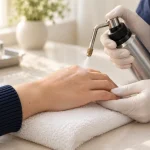
Age-related collagen loss can make hand skin thinner and looser. Radiofrequency and selected laser treatments can be used to address loose skin of the hands.
Non-Surgical Body Skin Tightening Options
Common treatment categories include:
- radiofrequency
- focused ultrasound
- RF Microneedling
- selected laser or infrared treatments
- minimally invasive energy-based tightening
- surgery when excess skin is substantial
Each has different benefits, limitations and risk profiles.
Radiofrequency for Body Skin Tightening
Radiofrequency (RF) uses electrical energy to generate controlled heat within tissue.
When carefully delivered, this heating can stimulate collagen remodeling and may make the skin appear firmer or tighter. RF body-contouring technologies are capable of heating the skin, subcutaneous tissue and fibrous connective structures, which may lead to temporary tightening through tissue contraction and increased collagen production.
RF systems vary considerably.
They may be:
- monopolar
- bipolar
- multipolar
- non-invasive
- needle-based
- minimally invasive
Therefore,
“RF” is a technology category rather than one single procedure.
Monopolar RF for the Body
Monopolar RF sends current between a treatment electrode and a return electrode.
Depending on the device, it can create relatively broad, deeper tissue heating.
Potential treatment areas may include:
- abdomen
- upper arms
- thighs
- buttocks
- knees
The goal is gradual collagen remodeling and improvement in tissue firmness.
However, outcomes depend on the degree of laxity and the specific device.
Bipolar and Multipolar RF
These systems pass energy between electrodes placed closer together.
Energy distribution is typically more localized than with monopolar systems, but actual depth varies significantly between devices.
Different systems may be designed primarily for:
- skin tightening
- cellulite
- body contouring
- combined tightening and fat treatment
Patients should therefore ask what tissue the specific device is intended to treat rather than assuming all RF technologies produce the same effect.
RF Microneedling for Body Skin Tightening
RF Microneedling uses small needles or electrodes that enter the skin and deliver RF energy at selected depths.
It may be considered where treatment goals include:
- skin laxity
- crepey skin
- textural irregularity
- selected scars
- stretch-mark appearance
Because needles penetrate the skin, RF Microneedling has a different recovery and risk profile from completely non-invasive RF.
Safety communications have been issued after reports of serious complications associated with certain uses of RF Microneedling, including burns, scarring, fat loss, disfigurement and nerve damage.
This does not mean the technology is inappropriate in every case. It means that correct indication, device selection, depth, energy and operator training are important.
Focused Ultrasound for Body Skin Tightening
Focused ultrasound directs acoustic energy into selected tissue depths.
The energy creates controlled thermal effects that can trigger collagen remodeling.
Ultrasound has been investigated for both skin tightening and body contouring, including areas such as the abdomen and thighs. Evidence shows tightening and contour improvement, though differences in protocols highlight the need for better standardization and long-term data.
It is important to distinguish treatment intended primarily for skin tightening from ultrasound designed primarily to affect fat.
These are not necessarily the same treatment.
Can HIFU Tighten Body Skin?
In selected patients, focused ultrasound may improve mild-to-moderate body laxity.
However, the result depends heavily on:
- treatment depth
- body area
- tissue thickness
- degree of laxity
- device design
- treatment parameters
HIFU should not be expected to remove large folds of redundant skin.
Patients who have substantial loose skin after major weight loss are generally less likely to obtain a sufficiently dramatic change from a non-invasive treatment alone.
Laser and Light-Based Body Tightening
Some laser and infrared technologies heat deeper skin layers without necessarily removing the surface.
This heating can stimulate collagen remodeling and may improve laxity.
Selected laser treatments can tighten body skin, including loose skin of the abdomen and upper arms, although multiple sessions may be required depending on the technology.
Light-based treatments should not automatically be treated as interchangeable.
Factors such as:
- wavelength
- penetration depth
- skin pigmentation
- cooling
- treatment intensity
can affect both results and safety.
Body Skin Tightening vs Body Contouring
These terms overlap but are not identical.
Body Skin Tightening
Primarily aims to improve loose or lax skin.
Body Contouring
Is a broader category that may aim to alter:
- body circumference
- localized fat
- cellulite
- muscle tone
- skin firmness
Non-invasive body contouring is generally classified as a broad category rather than a treatment for obesity or general weight loss.
A device marketed for body contouring may therefore target fat more than skin.
Patients should ask exactly what outcome the treatment is intended to produce.
Body Skin Tightening vs Fat Reduction
A common misunderstanding is that tightening and fat reduction are the same thing.
They are not.
If the main concern is excess subcutaneous fat, reducing fat may improve body contour.
If the main concern is lax skin, fat reduction alone can sometimes make the skin appear even looser because the underlying volume decreases.
This is especially important in thin patients or after major weight loss.
The treatment plan should therefore consider both skin and fat.
Can RF or Ultrasound Reduce Fat as Well?
Some devices can affect both skin and subcutaneous fat depending on the energy level, target depth and device design.
Heat-based body-contouring technologies may damage fat cells while also stimulating collagen and tightening connective tissue.
However, fat reduction is not always desirable.
Removing too much volume from an area where the skin is already loose can worsen the appearance of laxity.
Treatment goals should therefore be clearly defined before treatment.
Body Skin Tightening vs Cellulite Treatment
Cellulite is caused by the interaction between fat, skin and fibrous connective bands.
This creates the characteristic dimpled appearance.
Skin tightening may improve overall firmness but may not sufficiently correct deep cellulite dimples.
Some RF or body-contouring systems aim to affect both skin and fibrous tissue, but the degree of improvement varies.
Patients primarily concerned about cellulite should be assessed specifically for cellulite rather than simply receiving a generic tightening treatment.
Can Skin Tightening Improve Stretch Marks?
Stretch marks result from structural changes in the dermis after rapid stretching.
They are particularly common after:
- pregnancy
- puberty
- rapid weight gain
- muscle growth
- major weight fluctuation
Tightening treatments may improve surrounding skin quality or texture in some patients but should not be described as a cure for stretch marks.
Treatments aimed specifically at stretch-mark texture may include selected fractional laser or microneedling approaches depending on skin type and the characteristics of the marks.
Body Skin Tightening After Pregnancy
The abdomen after pregnancy deserves special assessment because several changes can occur simultaneously.
These may include:
- skin laxity
- stretch marks
- localized fat
- muscle separation
- altered abdominal wall contour
Non-surgical tightening may be reasonable when laxity is mild and the patient understands the limitations.
However, it cannot repair significant rectus diastasis or remove a large abdominal skin fold.
Patients with a persistent abdominal bulge, unusual pain or concern about a hernia should receive appropriate medical assessment rather than assuming the issue is cosmetic skin laxity.
Body Skin Tightening After Weight Loss
After moderate weight loss, some patients have mild residual laxity that may be suitable for non-surgical treatment.
After major weight loss, however, loose skin can become extensive.
Common areas include:
- abdomen
- upper arms
- thighs
- breasts or chest
- buttocks
- back
Non-invasive procedures may improve skin quality or firmness but generally cannot eliminate large amounts of redundant skin.
The clinical literature on off-face laxity specifically notes that surgery may be indicated after major weight loss.
Can Body Skin Tightening Replace a Tummy Tuck?
No.
A tummy tuck can physically remove excess skin and may also allow surgical correction of selected abdominal wall problems.
Non-surgical tightening does neither.
For someone with:
- mild abdominal laxity
- relatively little excess skin
- realistic expectations
a non-surgical procedure may be reasonable.
For someone with a large hanging skin fold or substantial post-pregnancy skin excess, the difference between surgery and non-surgical tightening is much greater.
Can It Replace an Arm Lift?
Not when there is substantial redundant upper-arm skin.
Non-surgical tightening may improve mild arm laxity or crepey skin but does not physically remove large folds of tissue.
Patients considering treatment should therefore distinguish between:
mild laxity → potentially suitable for energy-based tightening
and
significant hanging skin → surgical assessment may provide a more realistic option
Can Body Skin Tightening Treat Loose Inner Thighs?
Mild-to-moderate laxity may respond to selected energy-based treatments.
The inner thigh can be challenging because the skin is relatively thin and mobile.
Significant redundant skin after major weight loss is less likely to improve sufficiently with non-invasive technology.
Can It Tighten Skin Above the Knees?
Some energy-based treatments can be considered for mild wrinkling or laxity above the knees.
However, the improvement is generally gradual and subtle.
Very thin skin, significant folds or substantial laxity may limit what a non-surgical procedure can achieve.
Can It Tighten the Buttocks?
Selected treatments may improve skin firmness or mild laxity.
However, true buttock sagging involves several factors:
- skin
- fat distribution
- connective tissue
- muscle
- overall body anatomy
A skin-tightening device cannot correct every cause of a low or deflated buttock.
How Much Improvement Should You Expect?
This is where realistic expectations are particularly important.
Non-invasive tightening generally produces gradual and modest improvement rather than dramatic removal of loose skin, and clinical literature emphasizes that major laxity may require surgery.
The degree of improvement depends on:
- severity of laxity
- skin quality
- age
- treatment area
- technology
- tissue thickness
- weight stability
- individual response
A patient with early laxity usually has a more realistic chance of seeing a useful change than someone with substantial redundant skin.
When Do Results Appear?
Energy-based treatments usually rely on tissue remodeling rather than immediate removal of skin.
Collagen remodeling takes time.
Depending on the technology, improvement may continue over several weeks or months.
Results from non-invasive ultrasound, RF and laser tightening typically develop gradually rather than immediately.
Therefore, treatment should be planned well before a wedding, holiday or major event if the goal is to see the mature result.
How Long Do Body Skin Tightening Results Last?
There is no universal duration.
Results depend on:
- technology
- degree of initial laxity
- age
- treatment parameters
- weight changes
- pregnancy
- lifestyle
- sun exposure
- ongoing aging
Even when treatment successfully stimulates collagen remodeling, normal aging continues.
A large subsequent weight gain or weight loss can also change the result.
How Many Sessions Are Needed?
The number of sessions depends on the technology.
Some systems may be designed around one treatment followed by reassessment.
Others may use a treatment series.
Different non-invasive tightening technologies require different treatment schedules; some patients benefit from additional sessions.
The number of sessions should therefore be based on the actual device and clinical response rather than a universal package.
Is Body Skin Tightening Painful?
Discomfort varies substantially.
Depending on the technology, patients may feel:
- heat
- pressure
- tingling
- brief sharp sensations
- tenderness
Needle-based or minimally invasive treatments generally involve different pain management and recovery compared with treatments performed entirely through the surface.
More pain does not mean better tightening.
Recovery and Downtime
Non-invasive treatments often involve relatively little downtime.
Temporary effects may include:
- redness
- swelling
- tenderness
- bruising
- soreness
- tingling
Body-contouring procedures can also cause nodules or lumpiness, and specific heat-based technologies may cause blisters, burns, pigmentation changes or scars.
Procedures involving needles generally have more visible short-term skin changes than completely non-invasive treatments.
Possible Side Effects and Complications
Potential effects vary by technology.
Common temporary effects include:
- redness
- swelling
- discomfort
- tenderness
- bruising
Less common complications may include:
- burns
- blisters
- pigmentation changes
- prolonged numbness
- nodules
- contour irregularity
- scars
RF-based procedures can cause burns and scarring if tissue heating is excessive.
Therapeutic ultrasound may also cause burns or nerve injury depending on the technology and treatment circumstances.
Can Body Tightening Cause Hyperpigmentation?
Yes, depending on the procedure.
Patients with darker skin tones or a history of Post-Inflammatory Hyperpigmentation (PIH) may develop darkening after inflammation or thermal injury.
People with darker skin can experience darkening or lightening of the skin after some body-contouring procedures.
This is particularly relevant for Thai and other Asian patients.
Treatment parameters should therefore consider skin type and pigmentation tendency.
When Should You Contact a Dermatologist After Treatment?
Contact your clinician if you develop:
- pain that is worsening rather than improving
- significant blistering
- skin burns
- skin breakdown
- progressive swelling
- persistent numbness
- new muscle weakness
- signs of infection
- marked pigmentation changes
- hard or enlarging lumps
- unexpected contour deformity
Rapidly worsening or severe symptoms require prompt medical assessment.
When Loose Skin Should Be Medically Evaluated
Most loose skin associated with aging or weight change is benign.
However, not every change in body contour is simply cosmetic laxity.
Seek medical evaluation if you notice:
- a new or enlarging lump
- unexplained swelling
- persistent pain
- an abdominal bulge that increases with coughing or straining
- sudden one-sided swelling
- skin ulceration
- redness and warmth suggesting infection
- unexplained rapid body changes
An abdominal bulge, for example, may represent a hernia rather than loose skin.
Treating an undiagnosed structural problem with a cosmetic device is inappropriate.
Contraindications and Precautions
Contraindications vary by device.
Depending on the technology, treatment may need to be avoided or modified when there is:
- active infection
- open wounds
- significant dermatitis
- active implanted electrical devices
- metal in or near the treatment area
- impaired sensation
- pregnancy
- previous surgery affecting local anatomy
- certain medical conditions
Pacemakers, implanted defibrillators and certain metallic implants are among important considerations for some RF and ultrasound procedures.
Patients should always provide a complete medical and procedural history.
What Should You Tell Your Dermatologist Before Treatment?
Tell your clinician about:
- pregnancy or recent pregnancy
- major recent weight loss
- future planned weight loss
- previous body-contouring treatments
- liposuction
- abdominal surgery
- implants
- pacemaker or other implanted electrical device
- metal in the treatment area
- hernia
- rectus diastasis
- abnormal scarring
- history of PIH
- current infection or rash
- medications
- altered sensation in the area
Previous procedures can change anatomy and affect the safety or effectiveness of future treatment.
What Happens During a Body Skin Tightening Consultation in Bangkok?
A useful consultation should first define the actual problem.
The dermatologist or treating clinician may assess:
- location of laxity
- severity
- skin thickness
- fat thickness
- cellulite
- stretch marks
- scars
- previous treatment
- pigmentation risk
- whether significant excess skin is present
For abdominal treatment, additional attention should be given to:
- pregnancy history
- abdominal surgery
- weight changes
- possible muscle separation
- possible hernia
The clinician should then explain:
- whether the main problem is truly skin laxity
- what tissue needs treatment
- which treatment category is appropriate
- how much improvement is realistic
- what the treatment cannot achieve
- expected discomfort
- recovery
- possible complications
- when the result should be evaluated
This is more useful than choosing a treatment solely according to machine name or promotional package.
Body Skin Tightening for Thai and Asian Skin
Energy-based body procedures can be used in Asian skin, but treatment should still be individualized.
Pigmentation is an important consideration.
Excess inflammation or thermal injury may lead to PIH, especially in patients who already develop dark marks easily after:
- acne
- insect bites
- burns
- scratches
- previous procedures
The goal should be adequate treatment while avoiding unnecessary tissue injury.
Body Skin Tightening for Tourists and International Patients in Bangkok
Bangkok attracts international patients seeking aesthetic and dermatologic procedures.
Body tightening may appear convenient because many non-invasive treatments require relatively little downtime.
However, international patients should still plan for follow-up.
Before undergoing treatment, ask:
- What exact technology is being used?
- Is the treatment intended for laxity, fat or both?
- What improvement is realistic?
- How many sessions may be necessary?
- When will the result be visible?
- What recovery should I expect?
- What complications require medical attention?
- When should follow-up occur?
- What happens if I develop a complication after leaving Thailand?
Avoid scheduling an unfamiliar procedure immediately before a long flight or departure if follow-up would become difficult.
How to Choose a Body Skin Tightening Treatment in Bangkok
Do not choose solely according to:
- highest energy
- newest device
- largest number of shots
- cheapest package
- claims of permanent tightening
- dramatic before-and-after photographs
Instead ask:
Is my problem actually loose skin?
How severe is the laxity?
Is excess fat also present?
Do I have cellulite, stretch marks or muscle separation instead?
Which tissue layer is being targeted?
How much improvement is realistic without surgery?
What are the important risks?
What happens if I develop a complication?
Good treatment selection is based on anatomy and severity, not simply on which technology is being advertised.
When Is Surgery a Better Option?
Surgical assessment may be more appropriate when there is:
- substantial loose abdominal skin
- a large hanging abdominal fold
- major upper-arm skin excess
- substantial thigh laxity
- extensive redundant skin after major weight loss
- major post-pregnancy skin excess
- a desire for a degree of tissue removal that non-surgical treatment cannot provide
Non-surgical treatments can improve tissue firmness.
They cannot physically remove large areas of redundant skin.
That distinction should be made clear before treatment.
Frequently asked questions
What is body skin tightening?
Body skin tightening refers to non-surgical or minimally invasive treatments intended to improve the firmness and appearance of lax body skin.
Which areas can be tightened?
Common areas include the abdomen, upper arms, thighs, knees, buttocks, hands and selected areas of the trunk.
What is the best body skin tightening treatment?
There is no single best treatment. The choice depends on the area, severity of laxity, skin thickness, amount of fat and treatment goal.
Does RF tighten body skin?
RF can heat tissue and stimulate collagen remodeling, which may improve skin firmness in appropriately selected patients.
Does HIFU work for loose body skin?
Focused ultrasound may improve selected degrees of laxity, but it cannot remove large amounts of excess skin.
Is RF better than HIFU for body tightening?
Neither is universally better. They use different types of energy and may target tissue differently.
Can body skin tightening work after weight loss?
It may help mild residual laxity, but major excess skin after substantial weight loss often requires surgical assessment.
Can it tighten abdominal skin after pregnancy?
It may help mild skin laxity, but it cannot repair significant muscle separation or remove large amounts of extra skin.
Can it replace a tummy tuck?
No. Non-surgical treatments cannot physically remove redundant abdominal skin.
Can it tighten loose upper arms?
It may improve mild laxity or crepey skin, but significant hanging arm skin may be better addressed surgically.
Can it tighten inner thighs?
Selected technologies may improve mild-to-moderate inner-thigh laxity.
Can it tighten skin above the knees?
Mild laxity may improve, but significant folding or excess skin responds less predictably.
Can body tightening reduce fat?
Some technologies can affect both skin and fat, but skin tightening and fat reduction are different treatment goals.
Will fat reduction make loose skin worse?
Potentially. Removing underlying volume can make laxity more visible in some patients.
Does body skin tightening treat cellulite?
It may improve firmness, but cellulite is a distinct structural problem and may require a cellulite-specific treatment strategy.
Does it remove stretch marks?
No treatment can reliably erase stretch marks completely. Selected treatments may improve their texture or appearance.
How many treatments will I need?
This depends on the specific technology and individual response.
When will I see results?
Results usually develop gradually over several weeks to months as collagen remodeling occurs.
Is the result permanent?
No. Aging, pregnancy and future weight changes can affect the skin again.
Does body skin tightening hurt?
Discomfort varies depending on the device, treatment area, depth and energy.
Is there downtime?
Many non-invasive treatments have little downtime, but temporary redness, swelling, tenderness or bruising may occur.
What are the risks?
Risks vary by technology and can include burns, blisters, pigmentation changes, numbness, scars and contour irregularities.
Is RF Microneedling safe for the body?
It can be appropriate in selected patients, but serious complications including burns, scarring, fat loss and nerve injury have been reported with certain uses.
Is body tightening safe for darker or Asian skin?
It can be performed in Asian skin, but pigmentation changes are possible after inflammatory or thermal procedures.
Can tourists have body tightening treatment in Bangkok?
Potentially yes, but travel plans should allow for recovery and access to follow-up if necessary.
When should I consider surgery instead?
When there is substantial redundant skin that non-surgical treatment cannot reasonably remove.
Related conditions
-
Face & Neck Tightening Face & Neck Tightening Loose skin around the cheeks, jawline and neck is one of the most common age-related aesthetic concerns. However,
-
Fractional RF Fractional RF Fractional RF is a minimally invasive dermatology treatment used to improve atrophic acne scars, enlarged pores, and uneven skin texture by delivering controlled radiofrequency energy into the skin.

-
Skin Texture Skin Texture Uneven skin texture is one of the most common reasons people seek skin rejuvenation treatment. Skin may feel rough, look bumpy or dull, show enlarged pores, or develop shallow acne scars and fine lines that make the surface appear less smooth.
-
Fractional Laser Fractional Laser Fractional laser is a skin-resurfacing treatment commonly used to improve atrophic acne scars, uneven skin texture, enlarged-looking pores, and selected signs of photoaging.