





Fractional Laser
Fractional laser is a skin-resurfacing treatment commonly used to improve atrophic acne scars, uneven skin texture, enlarged-looking pores, and selected signs of photoaging.
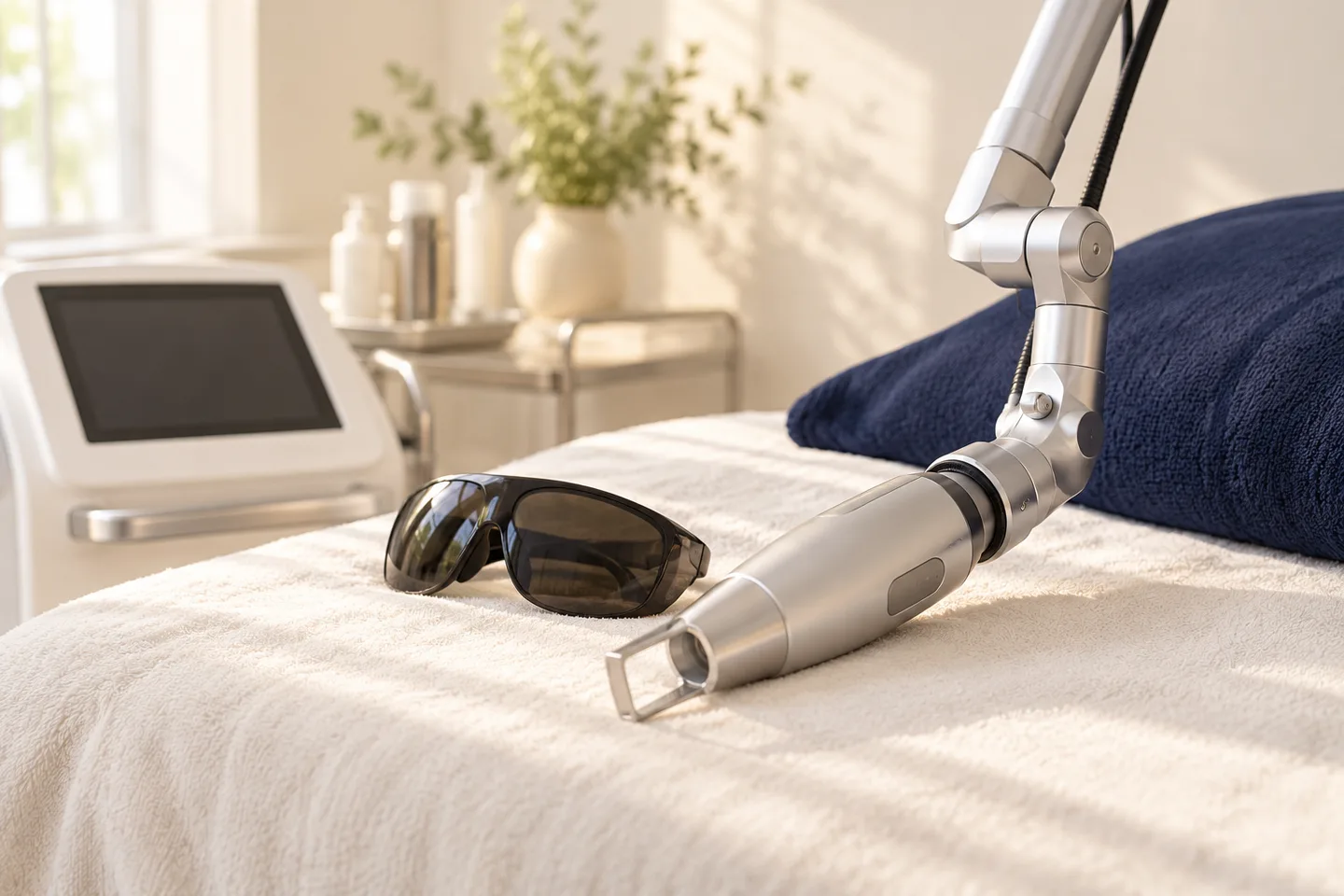
The key word is fractional: instead of treating the entire skin surface uniformly, fractional devices create many microscopic treatment zones while leaving surrounding skin relatively intact. This allows the skin to heal between treated areas while stimulating collagen remodeling.
However,
“fractional laser” does not refer to one machine or one treatment. There are important differences between ablative fractional lasers, such as fractional CO2, and non-ablative fractional lasers, which heat deeper skin while preserving more of the surface.
For patients considering fractional laser in Bangkok, especially those with Thai or Asian skin, treatment selection should also account for the risk of post-inflammatory hyperpigmentation (PIH). A stronger treatment is not automatically a better treatment.
Fractional laser can improve selected acne scars, but it cannot correct every type equally well. Deep ice-pick scars and scars tethered by deeper fibrous bands may require treatments such as TCA CROSS or subcision rather than laser alone.
What Is Fractional Laser?
Fractional laser is a technique in which laser energy is delivered through thousands of microscopic treatment columns rather than over the entire surface of the skin.
These microscopic zones trigger a controlled wound-healing response.
During healing, the skin can produce and reorganize collagen, gradually improving texture and the appearance of some scars.
The surrounding untreated skin helps support recovery.
Fractional lasers can broadly be divided into two groups:
- Ablative fractional lasers
- Non-ablative fractional lasers
They differ in how deeply and aggressively they affect the skin.
What Does “Fractional” Mean?
Traditional fully ablative resurfacing removes a continuous layer of skin across the treatment area.
Fractional resurfacing instead treats only a percentage of the skin at each session.
Imagine many microscopic columns of treatment surrounded by untreated tissue.
This design was developed to provide meaningful resurfacing while allowing faster healing than traditional full-field ablative resurfacing.
The exact effect still depends on:
- Laser wavelength
- Energy
- Density
- Pulse duration
- Treatment depth
- Number of passes
- Skin type
- Area being treated
Two treatments both called “fractional laser” can therefore produce very different levels of injury and downtime.
What Can Fractional Laser Treat?
Depending on the device and settings, fractional laser may be considered for:
- Atrophic acne scars
- Boxcar scars
- Selected rolling scars
- Enlarged-looking pores
- Uneven skin texture
- Fine lines
- Sun-damaged skin
- Selected pigmentation problems
- Surgical or traumatic scars in some cases
For acne scars specifically, fractional CO2 laser is an established treatment option. Evidence supports improvement in atrophic acne scars, although comparative studies do not show that it is universally superior to every other treatment.
Fractional Laser for Acne Scars
Fractional lasers are primarily useful for atrophic acne scars, meaning scars that are depressed below the surrounding skin.
Common atrophic scar types include:
- Ice-pick scars
- Boxcar scars
- Rolling scars
The response varies considerably by scar type.
Fractional Laser for Boxcar Scars
Boxcar scars are round or oval depressions with relatively distinct edges.
Shallow to medium-depth boxcar scars often respond better to fractional resurfacing than very deep scars.
Fractional laser can help by:
- Remodeling collagen
- Softening scar edges
- Improving overall texture
- Making depressions less visible
Deep sharply defined boxcar scars may require additional focal procedures.
Fractional Laser for Rolling Scars
Rolling scars are broad depressions that create a wave-like surface.
Some respond to fractional laser, particularly when the scars are relatively superficial.
However, many rolling scars are held downward by fibrous bands beneath the skin.
When this tethering is significant, resurfacing the surface alone may not fully release the depression.
In these cases, subcision may be required before or together with resurfacing treatment.
Fractional Laser for Ice-Pick Scars
Ice-pick scars are narrow but extend deeply into the skin.
Because fractional laser treats the skin in columns distributed across a broader surface, it may not adequately target the full depth of a narrow ice-pick scar.
Selected scars may instead respond better to:
- TCA CROSS
- Punch excision
- Other focal scar techniques
Fractional resurfacing can still be useful afterward to improve the surrounding texture.
Why Scar Type Matters Before Choosing Fractional Laser
The question patients often ask is:
“Which fractional laser is best?”
A better starting point is:
“Is fractional laser actually the right treatment for my scars?”
For example:
| Skin problem | Treatment approach often considered |
|---|---|
| Shallow boxcar scars | Fractional laser, RF microneedling, microneedling |
| Rolling scars without strong tethering | Fractional laser may help |
| Tethered rolling scars | Subcision ± resurfacing |
| Deep ice-pick scars | TCA CROSS or focal procedure |
| Mixed acne scars | Combination treatment |
| Enlarged pores | Fractional resurfacing, RF microneedling or microneedling in selected patients |
| Active acne | Control acne before aggressive scar treatment |
| Raised scars | Different scar-specific treatment |
Most acne-scar patients have more than one scar type.
Ablative vs Non-Ablative Fractional Laser
This is one of the most important distinctions.
Ablative Fractional Laser
Ablative lasers physically remove microscopic columns of skin.
Common examples include:
- Fractional CO2 laser
- Fractional Er:YAG laser
They generally provide stronger resurfacing but create more epidermal injury.
This usually means:
- More redness
- More crusting or peeling
- More downtime
- More wound care
- Greater potential for pigment change
Non-Ablative Fractional Laser
Non-ablative fractional lasers heat microscopic areas in the dermis while leaving most of the skin surface intact.
Examples include fractional erbium-glass systems.
They generally involve:
- Less surface injury
- Shorter recovery
- Less crusting
- More gradual improvement
- Often more treatment sessions
Both approaches can improve acne scars, but the best option depends on the patient’s scars, skin tone and tolerance for downtime.
Fractional CO2 Laser
Fractional CO2 uses a carbon dioxide laser wavelength of approximately 10,600 nm.
Its energy is strongly absorbed by water in tissue.
The treatment creates microscopic columns of ablation and thermal injury, triggering collagen remodeling during healing.
Fractional CO2 has substantial evidence supporting its use for atrophic acne scars. Systematic reviews and meta-analyses have found meaningful improvement, although outcomes vary significantly among studies because scar severity, laser parameters and evaluation systems differ.
Is Fractional CO2 the Best Fractional Laser?
Not necessarily.
Fractional CO2 is powerful and can produce meaningful resurfacing, but stronger treatment comes with trade-offs.
Compared with less aggressive approaches, it may involve:
- More pain
- Longer redness
- More crusting
- Greater PIH risk in susceptible patients
- Longer recovery
A recent meta-analysis comparing fractional CO2 with needling-based treatments found no clear overall superiority for scar-score reduction, with considerable variation between studies.
Another meta-analysis comparing fractional CO2 with microneedling radiofrequency reported greater improvement with CO2 in the included studies but also more pain, longer erythema and a higher risk of PIH.
This is a useful reminder that the most aggressive procedure is not automatically the best treatment for an individual patient.
Fractional Er:YAG Laser
Er:YAG laser is another ablative resurfacing laser.
It has a wavelength of approximately 2,940 nm and is also strongly absorbed by water.
Compared with CO2, Er:YAG generally creates less surrounding thermal damage for a comparable ablation depth, although treatment effects vary with device settings.
Both fractional CO2 and fractional Er:YAG can improve atrophic acne scars.
A recent meta-analysis comparing the two found differences in efficacy, pain and recovery outcomes, illustrating that the choice involves trade-offs rather than one laser being universally preferable.
Non-Ablative Fractional Er:Glass Laser
Fractional erbium-glass lasers are non-ablative devices commonly used for acne scars and texture.
They heat the dermis while preserving more of the epidermis.
Potential advantages include:
- Less crusting
- Shorter downtime
- Lower-intensity wound care
- Greater convenience for patients who cannot take prolonged recovery time
Potential limitations include:
- More gradual improvement
- Need for repeated sessions
- Less dramatic resurfacing per session compared with aggressive ablative treatment
Recent comparative evidence confirms that both fractional CO2 and non-ablative Er:Glass are established approaches for atrophic scars, but differences in efficacy and adverse effects remain important when selecting treatment.
Fractional Picosecond Laser
Some picosecond laser systems use specialized fractional or microlens arrays to create microscopic areas of high-energy stimulation.
Unlike ablative CO2 resurfacing, these devices usually cause substantially less visible surface injury.
Studies in Asian patients have shown improvement in atrophic acne scars with selected fractional picosecond systems, with PIH still possible but generally temporary in reported studies.
Potential advantages may include:
- Less crusting
- Shorter visible downtime
- Lower degree of surface ablation
- Suitability for selected patients concerned about pigmentation
However, the term “picosecond” does not automatically mean better results.
Results depend on:
- Wavelength
- Fractional handpiece
- Energy
- Treatment density
- Scar type
- Number of sessions
- Skin type
Fractional Laser for Enlarged Pores
Patients often seek fractional laser for both acne scars and enlarged pores because both can make the skin look uneven.
However, pores and scars are different structures.
Pores are the visible openings of hair follicles and sebaceous glands.
They can appear larger due to:
- Oily skin
- Larger follicles
- Acne and comedones
- Reduced skin elasticity
- Aging
- Chronic sun exposure
Fractional resurfacing can improve the appearance of pores in selected patients by improving surrounding skin texture and collagen support.
However:
Fractional laser does not permanently close pores.
Pores are normal anatomical structures and cannot simply be eliminated.
Fractional Laser vs RF Microneedling
This is one of the most common comparisons for acne scars and pores.
Fractional laser delivers light energy.
RF microneedling delivers radiofrequency energy through small needles placed into the skin.
Both can stimulate collagen remodeling.
Fractional laser may offer:
- Strong resurfacing
- Improvement of scar edges
- Surface texture improvement
- Treatment of associated photoaging depending on the laser
RF microneedling may offer:
- More energy delivered beneath the epidermis
- Less surface ablation
- Shorter visible recovery in some patients
- A potentially useful option in pigment-prone skin
Current evidence suggests both are effective for atrophic acne scars. Recent comparative reviews show that outcomes vary by study and treatment protocol rather than demonstrating one universally superior option.
Fractional Laser vs Microneedling
Microneedling creates controlled mechanical punctures without using laser energy.
Advantages may include:
- Relatively limited downtime
- No laser-related thermal injury
- Suitability across a wide range of skin tones
- Useful improvement of mild-to-moderate textural scars
Fractional laser may offer stronger resurfacing for certain scar patterns.
The decision depends on:
- Scar severity
- Scar type
- Skin color
- History of PIH
- Desired downtime
- Previous treatments
Recent meta-analysis comparing fractional CO2 with needling-based approaches found broadly comparable scar outcomes overall, though individual studies were highly variable.
Fractional Laser vs Subcision
These treatments address different structures.
Fractional laser works mainly by resurfacing and remodeling skin.
Subcision works by physically releasing fibrous bands underneath tethered scars.
A rolling scar that remains anchored downward cannot always be corrected by repeatedly resurfacing the surface.
For strongly tethered rolling scars:
Subcision first, resurfacing later may make more anatomical sense than laser alone.
They are therefore complementary rather than competing treatments.
Fractional Laser vs TCA CROSS
TCA CROSS places high-concentration trichloroacetic acid directly into selected deep scars.
It is most commonly used for:
- Ice-pick scars
- Selected narrow boxcar scars
Fractional laser treats a broader skin area.
Therefore:
TCA CROSS = focal deep scar treatment
Fractional laser = broader resurfacing and collagen remodeling
Patients with mixed scars may benefit from both at different stages.
Fractional Laser vs Chemical Peel
Chemical peels apply acid across the skin to create controlled exfoliation or injury.
Superficial peels may improve:
- Acne
- Pigmentation
- Mild surface irregularity
They usually do not remodel deeper acne scars as effectively as fractional laser.
Deeper peels can provide stronger resurfacing but also carry greater risk and require careful patient selection, especially in pigment-prone skin.
Should Active Acne Be Treated Before Fractional Laser?
Generally, active inflammatory acne should be adequately controlled before aggressive acne-scar resurfacing.
This is important because new inflammatory acne can continue creating new scars.
Treatment may therefore begin with acne management before scar procedures.
Depending on the patient, this may include:
- Topical retinoids
- Benzoyl peroxide
- Azelaic acid
- Oral antibiotics when appropriate
- Hormonal treatment in selected patients
- Isotretinoin when medically indicated
Treatment should be individualized according to acne severity and medical history.
Can Fractional Laser Treat Acne Marks?
It depends on what the patient means by “acne marks.
”
Brown marks
These are often post-inflammatory hyperpigmentation (PIH).
Certain lasers may influence pigmentation, but aggressive resurfacing can also provoke new PIH.
Pigment treatment may therefore require a separate strategy.
Red acne marks
Persistent red marks are caused mainly by vascular and inflammatory changes rather than structural scarring.
Vascular-directed lasers may sometimes be more appropriate than fractional resurfacing.
True scars
These involve structural changes and are where fractional resurfacing has a clearer role.
Fractional Laser for Asian and Thai Skin
This is particularly important for patients receiving treatment in Bangkok.
Thai and other Asian patients may have skin that produces more pigment after inflammation.
This means procedures that create significant heat or epidermal injury can lead to post-inflammatory hyperpigmentation.
That does not mean fractional laser cannot be used in Asian skin.
It means treatment should be planned carefully.
Factors to consider include:
- Skin phototype
- History of PIH
- Melasma
- Recent tanning
- Scar depth
- Laser wavelength
- Energy
- Treatment density
- Number of passes
- Treatment interval
- Aftercare
- Sun exposure
The appropriate settings for one patient may be too aggressive for another.
What Is Post-Inflammatory Hyperpigmentation?
Post-inflammatory hyperpigmentation (PIH) is darkening of the skin following inflammation or injury.
Fractional laser intentionally creates controlled injury, so PIH is a recognized possible side effect.
It may appear as:
- Brown patches
- Gray-brown discoloration
- Darkening of treated areas
The risk depends on:
- Baseline skin pigmentation
- Laser type
- Energy
- Density
- Treatment depth
- Sun exposure
- Inflammation
- Individual tendency toward pigmentation
PIH can often fade, but it may persist for a significant period in some patients.
This is why treatment planning for Asian skin should consider not only how aggressively scars can be resurfaced, but also how the patient’s skin is likely to heal.
Fractional Laser and Melasma
Patients with melasma need particular caution.
Heat, inflammation and ultraviolet exposure can worsen melasma in susceptible individuals.
If a patient has both acne scars and melasma, treating the scars aggressively without considering the pigmentation may produce an unsatisfactory result even if the scar texture improves.
A dermatologist may therefore:
- Stabilize melasma first
- Choose lower-risk treatment parameters
- Stage procedures
- Use strict photoprotection
- Consider alternatives to aggressive ablative resurfacing
Is Fractional Laser Safe for Darker Skin?
Fractional lasers can be used in darker skin, but treatment selection and parameters become increasingly important as pigment response increases.
Non-ablative fractional lasers and certain other modalities may sometimes be chosen when minimizing epidermal injury is a priority.
However, there is no single laser that is automatically “safe for all dark skin.
”
Risk depends on the device, settings, skin type and operator technique.
How Is Fractional Laser Performed?
Treatment varies according to device and intensity, but a typical appointment may involve:
1. Skin Assessment
The dermatologist evaluates:
- Acne activity
- Scar type
- Scar depth
- Skin color
- PIH risk
- Melasma
- Previous procedures
- Medications
- Desired downtime
2. Cleansing
Makeup, sunscreen and skincare products are removed.
3. Anesthesia
A topical anesthetic may be applied for more intensive treatments.
Some procedures may require additional anesthesia depending on intensity.
4. Laser Treatment
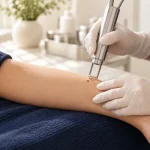
The laser handpiece delivers fractional energy across the selected areas.
Patients may feel:
- Heat
- Pricking
- Burning
- Stinging
5. Post-Treatment Care
The skin may be cooled, cleansed or covered with appropriate post-procedure products.
Does Fractional Laser Hurt?
Discomfort depends heavily on treatment intensity.
Factors include:
- Laser type
- Energy
- Density
- Number of passes
- Treatment area
- Individual pain sensitivity
- Anesthetic method
A mild non-ablative fractional treatment can feel very different from aggressive fractional CO2 resurfacing.
Topical anesthetic is commonly used for more intensive treatments.
What Does Skin Look Like Immediately After Fractional Laser?
Depending on the device, the skin may show:
- Redness
- Swelling
- Warmth
- Mild burning sensation
- Pinpoint crusting
- Dryness
- Bronzing or temporary darkening
- Peeling
Ablative fractional treatments generally create more visible surface change than non-ablative treatments.
How Long Is Fractional Laser Downtime?
There is no single downtime for “fractional laser.
”
The term covers treatments ranging from mild non-ablative procedures to aggressive ablative resurfacing.
Non-Ablative Fractional Laser
May cause:
- Redness
- Mild swelling
- Dryness
- Rough texture
Recovery is generally shorter.
Fractional CO2 Laser
Can cause:
- More intense redness
- Swelling
- Crusting
- Peeling
- Temporary darkening
- Longer visible recovery
Treatment settings can also dramatically change recovery time within the same device.
Therefore, patients should ask:
“What downtime should I expect from the exact settings planned for my skin?”
rather than asking only how long fractional laser takes to heal.
How Many Fractional Laser Sessions Are Needed?
There is no fixed number.
It depends on:
- Scar severity
- Scar type
- Laser type
- Treatment strength
- Skin tone
- Healing response
- Previous treatments
- Treatment goals
Stronger sessions do not automatically mean fewer sessions are preferable.
For some Asian patients, using moderate treatment intensity over more sessions may provide a better balance between improvement and pigmentation risk.
Can One Fractional Laser Session Remove Acne Scars?
Usually not.
Fractional laser generally produces gradual remodeling.
Patients with mild scars may notice improvement after relatively few treatments, while deeper mixed scars often require:
- Several sessions
- Additional procedures
- Time for collagen remodeling
A responsible goal is improvement, not complete scar removal.
When Will I See Results?
Immediately after treatment, swelling can temporarily make scars look shallower.
This is not the final result.
True remodeling develops gradually.
Changes may continue over:
- Several weeks
- Several months
This is because collagen production and remodeling continue after the visible redness resolves.
How Much Can Fractional Laser Improve Acne Scars?
Improvement varies substantially.
Studies support fractional CO2 as an effective treatment for atrophic acne scars, but research results differ because of:
- Different scar types
- Different laser settings
- Different numbers of sessions
- Different skin types
- Different scar-scoring methods
A meta-analysis found fractional CO2 effective but not clearly superior to non-CO2 laser therapies overall.
More recent systematic reviews continue to support fractional CO2 as an effective option but emphasize variability in protocols and outcomes.
Treatment should therefore not be sold as a predictable percentage improvement for every patient.
Fractional Laser Side Effects
Expected temporary effects may include:
- Redness
- Swelling
- Burning
- Tenderness
- Dryness
- Crusting
- Peeling
Possible complications include:
- PIH
- Hypopigmentation
- Infection
- Acne flare
- Prolonged redness
- Persistent texture change
- Scarring
Complication risk depends on treatment intensity and patient factors.
Can Fractional Laser Cause Scars?
Yes, although significant scarring should be uncommon when treatment is appropriately selected and performed.
Risk may increase with:
- Excessively aggressive settings
- Infection
- Picking or scratching
- Delayed healing
- Previous abnormal scarring
- Certain body areas
- Inappropriate aftercare
Patients with a history of hypertrophic scars or keloids should tell their dermatologist before treatment.
Can Fractional Laser Cause Acne?
Temporary acneiform breakouts can occur after resurfacing.
Possible contributors include:
- Occlusive ointments
- Inflammation
- Changes in skincare
- Existing acne tendency
Active acne should be discussed before treatment.
Can Fractional Laser Cause Infection?
Any procedure that disrupts the skin barrier can potentially lead to infection.
Possible infections may include:
- Bacterial infection
- Viral reactivation such as herpes simplex
- Less commonly other infections
Patients should seek medical attention if they develop:
- Increasing pain
- Pus
- Spreading redness
- Fever
- Blistering
- Abnormal wound healing
Fractional Laser Aftercare
Aftercare depends on the type of fractional laser.
General principles may include:
- Cleanse gently
- Use prescribed or recommended moisturizer or wound-care products
- Do not pick crusts
- Avoid scrubs
- Avoid irritating acids
- Pause retinoids when advised
- Avoid unnecessary heat
- Avoid strong sun exposure
- Use broad-spectrum sunscreen when appropriate
- Follow specific instructions regarding makeup and exercise
Ablative treatments require more intensive wound care than non-ablative treatments.
When Can I Wash My Face?
This depends on the procedure.
After many fractional treatments, gentle cleansing is permitted relatively soon, but specific advice should come from the treating clinician.
Avoid:
- Scrubbing
- Facial brushes
- Strong cleansers
- Exfoliation
- Picking peeling skin
When Can I Wear Makeup?
Makeup should not be applied to actively oozing or incompletely healed skin.
After mild non-ablative treatment, makeup may be possible sooner than after fractional CO2.
Ask your dermatologist when the skin barrier is sufficiently recovered.
Can I Exercise After Fractional Laser?
After stronger treatments, excessive heat and sweating may worsen:
- Burning
- Redness
- Swelling
- Irritation
The appropriate interval depends on treatment intensity.
Can I Swim After Fractional Laser?
Swimming should generally be avoided while the skin barrier is disrupted.
Pools, hot tubs and seawater can irritate healing skin and increase exposure to microorganisms.
This is particularly important for travelers planning beaches or islands immediately after treatment.
Sun Protection After Fractional Laser
Sun protection is one of the most important parts of recovery, particularly in Thailand.
Post-treatment inflammation combined with ultraviolet exposure can contribute to pigmentation.
Patients should use:
- Shade
- Hats
- Appropriate broad-spectrum sunscreen
- Avoidance of intense direct sun
according to their dermatologist’s advice.
Fractional Laser for Tourists in Bangkok
Fractional laser is popular among international patients, but treatment should fit the travel schedule rather than the other way around.
Before undergoing treatment, consider:
- How long will redness last?
- Will there be crusting?
- Can I wear makeup?
- Can I fly?
- Can I swim?
- Am I going to Phuket, Krabi, Samui or another beach destination afterward?
- Will I spend significant time outdoors?
- Do I need another treatment session?
- Is follow-up required?
- What happens if I develop pigmentation after returning home?
A patient staying in Bangkok for several weeks may have more flexibility than someone leaving for a beach holiday the next morning.
Fractional Laser Before a Beach Holiday
For treatments that cause significant inflammation or peeling, scheduling immediately before strong sun exposure is usually not ideal.
This is especially relevant in Thailand because:
- UV exposure can be intense
- Beach activities involve prolonged outdoor exposure
- Swimming may need to be restricted while skin heals
For international patients, treatment intensity should therefore be planned around both skin needs and the itinerary.
Fractional Laser During Isotretinoin Treatment
Historically, many laser and surgical procedures were postponed for months after isotretinoin because of concern about abnormal wound healing.
Current evidence has made this issue more nuanced.
The safety of treatment depends on:
- Type of fractional laser
- Ablative versus non-ablative treatment
- Isotretinoin dose
- Skin condition
- Treatment intensity
- Individual scar risk
Patients should always tell the treating dermatologist if they are currently taking or recently stopped isotretinoin.
The decision should be individualized rather than based on a single universal waiting period.
Fractional Laser and Pregnancy
Elective cosmetic laser treatment is generally postponed during pregnancy unless there is a specific medical reason for treatment.
This is partly because cosmetic treatment is not urgent and evidence for many elective procedures during pregnancy is limited.
Patients who are pregnant, breastfeeding or trying to conceive should inform the treating clinician before scheduling treatment.
When Should You See a Dermatologist?
Consider dermatologic assessment before fractional laser if:
- You still have active acne
- You have deep acne scars
- You are unsure whether you have scars or enlarged pores
- You have melasma
- You develop PIH easily
- You have a history of keloids
- You are taking isotretinoin
- You have active infection
- You have recurrent herpes around the treatment area
- Previous laser treatment caused pigmentation
- You have had multiple procedures with little improvement
The dermatologist should determine whether fractional laser is appropriate or whether another treatment addresses the underlying problem better.
What to Expect During a Fractional Laser Consultation in Bangkok
A good consultation should involve more than choosing a laser machine.
The dermatologist should evaluate:
- Active acne
- Ice-pick scars
- Boxcar scars
- Rolling scars
- Scar depth
- Scar tethering
- Enlarged pores
- PIH
- Melasma
- Skin phototype
- Previous pigmentation after procedures
- Previous laser treatments
- Current medications
- Isotretinoin use
- History of herpes
- Scar tendency
- Desired downtime
- Travel plans
- Expectations
From there, the dermatologist can decide:
- Whether fractional laser is appropriate
- Which type of fractional treatment makes sense
- Whether another treatment should be performed first
- Whether combination treatment would be more appropriate
- How aggressive the treatment should be
Fractional Laser vs Other Acne Scar Treatments: Quick Comparison
| Treatment | Particularly useful for | Surface injury | Typical limitation |
|---|---|---|---|
| Fractional CO2 | Atrophic scars, texture, pores | Higher | More downtime and PIH risk |
| Non-ablative fractional laser | Mild–moderate scars, texture | Lower | Often requires more sessions |
| RF Microneedling | Atrophic scars, pores | Limited surface injury | Does not directly release tethered scars |
| Microneedling | Mild–moderate scars, texture | Low | Limited effect on deep scars |
| Subcision | Tethered rolling scars | Minimal surface resurfacing | Does not correct surface texture alone |
| TCA CROSS | Deep ice-pick scars | Focal | Not a broad resurfacing treatment |
| Punch procedures | Selected very deep scars | Focal surgical wound | Suitable only for selected scars |
Fractional CO2 Atrophic scars, texture, pores Higher More downtime and PIH risk
Non-ablative fractional laser Mild–moderate scars, texture Lower Often requires more sessions
RF Microneedling Atrophic scars, pores Limited surface injury Does not directly release tethered scars
Microneedling Mild–moderate scars, texture Low Limited effect on deep scars
Subcision Tethered rolling scars Minimal surface resurfacing Does not correct surface texture alone
TCA CROSS Deep ice-pick scars Focal Not a broad resurfacing treatment
Punch procedures Selected very deep scars Focal surgical wound Suitable only for selected scars
Frequently asked questions
What is fractional laser?
Fractional laser delivers laser energy in microscopic treatment zones rather than treating the entire skin surface uniformly.
What is fractional laser used for?
It can be used for selected acne scars, enlarged-looking pores, uneven texture, fine lines and sun-damaged skin.
Is fractional laser good for acne scars?
Yes, particularly for selected atrophic scars. Its effectiveness depends on scar type, depth and laser type.
Which acne scars respond best to fractional laser?
Shallow-to-moderate boxcar scars and broader textural irregularities are commonly treated. Rolling scars may respond if they are not strongly tethered.
Does fractional laser work for ice-pick scars?
It may improve surrounding texture but deep narrow ice-pick scars often require focal treatment such as TCA CROSS or punch techniques.
Does fractional laser work for rolling scars?
It may improve some rolling scars, but tethered scars often require subcision.
Does fractional laser reduce pores?
It may make pores appear smaller by improving surrounding skin texture and collagen support, but it cannot permanently close pores.
Is fractional CO2 the same as fractional laser?
Fractional CO2 is one type of fractional laser. Other fractional lasers are non-ablative or use different wavelengths.
What is the difference between fractional CO2 and non-ablative fractional laser?
CO2 removes microscopic columns of skin and generally creates more resurfacing and downtime. Non-ablative lasers heat tissue while preserving more of the skin surface.
Is fractional CO2 better than non-ablative laser?
Not for every patient. CO2 may provide stronger resurfacing but usually involves greater downtime and pigment risk.
Is fractional laser better than RF microneedling?
Neither is universally better. Both can improve acne scars; choice depends on scar type, skin color, PIH risk and desired downtime.
Is fractional laser better than microneedling?
Fractional laser can produce stronger resurfacing in some cases, while microneedling generally creates less thermal injury. Comparative evidence does not show that one approach is best for every scar type.
Do I need subcision before fractional laser?
If scars are tethered by fibrous bands, subcision may need to be performed before resurfacing.
Can fractional laser and subcision be combined?
Yes, they may be used as complementary treatments for mixed or tethered acne scars.
Can fractional laser and TCA CROSS be combined?
They may be combined or staged when a patient has both deep ice-pick scars and broader textural scarring.
How painful is fractional laser?
Pain varies according to laser type and treatment intensity. Topical anesthesia is commonly used for stronger treatments.
How long does fractional laser take?
Treatment time depends on the area, anesthesia and type of laser. Full treatment appointments usually include preparation and post-treatment care in addition to the laser itself.
How many sessions are needed?
There is no fixed number. Scar severity, laser type, treatment strength and healing response determine the treatment course.
Does one fractional laser session work?
Some improvement can occur after one treatment, but meaningful acne-scar treatment often requires repeated or combination treatment.
When will I see results?
Collagen remodeling develops gradually over several weeks to months.
How long is the downtime?
Mild non-ablative treatments may have relatively short downtime, while fractional CO2 can cause several days or longer of visible redness, crusting and peeling depending on treatment intensity.
Does fractional laser cause peeling?
Ablative fractional lasers commonly cause peeling or crusting. Non-ablative lasers usually produce less surface peeling.
Does fractional laser cause redness?
Yes. Redness is an expected temporary response, particularly after stronger treatments.
Can fractional laser cause dark spots?
Yes. PIH is an important potential side effect, especially in pigment-prone skin.
Is fractional laser safe for Asian skin?
It can be used in Asian skin, but laser type and parameters should be chosen carefully to reduce pigmentation risk.
Is fractional laser safe for Thai skin?
Yes, when appropriate patient selection and treatment settings are used. History of PIH, melasma and sun exposure should be considered.
Can fractional laser worsen melasma?
Inflammation and heat can potentially aggravate melasma in susceptible patients, so treatment needs careful planning.
Can fractional laser cause scars?
Rarely, yes. Risk increases with excessive treatment, infection, abnormal healing and inappropriate aftercare.
Can fractional laser cause acne?
Temporary acneiform breakouts can occur after treatment.
Can fractional laser cause infection?
Yes, although uncommon. Seek assessment for increasing pain, pus, spreading redness, fever or abnormal healing.
Can I wash my face after fractional laser?
Usually gentle cleansing is possible according to procedure-specific instructions.
Can I wear makeup after fractional laser?
It depends on whether the skin surface is intact and healed. Makeup should not be placed over open or actively oozing skin.
Can I exercise after fractional laser?
Heat and sweating may irritate recently treated skin, particularly after stronger procedures.
Can I swim after fractional laser?
Swimming is best avoided while the skin barrier is disrupted.
Can I go to the beach after fractional laser?
Strong sun exposure and swimming soon after more intensive fractional treatment may increase irritation and pigmentation risk.
Can tourists have fractional laser in Bangkok?
Yes, but downtime, follow-up, sun exposure and onward travel should be considered.
Can fractional laser completely remove acne scars?
Usually not. The goal is meaningful improvement in depth, texture and visibility rather than complete disappearance.
Can fractional laser permanently remove enlarged pores?
No. It may reduce their appearance, but pores are normal anatomical structures and cannot be permanently closed.
Should acne be treated before fractional laser?
Usually active inflammatory acne should be controlled before aggressive acne-scar resurfacing.
Can I have fractional laser while taking isotretinoin?
This requires individualized medical assessment based on the laser type, treatment intensity and isotretinoin use.
Related conditions
-
Acne Scar Treatment Acne Scar Treatment Acne scars are not all the same, and this is the most important thing to understand before choosing treatment.
-
Enlarged Pores Enlarged Pores Enlarged pores are visible openings of hair follicles that appear larger or more noticeable than usual, particularly on the nose, cheeks, forehead, and central face.
-
TCA CROSS TCA CROSS TCA CROSS is a targeted dermatologic procedure used mainly to improve deep atrophic acne scars, particularly ice pick scars and selected deep, narrow boxcar scars.
-
Fractional RF Fractional RF Fractional RF is a minimally invasive dermatology treatment used to improve atrophic acne scars, enlarged pores, and uneven skin texture by delivering controlled radiofrequency energy into the skin.