


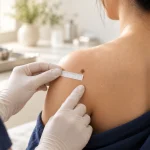
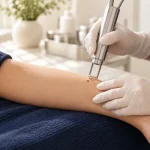
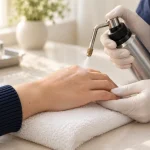

Skin Texture
Uneven skin texture is one of the most common reasons people seek skin rejuvenation treatment. Skin may feel rough, look bumpy or dull, show enlarged pores, or develop shallow acne scars and fine lines that make the surface appear less smooth.
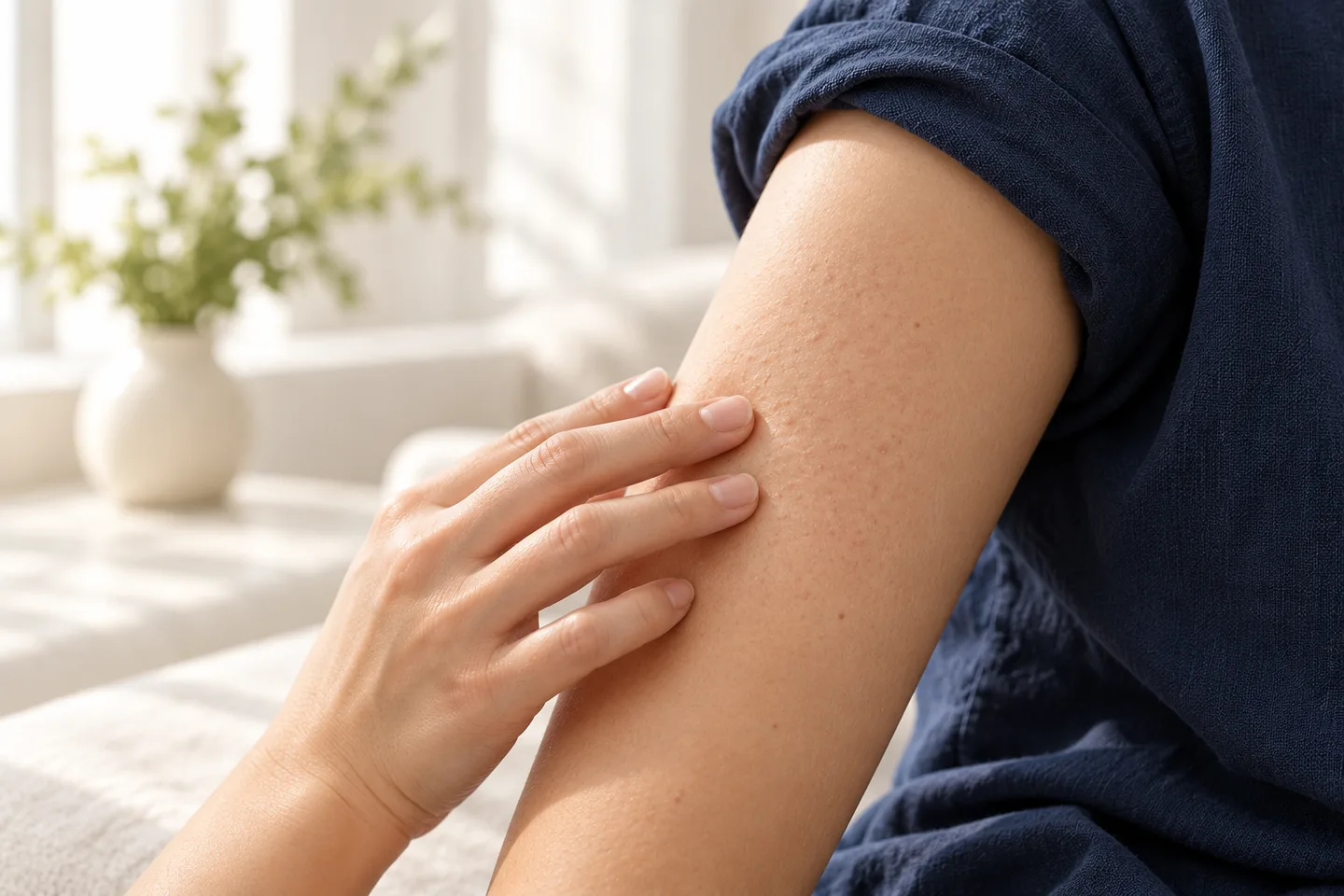
The important point is that “poor skin texture” is not a single diagnosis. It can result from acne and acne scarring, clogged pores, sun damage, dryness, aging, inflammatory skin conditions, or combinations of these factors.
For this reason, improving skin texture starts with identifying what is actually causing the irregularity. A treatment that works well for acne scars may not be appropriate for active acne, sensitive skin, rosacea, pigmentation, or a damaged skin barrier.
A dermatologist can assess the skin and create a treatment plan based on the cause, skin type, degree of textural change, pigmentation risk, expected downtime, and the patient’s goals.
What Is Uneven Skin Texture?
Skin texture describes how smooth or irregular the surface of the skin looks and feels.
Healthy skin is not completely poreless or perfectly smooth. Pores, follicles and fine lines are normal anatomical features of human skin.
However, certain conditions can make these features more noticeable.
Uneven skin texture may appear as:
- Rough or coarse skin
- Small bumps
- Enlarged or visible pores
- Blackheads and clogged pores
- Shallow depressions
- Acne scars
- Fine lines
- Dry or flaky areas
- Thickened skin
- Dull or irregular skin surface
Some people have several of these problems at the same time.
Before choosing a skin rejuvenation procedure, it is useful to determine which component is contributing most to the texture.
What Causes Uneven Skin Texture?
1. Acne and Clogged Pores
Acne is a very common cause of uneven facial texture.
Excess oil, abnormal shedding of skin cells and blockage of hair follicles can produce:
- Closed comedones
- Blackheads
- Small bumps
- Inflammatory pimples
- Enlarged-looking pores
If active acne is still present, controlling the acne is usually an important part of treatment before focusing aggressively on resurfacing procedures.
Treating acne scars while significant new acne lesions continue to develop may lead to disappointing long-term results because new scars can continue to form.
2. Acne Scars
Acne scars can significantly alter skin texture.
Depressed acne scars are generally divided into several patterns.
Ice Pick Scars
These are narrow, deep depressions that extend into the skin.
Because they are deep and narrow, they may respond differently from shallow scars.
Boxcar Scars
Boxcar scars are broader depressions with relatively defined edges.
Their depth can vary considerably.
Rolling Scars
Rolling scars create wider, wave-like depressions and may occur when fibrous scar tissue underneath the skin pulls the surface downward.
Because different scar types behave differently, acne scar treatment often requires a combination approach rather than relying on a single procedure.
3. Enlarged Pores
Visible pores are normal, particularly around the nose, cheeks and forehead.
They may become more noticeable due to:
- Oily skin
- Genetics
- Acne
- Comedones
- Loss of skin elasticity
- Sun damage
- Aging
It is important to have realistic expectations.
Dermatologic treatments may make pores appear smaller and less noticeable, but no treatment can permanently remove normal hair follicles or sebaceous pores from the skin.
4. Sun Damage
Long-term ultraviolet exposure affects collagen, elastin and other structures supporting the skin.
Over time, photodamage can contribute to:
- Rough texture
- Fine lines
- Uneven pigmentation
- Reduced elasticity
- Dull-looking skin
Bangkok’s strong year-round sun exposure makes photoprotection particularly important when treating skin texture and pigmentation.
Daily sunscreen is not simply an aftercare recommendation; it is an important part of preventing further photodamage.
5. Dry or Dehydrated Skin
Sometimes skin that looks rough does not require an aggressive procedure.
A damaged or dehydrated skin barrier can cause:
- Flaking
- Tightness
- Fine surface lines
- Roughness
- Increased sensitivity
Overuse of exfoliating acids, retinoids, scrubs or multiple active skincare products can worsen this problem.
In these situations, simplifying skincare and restoring the skin barrier may improve texture significantly.
6. Aging and Collagen Changes
Collagen and other supporting structures in the skin gradually change with age.
This may contribute to:
- Fine lines
- Reduced firmness
- More visible pores
- Irregular texture
- Reduced skin elasticity
Skin rejuvenation treatments often aim to stimulate controlled remodeling of the skin rather than simply removing the outermost layer.
7. Keratinization and Other Skin Conditions
Small bumps or rough skin are not always cosmetic.
Conditions such as keratosis pilaris, seborrheic dermatitis, eczema and certain disorders of keratinization may create irregular texture.
Persistent, itchy, inflamed or unusual bumps should therefore be evaluated before cosmetic treatment is started.
How Does a Dermatologist Evaluate Skin Texture?
A proper assessment is more useful than simply choosing a popular treatment.
During a dermatology consultation, the doctor may evaluate:
- Active acne
- Comedones
- Acne scar type and depth
- Pore visibility
- Pigmentation
- Redness
- Skin sensitivity
- Oiliness
- Dryness and skin-barrier function
- Fine lines and photodamage
- Previous procedures
- History of abnormal scarring
- Tendency to develop post-inflammatory hyperpigmentation
Skin type matters particularly when considering procedures that create inflammation or heat.
Patients with medium to darker skin tones may have a greater tendency to develop post-inflammatory hyperpigmentation (PIH) after certain procedures.
This does not necessarily mean that resurfacing cannot be performed, but treatment parameters, procedure selection and aftercare need to be chosen carefully.
Skin Texture Treatment Options
There is no single “best” skin texture treatment.
The most appropriate treatment depends on what is causing the uneven texture.
Medical Skincare
A dermatologist-guided skincare program may be enough for mild texture irregularities, clogged pores or early photodamage.
Depending on the patient, treatment may include ingredients such as:
- Retinoids
- Alpha-hydroxy acids
- Beta-hydroxy acids
- Moisturizers
- Barrier-repair products
- Pigmentation treatments
- Acne medications
- Sunscreen
Retinoids
Topical retinoids help normalize skin-cell turnover and are commonly used for acne, comedones and photoaging.
With consistent use, they may gradually improve some aspects of skin texture.
However, irritation, dryness and peeling can occur, particularly during the first weeks of treatment.
Stronger or more frequent application does not necessarily produce faster improvement and may instead damage the skin barrier.
Chemical Peels
Chemical peels use controlled application of chemical agents to exfoliate specific layers of the skin.
Depending on the type and strength of the peel, they may help with:
- Mild roughness
- Comedonal acne
- Superficial pigmentation
- Dull skin
- Some fine textural irregularities
Superficial peels generally involve less downtime than deeper resurfacing procedures.
However, chemical peels are not equally effective for every type of acne scar. Deep depressed scars usually require other approaches.
Possible side effects include:
- Redness
- Dryness
- Peeling
- Irritation
- Temporary darkening
- Post-inflammatory hyperpigmentation
Appropriate peel selection is especially important for patients prone to pigmentation.
Microneedling
Microneedling creates multiple controlled microscopic injuries in the skin using fine needles.
The healing response can stimulate collagen remodeling.
It may be considered for:
- Mild acne scars
- Fine textural irregularities
- Some enlarged pores
- Skin rejuvenation
Several treatment sessions are often needed because collagen remodeling develops gradually.
Advantages
Microneedling can provide gradual improvement with relatively controlled injury to the epidermis when performed appropriately.
Limitations
It may not adequately treat:
- Deep ice-pick scars
- Deep tethered rolling scars
- Severe boxcar scars
These scars may require additional procedures.
Microneedling should generally not be performed directly over significant active skin infection or uncontrolled inflammatory acne.
Fractional Radiofrequency Microneedling
Fractional radiofrequency microneedling combines needle penetration with controlled radiofrequency energy delivered into the skin.
The aim is to create controlled thermal injury within the dermis while stimulating collagen remodeling.
It may be considered for:
- Acne scars
- Enlarged-looking pores
- Irregular texture
- Fine lines
- Selected rejuvenation concerns
One potential advantage is that much of the thermal energy can be delivered beneath the skin surface.
However, the risk of side effects is not zero.
Possible reactions include:
- Redness
- Swelling
- Temporary pinpoint marks
- Crusting
- Pigmentation changes
- Infection
- Rare scarring
Results depend substantially on the condition being treated, treatment depth, energy settings, technique and individual healing response.
Fractional Laser Resurfacing
Fractional lasers create microscopic treatment zones in the skin while leaving surrounding areas untreated.
This allows controlled resurfacing and collagen remodeling.
Fractional laser treatment may be used for:
- Acne scars
- Rough skin texture
- Fine lines
- Photodamage
- Selected enlarged pores
There are two broad categories.
Ablative Fractional Lasers
Ablative fractional lasers remove microscopic columns of skin.
Examples include fractional CO₂ and erbium laser systems.
They can provide stronger resurfacing effects but generally involve more recovery and a greater risk of complications than gentler treatments.
Possible side effects include:
- Redness
- Swelling
- Crusting
- Temporary oozing
- Infection
- Post-inflammatory hyperpigmentation
- Prolonged redness
- Rare scarring
Careful patient selection is particularly important for patients with darker skin tones or a history of pigmentation after inflammation.
Non-Ablative Fractional Lasers
Non-ablative fractional lasers heat targeted areas of the skin without removing the surface to the same degree as ablative resurfacing.
They generally involve less downtime but may require multiple treatments to achieve meaningful improvement.
Subcision for Rolling Acne Scars
Some depressed acne scars are tethered to deeper tissue by fibrous bands.
In these cases, resurfacing the skin surface alone may not adequately correct the depression.
Subcision involves inserting a needle or specialized instrument beneath the scar to release some of these fibrous attachments.
It is particularly relevant to selected rolling or tethered scars.
Potential side effects include:
- Bruising
- Swelling
- Tenderness
- Bleeding
- Temporary lumps
- Pigmentation
- Infection
- Rare scar formation
Subcision is often combined with other acne scar treatments when appropriate.
TCA CROSS for Deep Acne Scars
TCA CROSS stands for Chemical Reconstruction of Skin Scars.
A high-concentration chemical agent is carefully placed inside selected individual scars rather than being applied as a full-face peel.
It is most commonly considered for certain deep, narrow acne scars such as ice-pick scars.
It requires precise application.
Possible complications include:
- Crusting
- Redness
- Pigmentation changes
- Widening of scars
- Rare additional scarring
This is different from a routine cosmetic chemical peel.
Can Different Skin Texture Treatments Be Combined?
Yes.
In fact, combination treatment can be particularly useful for acne scars because one patient may have several scar types.
For example, a patient might have:
- Ice-pick scars
- Rolling scars
- Boxcar scars
- Enlarged pores
- Residual pigmentation
Trying to treat all of these with the same device may not produce the best result.
A dermatologist may instead develop a staged plan addressing individual scar components.
For example, treatment might involve controlling active acne first, followed by scar-specific procedures and later resurfacing.
The sequence should be individualized rather than applying the same combination to every patient.
What Is the Best Treatment for Skin Texture?
The answer depends on the problem.
| Main Concern | Treatments That May Be Considered |
|---|---|
| Mild rough texture | Skincare, retinoids, selected chemical peels |
| Comedones | Acne treatment, retinoids, selected peels |
| Enlarged-looking pores | Retinoids, microneedling, RF microneedling, selected lasers |
| Mild acne scars | Microneedling, fractional treatments |
| Rolling acne scars | Subcision ± resurfacing |
| Ice-pick scars | TCA CROSS or other scar-specific techniques |
| Boxcar scars | Fractional resurfacing or scar-specific procedures depending on depth |
| Fine lines / photodamage | Retinoids, selected lasers and resurfacing procedures |
| Dry, rough skin | Barrier repair and appropriate skincare |
This table is a general guide rather than a treatment prescription.
An individual patient may have more than one problem requiring different approaches.
Skin Texture Treatment for Asian Skin
Treatment planning is particularly important for Asian skin because inflammatory procedures can sometimes trigger post-inflammatory hyperpigmentation.
PIH appears as brown or grey-brown discoloration after inflammation or injury.
The risk varies between individuals and depends on factors such as:
- Natural skin tone
- Treatment intensity
- Previous pigmentation problems
- Sun exposure
- Existing inflammation
- Procedure type
- Aftercare
The goal should not simply be to use the strongest possible treatment.
A more appropriate strategy is often to balance meaningful improvement against downtime and pigmentation risk.
This is particularly relevant in Bangkok, where regular ultraviolet exposure can make careful sun protection after treatment especially important.
How Many Sessions Are Needed?
There is no universal number.
Treatment frequency depends on:
- The cause of the texture problem
- Type and depth of acne scars
- Procedure selected
- Treatment intensity
- Skin type
- Healing response
- Desired level of improvement
Some superficial problems may improve with skincare alone.
Collagen-remodeling treatments usually produce gradual changes over weeks to months and may require multiple sessions.
Deep acne scars commonly require a staged treatment plan.
Patients should be cautious of claims that one treatment will permanently produce completely smooth or “poreless” skin.
Is Skin Texture Treatment Painful?
This depends on the procedure.
Topical skincare is generally painless but may cause temporary irritation.
Chemical peels may produce tingling or burning during treatment.
For procedures such as microneedling, fractional RF or laser resurfacing, topical anesthetic may be used beforehand when appropriate.
Some patients experience warmth, tenderness or sensitivity for a short period after treatment.
Recovery and Downtime
Downtime varies considerably.
Minimal-downtime treatments
Patients may experience mild:
- Redness
- Dryness
- Sensitivity
- Flaking
More intensive resurfacing
Patients may experience:
- Significant redness
- Swelling
- Crusting
- Peeling
- Temporary darkening
- Increased sensitivity
A dermatologist should explain the expected recovery period before treatment so that patients can plan work, travel and social activities appropriately.
For tourists or international patients visiting Bangkok, timing is especially important. More aggressive resurfacing should not necessarily be scheduled immediately before prolonged outdoor activities, beach trips or intense sun exposure.
Skin Texture Treatment Aftercare
Aftercare depends on the procedure, but several principles commonly apply.
Gentle Cleansing
Use a mild cleanser and avoid aggressive scrubbing while the skin is healing.
Moisturize
Maintaining the skin barrier helps reduce excessive dryness and irritation.
Sun Protection
Broad-spectrum sunscreen and sensible sun avoidance are important, particularly after procedures that temporarily increase skin sensitivity.
Avoid Picking
Do not scratch or remove crusts or peeling skin prematurely.
Picking can increase the risk of infection, pigmentation and scarring.
Temporarily Reduce Irritating Skincare
Retinoids, exfoliating acids and other irritating active ingredients may need to be temporarily stopped before or after certain procedures.
Follow the specific instructions provided for the treatment performed.
Possible Side Effects of Skin Rejuvenation Procedures
Side effects depend on the treatment.
Common temporary effects can include:
- Redness
- Swelling
- Dryness
- Peeling
- Sensitivity
- Mild discomfort
Less common but important complications may include:
- Post-inflammatory hyperpigmentation
- Hypopigmentation
- Infection
- Prolonged redness
- Acne flare
- Herpes simplex reactivation in susceptible patients
- Scarring
More intensive treatment does not automatically mean better treatment.
Procedure selection and treatment intensity should take into account both potential benefits and potential risks.
Can Skin Texture Become Uneven Again?
Yes.
Skin continues to change throughout life.
Even after successful treatment, new textural changes may develop due to:
- New acne
- Aging
- Sun exposure
- Skin-barrier damage
- Hormonal changes
- Recurrent inflammatory skin disease
Long-term skincare, acne control and sun protection can therefore be important for maintaining results.
When Should Uneven Skin Texture Be Evaluated by a Dermatologist?
Most cosmetic texture concerns are benign.
However, not every rough or raised area should automatically be treated as a cosmetic problem.
See a dermatologist if an area is:
- New and rapidly changing
- Persistently crusted
- Bleeding without a clear reason
- Painful
- Ulcerated
- Growing
- Changing in color or shape
- Significantly itchy or inflamed
- Different from surrounding lesions
- Not healing
A persistent rough or scaly patch, for example, can occasionally represent a medical skin condition rather than simple dry or sun-damaged skin.
It is better to establish the diagnosis before performing cosmetic resurfacing over an unexplained lesion.
What to Expect During a Skin Texture Consultation in Bangkok
A useful consultation should begin with the diagnosis rather than the device.
The dermatologist may ask about:
- Your main concern
- When the texture changes began
- Previous acne
- Current acne activity
- Previous treatments
- History of pigmentation
- History of keloid or abnormal scar formation
- Current skincare products
- Medications
- Previous lasers or procedures
- Expected downtime
- Treatment goals
The skin is then examined to identify the main causes of the irregular texture.
For acne scars, the dermatologist may assess the scar pattern and determine whether scars are predominantly rolling, boxcar, ice-pick or mixed.
From there, treatment can be prioritized according to the abnormalities most likely to respond.
A Practical Approach to Skin Rejuvenation
For many patients, the most sensible approach is staged rather than aggressive.
Step 1: Diagnose the Main Problem
Determine whether the concern is primarily acne, scars, pores, dryness, pigmentation, photodamage or another skin condition.
Step 2: Control Active Skin Disease
Active acne, dermatitis or infection should generally be addressed before elective resurfacing.
Step 3: Establish Appropriate Skincare
A suitable cleanser, moisturizer, sunscreen and targeted treatment can improve the skin environment and may reduce the amount of procedural treatment needed.
Step 4: Select Procedures Based on the Problem
Choose the treatment according to scar type, texture abnormality, skin type and risk profile—not simply because a particular device is popular.
Step 5: Reassess
Skin remodeling takes time.
Reassessment allows the treatment plan to be adjusted according to actual response rather than committing to unnecessary procedures in advance.
Skin Texture Treatment in Bangkok for International Patients
Bangkok is a common destination for international patients seeking dermatology and aesthetic skin treatments.
If you are visiting Thailand specifically for skin rejuvenation, consider the timing of treatment carefully.
Before undergoing a procedure, tell your dermatologist:
- How long you will remain in Bangkok
- Whether you will travel elsewhere afterward
- Whether beach or outdoor activities are planned
- Your previous laser or cosmetic treatments
- Any history of pigmentation after procedures
- Current prescription and non-prescription skincare
Procedures with significant downtime may require follow-up, and some complications are easier to manage when the treating physician can reassess the skin.
For patients staying only briefly in Bangkok, a conservative treatment plan may sometimes be more appropriate than aggressive resurfacing immediately before departure.
Frequently asked questions
What is the best treatment for uneven skin texture?
There is no single best treatment. The appropriate option depends on whether the problem is caused by pores, acne, acne scars, dryness, sun damage or aging.
Can enlarged pores be permanently closed?
No. Pores are normal structures of the skin and cannot be permanently removed. Treatments may reduce their appearance by improving oil control, comedones, collagen support and surrounding skin texture.
Can retinol or tretinoin improve skin texture?
Retinoids can improve comedonal acne, photoaging and some mild textural irregularities over time. Prescription tretinoin is stronger than cosmetic retinol and may cause irritation if used incorrectly.
Does microneedling improve acne scars?
Microneedling can improve selected acne scars through collagen remodeling. However, deep or tethered scars may require additional treatments such as subcision or scar-specific techniques.
Is fractional RF better than fractional laser?
Neither treatment is universally better.
They deliver energy differently and have different advantages, limitations, downtime and risk profiles.
The better choice depends on skin type, scar pattern, treatment goals and tolerance for recovery.
Can laser make pigmentation worse?
Yes. Post-inflammatory hyperpigmentation can occur after laser and other inflammatory procedures, particularly in people prone to pigmentation.
Careful treatment selection, appropriate settings and sun protection can help reduce the risk but cannot eliminate it completely.
How long does it take to see improvement?
It depends on the treatment.
Skincare changes may take weeks or months. Collagen-remodeling procedures also produce gradual improvement because new collagen formation and tissue remodeling take time.
Can one session completely remove acne scars?
Usually not.
Acne scars represent structural changes in the skin and often require multiple treatments or a combination of techniques.
The goal is improvement rather than completely restoring the skin to its appearance before acne occurred.
Should active acne be treated before acne scar procedures?
Generally, significant active acne should be controlled first. Continuing acne can create new scars and may also complicate certain resurfacing procedures.
Is skin resurfacing safe for darker or Asian skin?
Many procedures can be performed in Asian and darker skin types, but treatment selection requires attention to pigmentation risk.
Post-inflammatory hyperpigmentation is an important consideration, so the procedure, intensity and aftercare should be individualized.
Can I have skin rejuvenation treatment while visiting Bangkok?
Potentially, yes, but the procedure should fit your travel schedule.
Tell your dermatologist when you are leaving Thailand and whether you plan significant sun exposure, swimming or beach activities after treatment. Procedures involving longer recovery periods may require follow-up.
Related conditions
-
Acne Acne Acne is one of the most common skin conditions and can affect teenagers and adults alike. It may appear as blackheads, whiteheads, inflamed pimples, or deeper painful nodules and cysts.
-
Adult Acne Adult Acne Getting acne in your 20s, 30s, 40s or later can be frustrating—especially if you thought breakouts were something you would leave behind after your teenage years.
-
Acne Scar Treatment Acne Scar Treatment Acne scars are not all the same, and this is the most important thing to understand before choosing treatment.
-
Fractional Laser Fractional Laser Fractional laser is a skin-resurfacing treatment commonly used to improve atrophic acne scars, uneven skin texture, enlarged-looking pores, and selected signs of photoaging.