




















Fine Lines & Wrinkles
Fine lines and wrinkles are among the most common signs of skin aging. Some develop from repeated facial expressions, while others result from gradual changes in collagen, elastin, skin hydration, facial volume, and years of ultraviolet exposure.
There is no single treatment that is best for every wrinkle.
A fine line caused mainly by sun damage requires a different approach from a deep expression line, facial volume loss, or loose skin. For this reason, effective skin rejuvenation starts by identifying why the lines have developed, rather than simply choosing the most popular treatment.
For patients in Bangkok, a dermatologist can assess the type and depth of wrinkles, skin quality, facial movement, pigmentation tendency, and degree of volume loss before recommending an appropriate treatment plan.
What Are Fine Lines and Wrinkles?
Fine lines are shallow creases that usually appear first in areas where the skin moves frequently or has accumulated sun damage.
Common areas include:
- around the eyes
- forehead
- between the eyebrows
- around the mouth
- cheeks
- neck
Wrinkles are generally deeper and become more visible as structural changes develop within the skin and underlying facial tissues.
Both are normal parts of aging. However, their severity varies considerably between individuals.
Understanding the type of wrinkle is important because different treatments address different causes.
Dynamic vs Static Wrinkles: Why the Difference Matters
Dermatologists often assess whether a wrinkle is predominantly dynamic or static.
Dynamic Wrinkles
Dynamic wrinkles appear or become more prominent when facial muscles contract.
Examples include:
- crow’s feet when smiling
- horizontal forehead lines when raising the eyebrows
- frown lines between the eyebrows
Repeated muscle contraction gradually folds the overlying skin.
These lines may initially disappear when the face is relaxed but can eventually become visible even at rest.
Because muscle movement is a major contributor, treatments that temporarily reduce selected muscle activity may be particularly useful for this type of wrinkle.
Static Wrinkles
Static wrinkles remain visible even when the face is completely relaxed.
They can develop because of:
- collagen and elastin loss
- chronic ultraviolet exposure
- thinning of the skin
- reduced skin hydration
- repeated facial movement over many years
- loss of underlying facial volume
- changes in facial fat and bone structure
Static wrinkles often require treatments aimed at skin quality, collagen remodeling, resurfacing, or restoring lost structural support.
Many patients have a combination of dynamic and static wrinkles.
Why Do Fine Lines and Wrinkles Develop?
Skin aging is influenced by both intrinsic aging and external environmental factors.
Natural Skin Aging
As we age, the skin gradually becomes thinner and its structural support changes.
Collagen provides strength and firmness, while elastin contributes to elasticity. Changes in these components make the skin less resilient and allow lines to become more visible.
Skin also tends to retain moisture less effectively with age, which can make superficial lines appear more noticeable.
Sun Exposure and Photoaging
Ultraviolet radiation is one of the most important external contributors to premature skin aging.
Repeated UV exposure damages collagen and other components of the skin and can contribute to:
- fine lines
- deeper wrinkles
- uneven pigmentation
- rough skin texture
- loss of elasticity
- visible blood vessels
- sun spots
This process is known as photoaging.
Sun protection is therefore not simply an optional skincare step. It is an important part of both preventing further photoaging and maintaining the results of rejuvenation treatments.
This is especially relevant in Thailand, where significant UV exposure can occur throughout the year.
Repeated Facial Expressions
Smiling, squinting, frowning, and raising the eyebrows repeatedly fold the skin.
Over many years, these repeated movements can contribute to permanent lines.
Common examples include:
- crow’s feet
- forehead lines
- glabellar or frown lines
Facial Volume Loss
Not every apparent “wrinkle” originates in the skin itself.
With age, changes can occur in:
- facial fat
- bone structure
- ligaments and supporting tissues
- skin elasticity
Loss or redistribution of facial volume can contribute to folds, shadows, and deeper facial lines.
In these situations, treating only the skin surface may produce limited improvement.
Smoking
Smoking is associated with accelerated skin aging and can contribute to premature wrinkling.
Tobacco exposure can affect blood flow and connective tissue within the skin.
Dry Skin
Dryness does not necessarily cause deep structural wrinkles, but dehydrated or dry skin can make superficial lines look considerably more noticeable.
A suitable moisturizer may therefore improve the appearance of very fine lines, although it cannot replace lost facial volume or reverse deeper structural aging.
Common Types of Facial Lines
Forehead Lines
Horizontal forehead lines usually have a significant dynamic component caused by repeated contraction of the forehead muscles.
Early lines may primarily appear during facial expression, while established lines can remain visible at rest.
Vertical lines between the eyebrows are sometimes called glabellar lines or “11 lines.
”
They develop primarily from repeated contraction of muscles used when frowning or concentrating.
Crow’s Feet
Crow’s feet are lines extending outward from the corners of the eyes.
They are particularly visible when smiling or squinting and frequently have both dynamic and photoaging components.
Under-Eye Fine Lines
Fine lines around the eyes can be influenced by:
- thin skin
- repeated movement
- sun damage
- dryness
- collagen loss
Under-eye concerns require careful assessment because wrinkles, hollowing, pigmentation, prominent blood vessels, and under-eye bags can produce similar cosmetic complaints but require very different treatments.
Smile Lines and Nasolabial Folds
Nasolabial folds extend from the sides of the nose toward the corners of the mouth.
These folds are not simply skin wrinkles. Facial anatomy, cheek volume, tissue movement, and age-related structural changes all contribute.
Trying to completely erase a normal anatomical fold may create an unnatural result.
Lines Around the Mouth
Perioral lines can develop from repeated movement, skin aging, sun exposure, and changes in lip and facial volume.
Treatment depends on whether the main issue is superficial skin wrinkling, muscle movement, volume loss, or a combination.
When Should You See a Dermatologist for Fine Lines and Wrinkles?
Fine lines and wrinkles are usually benign cosmetic concerns rather than signs of disease.
However, professional assessment is useful when:
- you are unsure which treatment is appropriate
- over-the-counter products have not produced sufficient improvement
- you are considering injectable treatment
- you are considering laser or energy-based treatment
- you have sensitive or highly reactive skin
- you have melasma or a tendency toward post-inflammatory hyperpigmentation
- previous cosmetic procedures caused complications
- you want to combine several rejuvenation treatments safely
A dermatologist can also distinguish normal aging changes from lesions that require medical assessment.
A new spot that grows, bleeds repeatedly, crusts, develops an irregular appearance, or fails to heal should not simply be assumed to be an “age spot” or cosmetic skin change.
How Dermatologists Assess Fine Lines and Wrinkles
A useful consultation involves considerably more than simply looking at a wrinkle.
The dermatologist may evaluate:
Facial movement
You may be asked to smile, frown, squint, or raise your eyebrows to determine how much of the wrinkle is caused by muscle activity.
Wrinkles at rest
Lines that remain visible without facial movement usually have a stronger static component.
Skin quality
The dermatologist may examine:
- texture
- elasticity
- pigmentation
- sun damage
- pore appearance
- acne scarring
- dryness
- redness
Facial volume and structure
Some lines are caused or worsened by changes in deeper facial tissues rather than the skin alone.
Skin type and pigmentation tendency
This is particularly important when considering lasers, chemical peels, or other resurfacing procedures.
Patients with darker skin tones or a history of post-inflammatory hyperpigmentation may require more conservative treatment parameters or different treatment choices.
Treatment Options for Fine Lines and Wrinkles
Modern wrinkle treatment is increasingly based on identifying the underlying problem rather than applying the same procedure to every patient.
Depending on the examination, treatment may involve skincare, injectable treatments, resurfacing, collagen-remodeling procedures, or combinations of these approaches.
1. Daily Sun Protection
Sun protection is the foundation of any anti-aging skincare program.
Without adequate UV protection, ongoing sun exposure continues to contribute to collagen damage and pigmentation.
A broad-spectrum sunscreen should be combined, when practical, with:
- shade
- hats
- sunglasses
- protective clothing
- avoidance of unnecessary prolonged direct sun exposure
Patients undergoing procedures for photoaging should be particularly careful with sun exposure before and after treatment.
2. Retinoids and Retinol
Retinoids are vitamin A derivatives used in dermatology for several conditions, including acne and photoaged skin.
Depending on the formulation, retinoids may help improve:
- fine wrinkles
- uneven pigmentation
- rough texture
Prescription retinoids are stronger than many over-the-counter retinol products.
However, stronger does not automatically mean better for every patient.
Potential side effects include:
- dryness
- irritation
- peeling
- redness
- increased skin sensitivity
Treatment is often introduced gradually.
Patients with sensitive skin, eczema, rosacea, or significant skin-barrier impairment may require a modified approach.
Pregnancy and pregnancy planning should also be discussed with a doctor before using topical retinoids.
3. Moisturizers and Barrier-Supporting Skincare
Moisturizers cannot remove deep wrinkles, but they can improve skin hydration and make superficial lines less noticeable.
Useful ingredients may include:
- ceramides
- glycerin
- hyaluronic acid
- other humectants and barrier-supporting ingredients
A simple, well-tolerated skincare routine is often more useful than repeatedly adding aggressive anti-aging products that cause chronic irritation.
4. Botulinum Toxin for Dynamic Wrinkles
Botulinum toxin injections temporarily reduce the activity of selected facial muscles.
They are commonly considered for expression-related lines such as:
- frown lines
- forehead lines
- crow’s feet
The goal should generally be to soften excessive muscle contraction while maintaining appropriate facial expression rather than creating a completely motionless appearance.
Advantages
- particularly useful for dynamic wrinkles
- no surgical incision
- relatively little recovery time
- treatment can be customized according to facial movement
Limitations
Botulinum toxin does not directly replace lost facial volume and cannot correct every static wrinkle.
Its effect is temporary and gradually wears off.
Potential adverse effects include injection-site discomfort, bruising, asymmetry, headache, or unwanted weakening of nearby muscles. Eyelid or eyebrow position can occasionally be affected.
Rare but potentially serious systemic effects are possible with botulinum toxin products, which is one reason treatment should be performed using legitimate products by appropriately trained medical professionals.
5. Dermal Fillers
Dermal fillers can restore volume or provide structural support in selected areas of the face.
Hyaluronic acid fillers are among the commonly used temporary fillers.
They may be considered when wrinkles or folds are significantly influenced by:
- volume loss
- reduced structural support
- facial contour changes
Advantages
Results from many fillers can be seen relatively quickly, and treatment can be individualized according to facial anatomy.
Limitations
Fillers do not directly treat every type of wrinkle.
Using increasing amounts of filler to treat a problem primarily caused by skin laxity, muscle movement, or surface photoaging may produce disappointing or unnatural results.
Possible side effects
Common temporary effects include:
- swelling
- bruising
- tenderness
- redness
Less common complications include infection, inflammatory nodules, and other reactions.
A particularly important but uncommon complication is accidental injection into a blood vessel. This can compromise blood supply to the skin and, in rare circumstances, cause severe complications including tissue damage or visual impairment.
For this reason, filler injection should be considered a medical procedure rather than a routine beauty treatment.
6. Laser Skin Resurfacing
Laser resurfacing can be used to improve selected forms of photoaging, fine wrinkles, and uneven skin texture.
Broadly, resurfacing treatments can be divided into ablative and non-ablative approaches.
Ablative Laser Resurfacing
Ablative lasers remove controlled portions of the skin surface and stimulate subsequent remodeling.
They may produce more substantial improvement in appropriate patients but generally involve:
- more downtime
- greater redness
- peeling or crusting
- higher risk of pigment alteration
- greater aftercare requirements
Careful patient selection is particularly important in patients prone to post-inflammatory hyperpigmentation.
Non-Ablative Fractional Laser
Non-ablative fractional lasers deliver controlled thermal injury into microscopic zones while leaving much of the skin surface intact.
They aim to stimulate collagen remodeling while generally requiring less recovery than fully ablative resurfacing.
The trade-off is that improvement is usually gradual and multiple treatment sessions may be required.
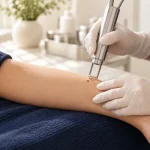
7. Microneedling
Microneedling creates controlled microscopic injuries in the skin using fine needles.
The healing response stimulates remodeling within the dermis.
It may be considered for:
- mild fine lines
- skin texture
- enlarged pore appearance
- certain acne scars
Results develop gradually rather than immediately.
Temporary redness, sensitivity, swelling, and pinpoint bleeding can occur.
Appropriate technique and infection control are important.
8. Radiofrequency Microneedling
Radiofrequency microneedling combines needle penetration with controlled delivery of radiofrequency energy into the skin.
The goal is to stimulate dermal remodeling while limiting unnecessary injury to the surface.
Depending on the indication, it may be considered for:
- fine wrinkles
- skin texture
- acne scars
- mild skin laxity
As with other collagen-remodeling procedures, improvement develops gradually.
Possible effects include temporary redness, swelling, tenderness, crusting, or pigment changes.
9. Radiofrequency and Ultrasound Skin-Tightening Treatments
Energy-based procedures using radiofrequency or focused ultrasound may be considered when mild skin laxity contributes to an aged appearance.
These procedures target deeper tissue rather than simply resurfacing the skin.
They should not be expected to reproduce the degree of tightening possible with surgical lifting.
Patient selection is important because the benefit varies according to:
- age
- degree of laxity
- facial anatomy
- skin thickness
- treatment technology
- treatment parameters
10. Chemical Peels
Chemical peels use controlled application of chemical solutions to exfoliate selected layers of skin.
Depending on their depth, they may improve:
- superficial fine lines
- uneven texture
- some forms of pigmentation
- signs of photoaging
Peels vary significantly in strength.
Superficial peels generally involve less recovery, while deeper peels produce more substantial injury and require considerably more aftercare.
Pigment alteration is an important consideration in darker skin types.
Which Treatment Is Best for Fine Lines and Wrinkles?
The answer depends on what is causing the wrinkle.
| Main concern | Treatments that may be considered |
|---|---|
| Dynamic forehead or frown lines | Botulinum toxin |
| Crow’s feet | Botulinum toxin, selected resurfacing treatments |
| Very superficial fine lines | Skincare, retinoids, resurfacing procedures |
| Sun-damaged texture | Retinoids, chemical peels, laser resurfacing |
| Facial volume loss | Dermal fillers or other volume-restoration approaches |
| Mild skin laxity | RF, ultrasound or selected collagen-remodeling treatments |
| Fine lines with acne scars | Fractional resurfacing, microneedling or RF microneedling |
| Multiple signs of aging | Carefully planned combination treatment |
This table is a general guide rather than a treatment recommendation.
Two patients of the same age with apparently similar wrinkles may require completely different approaches.
Combination Treatment for Facial Rejuvenation
Facial aging rarely results from one process.
For example, the same patient may have:
- dynamic forehead lines
- sun-damaged cheek skin
- reduced cheek volume
- mild lower-face laxity
No single procedure optimally addresses all four problems.
A dermatologist may therefore develop a staged treatment plan addressing different components separately.
For example, treatment could focus on:
- controlling further photodamage
- improving skin quality
- reducing excessive muscle-related lines
- correcting selected volume loss
- treating laxity when appropriate
Importantly, more treatment is not automatically better.
Natural-looking rejuvenation usually requires identifying which features actually need correction and which normal facial characteristics should be preserved.
Fine Lines and Wrinkle Treatment in Asian Skin
Patients with Asian and other more deeply pigmented skin types can respond very well to rejuvenation procedures, but treatment planning should consider the risk of post-inflammatory hyperpigmentation (PIH).
PIH refers to darkening that develops after inflammation or skin injury.
Procedures that intentionally create inflammation—including some lasers, chemical peels, and energy-based treatments—can occasionally trigger pigmentation.
Risk depends on several factors, including:
- skin type
- treatment intensity
- recent tanning
- sun exposure
- previous history of PIH
- underlying melasma
- aftercare
This does not mean that patients with darker skin cannot undergo resurfacing procedures. It means that appropriate treatment selection and parameters matter.
Recovery and Aftercare
Recovery depends heavily on the procedure.
Injectable treatments may produce temporary bruising, swelling, or tenderness.
Microneedling and energy-based treatments may produce redness and swelling for a short period.
More intensive resurfacing procedures can involve significantly longer periods of redness, peeling, crusting, or sensitivity.
General aftercare may include:
- gentle cleansing
- moisturizer
- appropriate sun protection
- avoiding unnecessary irritation
- following procedure-specific instructions
- temporarily avoiding selected active skincare ingredients
Patients should follow the specific instructions given for their treatment rather than assuming the same aftercare applies to every procedure.
Can Fine Lines and Wrinkles Come Back?
Skin aging continues throughout life.
Most cosmetic treatments improve existing signs of aging rather than permanently stopping the aging process.
Dynamic wrinkles can gradually return as muscle activity returns after wrinkle-relaxing injections.
Temporary fillers are gradually absorbed.
Collagen-remodeling treatments may produce longer-lasting structural changes, but the skin continues to age and remains exposed to environmental factors.
Maintenance treatment may therefore be considered depending on the procedure and the patient’s goals.
Daily sun protection remains one of the most important long-term measures.
What to Expect During a Dermatology Consultation in Bangkok
A consultation for fine lines and wrinkles should begin with understanding what bothers you—not simply selecting a procedure from a menu.
Your dermatologist may ask about:
- your main cosmetic concerns
- previous injectable treatments
- previous laser or energy-based treatments
- tendency to develop pigmentation
- history of melasma
- acne or acne scarring
- sensitive skin or rosacea
- medications
- allergies
- previous complications
- expected downtime
- desired degree of improvement
The face should ideally be examined both at rest and during movement.
A treatment plan can then prioritize the concerns most likely to respond while avoiding unnecessary procedures.
Patients visiting Bangkok from overseas should mention how long they will remain in Thailand. Certain treatments may require follow-up or may not be ideal immediately before prolonged sun exposure, swimming, diving, or travel.
Choosing a Clinic for Wrinkle Treatment in Bangkok
Fine lines and wrinkles are cosmetic concerns, but many of the procedures used to treat them are medical procedures.
When comparing clinics, consider asking:
- Who will perform the treatment?
- What is the medical qualification of the practitioner?
- What exactly is being injected or used?
- Why is this treatment recommended for my type of wrinkle?
- What improvement can realistically be expected?
- What are the alternatives?
- What are the important complications?
- How much downtime should I expect?
- What happens if a complication develops?
- Is follow-up available?
This is particularly important for injectable treatments and procedures involving lasers or other medical devices.
Fine Lines & Wrinkles Treatment in Bangkok: The Bottom Line
Fine lines and wrinkles are normal features of aging, but they do not all develop for the same reason.
The most useful question is therefore not:
“What is the strongest anti-aging treatment?”
It is:
“What is causing my lines, and which treatment specifically addresses that cause?”
A dermatologist can distinguish dynamic wrinkles from static wrinkles, assess sun damage, skin quality, pigmentation risk, facial volume, and laxity, and determine whether skincare, injectable treatment, resurfacing, collagen remodeling, or a combination approach is appropriate.
For patients seeking skin rejuvenation in Bangkok, a personalized assessment is particularly valuable before undergoing injectable, laser, or energy-based procedures.
The goal of treatment should be realistic improvement while preserving healthy skin, normal facial function, and natural facial proportions.
Frequently asked questions
What is the best treatment for fine lines and wrinkles?
There is no single best treatment.
Dynamic wrinkles often respond differently from wrinkles caused by sun damage, volume loss, or skin laxity. A dermatologist should identify the dominant cause before recommending treatment.
Can skincare really reduce wrinkles?
Skincare can help with mild fine lines, hydration, pigmentation, and photoaging.
Sun protection and appropriate retinoid therapy are particularly useful components of many anti-aging routines.
However, topical skincare cannot reproduce the effects of treatments designed to address muscle movement, significant volume loss, or substantial skin laxity.
Is Botox better than laser treatment for wrinkles?
They treat different problems.
Botulinum toxin primarily reduces wrinkles caused by muscle movement.
Laser resurfacing primarily targets skin texture, photoaging, and selected static wrinkles.
Some patients benefit from one; others may benefit from a combination.
What is the best treatment for forehead wrinkles?
If forehead wrinkles are primarily caused by facial movement, botulinum toxin may be considered.
If lines remain visible at rest, additional treatments targeting skin quality may sometimes be appropriate.
Careful assessment of eyebrow position and forehead muscle activity is important before treatment.
Can laser treatment permanently remove wrinkles?
No treatment permanently stops skin aging.
Laser resurfacing can improve selected wrinkles and skin texture, but aging and environmental exposure continue afterward.
How many treatments will I need?
It depends on the procedure and the severity of the concern.
Some injectable treatments can produce noticeable changes after one treatment, while collagen-remodeling and non-ablative resurfacing procedures commonly require a series of treatments.
Is wrinkle treatment painful?
Discomfort varies according to the procedure.
Injectables generally involve brief needle discomfort. Microneedling and laser procedures may require topical anesthetic. More intensive procedures can cause greater discomfort and longer recovery.
Is there downtime after wrinkle treatment?
It depends on the treatment.
Some injectables require minimal downtime, while fractional or ablative resurfacing can cause redness, swelling, peeling, or crusting.
Patients should discuss recovery requirements before scheduling treatment.
Can people with darker skin have laser wrinkle treatment?
Yes, but the laser type and treatment settings need to be selected carefully.
Patients with more deeply pigmented skin may have a higher risk of post-inflammatory hyperpigmentation after certain procedures.
At what age should I start wrinkle treatment?
There is no medically correct age to begin cosmetic wrinkle treatment.
Treatment should be based on an individual's concerns, examination findings, skin condition, and goals rather than age alone.
Sun protection and good skincare can be started long before procedural treatment becomes relevant.
Can wrinkles be prevented completely?
No.
Wrinkles are a normal part of aging. However, limiting excessive UV exposure, using sun protection, avoiding smoking, maintaining skin hydration, and appropriate skincare can help reduce preventable premature skin aging.
Should I get filler for every deep wrinkle?
No.
Some deep lines are caused mainly by muscle movement, skin laxity, or changes elsewhere in facial structure. Adding filler directly into every visible line can sometimes produce an unnatural appearance without addressing the actual cause.
How do I know whether I need Botox, filler, laser, or RF?
The choice depends on the underlying problem:
- muscle movement → wrinkle-relaxing treatment may be appropriate
- volume loss → filler may be considered
- surface texture and photoaging → resurfacing may be more appropriate
- mild laxity → selected energy-based tightening treatments may be considered
Many patients have more than one component.
Related conditions
-
Skin Rejuvenation Skin Rejuvenation Skin rejuvenation is not one single treatment. It is a broad approach to improving changes such as fine lines, uneven texture, enlarged pores, pigmentation, sun damage, acne scars, redness and mild skin laxity.

-
Fractional Laser Fractional Laser Fractional laser is a skin-resurfacing treatment commonly used to improve atrophic acne scars, uneven skin texture, enlarged-looking pores, and selected signs of photoaging.

-
Fractional RF Fractional RF Fractional RF is a minimally invasive dermatology treatment used to improve atrophic acne scars, enlarged pores, and uneven skin texture by delivering controlled radiofrequency energy into the skin.

-
Melasma Melasma Melasma is a common acquired pigmentation disorder that causes symmetrical brown, gray-brown, or sometimes darker patches, most often on the cheeks, forehead, nose, upper lip, and jawline.