





Skin Rejuvenation
Skin rejuvenation is not one single treatment. It is a broad approach to improving changes such as fine lines, uneven texture, enlarged pores, pigmentation, sun damage, acne scars, redness and mild skin laxity.
The most appropriate treatment depends on what is causing the visible change.
A patient with dynamic forehead lines may benefit from a very different approach from someone with melasma, acne scarring, sun spots or rough photodamaged skin. Trying to treat all of these problems with the same laser, injectable or skincare product can produce disappointing results and, in some skin types, unnecessary complications.
For patients seeking skin rejuvenation in Bangkok, a useful consultation should therefore begin with diagnosis and skin assessment—not selection of a device or procedure.
What Is Skin Rejuvenation?
Skin rejuvenation refers to medical, procedural and skincare approaches used to improve the appearance and quality of the skin.
Depending on the patient, treatment may focus on:
- fine lines and wrinkles
- uneven skin texture
- enlarged pores
- acne scars
- pigmentation
- sun spots
- photodamage
- dull or rough skin
- facial redness
- visible small blood vessels
- mild skin laxity
- age-related changes in skin quality
Skin rejuvenation should not be confused with trying to make the skin “perfect” or completely reversing aging.
Normal skin has pores, pigment variation, lines and texture. The realistic goal is usually to improve specific concerns while maintaining healthy skin and a natural appearance.
What Happens to Skin as It Ages?
Skin aging results from a combination of intrinsic aging and external environmental exposure.
Intrinsic aging refers to biological changes that occur naturally over time.
External factors can accelerate these changes, particularly ultraviolet radiation.
With age, the skin may gradually develop:
- reduced collagen support
- changes in elastic tissue
- reduced moisture retention
- slower repair processes
- altered pigmentation
- fine lines
- more visible texture
- reduced firmness
การเผชิญกับแสงแดดสะสมอาจทำให้เกิดริ้วรอย จุดด่างดำ ผิวไม่สม่ำเสมอ และสัญญาณความชราก่อนวัย แพทย์ผิวหนังมักเรียกภาวะนี้ว่า photoaging.
What Can Skin Rejuvenation Improve?
The term “skin rejuvenation” is very broad. It helps to separate concerns into categories because each responds to different treatments.
Fine Lines and Wrinkles
Fine lines can develop because of:
- repeated facial movement
- collagen changes
- ultraviolet exposure
- dryness
- natural aging
- changes in facial support
Dynamic wrinkles appear mainly when facial muscles contract.
Static wrinkles remain visible even when the face is relaxed.
This distinction matters because a procedure designed to improve skin texture may not adequately treat a wrinkle caused primarily by muscle movement.
Uneven Skin Texture
Patients may describe their skin as:
- rough
- bumpy
- uneven
- less smooth than before
- “crepey”
- irregular under makeup
Texture changes may result from aging, photodamage, acne, scarring, enlarged pores, dryness or other skin conditions.
Different causes require different treatment strategies.
Enlarged Pores
Pores are normal structures of the skin and cannot literally be removed.
However, their appearance may become more noticeable because of:
- oily skin
- acne
- loss of surrounding skin support
- sun damage
- scarring
- age-related changes
Treatments may reduce their visible appearance, but claims that a procedure can permanently “close” pores should be viewed cautiously.
Pigmentation and Uneven Skin Tone
Pigmentation is one of the most common reasons patients seek facial rejuvenation.
But “dark spots” are not a single diagnosis.
They may include:
- freckles
- solar lentigines
- melasma
- post-inflammatory hyperpigmentation
- seborrheic keratoses
- pigmented actinic keratoses
- melanocytic lesions
These conditions should not automatically receive the same laser or light treatment.
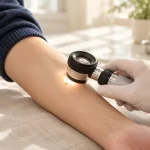
A diagnosis is particularly important before treating a new, irregular or changing brown lesion.
Sun Damage and Photoaging
Cumulative ultraviolet exposure can cause:
- fine and deep wrinkles
- age spots
- uneven pigmentation
- rough texture
- reduced elasticity
- visible vessels
- precancerous actinic keratoses
Some accumulated sun damage is permanent, but dermatologic treatment can improve several of its visible effects.
Skin rejuvenation in a patient with significant photodamage should therefore include both cosmetic assessment and consideration of medically important sun-related lesions.
Acne Scars
Acne scars are another common rejuvenation concern.
The term “acne scar” includes several different scar patterns, such as:
- rolling scars
- boxcar scars
- ice-pick scars
- raised scars
- post-inflammatory colour changes
Pigmentation left behind after acne is not the same as a true depressed scar.
Because different scar types respond differently to treatment, acne-scar rejuvenation often requires combination therapy rather than a single universal procedure.
Facial Redness and Visible Blood Vessels
Persistent facial redness may be related to:
- rosacea
- dilated superficial vessels
- sun damage
- inflammation
- post-acne redness
Patients sometimes seek general “skin rejuvenation” for redness when the underlying problem is actually a dermatologic condition such as rosacea.
Controlling the underlying inflammatory condition may be more important than immediately performing an aesthetic procedure.
Mild Skin Laxity
As skin and underlying tissues change with age, some patients notice:
- softer jawline definition
- mild cheek laxity
- loosening of the neck skin
- fine creasing
Non-surgical tightening procedures can improve selected patients, but results are generally more modest than surgical lifting.
Creams and moisturizers may temporarily make fine lines appear less noticeable, but topical products cannot physically lift significantly sagging tissue.
Who May Consider Skin Rejuvenation?
Skin rejuvenation may be appropriate for someone bothered by one or more specific concerns, such as:
- early fine lines
- photodamage
- uneven pigmentation
- rough texture
- acne scarring
- enlarged pores
- facial redness
- mild laxity
There is no medically required age to begin rejuvenation treatment.
Treatment should be based on the concern, skin condition, medical history and patient goals rather than age alone.
When “Skin Rejuvenation” Should Start With a Medical Examination
Not every visible skin change should immediately be treated cosmetically.
A dermatologist should assess a lesion before cosmetic treatment if it:
- is new and rapidly changing
- grows progressively
- repeatedly bleeds
- forms a persistent crust
- ulcerates
- becomes unusually painful or tender
- changes significantly in colour
- develops an irregular border
- looks very different from the patient’s other lesions
- repeatedly heals and returns
- does not heal normally
A rough patch on chronically sun-exposed skin, for example, may represent an actinic keratosis, which is a precancerous lesion rather than simply dry or aging skin. Chronic ultraviolet exposure also increases the risk of skin cancer.
Suspicious lesions should be diagnosed before laser or destructive cosmetic treatment.
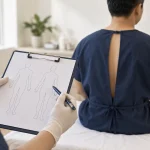
How a Dermatologist Assesses the Skin Before Rejuvenation
A useful rejuvenation consultation should answer a simple question first:
What exactly are we trying to improve?
A dermatologist may assess several components.
Skin Quality
This includes:
- texture
- hydration
- fine lines
- pore appearance
- pigmentation
- photodamage
- redness
- scarring
Facial Movement
The patient may be asked to:
- smile
- frown
- raise the eyebrows
- squint
This helps separate wrinkles caused mainly by muscle activity from those caused by structural skin changes.
Pigment Pattern
Brown pigmentation may represent very different diagnoses.
The dermatologist may evaluate:
- colour
- distribution
- symmetry
- borders
- relationship to previous inflammation
- sun-exposed distribution
- signs suggestive of melasma
Skin Type and Pigment Tendency
This is particularly important in Asian and darker skin.
Inflammatory procedures can occasionally trigger post-inflammatory hyperpigmentation, meaning darkening that develops after skin inflammation or injury.
Darker skin is more prone to burns and dark marks after some laser treatments, making appropriate laser selection and clinician experience important.
Scarring
If acne scars are present, the dermatologist should determine the scar type and depth rather than treating every scar identically.
Facial Volume and Laxity
Some changes patients describe as “skin aging” actually originate deeper than the skin.
Loss or redistribution of facial volume and changes in underlying tissues can contribute to:
- folds
- shadows
- laxity
- changes in facial contour
Surface rejuvenation alone may have limited effect when the main problem is structural.
Skin Rejuvenation Treatment Options
There is no single “best” rejuvenation treatment.
The best treatment depends on the dominant problem.
1. Daily Sun Protection
Sun protection is the foundation of almost every long-term rejuvenation plan.
Ultraviolet exposure contributes to:
- wrinkles
- pigmentation
- age spots
- loss of elasticity
- photodamage
- precancerous lesions
- skin cancer
It is generally recommended to use broad-spectrum sunscreen with an SPF of at least 30, together with shade and sun-protective clothing.
For patients living in Thailand, sun protection needs to be realistic enough to use consistently.
Useful measures include:
- broad-spectrum sunscreen
- hats
- sunglasses
- protective clothing
- seeking shade when possible
- reapplication during prolonged outdoor exposure, sweating or swimming
Expensive rejuvenation procedures cannot substitute for ongoing photoprotection.
2. Moisturizers and Skin-Barrier Care
A good moisturizer helps retain water in the skin.
This can make some fine lines look less noticeable and improve the appearance of dry, dull skin.
Moisturizers are especially useful when the skin barrier has been disrupted by:
- over-exfoliation
- acne treatment
- Retinoids
- frequent procedures
- sensitive skin
- dry environments
They do not remove deep wrinkles or physically tighten loose tissue, but they remain an important part of healthy skin maintenance.
3. Retinoids and Retinol
Retinoids are vitamin A derivatives widely used in dermatology.
Depending on the formulation, they may help improve:
- mild fine lines
- uneven texture
- mild pigmentation irregularities
- acne
They can promote skin-cell turnover and support collagen-related changes.
Advantages
Retinoids have an established role in medical dermatology and can be incorporated into long-term skincare.
Limitations
Results are gradual.
Possible side effects include:
- dryness
- peeling
- redness
- irritation
Patients with significant redness, very dry skin or inflammatory conditions such as rosacea may not tolerate them well. Irritation can also trigger hyperpigmentation in darker skin.
Retinoids should be discussed with a clinician in pregnancy or when planning pregnancy.
4. Chemical Peels
Chemical peels create controlled exfoliation using chemical agents.
Depending on the agent and depth, they may improve:
- superficial pigmentation
- rough texture
- selected fine lines
- acne-related changes
- some features of photodamage
Peels range from superficial to deeper treatments.
Advantages
Superficial peels can offer relatively limited downtime.
Limitations
Deeper treatment creates more skin injury and therefore more recovery.
Possible side effects include:
- irritation
- redness
- peeling
- infection
- persistent pigmentation changes
- scarring in uncommon cases
Patients with darker skin or a history of post-inflammatory pigmentation require careful treatment selection.
5. Microneedling
Microneedling uses multiple fine needles to create controlled microscopic injuries in the skin.
The healing process stimulates dermal remodeling.
It may be considered for:
- acne scars
- uneven texture
- fine lines
- visible pore appearance
Advantages
It does not rely on pigment-selective light energy and can be useful for several textural concerns.
Limitations
It is not a primary treatment for every form of pigmentation or vascular redness.
Improvement develops progressively and multiple treatment sessions may be required.
Possible short-term effects include:
- redness
- swelling
- tenderness
- pinpoint bleeding
- temporary roughness
Appropriate infection-control standards are important.
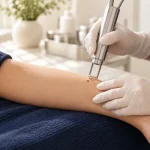
6. Radiofrequency Microneedling
Radiofrequency microneedling combines needles with Radiofrequency energy delivered into the skin.
It may be used for selected patients with:
- acne scars
- uneven texture
- fine lines
- enlarged pore appearance
- mild laxity
Potential Advantages
Energy can be delivered below the surface while limiting some epidermal injury.
Limitations
It is not a replacement for pigment-targeting treatment when the principal problem is a brown lesion, nor is it equivalent to surgical tightening for significant laxity.
Possible side effects include:
- redness
- swelling
- crusting
- tenderness
- temporary pigmentation changes
Rare complications depend on the technology and technique used.
7. Fractional Laser Resurfacing
Fractional lasers treat microscopic areas of skin while leaving surrounding areas untreated.
They are commonly considered for:
- photodamage
- fine lines
- textural irregularity
- acne scars
- selected pigmentation concerns
There are two broad categories.
Non-Ablative Fractional Laser
This approach creates controlled thermal injury beneath the surface with less removal of the epidermis.
Advantages may include:
- shorter recovery
- gradual collagen remodeling
- less surface disruption than ablative resurfacing
The trade-off is that improvement may be more gradual and less dramatic than with more aggressive ablative treatment.
Ablative Fractional Laser
This approach removes microscopic columns of skin and creates more significant controlled injury.
It may produce stronger resurfacing effects but generally involves more downtime.
Potential adverse effects include:
- redness
- swelling
- burning or itching
- infection
- scarring
- pigment changes
Laser resurfacing can improve sun-damaged skin, wrinkles, scars and age-related changes in appropriate patients, but treatment depth and risk must be individualized.
8. Pigment-Targeting Lasers
Pigment-targeting lasers may be appropriate for selected benign pigmentation such as some solar lentigines.
However, a crucial rule applies:
Diagnosis comes before laser treatment.
A brown lesion may represent:
- solar lentigo
- melasma
- post-inflammatory hyperpigmentation
- seborrheic keratosis
- actinic keratosis
- melanocytic lesion
These conditions do not all respond appropriately to the same device.
An irregular or changing pigmented lesion should be medically assessed before cosmetic treatment.
9. Intense Pulsed Light
Intense Pulsed Light is a broad-spectrum light treatment rather than a true laser.
Depending on the device and settings, it may be used for combinations of:
- superficial pigmentation
- facial redness
- visible vessels
- some signs of photodamage
It can be useful when pigmentation and vascular changes occur together.
However, patient selection matters, particularly in darker skin and in patients with melasma or a tendency to develop post-inflammatory hyperpigmentation.
10. Vascular Laser and Light-Based Treatment
Vascular treatments target blood vessels and may help selected patients with:
- visible superficial vessels
- persistent redness
- certain vascular lesions
Before treatment, the cause of the redness should be established.
A patient with rosacea may require medical treatment and trigger management in addition to a vascular procedure.
11. Botulinum Toxin
Botulinum toxin temporarily reduces activity in selected facial muscles.
It is most useful for dynamic wrinkles, such as:
- frown lines
- forehead lines
- crow’s feet
It does not improve all causes of skin aging.
For example, it does not directly treat:
- pigmentation
- acne scars
- sun spots
- rough texture
- facial volume loss
This is why it should be considered one component of facial rejuvenation rather than a universal “anti-aging” treatment.
12. Dermal Fillers
Dermal fillers are used to restore or modify volume and structural support in selected areas of the face.
They may be considered when changes are related to:
- volume loss
- deeper folds
- contour changes
- structural aging
They do not directly correct photodamage or skin texture.
Common temporary reactions may include:
- swelling
- bruising
- tenderness
- redness
Rare but serious vascular complications can occur with filler injections, so these should be regarded as medical procedures requiring appropriate anatomical knowledge and complication management.
13. Radiofrequency or Ultrasound Skin Tightening
Energy-based tightening treatments may be considered for selected patients with mild to moderate laxity.
These technologies generally work by delivering energy into deeper tissues to stimulate remodeling.
Advantages
They may offer modest tightening without surgical incisions.
Limitations
They should not be presented as equivalent to a surgical facelift.
Results vary according to:
- degree of laxity
- age
- tissue thickness
- treatment technology
- energy settings
- technique
- individual healing response
Which Skin Rejuvenation Treatment Is Best?
There is no useful answer without first identifying the problem.
| Main concern | Treatments that may be considered |
|---|---|
| Fine lines from photodamage | Retinoids, Fractional laser, Chemical peel, selected collagen-remodeling procedures |
| Dynamic forehead or frown lines | Botulinum toxin |
| Acne scars | Fractional laser, Microneedling, Radiofrequency microneedling and scar-specific procedures |
| Rough texture | Retinoids, Chemical peel, Fractional laser, Microneedling |
| Enlarged pore appearance | Retinoids, Microneedling, Fractional or Radiofrequency-based treatment depending on cause |
| Benign sun spots | Pigment-targeting treatment after diagnosis |
| Melasma | Medical pigmentation treatment with careful use of procedures where appropriate |
| Facial redness or visible vessels | Vascular Laser or light treatment after diagnosis |
| Mild skin laxity | Radiofrequency, Ultrasound or selected collagen-remodeling procedures |
| Facial volume loss | Dermal filler or other structural approaches where appropriate |
| Significant photodamage | Combination treatment plus sun protection and medical skin assessment |
| Suspicious lesion | Dermatologic examination before cosmetic treatment |
The table provides general information rather than a treatment recommendation for an individual patient.
Why Combination Treatment Is Often More Logical
Aging rarely affects only one part of the face.
One patient may have:
- dynamic forehead lines
- cheek pigmentation
- acne scars
- mild jawline laxity
- facial volume loss
Trying to solve all of these issues with one technology is unlikely to produce an optimal result.
Combination treatment may therefore address different causes separately.
For example:
- stabilize active acne or inflammatory skin disease first
- establish effective sun protection
- treat pigmentation or photodamage
- improve texture or scars
- address dynamic wrinkles where appropriate
- assess deeper structural concerns separately
This does not mean that more procedures are always better.
A conservative plan often produces a more natural result than performing multiple treatments simply because they are available.
Skin Rejuvenation for Asian Skin
Skin rejuvenation in Asian skin requires particular attention to pigmentation.
Patients may have combinations of:
- melasma
- solar lentigines
- acne-related hyperpigmentation
- post-inflammatory hyperpigmentation
- uneven skin tone
Procedures that cause inflammation can sometimes trigger additional pigmentation.
This does not mean that Asian or darker skin cannot undergo laser or energy-based procedures. It means that:
- diagnosis matters
- device choice matters
- treatment parameters matter
- recent tanning matters
- aftercare matters
- the patient’s history of pigment reactions matters
While lasers can be used across skin types, darker skin has a greater tendency to develop burns or dark marks following inappropriate laser treatment.
What Is Post-Inflammatory Hyperpigmentation?
Post-inflammatory hyperpigmentation is darkening of the skin that develops after inflammation or injury.
It can follow:
- acne
- dermatitis
- laser treatment
- Chemical peel
- Microneedling
- Radiofrequency procedures
- Cryotherapy
- other inflammatory procedures
It is particularly relevant when planning skin rejuvenation in patients with darker skin tones.
A patient who reports,
“Every pimple or scratch leaves a dark mark,
” should mention this during consultation.
Skin Rejuvenation and Melasma
Melasma deserves special consideration because it is often mistaken for ordinary sun damage.
Melasma is a chronic pigmentation disorder influenced by several factors, including ultraviolet and visible light exposure, genetic susceptibility and hormonal influences.
Aggressive heat or inflammatory treatments can worsen pigmentation in some patients.
Therefore, a patient with melasma should not automatically receive the same “brightening laser package” as a patient with isolated solar lentigines.
Diagnosis comes first.
Skin Rejuvenation and Active Acne
It is often better to control active acne before aggressively treating acne scars.
Why?
Because continuing inflammation may create new:
- scars
- red marks
- dark marks
Treatment planning may therefore occur in stages:
control active acne → reduce new scarring → treat residual scars and pigmentation
This sequence is often more logical than immediately resurfacing skin that is still actively inflamed.
Skin Rejuvenation and Rosacea
Patients with rosacea may have:
- redness
- visible vessels
- sensitive skin
- inflammatory bumps
- burning or stinging
A generic rejuvenation routine containing aggressive exfoliation, multiple acids or irritating Retinoids may worsen symptoms.
The underlying inflammatory skin disorder should first be recognized and controlled.
How Much Downtime Does Skin Rejuvenation Require?
Downtime varies considerably.
Some treatments produce minimal visible recovery.
Others may cause several days or longer of:
- redness
- swelling
- peeling
- crusting
- bruising
- tenderness
- temporary darkening
Broadly:
Little or minimal downtime may be associated with selected light treatments, gentle procedures or injectables.
Short visible recovery may occur after Microneedling, Radiofrequency microneedling, some fractional treatments or superficial peels.
More significant recovery may occur after aggressive ablative resurfacing or deeper peels.
The intensity of a treatment and the expected downtime should be discussed before treatment rather than discovered afterward.
Possible Side Effects of Skin Rejuvenation Procedures
Side effects vary by procedure.
Common temporary effects may include:
- redness
- swelling
- tenderness
- bruising
- peeling
- dryness
- temporary darkening
Less common complications can include:
- infection
- prolonged inflammation
- acne-like eruptions
- persistent pigmentation changes
- scarring
Laser resurfacing can cause swelling, burning, itching, infection, scarring and pigment alterations, although risk varies greatly by treatment and patient factors.
Injectables have different risk profiles and should be discussed separately.
Can Skin Rejuvenation Results Be Permanent?
Usually not in the literal sense.
Skin continues to age.
Ultraviolet exposure continues to affect the skin unless exposure is reduced.
Facial muscles continue to move.
Temporary injectable materials are gradually metabolized.
Collagen-remodeling procedures can produce longer-lasting structural improvement, but they do not stop biological aging.
Maintenance depends on:
- treatment type
- age
- skin condition
- sun exposure
- smoking
- skincare
- individual biology
A better goal is long-term skin management, not a one-time attempt to permanently stop aging.
How to Maintain Skin Rejuvenation Results
Long-term maintenance usually begins with relatively simple measures:
- daily sun protection
- appropriate moisturizer
- avoiding smoking
- avoiding excessive tanning
- using evidence-based topical treatments when suitable
- treating acne, rosacea or dermatitis rather than allowing chronic inflammation
- avoiding unnecessary over-treatment
Frequent procedures are not automatically better for the skin.
Healthy skin is the priority.
Can Skincare Replace Procedures?
Sometimes skincare is enough for mild concerns.
For example, appropriate skincare may improve:
- dryness
- mild roughness
- mild pigmentation
- early fine lines
Retinoids may improve mild fine lines, pigmentation irregularity and texture.
However, topical skincare cannot fully correct:
- deep acne scars
- substantial volume loss
- pronounced dynamic wrinkles
- significant skin laxity
- certain vascular changes
This is why treatment should be matched to the depth and cause of the concern.
Is More Aggressive Treatment Better?
Not necessarily.
A stronger procedure may create:
- greater inflammation
- longer recovery
- greater pigment risk
- more discomfort
- more potential complications
without necessarily being the most appropriate option.
For some patients, particularly those prone to pigmentation, several conservative treatments may be preferable to one highly aggressive treatment.
The optimal intensity is the lowest level of treatment likely to achieve the patient’s realistic goal with an acceptable risk profile.
Skin Rejuvenation for Tourists and International Patients in Bangkok
Bangkok is a convenient destination for many international patients, but treatment timing matters.
Patients should tell the dermatologist:
- how long they will remain in Bangkok
- whether they are flying soon
- whether they plan to visit beaches or islands
- whether they will be swimming or diving
- whether they have outdoor activities planned
- whether follow-up will be possible
A procedure requiring strict sun avoidance or several days of visible healing may not be ideal immediately before a beach holiday.
Similarly, a treatment that requires clinical reassessment may be less suitable when the patient leaves Thailand the following day.
Planning around the travel itinerary is part of safe treatment selection.
What to Expect During a Skin Rejuvenation Consultation in Bangkok
A useful consultation should not begin with:
“Which machine do you want?”
It should begin with:
“What bothers you, and what is causing it?”
A dermatologist may ask about:
- primary skin concerns
- duration of the problem
- previous acne
- acne scars
- melasma
- rosacea
- sensitive skin
- previous lasers
- previous injectables
- history of abnormal scarring
- history of dark marks after procedures
- medications
- pregnancy or pregnancy planning where relevant
- previous cold sores before some facial procedures
- sun exposure
- recent tanning
- expected downtime
- upcoming travel
- desired outcome
The skin may then be examined for pigmentation, texture, scarring, redness, facial movement, laxity and suspicious lesions.
Only after this assessment does treatment selection become meaningful.
How to Choose a Skin Rejuvenation Clinic in Bangkok
A useful consultation should help the patient understand the diagnosis, alternatives and limitations, not only the name of a treatment.
Questions worth asking include:
- What exactly is causing my concern?
- Why is this treatment recommended?
- Are there alternatives?
- What improvement is realistic?
- How many sessions may be needed?
- How much downtime should I expect?
- What are the important side effects?
- Is this treatment appropriate for my skin tone?
- Could my pigmentation be melasma rather than sun spots?
- Who performs the procedure?
- What happens if a complication occurs?
- Is follow-up available?
For laser procedures, clinician training and appropriate patient selection are important because treatment outcomes and complications depend partly on technique and the patient’s skin type.
Skin Rejuvenation in Bangkok: The Bottom Line
Skin rejuvenation works best when it is treated as a diagnosis-led medical plan rather than a menu of machines.
Fine lines, pigmentation, acne scars, enlarged pores, redness, photodamage and laxity are different problems, even though patients may describe all of them simply as “aging skin.
”
The first step is therefore to identify what is actually causing the concern.
For some patients, the foundation may be nothing more complicated than better sun protection, moisturizer and appropriate topical treatment.
Others may benefit from procedures such as:
- Chemical peel
- Microneedling
- Radiofrequency microneedling
- Fractional laser
- pigment or vascular treatment
- Botulinum toxin
- Dermal filler
- selected tightening procedures
Combination treatment can be useful when several problems coexist, but more treatment is not automatically better.
For patients seeking skin rejuvenation in Bangkok, particularly those with Asian or darker skin, melasma, sensitive skin or a history of post-inflammatory pigmentation, treatment selection should account for both expected benefit and pigment risk.
Most importantly, new, changing, bleeding, crusted or non-healing lesions should not simply be treated as signs of aging. They should first be evaluated medically.
The aim of good skin rejuvenation is not to create artificially perfect skin. It is to improve the concerns that matter to the patient while preserving healthy skin, natural facial expression and realistic expectations.
Frequently asked questions
What is skin rejuvenation?
Skin rejuvenation is a general term for treatments used to improve concerns such as fine lines, uneven texture, pigmentation, acne scars, photodamage, redness and mild laxity.
It can include skincare, topical medications, lasers, light-based procedures, Microneedling, Radiofrequency treatments, peels and selected injectables.
What is the best skin rejuvenation treatment?
There is no single best treatment.
The best option depends on whether the main problem is:
- pigmentation
- wrinkles
- acne scars
- texture
- redness
- enlarged pores
- laxity
- volume loss
A diagnosis should come before treatment selection.
What treatment is best for smoother skin?
Depending on the cause, options may include Retinoids, Chemical peel, Microneedling, Fractional laser or Radiofrequency microneedling.
Someone with roughness from dermatitis would require a different approach.
Which treatment is best for glowing skin?
“Glow” is not a medical diagnosis.
Patients often use the term to mean:
- smoother texture
- better hydration
- more even pigmentation
- less dullness
The correct treatment depends on which of those factors is present.
Sometimes improving basic skincare and sun protection produces more benefit than an invasive procedure.
What treatment is best for enlarged pores?
There is no treatment that permanently eliminates pores.
Depending on the cause, Retinoids, Microneedling, Fractional laser or Radiofrequency microneedling may help reduce their visible appearance.
Can skin rejuvenation remove wrinkles?
Some wrinkles can be significantly improved, but treatment depends on their cause.
Dynamic wrinkles may respond to Botulinum toxin, while fine static wrinkles related to photodamage may respond better to Retinoids or resurfacing procedures.
Deep structural changes often require a different approach.
Can skin rejuvenation improve acne scars?
Yes, many acne scars can be improved.
The best treatment depends on scar type.
Fractional laser, Microneedling and Radiofrequency microneedling may be useful, but some scars require scar-specific procedures rather than general resurfacing.
Does skin rejuvenation permanently remove pigmentation?
Usually not.
Some isolated benign lesions may clear after treatment, but new pigmentation can develop from continued ultraviolet exposure or underlying conditions such as melasma.
Is laser the best skin rejuvenation treatment?
Not necessarily.
Laser is useful for certain pigmentation, vascular changes, scars, wrinkles and texture, but it is not the best treatment for every problem.
A treatment should be chosen because it matches the diagnosis, not because it is the newest or strongest device.
Can people with darker skin have laser treatment?
Yes.
However, some darker skin types have a greater risk of post-inflammatory hyperpigmentation and burns from inappropriate laser parameters.
Treatment should be selected carefully.
How many sessions are needed?
It depends entirely on the procedure and the condition.
Some treatments may produce a useful change after one session.
Others require several sessions and progressive improvement over months.
A universal number should not be promised before assessing the patient.
How long does skin rejuvenation last?
Duration varies greatly.
Skin continues to age, and sun exposure continues to affect it.
Some treatments require maintenance while others create longer-lasting structural change.
There is no procedure that permanently stops skin aging.
At what age should I start skin rejuvenation?
There is no specific age.
Sun protection and healthy skincare can start early.
Procedural treatments should be considered only when there is a specific concern worth treating.
Is skin rejuvenation safe during pregnancy?
Some skincare ingredients and procedures are avoided or modified during pregnancy.
Patients who are pregnant, breastfeeding or planning pregnancy should tell their dermatologist before beginning treatment.
Can I have skin rejuvenation before a beach holiday?
It depends on the procedure.
Treatments involving laser, resurfacing, peeling or significant inflammation may require careful sun avoidance afterward.
If you are planning beach travel in Thailand, discuss your itinerary before scheduling treatment.
Should a dermatologist examine brown spots before laser treatment?
Yes, particularly if a spot is new, changing, irregular or clinically uncertain.
Not every brown lesion is harmless pigmentation.
A suspicious lesion should be medically assessed before cosmetic destruction.
Related conditions
-
Fine Lines & Wrinkles Fine Lines & Wrinkles Fine lines and wrinkles are among the most common signs of skin aging. Some develop from repeated facial expressions, while others result from gradual changes in collagen, elastin, skin hydration, facial volume, and years of ultraviolet exposure.
-
Skin Texture Skin Texture Uneven skin texture is one of the most common reasons people seek skin rejuvenation treatment. Skin may feel rough, look bumpy or dull, show enlarged pores, or develop shallow acne scars and fine lines that make the surface appear less smooth.
-
Enlarged Pores Enlarged Pores Enlarged pores are visible openings of hair follicles that appear larger or more noticeable than usual, particularly on the nose, cheeks, forehead, and central face.
-
Photodamage Photodamage Photodamage is the cumulative injury caused by repeated exposure to ultraviolet radiation from sunlight and artificial UV sources. Over time, it can lead to uneven pigmentation, sun spots, fine lines, rough texture, visible blood vessels, loss of elasticity and, importantly, precancerous or cancerous skin changes.