














Surgical Excision
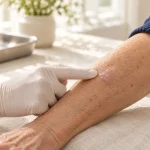
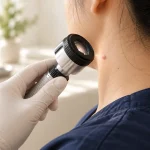
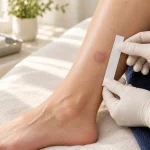
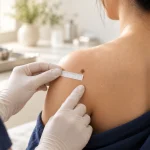
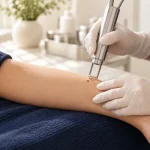
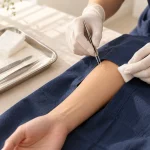
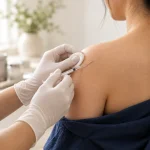
Surgical excision is one of the main treatments for skin cancer. During the procedure, the doctor removes the cancer together with a planned amount of normal-looking skin around it. The removed tissue is then examined under a microscope to determine whether cancer cells extend to the surgical edges, known as the margins.
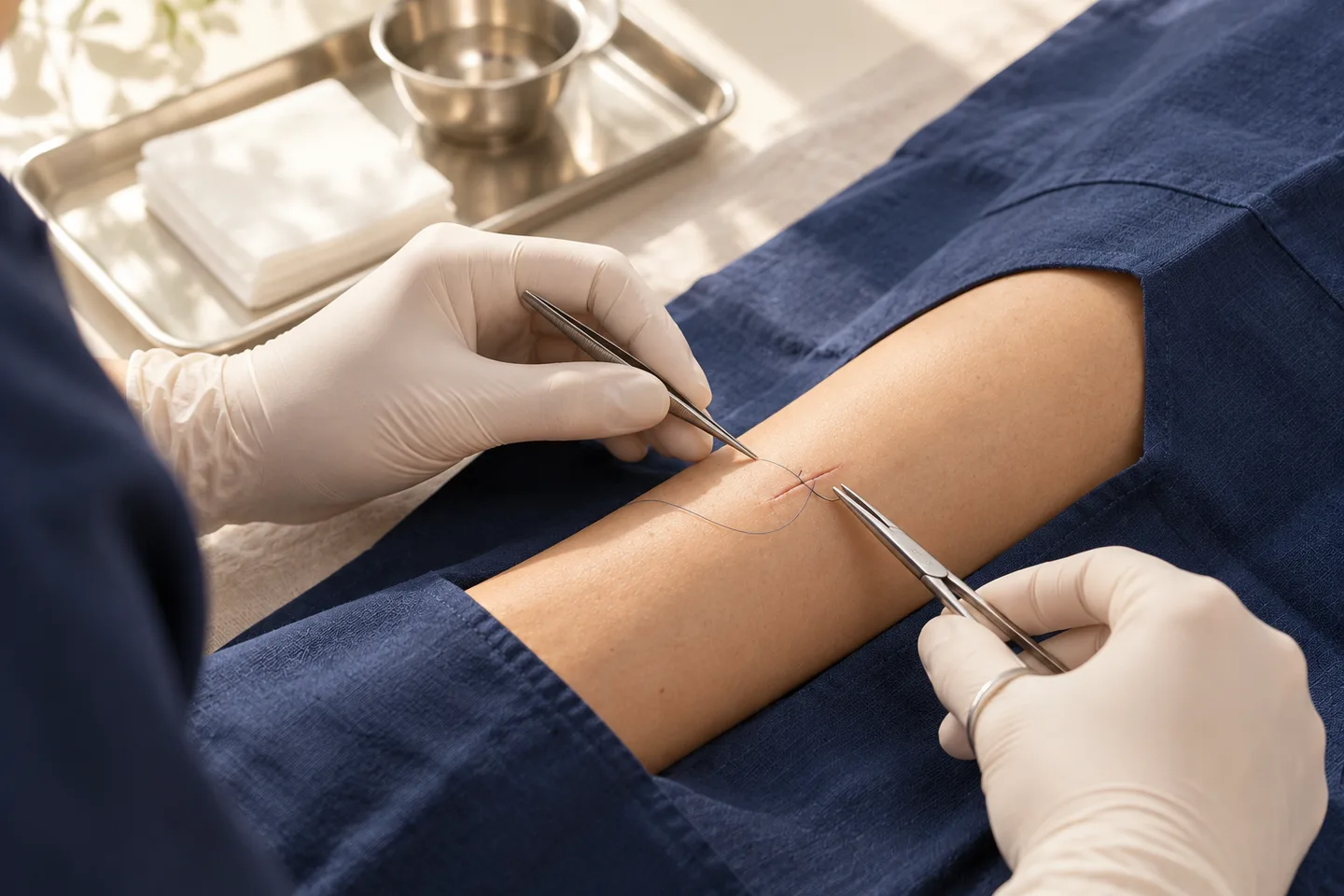
For many localized basal cell carcinomas and cutaneous squamous cell carcinomas, surgical excision is an established treatment option. Surgery is also the main treatment for localized melanoma, although melanoma requires its own margin planning and sometimes additional staging procedures.
For patients seeking skin cancer surgery in Bangkok, the important questions are not simply whether a lesion can be removed, but:
- What type of skin cancer is it?
- Has the diagnosis been confirmed by biopsy?
- How much tissue should be removed?
- Is standard surgical excision appropriate, or would Mohs surgery be more suitable?
- Will the specimen be examined by pathology?
- How will the wound be closed?
- What happens if the margins are not clear?
- How should follow-up be arranged, particularly for international patients?
This page explains those questions in practical terms.
What Is Surgical Excision for Skin Cancer?
Surgical excision means physically cutting out a skin cancer together with a margin of surrounding normal-looking tissue.
The procedure usually involves three important components:
Removal of the visible tumor or previously biopsied cancer site
- Removal of an appropriate surrounding surgical margin
- Histopathological examination of the specimen
For many early skin cancers, excision can be performed under local anesthesia while the patient remains awake.
The procedure is different from simply “removing a mole.
” Skin cancer surgery is planned according to the diagnosis, tumor characteristics, anatomical location, pathology findings, and risk of recurrence.
Which Skin Cancers Can Be Treated With Surgical Excision?
Surgical excision may be used for several forms of skin cancer.
Basal Cell Carcinoma
Surgical excision is widely used for localized basal cell carcinoma. The tumor and surrounding tissue are removed and sent for microscopic margin assessment.
Not every basal cell carcinoma should automatically be treated by standard excision. Tumor location, subtype, size, recurrence status, and the need to preserve healthy tissue may make Mohs surgery or another treatment preferable.
Squamous Cell Carcinoma
Surgical treatment remains a central part of care for cutaneous squamous cell carcinoma, and excision is widely used when the tumor is localized and suitable for conventional surgery.
Higher-risk squamous cell carcinomas require more careful planning because they have a greater risk of local recurrence or spread.
Melanoma
Localized melanoma is generally treated with surgical excision. After the initial diagnostic biopsy, a wide local excision is usually performed with a margin determined largely by the melanoma’s pathological thickness and other clinical factors.
Melanoma surgery should therefore not be planned in exactly the same way as basal cell carcinoma or squamous cell carcinoma.
Is Surgical Excision the Same as a Skin Biopsy?
No.
A biopsy is performed primarily to establish a diagnosis.
Surgical excision is performed primarily as treatment.
There can be overlap. For example, a small suspicious lesion may be completely removed during an excisional biopsy. However, if pathology subsequently shows melanoma or another skin cancer requiring a defined treatment margin, additional surgery may still be necessary.
This is particularly important with melanoma, where the first biopsy establishes information such as Breslow thickness that helps determine subsequent surgical management.
Why Is a Biopsy Important Before Skin Cancer Surgery?
Different skin cancers require different surgical approaches.
A pathology diagnosis can identify:
- Whether the lesion is cancerous
- The type of skin cancer
- Histological subtype
- Degree of differentiation in certain cancers
- Tumor depth or thickness when relevant
- Other high-risk microscopic features
Without this information, it may be difficult to determine the most appropriate treatment.
Some lesions can be assessed and removed in a single procedure when clinically appropriate, but a suspicious lesion should not simply be destroyed with laser, cautery, or freezing if histological diagnosis is needed.
What Is a Surgical Margin?
The surgical margin is the area of normal-looking tissue removed around a skin cancer.
Cancer cells may extend microscopically beyond the part of the lesion visible to the eye. Removing a surrounding margin is intended to address this microscopic extension.
The amount of tissue removed is not identical for every skin cancer.
It depends on factors such as:
- Cancer type
- Tumor size
- Anatomical location
- Histological subtype
- Tumor differentiation
- Whether the cancer is primary or recurrent
- Whether borders are clearly defined
- Depth of invasion
- Other high-risk features
Conventional excision of basal cell and squamous cell carcinoma uses planned surgical margins, with wider margins needed in some higher-risk tumors.
How Wide Should the Surgical Margin Be?
There is no single margin appropriate for every skin cancer.
For basal cell carcinoma and cutaneous squamous cell carcinoma, margin selection depends on tumor risk characteristics.
Conventional excision margins commonly range from several millimeters upward, with wider margins considered for larger, less differentiated, or high-risk tumors.
For melanoma, margin planning is different and is based primarily on melanoma thickness and stage. Localized melanoma is treated with wide local excision, and the planned margin may be considerably wider than the original biopsy scar.
Patients should therefore avoid comparing their planned margin with another patient’s surgery without considering the diagnosis.
Why Does the Surgeon Remove Normal-Looking Skin?
Normal-looking skin may still contain microscopic extensions of cancer.
Removing only the part visible to the naked eye may leave cancer cells behind.
The surrounding tissue is therefore removed according to a planned margin and examined microscopically.
This does not mean that all tissue inside the surgical margin is cancerous. The margin is part of the oncological safety planning.
What Does “Clear Margin” Mean?
After surgery, a pathologist examines the specimen.
If no cancer cells are identified at the examined edges of the specimen, the margins may be reported as clear, negative, or uninvolved.
This generally indicates that the tumor has been completely removed at the examined surgical edges.
Pathology reporting is crucial because the surgeon cannot reliably determine microscopic clearance from appearance alone.
What Does a Positive Margin Mean?
A positive margin means cancer cells extend to an examined edge of the removed tissue.
This suggests that residual tumor may remain in the patient.
Depending on the cancer type, location, pathology, and previous treatment, further management may include:
- Repeat surgical excision
- Mohs surgery
- Additional margin-controlled surgery
- Radiation therapy in selected situations
- Other treatments depending on the diagnosis
Repeat excision may be required when conventional surgical margins are inadequate.
A positive margin does not automatically mean the cancer has spread elsewhere in the body. It refers to the relationship between the tumor and the edge of the surgical specimen.
Is a Narrow but Clear Margin the Same as a Positive Margin?
No.
A clear margin means no cancer is seen at the examined edge.
A narrow margin means the distance between the tumor and the edge is small but still free of cancer.
Whether a narrow clear margin is acceptable depends on:
- Cancer type
- Tumor risk
- Anatomical location
- Histological findings
- Previous treatment
- Clinical judgment
The pathology report therefore needs to be interpreted in the context of the specific tumor.
What Happens During Skin Cancer Surgical Excision?
The details vary, but a typical procedure may follow these steps.
1. Confirming the Treatment Site
The doctor verifies the lesion, biopsy scar, pathology diagnosis, and planned procedure.
For lesions that have become difficult to see after biopsy, pre-biopsy photographs can be extremely useful.
2. Marking the Surgical Margin
The planned excision is marked around the lesion or biopsy scar.
The final shape is often designed to allow the wound to close appropriately.
3. Local Anesthesia
A local anesthetic is injected around the treatment area.
Most conventional excisions for suitable early skin cancers can be performed while the patient remains awake.
4. Removing the Tumor
The surgeon removes the lesion and planned surrounding tissue.
The excision usually extends through the skin and into an appropriate level of underlying tissue depending on the tumor.
5. Preparing the Specimen for Pathology
The specimen is sent for histopathological evaluation.
Orientation markings may be used when important for interpreting specific margins.
6. Closing the Wound
Depending on the size and location, the wound may be:
- Closed directly with stitches
- Allowed to heal naturally
- Repaired using a local flap
- Covered with a skin graft
- Reconstructed using another technique
Reconstruction is selected according to wound characteristics, function, anatomy, and patient factors.
Why Is the Final Scar Often Longer Than the Skin Cancer?
This commonly surprises patients.
A round skin cancer cannot always be removed and closed as a round hole.
The surgeon may design an elliptical excision so that the wound edges come together smoothly without excessive bunching of the skin.
As a result, the scar may be several times longer than the visible diameter of the original lesion.
The length of the scar does not mean that the cancer itself was that long.
How Is the Wound Closed?
Several approaches are possible.
Direct Closure
The wound edges are brought together with stitches.
This is often possible when enough surrounding skin is available.
Secondary Intention Healing
The wound is left open to heal gradually from the base and edges.
This may be appropriate for selected sites and defects.
Skin Flap
Nearby skin is moved into the surgical defect while maintaining its blood supply.
Flaps can be useful when direct closure would distort nearby structures or create excessive tension.
Skin Graft
Skin is taken from another body site and placed over the surgical defect.
Grafts may be used when nearby tissue cannot easily be moved into the wound.
Reconstruction after skin cancer removal should balance cancer clearance, wound healing, function, and appearance.
Is Surgical Excision Performed Under Local or General Anesthesia?
Many skin cancer excisions can be performed under local anesthesia.
The area is numb, but the patient remains awake.
More extensive surgery may require different anesthesia depending on:
- Tumor size
- Anatomical location
- Reconstruction required
- Depth of surgery
- Lymph-node surgery
- Patient factors
The appropriate setting cannot be determined from diagnosis alone.
How Long Does Skin Cancer Surgery Take?
There is no single duration.
A straightforward excision with direct closure may be relatively brief, while surgery requiring:
- A large excision
- Complex reconstruction
- Skin grafting
- Flap repair
- Lymph-node procedures
may take considerably longer.
Pathology processing from conventional excision is usually performed after the procedure rather than while the patient waits, unlike standard Mohs surgery where tissue is examined during the operative visit.
Surgical Excision vs Mohs Surgery
Both procedures remove skin cancer, but the method of margin assessment differs.
Surgical Excision Mohs Surgery
Tumor removed with a predetermined margin Tumor removed in stages Specimen usually sent for routine pathology Tissue examined during the procedure Only sampled sections of the margin are typically assessed in conventional pathology
Mohs is designed to examine the surgical margin systematically
Commonly used for many localized skin cancers Particularly useful for selected high-risk tumors or tissue-sensitive locations
Wound may be closed immediately Reconstruction usually follows confirmation of clearance
Mohs surgery removes the tumor in layers and continues until the examined surgical margins are free of cancer. One major advantage is preservation of healthy tissue while obtaining detailed margin control.
When Might Mohs Surgery Be Preferred?
The decision depends on more than tumor size.
Relevant considerations may include:
- Cancer type
- Anatomical location
- Whether the cancer is recurrent
- Tumor borders
- Histological subtype
- Tumor risk characteristics
- Importance of preserving healthy tissue
Mohs is particularly valuable in selected areas where tissue preservation is important, such as the eyelid, ear, nose, or other anatomically constrained sites.
Not every skin cancer requires Mohs surgery.
Is Mohs Always Better Than Surgical Excision?
No.
The best surgery depends on the tumor.
Conventional excision can be highly appropriate for many well-defined, localized skin cancers.
Mohs may provide important advantages for selected high-risk or anatomically sensitive tumors but is not necessary for every lesion.
The correct question is therefore:
“Which procedure is most appropriate for this specific skin cancer?”
rather than:
“Which surgery is always better?”
Surgical Excision for Basal Cell Carcinoma
Basal cell carcinoma is commonly treated with surgical excision.
During surgery, the visible or biopsy-confirmed tumor site and a surrounding margin are removed.
The specimen is examined microscopically to assess the margins.
Standard excision may be particularly suitable for selected localized basal cell carcinomas with clearly defined borders.
Other tumors may be better managed with Mohs surgery or another treatment based on:
- Location
- Recurrence
- Histological subtype
- Size
- Border definition
- Patient factors
Surgical Excision for Squamous Cell Carcinoma
Excision is widely used for cutaneous squamous cell carcinoma and is frequently appropriate for localized tumors.
Before treatment, the doctor should consider features that may make a squamous cell carcinoma higher risk, such as:
- Larger tumor size
- Greater depth
- Poor differentiation
- High-risk anatomical site
- Recurrent disease
- Certain microscopic patterns
- Perineural invasion
- Immunosuppression
Higher-risk tumors may require more extensive margin control, Mohs surgery, imaging, nodal assessment, or multidisciplinary care depending on the situation.
Surgical Excision for Melanoma
Melanoma surgery is different from standard excision for basal cell or squamous cell carcinoma.
After melanoma is diagnosed, the pathology report should be reviewed for features such as:
- Melanoma in situ versus invasive melanoma
- Breslow thickness
- Ulceration
- Margin status
- Other staging information
A wide local excision is then planned.
The required margin depends predominantly on melanoma thickness and clinical circumstances.
Some invasive melanomas may also require discussion of sentinel lymph node biopsy.
Does Surgery Remove Skin Cancer Permanently?
The objective of surgery is complete removal of the treated tumor.
However, no responsible treatment can guarantee that a cancer will never recur.
Recurrence risk varies according to:
- Skin cancer type
- Tumor characteristics
- Location
- Histological subtype
- Previous treatment
- Margin status
- Patient immune status
Follow-up remains important even after clear margins.
A patient who has developed one skin cancer may also develop a completely separate new skin cancer later.
Can Skin Cancer Return After Surgical Excision?
Yes.
Recurrence can occur even after apparently successful treatment, although the likelihood varies substantially according to the cancer and its risk factors.
Possible explanations include:
- Microscopic tumor extension
- Aggressive tumor biology
- Previous recurrence
- High-risk location
- Complex tumor borders
- Immunosuppression
A new lesion near a previous surgical scar should therefore be assessed rather than assumed to be scar tissue.
What Does Recurrent Skin Cancer Look Like?
Possible warning signs include:
- A new lump in or beside the scar
- Persistent scaling
- A sore that does not heal
- Recurrent bleeding
- New ulceration
- Gradual thickening
- New pigmentation in a melanoma scar
- Pain, tingling, or numbness in selected higher-risk cancers
These findings do not automatically indicate recurrence, but they deserve medical evaluation.
What Are the Advantages of Surgical Excision?
Surgical excision provides several important benefits.
Removal of the Tumor
The cancer is physically removed rather than only treated at the surface.
Histopathological Assessment
The removed specimen can be examined microscopically.
Margin Evaluation
Pathology can determine whether cancer reaches the examined edges.
Treatment and Diagnosis Can Be Linked
The pathological findings can guide further management when necessary.
Broad Applicability
Excision can be used for many localized basal cell carcinomas, squamous cell carcinomas, and melanomas.
What Are the Limitations of Surgical Excision?
Surgical excision is not ideal for every tumor.
Limitations can include:
- Removal of some healthy tissue
- Scarring
- Need for stitches
- Need for flap or graft reconstruction
- Possibility of positive margins
- Potential need for another operation
- Functional or cosmetic concerns in sensitive anatomical locations
Conventional pathology also differs from Mohs surgery because only selected sections of the specimen may be examined rather than the entire peripheral and deep margin being assessed in the Mohs manner.
Possible Side Effects and Complications
All surgery carries potential risks.
Possible complications include:
- Pain
- Swelling
- Bruising
- Bleeding
- Infection
- Wound separation
- Delayed healing
- Scar formation
- Numbness
- Tingling or altered sensation
- Reaction to local anesthetic
- Suture reaction
- Need for further surgery
The likelihood depends on the size and location of surgery and individual patient factors.
Will Skin Cancer Surgery Leave a Scar?
Yes.
Any procedure that cuts through the skin creates a scar.
The final appearance depends on factors including:
- Tumor size
- Surgical margin
- Anatomical location
- Wound tension
- Closure method
- Skin type
- Individual scar biology
- Infection or wound complications
- Sun exposure during scar maturation
The goal of skin cancer surgery is first to remove the cancer appropriately while preserving function and healthy tissue whenever possible.
Cosmetic outcome remains important, particularly on the face, but should not compromise adequate cancer treatment.
What Should I Expect Immediately After Surgery?
After surgery, the wound is usually covered with a dressing.
Some discomfort, swelling, bruising, or mild spotting of blood can occur.
The exact wound-care instructions depend on the closure method.
Patients may be advised about:
- Keeping the dressing dry for a certain period
- When to begin cleaning the wound
- How to apply an ointment or dressing
- Activity restrictions
- When sutures should be removed
- Which symptoms require urgent review
The treating surgeon’s instructions should take priority because wound care differs between procedures.
How Long Does the Wound Take to Heal?
Healing depends on:
- Location
- Size of the excision
- Depth
- Closure method
- Blood supply
- Smoking status
- Diabetes or other health conditions
- Medications
- Infection
A directly sutured wound heals differently from a graft, flap, or wound healing by secondary intention.
The scar continues to change for substantially longer than the initial wound-healing period.
When Are Stitches Removed?
There is no single timing for all sites.
Suture-removal timing depends on:
- Face versus trunk or extremity
- Wound tension
- Type of sutures
- Closure technique
- Healing progress
Some stitches dissolve and do not need removal.
International patients should discuss the suture-removal plan before leaving Bangkok.
Can I Shower After Skin Cancer Surgery?
Usually yes after an appropriate period, but instructions vary according to the wound and dressing.
Some wounds can be gently washed relatively early, while grafts or complex reconstructions may require different care.
Patients should follow the instructions provided after their specific operation.
Can I Exercise After Skin Cancer Surgery?
Strenuous activity can increase wound tension, bleeding, swelling, and the risk of the wound opening.
Restrictions depend on:
- Surgical site
- Size of the wound
- Type of reconstruction
- Sport or exercise
- Whether movement stretches the wound
A small facial excision and a large leg flap should not be given identical activity advice.
Can I Swim After Surgery?
Usually not while the wound is still open or before the surgeon considers it sufficiently healed.
Pools, sea water, hot tubs, and other immersion can expose the wound to contamination and may interfere with dressings or healing.
The timing should be individualized.
Can I Fly After Skin Cancer Surgery?
Often yes, but the answer depends on the procedure.
International patients should consider:
- Bleeding risk
- Swelling
- Wound care
- Need for dressing changes
- Suture removal
- Pathology results
- Possibility that further surgery will be required
- Skin graft or flap monitoring
The most important issue is often not the flight itself but whether the patient leaves Bangkok before the final pathology result is available.
Why Should International Patients Wait for the Pathology Result?
A skin cancer excision is not necessarily complete simply because the wound has been stitched.
The pathology report may show:
- Clear margins
- Positive margins
- A different diagnosis than expected
- Higher-risk histological features
- A need for additional treatment
Therefore, international patients should have a clear plan for receiving and reviewing pathology results even if they leave Thailand before the result is finalized.
What Should International Patients Take Home?
Useful documentation can include:
- Initial biopsy report
- Surgical pathology report
- Operation note
- Diagnosis and tumor subtype
- Margin status
- Wound-care instructions
- Suture-removal plan
- Medication list
- Follow-up recommendations
- Relevant clinical photographs when appropriate
If additional treatment is required in another country, complete documentation can make continuity of care easier.
When Should You Contact a Doctor After Surgery?
Seek medical review if you develop:
- Bleeding that does not stop with appropriate pressure
- Rapidly increasing swelling
- Severe or worsening pain
- Spreading redness
- Increasing warmth around the wound
- Pus or foul-smelling discharge
- Fever associated with worsening wound symptoms
- Wound opening
- Darkening or concerning color change in a flap or graft
- New neurological symptoms near a high-risk surgical site
Minor bruising or swelling may be expected after many procedures, but worsening symptoms deserve assessment.
Can Skin Cancer Be Removed With Laser Instead of Surgery?
Laser is not interchangeable with surgical excision.
For a confirmed or suspicious invasive skin cancer, one of the major advantages of surgical excision is that tissue remains available for histopathological diagnosis and margin assessment.
Destroying a suspicious cancer without adequate tissue examination may remove that opportunity.
Laser treatment is used only in selected skin cancer circumstances and is rarely used for basal cell carcinoma; surgery remains an important standard option for localized basal cell and squamous cell carcinoma.
Can Skin Cancer Be Frozen Instead?
Cryosurgery is an option for selected superficial or low-risk lesions, but it is not interchangeable with excision in every case.
For cutaneous squamous cell carcinoma, nonsurgical approaches may be appropriate for selected low-risk tumors or when surgery is contraindicated, but surgical treatment generally remains the most effective approach.
Treatment should be selected according to the diagnosis rather than simply choosing whichever procedure seems easiest.
What About Curettage and Electrodessication?
Curettage and electrodessication involves scraping away the lesion and treating the area with electrical energy.
It can be appropriate for selected low-risk basal cell or squamous cell carcinomas.
However, it does not provide the same type of intact surgical specimen and margin assessment as conventional excision.
It is therefore not the best option for every cancer.
What About Radiation Therapy?
Radiation can be used for selected basal cell and squamous cell carcinomas.
It may be considered when:
- Surgery is unsuitable
- The tumor cannot be adequately removed surgically
- Patient factors make surgery difficult
- Radiation is needed as part of treatment for higher-risk disease
It usually requires a different treatment pathway from a one-time surgical excision.
When Is Skin Cancer Surgery More Complex?
Surgery may require more planning when the tumor involves:
- Eyelid
- Nose
- Ear
- Lip
- Scalp
- Hand
- Finger
- Genital region
- Large areas of the face
- Areas close to nerves or major structures
Complexity also increases with:
- Large tumors
- Recurrent cancers
- Poorly defined borders
- Aggressive pathology
- Deep invasion
- Previous radiation
- Immunosuppression
The appropriate treatment may involve dermatology, Mohs surgery, plastic surgery, head and neck surgery, surgical oncology, or another specialty depending on the case.
Do Blood Thinners Need to Be Stopped?
Patients should not stop anticoagulant or antiplatelet medication on their own.
Examples include medications taken for:
- Atrial fibrillation
- Stroke prevention
- Heart disease
- Coronary stents
- Previous blood clots
Stopping these medications unnecessarily can create serious medical risk.
The surgeon should review the medication list and determine whether any adjustment is appropriate.
Reconstruction guidelines specifically address perioperative management considerations such as anticoagulation because decisions should be individualized.
Should Antibiotics Be Taken After Skin Cancer Surgery?
Not every skin cancer excision requires antibiotics.
The decision depends on factors such as:
- Surgical site
- Reconstruction
- Infection risk
- Patient health
- Wound contamination
- Specific clinical circumstances
Routine antibiotic use should not be assumed for every procedure.
Does Skin Cancer Surgery Require Hospital Admission?
Many straightforward skin cancer excisions can be performed without hospital admission and under local anesthesia.
More complex cases may require an operating room or hospital-based care.
Examples include:
- Extensive reconstruction
- Deep tumor invasion
- Major facial surgery
- Lymph-node surgery
- Advanced melanoma
- Significant medical comorbidity
The setting should match the complexity of the procedure.
When Should a Skin Lesion Be Evaluated Before Considering Surgery?
See a dermatologist if you have:
- A persistent sore that does not heal
- A lesion that repeatedly bleeds
- A pearly or shiny growing bump
- A crusted or scaly growth that enlarges
- A rapidly growing skin lesion
- A new or changing mole
- An irregular pigmented lesion
- A lesion that repeatedly returns after previous treatment
- A painful or tender skin tumor
- Numbness or unusual sensation associated with a suspicious lesion
Diagnosis should come before choosing the surgical technique.
What Happens During a Skin Cancer Surgery Consultation?
A useful consultation should answer several separate questions.
What Is the Diagnosis?
The doctor reviews the lesion, biopsy, and pathology.
What Type of Skin Cancer Is It?
Treatment differs for basal cell carcinoma, squamous cell carcinoma, melanoma, and less common tumors.
Is the Tumor Low Risk or High Risk?
Tumor location, size, subtype, recurrence status, depth, and other factors matter.
Is Standard Surgical Excision Appropriate?
For many localized cancers, yes.
For others, Mohs surgery or another approach may provide better margin control or tissue preservation.
How Much Tissue Needs to Be Removed?
This depends on the diagnosis and tumor risk.
How Will the Wound Be Repaired?
The doctor should consider direct closure, secondary healing, flap, graft, or another method.
Will the Specimen Be Sent to Pathology?
For conventional skin cancer excision, histopathological assessment of the removed tumor and margins is a critical part of management.
What Happens If the Margins Are Positive?
The patient should understand that further treatment may occasionally be necessary.
Questions to Ask Before Skin Cancer Surgery
- What type of skin cancer do I have?
- Has the diagnosis been confirmed by pathology?
- Is this considered a low-risk or high-risk tumor?
- Is standard surgical excision appropriate?
- Would Mohs surgery be more suitable?
- How much surrounding skin needs to be removed?
- How deep will the surgery go?
- Will the tissue be sent for pathology?
- How will the margins be evaluated?
- How will the wound be closed?
- Will I need a skin flap or graft?
- What scar should I expect?
- When will the pathology result be available?
- What happens if the margins are positive?
- When will stitches be removed?
- When can I exercise, swim, or travel?
- How will follow-up be arranged?
Frequently asked questions
What is surgical excision for skin cancer?
It is surgery that removes a skin cancer together with a planned margin of surrounding tissue. The specimen is then examined microscopically.
Is surgical excision a common skin cancer treatment?
Yes. It is a standard treatment for many localized basal cell carcinomas and squamous cell carcinomas and is also central to treatment of localized melanoma.
Is skin cancer surgery painful?
Local anesthetic is usually used for suitable minor skin cancer surgery. Patients may feel the injection initially but should not feel sharp surgical pain once the area is adequately numb.
Am I awake during skin cancer surgery?
For many straightforward excisions, yes.
Does every skin cancer need surgery?
No. Treatment depends on cancer type, risk, location, patient health, and other factors.
Is surgical excision the same as Mohs surgery?
No. Conventional excision removes the tumor with a planned margin and sends it for routine pathology. Mohs removes and examines tissue in stages during the procedure.
Which is better: Mohs or surgical excision?
Neither is universally better. The most appropriate method depends on the individual tumor.
What is a surgical margin?
It is the normal-looking tissue removed around the cancer to address microscopic tumor extension.
Why is normal skin removed?
Cancer cells can extend beyond the visible tumor.
How much skin must be removed?
It depends on the cancer type, size, location, pathology, and recurrence risk.
What does a clear margin mean?
No cancer cells are identified at the examined surgical edge.
What does a positive margin mean?
Cancer cells reach an examined edge of the specimen, suggesting residual tumor may remain.
Does a positive margin mean the cancer has metastasized?
No. It describes the edge of the removed specimen, not distant spread.
What happens if the margins are positive?
Additional surgery or another treatment may be recommended depending on the case.
Is the entire margin examined after standard excision?
Routine pathology generally samples representative sections. This differs from the systematic margin evaluation used in Mohs surgery.
Is the tissue always sent to pathology?
For skin cancer excision, pathological examination is an essential part of determining diagnosis and margin status.
Will skin cancer surgery leave a scar?
Yes.
Why is my scar longer than the original lesion?
The wound may need to be shaped to allow safe removal and appropriate closure.
Can facial skin cancer be surgically removed?
Yes, but facial location can influence the preferred surgical technique and reconstruction.
Can skin cancer on the nose be removed?
Yes. Depending on tumor risk and location, standard excision, Mohs surgery, or another approach may be considered.
Can skin cancer on the ear be removed?
Yes. Tissue preservation and margin control can be particularly important on the ear.
Can skin cancer on the eyelid be removed?
Yes, but surgery may require specialized planning because of the functional and anatomical importance of the eyelid.
What is a skin flap?
A skin flap moves nearby tissue into the surgical defect while preserving its blood supply.
What is a skin graft?
A skin graft transfers skin from another site to cover a wound.
Will I need a skin graft?
Only some wounds require grafting.
Can the wound heal without stitches?
Some carefully selected wounds can heal by secondary intention.
How long will the surgery take?
It varies according to tumor size, location, and reconstruction.
How long does pathology take?
Processing time varies between pathology services and the complexity of the specimen. It should not be assumed to be immediate after standard excision.
Can skin cancer return after surgery?
Yes. Recurrence is possible, although risk varies by cancer type and tumor characteristics.
Can another skin cancer develop later?
Yes. A previous skin cancer does not protect against development of another primary skin cancer.
Do I need follow-up after clear margins?
Yes. Follow-up is important for detecting recurrence and new primary skin cancers.
Can a skin cancer be removed with a laser instead?
Laser is not an equivalent replacement for surgical excision in many confirmed or suspicious invasive skin cancers because tissue diagnosis and margin evaluation may be important.
Can skin cancer be frozen?
Cryosurgery can be appropriate for selected lesions but is not suitable for every skin cancer.
Is radiation an alternative to surgery?
In selected cases, yes.
Can tourists have skin cancer surgery in Bangkok?
International patients can undergo evaluation and treatment, but pathology, wound care, suture removal, and the possibility of additional treatment should be planned before travel.
Can I fly home after skin cancer surgery?
Often yes, depending on the wound and surgery, but the follow-up and pathology plan should be established first.
Should I wait for my pathology before leaving Thailand?
When practical, receiving and discussing the final pathology before leaving can simplify follow-up. If travel cannot wait, there should be a clear plan for communicating results and arranging further treatment if required.
Related conditions
-
Full Body Skin Examination Full Body Skin Examination A full body skin examination is a head-to-toe assessment of the skin performed to look for suspicious moles, abnormal growths, precancerous changes and signs of skin cancer.
-
Suspicious Mole Assessment Suspicious Mole Assessment A suspicious mole assessment is a focused dermatology evaluation of a mole or pigmented skin lesion that is new, changing, unusual, bleeding, itching, or simply looks different from your other moles.
-
Dermoscopy Dermoscopy Dermoscopy is a non-invasive examination technique that allows a dermatologist to inspect skin lesions with greater detail than is possible with the naked eye alone.
-
Skin Biopsy (การวินิจฉัย / Diagnosis) Skin Biopsy (การวินิจฉัย / Diagnosis) A skin biopsy is a minor medical procedure in which a dermatologist removes a small sample of skin so it can be examined under a microscope. It is one of the most important diagnostic tools in dermatology because many skin conditions cannot be confirmed by appearance alone.