


Cryotherapy
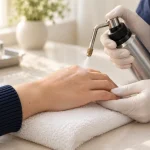
Cryotherapy is a dermatologic procedure that uses extreme cold—most commonly liquid nitrogen—to freeze and destroy selected abnormal skin tissue. Dermatologists commonly use it for conditions such as viral warts, actinic keratoses, some seborrheic keratoses, molluscum contagiosum, and selected skin tags.
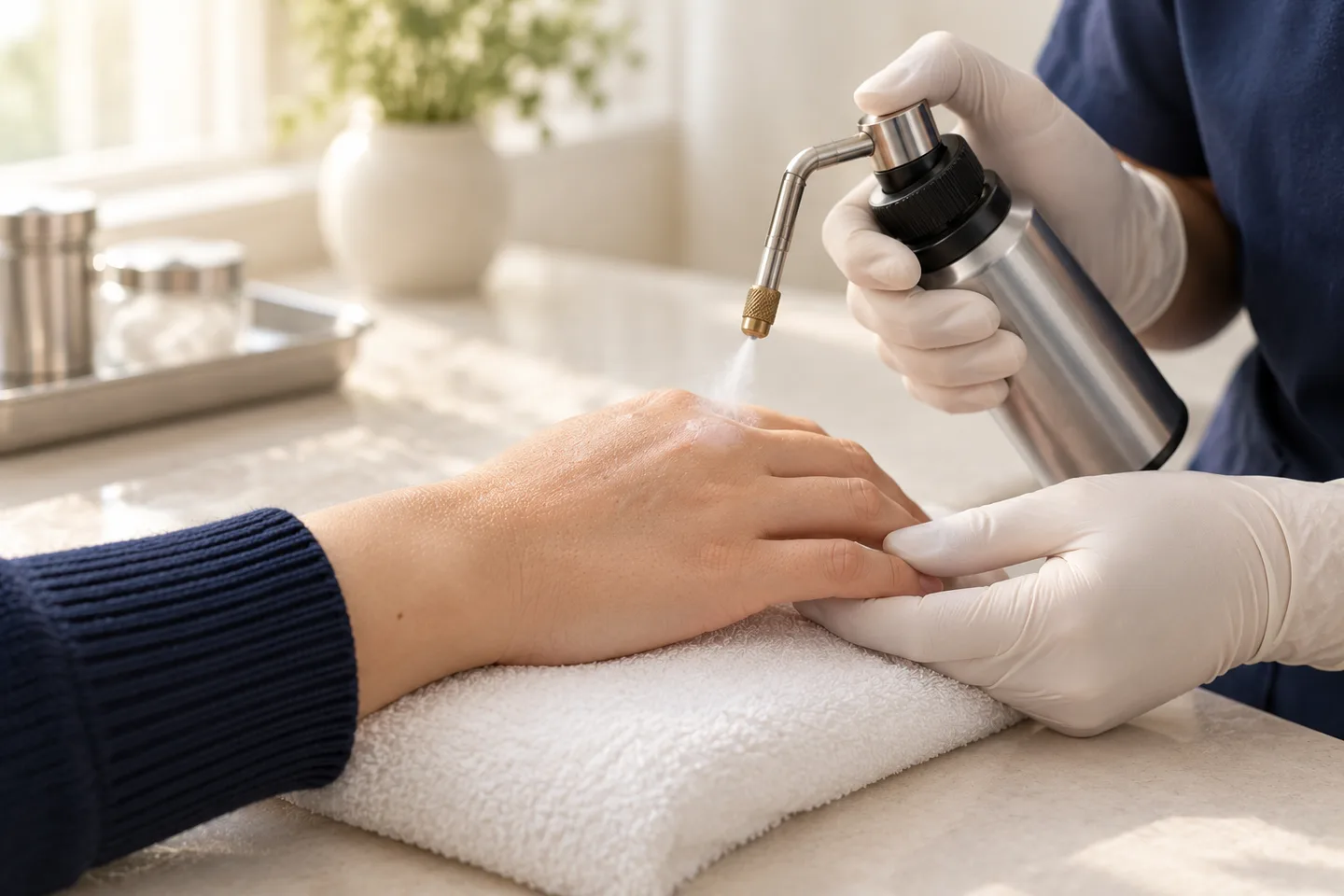
The treatment itself is often brief, but the treated area does not disappear immediately. Redness, swelling, blistering, darkening and crusting can occur before the skin heals. Some conditions, particularly warts and thicker lesions, may require repeated treatment.
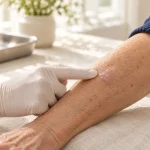
The most important issue, however, is diagnosis before freezing. Cryotherapy destroys tissue, so it may not leave an appropriate specimen for Histopathology. A changing mole, unusual pigmented lesion, unexplained bleeding growth or lesion suspicious for melanoma should therefore not simply be frozen before the diagnosis is established.
For patients considering cryotherapy in Bangkok, a dermatology consultation should therefore answer two questions first: What exactly is the lesion, and is cryotherapy the right treatment for it?
What Is Cryotherapy?
Cryotherapy means treatment using very low temperature.
In dermatology, it is used to freeze abnormal or unwanted skin tissue. The procedure is also sometimes called:
- Cryosurgery
- Cryoablation
- Liquid nitrogen treatment
- Freezing treatment
Although several substances can produce very low temperatures, liquid nitrogen is the most commonly used cryogen in clinical dermatology. Liquid nitrogen has a boiling point of approximately −196°C.
The dermatologist applies the cold directly to the lesion while limiting unnecessary injury to surrounding normal skin.
How Does Cryotherapy Work?
Extreme cold damages targeted cells.
Cryotherapy causes tissue injury through several mechanisms, including:
- Direct freezing injury to cells
- Ice crystal formation
- Changes that occur during thawing
- Damage to small blood vessels supplying the treated tissue
The frozen tissue then undergoes inflammation and gradually separates as the area heals.
This is why the lesion usually does not disappear immediately after treatment.
Instead, patients may see a sequence such as:
freezing → redness/swelling → possible blister → crust → healing
The exact reaction depends on the lesion and how deeply it needs to be treated.
What Is Liquid Nitrogen?
Liquid nitrogen is nitrogen gas cooled into liquid form at an extremely low temperature.
It is widely used for dermatologic cryotherapy because it can produce the degree of freezing required to destroy selected skin lesions.
It may be applied using:
- A cryospray
- A cryoprobe
- A suitable applicator
The technique depends on the size, thickness, location and type of lesion.
What Skin Conditions Can Cryotherapy Treat?
Cryotherapy is useful for several common dermatologic conditions, but it is not appropriate for every skin growth.
Common indications include:
- Viral warts
- Actinic keratoses
- Selected seborrheic keratoses
- Molluscum contagiosum
- Selected skin tags
In carefully selected circumstances, cryosurgery can also be used for certain superficial skin cancers, although this requires an established diagnosis and is not interchangeable with routine freezing of benign lesions.Cryotherapy for Viral Warts
Cryotherapy is one of the most commonly used office-based treatments for viral warts.
It can be used for:
- Common warts
- Plantar warts
- Flat warts
- Filiform warts
The freezing damages wart tissue and stimulates an inflammatory response.
Warts frequently require more than one treatment because they can extend deeper than they appear and are caused by human papillomavirus (HPV). Repeated cryosurgery sessions are commonly needed for wart treatment.
Does One Cryotherapy Treatment Remove a Wart?
Not necessarily.
Some small warts respond quickly, while others require several sessions.
Factors that affect response include:
- Wart size
- Thickness
- Location
- Duration
- Previous treatment
- Immune response
- Whether thick keratin covers the wart
Plantar warts, for example, can be more resistant because of the thick skin on the sole.
Cryotherapy therefore should not be presented as a guaranteed one-session treatment.
Cryotherapy for Plantar Warts
Plantar warts occur on the soles of the feet.
Pressure from walking can push the wart inward and produce a thick layer of keratin over the lesion.
Before freezing, reducing excessive surface keratin can sometimes improve treatment penetration. Cryotherapy may then be repeated at intervals depending on the response.
Patients should be aware that treatment of plantar warts can be uncomfortable and temporary soreness may affect walking.
Cryotherapy for Actinic Keratosis
Actinic keratosis (AK) is a sun-damaged precancerous skin lesion.
Cryotherapy is a well-established lesion-directed treatment for individual actinic keratoses and is strongly supported as a treatment option in clinical guidance.
A dermatologist may freeze an individual AK, after which the area may:
- Become red
- Swell
- Blister
- Crust
- Peel during healing
Some lesions may require another treatment.
Cryotherapy is particularly useful for treating individual visible lesions. When a patient has extensive sun damage with numerous actinic keratoses across an area, a field treatment may sometimes be more appropriate than repeatedly freezing every individual spot.
Why Should an Actinic Keratosis Be Examined Before Freezing?
Not every scaly sun-damaged lesion is necessarily a straightforward AK.
A lesion that is:
- Thick
- Rapidly enlarging
- Painful
- Repeatedly bleeding
- Ulcerated
- Horn-like
- Unusually indurated
may deserve closer evaluation because squamous cell carcinoma can occasionally resemble or arise in association with actinic keratosis. Medical evaluation is specifically advised for suspicious or horn-like lesions.
If Histopathology is required, biopsy rather than immediate destruction may be the better first step.
Cryotherapy for Seborrheic Keratosis
Seborrheic keratoses are common benign growths that often have a waxy, rough or “stuck-on” appearance.
Cryotherapy can be useful for selected lesions, especially thinner seborrheic keratoses. Thicker lesions may respond less predictably and sometimes require another method or additional treatment.
Possible alternatives include:
- Curettage
- Electrosurgery
- Shave removal
- Other lesion-removal techniques
The choice depends on lesion thickness, location, skin color and cosmetic priorities.
Cryotherapy for Skin Tags
Selected skin tags (acrochordons) can be treated by cryotherapy.
However, freezing is not necessarily the best technique for every skin tag.
Depending on size and stalk thickness, other approaches such as snip removal or electrosurgery may offer more immediate removal. Skin tags are among possible indications for cryotherapy, although alternative techniques may sometimes be more effective.
Most importantly, a hanging growth should be correctly diagnosed before it is frozen because raised moles and other lesions can occasionally resemble skin tags.
Cryotherapy for Molluscum Contagiosum
Molluscum contagiosum is a viral skin infection that causes small dome-shaped bumps, often with a central depression.
Cryotherapy is one possible treatment, particularly in selected older patients or adults.
Because molluscum can also resolve naturally and because freezing causes discomfort and inflammation, treatment decisions should consider:
- Patient age
- Number of lesions
- Location
- Symptoms
- Immune status
- Risk of pigmentation
- Whether treatment is actually necessary
Can Cryotherapy Treat Skin Cancer?
Cryotherapy can be used for selected skin cancers, but this is very different from routine cryotherapy for benign lesions.
Certain small, superficial, low-risk lesions such as selected superficial basal cell carcinoma (BCC) or squamous cell carcinoma in situ may sometimes be treated with cryosurgery by an appropriately trained clinician after the diagnosis has been established.
However, cryotherapy has important limitations for skin cancer:
- No excision specimen is produced for conventional margin assessment.
- Depth and treatment margins cannot be assessed in the same way as surgical excision.
- Recurrence can occur.
- Recurrent tumors may be more difficult to evaluate.
- Many skin cancers are better managed with surgery or another established treatment.
Cryosurgery for BCC is an option generally considered when more effective treatments such as surgical excision are unsuitable and the tumor is small and low risk.
Cryotherapy should therefore not be presented as a routine universal treatment for skin cancer.
Can Melanoma Be Treated With Cryotherapy?
No. A lesion suspicious for melanoma should not simply be frozen.
Melanoma diagnosis depends on examining tissue under a microscope, including features that can influence staging and further management.
Destroying an undiagnosed suspicious pigmented lesion may:
- Remove important diagnostic tissue
- Delay diagnosis
- Make subsequent assessment more difficult
Melanoma and lesions requiring tissue pathology are among situations where routine cryotherapy should not be used.
A suspicious mole should therefore be assessed for appropriate biopsy rather than cosmetic destruction.
Which Lesions Should Not Simply Be Frozen?
Cryotherapy is usually inappropriate when the diagnosis is uncertain.
Examples include:
- A changing mole
- A newly irregular pigmented lesion
- A lesion suspicious for melanoma
- An unexplained bleeding growth
- A rapidly growing tumor
- An ulcer that does not heal
- A lesion where Histopathology is required
- A recurrent lesion after previous treatment when the diagnosis is uncertain
Cryotherapy should not be used when there is uncertainty about the pathology, particularly where melanoma is in the Differential Diagnosis.
The principle is simple:
Diagnose first. Destroy second.
Cryotherapy vs Biopsy
Cryotherapy destroys tissue.
A biopsy removes tissue so that a pathologist can examine it under a microscope.
This difference is extremely important.
Cryotherapy may be appropriate when:
- The diagnosis is clinically secure
- The lesion is known to respond to freezing
- Histopathology is not required
Biopsy may be preferable when:
- The diagnosis is uncertain
- Malignancy is possible
- The lesion is changing
- Tissue architecture is diagnostically important
- Histological confirmation will affect management
The decision should be made before the lesion is destroyed.
Cryotherapy vs Laser
Both treatments can destroy skin lesions, but they work differently.
Cryotherapy uses extreme cold.
Laser treatment uses specific wavelengths of light to create a controlled tissue effect.
Neither is automatically superior.
The better treatment depends on:
- Diagnosis
- Lesion thickness
- Location
- Pigment
- Need for Histopathology
- Expected wound
- Risk of scar
- Risk of pigment change
- Recurrence risk
A lesion should not be treated with either simply because one technology sounds more advanced.
Cryotherapy vs Electrosurgery
Electrosurgery uses electrical energy to destroy or remove tissue.
Cryotherapy uses cold.
For some benign growths, either approach can potentially be used.
Factors that may influence the choice include:
- Lesion type
- Size
- Thickness
- Number
- Location
- Bleeding tendency
- Skin color
- Cosmetic priorities
- Need to preserve tissue
A thick seborrheic keratosis, for example, may not respond to the same technique as a thin lesion.
What Happens During a Cryotherapy Appointment?
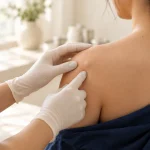
The procedure usually starts with examination rather than freezing.
1. Confirm the Diagnosis
The dermatologist assesses whether the lesion is most consistent with:
- Wart
- Actinic keratosis
- Seborrheic keratosis
- Molluscum
- Skin tag
- Another benign lesion
- A lesion requiring biopsy
2. Decide Whether Cryotherapy Is Appropriate
Cryotherapy may not be the best option for every lesion.
Location, skin type, lesion depth and diagnostic certainty matter.
3. Apply the Cryotherapy
The lesion is exposed to liquid nitrogen or another cryogen for a controlled period.
The tissue typically becomes temporarily white or frozen.
The exact treatment intensity varies according to the lesion.
4. Allow the Area to Thaw
Some conditions may require more than one freeze-thaw cycle during a treatment session.
5. Explain Aftercare
Patients should know what reaction is expected and which symptoms require medical review.
Does Cryotherapy Hurt?
Cryotherapy commonly causes some discomfort.
Patients may describe:
- Stinging
- Burning
- Sharp cold sensation
- Aching
- Throbbing afterward
Pain depends on:
- Treatment intensity
- Lesion thickness
- Location
- Number of lesions
- Individual pain sensitivity
Warts on fingers, soles, ears and other sensitive locations can be more uncomfortable.
Cryotherapy is generally tolerated better by adults than young children.
Does Cryotherapy Require Local Anesthesia?
Not always.
Many superficial lesions can be frozen without Local Anesthesia because the freezing itself is brief.
Local Anesthesia may sometimes be considered depending on:
- Location
- Lesion size
- Required treatment intensity
- Patient comfort
- Nature of the lesion
The approach should be individualized.
What Will My Skin Look Like Immediately After Cryotherapy?
Immediately or shortly after treatment, the area may become:
- White from freezing
- Red
- Swollen
- Tender
- Painful
- Blistered
Blisters may contain clear fluid or sometimes blood.
This can look alarming but is often part of the expected cryotherapy reaction.
Is Blistering Normal After Cryotherapy?
Yes.
A blister is a common and expected reaction after sufficiently strong freezing.
It may be:
- Clear
- Red
- Purple
- Blood-filled
The blister may then shrink and be replaced by a crust or scab during healing.
Not every patient develops a blister, and the absence of one does not automatically mean the treatment failed.
Should I Pop a Cryotherapy Blister?
Patients generally should avoid unnecessarily manipulating a blister.
A blister acts as a temporary biological covering over healing tissue.
If a blister becomes very large, tense, painful, repeatedly traumatized or otherwise problematic, it is better to ask the treating clinician for specific advice rather than puncturing or cutting it without guidance.
What Happens After the Blister?
The usual sequence may include:
swelling → blister → crust/scab → healing
The crust should generally be allowed to separate naturally.
Picking or repeatedly traumatizing it can potentially increase:
- Bleeding
- Inflammation
- Infection
- Pigment change
- Scarring
How Long Does Cryotherapy Take to Heal?
Healing time varies considerably.
It depends on:
- Treatment depth
- Lesion size
- Anatomical location
- Circulation
- Age
- General health
- Whether ulceration develops
Healing tends to be quicker on the face and slower on the hands and particularly the lower legs.
For this reason, there is no single healing time that can be promised for every patient.
Why Does Cryotherapy Heal More Slowly on the Legs?
The lower legs may have slower wound healing, especially in patients with:
- Reduced circulation
- Diabetes
- Venous disease
- Older age
- Previous wound-healing problems
More aggressive cryotherapy can also produce deeper ulceration.
This is why lesion location and the patient’s health history matter when deciding whether freezing is appropriate.
How Should I Care for the Skin After Cryotherapy?
Aftercare varies with treatment intensity and location, but general principles include:
- Keep the area reasonably clean.
- Avoid unnecessary picking or scratching.
- Protect the area from repeated friction.
- Allow crusts to separate naturally.
- Follow any wound-care instructions given by the clinician.
- Once healing allows, protect the area from excessive sun exposure, particularly if pigmentation is a concern.
A dressing may or may not be necessary depending on the wound.
Patients should follow the instructions given for their particular lesion rather than relying on one universal protocol.
Can I Shower After Cryotherapy?
For many minor cryotherapy sites, ordinary showering is possible.
However, wound care depends on how strongly the area was treated and whether a blister or open wound is present.
A brief shower is different from prolonged soaking.
If the treatment creates an open wound, specific instructions from the treating clinician should take priority.
Can I Swim After Cryotherapy?
It is usually sensible to avoid prolonged immersion while the treated area is open, blistered or ulcerated.
This includes:
- Swimming pools
- Sea water
- Hot tubs
- Baths
Patients planning cryotherapy during a trip to Bangkok or Thailand should consider beach and swimming plans before treatment, particularly if several lesions are being treated.
Can I Exercise After Cryotherapy?
Most minor cryotherapy does not require prolonged inactivity.
However, exercise may be uncomfortable when treatment involves:
- Plantar warts
- Large blisters
- Groin lesions
- Areas exposed to rubbing
- Multiple treatment sites
Sweating and friction can irritate healing skin.
Activity can therefore be adjusted according to the location and reaction.
Can I Apply Makeup After Facial Cryotherapy?
It is generally better not to place cosmetic products directly onto open, blistered or actively crusting treatment sites unless advised otherwise.
Once the skin surface has healed sufficiently, cosmetic products can usually be resumed.
Patients undergoing treatment on visible facial areas should ask about anticipated redness, crusting and pigmentation before scheduling around work or important events.
What Are the Side Effects of Cryotherapy?
Expected short-term reactions can include:
- Pain
- Burning
- Redness
- Swelling
- Blistering
- Crusting
- Tenderness
Less common complications include:
- Bleeding
- Ulceration
- Secondary infection
- Temporary sensory changes
- Nerve injury
- Scarring
- Persistent pigment alteration
- Hair loss in a treated hair-bearing area
- Persistent or recurrent lesion
These complications are recognized with cryotherapy and become more likely as freezing depth and tissue injury increase.
Can Cryotherapy Cause Dark Marks?
Yes.
Post-inflammatory hyperpigmentation may occur after cryotherapy, particularly in more pigmented skin.
The treated area may temporarily become darker during healing.
This pigmentation can take time to fade.
Patients with Asian or darker skin types should therefore discuss pigmentation risk before treatment, especially on the face or other visible areas.
Can Cryotherapy Leave a White Mark?
Yes.
Hypopigmentation—skin that becomes lighter than surrounding skin—is a recognized complication of cryotherapy.
Melanocytes, the cells that produce pigment, are sensitive to freezing.
A sufficiently deep freeze can therefore create a pale or white area that may persist.
This risk is particularly important in people with naturally darker or more pigmented skin because the contrast may be more visible.
Is Cryotherapy Safe for Darker or Asian Skin?
Cryotherapy can be used in people with more pigmented skin, but the risk-benefit decision requires particular attention to hyperpigmentation and hypopigmentation.
The issue is not that every darker-skinned patient will experience a pigment problem.
Rather, pigment alteration may be more noticeable and sometimes more cosmetically significant.
For a benign cosmetic lesion, it may therefore be reasonable to compare cryotherapy with alternative methods before deciding which approach offers the best cosmetic trade-off.
Does Cryotherapy Leave a Scar?
It can.
Superficial treatment may heal with minimal visible change, but deeper freezing can produce:
- Atrophic scar
- Hypertrophic scar
- Permanent hypopigmentation
- Texture change
Permanent hypopigmentation and scarring are recognized as possible complications.
No responsible treatment plan should promise completely scar-free cryotherapy.
Can Cryotherapy Cause Nerve Damage?
Rarely, yes.
Superficial nerves can be affected by freezing.
This is particularly relevant in anatomically sensitive areas, such as around the sides of the fingers and other locations where nerves run close to the skin surface.
Temporary numbness or altered sensation can occur; permanent injury is less common.
Can Cryotherapy Cause Hair Loss?
Yes, if sufficiently strong freezing affects hair follicles.
This is particularly relevant when treating lesions in hair-bearing areas such as:
- Scalp
- Eyebrows
- Beard area
Persistent alopecia is an uncommon but recognized complication of deeper cryotherapy.
Can Cryotherapy Cause Infection?
Infection is uncommon but possible.
Warning signs include:
- Increasing rather than improving pain
- Increasing redness around the wound
- Progressive swelling
- Pus or purulent discharge
- Thick abnormal blister fluid
- Worsening tenderness
Medical review is recommended when signs suggesting secondary infection develop.
When Should I Contact a Doctor After Cryotherapy?
Seek advice if you develop:
- Severe or increasing pain
- Rapidly increasing swelling
- Persistent significant bleeding
- Spreading redness
- Pus
- Fever or systemic illness
- A wound that is not healing as expected
- Persistent numbness
- A lesion that returns or continues growing
A recurrent lesion deserves particular attention if the original diagnosis was uncertain.
Why Did the Lesion Not Disappear After Cryotherapy?
Several explanations are possible.
The lesion may be:
- Too thick for one treatment
- Partially treated
- Resistant to cryotherapy
- Recurrent
- Incorrectly diagnosed
- Better suited to another treatment
Warts commonly need repeated therapy, and thicker seborrheic keratoses may also require additional treatment or another approach.
Repeatedly freezing a lesion that continues to return without reconsidering the diagnosis is not always appropriate.
Can a Lesion Grow Back After Cryotherapy?
Yes.
Cryotherapy does not guarantee that every treated lesion will permanently disappear.
Recurrence may occur because:
- The lesion was not completely destroyed
- It extends deeper than anticipated
- The underlying viral infection persists, as with warts
- New lesions develop nearby
- The original diagnosis was different
A persistent or recurrent lesion should be reassessed before simply repeating treatment indefinitely.
How Many Cryotherapy Sessions Will I Need?
There is no universal number.
It depends on:
- Diagnosis
- Lesion thickness
- Size
- Location
- Previous treatment
- Individual response
Some actinic keratoses may respond after a single treatment, whereas warts often require repeated sessions.
A dermatologist should reassess the response rather than guaranteeing a predetermined number of sessions.
Is Cryotherapy Suitable for Children?
Cryotherapy can be painful and may be difficult for young children to tolerate.
The decision depends on:
- Child’s age
- Lesion
- Symptoms
- Alternative treatments
- Ability to cooperate
- Likelihood that treatment is actually necessary
For many benign or self-limited conditions, the discomfort of freezing may outweigh the benefit.
Can Pregnant Patients Have Cryotherapy?
Cryotherapy acts locally rather than relying on a systemic medication, but treatment decisions during pregnancy should still be individualized.
The dermatologist should first consider:
- Diagnosis
- Need for treatment
- Location
- Expected discomfort
- Whether treatment can reasonably be deferred
A harmless cosmetic lesion does not necessarily need treatment during pregnancy.
Who Needs Extra Caution With Cryotherapy?
Additional consideration may be appropriate for patients with:
- Poor peripheral circulation
- Diabetes with impaired healing
- Previous slow wound healing
- Cold-induced disorders
- Raynaud disease
- Cold urticaria
- Cryoglobulinemia
- History of problematic scarring
- Darker skin with significant concern about pigment change
Poor circulation and cold-sensitive disorders are among relevant contraindications or precautions.
Home Freezing vs Dermatologist Cryotherapy
Over-the-counter wart-freezing products are available in some countries.
They are not equivalent to clinical liquid nitrogen cryotherapy, as home products do not provide the same freezing treatment as dermatologist-performed cryosurgery.
More importantly, home freezing should not be used indiscriminately on:
- Moles
- Pigmented lesions
- Unexplained skin growths
- Bleeding lesions
- Facial lesions of uncertain diagnosis
- Suspected skin cancer
The risk is not merely skin injury—it is also treating the wrong diagnosis.
Can I Freeze a Mole at Home?
No.
A mole should not be treated like a wart.
A pigmented lesion that requires evaluation may need:
- Dermoscopy
- Clinical monitoring
- Biopsy
- Histopathology
Freezing it first can destroy diagnostically useful tissue.
Is Cryotherapy Good for Cosmetic Skin Lesion Removal?
Sometimes.
For correctly diagnosed benign superficial lesions, cryotherapy can be convenient and avoids a surgical incision.
Advantages may include:
- Brief procedure
- No sutures in many cases
- Useful for multiple selected superficial lesions
- Usually performed in an outpatient setting
However, disadvantages include:
- Pain
- Blistering
- Healing time
- Pigment change
- Possible scar
- Lack of Histopathology
- Need for repeat treatment
- Less predictable cosmetic results for some lesions
Therefore,
“no cutting” does not automatically mean “better cosmetic result.
”
Advantages of Cryotherapy
Cryotherapy can offer several practical advantages:
- Minimally invasive
- Relatively quick
- Usually performed while awake
- No incision for many lesions
- No sutures for most superficial treatments
- Useful for several common dermatologic conditions
- Can treat multiple selected lesions during one visit
These advantages explain why cryotherapy remains a common dermatologic procedure.
Limitations of Cryotherapy
Important limitations include:
- Tissue is destroyed rather than removed intact
- Histopathology may not be available
- Treatment depth is estimated clinically
- Multiple sessions may be required
- Pigment change can occur
- Scarring can occur
- Treatment can be painful
- Not suitable for undiagnosed lesions
- Recurrence is possible
Understanding these limitations is essential before choosing cryotherapy purely because it appears simple.
What to Expect During a Cryotherapy Consultation in Bangkok
A dermatology consultation should ideally begin with the lesion, not the liquid nitrogen.
Step 1: Establish the Diagnosis
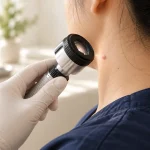
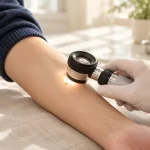
The dermatologist evaluates the lesion clinically and may use Dermoscopy when appropriate.
The first question is whether the lesion is actually something that should be frozen.
Step 2: Identify Warning Signs
A lesion may require a different approach if it is:
- Changing
- Growing rapidly
- Pigmented irregularly
- Ulcerated
- Bleeding without trauma
- Recurrent
- Clinically uncertain
Step 3: Compare Treatment Options
For some lesions, alternatives may include:
- Observation
- Topical medication
- Curettage
- Electrosurgery
- Shave removal
- Surgical excision
- Laser
- Biopsy
Step 4: Discuss Cosmetic Risks
This is particularly important for patients prone to:
- Post-inflammatory hyperpigmentation
- Hypopigmentation
- Hypertrophic scars
- Keloids
Step 5: Plan Aftercare
Patients should understand expected blistering, crusting, wound care, activity considerations and when reassessment is needed.
Cryotherapy for International Patients in Bangkok
Cryotherapy is often practical for tourists, expats and international patients because many treatments can be performed during an outpatient visit.
However, travel plans matter.
Before treatment, consider whether you plan to:
- Swim
- Visit the beach
- Exercise heavily
- Spend prolonged time in the sun
- Attend an important event
- Leave Thailand shortly afterward
Visible areas may develop redness, swelling or crusting.
Patients being treated for a lesion that may require repeated cryotherapy should also consider whether follow-up will take place in Bangkok or after returning home.
If the diagnosis is uncertain and biopsy may be necessary, travel planning should include how pathology results and further care will be communicated.
Frequently asked questions
What is cryotherapy?
Cryotherapy is a dermatologic procedure that uses extreme cold to freeze and destroy selected abnormal skin tissue.
Is cryotherapy the same as cryosurgery?
The terms are often used interchangeably in dermatology. Cryoablation is another related term.
What does a dermatologist use to freeze skin lesions?
Liquid nitrogen is the most commonly used cryogen in clinical dermatology.
How cold is liquid nitrogen?
Its boiling point is approximately −196°C.
What skin conditions can cryotherapy treat?
Common uses include viral warts, actinic keratoses, selected seborrheic keratoses, molluscum contagiosum and selected skin tags.
Can cryotherapy treat warts?
Yes. It is commonly used for several types of viral warts.
Does one freezing treatment remove a wart?
Not always. Warts frequently need repeated treatment.
Can cryotherapy treat plantar warts?
Yes, although plantar warts may be thick and resistant.
Can cryotherapy treat actinic keratosis?
Yes. Cryosurgery is an established lesion-directed treatment for individual actinic keratoses.
Can cryotherapy treat seborrheic keratosis?
Yes, particularly selected thinner lesions.
Can cryotherapy remove skin tags?
Selected skin tags can be frozen, although other removal techniques may sometimes be preferable.
Can cryotherapy treat molluscum?
Yes, in selected patients.
Can cryotherapy treat skin cancer?
It may be used for carefully selected low-risk superficial skin cancers, but this requires proper diagnosis and is not the preferred treatment for every skin cancer.
Can melanoma be frozen?
A suspicious melanoma should not simply be treated with cryotherapy because tissue diagnosis is essential.
Can I freeze a suspicious mole?
No. A suspicious mole should be medically evaluated and may require biopsy.
Why can't every skin lesion be frozen?
Cryotherapy destroys tissue, which can eliminate material needed for Histopathology.
Does cryotherapy hurt?
It commonly causes stinging, burning or aching, although discomfort varies.
Does cryotherapy need Local Anesthesia?
Not always. It depends on the lesion, site and treatment intensity.
Is blistering normal?
Yes. Clear or blood-filled blisters are common after stronger freezing.
What should I do with the blister?
Avoid unnecessary manipulation. Ask the treating clinician if a blister becomes unusually large or painful.
Will a scab form?
Often yes. Crusting is a common part of healing.
Should I pick the scab?
No. Allowing it to separate naturally generally reduces unnecessary trauma.
How long does cryotherapy take to heal?
Healing depends on treatment depth and anatomical location. The face generally heals faster than the lower legs.
Can cryotherapy leave a dark mark?
Yes. Post-inflammatory hyperpigmentation can occur.
Can cryotherapy leave a white mark?
Yes. Hypopigmentation can sometimes be persistent or permanent.
Is cryotherapy suitable for Asian skin?
It can be used, but pigment alteration deserves particular consideration in more pigmented skin.
Does cryotherapy leave scars?
It can, particularly when deeper freezing is required.
Can cryotherapy cause nerve damage?
Temporary nerve symptoms can occur when freezing is performed close to superficial nerves; permanent injury is less common.
Can cryotherapy cause infection?
Yes, although infection is uncommon.
How do I know if the area is infected?
Increasing pain, spreading redness, swelling, pus or abnormal discharge should prompt medical review.
Can the lesion come back?
Yes. Some lesions recur or require repeated treatment.
Why did my wart come back?
Warts are caused by HPV, and wart tissue may persist after treatment. Multiple sessions are often required.
Can I shower after cryotherapy?
Often yes, depending on the treated area and wound.
Can I swim after cryotherapy?
It is usually better to avoid swimming while the area is open, blistered or ulcerated.
Can I exercise?
Usually, although activity may need modification if the treatment site is painful or exposed to friction.
Can I wear makeup after facial cryotherapy?
Avoid applying cosmetics directly over open or blistered skin until healing is adequate.
Is cryotherapy better than laser?
Not necessarily. The correct treatment depends on the diagnosis and clinical situation.
Is cryotherapy better than electrosurgery?
Neither is universally superior. Different lesions are better suited to different methods.
Cryotherapy or biopsy—which do I need?
If diagnosis is uncertain or Histopathology is important, biopsy may be preferable. Cryotherapy is more appropriate when the diagnosis is already sufficiently secure.
Can I freeze a skin lesion myself?
Home wart-freezing products exist, but they are not equivalent to dermatologist-performed liquid nitrogen treatment and should not be used on unexplained or suspicious lesions.
Can tourists have cryotherapy in Bangkok?
Cryotherapy can often fit into a travel schedule, but patients should account for blistering, wound care, swimming restrictions and possible repeat sessions.
Can I fly after cryotherapy?
Minor cryotherapy usually does not by itself prevent air travel, although wound care and follow-up requirements should be considered.
Related conditions
-
Viral Warts Viral Warts Viral warts are common skin growths caused by infection with human papillomavirus (HPV). They can develop almost anywhere on the skin, but frequently affect the hands, fingers, feet, knees, face and genital area.
-
Genital Warts Genital Warts Genital warts are benign growths caused by certain types of human papillomavirus (HPV). They can appear on the penis, vulva, groin, scrotum, perineum, around the anus, inside the anal canal, and sometimes on the cervix, vagina or urethral opening.
-
Molluscum Contagiosum Molluscum Contagiosum Molluscum contagiosum is a common viral skin infection that causes small, smooth bumps, often with a characteristic tiny indentation in the center. It can affect children and adults and can spread through direct skin contact, shared personal items, sexual contact, or from one area of the body to another.
-
Actinic Keratosis / Precancerous Lesions Actinic Keratosis / Precancerous Lesions A rough, scaly spot that repeatedly crusts, feels tender, or does not heal may be more than simple dry or sun-damaged skin. Actinic keratosis (AK) is a precancerous skin lesion caused mainly by cumulative ultraviolet (UV) damage and is particularly important to recognize because some lesions can progress to cutaneous squamous cell carcinoma (SCC).