







Uneven Skin Tone
Uneven skin tone is a broad term used when different parts of the skin appear darker, lighter, redder or less uniform than the surrounding skin.

On the face, common causes include:
- Melasma
- Post-Inflammatory Hyperpigmentation (PIH)
- Acne marks
- Sun-induced pigmentation
- Freckles and solar lentigines
- Redness after inflammation
- Uneven tanning
- Irritation from skincare or procedures
- Certain medical skin conditions
The most important step is identifying what is causing the color difference before choosing a treatment.
A brown patch caused by melasma should not necessarily be treated the same way as a brown mark left after acne, diffuse sun damage, persistent facial redness or a new changing pigmented lesion.
For this reason, treatment for uneven skin tone may involve skincare, prescription medication, sun protection, Chemical Peels, laser or light-based treatment and, in selected conditions, injectable treatments.
The aim is usually to make skin tone more even and less visibly discolored, not to promise perfectly uniform or permanently pigment-free skin.
What Does “Uneven Skin Tone” Mean?
Uneven skin tone is a descriptive term rather than a single medical diagnosis.
Patients may use it to describe:
- Dark patches
- Brown spots
- Acne marks
- Red marks
- Patchy pigmentation
- Mottled complexion
- Sun spots
- Darker forehead or cheeks
- Pigmentation around the mouth
- Dull or irregular-looking skin
- Different color between parts of the face
Before treatment, a dermatologist should determine whether the color change comes primarily from:
Melanin → brown, gray or dark pigmentation
Blood vessels/inflammation → red or pink discoloration
Loss of pigment → lighter areas
or a mixture of several factors.
Treating all of these as “pigmentation” can lead to ineffective or unnecessarily aggressive procedures.
What Causes Uneven Skin Tone?
1. Melasma
Melasma is a common acquired pigmentation disorder that typically causes symmetrical brown or gray-brown patches on sun-exposed areas of the face.
Common locations include:
- Cheeks
- Forehead
- Upper lip
- Nose
- Chin
Melasma is influenced by several factors, including:
- Ultraviolet radiation
- Visible light
- Hormonal influences
- Genetics
- Heat and environmental factors
- Inflammation
- Skin-barrier changes
It is particularly common in people with more pigmented skin and in regions with substantial year-round sun exposure.
Melasma is chronic and commonly recurs. Modern expert consensus emphasizes that photoprotection is fundamental, with topical therapy forming the mainstay of treatment; procedures are generally adjunctive rather than a replacement for long-term medical management.
2. Post-Inflammatory Hyperpigmentation
Post-Inflammatory Hyperpigmentation (PIH) occurs when the skin produces excess pigment after inflammation or injury.
Common triggers include:
- Acne
- Eczema
- Insect bites
- Scratching
- Burns
- Irritating skincare
- Chemical Peels
- Laser treatment
- Procedures
- Skin infections
PIH often appears as flat brown, gray-brown or dark patches where the original inflammation occurred.
It is particularly important in Asian and other more pigmented skin types because it tends to occur more readily and may persist longer.
Systematic reviews confirm that PIH is especially common in skin of color and can persist for months or longer; treatment generally begins with controlling the underlying inflammation, consistent photoprotection and appropriately selected topical therapy.
3. Acne Marks
After acne heals, patients may be left with several different problems.
Brown Acne Marks
These are usually PIH.
They are flat and caused by excess pigment rather than permanent loss of skin tissue.
Red Acne Marks
These may represent post-inflammatory erythema, where blood vessels and inflammation remain visible after the acne lesion has healed.
Acne Scars
These are structural changes such as:
- Ice Pick scars
- Boxcar scars
- Rolling scars
A scar is not simply pigmentation.
Someone with acne may therefore have:
Active acne + brown PIH + red marks + depressed acne scars
Each component may require a different treatment.
4. Sun-Induced Pigmentation
Ultraviolet exposure stimulates pigment production and contributes to several forms of uneven skin tone.
These may include:
- Freckles
- Solar lentigines
- Mottled pigmentation
- Worsening melasma
- Darkening of PIH
- General photoaging
In Bangkok and Thailand, year-round ultraviolet exposure makes daily sun protection particularly important.
Photoprotection is not simply an optional addition to pigment treatment—it is one of the foundations of treatment and prevention. Recent evidence in skin of color found sunscreen to be the most consistently supported preventive strategy for procedure-related PIH.
- Visible Light
Visible light can also contribute to pigmentation, particularly in melasma and darker skin types.
This is one reason some patients with melasma may benefit from sunscreens that provide broader protection than ultraviolet filters alone.
Tinted sunscreens containing visible-light-blocking pigments may be considered in selected patients.
The exact product should still be chosen according to:
- Skin type
- Acne tendency
- Sensitivity
- Cosmetic preference
- Existing pigmentation disorder
6. Skin Irritation
Irritation can itself worsen uneven skin tone.
Common causes include:
- Over-exfoliation
- Excessive use of acids
- Strong scrubs
- Aggressive Retinoid use
- Frequent peels
- Unnecessary laser treatment
- Picking or squeezing acne
- Friction
- Contact dermatitis
In pigmentation-prone skin, more irritation can mean more pigment rather than faster improvement.
This is particularly relevant for patients trying multiple “brightening” products at the same time.
7. Hormonal Influences
Hormonal factors can contribute particularly to melasma.
Melasma may become more apparent during:
- Pregnancy
- Use of certain hormonal medications
- Other periods of hormonal change
However, pigmentation should not automatically be assumed to be hormonal.
Clinical examination is important because several different conditions can produce brown facial patches.
8. Genetics and Skin Type
Genetics influence:
- Baseline skin color
- Melanin production
- Tendency toward melasma
- Tendency to develop PIH
- Response to inflammation
- Susceptibility to sun-induced pigmentation
This means treatment should be individualized rather than based solely on a standard “brightening program.
”
9. Certain Medications or Medical Conditions
Less commonly, diffuse or unusual pigmentation can be associated with:
- Medications
- Hormonal disorders
- Metabolic conditions
- Nutritional abnormalities
- Inflammatory skin diseases
- Other dermatological conditions
Uneven skin tone that develops suddenly, becomes widespread or is associated with other symptoms should not automatically be treated cosmetically.
How Does a Dermatologist Diagnose Uneven Skin Tone?
Diagnosis begins with clinical examination.
The dermatologist may consider:
- Distribution of pigmentation
- Color
- Symmetry
- Relationship to previous acne or inflammation
- Sun exposure
- Pregnancy or hormonal history
- Medication history
- Skin-care products
- Previous laser or peel treatments
- Tendency toward PIH
- Presence of redness
- Presence of acne scars
- Presence of melasma
Depending on the lesion, examination may also involve:
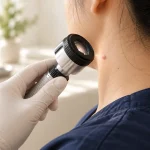
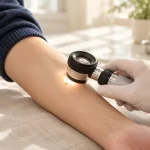
- Dermoscopy
- Wood’s lamp examination in selected settings
- Photography
- Examination of individual pigmented lesions
A single unusual lesion should be assessed differently from generalized cosmetic pigmentation.
Uneven Skin Tone vs Melasma
These terms are not interchangeable.
Uneven skin tone is a broad description.
Melasma is a specific pigmentary disorder.
Melasma typically appears as bilateral or symmetrical patches on the face and has characteristic clinical patterns.
Someone with uneven skin tone may instead have:
- PIH
- Solar lentigines
- Freckles
- Acne marks
- Redness
- Melasma
- Several of these together
Correct diagnosis matters because melasma behaves differently from isolated sun spots or PIH.
Uneven Skin Tone vs Hyperpigmentation
Hyperpigmentation means an area is darker because of increased pigment.
Uneven skin tone can include hyperpigmentation, but it can also include:
- Redness
- Lighter spots
- Vascular changes
- Mixed discoloration
Therefore, not every uneven complexion should automatically be treated with pigment-removing products or lasers.
Uneven Skin Tone vs Dull Skin
“Dull skin” usually describes reduced radiance or surface reflection rather than a defined pigment disorder.
It may be influenced by:
- Dryness
- Rough texture
- Surface scale
- Sun exposure
- Irregular pigmentation
- Fine lines
A patient can have dull skin without significant hyperpigmentation.
Likewise, someone can have melasma while their overall skin texture remains smooth.
What Is the Best Treatment for Uneven Skin Tone?
There is no single best treatment because the cause matters more than the appearance alone.
A useful approach is:
Brown acne marks → treat PIH and active acne
Melasma → photoprotection + pigment-directed medical therapy
Sun spots → lesion-specific pigment treatment
Red acne marks → consider vascular/inflammation-directed treatment
Texture + pigmentation → consider carefully selected combination treatment
Suspicious lesion → medical evaluation before cosmetic treatment
The first question should be:
“What is causing the uneven color?”
not:
“Which injection or laser is strongest?”
Sun Protection: The Foundation of Treatment
Daily photoprotection is central to managing uneven pigmentation.
It helps reduce:
- Darkening of existing pigment
- Recurrence of melasma
- Persistence of PIH
- New sun-induced pigmentation
- Photoaging
Sunscreen does not remove existing pigment overnight.
Its importance is preventive: it reduces the ongoing stimulus that repeatedly tells melanocytes to produce more pigment.
Clinical reviews consistently regard photoprotection as a cornerstone of both melasma and PIH management.
Topical Treatments for Uneven Skin Tone
Topical therapy is usually more important than injectable treatment for most pigment disorders.
Treatment may involve one or more agents depending on diagnosis.
Hydroquinone
Hydroquinone reduces melanin production by inhibiting tyrosinase, an enzyme involved in pigment formation.
It remains one of the most established treatments for hyperpigmentation.
It may be used for:
- Melasma
- PIH
- Selected hyperpigmentation
A hydroquinone-containing triple combination has long been considered an important reference treatment for melasma, and recent expert consensus continues to support supervised hydroquinone-based therapy as a key option.
Hydroquinone should not simply be used indefinitely without supervision.
Potential problems from inappropriate prolonged use can include:
- Irritation
- Rebound pigmentation
- Rare exogenous ochronosis
Treatment duration and concentration should therefore be individualized.
Retinoids
Topical Retinoids can be useful when uneven pigmentation occurs with:
- Acne
- PIH
- Photoaging
- Comedones
- Uneven texture
They improve epidermal turnover and can support other pigment-directed treatments.
Retinoids are particularly useful when acne and pigmentation occur together because treating acne reduces the formation of new inflammatory marks.
Clinical reviews support Retinoids for acne-associated PIH, particularly in patients with skin of color.
Potential side effects include:
- Dryness
- Peeling
- Redness
- Irritation
Excessive irritation can itself worsen PIH, so stronger treatment is not necessarily better.
Azelaic Acid
Azelaic Acid may be helpful for:
- Acne
- PIH
- Melasma
- Sensitive or inflammation-prone skin in selected patients
It can be particularly useful when pigmentation occurs together with acne because it addresses both problems.
It is also one of the topical alternatives included in contemporary melasma and PIH treatment strategies.
Cysteamine
Topical cysteamine is another pigment-modulating treatment used for selected hyperpigmentation disorders.
Evidence has expanded for conditions such as:
- Melasma
- PIH
It may be considered when traditional treatments are unsuitable or poorly tolerated.
As with other pigment treatments, irritation should be minimized.
Tranexamic Acid for Pigmentation
Tranexamic Acid (TXA) has become an important treatment option in melasma.
It can be administered through several routes:
- Topically
- Orally
- Intradermally
Research suggests TXA can improve melasma severity, but studies vary in formulation, dose, route and combination treatments. A 2024 meta-analysis of randomized trials found benefit across oral, topical and injectable routes while emphasizing considerable heterogeneity and the need for better-standardized protocols.
TXA should not simply be viewed as a generic “brightening injection.
”
Its best-established aesthetic dermatology role is in selected patients with melasma.
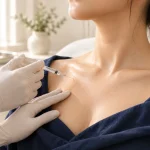
Injectable Treatments for Uneven Skin Tone
The role of injections depends heavily on the diagnosis.
Injectable treatment is not routinely required for every patient with uneven skin tone.
For most pigmentation disorders, the foundation remains:
- Diagnosis
- Photoprotection
- Appropriate topical treatment
- Control of inflammation
- Procedures only when indicated
The injectable treatment with the clearest direct evidence for pigmentation is currently intradermal Tranexamic Acid for melasma.
Other injectable “skin boosters” may improve hydration or texture, but improvement in pigmentation should not automatically be assumed.
Intradermal Tranexamic Acid for Melasma
Intradermal TXA involves placing small quantities of Tranexamic Acid into affected skin using multiple superficial injections.
The proposed effect relates to interference with pathways that contribute to melanocyte activation and pigment production.
A recent systematic review and meta-analysis of randomized trials found intradermal TXA to be an effective option for adult melasma.
A 2026 systematic review similarly concluded that intradermal TXA can improve melasma with generally mild transient adverse effects, although protocols differ significantly between studies.
Potential advantages
- Delivers treatment directly into affected skin
- Avoids systemic exposure associated with oral treatment
- Can be incorporated into a broader melasma plan
- May help selected patients who have not responded sufficiently to topical therapy
Limitations
- Requires multiple injections
- Can be uncomfortable
- Bruising may occur
- Treatment protocols are not universally standardized
- Melasma can recur
- Does not remove the need for photoprotection
- It is not appropriate for every type of uneven skin tone
Is Mesotherapy Useful for Pigmentation?
“Mesotherapy” describes a method of multiple superficial injections rather than one specific medication.
Products injected may vary considerably.
For pigmentation, research has particularly evaluated:
- Tranexamic Acid
- Vitamin C
- Other combinations
A 2024 meta-analysis comparing mesotherapy with Tranexamic Acid and vitamin C for melasma found both approaches associated with improvement, but only five small studies involving 127 patients were included, limiting the strength of conclusions.
Therefore, patients should ask:
What exactly is being injected?
rather than assuming that the word “mesotherapy” itself guarantees an effective pigmentation treatment.
Can Skin Boosters Improve Uneven Skin Tone?
Some injectable skin boosters may improve:
- Hydration
- Skin smoothness
- Fine lines
- Overall skin quality
However, improving skin quality is not the same as treating a pigment disorder.
If the main concern is:
- Melasma
- PIH
- Solar lentigines
- Acne pigmentation
the treatment should address pigment biology directly.
An injectable that improves hydration may make skin appear healthier or more radiant without actually treating the underlying pigmentation.
PN / PDRN and Uneven Skin Tone
Polynucleotides (PN) and PDRN are increasingly used as injectable treatments intended to improve skin quality and tissue repair.
Research suggests possible benefits for:
- Hydration
- Elasticity
- Texture
- Fine lines
- General skin quality
However, evidence for PN/PDRN as a primary treatment for melasma or uneven pigmentation remains substantially less established than evidence for conventional pigment treatments.
A review of polynucleotides in aesthetic medicine found potential benefits for skin quality and facial rejuvenation, but clinical protocols and evidence remain heterogeneous.
Therefore:
PN/PDRN may improve overall skin quality
but should not be presented as a proven standalone treatment for melasma or PIH.
Hyaluronic Acid Skin Boosters and Uneven Skin Tone
Hyaluronic Acid skin boosters are primarily used to support:
- Hydration
- Skin smoothness
- Fine superficial lines
- Skin quality
They do not directly target melanin production in the same way as pigment-specific medications.
A patient with dehydration and pigmentation may look more radiant after hydration treatment, but melasma or PIH may still require separate treatment.
Does Glutathione Injection Treat Uneven Skin Tone?
Glutathione is frequently marketed for “skin whitening” or brightening.
However, injectable or intravenous glutathione should not be treated as a routine evidence-based solution for uneven skin tone.
Evidence on efficacy and long-term safety for cosmetic skin lightening is substantially weaker than for established dermatological treatments.
Patients should be cautious when offered systemic injections primarily to make their natural skin color lighter.
The medical goal should be to treat abnormal pigmentation, not to imply that normal skin color requires correction.
Chemical Peels for Uneven Skin Tone
Chemical Peels use controlled application of acids to exfoliate the skin.
Agents may include:
- Glycolic Acid
- Salicylic Acid
- Other physician-selected peeling solutions
They may be useful for selected patients with:
- PIH
- Acne
- Superficial pigmentation
- Uneven texture
They are generally used as adjunctive rather than universally first-line treatment.
For melasma, expert consensus supports peels as possible adjuncts to topical therapy rather than as standalone curative treatments.
Risks of Chemical Peels in Asian Skin
More aggressive peeling does not necessarily create better pigment results.
Excessive inflammation can cause:
- Irritation
- Burns
- PIH
- Uneven pigmentation
This is especially relevant in Asian skin.
A conservative approach may produce a better long-term cosmetic outcome than aggressively trying to remove pigment in one session.
Laser Treatment for Uneven Skin Tone
Lasers can be useful for selected pigmentary conditions.
However, the term “pigmentation laser” includes many different technologies.
Possible approaches may include:
- Q-switched lasers
- Picosecond lasers
- Fractional lasers
- Vascular lasers when redness is the problem
- Other wavelength-specific devices
The correct choice depends on diagnosis.
Laser for Melasma
Laser should be used cautiously in melasma.
Melasma is biologically active and tends to recur.
A laser may reduce pigment temporarily but can also generate inflammation that contributes to:
- Recurrence
- PIH
- Rebound pigmentation
Current international expert consensus generally reserves laser-based approaches for selected or refractory melasma rather than positioning them as routine first-line therapy.
Laser for PIH
Laser may be considered for persistent PIH that has not responded adequately to conservative treatment.
However, laser itself can create inflammation and sometimes worsen PIH.
Systematic reviews in skin of color therefore generally position lasers as an adjunct or later-line option rather than the automatic first treatment.
Picosecond Laser for Uneven Pigmentation
Picosecond lasers produce extremely short laser pulses and may be used for selected pigmentary conditions.
Their role depends on:
- Type of pigment
- Depth of pigment
- Skin color
- Melasma history
- PIH risk
- Laser wavelength and settings
The word “picosecond” itself does not tell patients whether the treatment is appropriate.
A picosecond laser should still be selected according to the diagnosis.
Fractional Laser for Uneven Skin Tone
Fractional lasers can improve:
- Photoaging
- Uneven texture
- Selected pigmentation
- Acne scars
However, they are not automatically the best choice when pigment is the primary concern.
Because fractional treatment creates controlled inflammation, it can potentially trigger PIH in susceptible patients.
When someone has both acne scars and pigmentation, treatment settings and sequencing should be chosen carefully.
Can Microneedling Improve Uneven Skin Tone?
Microneedling can be used as an adjunct for selected pigmentation disorders and may enhance the delivery of certain topical agents.
Expert consensus on melasma includes microneedling among procedural options that may enhance topical therapy in selected patients.
RF Microneedling and Pigmentation
RF Microneedling is primarily used for:
- Acne scars
- Texture
- Dermal remodeling
- Selected laxity concerns
It is not primarily a pigment-removal treatment.
If the patient has both scars and PIH, RF Microneedling may address scar structure while pigmentation is managed separately.
This distinction prevents treatment goals from becoming confused.
Uneven Skin Tone in Asian Skin
Asian skin is not one uniform skin type, but many Asian patients have a greater tendency to develop PIH after inflammation.
This can influence decisions about:
- Laser intensity
- Chemical Peel strength
- Microneedling
- RF procedures
- Acne treatment
- Retinoid use
A treatment that creates unnecessary inflammation can make the complexion look less even rather than more even.
Systematic reviews consistently emphasize the higher burden of PIH in skin of color and the need to individualize treatment.
Why Uneven Skin Tone Is Particularly Relevant in Bangkok
Patients living in Bangkok face substantial environmental exposure to:
- Ultraviolet radiation
- Visible light
- Heat
- Outdoor exposure
Patients visiting Thailand may also spend significant time:
- Walking outdoors
- Visiting temples and attractions
- Traveling to islands
- Swimming
- Visiting beaches
A pigment procedure that requires strict sun avoidance may therefore need to be timed carefully.
This is especially important for:
- Melasma
- PIH-prone skin
- Recent Chemical Peels
- Laser procedures
- Other inflammatory procedures
Can Uneven Skin Tone Come Back?
Yes.
Recurrence depends on the underlying condition.
Melasma
Melasma commonly recurs because the biological tendency remains.
Long-term management usually requires continued photoprotection and sometimes maintenance treatment.
PIH
The individual spot may fade, but new PIH can develop whenever new inflammation occurs.
Controlling acne, eczema or other triggers helps prevent recurrence.
Sun Spots
New sun-induced pigmentation can develop with ongoing exposure.
Therefore, long-term prevention is an important part of treatment.
How Long Does It Take to Improve Uneven Skin Tone?
Pigment disorders usually improve gradually.
The timeline depends on:
- Diagnosis
- Pigment depth
- Skin type
- Treatment
- Consistency
- Sun exposure
- Continued inflammation
Patients should be cautious about treatments promising dramatic permanent brightening after one session.
Melasma and PIH in particular often require sustained management rather than a quick procedure.
What Side Effects Can Pigmentation Treatment Cause?
Side effects depend on treatment but may include:
- Dryness
- Redness
- Irritation
- Peeling
- Burning
- Bruising after injections
- Swelling
- Temporary darkening
- PIH
- Hypopigmentation
- Acne flare
- Rare infection after procedures
Treatments designed to reduce pigmentation can paradoxically cause more pigmentation if they create excessive inflammation.
This is one reason careful treatment selection is particularly important in Asian skin.
Warning Signs That Need Medical Evaluation
Most common uneven pigmentation is benign.
However, not every dark spot should be treated cosmetically.
See a dermatologist if a pigmented lesion:
- Is new and rapidly changing
- Has irregular borders
- Contains several unusual colors
- Is growing
- Repeatedly bleeds
- Forms a persistent crust
- Becomes ulcerated
- Is significantly different from your other spots
- Changes noticeably over time
A suspicious mole or pigmented skin cancer should not be treated with a cosmetic laser before an appropriate diagnosis is established.
Uneven Skin Tone and Skin Cancer
Melasma, freckles and PIH are generally benign.
However, some skin cancers and precancerous lesions can also appear as pigmented spots.
A lesion that does not fit the typical pattern of cosmetic pigmentation may need:
- Dermoscopic examination
- Clinical monitoring
- Photography
- Biopsy when appropriate
Pigment treatment should never delay investigation of a suspicious lesion.
What to Expect During an Uneven Skin Tone Consultation in Bangkok
A useful dermatology consultation should identify the type of discoloration before recommending an injectable or device.
The dermatologist may assess:
- Melasma
- PIH
- Acne
- Red acne marks
- Brown acne marks
- Sun spots
- Freckles
- Skin type
- Melasma history
- Previous pigmentation after procedures
- Current skincare
- Retinoid or acid use
- Hormonal history when relevant
- Sun exposure
- Previous laser treatments
- Upcoming travel
- Other skin lesions
The treatment plan might then look like:
Melasma → photoprotection + medical pigment treatment
Acne + PIH → treat acne and pigment together
Persistent PIH → topical therapy ± carefully selected procedure
Melasma requiring adjunctive treatment → selected Chemical Peel, Microneedling or intradermal TXA where appropriate
Redness → vascular treatment rather than pigment treatment
Suspicious lesion → diagnosis before aesthetic treatment
This is more useful than treating every patient with the same brightening injection or laser package.
Treatment Approach by Cause
| Main Problem | Treatment Approach That May Be Considered |
|---|---|
| Melasma | Photoprotection, topical treatment, selected TXA therapy, adjunct procedures |
| Acne-related PIH | Acne treatment, Retinoids, Azelaic Acid, pigment-directed therapy |
| Persistent PIH | Topical therapy, selected peels or laser when appropriate |
| Solar lentigines | Lesion-specific pigment treatment |
| Red acne marks | Vascular/inflammation-directed treatment |
| Uneven tone + texture | Combination treatment after diagnosis |
| Melasma + dehydration | Treat melasma separately; skin-quality injectables may be adjunctive |
| Melasma suitable for injectable therapy | Intradermal TXA may be considered |
| Suspicious pigmented lesion | Dermatological evaluation before cosmetic treatment |
Are Combination Treatments Better?
Sometimes.
Uneven skin tone often has several causes.
For example:
Melasma + PIH + acne + rough texture
may require more than one approach.
A dermatologist might treat:
Active acne → acne medication
PIH → pigment-directed topical treatment
Melasma → photoprotection + melasma therapy
Texture → selected resurfacing after pigment is stable
However, performing multiple aggressive procedures together can increase inflammation and PIH.
Combination treatment should be logical, not simply extensive.
Treatment for Tourists and International Patients in Bangkok
Patients visiting Bangkok for a short time should consider whether the treatment requires:
- Several sessions
- Strict sun avoidance
- Follow-up
- Medication monitoring
- Recovery time
- Management after returning home
Questions to ask include:
- What is the diagnosis?
- Is this melasma, PIH or another condition?
- What can realistically improve during my stay?
- Will I need treatment after leaving Thailand?
- Can I be outdoors after the procedure?
- Is there a risk of temporary darkening?
- What should I do if pigmentation worsens?
- Who should I contact if complications develop?
A procedure immediately before a beach holiday may not be ideal if significant inflammation or strict photoprotection is expected.
Choosing an Uneven Skin Tone Treatment in Bangkok
Patients should be cautious about claims such as:
- “Permanent whitening”
- “One injection removes all pigmentation”
- “Close pores and remove melasma permanently”
- “Laser removes all dark spots in one session”
- “The stronger the laser, the better”
- “One skin booster treats every type of pigmentation”
A more useful consultation should explain:
What is causing the discoloration?
Is it epidermal pigment, deeper pigment, vascular redness or structural skin change?
What is the safest treatment for this skin type?
What can realistically improve?
How likely is recurrence?
What is the risk of PIH?
Frequently asked questions
What causes uneven skin tone?
Common causes include melasma, PIH, acne marks, sun exposure, freckles, sun spots, inflammation and facial redness.
Is uneven skin tone the same as hyperpigmentation?
Not exactly. Hyperpigmentation means darker pigment, while uneven skin tone may also include redness or lighter areas.
What is the most common cause of facial pigmentation?
Melasma and PIH are among the most common causes of acquired facial hyperpigmentation, particularly in patients with more pigmented skin.
Can uneven skin tone be permanently cured?
Not always. Conditions such as melasma frequently recur and usually require long-term management.
Can melasma disappear permanently?
Melasma can improve substantially, but recurrence is common, particularly with continued sun, visible-light or hormonal triggers.
What is PIH?
PIH is excess pigmentation that develops after inflammation or injury such as acne, eczema, scratching or procedures.
How long does PIH last?
It can persist for months and sometimes longer, particularly when pigment extends deeper into the skin or inflammation continues.
What is the best treatment for PIH?
Treatment usually begins with controlling the underlying inflammatory condition, photoprotection and topical therapy. Procedures may be added for selected resistant cases.
Does sunscreen help uneven skin tone?
Yes. It reduces ongoing ultraviolet-induced pigment stimulation and is fundamental to both treatment and prevention.
Does visible light worsen melasma?
Visible light can contribute to melasma in susceptible patients, particularly those with more pigmented skin.
Does Retinol help uneven skin tone?
Retinoids may improve pigmentation, acne and photoaging, but can cause irritation if used too aggressively.
Does Azelaic Acid help pigmentation?
Yes, it may be useful for selected cases of PIH and melasma, especially when acne is present.
Does Hydroquinone work for pigmentation?
Hydroquinone is an established pigment-reducing treatment and remains an important option for melasma and PIH when appropriately supervised.
Can Tranexamic Acid treat melasma?
Yes. Oral, topical and intradermal TXA have all been studied for melasma, although protocols differ and treatment should be individualized.
Can Tranexamic Acid be injected into the skin?
Yes. Intradermal TXA has been studied as a treatment for melasma and can be considered in selected patients.
Is Tranexamic Acid injection a skin booster?
Not in the usual sense. Its purpose in melasma is pigment-directed treatment rather than simply hydration or skin-quality enhancement.
Can PN or PDRN treat uneven pigmentation?
PN/PDRN may improve aspects of skin quality, but evidence for treating melasma or PIH directly is currently less established than conventional pigment treatments.
Can Hyaluronic Acid skin boosters treat melasma?
They may improve hydration and skin quality but are not established primary treatments for melasma.
Does mesotherapy improve pigmentation?
Selected mesotherapy approaches, particularly those involving TXA, have been studied for melasma. Evidence is promising but protocols and study quality vary.
Can Chemical Peels improve uneven skin tone?
Yes, in selected patients with superficial pigmentation, PIH or acne. However, overly aggressive peeling may cause PIH.
Can laser improve uneven skin tone?
Yes, depending on the diagnosis. Laser may be useful for selected pigmentation disorders but can also worsen PIH or melasma if poorly selected.
Is laser good for melasma?
It may be used in selected refractory cases, but medical and topical treatment plus photoprotection generally form the foundation of management.
Can laser make pigmentation worse?
Yes. Excess inflammation can cause PIH, particularly in more pigmented skin.
Is Picosecond Laser good for pigmentation?
It can be useful for selected pigmentary conditions, but suitability depends on the diagnosis, wavelength, skin type and risk of PIH.
Can Fractional Laser improve pigmentation?
It may improve certain forms of photoaging and pigmentation, but it also produces inflammation and may worsen PIH in susceptible skin.
Is Microneedling good for melasma?
It may be used as an adjunct to other therapies in selected patients, rather than as a standalone cure.
Is uneven skin tone harder to treat in Asian skin?
Treatment can be more challenging because inflammation may more readily trigger PIH in susceptible patients.
Can acne treatment improve uneven skin tone?
Yes. Controlling acne prevents new inflammatory marks, while Retinoids and other treatments can address acne and PIH together.
Are red acne marks pigmentation?
Not necessarily. Red marks may be vascular or inflammatory rather than melanin-related.
Are brown acne marks scars?
Usually not. Flat brown marks are commonly PIH, whereas true acne scars involve structural changes in the skin.
Can pigmentation come back after treatment?
Yes. Melasma commonly recurs, and new PIH can develop after new episodes of inflammation.
How many treatments will I need?
There is no universal number. Treatment duration depends on the diagnosis, severity, skin type and therapy used.
How quickly can uneven skin tone improve?
Most pigment disorders improve gradually over weeks to months rather than immediately.
What is the safest pigmentation treatment for Asian skin?
There is no single safest treatment. Diagnosis, baseline skin color, previous PIH, melasma history and treatment intensity all need to be considered.
Should I have an injection or laser for uneven skin tone?
Not automatically. Many patients are better treated initially with photoprotection and topical therapy. Injections or laser should be used when they specifically address the diagnosed problem.
Can tourists have pigmentation treatment in Bangkok?
Yes, but treatment should account for sun exposure, travel plans, recovery, repeat sessions and follow-up.
When should a dark spot be checked by a dermatologist?
A lesion that is changing, growing, bleeding, crusting, ulcerating or looks very different from other spots should be medically assessed rather than treated cosmetically.
Related conditions
-
Melasma Melasma Melasma is a common acquired pigmentation disorder that causes symmetrical brown, gray-brown, or sometimes darker patches, most often on the cheeks, forehead, nose, upper lip, and jawline.
-
Post-inflammatory Hyperpigmentation Post-inflammatory Hyperpigmentation Post-inflammatory hyperpigmentation (PIH) is the flat brown, dark brown, or grayish discoloration that remains after inflammation or injury to the skin. It commonly follows acne, eczema, insect bites, burns, scratching, irritation, and some dermatologic procedures.
-
PN / PDRN PN / PDRN Injectable skin treatments are increasingly used for patients who want to improve skin quality rather than simply change facial shape or reduce muscle movement.
-
Skin Boosters Skin Boosters Skin boosters are injectable treatments designed primarily to improve skin quality rather than change facial shape or add obvious volume. Depending on the product, they may be used to improve hydration, fine lines, texture, elasticity, and overall skin appearance.