





















Skin Tags
Skin tags, medically called acrochordons, are soft, benign skin growths that commonly develop on the neck, underarms, groin, eyelids, beneath the breasts, and other areas where skin or clothing repeatedly rubs.

They are not skin cancer and usually do not require treatment. Removal may be considered when a skin tag catches on clothing or jewelry, becomes repeatedly irritated or bleeds, interferes with shaving or vision, or is bothersome cosmetically.
The most important step before removing a presumed skin tag is making sure that it actually is a skin tag. Warts, moles, seborrheic keratoses and occasionally more concerning skin lesions can resemble skin tags. A lesion that is changing, unusually pigmented, repeatedly bleeding, ulcerated, firm, rapidly enlarging or otherwise atypical should be examined rather than simply destroyed.
For patients looking for skin tag removal in Bangkok, treatment can often be performed as a minor dermatological procedure after the diagnosis has been confirmed.
What Are Skin Tags?
A skin tag is a small benign growth composed of skin and connective tissue.
The medical term is acrochordon.
A typical skin tag is:
- Soft
- Flesh-colored, brown or slightly darker than surrounding skin
- Smooth or mildly wrinkled
- Usually painless
- Often attached to the skin by a narrow stalk
- Able to move slightly when touched
Some are extremely small, while others become more prominent.
Skin tags are especially common in areas where skin rubs against skin, jewelry or clothing.
Are Skin Tags Dangerous?
Typical skin tags are benign.
They do not normally need to be removed for medical reasons unless they cause symptoms or interfere with daily activities.
However, patients should avoid diagnosing every hanging or raised growth as a skin tag themselves.
The more important question is:
“Is this definitely a skin tag?”
A dermatologist may sometimes identify a classic skin tag immediately from its appearance. If the lesion looks atypical, further examination or histopathology after removal may be appropriate.
What Do Skin Tags Look Like?
Skin tags can vary considerably.
They may appear as:
- A tiny soft bump
- A small piece of skin hanging from a stalk
- A smooth flesh-colored projection
- A brown or darker growth
- A larger soft pedunculated lesion
Acrochordons are soft pedunculated fibromas commonly found around the neck, axillae, and groin.
Because their appearance varies, not every lesion that hangs from the skin is necessarily an acrochordon.
Where Do Skin Tags Commonly Develop?
Typical areas include:
Neck
Particularly along neck folds and where necklaces or collars repeatedly rub.
Underarms
Friction and skin-to-skin contact make the axillae one of the most common locations.
Groin
Skin folds and repeated friction can encourage their development.
Under the breasts
Especially where skin surfaces rub against each other.
Eyelids
Small skin tags may develop around the eyes and occasionally become bothersome.
Abdomen, back and sides of the body
Skin tags may also appear away from major skin folds.
What Causes Skin Tags?
There is usually no single cause.
Repeated friction appears to contribute, which helps explain why skin tags commonly develop in skin folds and areas where clothing or jewelry rubs repeatedly.
Certain people also develop them more frequently.
Who Is More Likely to Develop Skin Tags?
Skin tags can occur in otherwise healthy people.
They may be more common in people who:
- Have skin folds that frequently rub together
- Are overweight
- Are pregnant
- Have loose skin
- Have family members who develop many skin tags
There are also observed associations with diabetes and metabolic syndrome. An association does not mean that everyone with skin tags has diabetes or another metabolic disorder.
Do Skin Tags Mean I Have Diabetes?
Not necessarily.
Many people with skin tags do not have diabetes.
However, multiple skin tags have been associated with metabolic conditions in some populations, including diabetes and metabolic syndrome.
A person should therefore not diagnose diabetes based on skin tags alone.
If numerous skin tags occur together with other risk factors for diabetes or metabolic syndrome, a doctor may recommend appropriate general medical assessment.
Are Skin Tags Caused by HPV?
Skin tags should not be confused with viral warts.
Warts are caused by infection with human papillomavirus (HPV), whereas typical skin tags are benign fibrous growths.
Some studies have investigated possible HPV involvement in certain acrochordons, but evidence has not established HPV as the straightforward cause of ordinary skin tags, with research in this area producing conflicting results.
This distinction matters because treatment and counseling for a skin tag and a viral wart are different.
Are Skin Tags Contagious?
Typical skin tags are not considered contagious.
They do not spread from one person to another in the way viral warts can.
If multiple lesions appear to be spreading between family members or after close skin contact, the diagnosis should be reconsidered because the lesions may represent warts or another condition rather than ordinary skin tags.
Skin Tag or Wart: How Can You Tell?
The two can sometimes appear similar.
Skin tags tend to be:
- Soft
- Smooth
- Flesh-colored or brown
- Attached by a narrow stalk
- Common in skin folds
Warts tend to be:
- Firmer
- Rough or keratotic
- Sometimes cauliflower-like
- Caused by HPV
- Potentially transmissible
The distinction is not always obvious from photographs.
Applying wart-removal products to skin tags is specifically advised against because the medication can irritate or damage normal skin.
Skin Tag or Mole?
Some raised melanocytic nevi, commonly called moles, can resemble skin tags.
A mole may be:
- Flesh-colored
- Brown
- Raised
- Soft
- Pedunculated
This is one reason lesions should be identified before removal.
Most moles are benign, but a changing or suspicious mole may require examination and potentially biopsy rather than simple cosmetic destruction. Evaluation is recommended for moles that change or develop concerning symptoms.
Skin Tag or Seborrheic Keratosis?
A seborrheic keratosis is another common benign skin growth.
Some pedunculated seborrheic keratoses can look remarkably similar to skin tags, and distinguishing the two can occasionally be difficult.
Seborrheic keratoses are usually more keratotic or waxy, but appearance varies.
If the diagnosis is unclear, dermatological assessment is preferable before removal.
Can Skin Cancer Look Like a Skin Tag?
Occasionally, a lesion that a patient assumes is a harmless skin tag can represent another type of growth.
This does not mean typical skin tags commonly become cancer.
The issue is misidentification.
It is possible to mistake other lesions, including skin cancer, for a skin tag.
A lesion deserves medical evaluation if it is:
- Rapidly enlarging
- Persistently bleeding
- Ulcerated
- Firm rather than soft
- Irregularly pigmented
- Changing significantly
- Painful without obvious irritation
- Very different from nearby skin tags
Do Skin Tags Turn Into Cancer?
Typical acrochordons are benign and are not considered precancerous lesions.
The main concern is not that a normal skin tag transforms into cancer, but that another lesion may have been mistaken for a skin tag.
This distinction is why examination is particularly useful when the appearance is unusual.
Why Does My Skin Tag Suddenly Hurt?
A skin tag can become painful if it is:
- Twisted around its stalk
- Caught on clothing
- Cut while shaving
- Irritated by jewelry
- Inflamed after repeated friction
A twisted skin tag can lose its blood supply and become red, purple, dark or painful.
Medical assessment is recommended when a skin tag becomes painful, especially if the pain starts suddenly.
Why Is My Skin Tag Turning Black?
A skin tag can occasionally twist around its stalk and lose blood supply.
This may cause it to become:
- Purple
- Dark brown
- Black
- Painful
However, a newly dark or changing lesion should not automatically be assumed to be a thrombosed skin tag.
If the diagnosis is uncertain—particularly with a pigmented lesion—it should be examined before removal.
Why Is My Skin Tag Bleeding?
Skin tags often occur in areas exposed to friction.
Bleeding may happen after:
- Shaving
- Scratching
- Catching the lesion on clothing
- Jewelry rubbing repeatedly against it
A single episode after obvious trauma may not be concerning.
Repeated spontaneous bleeding without clear trauma deserves evaluation because other skin lesions can also bleed.
Do Skin Tags Need Treatment?
Usually not.
Removal is optional for most typical skin tags.
Treatment may be reasonable when a skin tag:
- Is repeatedly irritated
- Catches on clothing
- Interferes with shaving
- Bleeds repeatedly after friction
- Becomes painful
- Develops on an eyelid and interferes with vision
- Causes significant cosmetic concern
Uncomplicated skin tags are harmless and generally only require removal when they become troublesome.
How Do Dermatologists Diagnose Skin Tags?
Diagnosis is usually clinical.
A dermatologist considers:
- Shape
- Softness
- Color
- Presence of a stalk
- Location
- Number of lesions
- Change over time
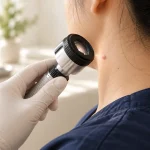
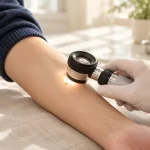
Dermoscopy may occasionally help if the lesion resembles another type of growth.
A biopsy is not automatically required for every classic skin tag.
However, histopathological examination may be considered if the diagnosis is uncertain or the lesion has atypical features.
Skin Tag Removal Options
There is no single technique that is best for every skin tag.
Treatment depends on:
- Size
- Thickness of the stalk
- Number of lesions
- Anatomical location
- Bleeding tendency
- Skin type
- Cosmetic considerations
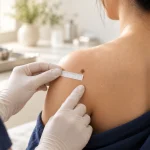
Common dermatologist-performed methods include snip removal, electrosurgery/electrodesiccation and cryosurgery.
1. Snip Removal
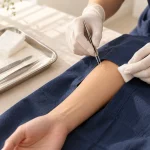
Small or pedunculated skin tags can often be removed by cutting through the stalk using sterile surgical scissors or a blade.
Depending on size and location, local anesthetic may be used first.
After removal, bleeding is controlled using an appropriate technique.
Advantages
- Removes the lesion immediately
- Useful for clearly pedunculated skin tags
- Removed tissue can potentially be retained for pathology if clinically necessary
Limitations
- Minor bleeding can occur
- A small scar or pigment change is possible
- Larger lesions may require local anesthesia
Snip removal is one of the commonly used dermatological treatments for skin tags.
2. Electrosurgery or Electrodesiccation
Electrical energy can be used to destroy the skin tag and control bleeding.
A small crust normally develops afterward.
Advantages
- Useful for small skin tags
- Can provide good bleeding control
- Multiple lesions may sometimes be treated during the same session
Limitations
Possible effects include:
- Temporary crusting
- Redness
- Pigment change
- Small scar
A crust can develop after electrodesiccation and subsequently heal.
3. Cryosurgery
Cryosurgery uses very low temperature, commonly from liquid nitrogen, to freeze the tissue.
The treated skin tag may subsequently:
- Swell
- Develop a blister
- Form a crust
- Darken
- Separate from the skin during healing
Cryotherapy is a standard clinical option for selected skin tags.
Advantages
- No surgical incision in many cases
- Useful for selected small lesions
- Procedure is generally brief
Limitations
The lesion may not disappear immediately.
Possible temporary effects include:
- Redness
- Swelling
- Blistering
- Crusting
- Darkening or lightening of the treated skin
Pigment change is an important consideration in patients with more pigmented skin.
Which Skin Tag Removal Method Is Best?
There is no universally superior method.
For example:
- A tiny thin skin tag may be suitable for snip removal.
- Multiple small lesions may be approached differently.
- A thicker skin tag may require local anesthesia and more careful bleeding control.
- A lesion close to the eye requires different planning from one on the trunk.
- A lesion whose diagnosis is uncertain should not simply be destroyed.
The treatment should therefore be selected after the lesion has been identified.
Does Skin Tag Removal Hurt?
Discomfort depends on the treatment method, lesion size and location.
Very small lesions may cause only brief discomfort.
Larger lesions may require local anesthesia.
When local anesthetic is used, the injection itself may sting briefly. Once the area is adequately numb, the patient should not normally experience sharp procedural pain.
Some tenderness, burning or sensitivity can occur afterward.
Do Skin Tags Need Local Anesthesia?
Not every skin tag requires it.
Local anesthesia may be more useful for:
- Larger skin tags
- Thick stalks
- Sensitive anatomical areas
- Procedures involving cutting or cautery
- Patients who are particularly sensitive to discomfort
The dermatologist can decide after examining the lesions.
How Long Does Skin Tag Removal Take?
The procedure itself may be brief for a small number of uncomplicated skin tags.
However, the appointment should also allow time for:
- Confirming the diagnosis
- Counting and examining lesions
- Discussing treatment choices
- Local anesthesia when required
- Controlling bleeding
- Providing aftercare instructions
Treating many lesions naturally takes longer than treating one small skin tag.
Can Many Skin Tags Be Removed at the Same Time?
Often several can be treated during one visit, but this depends on:
- Number
- Size
- Location
- Treatment method
- Expected wound burden
- Bleeding risk
- Patient comfort
Trying to remove a very large number at once may produce many simultaneous healing sites, so treatment planning may need to balance convenience with recovery.
What Happens After Skin Tag Removal?
The appearance depends on the technique.
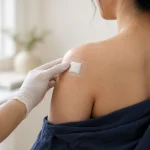
After snip removal, there may be a tiny superficial wound.
After electrosurgery, a small crust may develop.
After cryotherapy, the area may become red, swollen, blistered or crusted before healing.
Patients should follow the wound-care instructions given for the particular technique used.
How Should I Care for the Skin After Removal?
Aftercare depends on how the lesion was treated.
General principles can include:
- Keep the area clean.
- Avoid repeatedly picking at the wound or crust.
- Use wound care recommended by the treating clinician.
- Protect healing areas from unnecessary friction.
- Allow crusts to separate naturally.
- Protect healed skin from excessive sun exposure, particularly if pigment change is a concern.
Specific instructions should take priority over general advice.
How Long Does Skin Tag Removal Take to Heal?
Healing time depends on:
- Treatment technique
- Size
- Location
- Depth of injury
- Individual healing
- Friction at the site
- Infection
- Skin type
A tiny snip-removal site may heal relatively quickly, while a larger cauterized or frozen lesion can take longer.
Areas treated with electrodesiccation commonly form a crust and may heal over approximately one to three weeks. Will Skin Tag Removal Leave a
Scar?
Any procedure that intentionally injures or removes skin has some potential to leave a visible mark.
Possible outcomes include:
- Very small flat scar
- Temporary redness
- Brown pigmentation
- Lighter skin
- Rarely a raised scar
Caution is advised against claims that skin growth removal is completely “scar free” or “zero risk.
”
Scar risk depends on both the technique and the patient’s individual healing tendency.
Can Skin Tag Removal Cause Dark Marks?
Yes.
Post-inflammatory hyperpigmentation can occur after many skin procedures.
It may be particularly noticeable in more pigmented skin.
Temporary darkening can follow:
- Cryotherapy
- Electrosurgery
- Inflammation
- Scratching
- Wound healing
The possibility of pigment change should be considered when choosing treatment, particularly for visible areas.
Can Skin Tag Removal Cause White Marks?
Yes.
Loss of pigment can occasionally occur after injury to the skin, especially following treatments that destroy tissue such as cryotherapy.
The risk varies with treatment intensity, anatomical location and skin type.
This is one reason treatment should not simply be based on removing the lesion as aggressively as possible.
Can Skin Tags Grow Back?
A correctly removed individual skin tag may not necessarily return from exactly the same tissue.
However, new skin tags can develop elsewhere, especially in people who are predisposed to them.
Therefore, removing existing skin tags does not prevent future skin tags from forming.
If what appears to be the same lesion repeatedly regrows, the diagnosis should be reconsidered.
Why Do I Keep Getting More Skin Tags?
Some people naturally develop more skin tags with age.
Other contributing factors can include:
- Repeated friction
- Skin folds
- Genetic tendency
- Weight gain
- Pregnancy
- Metabolic factors
There is an increased likelihood in people who are overweight, pregnant, have loose skin, metabolic syndrome, diabetes, or relatives with skin tags.
Developing a few new skin tags over time is therefore not unusual.
What If I Suddenly Develop Many Skin Tags?
A sudden eruption of numerous skin tags is unusual.
Dermatological evaluation is advised when many skin tags appear suddenly, because although this is uncommon, it may warrant assessment for other underlying issues.
This does not mean that suddenly developing multiple skin tags automatically indicates a serious disease.
It means the clinical pattern deserves proper assessment.
Should Skin Tags Be Sent for Histopathology?
Not every classic skin tag requires Histopathology.
When a lesion has a completely typical clinical appearance, dermatological diagnosis may be sufficient.
Histopathology may become more relevant when:
- The diagnosis is uncertain
- Pigmentation is unusual
- The lesion is firm rather than soft
- It is rapidly enlarging
- It repeatedly bleeds without obvious trauma
- It is unusually large
- It has an atypical surface
- Another tumor is in the differential diagnosis
The decision should be based on the clinical appearance rather than assuming every removed growth requires the same approach.
Should You Remove Skin Tags at Home?
Home removal is not recommended.
Methods promoted online can include:
- Cutting with scissors
- Tying the stalk with thread
- Applying acids
- Using wart medication
- Unregulated skin-tag-removal liquids
- Home freezing devices
These approaches create several problems.
Most importantly, the diagnosis may be wrong.
At-home products for removing moles and skin tags can cause skin injury, infection, scarring, bleeding, and delay the diagnosis of skin cancer.
Can I Cut a Skin Tag Off Myself?
It may appear easy because many tags have a thin stalk, but cutting them at home is not advisable.
Potential complications include:
- Significant bleeding
- Infection
- Scar formation
- Removing the wrong type of lesion
- Incomplete removal
- Delayed diagnosis of a more important skin condition
What looks like a harmless skin tag in a mirror or photograph is not always one.
Can I Tie Dental Floss Around a Skin Tag?
Ligation can interrupt blood flow and cause tissue death, which is why this technique appears in home-removal advice.
However, unsupervised ligation has limitations:
- Diagnosis may be incorrect
- Larger lesions can become painful
- Inflammation or infection can occur
- The stalk may be too thick
- The lesion may bleed
- A lesion requiring Histopathology may be destroyed
Professional diagnosis before treatment is safer.
Can Wart Remover Be Used on Skin Tags?
It should not be used for ordinary skin tags.
Wart treatments are designed for a different condition and can damage surrounding skin.
Wart-removal medication can cause irritation or scarring when applied to a skin tag.
Should Skin Tags Be Removed by Laser?
The more important issue is not whether a device can destroy the lesion, but whether the diagnosis is secure and whether the selected technique offers an appropriate balance of removal, wound healing, pigmentation risk and scarring.
For a completely typical benign lesion, several destructive or surgical methods may be possible.
For an atypical lesion, destroying it without tissue diagnosis can be inappropriate because Histopathology may be needed.
Skin Tags Around the Eyes
Skin tags can occur on the eyelids.
Treatment in this region deserves additional care because the lesion may be close to:
- The eyelid margin
- Eyelashes
- The eye surface
- Important eyelid structures
Removal may be appropriate when an eyelid skin tag interferes with vision.
Not every bump around the eye is an acrochordon, so diagnosis is particularly important before treatment.
Skin Tags on the Neck
The neck is one of the most common locations.
Skin tags here may repeatedly rub against:
- Collars
- Necklaces
- Seat belts
- Hair
- Shaving equipment
Repeated irritation can make them red, painful or occasionally bleed.
Patients with numerous neck lesions may have a mixture of skin tags and other benign lesions, so each lesion should not automatically be assumed to have the same diagnosis.
Skin Tags Under the Arms
Skin-to-skin friction makes the underarms another frequent site.
Tags may become irritated by:
- Shaving
- Tight clothing
- Deodorant application
- Repeated movement
Multiple lesions may sometimes be treated together, depending on their size and number.
Skin Tags in the Groin
Skin tags can occur in the groin because of friction and skin folds.
However, this area is also a common location for other conditions, including genital warts.
Because treatment and implications are very different, uncertain lesions should be diagnosed before removal.
A genital wart should not be labeled a skin tag solely because it appears pedunculated.
Skin Tags Under the Breasts
The fold underneath the breast is another friction-prone area where skin tags may develop.
They can become irritated through:
- Sweating
- Skin friction
- Clothing
- Bra edges
Repeated irritation may be a reason to consider removal.
Skin Tags During Pregnancy
Pregnancy can be associated with an increase in skin tags.
Hormonal and body changes, along with increased skin friction, may contribute, making pregnancy a setting in which skin tags are more likely to develop.
Many pregnancy-associated skin tags are harmless.
Removal can often be deferred unless they are causing significant symptoms, with timing determined individually.
What Is the Difference Between Skin Tag Removal and Mole Removal?
The terms should not be used interchangeably.
A skin tag is typically a benign acrochordon.
A mole is usually a melanocytic nevus.
Removal techniques may differ because diagnostic requirements are different.
A classic skin tag may be treated with snipping, cryotherapy or electrosurgery.
A suspicious pigmented mole may require a biopsy technique that preserves tissue architecture for Histopathology.
Suspicious moles should receive appropriate evaluation rather than being treated as simple cosmetic growths.
When Should a Skin Growth Be Examined Before Removal?
See a dermatologist when a presumed skin tag:
- Is rapidly growing
- Changes significantly in color
- Has several colors
- Becomes firm
- Develops an ulcer
- Bleeds repeatedly without obvious trauma
- Is persistently painful
- Has an irregular surface
- Looks very different from your other tags
- Continues growing after previous removal
- Is located in an area where the diagnosis is uncertain
The goal is not to biopsy every harmless growth.
It is to avoid destroying a lesion that should first be diagnosed.
What to Expect During a Skin Tag Consultation in Bangkok
A useful consultation should begin with diagnosis rather than immediately choosing a removal device.
1. Confirm What the Lesion Is
The dermatologist determines whether the growth is most consistent with:
- Skin tag
- Mole
- Wart
- Seborrheic keratosis
- Another benign growth
- A lesion requiring further investigation
2. Determine Whether Removal Is Necessary
A typical asymptomatic skin tag can be left alone.
Removal is generally elective unless it causes symptoms or functional problems.
3. Choose the Appropriate Removal Method
Treatment should take into account:
- Size
- Number
- Location
- Skin type
- Stalk thickness
- Bleeding risk
- Pigmentation risk
- Cosmetic priorities
4. Discuss Expected Healing
Patients should understand that temporary redness, crusting, pigment change or a small scar may occur.
5. Decide Whether Histopathology Is Needed
A completely typical skin tag may not require it.
An unusual or diagnostically uncertain lesion may need to be handled differently.
Skin Tag Removal for International Patients in Bangkok
Skin tag removal is often a relatively minor dermatological procedure, which can make it practical for tourists and international patients.
However, patients should consider the timing of treatment if they plan to:
- Swim
- Visit beaches
- Exercise heavily
- Travel for long periods
- Spend substantial time in the sun
Fresh treatment sites may require wound care and protection during healing.
If the lesion is atypical and Histopathology is recommended, international patients should also clarify how results will be communicated after leaving Thailand.
Can I Fly After Skin Tag Removal?
For a small uncomplicated treatment, flying is generally not prohibited solely because a skin tag was removed.
Practical considerations are usually more important:
- Is the wound still bleeding?
- Does it require dressing changes?
- Is there significant pain?
- Was a larger lesion removed?
- Is Histopathology pending?
- Will follow-up be necessary?
For minor treatment sites, travel can often be planned around routine wound care.
Can I Swim After Skin Tag Removal?
Swimming immediately after treatment may expose healing wounds to prolonged moisture and microorganisms.
The appropriate time to return to swimming depends on:
- Removal technique
- Wound size
- Whether a crust is present
- Whether the skin surface has closed
Patients planning beach or pool activities in Thailand should consider this when scheduling removal.
Frequently asked questions
What are skin tags?
Skin tags are benign soft skin growths medically called acrochordons.
Are skin tags cancer?
Typical skin tags are benign and are not skin cancer.
Can a skin tag become cancer?
Typical acrochordons are not considered precancerous. The greater concern is that another lesion may be mistaken for a skin tag.
Are skin tags contagious?
No. Ordinary skin tags are not considered contagious.
Are skin tags caused by HPV?
Ordinary skin tags should not be confused with HPV-related warts. Evidence has not established HPV as the simple cause of typical acrochordons.
Why do I have skin tags?
Friction, skin folds, genetics, pregnancy, weight and metabolic factors may contribute.
Does having skin tags mean I have diabetes?
No. Skin tags can occur without diabetes, although an association with diabetes and metabolic syndrome has been described.
Why do skin tags occur on the neck?
The neck is exposed to repeated friction from skin folds, clothing and jewelry.
Why do skin tags develop under the arms?
Skin-to-skin friction is common in this area.
Can skin tags occur around the eyes?
Yes. Eyelid skin tags are common and can occasionally interfere with vision.
Can skin tags occur in the groin?
Yes, but genital warts and other lesions can occur in the same region, so uncertain lesions should be examined.
Why is my skin tag bleeding?
It may have been caught, shaved or repeatedly irritated. Unexplained recurrent bleeding should be evaluated.
Why did my skin tag turn black?
It may have twisted and lost its blood supply, but a changing dark lesion should be assessed if the diagnosis is uncertain.
Why is my skin tag painful?
Twisting, trauma and friction can cause pain.
Do skin tags need to be removed?
No. Typical asymptomatic skin tags can be left untreated.
When should a skin tag be removed?
Removal may be considered when it becomes irritated, painful, repeatedly bleeds, interferes with vision or causes cosmetic concern.
How are skin tags removed?
Common methods include snip removal, electrodesiccation and cryosurgery.
Is skin tag removal painful?
Discomfort varies. Local anesthesia can be used when needed.
Does skin tag removal leave a scar?
A small scar or pigment change is possible with any procedure that damages or removes skin.
Can skin tag removal leave a dark mark?
Yes. Post-inflammatory hyperpigmentation can occur.
Can cryotherapy leave a white spot?
Loss of pigment is possible after sufficiently strong freezing, particularly in more pigmented skin.
Do removed skin tags grow back?
New skin tags can develop even after existing lesions have been removed.
Can multiple skin tags be removed together?
Often yes, although the number treated in one session depends on size, location, treatment technique and expected healing.
Should skin tags be sent to pathology?
Not every typical skin tag requires Histopathology, but uncertain or atypical lesions may warrant further evaluation.
Can I remove a skin tag myself?
Home removal is not recommended because of risks including bleeding, infection, scarring and incorrect diagnosis.
Can I use wart remover on a skin tag?
No. Wart medication can damage surrounding skin and is not an appropriate treatment for ordinary skin tags.
Can I cut a skin tag with scissors?
Self-cutting is not recommended because bleeding, infection, scarring and misdiagnosis can occur.
Can I tie a skin tag with thread?
Although ligation can interrupt blood supply, home treatment risks misdiagnosis, inflammation, infection and incomplete removal.
Are skin tags and moles the same?
No. A skin tag is an acrochordon, while a typical mole is a melanocytic nevus.
Can a mole look like a skin tag?
Yes. Some raised nevi can be soft and pedunculated.
Can a wart look like a skin tag?
Yes, particularly in certain anatomical areas.
Can seborrheic keratosis resemble a skin tag?
Yes. Pedunculated seborrheic keratoses can sometimes resemble acrochordons.
Can skin cancer resemble a skin tag?
Occasionally another lesion, including a skin cancer, can be mistaken for a skin tag.
When should I worry about a “skin tag”?
Seek assessment if it rapidly changes, becomes irregularly pigmented, ulcerates, repeatedly bleeds, becomes firm or looks unusual compared with your other skin tags.
Can I shower after skin tag removal?
Often yes, depending on the treatment and wound-care instructions.
Can I swim after skin tag removal?
It is generally better to wait until the treated surface has healed adequately.
Can I exercise afterward?
Usually light activity is possible after minor treatment, but friction and sweating over fresh wounds may cause irritation.
Can tourists have skin tags removed in Bangkok?
Minor skin lesion procedures can often fit into travel schedules, but patients should consider wound care, swimming, sun exposure and possible pathology follow-up.
Can I fly after skin tag removal?
Minor uncomplicated removal usually does not itself prevent air travel, although wound care and any required follow-up should be planned.
Related conditions
-
Mole Removal Mole Removal Many growths that patients call “moles” are benign and can be removed because they catch on clothing, become repeatedly irritated, or are cosmetically unwanted. Others may actually be Seborrheic Keratosis, Skin Tag, Wart, Actinic Keratosis, or another skin condition. Occasionally, a lesion that looks like an ordinary mole or growth can represent Melanoma, Basal Cell Carcinoma, SCC, or another skin cancer.

-
Seborrheic Keratosis Seborrheic Keratosis Seborrheic Keratosis is one of the most common benign skin growths seen by dermatologists. It often appears as a brown, black, or tan spot that looks as though it is "stuck onto the skin.
-
Viral Warts Viral Warts Viral warts are common skin growths caused by infection with human papillomavirus (HPV). They can develop almost anywhere on the skin, but frequently affect the hands, fingers, feet, knees, face and genital area.

-
Genital Warts Genital Warts Genital warts are benign growths caused by certain types of human papillomavirus (HPV). They can appear on the penis, vulva, groin, scrotum, perineum, around the anus, inside the anal canal, and sometimes on the cervix, vagina or urethral opening.