







Non-Surgical Facial Rejuvenation
Non-surgical facial rejuvenation is not a single procedure. It is a treatment approach that combines different non-surgical methods to address the specific changes responsible for an aged or tired appearance.

Depending on the patient, these changes may include:
- dynamic wrinkles caused by facial movement
- loss of facial volume
- deeper folds
- uneven skin texture
- pigmentation and sun damage
- enlarged pores
- acne scars
- redness and visible blood vessels
- mild skin laxity
- changes in facial proportions
The most important point is that these problems do not all respond to the same treatment.
Botulinum toxin treats muscle-related wrinkles. Fillers restore selected areas of volume. Lasers and resurfacing treatments primarily target skin quality. Radiofrequency or ultrasound may be considered for selected degrees of laxity.
A useful facial rejuvenation plan therefore begins by identifying what is actually causing the concern, rather than choosing a treatment because it is popular or because a particular device is being promoted.
For patients considering non-surgical facial rejuvenation in Bangkok, this distinction is especially important because the city offers a very wide range of cosmetic procedures. The most appropriate treatment is not necessarily the newest or most aggressive one.
What Is Non-Surgical Facial Rejuvenation?
Non-surgical facial rejuvenation refers to medical and cosmetic treatments designed to improve signs of facial aging without traditional facelift surgery.
Depending on the concern, treatment may target:
- muscles
- facial volume
- skin surface
- collagen and supporting tissue
- pigmentation
- blood vessels
- mild laxity
Common treatment categories include:
- Botulinum toxin
- injectable fillers
- laser resurfacing
- pigment and vascular lasers
- intense pulsed light
- Microneedling
- Radiofrequency Microneedling
- non-invasive Radiofrequency
- ultrasound-based tightening
- Chemical peels
- prescription or medical-grade skincare
Several of these approaches are widely recognized for age-related concerns, including Botulinum toxin, fillers, laser resurfacing, Chemical peels, Microneedling, Radiofrequency and ultrasound-based tightening.
The phrase “non-surgical facelift” is sometimes used in marketing, but it can be misleading. Non-surgical procedures may improve selected features of facial aging, but they do not reproduce the anatomical changes achieved by surgical lifting in patients with significant tissue laxity.
Why Does the Face Look Older?
Facial aging occurs at several anatomical levels at the same time.
Understanding these changes helps explain why one procedure rarely solves every problem.
Skin Changes
With age and cumulative ultraviolet exposure, the skin may develop:
- fine lines
- rough texture
- uneven pigmentation
- sun spots
- reduced elasticity
- dryness
- visible small blood vessels
Sun exposure contributes significantly to visible premature skin aging. Topical retinoids, injectables, peels, lasers and other procedures may be used depending on the dominant problem.
Muscle Activity
Repeated facial expressions contribute to dynamic wrinkles.
Examples include:
- forehead lines
- frown lines
- crow’s feet
These wrinkles become more visible when the relevant muscles contract.
Facial Volume Changes
Changes in facial fat and supporting structures may contribute to:
- flatter cheeks
- hollow temples
- under-eye hollows
- deeper facial folds
- changes around the mouth
- loss of facial contour
Bone and Structural Support
The facial skeleton also changes with age.
These changes can affect the relationship between the cheeks, eyes, mouth, chin and jawline.
Skin Laxity
Collagen and elastic tissue gradually change with age and sun exposure.
This may contribute to:
- less defined jawline
- early jowling
- mild cheek descent
- neck laxity
- loose skin around the eyes
Because these processes occur together, facial rejuvenation should assess the entire face rather than treating each visible line independently.
What Can Non-Surgical Facial Rejuvenation Improve?
A well-designed treatment plan may address one or several concerns.
Fine Lines
Fine lines can arise from intrinsic aging, sun exposure, dryness and repeated movement.
Depending on the cause, treatment may include:
- skincare
- Retinoids
- Botulinum toxin
- resurfacing procedures
- Microneedling
- selected laser treatments
Dynamic Wrinkles
Dynamic wrinkles appear or deepen during facial expression.
Typical areas include:
- forehead
- between the eyebrows
- outer corners of the eyes
Botulinum toxin is usually more directly suited to these wrinkles than filler because it temporarily reduces targeted muscle activity. The effect is temporary and typically requires repeat treatment.
Static Wrinkles and Deeper Folds
Static wrinkles remain visible while the face is at rest.
Their causes can include:
- skin aging
- loss of volume
- sun damage
- repeated movement over many years
- structural change
Treatment may therefore involve resurfacing, fillers, Botulinum toxin or combination treatment depending on the cause.
Facial Volume Loss
Selected areas of volume loss may be treated with injectable fillers.
Fillers can help restore fullness or modify facial contours, but results depend on the material used, anatomy and injection site. Most commonly used filler materials are temporary.
Mild Skin Laxity
Selected patients with mild laxity may consider:
- Radiofrequency
- ultrasound-based tightening
- resurfacing procedures
- Radiofrequency Microneedling
These treatments generally produce more modest changes than surgery.
The more advanced the laxity, the less realistic it becomes to expect a non-surgical procedure to create a surgical-level lift.
Uneven Skin Texture
Texture concerns may include:
- rough skin
- fine surface lines
- acne scars
- enlarged pores
Depending on the cause, options may include:
- Retinoids
- Chemical peels
- Microneedling
- Radiofrequency Microneedling
- fractional laser resurfacing
Enlarged Pores
Pore visibility is influenced by several factors, including:
- sebaceous activity
- genetics
- loss of skin firmness
- acne
- skin texture
No procedure can permanently remove normal pores.
Treatments may make them less noticeable by improving oil control, skin texture or surrounding collagen.
Acne Scars
Acne scars should be classified before treatment because different scar types respond differently.
Options can include:
- Microneedling
- Radiofrequency Microneedling
- fractional laser
- scar-specific procedures
- selected injectable treatments
Microneedling stimulates collagen and can be used for acne scars and other texture concerns.
Pigmentation and Sun Damage
Brown spots are not all the same.
They may represent:
- freckles
- solar lentigines
- melasma
- post-inflammatory hyperpigmentation
- seborrheic keratosis
- actinic keratosis
- occasionally skin cancer
Diagnosis should come before cosmetic treatment.
Depending on the diagnosis, treatment may include:
- topical medication
- Retinoids
- Chemical peels
- laser
- intense pulsed light
- sun protection
Facial Redness and Visible Blood Vessels
Redness may result from:
- Rosacea
- sun damage
- telangiectasia
- inflammation
- other vascular conditions
Vascular laser or light-based treatment may help selected patients, but a diagnosis should be made first.
Non-Surgical Facial Rejuvenation Is Not One Treatment
One of the most common mistakes in cosmetic treatment is trying to use a single procedure for every sign of aging.
A more useful approach is to match each problem with the structure causing it.
| Main Concern | Treatment Categories That May Be Considered |
|---|---|
| Dynamic forehead or frown lines | Botulinum toxin |
| Facial volume loss | Injectable filler |
| Deep volume-related folds | Filler ± other treatment |
| Fine sun-related wrinkles | Retinoids, resurfacing, Chemical peel |
| Rough texture | Retinoids, Microneedling, fractional laser, peels |
| Acne scars | Scar-specific treatment, Microneedling, RF Microneedling, fractional laser |
| Mild laxity | Radiofrequency, ultrasound, selected resurfacing |
| Significant laxity | Surgical consultation may be more appropriate |
| Sun spots | Pigment-directed treatment after diagnosis |
| Melasma | Medical pigmentation treatment; procedures used selectively |
| Facial redness | Vascular treatment after diagnosis |
| Suspicious skin lesion | Dermatologic examination before cosmetic treatment |
The important principle is simple:
Treat the cause, not just the visible symptom.
Botulinum Toxin for Facial Rejuvenation
Botulinum toxin temporarily reduces the activity of selected muscles.
For facial rejuvenation, it is particularly useful for wrinkles caused by repeated movement.
Common examples include:
- frown lines
- forehead lines
- crow’s feet
The treatment does not add volume.
This is why Botulinum toxin should not be expected to correct:
- hollow cheeks
- under-eye volume loss
- deep structural folds
- significant skin laxity
- pigmentation
- poor skin texture
Appropriate treatment can soften targeted wrinkles while preserving natural facial expression.
Advantages
- minimal procedural downtime in many patients
- targeted treatment of dynamic wrinkles
- temporary effect
- can be combined with other treatment categories when appropriate
Limitations
- does not restore facial volume
- does not improve pigmentation or skin texture directly
- results are temporary
- excessive or poorly planned treatment can affect normal expression
Possible Side Effects
Depending on the area, effects may include:
- bruising
- pain
- temporary headache
- asymmetry
- eyelid or brow drooping
- unwanted weakness of nearby muscles
Rare systemic adverse effects have also been reported with Botulinum toxin products.
Injectable Fillers for Volume Loss and Facial Contouring
Fillers are injectable materials used to restore or modify volume.
They may be considered for selected concerns involving:
- cheeks
- chin
- jawline
- lips
- facial folds
- other areas depending on the product and indication
Common temporary filler materials include Hyaluronic acid, Calcium hydroxylapatite and Poly-L-lactic acid.
Advantages
Depending on the product and area:
- visible volume change can occur relatively quickly
- treatment can be localized
- different materials have different structural characteristics
Limitations
- most results are temporary
- filler cannot correct every form of facial aging
- significant laxity may not improve adequately
- excessive volume can make the face look heavy or unnatural
Important Risks
Common effects include:
- swelling
- bruising
- tenderness
- redness
Less common complications include:
- infection
- nodules
- inflammatory reactions
- migration
- tissue damage
The most serious risk is accidental injection into or obstruction of a blood vessel. This can lead to skin necrosis, visual impairment, blindness or stroke.
Unusual severe pain, skin turning white, gray or blue, sudden visual symptoms or stroke-like symptoms after filler injection require urgent medical attention.
Laser Skin Resurfacing
Laser resurfacing can target skin texture rather than simply adding volume or reducing muscle movement.
Depending on the technology and treatment intensity, it may improve:
- fine lines
- rough texture
- sun damage
- selected pigmentation
- acne scars
Laser procedures range from relatively gentle treatments to more intensive resurfacing.
Non-Ablative Fractional Laser
Non-ablative fractional treatment creates microscopic treatment zones while leaving much of the surface skin intact.
Potential advantages include:
- shorter recovery than more aggressive resurfacing
- treatment of texture and fine lines
- collagen remodeling
Limitations include:
- results generally develop gradually
- multiple treatments may be required
- improvement is usually more modest than with aggressive resurfacing
Ablative Fractional Laser
Ablative resurfacing removes microscopic columns of skin and produces a stronger wound-healing response.
It may be considered for selected patients with more pronounced:
- wrinkles
- texture change
- scars
- photodamage
The trade-off is greater downtime and higher risk of side effects such as prolonged redness, infection, pigment change and scarring.
Laser resurfacing can provide more substantial tightening than many non-invasive tightening procedures, but requires more recovery and carries greater risks.
Microneedling
Microneedling uses very small needles to create controlled microscopic injury in the skin.
The healing response stimulates collagen production.
It may be used for:
- fine lines
- acne scars
- enlarged pores
- uneven texture
- selected pigmentation concerns
- mild skin aging
Microneedling is minimally invasive and suitable across skin tones when appropriately performed.
Advantages
- suitable for a broad range of skin tones
- useful for texture and scar-related concerns
- generally less disruptive to the surface than aggressive laser resurfacing
Limitations
- does not provide dramatic lifting
- results develop gradually
- multiple treatments may be needed
- not appropriate during some active infections or inflammatory conditions
Potential side effects include:
- redness
- swelling
- irritation
- infection
- pigment change
- scarring if performed incorrectly
Radiofrequency Microneedling
Radiofrequency Microneedling combines Microneedling with heat delivered through the needles.
The purpose is to stimulate remodeling in deeper skin layers.
It may be considered for:
- acne scars
- texture
- fine lines
- selected laxity
- enlarged pores
This treatment can be used across skin tones, although comparative evidence remains limited and treatment still requires appropriate patient selection.
Advantages
- combines mechanical needling and thermal stimulation
- can address texture and selected laxity
- may offer less surface disruption than some aggressive lasers
Limitations
- not equivalent to surgical lifting
- response varies
- several sessions may be needed
- inappropriate energy settings can still cause burns, pigment change or scarring
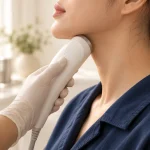
Radiofrequency Skin Tightening
Non-invasive Radiofrequency devices heat deeper tissue with the aim of stimulating collagen remodeling.
They are most appropriate for mild laxity rather than substantial sagging.
Potential treatment areas may include:
- lower face
- jawline
- cheeks
- neck
Radiofrequency is included among non-surgical options for skin tightening.
Advantages
- generally little surface injury
- limited downtime in many cases
- gradual rather than abrupt change
Limitations
- improvement is generally modest
- results vary
- cannot reposition significantly descended facial tissues
- not a substitute for facelift surgery in advanced laxity
Ultrasound-Based Skin Tightening
Focused ultrasound technology can deliver energy below the skin surface to stimulate tissue remodeling.
It may be considered for selected patients with mild facial or neck laxity.
Advantages
- no surgical incision
- little surface disruption
- gradual improvement
Limitations
- results are not equivalent to surgery
- not all patients respond equally
- discomfort can occur
- inappropriate treatment parameters can cause complications
Patients with substantial sagging may benefit more from discussing surgical options rather than repeatedly pursuing non-surgical tightening.
Chemical Peels
Chemical peels use controlled chemical exfoliation at different depths.
Depending on peel type and concentration, they may improve:
- superficial pigmentation
- fine lines
- rough texture
- some signs of sun damage
- selected acne-related changes
Chemical peels are often included among dermatologic treatments for age-related skin changes and sun damage.
Advantages
- treatment depth can be adjusted
- can target texture and superficial pigmentation
- lighter peels may have relatively limited downtime
Limitations
- deeper peels require more recovery
- pigment changes may occur
- not suitable for every skin type or condition
- does not restore facial volume or correct significant laxity
Intense Pulsed Light
Intense pulsed light, commonly known as IPL, uses multiple wavelengths of light rather than a single laser wavelength.
It can be useful for selected patients with:
- sun spots
- uneven pigmentation
- redness
- visible vessels
IPL is not the appropriate treatment for every brown spot.
A pigmented lesion should be diagnosed before treatment, especially if it is new, changing or atypical.
Pigment Lasers
Pigment-targeting lasers may be used for selected benign pigmentation.
However, brown facial patches can represent very different diagnoses.
For example, a solar lentigo is treated differently from melasma.
This distinction is especially important because overly aggressive treatment of melasma or skin with a high tendency toward pigmentation may worsen discoloration.
Vascular Lasers
Vascular lasers target blood vessels and may be considered for:
- persistent facial redness
- telangiectasia
- selected forms of Rosacea-related redness
- some vascular lesions
Treatment should follow diagnosis because facial redness can have several causes.
Can Non-Surgical Treatments Lift the Face?
They can improve the appearance of selected forms of mild laxity, but “lifting” is frequently overstated in cosmetic advertising.
Non-surgical procedures may:
- improve skin firmness
- restore lost volume
- improve jawline appearance
- soften selected folds
- improve texture
However, they cannot physically reposition markedly descended facial tissues in the same way that surgery can.
A patient with substantial jowling, neck laxity or tissue descent should therefore be given realistic expectations.
Non-Surgical Facial Rejuvenation vs Facelift Surgery
The two should not be considered direct equivalents.
Non-Surgical Treatment May Be Better Suited When
- aging changes are mild to moderate
- the main concern is dynamic wrinkles
- volume loss is localized
- skin texture is a major concern
- downtime needs to be limited
- the patient prefers gradual change
Surgical Assessment May Be More Appropriate When
- facial laxity is substantial
- jowling is advanced
- neck laxity is pronounced
- significant tissue repositioning is required
- the desired degree of lifting cannot realistically be achieved without surgery
A non-surgical treatment should not be presented as a guaranteed substitute for a facelift.
Why Combination Treatment Can Be More Logical
Facial aging affects multiple structures.
For example, one patient may have:
- forehead lines from muscle activity
- mild cheek volume loss
- sun-related pigmentation
- rough skin texture
- early jawline laxity
Using filler everywhere would not address all of these concerns.
A more rational plan might use different treatments for different causes.
For example:
Muscle-related wrinkles → Botulinum toxin
Volume loss → filler
Texture or fine lines → resurfacing or Microneedling
Pigmentation → diagnosis-specific pigment treatment
Mild laxity → selected tightening procedure
This does not mean that every patient requires multiple procedures.
Combination treatment is only useful when each component has a clear purpose.
More treatment is not necessarily better treatment.
In What Order Should Facial Rejuvenation Treatments Be Done?
There is no universal sequence.
Treatment order should depend on the patient’s primary problems.
A practical approach may involve:
- diagnose and control active skin disease
- establish sun protection and appropriate skincare
- address pigmentation or inflammation when necessary
- treat texture or scars
- address muscle-related wrinkles
- restore selected areas of volume
- consider laxity or structural concerns
The order may change considerably depending on the patient.
For example, someone with active acne should generally have inflammation controlled before aggressive scar treatment.
A patient with active melasma may require stabilization before elective energy-based procedures.
Facial Rejuvenation for Asian Skin
Bangkok patients include a wide range of Asian and darker skin tones.
Treatment choice should account for the patient’s individual tendency to develop pigment after inflammation.
Post-inflammatory hyperpigmentation is darkening that occurs after skin inflammation or injury.
Procedures that intentionally create heat or controlled injury—including some lasers and peels—can trigger this reaction.
Darker skin is more prone to burns and dark marks after laser treatment, making appropriate laser selection and clinician experience particularly important.
This does not mean darker skin cannot be treated.
It means the correct procedure, settings, pretreatment and aftercare matter.
Facial Rejuvenation and Melasma
Melasma deserves special consideration.
A brown facial patch should not automatically be treated as a “sun spot.
”
Melasma can be worsened by:
- ultraviolet exposure
- visible light
- heat
- hormonal factors
- irritation
Aggressive procedures can sometimes worsen pigmentation.
Diligent sun protection is recommended, as visible light can worsen melasma, particularly in darker skin tones.
For patients with melasma, the first goal is usually disease control rather than performing every available rejuvenation procedure.
Facial Rejuvenation and Active Acne
If active inflammatory acne is present, it may be more appropriate to control acne first.
Treating scars while new inflammatory lesions continue to form can be inefficient and may increase inflammation.
Deep, painful or pus-filled acne is also a reason to postpone some procedures such as Microneedling until the acne has improved.
Facial Rejuvenation and Rosacea
Patients with Rosacea may have:
- persistent redness
- flushing
- visible blood vessels
- sensitive skin
- inflammatory papules or pustules
Procedures that generate heat or significant irritation may not be appropriate during an active flare.
The first step should be determining which component of Rosacea is present and stabilizing inflammation when necessary.
When a “Cosmetic” Problem Should Be Examined Medically First
Not every spot or bump on an aging face is simply a cosmetic issue.
Before laser, peel or other cosmetic treatment, see a dermatologist if a lesion is:
- new and changing
- rapidly growing
- repeatedly bleeding
- persistently crusted
- ulcerated
- unusually painful or tender
- becoming significantly darker or changing color
- developing an irregular border
- very different from other spots
- healing and then returning
- not healing
Sun-damaged skin can develop actinic keratosis, a precancerous lesion, as well as skin cancer.
Suspicious lesions should be diagnosed before they are treated cosmetically.
What Happens During a Facial Rejuvenation Consultation?
A useful consultation should not begin with a menu of machines.
The dermatologist should first ask what specifically bothers you.
Topics may include:
- wrinkles
- facial shape
- volume loss
- skin texture
- pigmentation
- acne scars
- redness
- laxity
- previous treatments
- previous fillers
- previous Botulinum toxin
- previous laser treatment
- history of pigment changes
- history of abnormal scars
- medications
- allergies
- skin disease
- pregnancy
- history of cold sores
- planned travel
- tolerance for downtime
- expected result
The face may then be examined:
- at rest
- during facial expression
- from the front
- in profile
- from oblique angles
Skin examination may assess:
- pigmentation
- texture
- pores
- scars
- redness
- vascular changes
- sun damage
- suspicious lesions
- skin laxity
The goal is to determine whether the concern comes mainly from muscle, volume, skin or structural change.
How to Choose the Right Treatment
Instead of asking:
“What is the best facial rejuvenation treatment?”
A better question is:
“What is causing the feature I want to improve?”
For example:
“I look tired.
”
Possible causes include:
- under-eye hollowing
- pigmentation
- visible vessels
- eye bags
- eyebrow position
- skin texture
Filler would only help some of these causes.
“My face looks saggy.
”
Possible causes include:
- volume loss
- tissue descent
- skin laxity
- jowling
- skeletal structure
The correct treatment depends on which factor dominates.
“My skin looks old.
”
This may reflect:
- sun damage
- pigmentation
- fine wrinkles
- rough texture
- dryness
- reduced elasticity
Skin-directed treatment may be more logical than filler.
How Much Downtime Is There?
Recovery varies substantially.
Minimal Downtime
Often associated with selected treatments such as:
- Botulinum toxin
- some fillers
- non-invasive Radiofrequency
- some light-based treatments
However, bruising or swelling can still occur.
Short Downtime
May occur after:
- Microneedling
- Radiofrequency Microneedling
- lighter fractional laser
- superficial Chemical peels
Patients may experience redness, swelling or temporary sensitivity.
More Significant Downtime
Can occur after:
- stronger fractional laser
- ablative laser resurfacing
- deeper Chemical peels
These may involve:
- peeling
- crusting
- prolonged redness
- swelling
- greater need for sun avoidance
Patients should ask about realistic recovery rather than relying on the phrase “no downtime.
”
Possible Side Effects of Facial Rejuvenation Treatments
Because non-surgical facial rejuvenation covers many procedures, risks vary.
Potential adverse effects include:
- redness
- swelling
- bruising
- temporary pain
- peeling
- dryness
- irritation
- acne flare
- pigment darkening
- pigment lightening
- infection
- burns
- scarring
- prolonged redness
Injectables have additional procedure-specific risks.
Botulinum toxin may cause temporary unwanted muscle weakness.
Fillers can rarely cause vascular occlusion and serious complications including tissue necrosis or visual loss.
Sun Protection Is Part of Facial Rejuvenation
No rejuvenation procedure can compensate for ongoing excessive ultraviolet exposure.
Daily photoprotection helps:
- reduce additional photodamage
- reduce pigmentation recurrence
- protect treated skin
- support longer-lasting improvement
Broad-spectrum sunscreen should therefore be considered part of a long-term rejuvenation plan rather than an optional extra.
Sun protection is particularly important before and after many laser procedures because tanning and ultraviolet exposure can increase the risk of burns and discoloration.
Can Non-Surgical Facial Rejuvenation Reverse Aging?
No treatment completely reverses biological aging.
Procedures can improve selected visible changes, but aging continues.
Some treatments provide temporary effects.
Others stimulate remodeling that develops gradually but also changes over time.
The goal should be realistic improvement, not permanent reversal of aging.
How Long Do Results Last?
There is no single answer.
Duration depends on:
- the treatment
- the concern being treated
- age
- skin condition
- sun exposure
- facial movement
- lifestyle
- individual biology
Botulinum toxin is temporary.
Most fillers are temporary.
Collagen-stimulating treatments may develop more gradually.
Pigmentation may recur, particularly when the underlying trigger remains.
Skin continues to age regardless of treatment.
Is Maintenance Necessary?
Often, yes.
Maintenance may include:
- sunscreen
- appropriate skincare
- topical Retinoids when suitable
- periodic treatment for muscle-related wrinkles
- repeat filler when clinically appropriate
- occasional resurfacing
- continued pigmentation treatment
- treatment of recurrent vascular redness
Maintenance should be based on actual changes rather than automatically repeating procedures on a fixed schedule.
Can Skincare Replace Procedures?
For mild concerns, good skincare can make a meaningful difference.
Helpful components may include:
- sun protection
- moisturizer
- Retinoids
- selected pigmentation treatments
- acne treatment where relevant
However, skincare cannot reproduce every effect of injectable or procedural treatment.
For example, creams cannot restore substantial facial volume or physically reposition significantly sagging tissues.
At the same time, procedures should not be used as a substitute for basic skin care and sun protection.
Is a More Aggressive Treatment Better?
Not necessarily.
Greater treatment intensity can sometimes produce greater improvement, but often at the cost of:
- longer recovery
- more discomfort
- higher risk of pigment change
- higher risk of infection
- higher risk of scarring
The strongest available treatment is not automatically the best choice.
The correct treatment intensity depends on the desired improvement, skin type, diagnosis and tolerance for risk and downtime.
Non-Surgical Facial Rejuvenation for Tourists and International Patients in Bangkok
International patients should consider treatment timing carefully.
Tell the dermatologist if your trip includes:
- beach holidays
- islands
- swimming
- diving
- extensive outdoor activity
- long-haul flights
- departure from Thailand shortly after treatment
- an important event soon after treatment
For example, an aggressive resurfacing procedure may be poorly timed immediately before a beach holiday.
Similarly, undergoing filler just before leaving Thailand may limit access to the treating physician if a complication or unexpected reaction develops.
A treatment plan should therefore fit the patient’s travel schedule as well as their skin.
How to Choose a Facial Rejuvenation Clinic in Bangkok
Rather than starting with the name of a device, ask:
- What is causing my concern?
- What treatment is being recommended?
- Why is it appropriate for me?
- What alternatives are available?
- What degree of improvement is realistic?
- How much downtime should I expect?
- What side effects can occur?
- Is the treatment suitable for my skin tone?
- Could my pigmentation be melasma?
- What happens if I develop a complication?
- Who performs the procedure?
- What follow-up is available?
Cosmetic procedures require medical knowledge to determine both appropriateness and safety.
Bottom Line
Non-surgical facial rejuvenation is most useful when it is treated as a diagnosis-led plan rather than a collection of cosmetic procedures.
Different signs of facial aging have different causes.
Muscle-related wrinkles → Botulinum toxin may be appropriate.
Volume loss → filler may be appropriate.
Texture and fine lines → resurfacing, Microneedling or other skin-directed treatment may be appropriate.
Pigmentation → diagnose the pigmentation disorder first.
Mild laxity → selected tightening procedures may help.
Significant laxity → surgery may provide a more realistic degree of correction.
For many patients, combining carefully selected treatments produces a more balanced result than repeatedly using one procedure for every problem.
However, more treatment is not necessarily better.
The goal of facial rejuvenation should be to improve the concerns that matter to the patient while maintaining normal facial proportions, expression and skin health.
For patients considering non-surgical facial rejuvenation in Bangkok, especially international visitors, treatment planning should also consider skin type, risk of pigmentation, downtime, travel schedule and access to follow-up care.
And before treating a brown spot, crusted lesion, rapidly changing growth or non-healing area as a cosmetic concern, it should first be examined medically.
Frequently asked questions
What is non-surgical facial rejuvenation?
It is an umbrella term for treatments designed to improve facial aging without traditional surgery.
Depending on the concern, it may involve injectables, laser treatment, Microneedling, Radiofrequency, ultrasound, Chemical peels or medical skincare.
What is the best non-surgical facial rejuvenation treatment?
There is no single best treatment.
The correct choice depends on whether the main concern is:
- muscle-related wrinkles
- volume loss
- skin texture
- pigmentation
- scars
- redness
- laxity
What is the best treatment for facial wrinkles?
It depends on the type of wrinkle.
Dynamic wrinkles often respond to Botulinum toxin.
Volume-related folds may benefit from filler.
Fine surface wrinkles may be better treated with resurfacing or topical treatments.
What is the best non-surgical treatment for sagging skin?
For mild laxity, Radiofrequency, ultrasound or selected collagen-remodeling procedures may be considered.
Significant sagging may not respond sufficiently to non-surgical treatments and may warrant surgical consultation.
Can non-surgical treatments replace a facelift?
Not in patients who require substantial tissue repositioning.
Non-surgical treatments generally produce more modest changes.
What is the difference between filler and skin tightening?
Filler adds or restores volume.
Skin-tightening procedures aim to stimulate tissue contraction or collagen remodeling.
They treat different problems.
Is Botulinum toxin the same as filler?
No.
Botulinum toxin reduces selected muscle activity.
Filler restores or modifies volume.
Can facial rejuvenation make me look natural?
Yes, when treatment is appropriately selected and conservative.
The goal does not need to be removing every wrinkle or dramatically changing facial proportions.
Is laser the best treatment for facial rejuvenation?
Not necessarily.
Laser is particularly useful for selected problems involving texture, scars, sun damage or pigmentation.
It does not treat every cause of facial aging.
Is Microneedling good for facial rejuvenation?
It can help selected patients with texture, fine lines, enlarged pores and acne scars.
It does not provide major facial lifting.
What is Radiofrequency Microneedling used for?
It may be used for acne scars, texture, pores, fine lines and selected degrees of skin laxity.
Which treatment has the least downtime?
Botulinum toxin, some filler treatments and selected non-invasive energy treatments generally involve less downtime than aggressive resurfacing.
However, swelling, bruising or redness can still occur.
How many treatments do I need?
It depends on the procedure and treatment goal.
Some injectable treatments may produce a noticeable effect after one session, while collagen-remodeling and skin-quality treatments often require a course of treatment.
How long does non-surgical facial rejuvenation last?
There is no single duration.
Different treatments have very different timelines, and normal aging continues.
What age should I start facial rejuvenation?
There is no medically required starting age.
Treatment should be based on an actual concern rather than age alone.
Is non-surgical facial rejuvenation safe for Asian skin?
Yes, many treatments can be used in Asian skin.
However, pigment tendency should be considered carefully, particularly with lasers, heat-based procedures and peels.
Can laser cause dark marks in Asian skin?
Yes.
Post-inflammatory hyperpigmentation can occur after skin injury or laser treatment, particularly in skin with a greater tendency to pigment. Appropriate treatment selection reduces but does not eliminate this risk.
Can I have facial rejuvenation if I have melasma?
Potentially, but melasma should be diagnosed and controlled first.
Some aggressive treatments can worsen it.
Can I have facial rejuvenation if I have active acne?
Some procedures should be delayed until active inflammatory acne is better controlled.
Can I have treatment while visiting Bangkok?
Yes, depending on the procedure and medical assessment.
Your travel schedule, sun exposure and access to follow-up should be considered.
Can I go to the beach after facial rejuvenation?
This depends on the treatment.
After resurfacing, peels or other procedures that temporarily disrupt or inflame the skin, significant sun exposure can increase the risk of pigmentation and other complications.
Should brown spots be lasered without diagnosis?
No.
A new, changing or atypical pigmented lesion should be examined before cosmetic destruction because not every brown spot is benign.
Related conditions
-
Fine Lines & Wrinkles Fine Lines & Wrinkles Fine lines and wrinkles are among the most common signs of skin aging. Some develop from repeated facial expressions, while others result from gradual changes in collagen, elastin, skin hydration, facial volume, and years of ultraviolet exposure.
-
Botulinum Toxin Botulinum Toxin Botulinum toxin injections are commonly used to soften dynamic facial wrinkles—lines caused mainly by repeated muscle movement—and can also be used in selected patients to modify facial contour by reducing the activity or bulk of specific muscles.

-
Dermal Fillers Dermal Fillers Dermal fillers are injectable treatments used to restore facial volume, soften selected folds and wrinkles, enhance facial contours, and improve the proportions of specific facial features.
-
Facial Contouring Facial Contouring Facial contouring is not one treatment. It is an approach to improving facial proportion, definition and balance by identifying which anatomical structures are responsible for the appearance a patient wants to change.