










For some people, the face becomes temporarily red after heat, exercise or spicy food. Others have persistent redness across the cheeks and nose, visible small blood vessels, burning or stinging, acne-like bumps, or red marks that remain after acne has healed.
Common causes include:
- Rosacea
- Flushing
- Visible facial blood vessels or telangiectasia
- Post-inflammatory erythema after acne
- Seborrheic dermatitis
- Irritant or allergic contact dermatitis
- Atopic dermatitis
- Sun damage
- Overuse of irritating skincare
- Topical steroid-related facial redness
- Less commonly, autoimmune or other medical conditions
The most useful question is therefore not simply:
“Which laser removes redness?”
It is:
“What is causing the redness?”
Treatment works best when it targets the actual cause. Persistent vascular redness may respond to vascular laser or light treatment, while inflammatory rosacea may need medication and gentle skincare. Dermatitis requires control of inflammation and avoidance of triggers, and a suspicious or unusual facial rash may require medical evaluation before any aesthetic procedure.
What Is Facial Redness?
Facial redness, medically described as facial erythema, occurs when the skin appears red, pink, purplish or flushed compared with its usual color.
The appearance may come from:
- Increased blood flow
- Dilated superficial blood vessels
- Inflammation
- Skin-barrier disruption
- Persistent small blood vessels
- A combination of these factors
Facial redness can be:
Temporary
Redness appears for minutes or hours and then fades.
This is often called flushing.
Persistent
The cheeks, nose, chin or central face remain red for prolonged periods.
Persistent central facial erythema is an important feature of rosacea.
Localized
Redness may appear around the nose, in individual blood vessels, around acne lesions or within a patch of dermatitis.
The pattern gives important clues to the diagnosis.
Common Causes of Facial Redness
- Rosacea
Rosacea is a chronic inflammatory condition affecting mainly the central face.
It can present with different combinations of:
- Persistent facial redness
- Recurrent flushing
- Visible blood vessels
- Burning or stinging
- Sensitive skin
- Papules and pustules
- Eye irritation
- Thickening of the skin in some patients
Modern rosacea classification focuses on the individual features or phenotypes present rather than forcing every patient into one fixed subtype. This allows treatment to target persistent redness, inflammatory lesions, visible vessels or ocular symptoms separately.
Rosacea is not limited to fair skin. It occurs in Asian and darker skin as well, although redness may be less visually obvious and the condition may therefore be underdiagnosed.
2. Facial Flushing
Flushing means temporary episodes of facial redness caused by increased blood flow.
Common triggers include:
- Heat
- Hot weather
- Exercise
- Emotional stress
- Spicy food
- Hot drinks
- Alcohol
- Sun exposure
- Sudden temperature changes
Occasional flushing can be normal.
However, frequent flushing—especially when accompanied by burning, persistent redness or visible blood vessels—may suggest rosacea.
3. Visible Facial Blood Vessels
Small visible vessels on the face are called telangiectasias.
They may appear as:
- Fine red lines
- Branching vessels
- Small purple-red vessels
- Persistent redness around the nose or cheeks
They may occur with:
- Rosacea
- Long-term sun exposure
- Genetics
- Aging
- Previous inflammation
- Certain medications
- Chronic topical steroid use
Unlike temporary flushing, established telangiectasias generally do not disappear simply by using moisturizer or anti-redness skincare.
Vascular laser or selected light-based treatment may therefore have a role.
4. Post-Inflammatory Erythema After Acne
After an inflammatory acne lesion heals, a flat red or pink mark may remain.
This is commonly called post-inflammatory erythema, or PIE.
It is different from:
Brown acne marks
These are usually Post-Inflammatory Hyperpigmentation (PIH) caused primarily by excess melanin.
Acne scars
These involve structural changes in the skin, such as Ice Pick, Boxcar or Rolling scars.
A systematic review found that multiple treatments have been studied for post-acne erythema, with vascular and light-based devices—including Pulsed Dye Laser—among the most frequently investigated approaches. However, there is currently no universally accepted single gold-standard treatment.
5. Seborrheic Dermatitis
Seborrheic dermatitis commonly causes redness with:
- Flaking
- Scale
- Itching
- Greasy skin
- Irritation
Typical areas include:
- Sides of the nose
- Eyebrows
- Between the eyebrows
- Hairline
- Scalp
- Behind the ears
It can sometimes resemble rosacea.
Some patients have both conditions at the same time.
Treating seborrheic dermatitis with vascular laser alone would not address the underlying inflammatory condition.
6. Irritant Contact Dermatitis
Facial redness can result from irritation caused by skincare products.
Common triggers include:
- Strong Retinoids
- Exfoliating acids
- Scrubs
- Benzoyl Peroxide
- Multiple active ingredients used together
- Frequent peeling
- Alcohol-based products
- Fragrances
- Aggressive cleansing
Symptoms may include:
- Redness
- Burning
- Tightness
- Stinging
- Dryness
- Peeling
When irritation is the cause, adding more aggressive treatments may worsen the problem.
7. Allergic Contact Dermatitis
Allergic contact dermatitis is an immune reaction to something touching the skin.
Possible triggers include ingredients in:
- Cosmetics
- Sunscreens
- Fragrances
- Hair products
- Skincare
- Preservatives
The skin may become:
- Red
- Itchy
- Swollen
- Dry
- Scaly
Patch testing may be considered when recurrent allergic contact dermatitis is suspected.
8. Atopic Dermatitis
Atopic dermatitis or eczema can cause facial redness accompanied by:
- Itching
- Dryness
- Scaling
- Skin sensitivity
- Recurrent inflammation
Treatment focuses on controlling inflammation and restoring the skin barrier rather than targeting blood vessels alone.
9. Topical Steroid-Related Facial Redness
Long-term or inappropriate use of potent topical corticosteroids on the face can lead to:
- Persistent redness
- Visible vessels
- Acne-like eruptions
- Skin thinning
- Increased sensitivity
- Rebound inflammation after stopping
This can resemble rosacea.
Patients who have been using steroid-containing facial creams regularly should tell their dermatologist, including creams obtained without a prescription or mixed cosmetic preparations.
10. Sun Damage
Chronic ultraviolet exposure can contribute to:
- Persistent redness
- Visible vessels
- Uneven pigmentation
- Skin thinning
- Photoaging
Sun exposure may also trigger rosacea flares.
Daily photoprotection is therefore useful not only for pigmentation but also for patients with redness-prone skin.
11. Less Common Medical Causes
Facial redness can occasionally occur with medical conditions that require further evaluation.
Examples include:
- Lupus erythematosus
- Dermatomyositis
- Photosensitive eruptions
- Medication reactions
- Certain systemic causes of flushing
Several inflammatory conditions can mimic rosacea, which is why history and physical examination are particularly important when the pattern is unusual.
Is Facial Redness Always Rosacea?
No.
Rosacea is one of the most common reasons for persistent central facial redness, but facial redness can also come from:
- Acne
- Dermatitis
- Irritation
- Visible vessels
- Sun damage
- Allergic reactions
- Steroid use
- Other inflammatory or medical conditions
A dermatologist looks at the pattern, accompanying symptoms and history rather than diagnosing rosacea based on redness alone.
How Is Rosacea Diagnosed?
Rosacea is primarily a clinical diagnosis.
There is no single blood test or skin test that confirms ordinary rosacea.
The dermatologist may assess:
- Persistent central facial redness
- Flushing
- Telangiectasia
- Papules and pustules
- Burning
- Stinging
- Skin sensitivity
- Eye symptoms
- Thickening of the skin
- Trigger patterns
Current consensus favors a phenotype-based approach, meaning treatment is chosen according to the features that are actually present in that patient.
Facial Redness in Asian Skin
Rosacea and vascular facial conditions can be more difficult to recognize in Asian and darker skin tones.
Bright red erythema may appear instead as:
- Dusky red
- Brown-red
- Purple
- Subtle warmth
- Burning or stinging without dramatic visible redness
Research suggests rosacea is probably underrecognized in skin of color because erythema and superficial vessels can be more difficult to see.
In East Asian populations, symptoms such as burning, stinging, vascular changes and sensitivity may therefore provide useful diagnostic clues even when redness appears subtle.
Why Does the Face Become Red in Rosacea?
Rosacea is more complicated than simply having “weak blood vessels.
”
Several mechanisms appear to contribute, including:
- Abnormal vascular responses
- Neurovascular dysregulation
- Inflammation
- Innate immune-system activation
- Skin-barrier dysfunction
- Environmental triggers
- Microbial factors including Demodex in selected patients
Different mechanisms may dominate in different individuals.
This helps explain why one person mainly develops flushing while another develops inflammatory bumps, visible vessels or burning skin.
Common Rosacea Triggers
Triggers vary substantially between individuals.
Common examples include:
- Sun
- Heat
- Hot weather
- Exercise
- Spicy food
- Hot drinks
- Alcohol
- Emotional stress
- Hot showers
- Saunas
- Irritating skincare
Avoiding every possible trigger is unnecessary.
A more practical strategy is to identify the triggers that consistently cause symptoms in the individual patient.
Facial Redness in Bangkok and Thailand
Bangkok presents several practical considerations for patients with redness-prone skin.
These include:
- High temperatures
- Strong sunlight
- Outdoor exposure
- Moving repeatedly between air-conditioned buildings and outdoor heat
- Exercise in hot environments
- Travel to beaches or islands
Heat and ultraviolet exposure can worsen flushing or rosacea in susceptible patients.
Patients undergoing vascular laser or other procedures should also plan around intense sun exposure and outdoor travel during the recovery period.
Treatment for Facial Redness
The correct treatment depends on what is producing the redness.
A useful framework is:
Inflammation → treat inflammation
Rosacea papules/pustules → rosacea medication
Persistent vascular redness → redness-directed treatment
Visible vessels → vascular laser/light treatment
Post-acne erythema → allow natural improvement or consider targeted treatment
Dermatitis → restore barrier and control inflammation
Irritant reaction → remove the trigger
This is usually more effective than treating every red face with the same laser.
Gentle Skincare for Facial Redness
For rosacea and sensitive red skin, a gentle routine is often part of treatment rather than merely cosmetic care.
Consider:
- Mild cleanser
- Non-irritating moisturizer
- Broad-spectrum sunscreen
- Avoiding harsh scrubs
- Avoiding unnecessary acids
- Limiting strongly irritating active ingredients
- Avoiding frequent product changes
Skin-barrier impairment contributes to burning and sensitivity in rosacea, and reviews focusing on Asian and skin-of-color populations support gentle cleansing, moisturization and sun protection as useful adjuncts to medical therapy.
Sunscreen and Facial Redness
Sun exposure is a common rosacea trigger.
Daily sunscreen may help reduce:
- Flushing triggered by sunlight
- Rosacea exacerbations
- Additional sun-related vascular damage
- Pigmentation that can develop after procedures
Patients with very sensitive skin may need to test different formulations to find one that does not sting or trigger irritation.
Topical Treatment for Rosacea
Medication should be selected according to the dominant feature.
Brimonidine
Topical Brimonidine causes temporary constriction of superficial blood vessels and can reduce persistent facial erythema in selected rosacea patients.
Its effect is temporary rather than curative.
Some patients may experience:
- Irritation
- Excessive blanching
- Rebound redness
It should be used under appropriate medical guidance.
Oxymetazoline
Topical Oxymetazoline is another vasoconstricting medication used for persistent facial erythema associated with rosacea.
It temporarily decreases redness rather than permanently removing blood vessels.
Current rosacea treatment algorithms include topical Brimonidine and Oxymetazoline among options for persistent erythema.
Azelaic Acid
Azelaic Acid is primarily useful for inflammatory rosacea lesions such as papules and pustules.
It may also help patients who have acne-like rosacea.
It is not primarily a treatment for established telangiectasia.
Potential side effects include:
- Stinging
- Burning
- Dryness
- Irritation
Sensitive patients may need gradual introduction.
Metronidazole
Topical Metronidazole is widely used for inflammatory rosacea.
It can reduce papules and pustules but does not directly erase established facial blood vessels.
Ivermectin
Topical Ivermectin is another option for papulopustular rosacea.
Its effects include anti-inflammatory activity and activity relating to Demodex mites.
Again, its principal role is treating inflammatory rosacea rather than simply removing visible vessels.
Oral Doxycycline
Oral Doxycycline may be used for inflammatory rosacea, particularly when papules and pustules are more significant.
Anti-inflammatory dosing strategies may be used in selected patients.
Oral antibiotics are not generally prescribed simply because the cheeks look red.
The treatment target should be clear.
Can Acne Medication Treat Facial Redness?
Sometimes—but only if acne is the underlying problem.
Active acne treatment can prevent new inflammatory lesions and therefore reduce the development of additional red marks.
However, medication that controls acne does not necessarily remove existing post-acne erythema immediately.
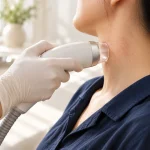
Vascular Laser for Facial Redness
Vascular lasers target hemoglobin within blood vessels.
When the wavelength and settings are appropriate, light energy is absorbed by the vessel and converted into heat, damaging the targeted vessel while aiming to preserve surrounding tissue.
Vascular laser treatment may be considered for:
- Persistent vascular facial redness
- Rosacea-associated erythema
- Telangiectasia
- Visible vessels around the nose
- Selected post-acne erythema
The choice of device depends on:
- Vessel size
- Vessel depth
- Color
- Skin tone
- Treatment area
- Underlying diagnosis
- Previous pigmentation problems
- Acceptable downtime
Pulsed Dye Laser (PDL)
Pulsed Dye Laser (PDL) is one of the most established vascular laser technologies.
It targets oxyhemoglobin and may be used for:
- Facial telangiectasia
- Persistent rosacea redness
- Selected vascular lesions
- Post-acne erythema
Rosacea management recommendations include PDL among treatment options for vascular erythema and telangiectasia.
V-Beam and Facial Redness
V-Beam is a well-known commercial platform based on Pulsed Dye Laser technology.
It is often discussed in relation to:
- Rosacea redness
- Visible facial vessels
- Telangiectasia
- Post-acne redness
- Certain vascular lesions
The effectiveness and recovery depend on the indication and treatment settings.
The device name alone does not determine whether treatment is appropriate.
Does Vascular Laser Cure Rosacea?
No.
Vascular laser can reduce visible vascular features such as:
- Persistent erythema
- Telangiectasia
But rosacea is a chronic inflammatory disorder.
A patient may still require:
- Trigger management
- Skincare
- Anti-inflammatory medication
- Maintenance treatment
New redness or vessels can also develop over time.
KTP Laser
KTP laser systems commonly use a wavelength around 532 nm and can target superficial red vessels.
They may be useful for selected:
- Facial telangiectasias
- Superficial vessels
- Rosacea-related redness
Because shorter wavelengths interact more strongly with epidermal melanin than some longer wavelengths, treatment parameters and patient selection are particularly important in more pigmented skin.
Nd:YAG Laser
Long-pulsed Nd:YAG at 1064 nm penetrates more deeply and may be useful for deeper or larger vascular structures in selected cases.
It is not automatically better than PDL.
Different vessels require different approaches.
The ideal wavelength depends on vessel depth, diameter, skin type and diagnosis.
IPL for Facial Redness
Intense Pulsed Light (IPL) is not technically a laser.
It produces a broad spectrum of light filtered to target selected chromophores, including hemoglobin and melanin.
IPL may be used for:
- Diffuse redness
- Telangiectasia
- Selected rosacea features
- Sun-related pigmentation occurring together with redness
Rosacea treatment algorithms include IPL as one possible option for persistent erythema in appropriately selected patients.
Vascular Laser vs IPL
Neither treatment is universally better.
Vascular Laser
Provides a more specific wavelength targeted toward blood vessels.
May be particularly useful for:
- Defined vessels
- Rosacea erythema
- Telangiectasia
IPL
Uses filtered broad-spectrum light.
May be useful when a patient has:
- Diffuse redness
- Multiple small vessels
- Mixed redness and photodamage
Selection should depend on the clinical problem rather than assuming one technology is always superior.
Vascular Laser vs Picosecond Laser
These treatments have different primary targets.
Vascular Laser
Primarily targets hemoglobin within blood vessels.
Picosecond Laser
More commonly used for selected pigmentation, tattoos and certain fractional applications depending on the device.
A patient whose main problem is vascular redness usually requires a treatment aimed at blood vessels rather than simply choosing a laser because it is described as “picosecond.
”
Vascular Laser vs Fractional Laser
Fractional lasers primarily target:
- Skin resurfacing
- Texture
- Acne scars
- Photoaging
They are not generally the most direct treatment for isolated visible vessels.
If someone has:
red acne marks + acne scars
a treatment plan may need to address the vascular redness and scar structure separately.
Treating Post-Acne Redness
Post-acne erythema may gradually improve without a procedure.
Treatment decisions depend on:
- Duration
- Severity
- Skin tone
- Active acne
- Associated scars
- Pigmentation
- Patient preference
Options that have been investigated include:
- Pulsed Dye Laser
- Nd:YAG-based devices
- IPL
- Selected fractional technologies
- RF Microneedling
- Topical treatments
Systematic reviews suggest laser and light-based devices can improve persistent post-acne erythema, but protocols vary and more high-quality comparative research is still needed.
Facial Redness vs Brown Acne Marks
This distinction is important.
Red or Pink Marks
Usually reflect vascular or inflammatory changes.
Treatment may involve:
- Time
- Acne control
- Anti-inflammatory measures
- Vascular treatment
Brown or Gray Marks
More likely represent PIH.
Treatment may involve:
- Sun protection
- Pigment-directed topical treatment
- Selected pigment procedures
Using a pigment laser for a primarily vascular red mark may not address the correct target.
Facial Redness vs Acne
Rosacea and acne can look similar because both may produce bumps and pustules.
However, rosacea often includes:
- Persistent central facial redness
- Flushing
- Burning
- Sensitive skin
- Visible vessels
Acne more commonly includes:
- Comedones
- Blackheads
- Whiteheads
- Nodules
- Typical acne distribution
Some people have both acne and rosacea.
Facial Redness vs Seborrheic Dermatitis
Seborrheic dermatitis tends to produce redness together with scale, particularly around:
- Nose
- Eyebrows
- Scalp
- Hairline
Rosacea more characteristically affects the central face and may involve flushing, vessels, papules and pustules.
However, overlap can occur.
Facial Redness vs Melasma
Melasma causes brown or gray-brown pigmentation rather than true vascular redness.
In darker or Asian skin, however, red and brown tones can sometimes be visually difficult to distinguish.
Clinical examination is therefore helpful before choosing pigment or vascular treatment.
Can Facial Redness Be Treated in Asian Skin?
Yes.
However, treatment needs to account for:
- Baseline skin tone
- Risk of Post-Inflammatory Hyperpigmentation
- Melasma
- Previous laser responses
- Tanning
- Sun exposure
- Device wavelength
- Energy
- Pulse duration
- Cooling
Published reviews emphasize that vascular and light-based treatment can be used in skin of color, but careful selection and conservative parameters may be necessary to reduce pigment complications.
Can Vascular Laser Cause PIH?
Yes.
Post-Inflammatory Hyperpigmentation can occur after laser treatment, particularly in more pigmented or recently tanned skin.
Risk may be influenced by:
- Skin phototype
- Energy
- Pulse parameters
- Sun exposure
- Treatment density
- Inflammation
- Previous tendency toward PIH
- Aftercare
This does not mean patients with Asian skin cannot receive vascular treatment.
It means the treatment plan should account for pigment risk.
What Does Vascular Laser Feel Like?
Patients commonly describe sensations such as:
- Snapping
- Brief heat
- Pinprick sensation
- Stinging
Cooling may be incorporated into treatment depending on the device.
Comfort varies with:
- Treatment area
- Energy
- Vessel size
- Device
- Individual pain sensitivity
What Happens After Vascular Laser?
Temporary effects may include:
- Redness
- Swelling
- Warmth
- Mild sensitivity
Depending on the treatment settings, some patients may also develop:
- Temporary darkening of vessels
- Bruising or purpura
- Mild crusting
- Temporary pigmentation changes
The amount of downtime varies substantially.
What Is Purpura After PDL?
Purpura means purple bruising caused by blood leaking into the skin after vascular laser treatment.
Some PDL settings are intentionally purpuric, while others aim to minimize bruising.
Whether purpura is desirable depends on:
- The condition
- Treatment strategy
- Vessel type
- Patient’s tolerance for downtime
More bruising does not automatically mean a better long-term result.
Aftercare for Facial Redness and Vascular Laser
General aftercare may include:
- Gentle cleansing
- Non-irritating moisturizer
- Sun protection
- Avoiding picking or scratching
- Avoiding harsh acids temporarily
- Avoiding strong Retinoids until the skin has recovered
- Avoiding excessive heat soon after treatment
- Following specific instructions from the treating clinician
Patients should follow the aftercare instructions for the exact procedure they received.
Exercise After Vascular Laser
Heavy exercise can increase facial blood flow and heat.
Depending on the treatment, patients may be advised to avoid strenuous exercise during the early recovery period.
The exact duration depends on the device, settings and skin response.
Sauna and Hot Shower After Treatment
Heat can temporarily increase redness and swelling.
Patients may therefore be advised to avoid:
- Sauna
- Steam rooms
- Very hot showers
- Hot yoga
- Excessive heat
during the initial recovery period.
Sun Exposure After Vascular Laser
Sun protection is particularly important after laser treatment.
Excessive ultraviolet exposure may increase:
- Irritation
- Pigment changes
- PIH
For patients traveling in Thailand, treatment timing should consider upcoming:
- Beach holidays
- Island trips
- Outdoor excursions
How Many Vascular Laser Treatments Are Needed?
There is no universal number.
Treatment requirements depend on:
- Diagnosis
- Severity
- Vessel size
- Vessel depth
- Area treated
- Skin type
- Laser parameters
- Individual response
Established telangiectasia and diffuse erythema may require more than one treatment.
Maintenance may also be needed because vascular changes can recur over time.
How Quickly Does Facial Redness Improve?
The answer depends on the cause.
Irritant dermatitis
May improve after the trigger is removed and the skin barrier recovers.
Inflammatory rosacea
Usually improves gradually with treatment.
Temporary flushing
May improve with trigger control and rosacea management.
Visible vessels
May improve after vascular treatment but can require repeated sessions.
Post-acne erythema
Can slowly fade naturally, although persistent cases may benefit from treatment.
Can Facial Redness Come Back?
Yes.
Recurrence depends on the cause.
Rosacea
Rosacea is chronic and can flare again.
Telangiectasia
Treated vessels may improve, but new vessels can develop over time.
Post-acne redness
Old marks may fade, but new red marks can develop if acne remains active.
Dermatitis
Redness can recur when the skin is re-exposed to the trigger.
Long-term management therefore often focuses on both treatment and prevention.
When Should You See a Dermatologist for Facial Redness?
Consider evaluation when redness:
- Persists for weeks or months
- Is worsening
- Frequently flushes without a clear reason
- Burns or stings
- Is associated with visible vessels
- Occurs with acne-like bumps
- Is associated with eye irritation
- Does not improve after stopping irritating products
- Follows prolonged steroid cream use
- Develops repeatedly after procedures
- Is difficult to distinguish from pigmentation
A dermatologist can help determine whether the main problem is vascular, inflammatory, allergic, pigmentary or a combination.
Warning Signs That Need Medical Assessment
Seek medical evaluation if facial redness is associated with:
- Significant swelling
- Blistering
- Skin ulceration
- Severe pain
- Fever
- Rapidly spreading rash
- Difficulty breathing
- Swelling of the lips or tongue
- Eye pain
- Light sensitivity
- Significant vision changes
- Persistent unexplained systemic symptoms
Eye involvement deserves particular attention in suspected rosacea.
Rosacea can affect the eyelids and ocular surface, and patients with significant ocular symptoms may require ophthalmological assessment.
Ocular Rosacea
Rosacea can affect the eyes as well as the skin.
Possible symptoms include:
- Dryness
- Grittiness
- Burning
- Red eyes
- Eyelid irritation
- Recurrent styes
- Light sensitivity
Severe eye pain, marked light sensitivity or reduced vision should not be treated as a cosmetic redness issue and requires prompt medical assessment.
What Happens During a Facial Redness Consultation in Bangkok?
A useful consultation should determine why the face is red before discussing treatment.
The dermatologist may assess:
- Location of redness
- Persistent vs temporary redness
- Flushing
- Visible blood vessels
- Papules and pustules
- Acne
- PIH
- Dermatitis
- Scaling
- Burning or stinging
- Eye symptoms
- Current skincare
- Topical steroid use
- Medication
- Previous lasers
- History of pigmentation after treatment
- Sun exposure
- Trigger factors
- Travel plans
The resulting treatment strategy may look like:
Persistent erythema + flushing → evaluate for rosacea
Inflammatory rosacea → skincare + appropriate medication
Visible telangiectasia → consider vascular laser/light treatment
Persistent post-acne redness → acne control ± vascular treatment
Scaling around nose/eyebrows → evaluate for seborrheic dermatitis
Burning after new skincare → consider irritant or allergic dermatitis
Eye symptoms → assess for ocular rosacea
This diagnosis-first approach prevents unnecessary procedures.
Choosing Treatment for Facial Redness in Bangkok
Before having treatment, useful questions include:
- What is causing my redness?
- Is this rosacea?
- Is the redness vascular or inflammatory?
- Are these visible telangiectasias?
- Could this be dermatitis?
- Are my acne marks red or brown?
- Do I need medication before laser?
- What wavelength or device is being used?
- Is it suitable for my skin tone?
- What is my risk of PIH?
- Will I bruise?
- How much downtime should I expect?
- How many treatments may be needed?
- Can the redness come back?
- How should I protect my skin afterward?
Treatment Approach by Cause
| Main Problem | Treatment Approach That May Be Considered |
|---|---|
| Rosacea with persistent redness | Gentle skincare, trigger management, redness-directed medication, selected vascular treatment |
| Rosacea with papules/pustules | Topical or oral anti-inflammatory treatment |
| Telangiectasia | Vascular laser or selected light-based treatment |
| Flushing | Trigger evaluation, rosacea management, selected medical therapy |
| Post-acne erythema | Acne control, observation or selected vascular/light treatment |
| Seborrheic dermatitis | Anti-inflammatory and antifungal-directed therapy as appropriate |
| Irritant dermatitis | Stop trigger, restore skin barrier |
| Allergic contact dermatitis | Allergen avoidance, treatment of inflammation, patch testing when indicated |
| Brown acne marks | PIH-directed treatment rather than vascular treatment |
| Redness + acne scars | Treat vascular redness and scar structure according to each problem |
| Eye symptoms with rosacea | Ocular assessment and appropriate medical treatment |
Facial Redness Treatment for Tourists and International Patients
Patients visiting Bangkok for a short period should consider:
- Whether several treatments are needed
- Whether bruising could occur
- Whether outdoor activity should be limited
- Whether follow-up is required
- Whether medication needs ongoing monitoring
- Whether they are traveling to a beach afterward
- How complications would be managed after returning home
A vascular procedure immediately before a major event or beach holiday may not always be ideal if temporary redness, swelling or bruising is expected.
Frequently asked questions
What causes facial redness?
Common causes include rosacea, flushing, visible blood vessels, acne-related redness, dermatitis, sun exposure and irritation from skincare.
Why are my cheeks always red?
Persistent cheek redness may result from rosacea, visible blood vessels, dermatitis, sun damage or other inflammatory conditions.
Is facial redness always rosacea?
No. Rosacea is common, but facial redness has many possible causes.
How do I know if I have rosacea?
Rosacea may involve persistent central facial redness, flushing, visible vessels, burning, sensitivity, inflammatory bumps or eye symptoms. Diagnosis is usually clinical.
Can Asian people have rosacea?
Yes. Rosacea occurs in Asian skin but may be underdiagnosed because redness is sometimes less visually obvious.
What do visible red veins on the face mean?
They are often telangiectasias—dilated superficial blood vessels. They may occur with rosacea, sun damage or other causes.
Can visible facial vessels disappear naturally?
Established telangiectasias often persist. Selected vascular laser or light treatments may reduce their appearance.
Why does my face turn red when I exercise?
Exercise increases blood flow and body temperature. This can cause normal flushing or trigger more pronounced flushing in people with rosacea.
Why does my face turn red in hot weather?
Heat causes blood vessels to dilate and is a common rosacea trigger.
Can spicy food cause facial flushing?
Yes, spicy foods can trigger flushing in susceptible individuals.
Can alcohol worsen facial redness?
Yes. Alcohol can trigger vasodilation and may worsen flushing in some patients.
Can stress cause facial redness?
Yes. Emotional stress can trigger flushing and may worsen rosacea symptoms.
Does sunscreen help facial redness?
Sun protection can reduce ultraviolet-triggered rosacea flares and prevent additional sun-related skin damage.
What skincare is best for redness-prone skin?
A gentle cleanser, moisturizer and sunscreen are usually preferable to aggressive exfoliation or multiple irritating active ingredients.
Can Retinol make facial redness worse?
Retinoids can cause irritation, dryness and redness, especially when introduced too aggressively.
Can over-exfoliating make my face red?
Yes. Excessive acids, scrubs or peeling can disrupt the skin barrier and cause irritant dermatitis.
Can steroid cream cause facial redness?
Long-term or inappropriate topical steroid use on the face can cause persistent redness, visible vessels and steroid-related rosacea-like eruptions.
What is the difference between flushing and persistent redness?
Flushing is temporary. Persistent erythema remains visible for much longer and may occur with rosacea or established vascular changes.
What is telangiectasia?
Telangiectasia means small, permanently dilated superficial blood vessels that are visible through the skin.
What is the best treatment for visible facial vessels?
Vascular laser or selected light-based treatments are commonly considered, but the best choice depends on vessel characteristics and skin type.
What is vascular laser?
It is a laser designed to target hemoglobin inside blood vessels while minimizing injury to surrounding tissue.
What is Pulsed Dye Laser?
Pulsed Dye Laser is a vascular laser commonly used for redness, telangiectasia and selected vascular skin conditions.
Is V-Beam the same as PDL?
V-Beam is a commercial platform that uses Pulsed Dye Laser technology.
Does V-Beam work for rosacea?
It may improve persistent vascular redness and visible vessels in selected rosacea patients, but it does not cure the underlying chronic condition.
Does vascular laser cure rosacea permanently?
No. It can reduce vascular signs, but rosacea can recur or develop new vascular changes.
How many vascular laser treatments are needed?
There is no fixed number. It depends on diagnosis, severity, vessel depth, skin type and response.
Does vascular laser hurt?
Patients commonly describe brief snapping, stinging or heat sensations.
Will I bruise after PDL?
Some treatment settings can cause temporary purpura or bruising, while other settings are designed to minimize this.
Is bruising necessary for PDL to work?
Not always. Treatment strategy depends on the condition and settings.
Can vascular laser cause pigmentation?
Yes. PIH can occur, particularly in more pigmented or recently tanned skin.
Is vascular laser safe for Asian skin?
It can be used in Asian skin, but wavelength, energy, pulse duration, cooling and PIH risk should be carefully considered.
What is the difference between PDL and IPL?
PDL uses a specific laser wavelength, while IPL produces filtered broad-spectrum light. Both can be used for selected vascular concerns.
Is IPL good for facial redness?
IPL may help selected patients with diffuse erythema, telangiectasia or mixed photodamage.
Is Nd:YAG good for facial veins?
Long-pulsed Nd:YAG may be useful for selected deeper or larger vessels.
Is Picosecond Laser good for redness?
Picosecond technology is generally not the primary first choice for isolated vascular redness. Treatment should target the relevant chromophore—usually hemoglobin for vascular redness.
Can Fractional Laser remove redness?
Fractional lasers are primarily used for resurfacing, texture and acne scars rather than isolated superficial blood vessels.
What are the red marks left after acne?
They may represent post-inflammatory erythema caused by residual vascular and inflammatory changes.
Are red acne marks scars?
Usually not. Flat red marks are different from structural acne scars.
Are red acne marks the same as brown acne marks?
No. Red marks are primarily vascular/inflammatory, while brown marks usually represent PIH.
Can red acne marks fade naturally?
Yes. Some improve gradually over time.
Can laser treat post-acne redness?
Yes. Vascular and light-based devices have been studied for persistent post-acne erythema.
Can rosacea look like acne?
Yes. Papulopustular rosacea may produce acne-like bumps, although comedones are more characteristic of acne.
Can rosacea and acne occur together?
Yes.
Can rosacea and seborrheic dermatitis occur together?
Yes. The conditions may overlap.
Why does my skin burn even when it does not look very red?
Burning and stinging can occur with rosacea and skin-barrier dysfunction, and visible erythema may be subtle in darker skin tones.
Can facial redness come back after treatment?
Yes. Rosacea may flare again and new blood vessels can develop over time.
Should I see a dermatologist before having redness laser treatment?
Yes, particularly when the diagnosis is uncertain, the redness is persistent, inflammatory lesions are present or the patient has a history of pigmentation after procedures.
When is facial redness a medical concern?
Seek medical evaluation for severe or rapidly spreading redness, significant swelling, blistering, eye pain, vision changes, systemic symptoms or an unusual persistent rash.
Related conditions
-
Rosacea Rosacea Rosacea is a chronic inflammatory skin condition that mainly affects the central face. It may cause persistent redness, frequent flushing, visible blood vessels, acne-like bumps, burning or sensitive skin, and sometimes eye symptoms.

-
Broken Capillaries Broken Capillaries Broken capillaries are small, visible red, pink, or purple blood vessels that commonly appear around the nose, cheeks, chin, and other areas of the face. The medical term is telangiectasia—small superficial blood vessels that have become permanently widened and visible through the skin.

-
Post-Acne Redness Post-Acne Redness Post-acne redness refers to flat red or pink marks that remain after an inflamed pimple has healed. Dermatologists often call this post-inflammatory erythema (PIE) or post-acne erythema (PAE).
-
Vascular Laser / V-Beam Vascular Laser / V-Beam Persistent facial redness, visible small blood vessels and recurrent flushing are common reasons patients seek dermatologic care. Although these concerns are often grouped together as “redness,