








PN vs PDRN Skin Boosters: Understanding Rejuran, Plinest, and Vitaran
Are PN and PDRN skin boosters the same treatment? And how do Rejuran, Plinest, and Vitaran compare?

Are PN and PDRN skin boosters the same treatment? And how do Rejuran, Plinest, and Vitaran compare?
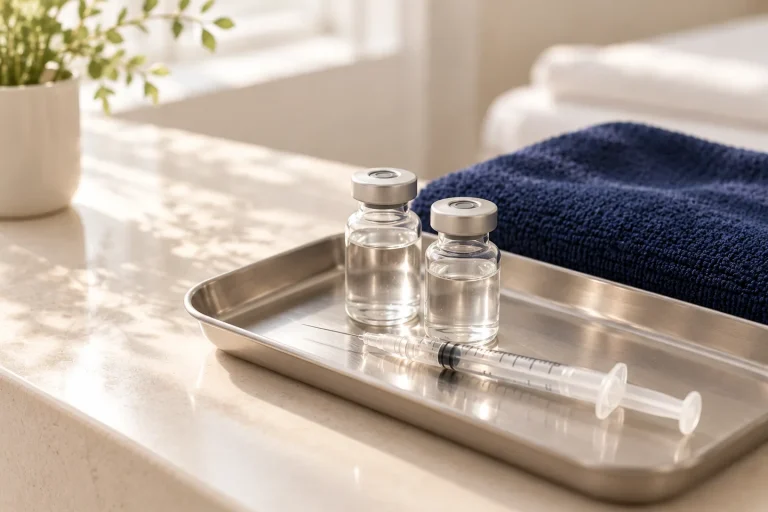
Polynucleotides (PN) and polydeoxyribonucleotides (PDRN) are DNA-derived materials that have attracted attention in dermatology and aesthetic medicine. They are often discussed for skin rejuvenation, fine lines, skin texture, and tissue repair.
Although the terms are sometimes used interchangeably, PN and PDRN are not necessarily identical materials or interchangeable injectable treatments. Their molecular characteristics, manufacturing processes, formulations, and intended medical uses can differ.
Rejuran, Plinest, and Vitaran are product families associated with polynucleotide-based injectable treatments. However, their exact formulations and indications must be assessed individually.
Most importantly, there is currently insufficient high-quality head-to-head evidence to establish that one of these three brands consistently produces superior skin rejuvenation results.
For patients considering skin boosters in Bangkok, understanding what is being injected—and what it can realistically achieve—is more important than choosing a product based on popularity alone.
What Is a PN Skin Booster?
PN stands for polynucleotide.
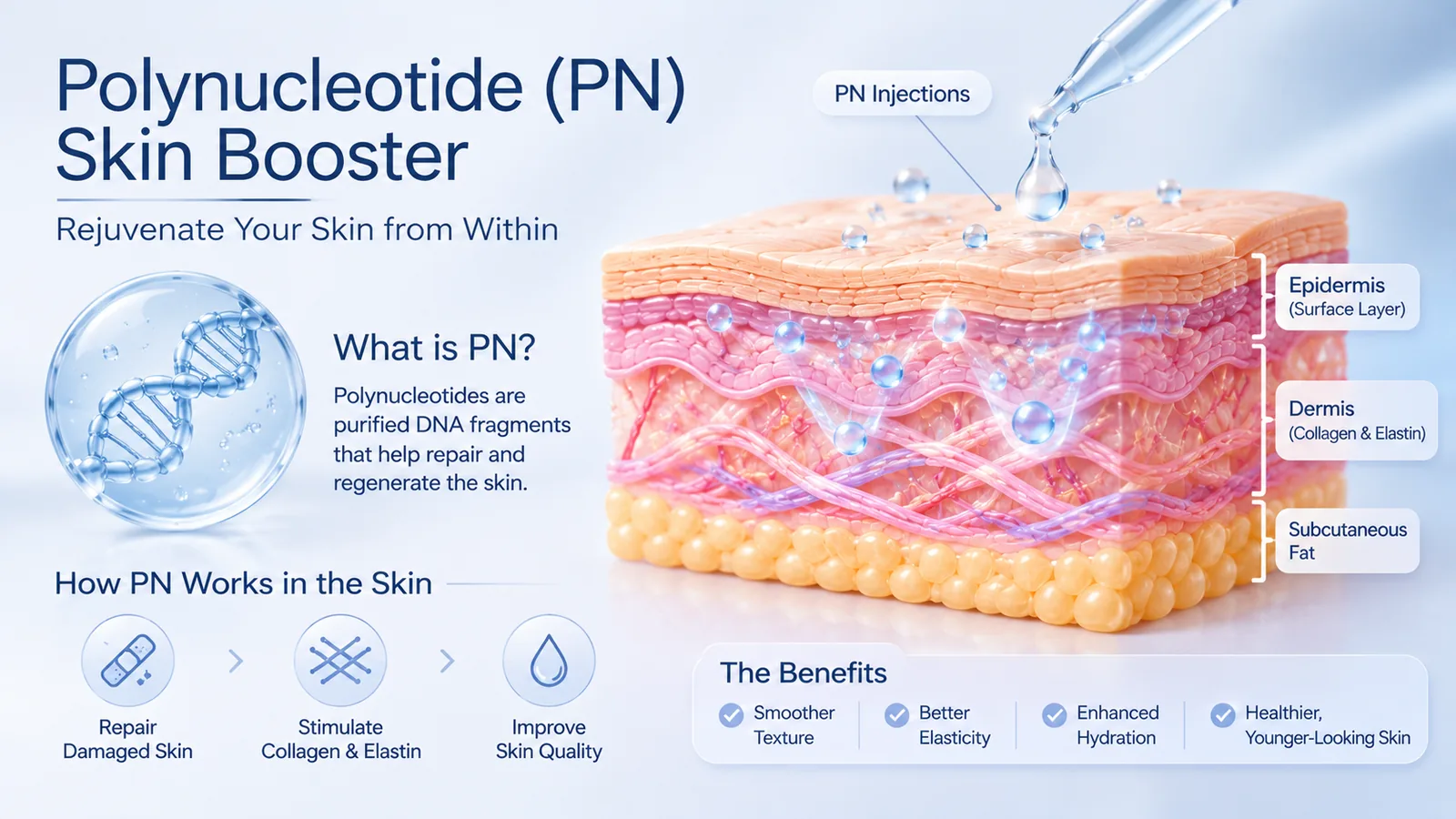
Polynucleotides are chains of nucleotides, the molecular building blocks of DNA and RNA. Injectable PN preparations used in aesthetic medicine are typically purified DNA-derived materials.
These preparations are being investigated for potential effects on biological processes involved in tissue repair, inflammation, and maintenance of the skin’s extracellular matrix.
The extracellular matrix is the network of structural components surrounding skin cells, including collagen and other proteins that contribute to the skin’s support and function.
What Are PN Injections Used For?
Depending on the exact formulation, PN injections may be considered for selected concerns such as:
- Fine superficial lines
- Mild changes in skin texture
- Crepey-looking skin
- Reduced skin elasticity
- Certain delicate facial areas
- Selected skin-quality concerns
However, the clinical evidence varies considerably between products and indications.
PN injections should not be expected to replace treatments designed to correct deep wrinkles, significant skin sagging, facial volume loss, or established acne scars.
What Is PDRN?
PDRN stands for polydeoxyribonucleotide.
PDRN preparations contain DNA-derived fragments. They have been studied in medical contexts involving tissue repair and wound healing.
Research has explored potential biological mechanisms, including pathways associated with adenosine A2A receptors and tissue repair.
However, these findings are dependent on the preparation and clinical setting.
Evidence supporting a particular PDRN preparation for wound healing does not automatically establish that a cosmetic injectable containing DNA fragments will improve wrinkles, pores, or skin elasticity.
Patients should distinguish between research on a medical preparation and marketing claims about a commercial aesthetic product.
PN vs PDRN: What Is the Difference?
Both PN and PDRN refer to nucleotide-based materials, but the terms are not sufficient to identify a specific injectable formulation.
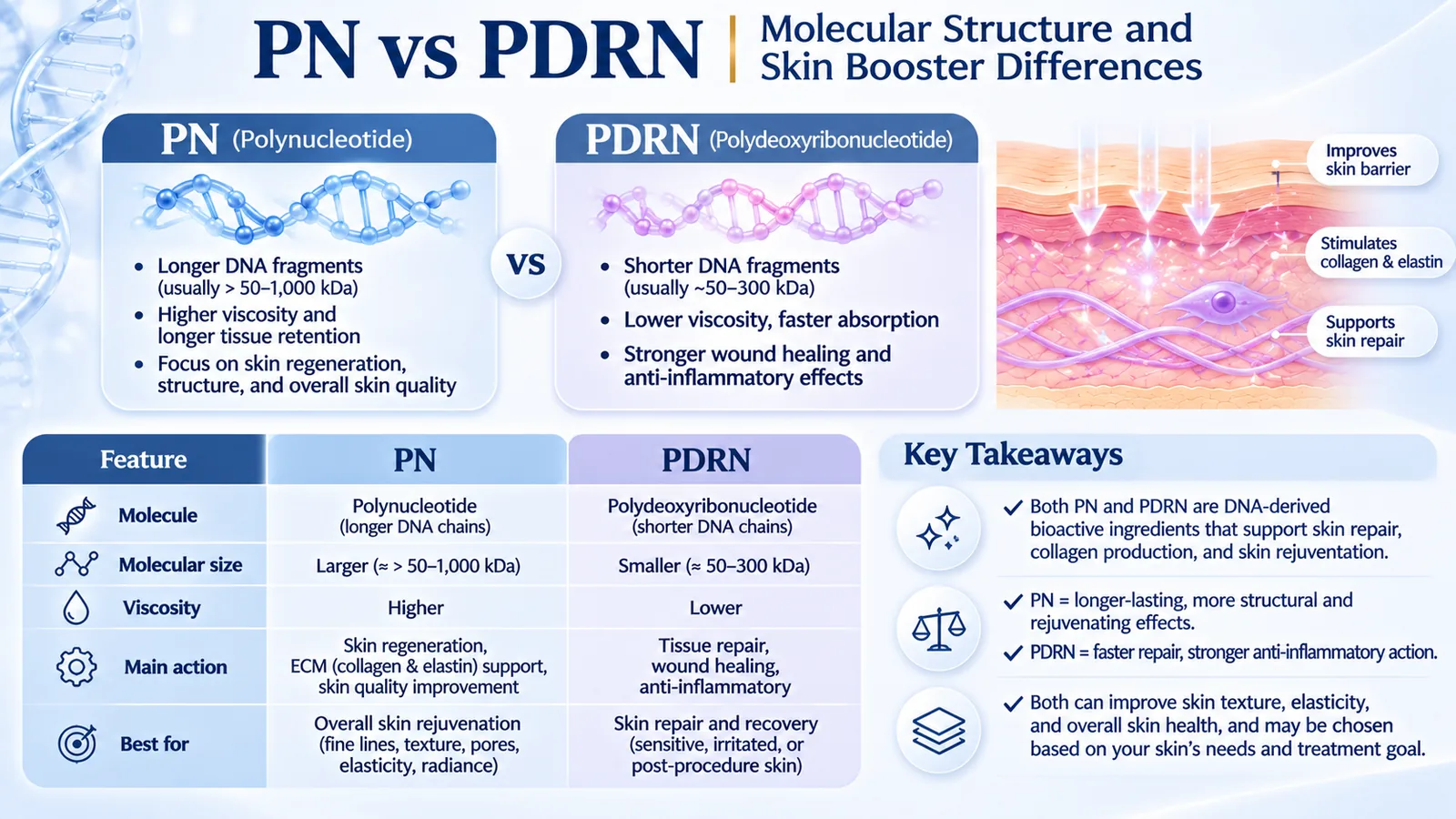
They are sometimes distinguished by molecular size or chain length. However, these characteristics are not standardized across every commercial product.
The exact molecular profile depends on the manufacturer and production process.
| Feature | PN | PDRN |
|---|---|---|
| Full name | Polynucleotide | Polydeoxyribonucleotide |
| General composition | Chains of nucleotides | DNA-derived nucleotide fragments |
| Common discussion in aesthetic medicine | Skin quality and rejuvenation | Tissue repair and skin recovery |
| Clinical research | Selected aesthetic and medical applications | Tissue repair and wound-healing applications |
| Standardized molecular size across all products? | No | No |
| Proven to reverse skin aging? | No | No |
| Interchangeable with every other DNA-derived injectable? | No | No |
Is PN Stronger Than PDRN?
Not necessarily.
It is sometimes claimed that PN is more powerful because it contains longer molecular chains.
However, molecular size alone does not establish clinical superiority.
Treatment outcomes depend on the formulation, concentration, molecular characteristics, injection technique, indication, and quality of supporting evidence.
There is insufficient robust comparative evidence to conclude that PN is universally more effective than PDRN for cosmetic skin rejuvenation.
Is PDRN Better for Skin Repair?
Certain PDRN preparations have been investigated in tissue-repair settings.
That does not mean every PDRN skin booster has been proven superior for post-procedure recovery or skin healing.
The specific product, route of administration, and clinical indication matter.
Rejuran vs Plinest vs Vitaran: How Do They Compare?
Rejuran, Plinest, and Vitaran are commercial product families associated with polynucleotide-based treatments.
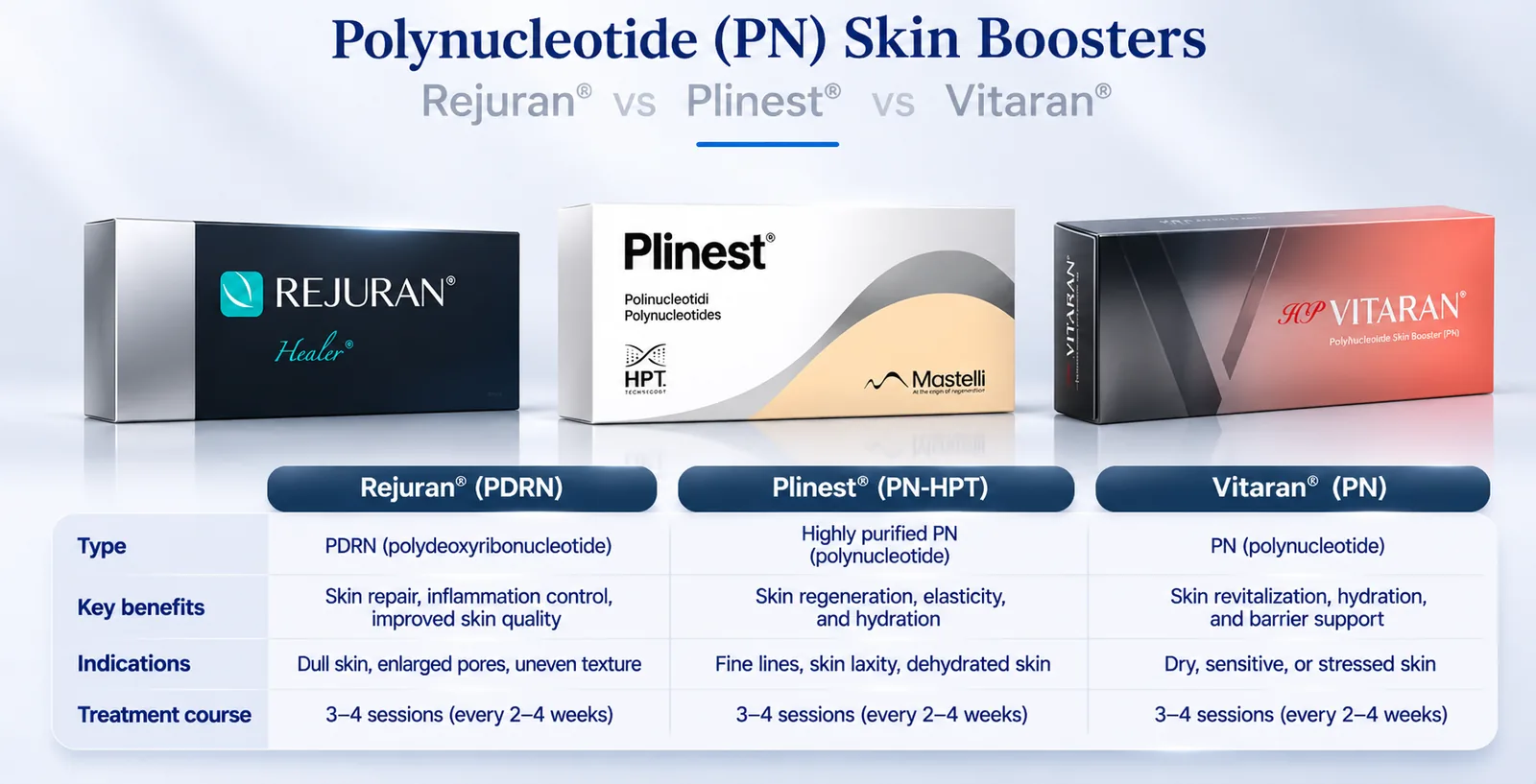
They should not be treated as identical products simply because they belong to a broadly similar category.
| Feature | Rejuran | Plinest | Vitaran |
|---|---|---|---|
| Country of origin | South Korea | Italy | South Korea |
| Associated manufacturer | PharmaResearch | Mastelli | BR Pharm |
| Main product category | PN-based injectables | PN-based injectables | PN-based injectables |
| Distinguishing information | Multiple formulations, including products for selected facial areas | Manufacturer describes PN-HPT technology | Product-specific indications, including selected fine wrinkles |
| Commonly discussed goals | Fine lines and skin quality | Fine lines, elasticity, and skin quality | Selected fine wrinkles and skin-quality concerns |
| Proven superior to the other brands? | No | No | No |
This table describes product families, not the exact specifications of every available formulation.
The manufacturer’s documentation and applicable regulatory information should be checked before making product-specific claims.
Rejuran: Korean Polynucleotide Skin Booster
Rejuran is associated with PharmaResearch in South Korea.
The brand includes different formulations intended for different treatment applications.
Rejuran Healer
Rejuran Healer is commonly discussed for general skin-quality concerns, including fine lines and uneven texture.
Patients may experience subtle improvements in selected skin characteristics, but the degree and duration of benefit remain uncertain.
Rejuran I
Rejuran I is marketed for delicate areas, particularly around the eyes.
It may be discussed for fine lines or crepey-looking skin, but it should not be expected to correct under-eye hollowing, prominent eye bags, or all causes of dark circles.
Rejuran HB
Certain Rejuran HB formulations include additional ingredients such as hyaluronic acid and lidocaine.
These ingredients can affect the formulation’s characteristics and treatment experience.
Patients should confirm the exact product and disclose any relevant allergies.
Is Rejuran PN or PDRN?
Rejuran injectable skin rejuvenation products are generally described as polynucleotide-based formulations.
However, consumers should not assume that every product sold under the broader brand name has identical composition or medical indications.
The exact formulation should always be verified.
Plinest: Italian Polynucleotide Treatment
Plinest is a polynucleotide-based product family associated with the Italian manufacturer Mastelli.
The manufacturer describes a specialized production technology known as PN-HPT.
What Is PN-HPT?
PN-HPT is the manufacturer’s terminology for polynucleotides processed using its proprietary technology.
It is not a separate universally standardized category of skin booster.
What Is the Concentration of Plinest?
According to manufacturer product information, standard Plinest contains 40 mg of polynucleotides in 2 mL, corresponding to a concentration of 2%.
Other formulations may differ.
Is Plinest Better Than Rejuran?
There is insufficient high-quality direct comparative evidence to conclude that Plinest consistently produces better results than Rejuran.
Differences in concentration or manufacturing technology do not automatically establish superior effectiveness.
Vitaran: Korean Polynucleotide Skin Booster
Vitaran is associated with BR Pharm in South Korea.
Product information for HP VITARAN PN Skinbooster identifies polynucleotide sodium as an ingredient.
A Korean product indication relates to temporary improvement of fine wrinkles near the outer corners of the eyes.
Is Vitaran PN or PDRN?
The HP VITARAN PN Skinbooster formulation is identified as a polynucleotide-based product.
Patients should verify the exact formulation rather than assuming that every Vitaran product has identical ingredients.
Is Vitaran Better Than Rejuran or Plinest?
There is insufficient high-quality head-to-head evidence to establish that Vitaran is more effective for overall skin rejuvenation.
Results from a particular indication should not be generalized to every facial area or skin concern.
Which Is Better for Skin Rejuvenation: Rejuran, Plinest, or Vitaran?
There is no evidence-based universal winner.
The most appropriate choice depends on the specific skin problem, available formulations, clinical evidence, and the patient’s treatment goals.
| Skin concern | Clinical consideration |
|---|---|
| Fine superficial wrinkles | A suitable PN formulation may be discussed, with realistic expectations |
| Crepey skin | Assess sun damage, skin thickness, and the cause of fine wrinkling |
| Mild textural irregularities | PN may be considered, but other treatments may have stronger evidence |
| Enlarged pores | Identify whether oil production, acne scarring, or skin laxity contributes |
| Atrophic acne scars | Scar-directed procedures are usually more important than PN alone |
| Dynamic wrinkles | Botulinum toxin may be more appropriate |
| Facial volume loss | Volume-restoring treatments may be more appropriate |
| Significant skin sagging | PN alone is unlikely to provide meaningful lifting |
| Pigmentation | Diagnosis-specific pigment treatment is generally more appropriate |
| Dry skin | Skin-barrier care and moisturizers are first-line considerations |
The best treatment is determined by the underlying problem, not simply by the brand name.
Can PN or PDRN Improve Fine Lines?
Some studies of polynucleotide-based aesthetic treatments have reported improvements in selected skin-quality measures.
However, evidence remains limited by small study populations, differences between products, inconsistent treatment protocols, and variable outcome measurements.
Fine lines also have different causes.
Wrinkles associated with repeated facial movement may respond better to botulinum toxin.
Wrinkles caused by sun damage may require a combination of sun protection, topical treatment, and selected resurfacing procedures.
PN injections may be considered for certain superficial concerns, but deep wrinkles should not be expected to disappear.
Can PN or PDRN Improve Acne Scars?
Acne scars form when inflammation damages the skin and disrupts normal tissue repair.
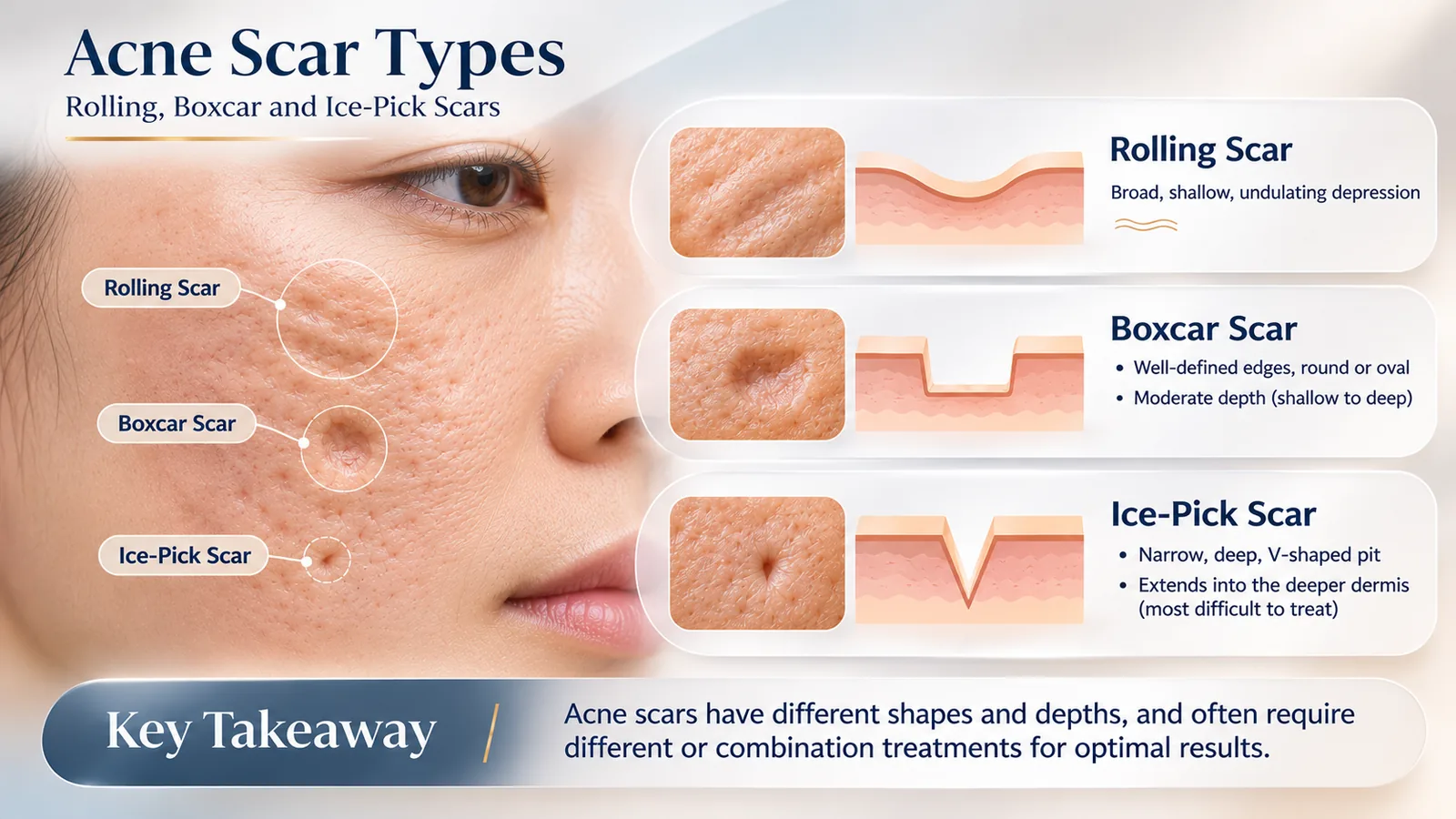
Depressed acne scars can have different shapes and depths, including ice-pick, boxcar, and rolling scars.
These differences are important because treatment selection depends on scar structure.
Established treatments may include:
- Subcision for selected tethered rolling scars
- TCA CROSS for selected narrow, deep scars
- Fractional laser resurfacing
- Microneedling or radiofrequency microneedling in appropriate patients
- Selected surgical scar techniques
PN or PDRN injections should not be considered established stand-alone replacements for these procedures.
Evidence supporting their use as additional treatments for acne scars remains limited.
Can PN or PDRN Reduce Enlarged Pores?
Visible pores can be influenced by oil production, genetics, acne-related changes, and age-related changes in skin structure.
No PN or PDRN product has been established as a reliably effective treatment for permanently shrinking pores.
Patients with enlarged pores should first be assessed for contributing factors such as active acne, excess oil production, and acne scarring.
Treatment may involve topical retinoids, acne management, or selected resurfacing procedures, depending on the cause.
Can PN or PDRN Improve Skin Elasticity?
Some clinical research has investigated changes in skin elasticity following polynucleotide-based treatments.
However, the studies are heterogeneous, and the findings cannot automatically be applied to every product.
Patients with significant laxity should not expect PN or PDRN injections to produce substantial facial lifting.
Can PN or PDRN Stimulate Collagen?
Laboratory research has explored potential effects of nucleotide-based materials on tissue repair and extracellular matrix processes.
However, claims that a specific injection produces major collagen regeneration or reverses skin aging require stronger clinical evidence.
Biological activity observed in laboratory studies is not equivalent to proven long-term cosmetic improvement.
PN and PDRN vs Hyaluronic Acid Skin Boosters
Hyaluronic acid is a naturally occurring component of the skin that helps bind water.
Certain injectable hyaluronic acid formulations are intended to improve hydration or selected skin-quality characteristics.
PN and PDRN products are different materials investigated for different biological effects.
Neither category is universally superior.
The most suitable treatment depends on whether the primary concern is hydration, fine lines, skin texture, volume loss, or another problem.
PN and PDRN vs Botulinum Toxin and Dermal Fillers
Botulinum toxin temporarily reduces muscle activity and is particularly useful for selected dynamic wrinkles.
Dermal fillers may be used to restore facial volume or improve specific contours.
PN and PDRN injections are generally discussed for skin-quality concerns.
These treatments have different purposes and should not be presented as interchangeable.
How Many PN or PDRN Sessions Are Needed?
Treatment protocols vary according to the product, indication, and clinician’s assessment.
Some aesthetic protocols involve several sessions separated by weeks.
However, there is no single evidence-based schedule applicable to all PN and PDRN products.
Patients should receive an individualized explanation of the proposed treatment course.
When Will Results Appear?
If improvement occurs, changes in skin quality generally develop gradually rather than immediately.
The timeline varies between products and patients.
Temporary swelling after an injection should not be mistaken for lasting skin rejuvenation.
How Long Do Results Last?
The duration of benefit remains uncertain across many PN and PDRN formulations.
Long-term comparative studies are limited.
Patients should be cautious about promises of fixed treatment duration or permanent results.
What Happens During a PN Skin Booster Consultation?
A dermatologist should assess the skin concern before recommending an injectable treatment.
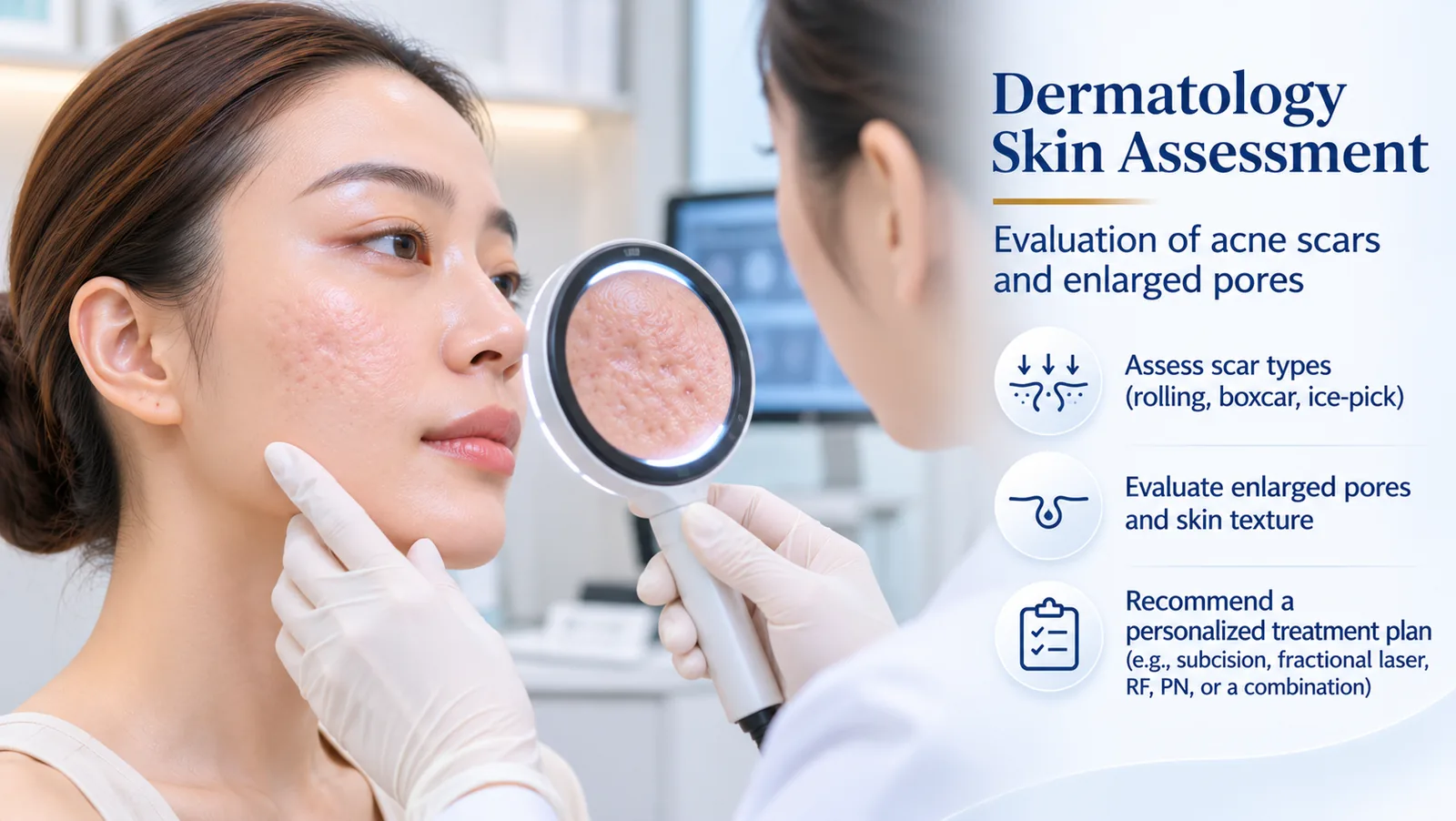
The consultation may include:
- Reviewing the patient’s goals and medical history
- Examining fine lines, skin texture, pigmentation, and skin laxity
- Identifying whether the concern is superficial or structural
- Reviewing previous treatments and allergies
- Discussing the exact proposed formulation
- Explaining the available evidence and alternatives
- Reviewing risks, downtime, and follow-up
- Confirming product authenticity and applicable regulatory status
Patients should be able to ask what is being injected, why that formulation is recommended, and what improvement is realistically expected.
Side Effects and Risks of PN and PDRN Injections
Common short-term injection reactions may include:
- Redness
- Swelling
- Small raised bumps
- Tenderness
- Bruising
Potential complications include infection, allergic or inflammatory reactions, persistent nodules, and tissue injury.
Safety data are not equally extensive for all formulations.
Warning Signs After Treatment
Seek prompt medical assessment if you develop increasing pain, spreading redness, warmth, pus, fever, or persistent painful swelling.
Sudden severe pain, unusual skin blanching or mottling, and rapidly worsening discoloration require urgent evaluation.
Sudden changes in vision after any facial injection require emergency medical care.
Although vascular complications are better documented for conventional dermal fillers, concerning symptoms after any facial injection should not be ignored.
Who Should Avoid or Postpone PN or PDRN Injections?
Treatment may need to be postponed or avoided in patients with:
- Active skin infection
- Significant inflammation at the injection site
- Known allergy to product ingredients
- Certain medical conditions affecting healing
- Pregnancy or breastfeeding, because adequate safety data are lacking
Patients taking anticoagulant or antiplatelet medication should inform their clinician.
Do not stop prescribed medication without medical advice.
Patients with a history of severe allergies should discuss the complete formulation, including any added anesthetic or other ingredients.
Aftercare Following PN or PDRN Injections
Follow the treating clinician’s instructions.
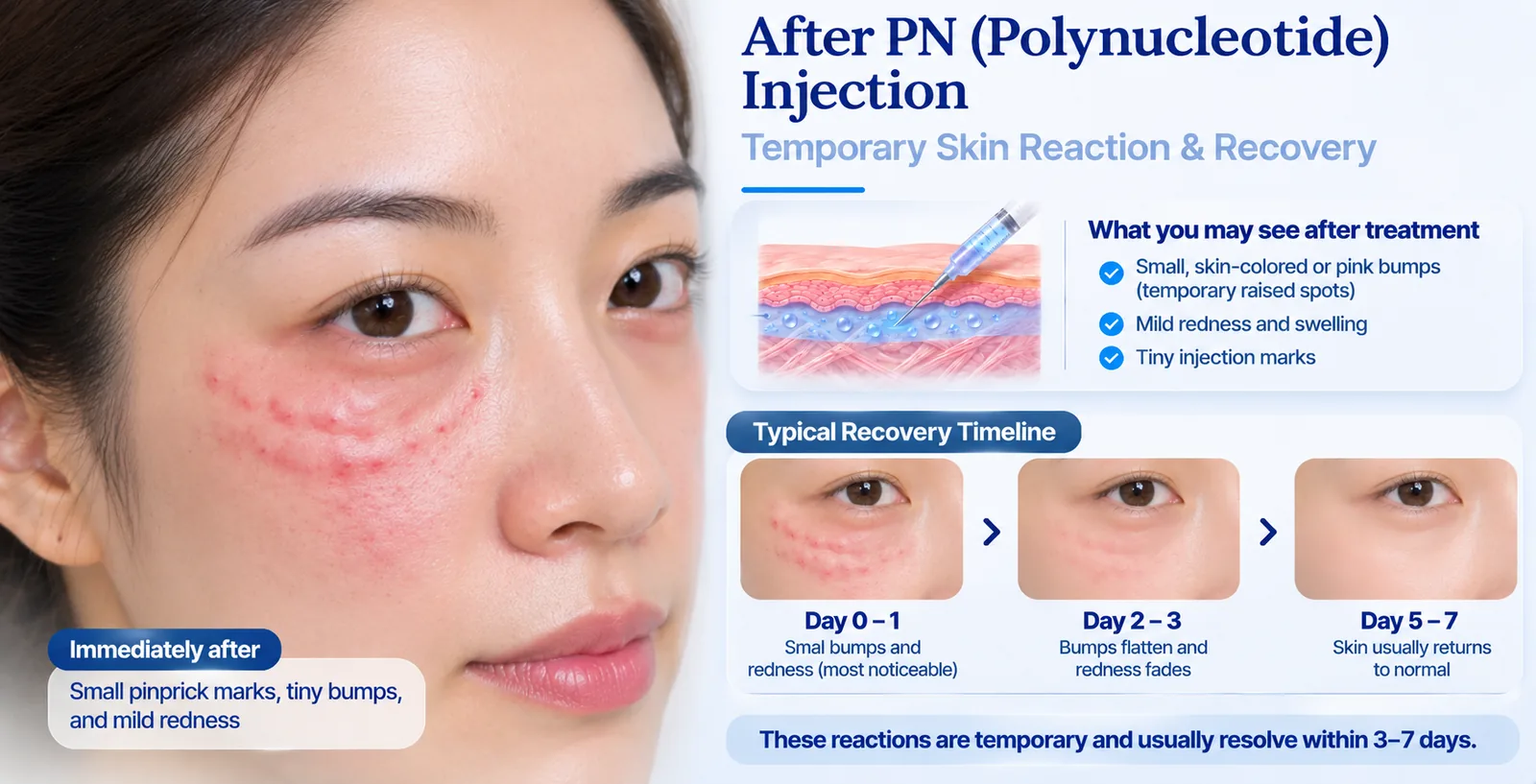
General recommendations may include:
- Keep injection sites clean.
- Avoid rubbing or massaging raised bumps.
- Use gentle skincare products.
- Avoid irritating treatments during early recovery.
- Protect the skin from excessive sun exposure.
- Follow individualized advice about makeup, exercise, and heat exposure.
- Contact the clinic if symptoms worsen.
Do not self-prescribe topical antibiotics or steroids for injection-site reactions.
Are PN and PDRN Skin Boosters Approved in Thailand?
Regulatory status must be checked for each exact product and formulation.
Approval or registration in South Korea, Italy, or another country does not automatically establish that a product is authorized for the same use in Thailand.
Patients should ask the clinic to identify the specific product and verify its applicable Thai Food and Drug Administration status.
Availability and regulatory status may change over time.
PN and PDRN Skin Booster Consultation in Bangkok
Clear Skin Dermatology is a medical dermatology and skin cancer clinic located in Asoke, Bangkok, Thailand.
Patients interested in PN or PDRN skin boosters can seek a dermatology consultation to discuss concerns such as fine lines, uneven skin texture, acne scars, or early changes in skin elasticity.
A dermatologist can help distinguish concerns that may be suitable for skin-quality treatments from those requiring different approaches.
For example, deep acne scars may require scar-directed procedures, dynamic wrinkles may respond better to botulinum toxin, and significant facial volume loss may require another treatment strategy.
Not every patient needs an injectable skin booster.
Patients interested specifically in Rejuran, Plinest, or Vitaran should contact the clinic to confirm current product availability, exact formulations, and applicable Thai regulatory status.
Clear Skin Dermatology
Medical Dermatology & Skin Cancer Clinic
Asoke, Bangkok, Thailand
Frequently Asked Questions About PN and PDRN Skin Boosters
1. What is the main difference between PN and PDRN?
Both involve nucleotide-based materials, but their molecular characteristics, formulations, and medical applications may differ. They should not automatically be treated as interchangeable.
2. Is PN better than PDRN for skin rejuvenation?
There is insufficient robust comparative evidence to establish that PN is universally more effective than PDRN.
3. Is Rejuran PN or PDRN?
Rejuran injectable skin rejuvenation products are generally described as PN-based. The exact formulation should be verified.
4. Is Plinest PN or PDRN?
Plinest is a PN-based product family associated with Mastelli and its PN-HPT manufacturing technology.
5. Is Vitaran PN or PDRN?
HP VITARAN PN Skinbooster is identified as containing polynucleotide sodium. Other formulations should be checked individually.
6. Which is better: Rejuran, Plinest, or Vitaran?
There is insufficient high-quality head-to-head evidence to establish that one brand is consistently superior.
7. Can PN skin boosters reduce wrinkles?
They may offer modest improvement in selected superficial skin-quality concerns, but deep wrinkles are unlikely to disappear.
8. Can PDRN improve skin healing?
Certain PDRN preparations have been studied for tissue repair, but findings cannot be generalized to every aesthetic injectable.
9. Can PN or PDRN treat acne scars?
Evidence is insufficient to recommend them as stand-alone replacements for established scar treatments such as subcision or fractional laser.
10. Can PN reduce pore size?
There is no strong evidence that PN injections permanently shrink enlarged pores.
11. Can PN stimulate collagen?
Potential biological effects have been investigated, but substantial clinical collagen regeneration is not guaranteed.
12. Is PN better than hyaluronic acid?
Neither is universally superior. The best option depends on the treatment goal and specific formulation.
13. Is PN the same as a dermal filler?
No. PN products are generally discussed for skin quality, while dermal fillers are commonly used for volume and contour correction.
14. How many PN treatments are needed?
The schedule varies by product and indication. There is no universal evidence-based number of sessions.
15. How long does PN last?
The duration of benefit is uncertain and varies between formulations and patients.
16. Do PN injections hurt?
They may cause discomfort, stinging, or pressure. Anesthetic measures may help.
17. How much downtime is needed?
Mild swelling, redness, and raised bumps often improve over several days, while bruising may last longer.
18. Are PN and PDRN safe?
All injectable procedures carry risks. Safety evidence varies between products, and complications can occur.
19. Are Rejuran, Plinest, and Vitaran approved in Thailand?
The status of each exact formulation must be verified with the Thai FDA. Overseas authorization does not automatically establish Thai approval.
20. Where can I consult a dermatologist about PN skin boosters in Bangkok?
Patients can contact Clear Skin Dermatology in Asoke, Bangkok, for an individualized skin assessment and discussion of suitable treatment options.
Conclusion: PN vs PDRN and Choosing Between Rejuran, Plinest, and Vitaran
PN and PDRN are related nucleotide-based materials, but they are not automatically identical or interchangeable.
Rejuran, Plinest, and Vitaran are polynucleotide-based product families with differences in formulation, manufacturing, and product-specific indications.
Although these treatments have attracted interest for skin rejuvenation, there is insufficient high-quality evidence to declare one brand universally superior or to promise dramatic anti-aging results.
The most useful decision is not simply whether to choose PN or PDRN. It is whether a nucleotide-based injectable is appropriate for the patient’s actual skin concern.
For patients seeking skin rejuvenation in Bangkok, a dermatology consultation can help establish realistic goals, assess the evidence, and identify the most suitable treatment options.
Clear Skin Dermatology — Asoke, Bangkok, Thailand
Medical disclaimer: This article is for general educational purposes and does not replace individualized medical advice. Injectable procedures carry risks. Exact product composition, indications, availability, and regulatory status should be verified before treatment.
Medical References
- Lampridou S, et al. (2025). The Effectiveness of Polynucleotides in Esthetic Medicine: A Systematic Review. Journal of Cosmetic Dermatology. This review included nine studies involving 219 patients and found promising results, while emphasizing the need for stronger research.
- Polynucleotides and Polydeoxyribonucleotides for Skin Rejuvenation, Postoperative Scar Prevention, and Wound Healing (2026). A systematic review of seven randomized trials involving 183 participants. The authors reported potential benefits but highlighted small study sizes, varied formulations, and limited comparative evidence.
- The Effects of Polydeoxyribonucleotide on Wound Healing and Tissue Regeneration (2020). A systematic review examining tissue-repair mechanisms and the potential role of adenosine A2A receptor signaling.
- Polynucleotides in Skin Regeneration: Targeting the Adenosine A2A Receptor and Salvage Pathway (2024). Dermatologic Surgery. A discussion of proposed biological mechanisms relevant to skin regeneration.
Medically reviewed by
Reviewed on
Related articles
-
Aesthetic & Skin Rejuvenation Rejuran vs Plinest vs Vitaran for Acne Scars, Enlarged Pores, and Skin Texture Which is better for acne scars and enlarged pores: Rejuran, Plinest, or Vitaran?

-
Aesthetic & Skin Rejuvenation Rejuran vs Plinest vs Vitaran for Anti-Aging and Skin Rejuvenation: Which Is Better? Rejuran, Plinest, and Vitaran are polynucleotide-based injectable product families increasingly discussed for skin rejuvenation. They are often promoted for improving fine lines, skin texture, and elasticity.

-
Aesthetic & Skin Rejuvenation Rejuran vs Plinest vs Vitaran: Which PN Skin Booster Is Best in Bangkok? Rejuran, Plinest, and Vitaran are injectable skin rejuvenation products associated with polynucleotides (PN), a group of DNA-derived molecules being studied for their potential to improve skin quality.