





























HIFU (Ultraformer III) vs Monopolar RF (XERF): Which Skin Tightening Treatment Is Right for You?
If you are considering nonsurgical facial lifting or skin tightening, you may have come across two popular technologies: HIFU (Ultraformer III) and monopolar radiofrequency (XERF).

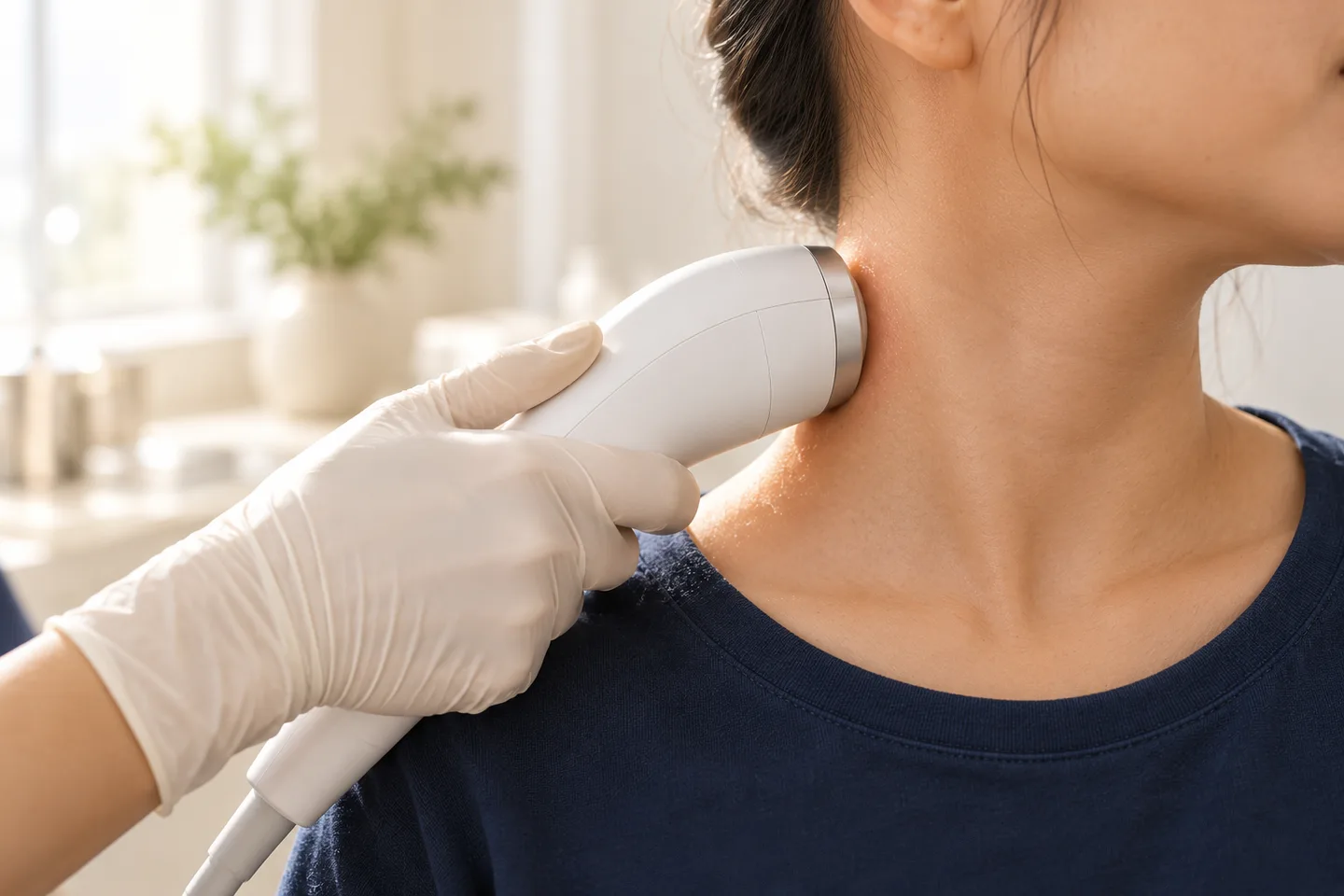
If you are considering nonsurgical facial lifting or skin tightening, you may have come across two popular technologies: HIFU (Ultraformer III) and monopolar radiofrequency (XERF).
Both treatments use controlled energy to heat tissues beneath the skin, stimulate collagen remodeling, and improve mild to moderate skin laxity. However, they work differently and may be suited to different facial concerns.
The main difference is that Ultraformer III uses focused ultrasound energy to target selected tissue depths, while XERF uses monopolar radiofrequency energy to heat tissue through an adjustable treatment approach.
Neither treatment is automatically better for everyone. The appropriate choice depends on skin thickness, facial fat distribution, degree of sagging, treatment goals, medical history, and individual tolerance.
This guide explains the differences between HIFU and monopolar RF, including their mechanisms, expected results, discomfort, recovery, risks, and how dermatologists select an appropriate treatment.
What Is HIFU (Ultraformer III)?
HIFU stands for high-intensity focused ultrasound.
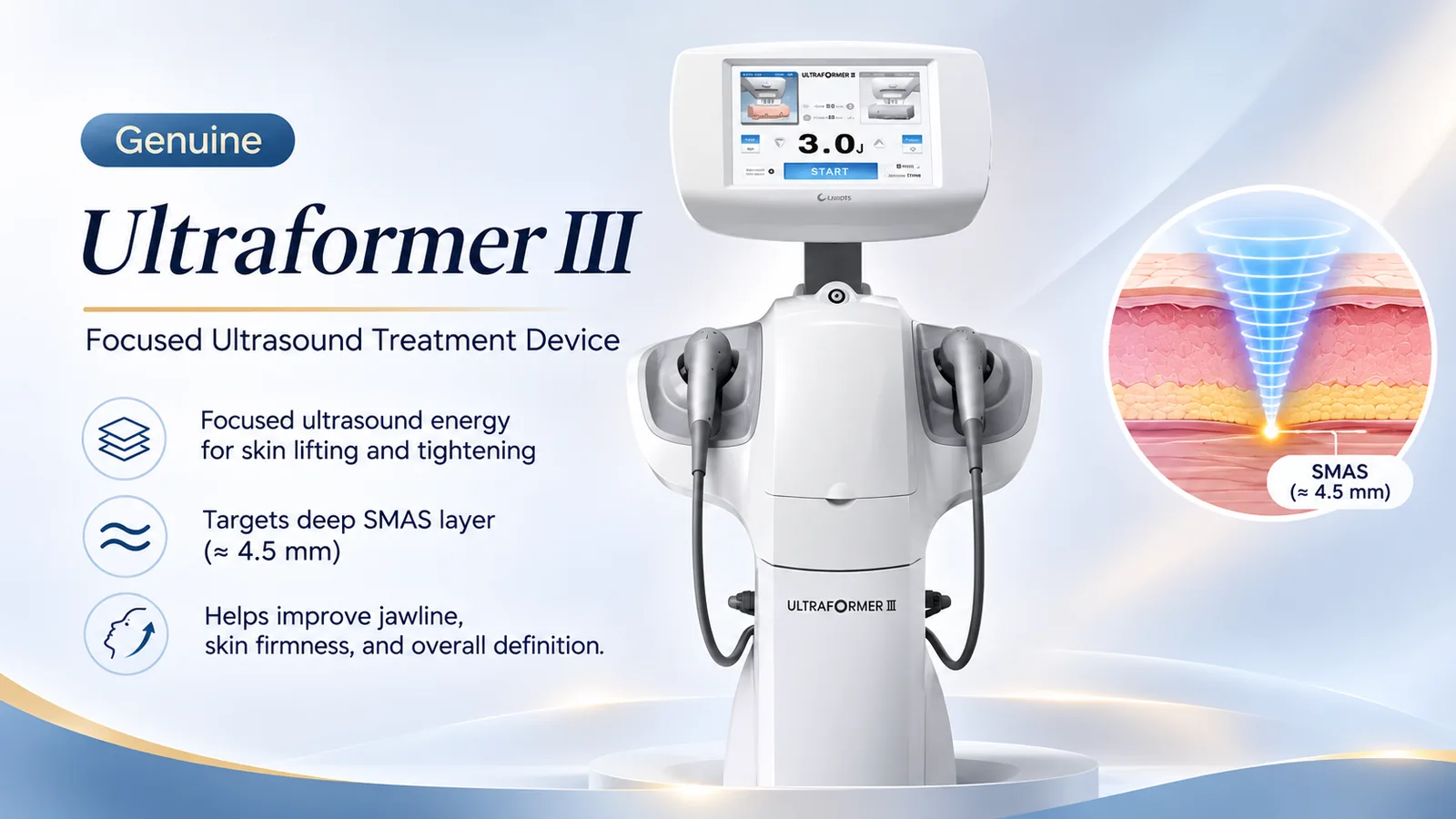
Ultraformer III is a nonsurgical ultrasound-based treatment system designed to deliver focused energy into selected layers beneath the skin.
The ultrasound energy creates small, controlled areas of thermal injury at targeted depths. This stimulates tissue contraction and the body’s natural collagen repair and remodeling response.
How Does Ultraformer III Work?
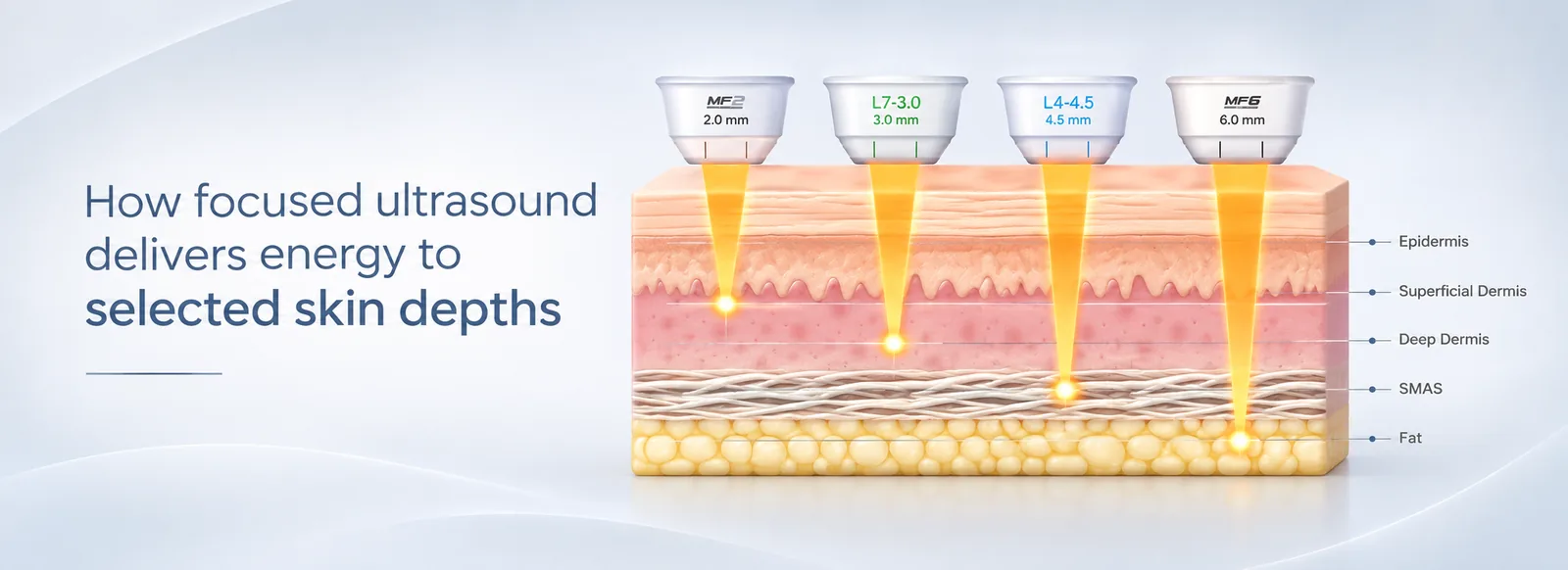
Ultraformer III uses different treatment cartridges to deliver ultrasound energy at selected depths.
Facial cartridges include:
- 1.5 mm: Targets relatively superficial dermal tissue.
- 2.0 mm: Designed for selected superficial facial areas.
- 3.0 mm: Targets deeper dermal tissue.
- 4.5 mm: Targets deeper supporting tissues, depending on facial anatomy.
The choice of cartridge depends on the treatment area, tissue thickness, and clinical objectives.
Importantly, a stated cartridge depth describes the intended focal region, not an exact anatomical layer that is identical in every patient.
The treatment aims to stimulate collagen remodeling and improve skin firmness over time.
What Can Ultraformer III Help Improve?
Depending on patient selection and treatment settings, focused ultrasound may help improve:
- Mild facial sagging
- Early jawline laxity
- Mild looseness beneath the chin
- Selected areas of neck laxity
- Skin firmness
- Some fine lines
The degree of improvement varies.
HIFU is not equivalent to a surgical facelift and cannot reliably correct severe tissue descent or substantial excess skin.
What Is Monopolar RF (XERF)?
Monopolar radiofrequency is a nonsurgical treatment that uses electrical energy to generate controlled heat within tissue.
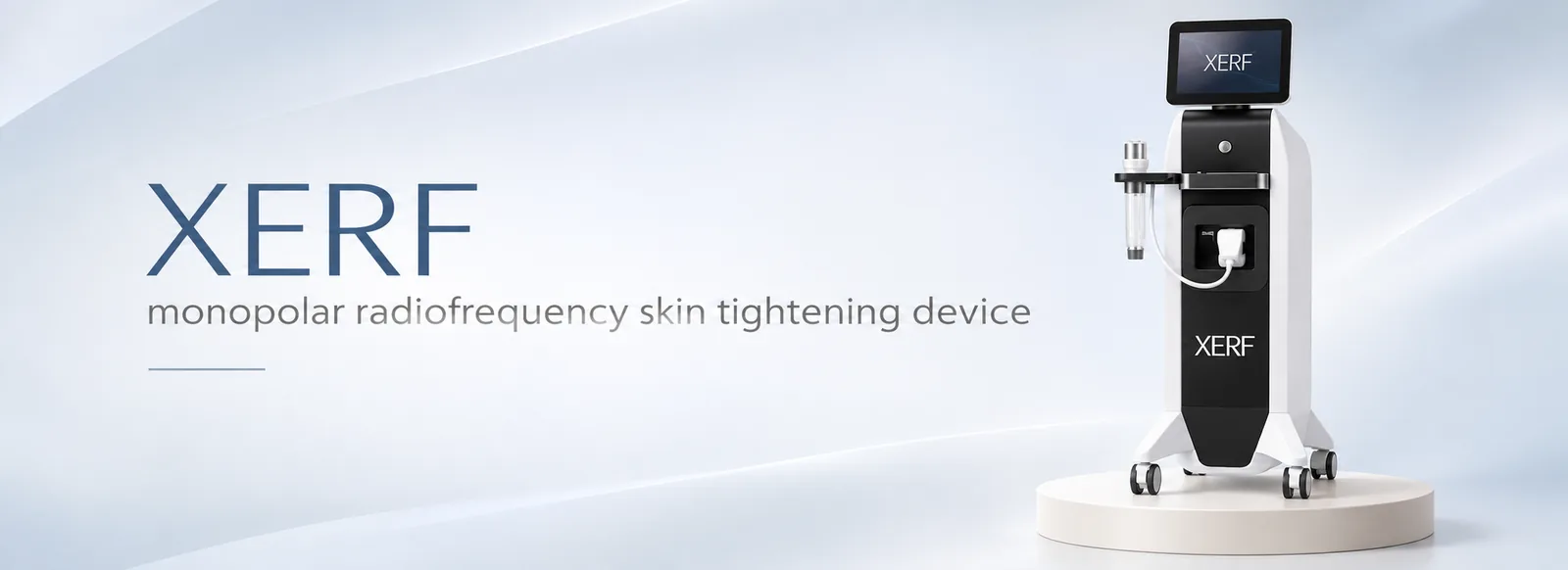
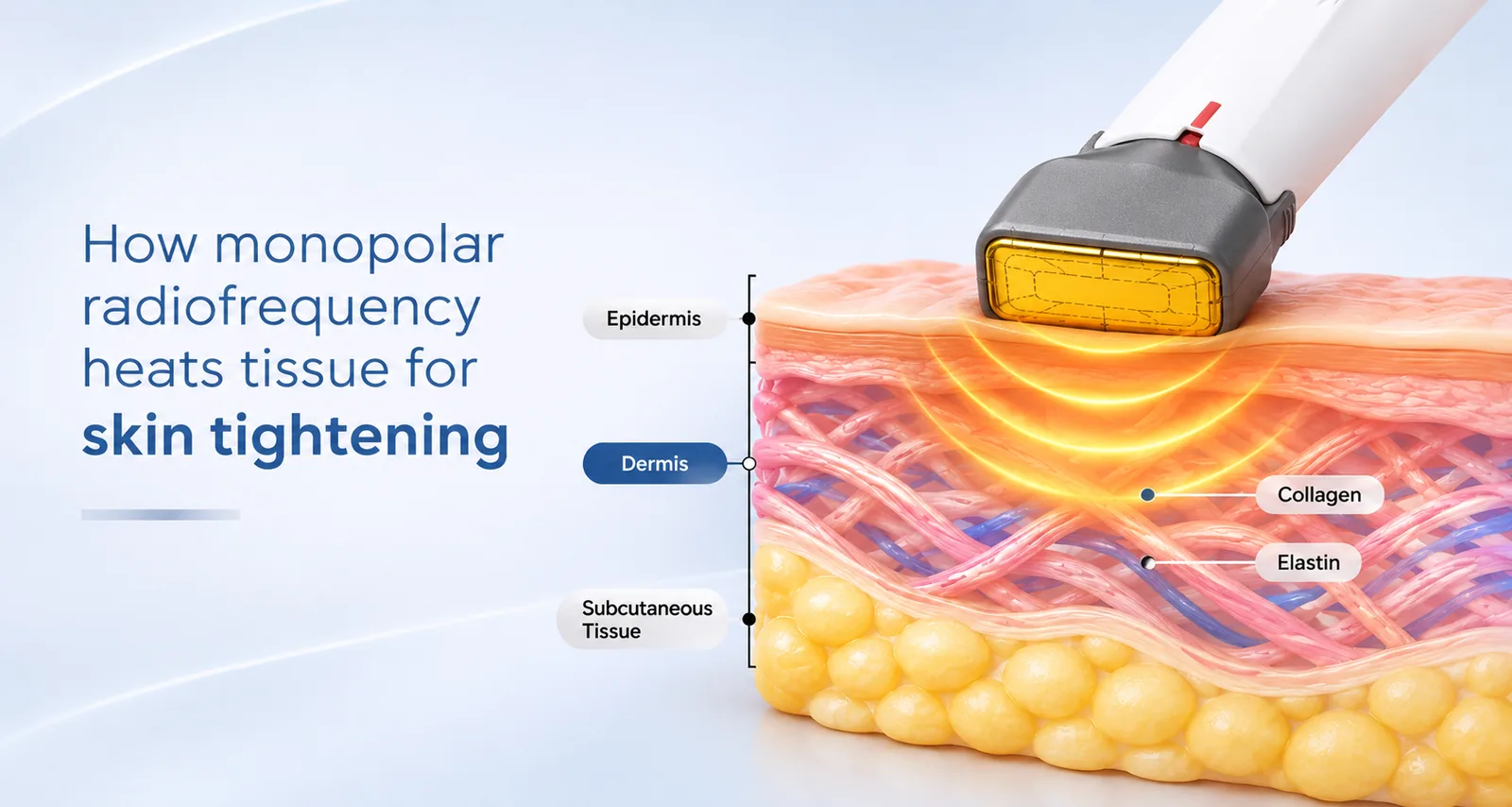
Unlike focused ultrasound, radiofrequency heating depends on electrical properties of tissue, electrode design, treatment settings, and the distribution of energy.
XERF is a monopolar radiofrequency system that uses two radiofrequency frequencies—6.78 MHz and 2 MHz—with adjustable treatment settings.
The system is designed to deliver energy at different treatment depths while incorporating surface cooling.
How Does XERF Work?
Radiofrequency energy generates heat as electrical current passes through tissue.
Controlled heating may cause immediate collagen contraction and stimulate longer-term collagen remodeling.
XERF incorporates:
- Two radiofrequency frequencies
- Adjustable depth settings
- Multiple intensity levels
- Skin impedance feedback
- Integrated cooling technology
These features allow the operator to adjust treatment according to the area and patient characteristics.
However, the depth of radiofrequency heating is not directly equivalent to the focal depths specified for ultrasound cartridges.
What Can XERF Help Improve?
Monopolar RF treatments may help improve:
- Mild to moderate skin laxity
- Reduced facial firmness
- Early changes in jawline definition
- Mild neck skin laxity
- Skin texture and fine lines in selected patients
Results depend on the device, treatment settings, technique, and individual response.
The available clinical evidence for monopolar RF as a treatment category supports improvement in skin laxity, but findings from older devices cannot automatically be assumed to represent identical outcomes with XERF.
HIFU vs Monopolar RF: Key Differences
| Feature | HIFU (Ultraformer III) | Monopolar RF (XERF) |
|---|---|---|
| Energy type | Focused ultrasound | Radiofrequency |
| Energy delivery | Concentrated thermal treatment zones at selected focal depths | Electrical heating distributed through tissue according to device settings and tissue properties |
| Depth selection | Different cartridges with specified focal depths | Adjustable treatment modes; heating depth is not directly comparable with ultrasound focal depth |
| Main treatment objective | Tissue tightening and selected lifting effects | Skin tightening and collagen remodeling |
| Common treatment areas | Face, jawline, beneath the chin, neck | Face, jawline, neck and other areas according to device indications |
| Sensation | May involve deep aching, tingling, or sharp discomfort | Usually feels like warmth or heat, sometimes intense |
| Anesthesia | Depends on patient tolerance and treatment protocol | Often performed without topical anesthesia, depending on protocol |
| Downtime | Usually minimal | Usually minimal |
| Results | Develop gradually | Develop gradually |
| Best candidate | Selected patients with mild to moderate laxity | Selected patients with mild to moderate laxity |
Neither technology can be declared universally superior based on its energy type alone.
Which Treatment Is Better for Facial Lifting?
The answer depends on what the patient means by “lifting.”
A patient may be concerned about:
- Sagging along the jawline
- Early jowls
- Loose skin beneath the chin
- Reduced skin firmness
- Fine lines
- Facial volume loss
These problems are not interchangeable.
If Your Main Concern Is Early Sagging
Focused ultrasound may be considered when the treatment goal involves selected deeper supporting tissues.
However, suitability depends on facial anatomy, skin thickness, and the location of underlying fat.
Monopolar RF may also improve mild laxity through tissue heating and collagen remodeling.
There is insufficient direct evidence to conclude that Ultraformer III consistently produces greater lifting than XERF.
If Your Main Concern Is Skin Firmness
Monopolar RF is a reasonable option to consider for improving mild skin laxity and firmness.
Focused ultrasound may also improve firmness through collagen remodeling.
Treatment selection should depend on examination findings rather than assuming that one energy technology is exclusively for lifting and the other exclusively for tightening.
If You Have Thin Facial Skin or a Lean Face
Patients with limited facial fat may require particular care.
Excessive or poorly targeted thermal energy can potentially affect subcutaneous tissue and facial contours.
The clinician should assess facial fat distribution and select appropriate treatment areas and settings.
Neither HIFU nor monopolar RF should be assumed to be completely free of the risk of unwanted contour changes.
If You Have Significant Jowls or Severe Sagging
Neither treatment can reliably reproduce the results of surgical lifting.
Patients with substantial tissue descent or excess skin may achieve only limited improvement from nonsurgical energy-based procedures.
A consultation should include realistic discussion of whether a surgical approach would better address the concern.
Is HIFU or XERF More Painful?
Discomfort varies between individuals and treatment settings.
HIFU Discomfort
During Ultraformer III treatment, patients may experience:
- Tingling
- Deep aching
- Brief sharp sensations
- Discomfort over bony areas
Pain intensity depends on the treatment depth, energy settings, anatomical location, and individual sensitivity.
XERF Discomfort
During XERF treatment, patients generally experience warming or heating sensations.
The system incorporates cooling technology designed to improve comfort.
However, the treatment may still feel uncomfortable, especially at higher settings or in sensitive areas.
Which Is More Comfortable?
XERF is designed to support treatment without routine numbing, but this does not establish that it is less painful than Ultraformer III for every patient.
High-quality direct comparisons of these exact devices are needed before making a definitive comfort ranking.
Which Treatment Produces Faster Results?
Both treatments may produce some early tightening from tissue contraction.
However, the more meaningful changes generally develop gradually as collagen remodeling occurs.
Ultraformer III Results
Patients may notice progressive improvement over several weeks to months.
Changes may continue as collagen remodeling develops.
XERF Results
Some patients may notice an early improvement in firmness.
Further changes may develop over subsequent weeks and months.
The extent and timing depend on the treatment protocol and individual response.
Neither treatment should be expected to produce the immediate or dramatic lifting associated with surgery.
How Long Do the Results Last?
Results from ultrasound and radiofrequency skin-tightening treatments are not permanent.
The duration varies with:
- Age
- Baseline skin laxity
- Treatment settings
- Skin and tissue characteristics
- Individual collagen response
- Continued aging
- Weight changes
- Sun exposure and other lifestyle factors
Some patients maintain improvement for many months, but the duration cannot be guaranteed.
Repeat treatment may be considered after reassessment.
There is no single maintenance interval that is appropriate for every patient or every device.
How Many Sessions Are Needed?
The number of sessions depends on the treatment protocol and individual response.
Some focused ultrasound protocols use a single treatment followed by reassessment after several months.
Radiofrequency protocols may involve one or multiple sessions depending on the device and treatment plan.
A higher number of sessions does not automatically mean better results.
Excessive treatment can increase the risk of unwanted tissue effects.
Patients should receive a personalized recommendation rather than selecting the number of sessions solely from a promotional package.
Can HIFU or Monopolar RF Cause Facial Fat Loss?
This is an important concern, especially for patients with naturally slim faces.
Both technologies generate heat within tissues beneath the skin.
Depending on energy delivery and treatment settings, thermal energy may affect subcutaneous tissue.
Some ultrasound systems also use deeper cartridges for body contouring, but facial treatment objectives and settings are different.
Unwanted facial contour changes or fat loss have been reported with energy-based treatments, although the precise risk for each device and protocol is not well established.
To reduce avoidable risk, the clinician should consider:
- Facial fat volume
- Skin thickness
- Treatment depth
- Energy settings
- Anatomical treatment zones
- Previous energy-based procedures
- Patient expectations
Patients who already have hollow cheeks or significant facial volume loss should discuss this concern before treatment.
What Are the Possible Side Effects?
Both procedures are generally associated with limited recovery time when performed appropriately, but complications can occur.
Possible Side Effects of Ultraformer III
- Temporary redness
- Mild swelling
- Tenderness
- Tingling or altered sensation
- Temporary discomfort when touching the treated area
Less common but potentially important complications include burns, prolonged nerve-related symptoms, or unwanted contour changes.
Possible Side Effects of XERF
- Temporary redness
- Swelling
- Tenderness
- Warmth or discomfort
Thermal burns, blistering, pigmentation changes, and unwanted tissue effects are possible with radiofrequency procedures, although the likelihood depends on the device and treatment technique.
Patients should be informed of relevant risks before undergoing treatment.
What Is the Recovery Time?
Both treatments generally have minimal downtime.
Most patients can resume normal daily activities soon afterward, provided they do not experience significant side effects.
Aftercare Recommendations
- Use gentle skincare if the skin feels sensitive.
- Avoid excessive heat if redness or discomfort persists.
- Use appropriate sun protection.
- Avoid aggressive exfoliation immediately after treatment if the skin is irritated.
- Follow the treating clinician’s specific instructions.
Seek medical assessment if you develop persistent severe pain, blisters, burns, marked swelling, or unexpected neurological symptoms.
Who May Not Be Suitable for These Treatments?
Not every patient is an appropriate candidate.
A dermatologist should review:
- Pregnancy or breastfeeding
- Active infection or inflammation in the treatment area
- Open wounds
- Implanted electronic devices
- Metal implants or other relevant implanted materials
- Previous fillers or other aesthetic procedures
- Previous facial surgery
- Significant facial volume loss
- Neurological conditions affecting the treatment area
- Medical conditions that may impair healing
Contraindications and precautions differ between devices and should be checked against the manufacturer’s current instructions.
For example, the presence of a pacemaker or other implanted electronic device is particularly important when evaluating radiofrequency treatment.
Patients should disclose their full medical and aesthetic treatment history before the procedure.
Can HIFU and Monopolar RF Be Combined?
In selected patients, ultrasound and radiofrequency may be used as complementary treatments.
However, combining procedures does not necessarily produce better results.
There is limited high-quality evidence defining the ideal combination, treatment sequence, or interval for Ultraformer III and XERF specifically.
Treatment planning should consider the total amount of thermal energy delivered, facial anatomy, and recovery.
Combining treatments too aggressively may increase the risk of unwanted tissue effects.
What Does the Scientific Evidence Say?
Both focused ultrasound and monopolar radiofrequency have published clinical evidence supporting improvement in mild to moderate facial skin laxity.
A randomized, split-face study published in Dermatologic Surgery compared monopolar radiofrequency with microfocused ultrasound with visualization.
Both treatment modalities improved facial and neck laxity, and the study did not find a statistically significant difference between the two approaches on its main clinical assessments.
However, the study did not directly compare Ultraformer III with XERF.
Systematic reviews also support the potential effectiveness of focused ultrasound and radiofrequency treatments, while identifying variation in devices, protocols, study designs, and outcome measurements.
Therefore, it would be misleading to claim that XERF is scientifically proven to outperform Ultraformer III, or vice versa, without appropriate direct comparative evidence.
HIFU vs XERF: Which Should You Choose?
The most appropriate treatment depends on the patient’s primary concern.
| Your main concern | What to discuss with your dermatologist |
|---|---|
| Early jawline sagging | Whether focused ultrasound or radiofrequency is appropriate for your anatomy |
| Mild skin looseness | Expected tightening from either technology |
| Thin face or hollow cheeks | Risk of unwanted fat or contour changes |
| Fine lines and skin texture | Whether another skin rejuvenation treatment would be more suitable |
| Sensitivity to discomfort | Treatment settings, cooling, and pain management |
| Severe jowls or loose skin | Limitations of nonsurgical treatments and possible surgical options |
| Previous fillers or lifting procedures | Timing, treatment areas, and device-specific precautions |
The decision should be based on the condition of the skin and supporting tissues, not simply the popularity of the device.
Skin Tightening Consultation at Clear Skin Dermatology Bangkok
Clear Skin Dermatology is a medical dermatology clinic located in Asoke, Bangkok, Thailand.
Patients considering nonsurgical facial rejuvenation can seek assessment of:
- Facial skin laxity
- Early jowls
- Jawline definition
- Loose skin beneath the chin
- Neck skin laxity
- Fine lines and age-related skin changes
During a consultation, the dermatologist can assess facial anatomy, skin thickness, volume distribution, and treatment goals.
The discussion should include realistic expected improvement, available treatment options, limitations, possible adverse effects, and whether a nonsurgical approach is suitable.
Availability of specific devices and procedures should be confirmed directly with the clinic before booking.
Clear Skin Dermatology
Medical Dermatology & Skin Cancer Clinic
Asoke, Bangkok, Thailand
Frequently Asked Questions
1. Is HIFU better than monopolar RF for facial lifting?
Not necessarily. Both can improve mild to moderate skin laxity, but they deliver energy differently. There is insufficient direct evidence showing that Ultraformer III consistently outperforms XERF for facial lifting.
2. What is the main difference between Ultraformer III and XERF?
Ultraformer III uses focused ultrasound energy delivered at selected depths. XERF uses monopolar radiofrequency energy with adjustable treatment settings to heat tissue and stimulate collagen remodeling.
3. Is XERF less painful than HIFU?
XERF incorporates cooling and is designed to improve treatment comfort. However, discomfort varies, and direct evidence comparing pain between these exact devices is limited.
4. Which treatment is better for jowls?
Both may provide modest improvement in early jowling. Significant jowls caused by deeper tissue descent may not respond sufficiently to either treatment.
5. Can HIFU or XERF cause facial fat loss?
Unwanted contour changes are possible with energy-based treatments. The risk depends on treatment depth, settings, facial anatomy, and technique. Patients with thin faces should discuss this before treatment.
6. How long does it take to see results?
Some early improvement may occur, but collagen remodeling generally develops over several weeks to months.
7. How long do HIFU and XERF results last?
Results are temporary and vary between patients. Repeat treatment may be considered after evaluating the response and ongoing skin aging.
8. How many sessions of Ultraformer III or XERF are needed?
The number depends on the device protocol, treatment goals, and individual response. A dermatologist should recommend the appropriate schedule after examination.
9. Can I have HIFU after dermal fillers?
Previous fillers do not automatically exclude treatment, but filler type, placement, timing, and treatment depth must be considered. Inform your dermatologist about all previous injections.
10. Can HIFU and XERF be performed together?
They may be combined in selected cases, but the ideal interval and combined protocol are not established for every patient. Treatment should be individualized to avoid unnecessary cumulative heating.
11. Which treatment has less downtime?
Both generally have minimal downtime, although temporary redness, swelling, or tenderness can occur.
12. Is HIFU or XERF a replacement for a facelift?
No. Neither treatment can reliably reproduce the degree of lifting achievable with surgery, particularly in patients with significant sagging or excess skin.
Book a Skin Tightening Consultation in Bangkok
HIFU and monopolar radiofrequency are both established categories of nonsurgical skin-tightening technology.
Ultraformer III delivers focused ultrasound energy at selected depths, while XERF uses adjustable monopolar radiofrequency heating.
Both may improve mild to moderate laxity, but the best choice depends on individual facial anatomy, treatment goals, and safety considerations.
For patients living in Bangkok or visiting Thailand, Clear Skin Dermatology in Asoke provides dermatology consultations to discuss facial aging concerns and appropriate treatment options.
This article is intended for general medical education. It does not replace an individual medical consultation, and treatment outcomes cannot be guaranteed.
Medical References
- CLASSYS — Ultraformer III official product information. Ultrasound technology and cartridge depths.
- Cynosure Lutronic — XERF official technology information. Dual-frequency RF, cooling, and adjustable settings.
- Alhaddad et al., Dermatologic Surgery (2019). Randomized comparison of monopolar RF and microfocused ultrasound with visualization; not a direct Ultraformer III–XERF trial.
- Rohrich et al., Plastic and Reconstructive Surgery (2022). Systematic review of radiofrequency devices for skin tightening.
- Systematic Review of Microfocused Ultrasound (2023). Clinical evidence and limitations of ultrasound skin-tightening treatments.
Medically reviewed by
Reviewed on
Related articles
-
Aesthetic & Skin Rejuvenation Rejuran vs Plinest vs Vitaran for Acne Scars, Enlarged Pores, and Skin Texture Which is better for acne scars and enlarged pores: Rejuran, Plinest, or Vitaran?

-
Aesthetic & Skin Rejuvenation Rejuran vs Plinest vs Vitaran for Anti-Aging and Skin Rejuvenation: Which Is Better? Rejuran, Plinest, and Vitaran are polynucleotide-based injectable product families increasingly discussed for skin rejuvenation. They are often promoted for improving fine lines, skin texture, and elasticity.

-
Aesthetic & Skin Rejuvenation Rejuran vs Plinest vs Vitaran: Which PN Skin Booster Is Best in Bangkok? Rejuran, Plinest, and Vitaran are injectable skin rejuvenation products associated with polynucleotides (PN), a group of DNA-derived molecules being studied for their potential to improve skin quality.