








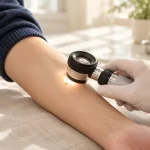


















Biologic Treatment for Psoriasis in Bangkok: Price Comparison, Dosing & Treatment Guide 2026
For people with moderate-to-severe psoriasis, biologic treatment has transformed what can realistically be achieved with long-term disease control. Modern biologics target specific inflammatory pathways involved in psoriasis rather than broadly suppressing the immune system.

However, choosing a biologic is more complicated than asking which injection is the “strongest.”
For patients considering biologic treatment for psoriasis in Bangkok, the practical questions are usually:
Which biologic is most suitable for my psoriasis? How often is it injected? How quickly might it work? How much does it cost? What tests are needed before treatment? And which option makes the most sense for long-term treatment?
This 2026 guide compares commonly used biologic options, including Taltz, Tremfya, Cosentyx, Stelara, adalimumab and brodalumab, with particular attention to dosing frequency, approximate treatment costs, safety and factors that influence treatment selection.
Importantly:
The cheapest drug per injection is not necessarily the least expensive treatment overall.
Loading doses, dose per treatment, injection frequency and long-term maintenance schedules can make a major difference to total cost.
What Are Biologic Drugs for Psoriasis?
Psoriasis is a chronic immune-mediated inflammatory disease.
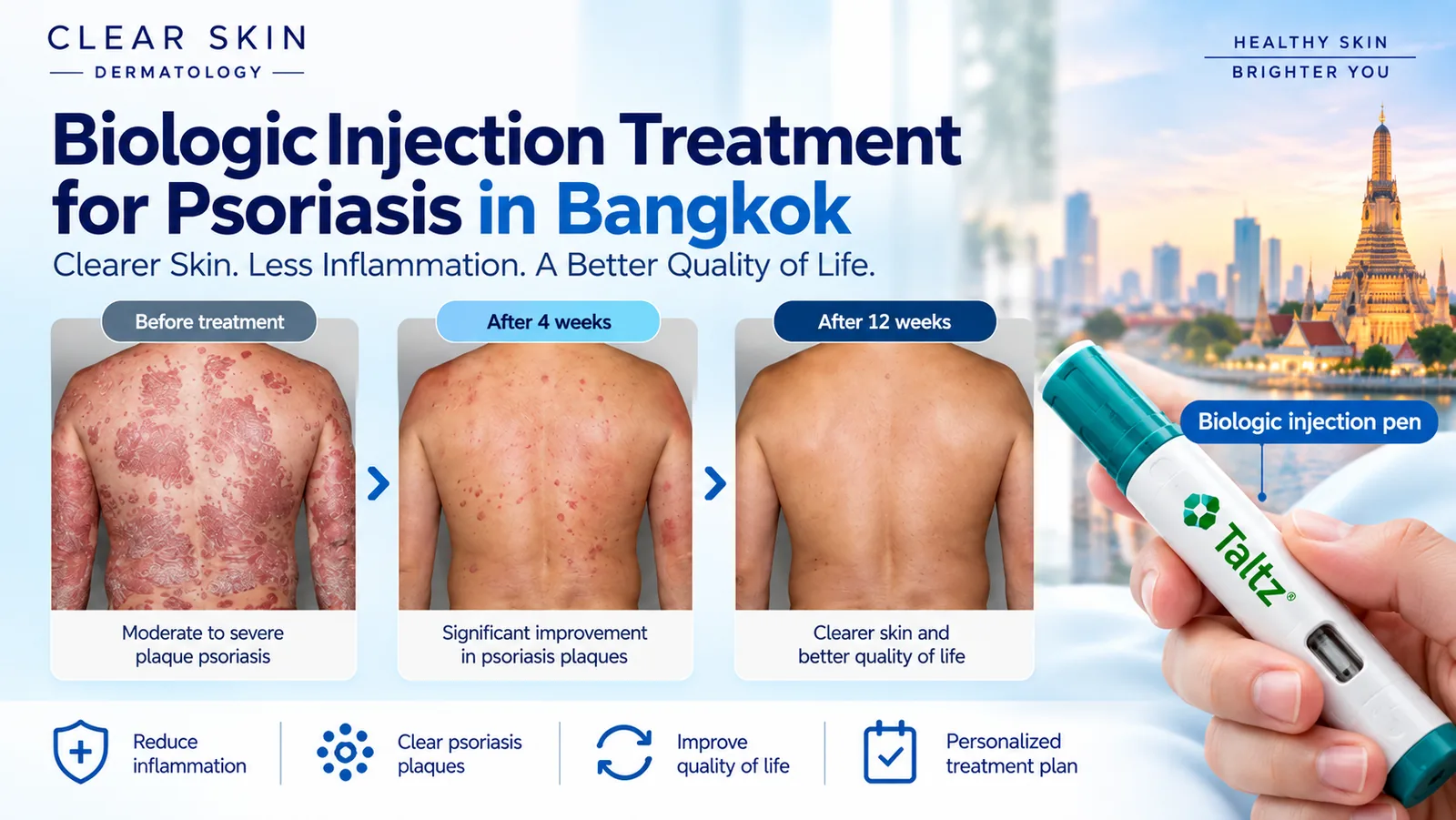
In plaque psoriasis, abnormal immune signaling causes inflammation and accelerates the turnover of skin cells. This produces the characteristic thick, inflamed, scaly plaques.
Biologic medicines are designed to target specific components of this inflammatory process.
Important biologic targets in psoriasis include:
- TNF-α
- IL-12/23
- IL-17
- IL-23
Modern IL-17 and IL-23 inhibitors are among the most effective systemic therapies for achieving substantial skin clearance in moderate-to-severe plaque psoriasis, although efficacy alone should never determine which drug is chosen.
Treatment selection also needs to consider safety, associated medical conditions, psoriatic arthritis, previous treatments, convenience, injection frequency and cost.
Who Should Consider Biologic Treatment?
Biologic treatment may be considered when psoriasis is sufficiently severe or burdensome to justify systemic therapy.
This can include patients with:
- Moderate-to-severe plaque psoriasis
- Extensive psoriasis
- Psoriasis significantly affecting quality of life
- Difficult-to-treat areas such as the scalp, palms, soles or genital region
- Significant nail psoriasis
- Psoriatic arthritis
- Inadequate response to topical treatment
- Inadequate response or intolerance to conventional systemic treatment
- Disease requiring repeated or prolonged systemic therapy
Severity should not be judged by body surface area alone.
For example, psoriasis affecting a relatively small area of the hands, feet, genitals or nails can sometimes have a much greater effect on daily life than more extensive but mild plaques elsewhere.
How Is Psoriasis Severity Assessed?
Dermatologists may consider several factors.
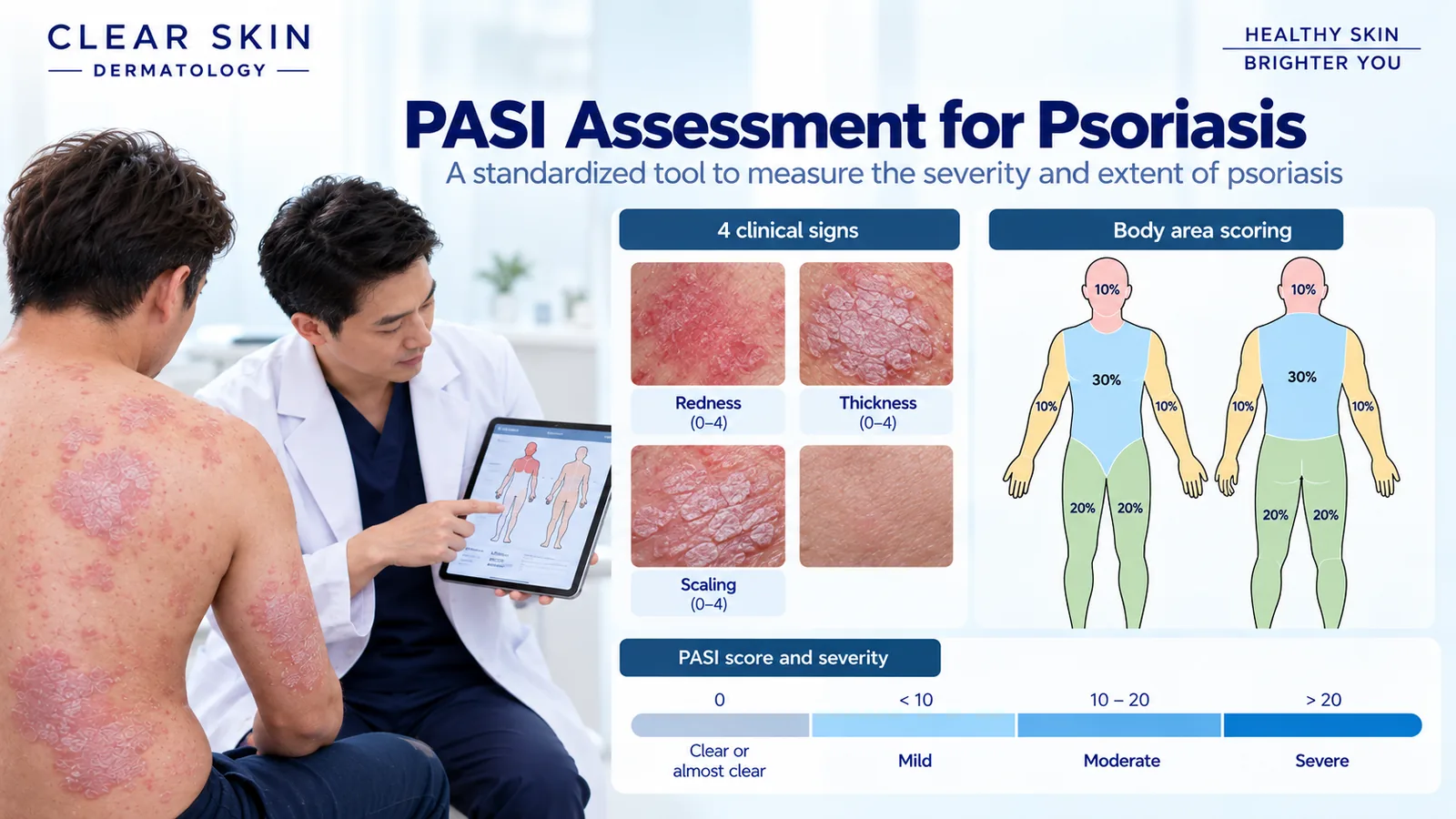
Body Surface Area
This estimates the percentage of the body affected by psoriasis.
PASI
The Psoriasis Area and Severity Index (PASI) evaluates both the extent of psoriasis and characteristics such as redness, thickness and scaling.
Quality of Life
Psoriasis may affect:
- Sleep
- Work
- Exercise
- Relationships
- Clothing choices
- Sexual health
- Self-confidence
- Emotional wellbeing
Therefore, there is no single percentage of affected skin that automatically determines whether biologic treatment is appropriate.
Biologic Treatment Price Comparison in Bangkok — 2026
One of the most common questions is:
“How much does biologic treatment for psoriasis cost?”
The answer depends heavily on the specific medicine and dosing schedule.
For this guide, the listed Taltz price is 25,000 THB per 80-mg unit and Tremfya is 70,000 THB per 100-mg unit.
Prices for the other drugs below are reference figures and may differ from the actual price charged by a hospital, clinic or pharmacy.
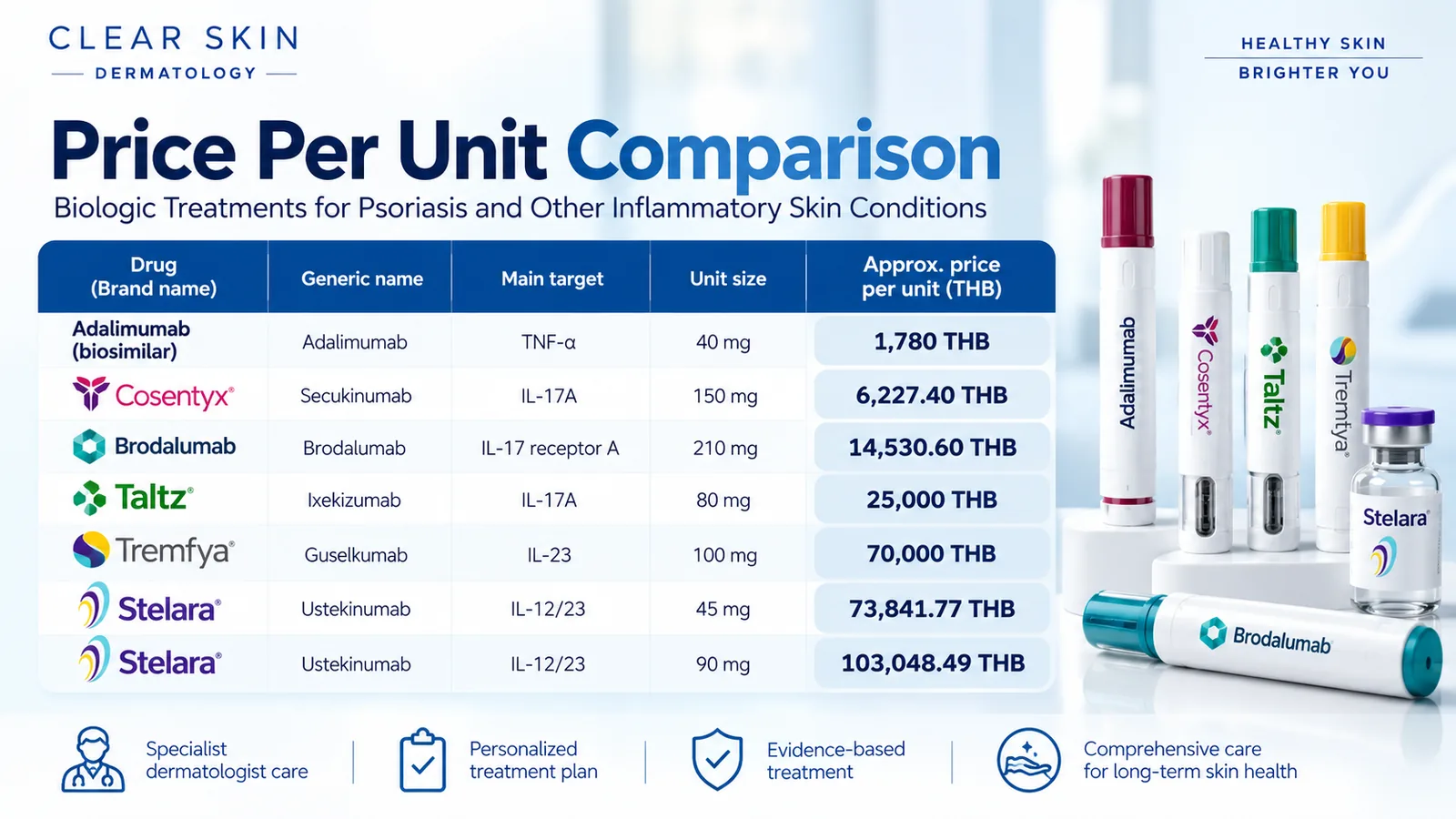
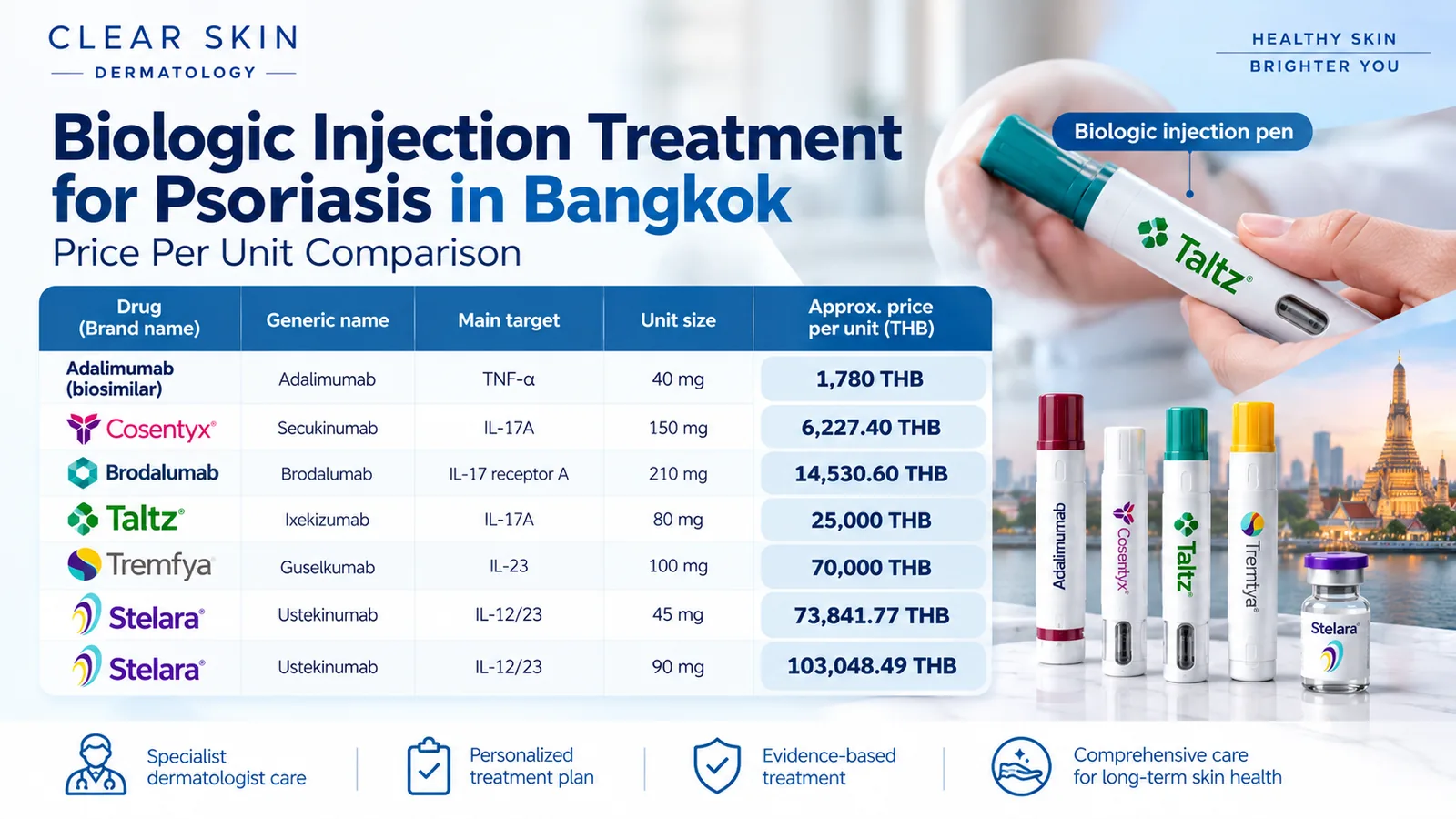
Price Per Unit Comparison
| Drug | Generic name | Main target | Unit size | Approx. price per unit |
|---|---|---|---|---|
| Adalimumab / biosimilar | Adalimumab | TNF-α | 40 mg | 1,780 THB |
| Cosentyx | Secukinumab | IL-17A | 150 mg | 6,227.40 THB |
| Brodalumab | Brodalumab | IL-17 receptor A | 210 mg | 14,530.60 THB |
| Taltz | Ixekizumab | IL-17A | 80 mg | 25,000 THB |
| Tremfya | Guselkumab | IL-23 | 100 mg | 70,000 THB |
| Stelara | Ustekinumab | IL-12/23 | 45 mg | 73,841.77 THB |
| Stelara | Ustekinumab | IL-12/23 | 90 mg | 103,048.49 THB |
WP0WYGT5Y7skYwx3R/view?usp=sharing
Taltz is registered in Thailand as ixekizumab 80 mg in prefilled pen and prefilled syringe presentations. (National Drug Information)
Important: These figures should not be interpreted as a guaranteed quotation for treatment. Consultation, laboratory testing, administration and other medical costs may be separate.
Why Price Per Injection Can Be Misleading
Looking only at the price of one syringe can produce a very misleading comparison.
Consider Taltz and Tremfya.
Taltz costs approximately 25,000 THB per 80-mg unit, while Tremfya costs approximately 70,000 THB per 100-mg unit.
At first glance, Tremfya appears much more expensive.
However, Tremfya is normally given every eight weeks during maintenance, whereas Taltz is normally given every four weeks and also requires a more intensive loading schedule.
Cosentyx provides another example. A 150-mg unit may cost much less than several competing biologics, but the standard adult plaque-psoriasis dose is usually 300 mg, meaning two 150-mg units are required for each full dose when using that presentation.
The more useful question is therefore:
What is the total cost of the complete treatment schedule—not simply the price of one pen or syringe?
Biologic Dosing and Price Comparison
| Drug | Initial treatment | Maintenance treatment | Approx. price per unit |
|---|---|---|---|
| Adalimumab | 80 mg initially → 40 mg one week later | 40 mg every 2 weeks | 1,780 THB / 40 mg |
| Cosentyx | 300 mg at weeks 0, 1, 2, 3 and 4 | 300 mg every 4 weeks | 6,227.40 THB / 150 mg |
| Taltz | 160 mg initially → 80 mg at weeks 2, 4, 6, 8, 10 and 12 | 80 mg every 4 weeks | 25,000 THB / 80 mg |
| Brodalumab | 210 mg at weeks 0, 1 and 2 | 210 mg every 2 weeks | 14,530.60 THB / 210 mg |
| Tremfya | 100 mg at weeks 0 and 4 | 100 mg every 8 weeks | 70,000 THB / 100 mg |
| Stelara ≤100 kg | 45 mg at weeks 0 and 4 | 45 mg every 12 weeks | 73,841.77 THB / 45 mg |
| Stelara >100 kg | 90 mg at weeks 0 and 4 | 90 mg every 12 weeks | 103,048.49 THB / 90 mg |
Estimated First-Year Biologic Drug Cost
The following estimates use typical adult plaque-psoriasis dosing schedules through approximately week 52.
They represent drug cost only and should not be interpreted as a complete treatment quotation.
| Treatment | Approx. units during first year | Approx. first-year drug cost |
|---|---|---|
| Adalimumab | 28 × 40-mg units | 49,840 THB |
| Cosentyx 300 mg | 34 × 150-mg units | 211,732 THB |
| Brodalumab 210 mg | 28 units | 406,857 THB |
| Stelara 45 mg | 6 units | 443,051 THB |
| Taltz 80 mg | 18 units | 450,000 THB |
| Tremfya 100 mg | 8 units | 560,000 THB |
| Stelara 90 mg | 6 units | 618,291 THB |
Actual costs may vary according to the precise treatment dates, prescribed dose, product availability and institution.
WP0WYGT5Y7skYwx3R/view?usp=sharing
Taltz Cost: How the First-Year Estimate Is Calculated
Taltz (ixekizumab): 25,000 THB per 80-mg unit
For adult plaque psoriasis:
Initial dose
160 mg = two 80-mg injections
50,000 THB
Loading phase
80 mg at weeks 2, 4, 6, 8, 10 and 12
6 injections × 25,000 THB
150,000 THB
Maintenance through approximately week 52
80 mg every four weeks
Approximately 10 additional injections
250,000 THB
Approximate first-year drug cost
450,000 THB
The standard Taltz psoriasis regimen begins with 160 mg, followed by 80 mg every two weeks through week 12 and then every four weeks. Thai FDA information confirms the 80-mg prefilled presentation.
Tremfya Cost: How the First-Year Estimate Is Calculated
Tremfya (guselkumab): 70,000 THB per 100-mg unit
For adult plaque psoriasis:
Week 0
100 mg
70,000 THB
Week 4
100 mg
70,000 THB
Thereafter
100 mg every eight weeks
Using a week-52 treatment horizon, the typical schedule is approximately:
Weeks 0, 4, 12, 20, 28, 36, 44 and 52.
That gives approximately 8 injections during the first 52 weeks.
Approximate first-year drug cost
8 × 70,000 THB = 560,000 THB
Estimated Maintenance Cost After the Loading Phase
For chronic psoriasis, maintenance cost may be more useful than the first-year figure because loading doses can make the first year unusually expensive.
| Treatment | Maintenance schedule | Approx. annualized maintenance drug cost |
|---|---|---|
| Adalimumab | Every 2 weeks | 46,280 THB/year |
| Cosentyx 300 mg | Every 4 weeks | 161,912 THB/year |
| Stelara 45 mg | Every 12 weeks | approximately 295,000–369,000 THB/year |
| Taltz 80 mg | Every 4 weeks | 325,000 THB/year |
| Brodalumab 210 mg | Every 2 weeks | 377,796 THB/year |
| Tremfya 100 mg | Every 8 weeks | approximately 420,000 THB/year |
| Stelara 90 mg | Every 12 weeks | approximately 412,000–515,000 THB/year |
The ranges for every-8-week and every-12-week treatments reflect the fact that the number of injections falling within a particular calendar year can vary according to the treatment start date.
Quick Comparison of Common Psoriasis Biologics
| Drug | Target | Maintenance interval | Price per unit | Approx. first-year drug cost |
|---|---|---|---|---|
| Adalimumab | TNF-α | Every 2 weeks | 1,780 THB / 40 mg | 49,840 THB |
| Cosentyx | IL-17A | Every 4 weeks | 6,227.40 THB / 150 mg | 211,732 THB |
| Brodalumab | IL-17 receptor A | Every 2 weeks | 14,530.60 THB / 210 mg | 406,857 THB |
| Stelara 45 mg | IL-12/23 | Every 12 weeks | 73,841.77 THB | 443,051 THB |
| Taltz | IL-17A | Every 4 weeks | 25,000 THB / 80 mg | 450,000 THB |
| Tremfya | IL-23 | Every 8 weeks | 70,000 THB / 100 mg | 560,000 THB |
| Stelara 90 mg | IL-12/23 | Every 12 weeks | 103,048.49 THB | 618,291 THB |
This comparison illustrates why price per injection should never be considered in isolation.
Taltz for Psoriasis
Taltz (ixekizumab) is an IL-17A inhibitor.
For adult plaque psoriasis, the usual regimen is:
- Week 0: 160 mg
- Weeks 2, 4, 6, 8, 10 and 12: 80 mg
- After week 12: 80 mg every 4 weeks
Taltz is registered in Thailand in an 80-mg prefilled pen and syringe presentation. Approximate price
25,000 THB per 80-mg unit
The first 160-mg dose therefore requires two units:
approximately 50,000 THB for the initial dose.
Advantages
Taltz is a highly effective modern psoriasis biologic and IL-17 inhibition can produce relatively rapid improvement.
This may be useful when rapid disease control is clinically important.
Limitations
The initial loading phase requires frequent injections.
IL-17 inhibition is also associated with particular considerations including mucocutaneous Candida infection and inflammatory bowel disease.
The patient’s medical history should therefore be reviewed before treatment.
Tremfya for Psoriasis
Tremfya (guselkumab) is an IL-23 inhibitor.
The usual adult plaque-psoriasis schedule is:
- Week 0: 100 mg
- Week 4: 100 mg
- Thereafter: 100 mg every 8 weeks
Approximate price
70,000 THB per 100-mg injection
The first two injections therefore cost approximately:
140,000 THB
before entering the every-eight-week maintenance schedule.
Advantages
A major practical advantage is the relatively long interval between maintenance injections.
IL-23 inhibitors are highly effective modern treatments for plaque psoriasis and can provide sustained disease control in appropriately selected patients.
Limitations
The price per injection is relatively high.
For this reason, Tremfya should be compared using annual treatment cost, rather than the price of a single syringe.
Cosentyx for Psoriasis
Cosentyx (secukinumab) targets IL-17A.
The usual adult plaque-psoriasis regimen is:
- 300 mg at weeks 0, 1, 2, 3 and 4
- Then 300 mg every 4 weeks
A key point when comparing prices is that a 150-mg presentation requires two units to provide a 300-mg dose.
At approximately 6,227.40 THB per 150-mg unit:
one 300-mg treatment dose costs approximately 12,454.80 THB in drug cost.
This is a good example of why comparing the price per syringe without checking the required dose can be misleading.
Stelara for Psoriasis
Stelara (ustekinumab) targets the shared p40 subunit of IL-12 and IL-23.
Adult plaque-psoriasis dosing is generally weight based:
Body weight 100 kg or less
45 mg
Body weight over 100 kg
90 mg
Treatment is normally given:
- Week 0
- Week 4
- Every 12 weeks thereafter
Advantages
The long maintenance interval means relatively few injections are required.
Limitations
The cost per dose is relatively high, particularly for patients requiring the 90-mg dose.
Newer IL-17 and IL-23 inhibitors may also provide higher rates of near-complete skin clearance in comparative studies, although efficacy rankings alone should not determine treatment.
Adalimumab and Biosimilars
Adalimumab targets TNF-α and has been used to treat psoriasis and psoriatic arthritis for many years.
A typical adult plaque-psoriasis regimen begins with:
- 80 mg initially
- 40 mg one week later
- 40 mg every other week thereafter
The increasing availability of biosimilars has significantly changed the economics of this treatment.
At a reference price of approximately 1,780 THB per 40-mg unit, estimated first-year drug acquisition cost can be substantially lower than that of many newer biologics.
However:
Lower cost does not automatically mean better treatment.
Modern IL-17 and IL-23 inhibitors may provide greater levels of skin clearance for many patients.
Treatment choice should therefore balance cost with efficacy, safety and the patient’s individual medical circumstances.
Brodalumab for Psoriasis
Brodalumab targets the IL-17 receptor A.
A typical regimen is:
- 210 mg at week 0
- 210 mg at week 1
- 210 mg at week 2
- Then 210 mg every 2 weeks
At approximately 14,530.60 THB per 210-mg injection, the first-year drug cost is approximately 406,857 THB using the dosing schedule through week 52.
Brodalumab can provide rapid and substantial skin clearance, but individual medical history and product-specific safety considerations must be reviewed before treatment.
What About Skyrizi?
Skyrizi (risankizumab) is an IL-23 inhibitor and is another highly effective modern biologic for plaque psoriasis.
A typical adult regimen is:
- 150 mg at week 0
- 150 mg at week 4
- Then 150 mg every 12 weeks
However, because this article does not have a sufficiently reliable current Bangkok price for Skyrizi, it has deliberately not been included in the price-comparison calculations.
It is better to leave a price unpublished than to provide patients with an unreliable estimate.
Which Biologic Works Fastest?
Patients with extensive or symptomatic psoriasis often want improvement as quickly as possible.
In general, IL-17 inhibitors such as ixekizumab, secukinumab and brodalumab tend to have a relatively rapid onset of action.
IL-23 inhibitors can also achieve high levels of skin clearance, although their initial response may be somewhat slower for some patients.
This is a general pattern rather than a guarantee.
Individual response varies considerably.
Which Biologic Is Most Effective?
There is no single biologic that is “best” for everyone.
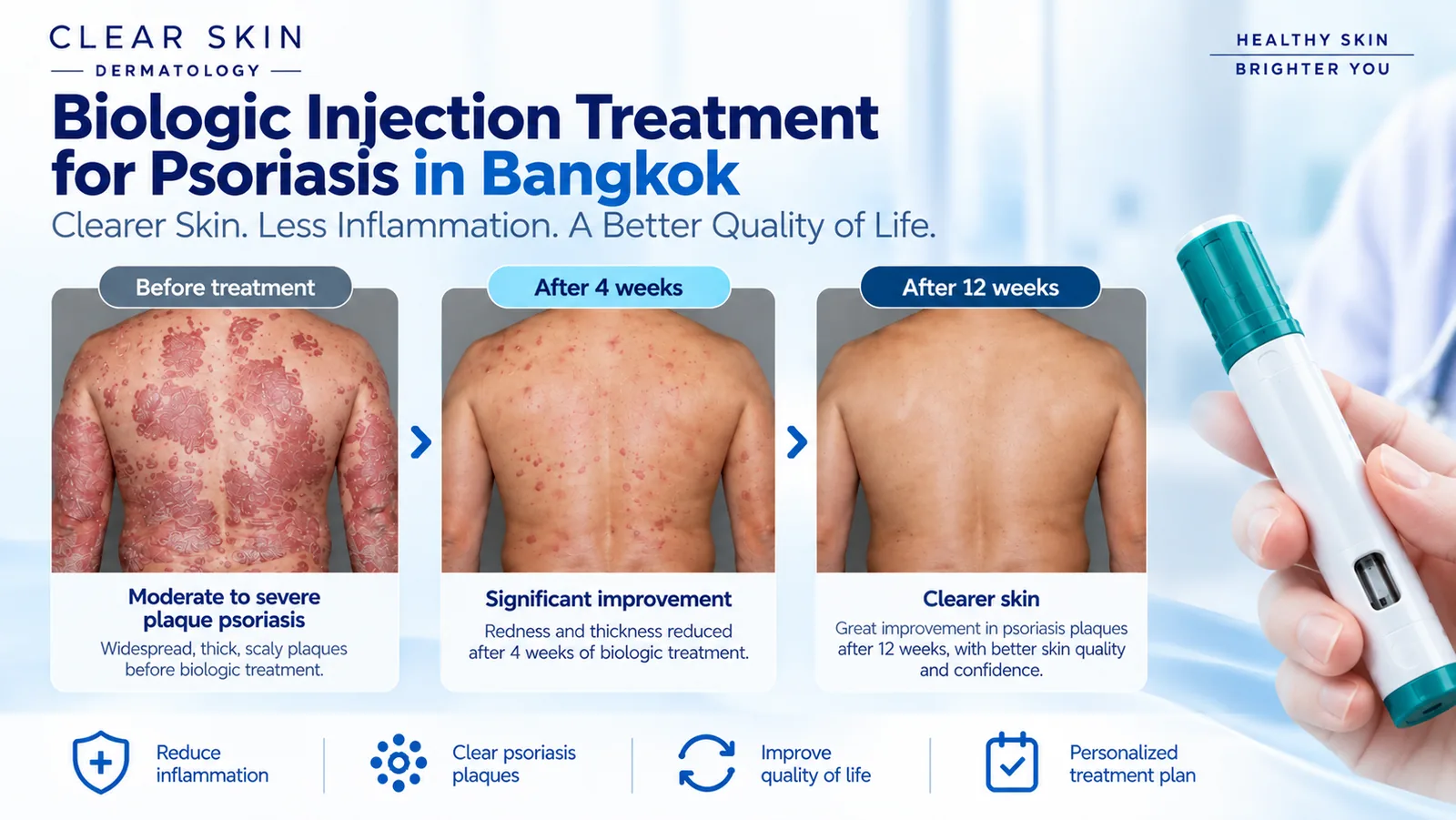
Modern IL-17 and IL-23 inhibitors are among the most effective systemic therapies for moderate-to-severe plaque psoriasis.
However, choosing treatment solely according to which drug achieves the highest PASI response in a clinical trial is not good clinical practice.
Treatment selection may also depend on:
- Psoriatic arthritis
- Inflammatory bowel disease
- Tuberculosis risk
- Hepatitis B or C
- Previous biologic treatment
- Previous treatment failure
- Body weight
- Pregnancy planning
- Other medical conditions
- Injection frequency
- Cost
- Insurance coverage
- Patient preference
The most appropriate biologic is therefore the one that provides the best balance of effectiveness, safety, practicality and sustainability for that individual patient.
IL-17 or IL-23: Which Is Better?
This is particularly relevant when comparing drugs such as:
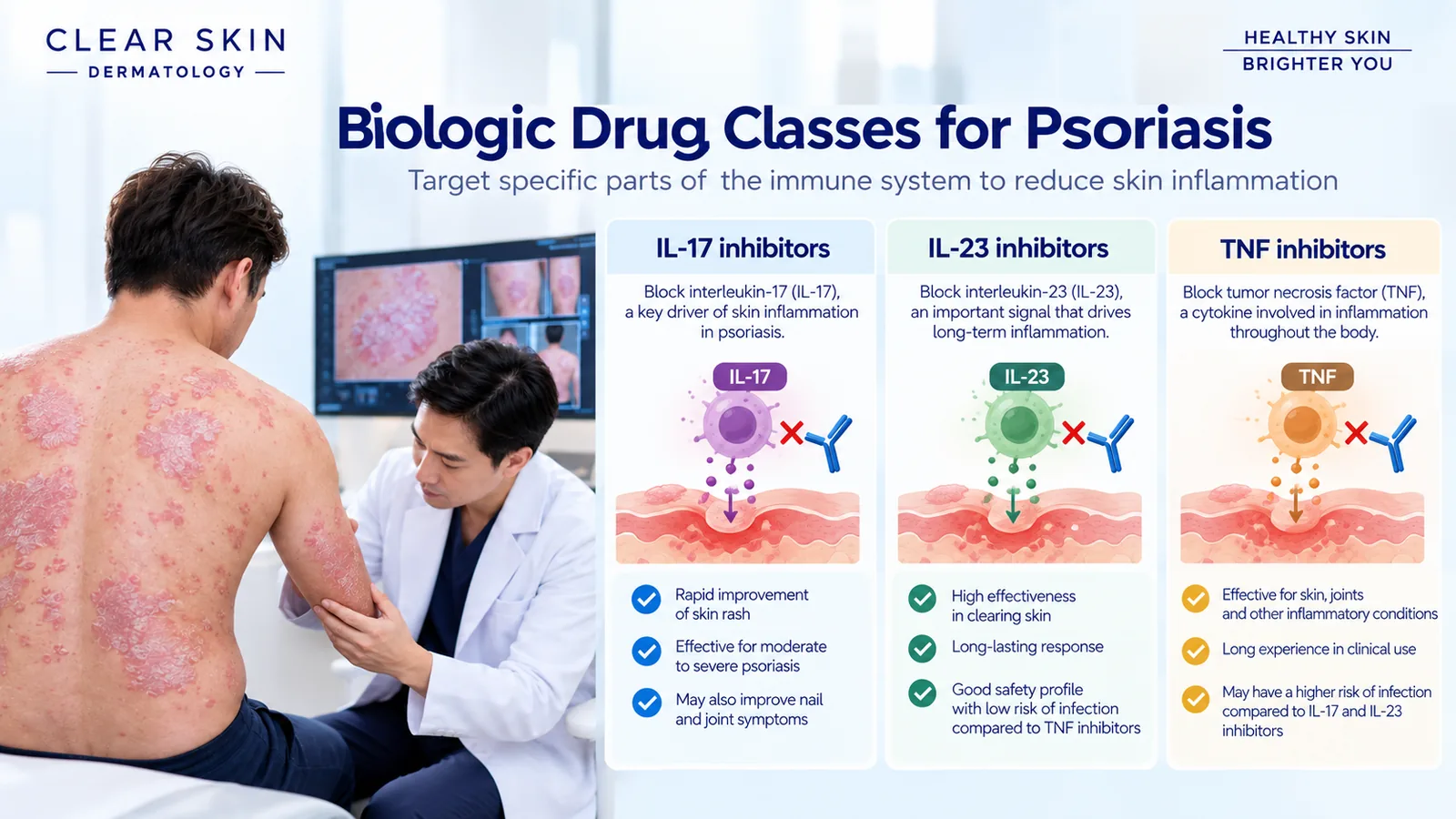
Taltz or Cosentyx vs Tremfya
IL-17 inhibitors
Examples include:
- Taltz
- Cosentyx
- Brodalumab
Potential advantages include high efficacy and relatively rapid improvement.
IL-23 inhibitors
Examples include:
- Tremfya
- Skyrizi
- Tildrakizumab
Potential advantages include high efficacy and relatively long intervals between maintenance injections.
Neither group is automatically better.
For example, a history of inflammatory bowel disease can influence the choice because IL-17 inhibition requires additional caution in these patients.
What Do PASI 75, PASI 90 and PASI 100 Mean?
These terms are frequently used when comparing psoriasis biologics.
PASI 75
At least a 75% improvement from the patient’s original PASI score.
PASI 90
At least a 90% improvement.
PASI 100
Complete clearance according to the PASI assessment.
Modern biologic trials increasingly focus on PASI 90 and PASI 100 because near-complete or complete skin clearance has become achievable for many patients.
However, PASI does not capture everything that matters.
Patients may also care about:
- Itching
- Scalp psoriasis
- Nail disease
- Genital psoriasis
- Joint symptoms
- Sleep
- Ability to work
- Treatment convenience
- Quality of life
What Tests Are Needed Before Starting a Biologic?
Biologic treatment should not begin simply by choosing and purchasing an injection.
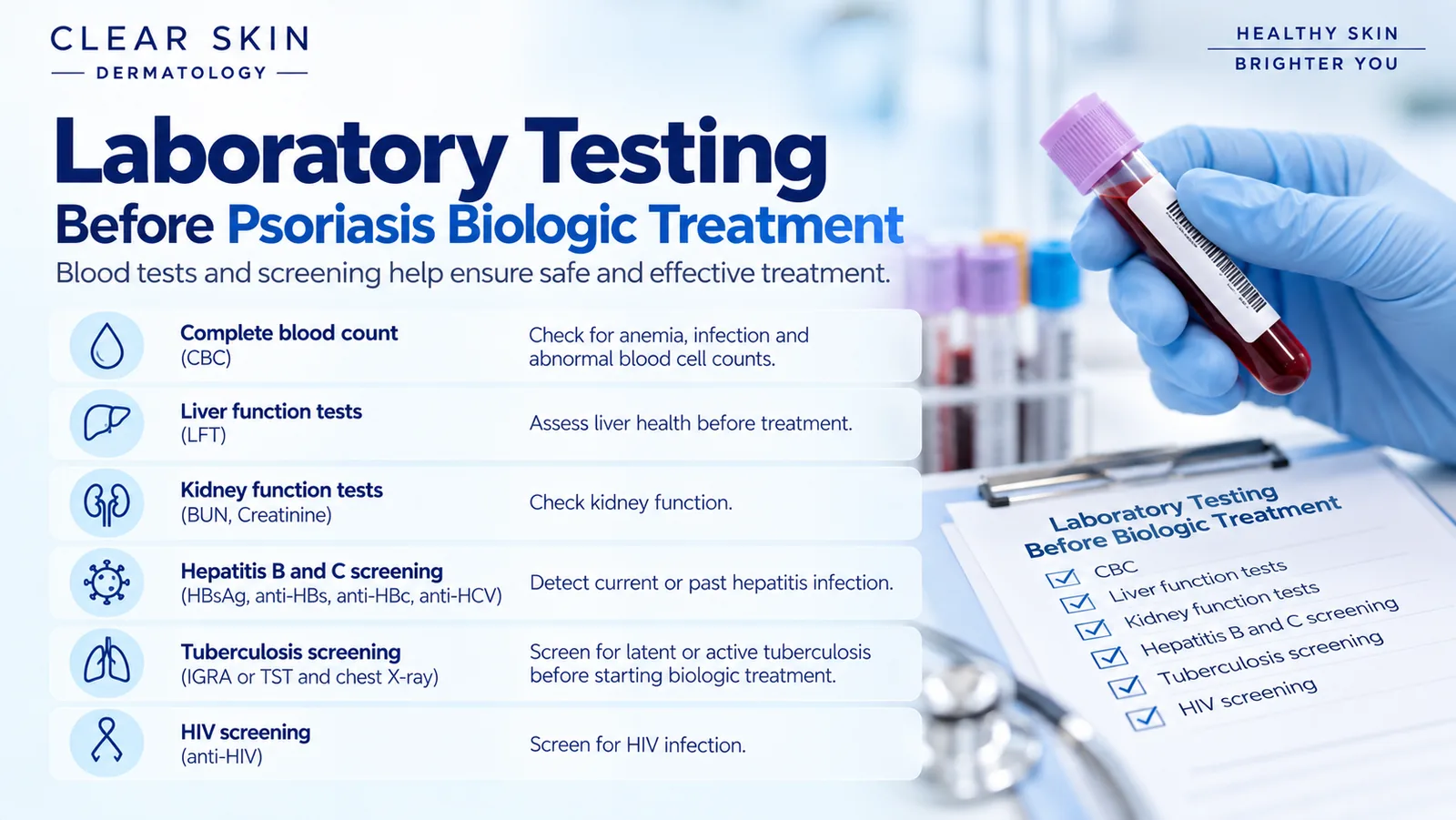
The first step is a proper medical assessment.
Pretreatment evaluation may include:
- Complete blood count
- Liver function
- Kidney function where appropriate
- Hepatitis B screening
- Hepatitis C screening
- Tuberculosis assessment
- HIV testing according to individual circumstances
- Pregnancy testing where relevant
- Vaccination review
- Assessment for current infection
- Review of previous or current cancer
- Review of other immunosuppressive medicines
Recent European psoriasis guidance recommends pretreatment assessment tailored to the selected systemic therapy and individual patient risk.
Tuberculosis Screening Before Biologic Treatment
Tuberculosis deserves particular consideration when systemic immune-modifying treatment is planned.
The risk is not identical across biologic classes.
TNF inhibitors have a well-established association with reactivation of latent tuberculosis, making TB assessment particularly important before treatment.
Guidance for IL-17 and IL-23 inhibitors has evolved.
A 2026 joint position statement from the National Psoriasis Foundation Medical Board and International Psoriasis Council concluded that routine latent-TB testing is not required for every patient receiving an IL-17 or IL-23 inhibitor. However, the statement specifically allows continued testing in higher-risk circumstances, including people living in TB-endemic areas and those receiving additional immunosuppression.
Other contemporary European guidance continues to recommend IGRA screening before biologic treatment.
For patients in Thailand, the sensible approach is therefore individualized risk assessment rather than automatically applying a simplified screening rule developed for a different population.
What Happens If the TB Test Is Positive?
A positive screening test does not necessarily mean the patient has active tuberculosis.
Further evaluation may include:
- TB symptoms
- Previous exposure
- Chest imaging
- Assessment for active tuberculosis
- Infectious-disease consultation
- Treatment of latent tuberculosis where appropriate
The choice and timing of psoriasis treatment then depend on whether infection is latent or active and which biologic is being considered.
Hepatitis B and Biologic Treatment
Hepatitis B is another important consideration before systemic psoriasis treatment.
Current European psoriasis guidance recommends screening for hepatitis B with:
- HBsAg
- Anti-HBs
- Anti-HBc
before biologic treatment. Hepatitis C screening is also recommended. (PubMed Central (PMC))
A positive hepatitis test does not automatically mean biologic treatment is impossible.
However, additional assessment and monitoring may be required, sometimes together with a specialist experienced in hepatitis management.
Vaccination Before Biologic Treatment
Vaccination history should be reviewed before starting treatment.
Where possible, appropriate vaccinations should be updated before immunomodulatory therapy begins.
Live vaccines require particular consideration during biologic treatment.
Patients should therefore tell their dermatologist about upcoming vaccinations, especially if they are planning international travel.
Can You Start a Biologic During an Infection?
A clinically important active infection should be evaluated before starting or administering biologic therapy.
Tell your doctor if you have:
- Fever
- Persistent cough
- Recent tuberculosis exposure
- Shingles
- Recurrent infections
- Significant dental infection
- Significant skin infection
- Recent hospitalization
- Current antibiotic treatment
Biologics modify immune signaling, so infection history matters.
What About Psoriatic Arthritis?
Possible psoriatic arthritis should always be discussed before choosing a biologic.
Warning symptoms include:
- Painful or swollen joints
- Morning stiffness
- Swollen fingers or toes
- Heel pain
- Persistent tendon pain
- Back stiffness that improves with movement
Several psoriasis biologics also treat psoriatic arthritis, but their effects on the skin, peripheral joints, spine and other manifestations are not identical.
When psoriatic arthritis is suspected, coordinated dermatology and rheumatology assessment may be appropriate.
Psoriasis Is More Than a Skin Disease
Moderate-to-severe psoriasis is associated with several important health conditions.
These can include:
- Psoriatic arthritis
- Obesity
- Metabolic disease
- Cardiovascular risk factors
- Depression and anxiety
- Inflammatory bowel disease
Systemic psoriasis treatment should therefore consider the patient’s overall health—not only the appearance of the skin.
Can Biologics Cure Psoriasis?
No.
Biologic treatment can suppress the inflammatory pathways responsible for psoriasis and may produce very clear or even completely clear skin while treatment remains effective.
However, biologics do not eliminate the underlying susceptibility to psoriasis.
Psoriasis can return after treatment is discontinued.
Biologic therapy should therefore be viewed primarily as long-term disease control rather than a permanent cure.
What Happens If a Biologic Stops Working?
Loss of effectiveness can occur.
Possible reasons include:
- Inadequate response from the beginning
- Reduced response over time
- Treatment interruption
- Anti-drug antibodies with some medicines
- Changes in body weight or health
- Incorrect diagnosis of persistent skin lesions
Depending on the situation, the dermatologist may:
- Reassess the diagnosis
- Review adherence
- Reassess disease severity
- Evaluate joints and difficult-to-treat areas
- Change treatment
- Switch within the same biologic class
- Switch to another biologic class
Failure of one biologic does not mean that all biologic treatment has failed.
Can You Stop Treatment Once Your Skin Is Clear?
Clear skin does not mean psoriasis has been permanently cured.
Stopping treatment may allow psoriasis to recur.
Patients should therefore not independently skip doses or extend injection intervals simply because their skin looks clear.
If treatment interruption is being considered because of cost, travel, pregnancy planning, surgery, infection or another medical reason, discuss it with the treating doctor first.
Biologic Treatment and Pregnancy
Pregnancy planning requires drug-specific assessment.
Safety information differs between biologic medicines.
Patients who are:
- Pregnant
- Planning pregnancy
- Trying to conceive
- Breastfeeding
should discuss this before starting or switching treatment.
Recommendations for one biologic should not automatically be applied to another.
Biologic Treatment for International Patients in Bangkok
International patients who have already started biologic therapy overseas should bring as much previous medical information as possible.
Useful information includes:
- Exact drug name
- Generic name
- Dose
- Date of last injection
- Current injection schedule
- Previous biologic treatments
- Original psoriasis diagnosis
- Previous disease severity
- TB screening results
- Hepatitis results
- Recent blood tests
- Vaccination history
- Relevant medical conditions
Do not substitute one biologic for another simply because the original brand is unavailable.
These are different medicines and treatment changes should be medically reviewed.
Traveling With Biologic Medication
Many injectable biologics require refrigerated storage.
Patients traveling to or from Bangkok should check the storage requirements for their exact medicine.
Important considerations can include:
- Required storage temperature
- How long the medicine may remain outside refrigeration
- Protection from freezing
- Protection from excessive heat
- Protection from direct sunlight
- Airline transport requirements
- Carry-on arrangements
- Medical documentation for airport security
Storage instructions differ between products.
Always follow the official instructions for the specific medicine.
How Should You Compare Biologic Prices in Bangkok?
When comparing treatment costs, patients should ask for the exact drug, exact dose and complete treatment schedule.
For example:
Taltz 80 mg = approximately 25,000 THB per unit
but the first dose is 160 mg and therefore requires:
2 units = approximately 50,000 THB
Similarly:
Cosentyx 150 mg = approximately 6,227.40 THB per unit
but a typical 300-mg adult dose requires:
2 units = approximately 12,454.80 THB per treatment dose
Tremfya is simpler:
Tremfya 100 mg = approximately 70,000 THB per injection
with maintenance dosing every eight weeks after the first two doses.
Patients should therefore compare:
price per unit → units required per dose → loading phase → maintenance frequency → annual cost
rather than simply comparing syringe prices.
Price Should Be Considered Over the Long Term
Psoriasis is a chronic disease.
The more meaningful financial question is therefore not:
“Which injection is cheapest?”
but:
“What will it cost to maintain effective psoriasis control over time?”
The true treatment burden includes:
drug price + loading doses + maintenance frequency + laboratory monitoring + medical follow-up + ability to remain on treatment
A medicine with a high price per injection may require relatively few injections.
Another medicine may appear inexpensive per syringe but require two units per dose or much more frequent administration.
How Does a Dermatologist Choose Between Biologics?
Treatment selection usually involves several questions.
How severe is the psoriasis?
Both extent and impact on quality of life matter.
Is psoriatic arthritis present?
Joint disease may significantly change treatment selection.
Is inflammatory bowel disease present?
This may influence whether an IL-17 inhibitor is suitable.
Is there a history or risk of tuberculosis?
This is particularly important with TNF inhibitors and deserves consideration in Thailand.
Is hepatitis present?
Potential viral reactivation needs to be considered.
Has the patient previously used a biologic?
Previous effectiveness and adverse effects can guide the next choice.
How quickly is improvement needed?
Some biologic classes tend to produce earlier improvement.
How frequently is the patient willing to inject?
Maintenance schedules vary substantially.
What can the patient afford long term?
A treatment plan needs to be financially sustainable.
Common Side Effects of Biologics
Side effects vary between medicines.
Possible effects include:
- Injection-site reactions
- Upper respiratory infections
- Headache
- Other infections
Different biologic classes also have different safety considerations.
For example, IL-17 inhibition requires particular consideration in patients with inflammatory bowel disease and can increase susceptibility to mucocutaneous Candida infection.
TNF inhibitors require greater attention to latent tuberculosis because of their established association with TB reactivation.
Patients should therefore discuss the safety profile of the specific biologic being considered, rather than assuming all psoriasis injections carry identical risks.
When Should You Contact a Doctor Urgently?
Patients receiving biologic treatment should seek medical assessment if they develop concerning symptoms such as:
- Persistent high fever
- Shortness of breath
- Significant or rapidly worsening infection
- Persistent unexplained cough
- Coughing blood
- Severe or widespread shingles
- Significant allergic reaction
- Severe diarrhea or bloody stool
- New neurological symptoms
- Other severe or rapidly progressive illness
A scheduled biologic dose may sometimes need to be delayed while the problem is assessed.
Do not stop and restart biologic treatment solely on the basis of internet advice.
What to Expect at a Psoriasis Biologic Consultation
A proper biologic consultation should involve much more than choosing an injection from a price list.

The dermatologist should assess:
- The diagnosis
- Extent and severity of psoriasis
- Difficult-to-treat areas
- Nail involvement
- Possible psoriatic arthritis
- Previous treatments
- Previous biologics
- Other medical conditions
- Current medications
- Infection history
- TB and hepatitis risk
- Vaccination history
Suitable treatment options can then be compared according to:
effectiveness + safety + associated diseases + dosing frequency + convenience + long-term cost
For international patients, continuity of treatment after leaving Bangkok should also be considered.
Which Biologic Offers the Best Value?
There is no universal answer.
If the goal is simply the lowest drug acquisition cost, adalimumab biosimilars may be considerably less expensive than many newer biologics.
If the priority is high levels of skin clearance, newer IL-17 and IL-23 inhibitors may offer advantages.
If the priority is fewer injections, drugs with longer maintenance intervals such as Tremfya or Stelara may be attractive.
If rapid improvement is important, an IL-17 inhibitor may be considered.
The concept of “best value” therefore depends on what matters most to the individual patient:
- Cost
- Skin clearance
- Speed of response
- Injection frequency
- Joint disease
- Other medical conditions
- Safety
- Insurance coverage
- Long-term sustainability
A good treatment decision balances all of these factors.
Frequently Asked Questions
How much does biologic treatment for psoriasis cost in Bangkok?
Costs vary substantially according to the medicine and dosing schedule.
For example, the prices used in this guide are approximately:
Taltz 80 mg: 25,000 THB per unit
Tremfya 100 mg: 70,000 THB per unit
However, the total treatment cost depends on loading doses and maintenance frequency.
How much does Taltz cost in Bangkok?
The price used in this guide is approximately 25,000 THB per 80-mg unit.
Because the initial plaque-psoriasis dose is 160 mg, the first treatment requires two 80-mg units and therefore costs approximately 50,000 THB in drug cost.
The estimated first-year drug cost using the standard dosing schedule is approximately 450,000 THB.
How much does Tremfya cost in Bangkok?
The price used in this guide is approximately 70,000 THB per 100-mg injection.
Treatment is normally given at weeks 0 and 4 and then every eight weeks.
Using a week-52 schedule, the approximate first-year drug cost is 560,000 THB.
Taltz or Tremfya: which is cheaper?
Taltz costs less per individual unit in this comparison:
Taltz: 25,000 THB per 80 mg
Tremfya: 70,000 THB per 100 mg
However, Taltz requires more frequent injections.
Estimated first-year drug costs are therefore much closer:
Taltz: approximately 450,000 THB
Tremfya: approximately 560,000 THB
Treatment should not be chosen on price alone.
How often is Taltz injected?
For adult plaque psoriasis, treatment begins with 160 mg, followed by 80 mg every two weeks through week 12 and then 80 mg every four weeks.
How often is Tremfya injected?
Tremfya is normally given at week 0, week 4 and then every eight weeks.
How often is Cosentyx injected?
For adult plaque psoriasis, a commonly used regimen is 300 mg at weeks 0, 1, 2, 3 and 4 followed by 300 mg every four weeks.
How often is Stelara injected?
Stelara is normally administered at weeks 0 and 4 and then every 12 weeks.
The psoriasis dose is generally based on body weight.
Which biologic works fastest?
IL-17 inhibitors such as Taltz, Cosentyx and brodalumab are generally among the faster-acting biologic options.
However, individual response varies.
Which biologic is strongest?
There is no universally “strongest” biologic.
Several modern IL-17 and IL-23 inhibitors provide high levels of skin clearance, but the most appropriate treatment depends on the patient’s psoriasis, associated diseases, safety considerations and treatment goals.
Do I need a TB test before starting a biologic?
TB risk should be assessed before biologic treatment.
Guidelines differ regarding routine screening with IL-17 and IL-23 inhibitors, and individual risk—including living in a TB-endemic area—should be considered. (PubMed)
Do I need hepatitis testing?
Hepatitis B and C assessment is commonly recommended before biologic therapy. Current European guidance specifically recommends hepatitis B screening before biologic treatment and suggests routine hepatitis C screening as well. (PubMed Central (PMC))
Can biologics cure psoriasis permanently?
No.
Biologics can provide excellent disease control and sometimes complete skin clearance while treatment is effective, but they do not permanently remove the underlying tendency to develop psoriasis.
What happens if my biologic stops working?
The dermatologist can reassess the diagnosis, adherence and disease activity and may consider switching to another biologic.
Failure of one biologic does not mean all biologics will fail.
Can tourists start biologic treatment in Bangkok?
International patients can be medically evaluated in Bangkok, but starting long-term biologic therapy during a short visit requires planning.
Pretreatment screening, future injections, monitoring and continuity of care after leaving Thailand all need to be considered.
Medically reviewed by
Reviewed on
Related articles
-
Skin Conditions & Rashes Heat Rash in Thailand: Causes, Treatment & Prevention Developing small, itchy bumps while traveling in Thailand is common, particularly during hot and humid weather. You may notice a prickling sensation on your neck, red bumps across your chest, or an irritating rash on your back after spending time outdoors.

-
Skin Conditions & Rashes Sun Rash and Sun Allergy in Thailand: Symptoms, Causes and Treatment Developing an itchy rash after spending time outdoors in Thailand can be confusing. You may notice small red bumps on your arms, an itchy rash across your chest, or raised welts that appear shortly after exposure to sunlight.

-
Skin Conditions & Rashes Developed a Skin Rash While Traveling in Thailand? Common Causes and What to Do Developing a skin rash while traveling in Thailand can be uncomfortable and sometimes worrying, especially when you are unfamiliar with the local climate, insects, plants, or potential infections.