

























Atopic Dermatitis Treatment Cost in Thailand 2026: Biologics and JAK Inhibitors Compared
For patients with moderate-to-severe atopic dermatitis, treatment may need to go beyond moisturizers and topical medication. Modern systemic options include injectable biologic medicines such as Dupixent (dupilumab), Ebglyss (lebrikizumab), and Adtralza (tralokinumab), as well as oral JAK inhibitors such as upadacitinib and abrocitinib.

One of the first questions patients ask is simple:
How much does biologic treatment for atopic dermatitis cost in Thailand?
The answer is less simple. Comparing only the price of one injection or one box of tablets can be misleading. The total cost depends on the loading dose, maintenance schedule, dose, treatment response, hospital or clinic pricing, insurance coverage, and whether laboratory monitoring is required.
This guide explains how the major treatments differ and how to compare their real treatment costs in Thailand in 2026.
Important: Prices can change and vary substantially between hospitals, clinics, pharmacies and purchasing arrangements. Public procurement prices are not necessarily the price charged to an individual patient. Always request a current quotation before starting treatment.
- Quick Comparison: Biologics and JAK Inhibitors for Atopic Dermatitis
- Treatme
nt
Active ingredient
Type How it is given
Main target
Typical long-term schedule\*
Public Thailand price information
Dupixent Dupilumab Biologic Injection IL-4/IL-1 3 pathway
Usually every 2 weeks in adults
THB 26000
Ebglyss Lebrikizuma b
Biologic Injection IL-13 Maintenance interval may be extended after adequate response
Reliable Thai retail price not publicly established
Adtralza Tralokinuma b
Biologic Injection IL-13 Usually every 2 weeks; selected responders may use a longer interval
Reliable Thai retail price not publicly established
Rinvoq Upadacitinib JAK inhibitor
Tablet JAK pathway
Daily Price depends on supplier/facility
Cibinqo Abrocitinib JAK inhibitor
Tablet JAK1 Daily THB 30000
\*Schedules vary by age, body weight, response, regulatory labeling and individual circumstances. This table should not be used to determine a personal dose.
Current American Academy of Dermatology guidelines strongly recommend several modern systemic treatments for appropriate adults with atopic dermatitis, including dupilumab, tralokinumab, lebrikizumab, upadacitinib and abrocitinib. (American Academy of Dermatology)
What Is Moderate-to-Severe Atopic Dermatitis?
Atopic dermatitis, often called eczema, is a chronic inflammatory skin disease. It commonly causes:
- persistent itching
- dry and sensitive skin
- red or inflamed patches
- thickened skin from chronic scratching
- recurrent flares
- cracked or oozing skin during severe episodes
- sleep disturbance
- impairment of work, school or daily life
Moderate-to-severe disease is not defined simply by how dramatic the rash looks on one particular day.
Dermatologists may consider the extent of affected skin, intensity of inflammation and itching, sleep disruption, frequency of flares, involvement of difficult areas such as the face or hands, quality-of-life impact, and previous treatment response.
Clinical assessment tools such as EASI (Eczema Area and Severity Index) may also be used.
When Are Biologics or JAK Inhibitors Considered?
Most patients with atopic dermatitis do not need biologic treatment.
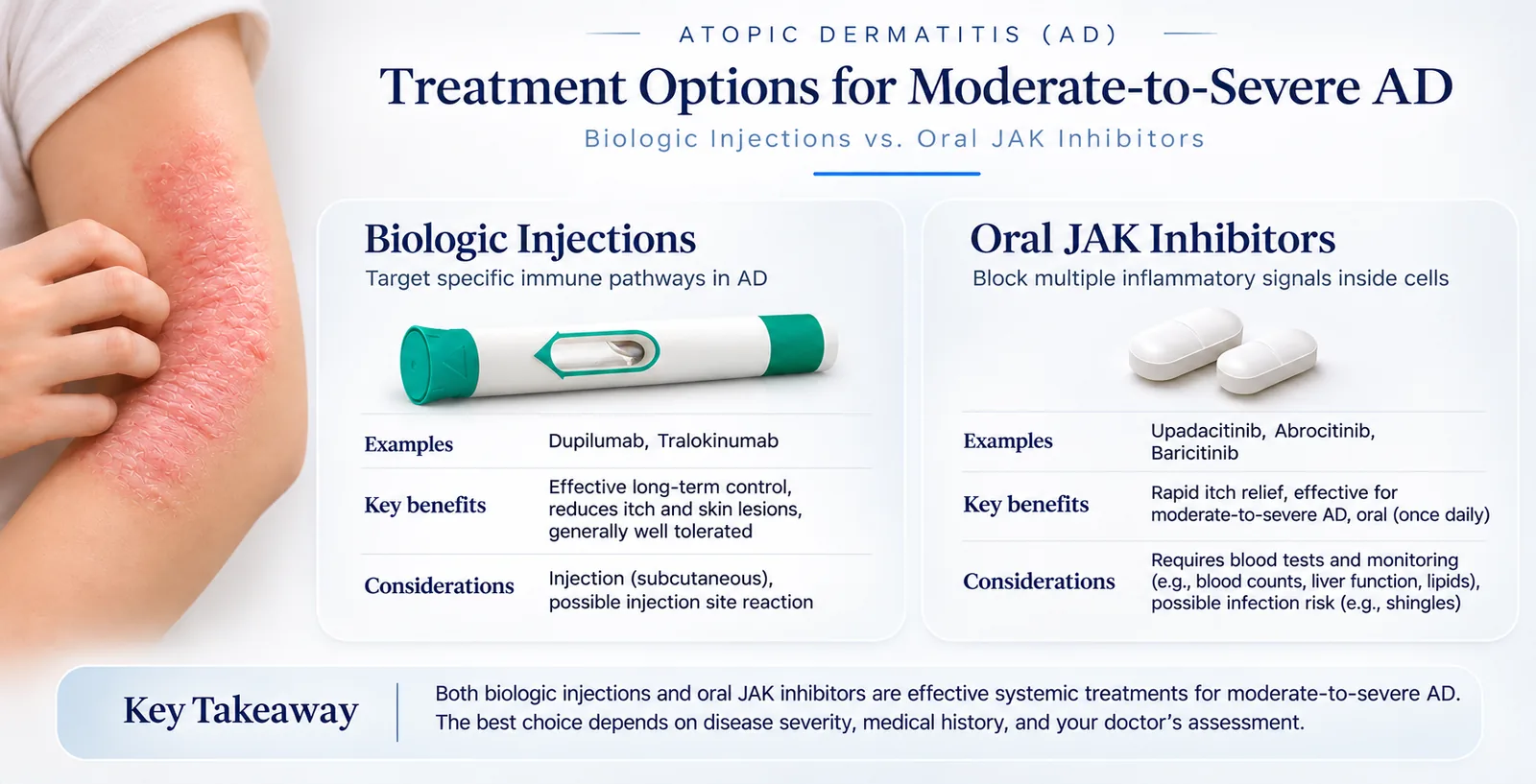
Basic treatment remains important even in patients receiving advanced systemic medication and may include:
- regular moisturizers
- appropriate bathing and skin care
- avoidance of relevant irritants
- topical corticosteroids
- topical calcineurin inhibitors
- other non-steroid topical treatments where appropriate
Systemic treatment becomes relevant when atopic dermatitis is moderate to severe and cannot be adequately controlled with appropriate topical treatment, when topical treatment is impractical because of extensive disease, or when the disease has a major impact on quality of life.
Current evidence-based guidelines include biologics and JAK inhibitors among recommended systemic options for appropriately selected patients. (American Academy of Dermatology)
How Much Does Dupixent Cost in Thailand in 2026?
Dupixent (dupilumab) is one of the most established biologic treatments for moderate-to-severe atopic dermatitis.
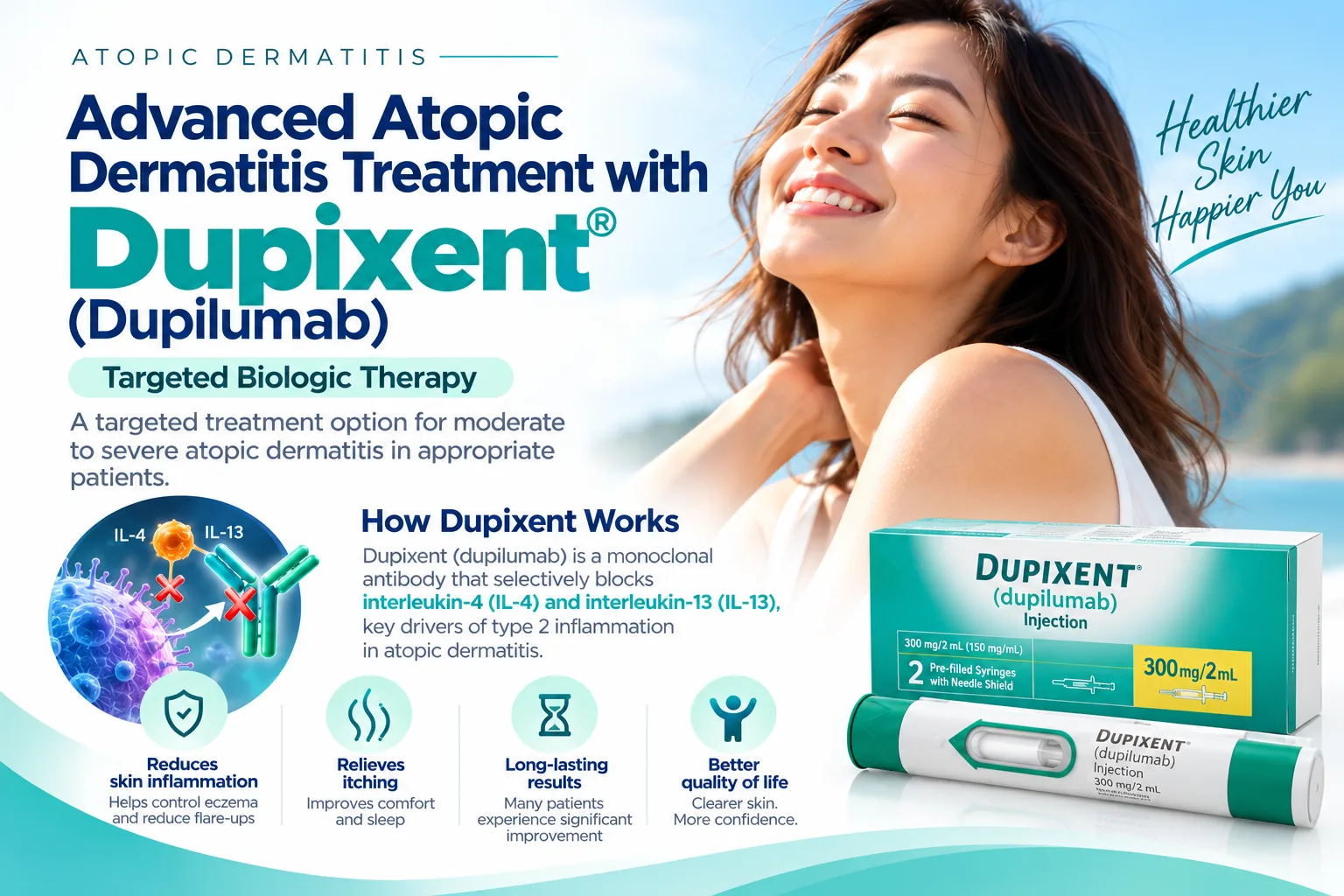
It is a monoclonal antibody that inhibits signaling involving interleukin-4 (IL-4) and interleukin-13 (IL-13), two important pathways in type 2 inflammation.
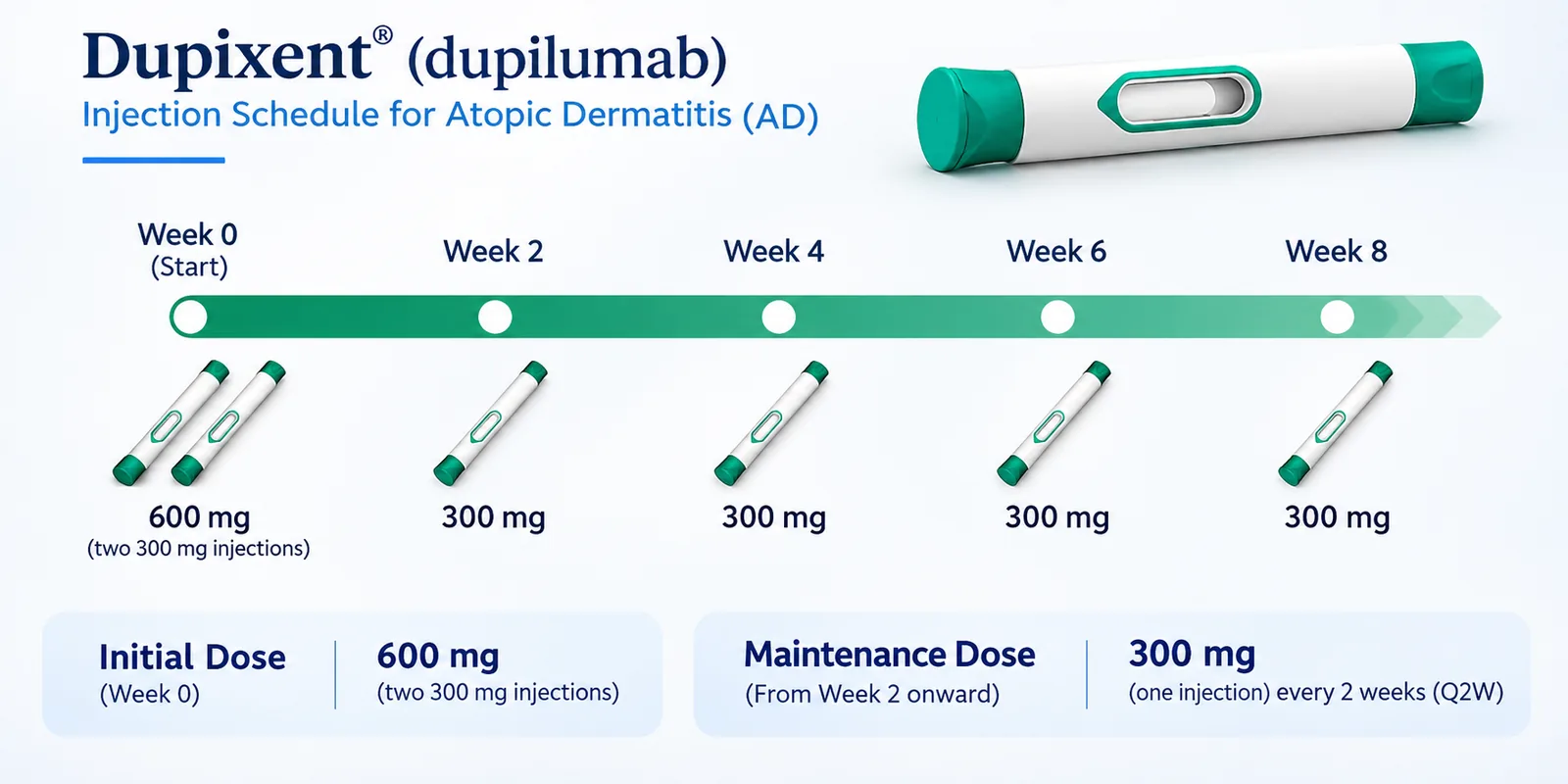
For many adults with atopic dermatitis, the commonly used regimen begins with a loading dose followed by an injection every two weeks. Dosing differs in children and adolescents according to age and weight.
Dupixent Price in Thailand
A 2026 Thai public procurement document for dupilumab 300 mg/2 mL prefilled syringe listed a reference price of approximately 25,749.55 baht per unit. (IOD)
This is useful as a reference price, but it should not be interpreted as a guaranteed patient price.
The amount actually paid by a patient may differ because of:
- hospital or clinic medication pricing
- pharmacy charges
- physician fees
- injection or service fees
- loading-dose requirements
- insurance coverage
- manufacturer or patient-support programs, when available
- changes in procurement prices
For an adult receiving 300 mg every two weeks, the drug requirement is approximately 26 maintenance injections during a full year, in addition to the additional injection required for the usual adult loading dose at treatment initiation.
Therefore, annual treatment cost is much more useful than simply asking for the price per injection.
Ebglyss: A Newer IL-13 Biologic
Ebglyss (lebrikizumab) is a monoclonal antibody targeting IL-13.
It is used for moderate-to-severe atopic dermatitis in appropriate patients. The FDA indication includes adults and adolescents aged 12 years and older weighing at least 40 kg whose disease is not adequately controlled with prescription topical therapies or when those therapies are not advisable. (U.S. Food and Drug Administration)
How Often Is Ebglyss Injected?
The dosing schedule is one of the important differences when comparing long-term costs.
Treatment begins with loading doses followed by injections every two weeks during the initial treatment period. After an adequate clinical response is achieved, the maintenance interval can be extended according to the approved regimen. (U.S. Food and Drug Administration)
This means that comparing Ebglyss with another biologic based solely on price per syringe would not provide a fair comparison.
A medication that costs more per injection could potentially have a different annual cost if it requires fewer maintenance injections.
How Much Does Ebglyss Cost in Thailand?
As of this 2026 review, a sufficiently reliable public Thai retail price could not be verified to justify publishing a specific patient price here.
For this reason, patients should request a current quotation from the prescribing facility rather than relying on overseas prices.
Prices from the United States, Europe, Singapore or other markets should not be converted into Thai baht and presented as a Thai treatment price.
Adtralza: Tralokinumab for Atopic Dermatitis
Adtralza (tralokinumab) is another biologic that targets IL-13.
Clinical trials have demonstrated that tralokinumab can improve signs and symptoms of moderate-to-severe atopic dermatitis in appropriately selected patients. (PubMed)
Adtralza Dosing
For adults, the commonly referenced regimen begins with a loading dose followed by maintenance treatment every two weeks.
For selected adult patients who achieve clear or almost clear skin, some approved regimens allow consideration of treatment every four weeks. (FDA Access Data)
Again, this is why annual cost should be calculated from the actual maintenance regimen, rather than from one injection.
Adtralza Price in Thailand
A sufficiently reliable publicly available 2026 Thai retail price could not be confirmed for this article.
Patients considering tralokinumab should therefore confirm:
- whether the medicine is currently available in Thailand
- the exact presentation and strength
- the price per syringe or pen
- how many injections are required for the loading dose
- the expected maintenance schedule
- whether insurance covers the medication
Do not assume that an overseas Adtralza price represents the price in Bangkok.
What Are JAK Inhibitors?
JAK inhibitors are different from biologic injections.
They are small-molecule medicines that interfere with Janus kinase (JAK) signaling inside cells, reducing inflammatory signaling involved in atopic dermatitis.
Important oral options include:
- Rinvoq (upadacitinib)
- Cibinqo (abrocitinib)
Unlike Dupixent, Ebglyss and Adtralza, these treatments are taken orally rather than injected.
Current dermatology guidelines include upadacitinib and abrocitinib among systemic treatment options for moderate-to-severe atopic dermatitis. (American Academy of Dermatology)
Cibinqo Price in Thailand
Cibinqo (abrocitinib) is an oral JAK1 inhibitor taken once daily.
A Thai public procurement document from Thammasat University Hospital listed Cibinqo 200 mg, 28 tablets at a reference procurement price of 12,432.33 baht per box. (Hospital TU)
This figure is particularly useful for demonstrating why online price comparisons need context.
It is a hospital procurement reference price, not a guarantee that a patient can purchase a 28-tablet box for exactly 12,432.33 baht.
The patient’s actual cost may differ according to the hospital, dispensing arrangement, prescribed dose and associated monitoring.
Rinvoq Price in Thailand
Rinvoq (upadacitinib) is an oral JAK inhibitor used for several inflammatory diseases, including moderate-to-severe atopic dermatitis in appropriately selected patients.
For a useful cost comparison, the relevant price must correspond to:
- the correct strength,
- the indication being treated,
- the prescribed dose,
- a current Thai source.
A sufficiently reliable current public Thai patient price was not identified for this article, so publishing an estimated figure would risk misleading patients.
Patients should request the price for the exact prescribed strength directly from the treating facility.
Dupixent vs Ebglyss vs Adtralza vs JAK Inhibitors: Which Is Cheapest?
There is no reliable answer based on the price of one injection or one box.
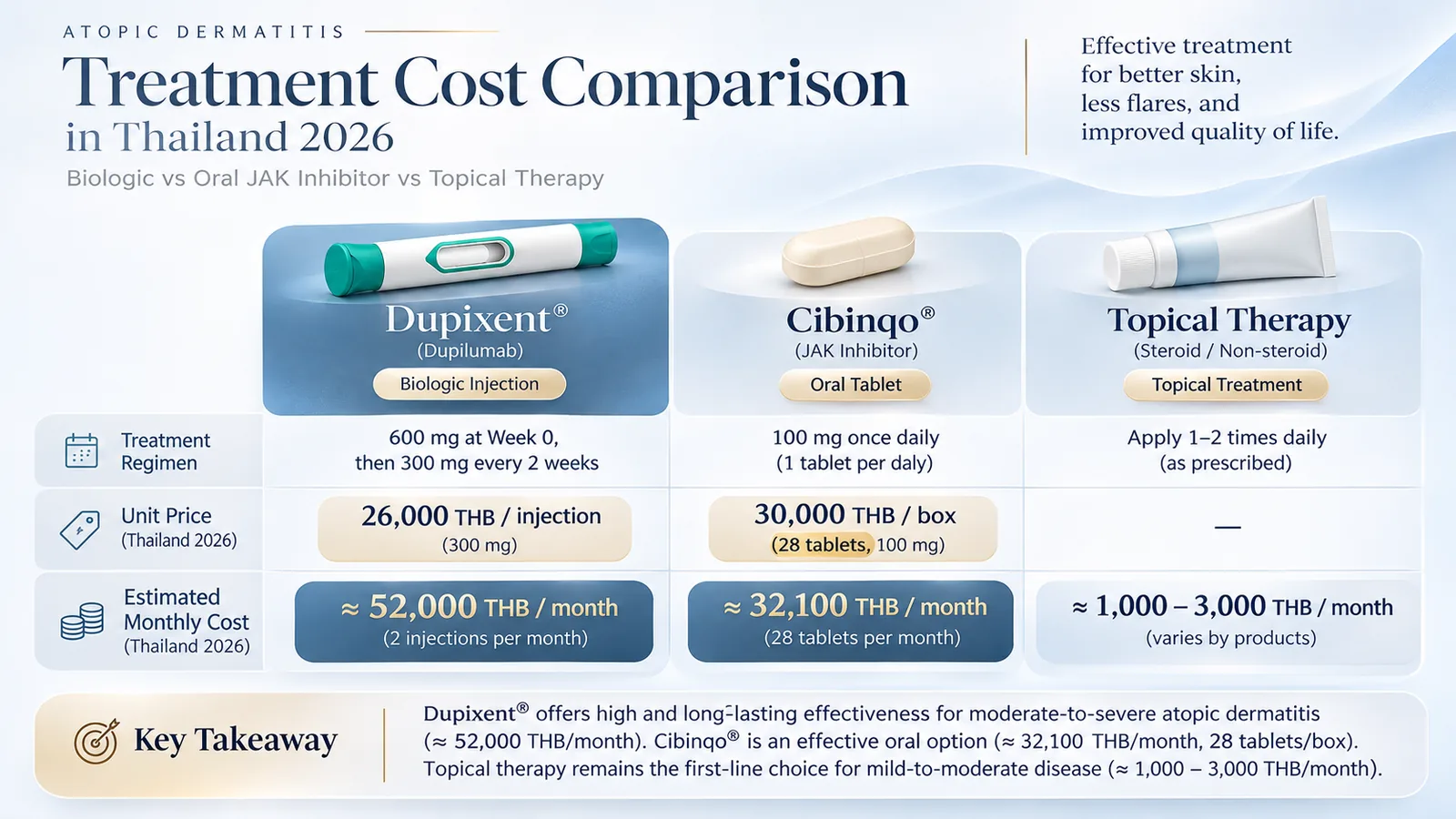
The more useful calculation is:
Total treatment cost = loading treatment + maintenance treatment + required monitoring
+ consultation/facility costs
For example, biologics can have different loading and maintenance schedules, while oral JAK inhibitors are taken every day and generally require more laboratory and risk assessment.
The least expensive medication per unit is therefore not necessarily the least expensive treatment over one year.
Biologic vs JAK Inhibitor: What Is the Main Difference?
| Feature | Biologics | Oral JAK inhibitors |
|---|---|---|
| Examples | Dupixent, Ebglyss, Adtralza | Rinvoq, Cibinqo |
| Administration | Injection | Tablet |
| Target | Specific inflammatory cytokine pathways | Intracellular JAK signaling |
| Frequency | Usually every few weeks depending on drug and response | Daily |
| Routine laboratory monitoring | Generally less intensive for these biologics | More important |
| Important considerations | Injection reactions, eye-related adverse effects with some agents | Infection, laboratory abnormalities and important systemic safety warnings |
| Best option | Depends on individual patient | Depends on individual patient |
This comparison is intentionally simplified. Individual drugs within each category have different indications, precautions and adverse-effect profiles.
Are JAK Inhibitors More Dangerous Than Biologics?
It is more accurate to say that their safety considerations are different.
Oral JAK inhibitors require careful patient selection.
Regulatory warnings for this drug class include serious infections and concerns involving malignancy, major cardiovascular events and thrombosis. Cibinqo labeling also includes important boxed warnings. (U.S. Food and Drug Administration)
This does not mean that every patient taking a JAK inhibitor will develop these problems.
It means that age, smoking history, cardiovascular risk, previous thrombosis, malignancy history, infection risk and other medical factors should be reviewed before prescribing.
For some patients, the balance of benefits and risks can still favor a JAK inhibitor.
Do Biologics Require Blood Tests?
One practical difference between biologics and oral JAK inhibitors is laboratory monitoring.
Dupilumab and IL-13-targeting biologics generally do not require the same routine laboratory-monitoring strategy used with oral JAK inhibitors.
JAK inhibitors may require assessment such as:
- complete blood count
- liver function
- lipid profile
- infection screening
- tuberculosis assessment
- hepatitis assessment where clinically appropriate
The exact tests depend on the medication, labeling, patient history and local clinical practice.
This additional monitoring should be considered when comparing the true cost and convenience of treatment.
What Side Effects Can Occur with Biologic Treatment?
Side effects differ between medications.
For biologics used in atopic dermatitis, possible adverse effects can include:
- injection-site reactions
- conjunctivitis or other eye symptoms with some agents
- hypersensitivity reactions
- other drug-specific adverse effects
Patients who develop persistent red eyes, eye pain, significant visual symptoms or severe allergic symptoms should contact their treating physician.
What Side Effects Can Occur with JAK Inhibitors?
Depending on the specific JAK inhibitor, adverse effects may include:
- infections
- acne
- herpes zoster
- changes in blood counts
- liver-enzyme abnormalities
- lipid changes
There are also more serious safety considerations involving severe infections, thrombosis, cardiovascular events and malignancy that require appropriate risk assessment. (U.S. Food and Drug Administration)
The presence of these warnings does not automatically make a JAK inhibitor inappropriate. It makes patient selection and monitoring important.
Which Treatment Works Fastest?
Speed of improvement is relevant, especially for patients whose main problem is severe itching and sleep disruption.
JAK inhibitors can provide relatively rapid improvement in itch in some patients, while biologics also substantially improve disease control in many appropriate patients.
However, treatment should not be selected from speed alone.
A dermatologist should also consider:
- long-term safety
- age
- pregnancy plans
- cardiovascular risk
- infection risk
- previous herpes zoster
- previous systemic treatments
- other allergic diseases
- other medical conditions
- preference for injection versus daily tablets
- need for laboratory monitoring
- treatment cost and insurance
The treatment that acts fastest is not automatically the treatment with the best overall benefit-risk balance for a particular patient.
Dupixent vs Ebglyss: What Is the Difference?
Both are biologic treatments, but they do not target exactly the same pathway.
Dupixent (dupilumab) blocks signaling involving IL-4 and IL-13.
Ebglyss (lebrikizumab) selectively targets IL-13. (U.S. Food and Drug Administration)
Their dosing schedules also differ, particularly after an adequate treatment response.
For patients comparing long-term costs, the important question is therefore not:
“Which injection is cheaper?”
It is:
“What will my actual dosing schedule be, and what is the expected total annual treatment cost?”
Ebglyss vs Adtralza: Are They the Same?
No.
Both target IL-13, but lebrikizumab and tralokinumab are different monoclonal antibodies with different molecular properties, clinical trial programs and dosing regimens.
They should not be treated as interchangeable simply because they target the same cytokine.
There is also no sound reason to assume that one is automatically the “best IL-13 biologic” for every patient.
Dupixent vs Rinvoq: Injection or Tablet?
This is a common practical decision.
Dupixent offers biologic therapy by injection and generally requires less routine laboratory monitoring.
Rinvoq is an oral JAK inhibitor taken daily and can be attractive to patients who prefer tablets or require a different systemic approach, but its safety profile and monitoring requirements are different.
The decision should therefore consider medical suitability first and convenience second.
Why Price Per Injection Can Be Misleading
Suppose Drug A costs less per injection than Drug B.
Drug A may still cost more over a year if it requires substantially more injections.
Similarly, a daily tablet that appears inexpensive per tablet may become expensive when multiplied by 365 days and combined with laboratory monitoring.
A useful price comparison should therefore include:
| Cost component | Why it matters |
|---|---|
| Loading dose | Initial treatment may require additional injections |
| Maintenance frequency | Determines long-term medication use |
| Dose/strength | Different patients may require different doses |
| Number of doses per year | Better reflects annual drug cost |
| Blood monitoring | Particularly relevant to JAK inhibitors |
| Consultation | May vary between facilities |
| Insurance | Can dramatically change out-of-pocket cost |
| Treatment response | May influence whether treatment continues or changes |
What Is the Cheapest Biologic for Atopic Dermatitis in Thailand?
There is currently not enough reliable, standardized public retail-price information to name one biologic as the cheapest atopic dermatitis biologic in Thailand.
Doing so based on overseas list prices or isolated procurement figures would be misleading.
Instead, patients should compare a written estimate based on their expected regimen.
Ask for:
“What is my estimated medication cost for the first 16 weeks, and what would the approximate annual cost be if I respond and continue maintenance treatment?”
That question produces a much more useful answer than asking only for the price per syringe.
Does Insurance in Thailand Cover Biologic Treatment for Atopic Dermatitis?
Coverage varies substantially.
Some private health-insurance policies may cover systemic treatment when medically indicated, while others may exclude outpatient medication, biologic drugs, pre-existing conditions or certain high-cost therapies.
International patients should ask their insurer whether they require:
- pre-authorization
- a dermatologist’s medical report
- documentation of disease severity
- previous topical-treatment failure
- previous systemic-treatment failure
- laboratory results
- an itemized quotation
Do not assume coverage simply because a medication has been prescribed.
How Does a Dermatologist Decide Whether Atopic Dermatitis Is Severe Enough for Systemic Treatment?
A dermatologist does not make this decision from one photograph alone.
Assessment may include:
- percentage of body surface affected
- severity of redness, thickening and scratching
- intensity of itch
- sleep disturbance
- frequency of flares
- facial, hand or genital involvement
- effect on work or school
- previous treatment response
- amount of topical medication required
- recurrent infection
- impact on quality of life
Formal scoring systems such as EASI, IGA, SCORAD or patient-reported measures may be useful in selected settings.
Do You Need an Allergy Test Before Starting a Biologic?
Not routinely.
Atopic dermatitis is a complex inflammatory disease and is not simply the result of one food or environmental allergy.
Routine broad allergy testing or elimination diets are not necessary for every patient with eczema. The 2023 AAAAI/ACAAI guideline specifically advises against routine elimination diets as a general strategy for atopic dermatitis. (AAAAI)
Allergy testing should be guided by the patient’s history and the clinical question being investigated.
Can Diet Cure Atopic Dermatitis?
There is no universal “eczema diet” that cures atopic dermatitis.
Unnecessary food restriction can create nutritional and quality-of-life problems, particularly in children.
Food allergy should be evaluated when the clinical history genuinely suggests it rather than assuming that chronic eczema means the patient is allergic to multiple foods.
Do Patients Still Need Moisturizer and Topical Treatment After Starting a Biologic?
Often, yes.
Systemic treatment does not make skin-barrier care irrelevant.
Moisturizers and appropriate topical anti-inflammatory treatment may still be used depending on disease activity and the medication prescribed.
The aim is not simply to replace every cream with an injection or tablet. The goal is to obtain durable disease control with an acceptable treatment burden and safety profile.
Can Atopic Dermatitis Be Cured Permanently?
Current treatments can control atopic dermatitis very effectively in many patients, but they should not be presented as a guaranteed permanent cure.
Atopic dermatitis is a chronic inflammatory disease.
Symptoms can improve substantially, and some patients achieve long periods of excellent control, but disease activity can recur.
Long-term management may therefore involve:
- skin-barrier care
- trigger management
- topical treatment when necessary
- systemic treatment in appropriate patients
- reassessment over time
What Happens If a Biologic Stops Working?
An inadequate response does not necessarily mean that all biologic treatment has failed.
A dermatologist may reassess:
- whether the diagnosis is correct
- treatment adherence
- duration of treatment
- concurrent contact dermatitis
- infection
- facial or head-and-neck dermatitis
- topical treatment
- treatment dose and schedule
- whether another systemic mechanism may be more appropriate
Switching treatment may sometimes be reasonable, but it should follow reassessment rather than automatically moving to the newest or most expensive medication.
Warning Signs: When Should an Atopic Dermatitis Patient Seek Medical Care?
Seek medical assessment if eczema becomes:
- rapidly more painful
- warm, swollen or increasingly tender
- associated with pus or extensive crusting
- associated with fever
- suddenly covered with painful blisters or erosions
- rapidly spreading
- severe enough to prevent sleep or normal daily activities
Patients with atopic dermatitis can develop secondary bacterial or viral infections.
A sudden eruption of painful, similar-looking blisters or punched-out erosions, particularly with fever or feeling unwell, can indicate eczema herpeticum, which requires prompt medical evaluation.
What to Expect During an Atopic Dermatitis Consultation in Bangkok
For a patient considering biologic or JAK inhibitor treatment, the consultation should involve more than choosing a brand.

A useful assessment should address:
- Is the diagnosis truly atopic dermatitis?
- How severe is the disease?
- Which areas are involved?
- How much does itching affect sleep and daily life?
- Which topical treatments have already been used?
- Have systemic treatments been tried?
- Are there recurrent infections?
- Are there eye problems?
- Are there other allergic diseases such as asthma?
- What other medical conditions are present?
- What medications is the patient taking?
- Is pregnancy planned?
- What laboratory or infection screening is required?
- Which treatment has the most appropriate benefit-risk profile?
- What will the treatment realistically cost over one year?
For expats and international patients in Bangkok, bringing previous prescriptions, laboratory results and a list of prior treatments can make the consultation more useful.
How to Compare Atopic Dermatitis Treatment Prices in Thailand
Before deciding on treatment, ask for these five numbers:
1. Price per injection or box
This is only the starting point.
2. Loading-dose cost
Some biologics require additional injections at the beginning.
3. First 16-week cost
This is a useful standardized period because many treatment decisions involve assessment of the initial response.
4. Estimated first-year medication cost
This provides a much better comparison between different dosing schedules.
5. Ongoing annual maintenance cost
The first year and subsequent years may not cost the same because loading treatment occurs only at initiation and some biologics may allow less frequent maintenance dosing in responders.
This is the most patient-friendly way to compare expensive long-term treatment.
Bottom Line: Which Atopic Dermatitis Treatment Offers the Best Value?
There is no single answer for every patient.
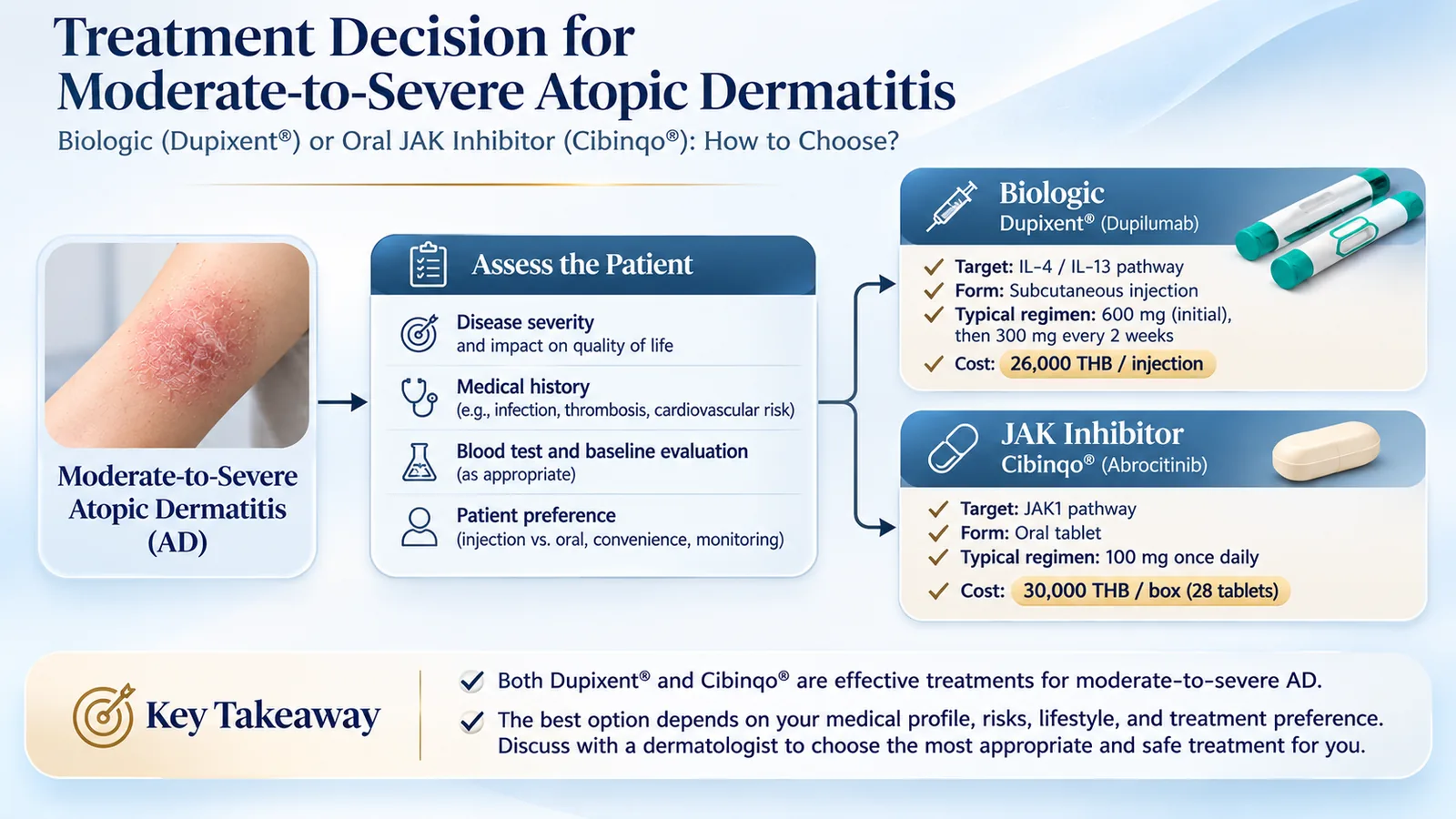
Dupixent, Ebglyss and Adtralza are biologics, while Rinvoq and Cibinqo are oral JAK
inhibitors. They differ in mechanism, dosing frequency, monitoring requirements, safety considerations and cost.
For patients comparing treatment in Thailand, the key points are:
- Do not compare medications using price per injection alone.
- Compare the loading phase and maintenance phase separately.
- Calculate approximate annual medication cost.
- Include laboratory monitoring when comparing JAK inhibitors.
- Confirm current Thai pricing rather than using overseas prices.
- Check insurance authorization before treatment when applicable.
- Choose treatment according to medical suitability, not price alone.
The cheapest medicine is not necessarily the treatment with the lowest total cost—and the most expensive treatment is not automatically the most effective or appropriate.
For moderate-to-severe atopic dermatitis, treatment selection should ultimately balance disease severity, expected benefit, safety, convenience, monitoring requirements and affordability.
Frequently Asked Questions
How much does Dupixent cost in Thailand?
A Thai public procurement document in 2026 listed dupilumab 300 mg/2 mL at approximately 25,749.55 baht per unit. This is a procurement reference and should not be interpreted as a guaranteed retail or hospital patient price. (IOD)
How much does Ebglyss cost in Thailand?
A reliable standardized public Thai retail price was not confirmed for this review. Patients should obtain a current quotation from the prescribing facility.
How much does Adtralza cost in Thailand?
Publicly verifiable Thai retail pricing is currently insufficient for a reliable patient-price estimate. Availability and current pricing should be confirmed before treatment.
How much does Cibinqo cost in Thailand?
A recent Thai public procurement document listed Cibinqo 200 mg, 28 tablets at 12,432.33 baht per box as a procurement reference price. Actual patient charges may differ. (Hospital TU)
Which is cheaper, Dupixent or Ebglyss?
Price per injection is not enough to answer this because the maintenance schedules differ. The appropriate comparison is estimated annual treatment cost using current Thai prices and the patient’s expected dosing schedule.
Which is cheaper, Dupixent or Rinvoq?
This depends on current Thai medication prices, the prescribed Rinvoq strength, Dupixent dosing, laboratory-monitoring costs and insurance coverage.
Is Dupixent a steroid?
No. Dupixent is a biologic monoclonal antibody and is not a corticosteroid.
Is Ebglyss a steroid?
No. Ebglyss is a biologic monoclonal antibody targeting IL-13.
Is Adtralza a steroid?
No. Adtralza is an IL-13-targeting monoclonal antibody.
Is Rinvoq a biologic?
No. Rinvoq is an oral small-molecule JAK inhibitor.
Is Cibinqo a biologic?
No. Cibinqo is an oral JAK1 inhibitor.
Which biologic is best for atopic dermatitis?
There is no universally best biologic. Treatment should be individualized according to age, severity, previous treatment, associated diseases, safety considerations, dosing preference, availability and cost.
Are biologics safer than JAK inhibitors?
They have different safety profiles. JAK inhibitors carry important systemic warnings and generally require more risk assessment and laboratory monitoring. This does not mean that they are inappropriate for every patient.
Do I need blood tests before Dupixent?
Dupilumab generally does not require the same routine laboratory-monitoring program used for oral JAK inhibitors, although a dermatologist may order tests for other clinical reasons.
Do I need blood tests before Rinvoq or Cibinqo?
Laboratory and infection screening are generally important when considering oral JAK inhibitors. The exact tests depend on the medication and individual patient.
Can I stop treatment once my eczema is clear?
Do not stop or alter systemic treatment without discussing it with your prescribing doctor. Long-term treatment strategy depends on the medication, response, disease history and risk of relapse.
Can atopic dermatitis come back after stopping a biologic?
Yes. Biologics control the inflammatory pathways involved in the disease but are not guaranteed permanent cures. Disease activity may return after treatment is discontinued.
Can tourists start biologic treatment in Bangkok?
It may be possible, but biologic treatment is usually a long-term management decision. International patients should consider medication availability in their home country, refrigeration and transport where relevant, follow-up, insurance, and continuity of prescribing before starting treatment during a short trip.
Medically reviewed by
Reviewed on
Related articles
-
Skin Conditions & Rashes Heat Rash in Thailand: Causes, Treatment & Prevention Developing small, itchy bumps while traveling in Thailand is common, particularly during hot and humid weather. You may notice a prickling sensation on your neck, red bumps across your chest, or an irritating rash on your back after spending time outdoors.

-
Skin Conditions & Rashes Sun Rash and Sun Allergy in Thailand: Symptoms, Causes and Treatment Developing an itchy rash after spending time outdoors in Thailand can be confusing. You may notice small red bumps on your arms, an itchy rash across your chest, or raised welts that appear shortly after exposure to sunlight.
-
Skin Conditions & Rashes Developed a Skin Rash While Traveling in Thailand? Common Causes and What to Do Developing a skin rash while traveling in Thailand can be uncomfortable and sometimes worrying, especially when you are unfamiliar with the local climate, insects, plants, or potential infections.