





























Excessive Hair Shedding
Seeing more hair than usual in the shower, on your pillow, or in your hairbrush can be alarming. However, excessive hair shedding is not always the same as permanent hair loss.
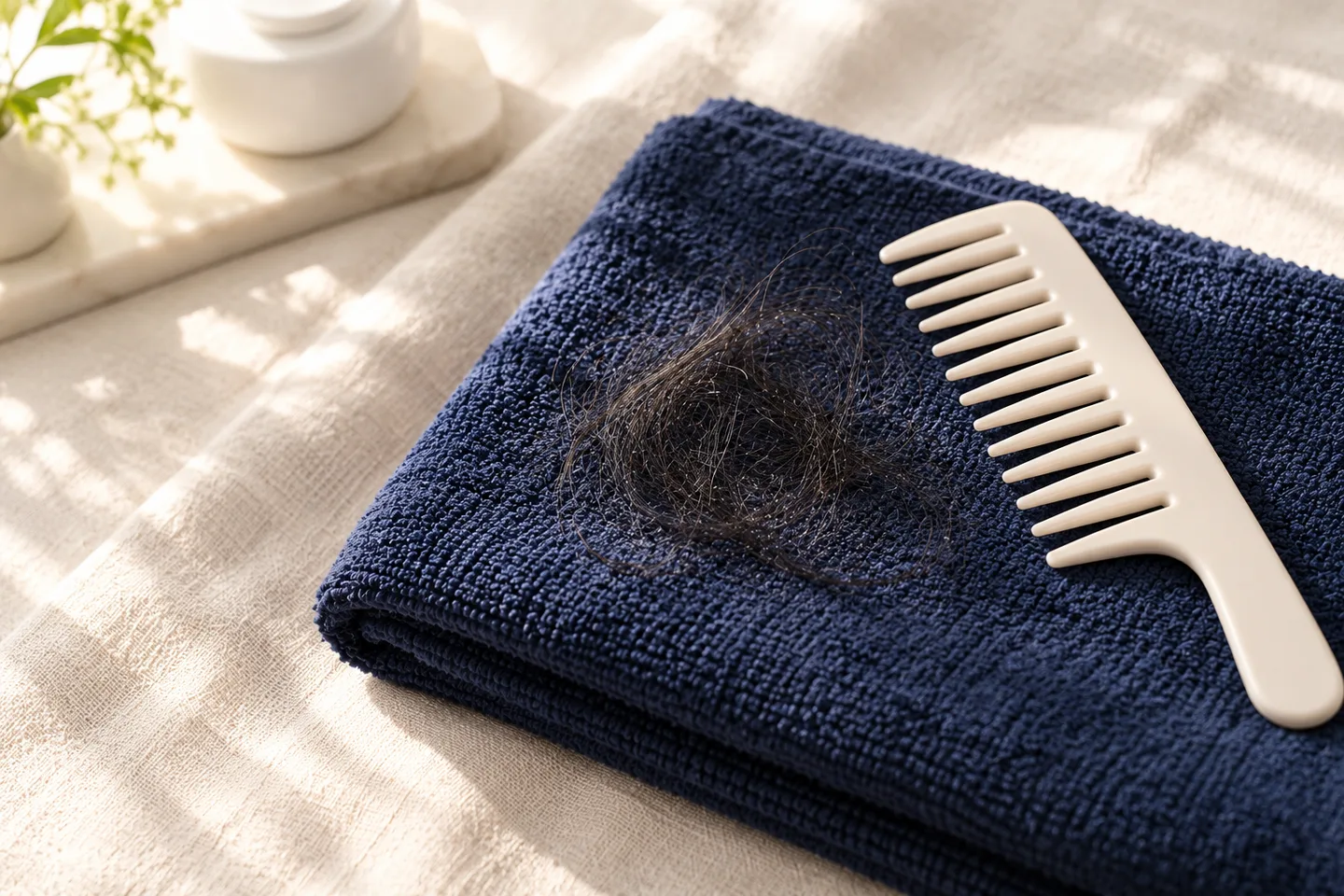
One of the most common causes is telogen effluvium, a temporary disturbance of the normal hair-growth cycle. It often develops a few months after a physical or emotional stressor such as illness, high fever, surgery, childbirth, rapid weight loss, major stress, nutritional deficiency, or certain medication changes.
Many cases eventually improve once the underlying trigger has resolved. However, persistent or severe shedding deserves proper evaluation because excessive hair loss can also occur with iron deficiency, thyroid disease, pattern hair loss, alopecia areata, scalp disorders, medications, and other medical conditions.
For patients in Bangkok—whether Thai residents, expats, or visitors—the most useful first step is not simply buying a hair supplement. It is determining why the hair is shedding.
What Is Excessive Hair Shedding?
Every scalp naturally loses hair as part of the normal hair-growth cycle.
Shedding approximately 50–100 hairs per day is generally considered normal. When significantly more hairs enter the shedding phase at the same time, the condition is referred to as excessive hair shedding, medically called telogen effluvium in many cases.
The important distinction is that hair can be:
- Shedding excessively from the root
- Becoming progressively thinner
- Breaking along the hair shaft
- Falling out in patches
- Being permanently lost because hair follicles are damaged
These patterns do not all have the same cause or treatment.
Excessive Hair Shedding vs Hair Loss
Patients often use the terms interchangeably, but dermatologists make an important distinction.
Excessive hair shedding
Typical features include:
- More hair in the shower or drain
- Hair coming out while shampooing
- Increased hair on the pillow or floor
- Diffuse shedding across the scalp
- No completely bald patches
- Usually no destruction of the hair follicles
Telogen effluvium is the classic example.
Progressive hair thinning
Pattern hair loss generally develops more gradually.
Women may notice:
- Widening of the central part
- Reduced density over the top of the scalp
- A thinner ponytail
- Increased scalp visibility
Men may notice:
- Receding temples
- Thinning over the crown
- Progressive reduction in hair density
Pattern hair loss and excessive shedding can occur at the same time. Telogen effluvium may make previously mild genetic hair thinning much more noticeable.
What Is Telogen Effluvium?
Hair follicles normally cycle through several stages.
During the growth phase, hair actively becomes longer. Eventually, the follicle enters a resting phase before the old hair is shed and replaced by new growth.
Telogen effluvium occurs when an unusually large number of hairs move into the resting phase after the body experiences a significant physiological or psychological change.
The unusual feature is the delay.
Patients often start shedding hair approximately two to four months after the triggering event, so they may not immediately connect their hair loss with the illness, surgery, stress, or dietary change that happened months earlier.
For example, someone may recover completely from a fever and only begin noticing heavy hair shedding several months later.
Common Causes of Excessive Hair Shedding
There is rarely one universal cause.
A dermatologist will usually look back several months before the shedding began.
Illness and high fever
Significant illness—especially illness accompanied by fever—can disrupt the hair cycle.
The patient may have recovered fully by the time excessive shedding becomes noticeable.
Major physical stress
Possible triggers include:
- Major surgery
- Hospitalization
- Significant injury
- Severe infection
- Major blood loss
The hair shedding usually occurs after the triggering event rather than immediately.
Psychological stress
Major psychological stress can contribute to telogen effluvium.
However, it is important not to automatically label all unexplained hair loss as “stress.
” Persistent shedding should still be evaluated for other causes.
Rapid weight loss and restrictive dieting
Rapid weight reduction, very restrictive diets, inadequate protein intake, and nutritional deficiencies may trigger excessive shedding.
This is particularly relevant when patients have recently:
- Lost substantial weight
- Changed their diet dramatically
- Reduced calorie intake
- Had difficulty eating
- Followed highly restrictive diets
Iron deficiency
Iron deficiency is an important consideration in diffuse hair shedding, particularly when accompanied by anemia, heavy menstrual bleeding, restrictive eating, or other risk factors.
A dermatologist may therefore consider testing blood count and iron stores when clinically appropriate.
However, hair loss should not be diagnosed as iron deficiency based solely on symptoms, and iron supplements should not be taken indefinitely without establishing whether deficiency is actually present.
Thyroid disease
Both an underactive and overactive thyroid can contribute to diffuse hair shedding.
Testing may be appropriate when the history or examination suggests thyroid dysfunction.
Childbirth
Postpartum hair shedding is extremely common.
During pregnancy, hormonal changes can keep more hairs in the growing phase. After delivery, many of these hairs may enter the resting phase and shed around the same period.
This can appear dramatic but is often temporary.
Medication changes
Some medications can contribute to diffuse shedding.
This does not mean patients should stop prescription medication on their own.
Instead, tell the dermatologist about medications and supplements started, stopped, or changed during the months before hair shedding began.
Can Travel Cause Hair Shedding?
Travel by itself does not usually cause permanent hair loss.
However, international travel may coincide with factors that affect the hair cycle, including:
- Significant sleep disruption
- Illness
- Dietary changes
- Weight loss
- Psychological stress
- Changes in medication
Overseas travel associated with significant jet lag is considered one of the possible triggers for telogen effluvium.
For international patients visiting Bangkok, mentioning recent travel, illness, hospitalization, or major lifestyle changes can therefore be useful during consultation.
What Does Telogen Effluvium Look Like?
The typical pattern is diffuse shedding across the scalp rather than one completely bald area.
Patients commonly describe:
“Every time I wash my hair, so much comes out.
”
or:
“My ponytail suddenly feels much thinner.
”
The scalp itself usually looks relatively normal.
There should not typically be significant:
- Redness
- Thick scaling
- Pustules
- Severe itching
- Burning
- Scarring
A normal-looking scalp with increased diffuse shedding is compatible with telogen effluvium, although examination is still needed to distinguish it from other types of hair loss.
Why Does Hair Start Falling Out Months After the Trigger?
This delay is one of the most confusing features for patients.
When illness, stress, nutritional problems, or another trigger alters the hair cycle, affected hairs do not necessarily fall immediately.
Instead, they enter the resting stage and remain in the scalp for a period before being released.
As a result, the trigger may happen in January while noticeable shedding does not begin until March or April.
This timing is an important clue during a dermatology consultation.
Acute vs Chronic Excessive Hair Shedding
Acute telogen effluvium
Acute telogen effluvium is generally defined as shedding lasting less than about six months.
It commonly occurs after an identifiable trigger such as illness, childbirth, surgery, or significant weight loss.
Once the trigger has resolved, shedding usually gradually decreases.
Chronic telogen effluvium
If excessive shedding continues for more than approximately six months, it may be classified as chronic telogen effluvium.
Some patients have fluctuating periods of heavy and lighter shedding, and a clear trigger cannot always be identified.
Persistent shedding deserves reassessment because another hair disorder may also be present.
Other Conditions That Can Look Like Excessive Hair Shedding
Telogen effluvium is common, but it is not the only cause of diffuse hair loss.
Female pattern hair loss
Women may notice gradual thinning over the central scalp and widening of the part.
Telogen effluvium can occur at the same time and make genetic thinning suddenly appear much worse.
Male pattern hair loss
Men typically develop progressive thinning at the temples, frontal scalp, or crown.
Unlike acute telogen effluvium, this tends to progress gradually.
Alopecia areata
Alopecia areata is an autoimmune form of hair loss.
It commonly produces round or oval bald patches, although some forms can cause more diffuse hair loss and resemble telogen effluvium.
Anagen effluvium
Anagen effluvium is different from telogen effluvium.
It occurs when hairs are damaged while actively growing. The best-known cause is chemotherapy, although other drugs and toxic exposures can occasionally be responsible.
Hair loss may begin much more rapidly and can be extensive.
Hair breakage
Sometimes what appears to be shedding is actually hair shaft breakage.
Possible causes include:
- Bleaching
- Chemical straightening
- Repeated heat styling
- Excessive mechanical trauma
- Tight hairstyles
- Hair shaft disorders
Examining the shed hairs and scalp can help distinguish breakage from hair coming out at the root.
Scalp disease
Inflammatory or infectious scalp conditions can also contribute to hair loss.
Signs that suggest something beyond straightforward telogen effluvium include:
- Persistent scaling
- Significant itching
- Pain or burning
- Pustules
- Crusting
- Redness
- Scarring
- Broken hairs
How Does a Dermatologist Diagnose Excessive Hair Shedding?
Diagnosis begins with history and scalp examination.
The dermatologist may ask what happened approximately two to six months before the shedding started.
Important questions include:
- When did shedding begin?
- Was onset sudden or gradual?
- Is hair coming from everywhere or one area?
- Have you had fever or illness?
- Have you recently had surgery?
- Have you lost weight?
- Has your diet changed?
- Have you recently given birth?
- Have your menstrual periods changed?
- Have you started or stopped medication?
- Is there a family history of pattern hair loss?
- Do you have itching, scaling, or scalp pain?
A careful timeline is often one of the most useful diagnostic tools.
Scalp Examination and Hair Pull Test
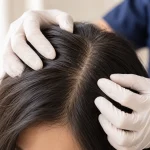
A dermatologist examines both the hair shafts and scalp.
A hair pull test may be performed by gently pulling a small group of hairs to assess whether an unusually large number come away.
Dermoscopic examination of the scalp may also help evaluate:
- Hair density
- Variation in hair diameter
- Miniaturized hairs
- Broken hairs
- Follicular openings
- Inflammation
- Features suggestive of alopecia areata or pattern hair loss
No single test should be interpreted without the overall clinical picture.
Do You Need Blood Tests for Hair Shedding?
Not everyone with excessive hair shedding needs the same blood tests.
Testing should be guided by medical history, examination, diet, symptoms, and risk factors.
Depending on the situation, a dermatologist may consider investigations for problems such as:
- Anemia
- Iron deficiency
- Thyroid dysfunction
- Selected nutritional deficiencies
It is important to correct abnormalities such as iron deficiency and thyroid dysfunction when they are present.
Broad panels of vitamins, minerals, and hormones are not automatically necessary for every patient.
Ferritin and Hair Shedding
Ferritin is a blood marker used to help assess the body’s iron stores.
Low ferritin can support a diagnosis of iron deficiency and may be relevant in a patient with diffuse hair shedding.
However, there is no single universally accepted ferritin target that guarantees hair regrowth, and hair loss should not be attributed to ferritin alone without considering the rest of the clinical picture.
If iron deficiency is confirmed, the cause should also be considered—for example:
- Heavy menstrual bleeding
- Insufficient dietary iron
- Gastrointestinal blood loss
- Malabsorption
- Recent blood donation
- Pregnancy-related requirements
Simply taking more iron without confirming deficiency is not necessarily beneficial and excessive supplementation can cause harm.
Does Low Vitamin D Cause Hair Shedding?
Vitamin D has been studied in several hair-loss disorders, but finding a low vitamin D level does not automatically prove that it is the sole cause of excessive shedding.
If deficiency is clinically suspected or confirmed, it should be corrected for general health.
The same principle applies to many supplements promoted for hair growth: laboratory abnormalities should be interpreted in context rather than assuming that every patient needs a large supplement panel.
Does Biotin Help Excessive Hair Shedding?
Biotin deficiency can affect hair, but true deficiency is uncommon.
Taking high-dose biotin without evidence of deficiency has not been established as a universal treatment for telogen effluvium.
High-dose biotin can also interfere with some laboratory tests.
For most patients, identifying the actual cause of shedding is more useful than automatically adding multiple “hair vitamins.
”
Treatment for Excessive Hair Shedding
Treatment depends on the diagnosis.
There is no single treatment that is appropriate for every person with heavy hair shedding.
1. Identify and correct the trigger
This is the most important step when telogen effluvium is present.
Examples include:
- Correcting confirmed iron deficiency
- Treating thyroid disease
- Improving inadequate nutritional intake
- Addressing excessive weight loss
- Managing an underlying illness
- Reviewing potentially relevant medications with the prescribing doctor If a medication may be contributing, do not stop it without medical advice.
2. Ensure adequate nutrition
A balanced diet with sufficient protein and calories is important for normal hair production.
Repeated crash diets and rapid weight loss can perpetuate shedding.
Supplements should be targeted toward documented or clinically suspected deficiencies rather than taken indiscriminately.
3. Gentle hair care
Telogen effluvium is not caused by washing the hair.
Patients sometimes wash less frequently because seeing shed hair in the shower is distressing. This can make it appear that even more hair is being lost on the next wash because hairs that would normally have fallen over several days come out together.
Gentle care is preferable:
- Shampoo normally
- Avoid excessive brushing
- Minimize repeated bleaching and chemical processing
- Reduce very high heat
- Avoid tight hairstyles if they pull on the scalp
It is recommended to handle hair gently while telogen effluvium is active.
4. Minoxidil
Minoxidil may be considered in selected patients, particularly when another condition such as pattern hair loss is also present.
It is not automatically necessary for every episode of acute telogen effluvium because many episodes recover after the trigger resolves.
Potential disadvantages include:
- Scalp irritation
- Unwanted facial hair in some patients
- An initial temporary increase in shedding
- The need for ongoing treatment when being used for pattern hair loss Whether minoxidil is appropriate depends on the underlying diagnosis rather than simply the amount of hair seen in the shower.
How Long Does Excessive Hair Shedding Last?
Acute telogen effluvium often sheds actively for several months.
Once the trigger has resolved, shedding gradually improves and new hairs continue growing.
However, there is an important difference between:
the shedding stopping
and
the hair looking fully dense again.
Hair grows slowly. Even after shedding normalizes, visible restoration of density can take considerably longer because new hairs need time to gain length and volume.
Patients with long hair may therefore feel that recovery is slow even when normal regrowth has already started.
Does Telogen Effluvium Cause Permanent Baldness?
Classic telogen effluvium is a non-scarring form of hair loss.
The follicles remain present, so hair can regrow once the trigger resolves.
However, telogen effluvium can reveal another underlying condition, particularly genetic pattern hair loss.
For example, someone may already have mild female pattern hair loss that was not noticeable until a major episode of shedding reduced overall density.
If hair remains noticeably thinner after shedding settles, reassessment may be useful.
Can Excessive Hair Shedding Come Back?
Yes.
A new physiological stressor can trigger another episode.
Repeated episodes may occur after:
- Recurrent illness
- Repeated rapid weight loss
- Chronic nutritional deficiency
- Medication changes
- Ongoing medical conditions
Chronic telogen effluvium can also fluctuate without an obvious single trigger.
Is Bangkok’s Heat or Humidity Causing My Hair Loss?
Bangkok’s hot and humid climate can increase sweating and make the scalp feel oily more quickly, but sweating itself is not a typical cause of telogen effluvium.
More relevant factors may include:
- Recent illness
- Weight changes
- Diet
- Travel
- Sleep disruption
- Psychological stress
- Scalp inflammation
- Underlying genetic hair loss
Patients who recently moved to Thailand may notice hair shedding around the same time and assume the climate is responsible. A timeline of events is usually more helpful than attributing shedding to weather alone.
Does Washing Your Hair Every Day Cause Hair Loss?
Normal shampooing does not cause telogen effluvium.
When hairs have already completed their growth cycle and are ready to shed, washing simply helps release them.
People who wash their hair less frequently may see a larger amount come out on washing days because several days’ worth of shed hair has accumulated.
The important question is therefore not how much hair appears during one shampoo, but whether there has been a sustained change in overall shedding and hair density.
Should You Count How Many Hairs You Lose?
Usually, exact daily counting is unnecessary and may create additional anxiety.
A more useful approach is to notice changes such as:
- Clearly increased shedding compared with your usual baseline
- Reduced ponytail diameter
- Widening of the part
- Increased scalp visibility
- Persistent shedding for several months
Standardized photographs taken in similar lighting and hair positioning can sometimes be more useful for following hair density over time.
When Should You See a Dermatologist for Excessive Hair Shedding?
A short period of increased shedding after a clear trigger may recover spontaneously.
However, dermatologic evaluation is particularly useful when:
- Hair shedding is severe
- Shedding continues for several months
- There is no obvious trigger
- Hair density continues to decrease
- The part is becoming wider
- There are bald patches
- Eyebrows or eyelashes are affected
- The scalp is painful, burning, red, or very itchy
- There is significant scaling or crusting
- Hair shafts are breaking
- There is evidence of scarring
- You have symptoms suggestive of anemia or thyroid disease
- There has been significant unexplained weight change
- You are taking medications that may affect hair growth
- Hair does not appear to recover after the suspected trigger has resolved Sudden extensive hair loss involving most of the scalp or hair loss associated with significant systemic illness should receive timely medical assessment.
What to Expect During a Hair Loss Consultation in Bangkok
A proper hair-loss consultation should focus on establishing the diagnosis rather than immediately recommending a treatment package.
The dermatologist will typically review the timing and pattern of shedding and examine both the scalp and individual hairs.
Bring information about:
- When shedding started
- Illnesses during the previous several months
- Fever or hospitalization
- Surgery
- Recent pregnancy or childbirth
- Weight loss
- Dietary changes
- Menstrual history when relevant
- Medication changes
- Supplements
- Previous blood-test results
- Family history of hair thinning
Photos showing your hair density before shedding began can also be useful.
For tourists or international patients in Bangkok, mention how long you will remain in Thailand. This can help determine which investigations can realistically be completed and how follow-up should be arranged.
Frequently asked questions
Why is my hair suddenly shedding so much?
One common explanation is telogen effluvium, particularly if you had an illness, fever, significant stress, surgery, childbirth, rapid weight loss, or another physical change several months earlier.
Other causes should be considered if the pattern is atypical or persistent.
How much daily hair shedding is normal?
The American Academy of Dermatology describes approximately 50–100 hairs per day as normal for many people.
However, exact counting is less useful than recognizing a clear change from your usual level of shedding.
Why did my hair start falling out three months after I was sick?
Telogen effluvium has a delayed onset because affected follicles enter the resting phase before the hairs are eventually released.
Shedding commonly becomes noticeable around two to four months after the triggering event.
Can stress really cause hair shedding?
Yes. Significant psychological or physiological stress is a recognized trigger for telogen effluvium.
However, persistent hair loss should not automatically be blamed on stress without considering other causes.
Can rapid weight loss cause hair loss?
Yes. Rapid weight loss, restrictive diets, inadequate protein intake, and nutritional deficiencies can contribute to telogen effluvium.
Can low iron cause excessive hair shedding?
Iron deficiency can be associated with diffuse hair loss and is one of the factors that may be investigated when clinically appropriate.
What ferritin level is needed for hair growth?
There is no universally accepted ferritin number that guarantees hair regrowth.
Ferritin should be interpreted together with blood count, iron status, symptoms, medical history, and other potential causes of hair loss.
Should I take iron for hair loss?
Only when iron deficiency is confirmed or a clinician recommends supplementation for a specific reason.
Taking iron unnecessarily can cause adverse effects and may delay investigation of the real cause.
Does biotin stop hair shedding?
Biotin is important for normal biology, but routine high-dose biotin has not been proven necessary for everyone with hair shedding.
True biotin deficiency is uncommon.
Does shampooing every day make hair fall out?
Normal shampooing does not cause telogen effluvium.
Hairs seen during washing were generally already in the process of shedding.
Should I stop washing my hair while it is shedding?
No. Washing less frequently does not stop hairs that have already entered the shedding phase.
Gentle normal hair care is usually preferable.
Does telogen effluvium grow back?
In typical cases, yes.
Telogen effluvium is non-scarring, and new hair continues to grow. Recovery occurs once the trigger resolves, although restoring visible density takes time.
How long does telogen effluvium last?
Acute telogen effluvium generally lasts several months. When shedding persists beyond approximately six months, chronic telogen effluvium or another diagnosis may need consideration.
Why is my hair still thin even though shedding has stopped?
New hair needs time to grow long enough to restore visible volume.
In addition, telogen effluvium can sometimes reveal underlying genetic pattern hair loss.
Can telogen effluvium and female pattern hair loss happen together?
Yes.
A temporary shedding episode can occur in someone who also has female or male pattern hair loss, which is an important reason to examine the scalp rather than assuming all diffuse shedding is temporary.
When should I worry about hair shedding?
Seek dermatologic evaluation if the loss is severe or persistent, develops in patches, causes visible progressive thinning, affects eyebrows or eyelashes, or is accompanied by redness, pain, itching, scaling, pustules, or scarring.
Related conditions
-
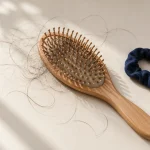
Male & Female Pattern Hair Loss Male & Female Pattern Hair Loss Male and female pattern hair loss—medically called androgenetic alopecia—is one of the most common causes of gradual hair thinning. In men, it often appears as a receding hairline or thinning at the crown. In women, it more often causes widening of the central part and reduced hair density over the top of the scalp.
-
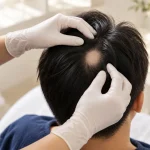
Alopecia Areata Alopecia Areata Alopecia areata is an autoimmune form of hair loss that most commonly causes sudden, smooth, round or oval bald patches on the scalp or beard. It can also affect the eyebrows, eyelashes and other body hair.
-
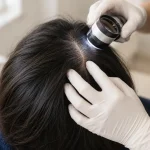
Scalp Disorders Scalp Disorders Scalp disorders are a common reason people seek dermatology care. Symptoms may include itching, flaking, redness, scaling, pimples, pustules, scalp pain, crusting, hair shedding or patchy hair loss.
-
Seborrheic Dermatitis Seborrheic Dermatitis Seborrheic dermatitis is a common inflammatory skin condition that causes redness, flaking, greasy or dry scales, and sometimes itching. It most often affects areas with many oil glands, including the scalp, eyebrows, sides of the nose, ears, beard area and upper chest.