





Rosacea
Rosacea is a chronic inflammatory skin condition that mainly affects the central face. It may cause persistent redness, frequent flushing, visible blood vessels, acne-like bumps, burning or sensitive skin, and sometimes eye symptoms.
Rosacea is not contagious and is not simply a form of acne. Although there is currently no permanent cure, symptoms can often be controlled with appropriate skincare, medication, trigger management and, in selected patients, laser or light-based treatment.
For people living in Bangkok, as well as expats, tourists and international patients, heat and sun exposure may make rosacea more noticeable or trigger flare-ups. The first step is confirming that facial redness is actually rosacea rather than acne, dermatitis or another skin condition.
What Is Rosacea?
Rosacea is a long-term inflammatory skin condition that most commonly affects the cheeks, nose, chin and forehead.
Symptoms vary between individuals and may include:
- Persistent facial redness
- Frequent flushing
- Visible small blood vessels
- Red inflammatory bumps
- Pustules
- Burning or stinging
- Dry or sensitive skin
- Eye irritation
- Thickening of the skin in more advanced cases
Not every patient has all of these symptoms. Treatment should therefore focus on the specific rosacea features present in each individual.
What Does Rosacea Look Like?
Rosacea can appear differently depending on skin tone and the type of symptoms present.
Persistent Facial Redness
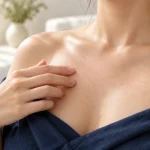
Persistent redness is one of the most recognizable signs of rosacea, particularly around the cheeks and nose.
In lighter skin tones, this may appear pink or red. In darker skin tones, redness can be more difficult to recognize and may appear as a darker, brownish or dusky discoloration.
Some patients mainly experience warmth, sensitivity or burning rather than obvious redness.
Facial Flushing
Patients with rosacea may notice that their face becomes red or hot more easily than before.
Common triggers include:
- Heat
- Sun exposure
- Exercise
- Stress
- Alcohol
- Spicy foods
- Hot drinks
In some patients, redness gradually becomes more persistent between episodes.
Visible Blood Vessels
Small dilated blood vessels may become visible around the cheeks and nose. These are known medically as telangiectasia.
Visible blood vessels usually do not respond to conventional acne treatment and may require a different approach.
Red Bumps and Pustules
Rosacea can cause red inflammatory bumps and pus-filled lesions that look similar to acne.
This type is commonly called papulopustular rosacea.
Because the appearance resembles acne, some patients use acne medication for months before realizing that they have rosacea.
Burning, Stinging and Sensitive Skin
Rosacea-prone skin is often sensitive.
Symptoms may include:
- Burning
- Stinging
- Tightness
- Dryness
- Irritation from skincare products
- Discomfort after washing
These symptoms can sometimes be as troublesome as the visible redness.
Can Rosacea Affect the Eyes?
Yes.
Rosacea involving the eyes or eyelids is called ocular rosacea.
Possible symptoms include:
- Dry eyes
- Burning or stinging
- Red eyes
- Gritty sensation
- Watery eyes
- Crusting around the eyelashes
- Eyelid inflammation
- Sensitivity to light
Eye symptoms can occur even when facial rosacea is relatively mild.
Patients with significant eye pain, marked light sensitivity, worsening vision or persistent severe eye inflammation should seek medical evaluation promptly.
What Is Rhinophyma?
Some patients with long-standing rosacea develop thickening of the skin, particularly around the nose.
When this occurs on the nose, it is called rhinophyma.
The nose may gradually become:
- Enlarged
- Thickened
- Irregular
- Bumpy
Established rhinophyma requires a different treatment approach from ordinary redness or inflammatory rosacea.
What Causes Rosacea?
The exact cause of rosacea is not fully understood.
Several mechanisms are thought to contribute, including:
- Abnormal inflammatory responses
- Increased blood vessel reactivity
- Skin barrier dysfunction
- Nervous system responses
- Genetic susceptibility
- Changes involving microorganisms on the skin
Rosacea therefore cannot usually be explained by one single food, skincare product or infection.
Does Demodex Cause Rosacea?
Demodex are microscopic mites that naturally live inside hair follicles.
They may contribute to inflammation in some patients with rosacea, and certain treatments can reduce Demodex as part of their effect.
However, having Demodex does not mean the skin is dirty, and rosacea should not be considered simply a mite infection.
What Triggers Rosacea?
Rosacea triggers vary significantly between individuals.
Common triggers may include:
- Sunlight
- Hot weather
- Overheating
- Exercise
- Emotional stress
- Alcohol
- Spicy foods
- Hot drinks
- Cold weather
- Wind
- Irritating skincare products
- Certain medications
Patients do not need to avoid every possible rosacea trigger.
It is more useful to identify which triggers consistently cause symptoms in the individual patient.
Rosacea in Bangkok’s Hot and Humid Climate
Bangkok’s warm climate can make rosacea management more challenging for some patients.
Heat and sun exposure are common triggers. Sweating, overheating, friction and heavy skincare products may also aggravate sensitive skin.
Practical measures include:
- Daily broad-spectrum sunscreen
- Seeking shade during intense sunlight
- Avoiding unnecessary overheating
- Choosing lightweight skincare
- Cooling down after exercise
- Gently cleansing after heavy sweating
- Wearing a hat or using an umbrella during strong sunlight
The goal is not to avoid Bangkok’s climate completely, but to reduce avoidable triggers.
Rosacea vs Acne
Rosacea and acne can both produce red inflammatory bumps, but they are different conditions.
Rosacea commonly causes:
- Persistent facial redness
- Flushing
- Visible blood vessels
- Burning or stinging
- Sensitive skin
- Eye symptoms
Acne commonly causes:
- Blackheads
- Whiteheads
- Clogged pores
- Deep inflammatory nodules
- Acne scars
Blackheads and whiteheads are not typical features of rosacea.
It is also possible to have acne and rosacea at the same time.
Rosacea vs Seborrheic Dermatitis
Seborrheic dermatitis usually causes redness with flaky or greasy scale around areas such as:
- Eyebrows
- Sides of the nose
- Scalp
- Ears
Seborrheic dermatitis can occur together with rosacea.
Rosacea vs Perioral Dermatitis
Perioral dermatitis typically causes small red bumps around the mouth, nose or eyes.
It can resemble acne or rosacea.
Repeated use of corticosteroid creams on the face may trigger or worsen perioral dermatitis and rosacea-like eruptions.
Rosacea vs Lupus
Some autoimmune conditions, including lupus, can also cause facial redness.
If the appearance or medical history is unusual, additional evaluation may occasionally be required to exclude another condition.
How Is Rosacea Diagnosed?
Rosacea is usually diagnosed clinically by examining the skin and reviewing the patient’s symptoms and medical history.
A dermatologist may ask about:
- How long the redness has been present
- Flushing
- Possible triggers
- Burning or stinging
- Acne-like bumps
- Visible blood vessels
- Eye symptoms
- Current skincare
- Previous treatments
- Use of topical corticosteroids
- Medications
Routine blood tests are not usually necessary.
In unusual cases, additional tests or a skin biopsy may be considered to exclude another diagnosis.
Rosacea Treatment Options
There is no single treatment that works for every patient with rosacea.
Treatment depends on which symptoms are present.
For example, inflammatory bumps require a different approach from visible blood vessels or persistent redness.
Some patients require a combination of treatments.
Metronidazole
Topical metronidazole is commonly used for inflammatory rosacea.
It can help reduce red papules and pustules.
Possible side effects include mild dryness or irritation.
Ivermectin
Topical ivermectin is another treatment option for inflammatory rosacea.
It has anti-inflammatory effects and also affects Demodex mites.
It may be particularly useful when papules and pustules are prominent.
Azelaic Acid
Azelaic acid can help reduce inflammatory lesions in some patients.
Possible side effects include:
- Burning
- Tingling
- Dryness
- Irritation
Patients with very sensitive skin may need to introduce treatment gradually.
Oral Doxycycline
For moderate or more inflammatory rosacea, oral doxycycline may be considered.
In rosacea, doxycycline is often used primarily for its anti-inflammatory effect rather than because rosacea is a bacterial infection.
Possible side effects include gastrointestinal upset and increased sensitivity to sunlight.
Sun protection is particularly important when using photosensitizing medication in Thailand.
Treatment for Persistent Facial Redness
Certain prescription topical medications can temporarily reduce persistent facial redness by constricting superficial blood vessels.
Examples include:
- Brimonidine
- Oxymetazoline
These medications can reduce redness temporarily but do not permanently remove visible blood vessels.
Some patients may experience irritation or worsening redness, so treatment should be individualized.
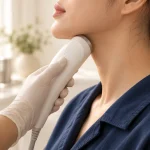
Laser and Light Treatment for Rosacea
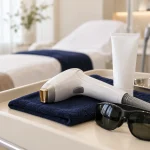
Laser and light-based treatments may be useful when the main concerns are:
- Persistent redness
- Visible blood vessels
- Telangiectasia
Vascular lasers work by targeting haemoglobin inside superficial blood vessels.
Depending on the patient’s skin type and vascular pattern, different vascular lasers or light-based devices may be considered.
Advantages
Vascular treatment can directly target visible vessels and redness that may not respond adequately to topical medication.
Limitations
Laser does not permanently cure rosacea.
New redness or blood vessels may develop over time because the underlying tendency toward rosacea remains.
Some patients require multiple treatments or maintenance sessions.
Possible Side Effects
Depending on the technology and treatment settings, temporary effects may include:
- Redness
- Swelling
- Bruising
- Temporary sensitivity
- Pigment changes
Treatment must be selected carefully in darker or Asian skin because inappropriate settings can increase the risk of pigmentation changes.
Can Rosacea Be Permanently Cured?
Rosacea is a chronic condition.
Symptoms can often be controlled very well, but the underlying tendency toward flushing, inflammation and vascular changes may remain.
Patients may experience periods when symptoms are minimal followed by periods of flare-ups.
The goals of treatment are to:
- Reduce inflammation
- Reduce redness
- Improve skin comfort
- Control inflammatory bumps
- Manage visible blood vessels
- Identify relevant triggers
- Protect the skin barrier
- Reduce future flare-ups
How Long Does Rosacea Treatment Take?
Treatment results depend on the type of rosacea symptom being treated.
Inflammatory bumps usually improve gradually over several weeks.
Persistent redness and visible blood vessels may require separate treatment.
Patients should not expect rosacea medication to completely change the skin after only a few applications.
Long-term management may include skincare, medication, trigger control and occasional procedural treatment.
Skincare for Rosacea
A simple skincare routine is usually preferable for rosacea-prone skin.
Morning
- Gentle cleanser
- Prescribed rosacea medication if needed
- Moisturizer
- Broad-spectrum sunscreen
Evening
- Gentle cleanser
- Prescribed rosacea treatment
- Moisturizer
Avoid introducing several strong active ingredients at the same time.
Products that may irritate sensitive rosacea skin include:
- Strong exfoliating acids
- Physical scrubs
- High-alcohol products
- Fragrance
- Harsh astringents
- Strong retinoids
- Frequent chemical peels
These ingredients are not prohibited for every patient, but should be used cautiously when the skin is actively inflamed or sensitive.
Sunscreen for Rosacea
Sun exposure is a common rosacea trigger.
Daily sun protection is therefore especially important for patients living in Bangkok or travelling in Thailand.
Choose a broad-spectrum sunscreen that feels comfortable enough to use every day.
Patients with sensitive skin may sometimes tolerate mineral sunscreens containing zinc oxide or titanium dioxide better, although individual tolerance varies.
Can Steroid Cream Treat Rosacea?
Topical corticosteroids are not routine treatment for rosacea.
Repeated steroid use on the face can cause steroid-induced rosacea or rosacea-like dermatitis and may make symptoms more difficult to control.
If you have been applying a steroid cream to facial redness, tell your dermatologist exactly which product you have been using and for how long.
Do not abruptly stop long-term prescription steroid treatment without medical advice.
Does Diet Cause Rosacea?
There is no single rosacea diet that works for everyone.
Spicy foods, alcohol and hot drinks can trigger flushing in some patients, but many people can consume these without worsening symptoms.
Rather than eliminating many foods unnecessarily, try to identify which foods consistently trigger your own rosacea.
Is Coffee Bad for Rosacea?
Not necessarily.
In some patients, the heat from very hot drinks may be more important than the caffeine itself.
If coffee does not consistently trigger flushing, there may be no reason to completely avoid it.
Does Alcohol Make Rosacea Worse?
Alcohol can trigger flushing in some people with rosacea.
However, rosacea is not caused by excessive alcohol use, and having rosacea does not indicate that someone drinks too much.
If a particular alcoholic drink consistently triggers flushing, reducing or avoiding it may help.
Can You Exercise With Rosacea?
Yes.
Exercise has important health benefits and usually does not need to be stopped because of rosacea.
The main trigger for some patients is overheating.
Helpful strategies include:
- Exercising in a cooler environment
- Avoiding the hottest part of the day
- Taking breaks
- Drinking cool water
- Using a fan indoors
- Reducing intensity during severe flare-ups
Rosacea in Asian and Darker Skin
Rosacea can affect all skin tones.
In Asian and darker skin, redness may be less obvious.
Other signs may include:
- Facial warmth
- Burning
- Stinging
- Persistent sensitivity
- Swelling
- Acne-like bumps
- Brown or dusky facial discoloration
Because redness may be harder to recognize, rosacea can sometimes be mistaken for acne, dermatitis or an allergic reaction.
When Should You See a Dermatologist for Rosacea?
Consider seeing a dermatologist if:
- Facial redness repeatedly returns
- Redness is becoming persistent
- You flush very easily
- Visible facial blood vessels are developing
- You repeatedly develop acne-like bumps without blackheads
- Acne treatment is not helping
- Your face frequently burns or stings
- Skincare products are becoming difficult to tolerate
- You have eye symptoms
- Your nose or facial skin is becoming thicker
- Symptoms are affecting your quality of life
- You are unsure whether the condition is rosacea, acne or dermatitis Seek prompt medical evaluation if you develop significant eye pain, marked sensitivity to light, worsening vision or severe persistent eye inflammation.
What to Expect During a Rosacea Consultation in Bangkok
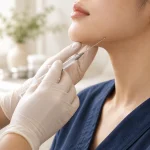
A rosacea consultation should identify which features of the condition are present rather than treating every patient with the same approach.
A dermatologist may evaluate:
- Persistent redness
- Flushing
- Papules and pustules
- Visible blood vessels
- Skin sensitivity
- Dryness and skin barrier damage
- Eye symptoms
- Skin thickening
- Previous treatments
- Use of steroid creams
- Skincare products
- Possible triggers
Treatment can then be selected according to the symptoms that are causing the most difficulty.
International patients visiting Bangkok may find it helpful to bring:
- Photos from previous flare-ups
- Names of medications previously used
- Photos or a list of skincare products
- Information about previous laser treatments
Rosacea can sometimes look relatively mild on the day of consultation, so photographs taken during a flare can be very useful.
Rosacea Treatment Starts With the Correct Diagnosis
Rosacea is not simply “red skin.
”
One patient may mainly experience flushing, while another develops inflammatory bumps, visible blood vessels, sensitive skin or eye symptoms.
The important questions are:
Is this actually rosacea?
Which rosacea features are present?
What triggers the flare-ups?
Is there eye involvement?
Is the main problem inflammation, persistent redness, visible blood vessels or a combination?
Once these questions are answered, treatment can be tailored using appropriate skincare, sun protection, topical or oral medication, trigger management and vascular laser or light treatment when indicated.
Rosacea cannot currently be permanently cured, but appropriate diagnosis and long-term management can help control symptoms and reduce flare-ups.
PRIMARY KEYWORD
rosacea
SECONDARY KEYWORDS
rosacea treatment rosacea treatment Bangkok
facial redness red face treatment rosacea dermatologist papulopustular rosacea ocular rosacea rosacea laser treatment rosacea skincare rosacea triggers persistent facial redness visible blood vessels on face sensitive red skin rosacea Thailand
LONG-TAIL KEYWORDS
rosacea treatment in Bangkok dermatologist for rosacea in Bangkok how to treat rosacea facial redness best treatment for rosacea redness why is my face always red rosacea vs acne adult acne vs rosacea laser treatment for rosacea Bangkok treatment for visible blood vessels on face what triggers rosacea can rosacea be cured permanently how to treat papulopustular rosacea rosacea around nose and cheeks ocular rosacea symptoms does Bangkok heat make rosacea worse skincare routine for rosacea in Thailand
SEARCH INTENT
Informational + Medical Treatment + Local Dermatology Intent
The patient is usually trying to understand whether persistent facial redness or acne-like bumps are rosacea, what causes or triggers the condition, which treatments are available, whether laser may help, and when they should see a dermatologist in Bangkok.
Frequently asked questions
Is rosacea the same as acne?
No.
Rosacea and acne can both cause inflammatory bumps, but rosacea commonly causes flushing, persistent redness, visible blood vessels and skin sensitivity.
Blackheads and whiteheads are characteristic of acne and are not typical of rosacea.
Can rosacea be permanently cured?
Rosacea is generally considered a chronic condition.
Symptoms can often be controlled well, but recurrence is possible.
What is the best treatment for rosacea?
There is no single best treatment.
Inflammatory bumps, redness, visible blood vessels and eye symptoms may each require different treatment approaches.
What causes rosacea?
The exact cause is not completely understood.
Inflammation, abnormal blood-vessel responses, skin-barrier dysfunction, genetics, nervous-system responses and microorganisms on the skin may all contribute.
Why is my face always red?
Rosacea is one possibility, but facial redness can also result from dermatitis, sun damage, medication reactions and other conditions.
Persistent unexplained redness should be evaluated.
Can rosacea look like hormonal acne?
Yes.
Papulopustular rosacea can produce inflammatory bumps that resemble adult acne.
Flushing, burning, persistent redness, visible blood vessels and the absence of blackheads or whiteheads may suggest rosacea.
Can rosacea affect the eyes?
Yes.
Ocular rosacea can cause dry, irritated, gritty or red eyes and eyelid inflammation.
Can rosacea occur in Asian skin?
Yes.
Rosacea can occur in all skin tones, but redness may be more difficult to see in Asian or darker skin.
Burning, sensitivity, flushing and inflammatory bumps may therefore be important clues.
Can I use retinol if I have rosacea?
Some patients can tolerate retinoids once their rosacea is well controlled, while others develop significant irritation.
It is usually better to stabilize active inflammation and the skin barrier before introducing potentially irritating products.
Can vitamin C be used with rosacea?
Some patients tolerate vitamin C well, while others experience stinging or redness.
There is no requirement for every patient with rosacea to use vitamin C.
Does laser cure rosacea?
No.
Laser can reduce visible blood vessels and persistent redness in appropriately selected patients, but it does not remove the underlying tendency to develop rosacea.
How many laser sessions are needed?
There is no fixed number for everyone.
The number of sessions depends on the type and severity of redness, visible vessels, skin type, technology used and individual response.
Is rosacea contagious?
No.
Rosacea cannot be transmitted from one person to another.
Can Bangkok's hot weather make rosacea worse?
Yes, heat and overheating can trigger rosacea in some people.
Sun exposure is another important trigger, making daily sun protection particularly important in Thailand.
Should I avoid spicy food?
Only if spicy food consistently triggers your rosacea.
There is no need for every patient to follow the same restrictive diet.
Should I see a dermatologist for rosacea?
Consider seeing a dermatologist if redness is persistent, symptoms are recurring, acne treatments are not working, visible blood vessels are developing, your eyes are affected or you are uncertain about the diagnosis.
Related conditions
-
Acne Acne Acne is one of the most common skin conditions and can affect teenagers and adults alike. It may appear as blackheads, whiteheads, inflamed pimples, or deeper painful nodules and cysts.
-
Adult Acne Adult Acne Getting acne in your 20s, 30s, 40s or later can be frustrating—especially if you thought breakouts were something you would leave behind after your teenage years.
-
Facial Redness Facial Redness Facial redness can mean many different things.

-
Vascular Laser / V-Beam Vascular Laser / V-Beam Persistent facial redness, visible small blood vessels and recurrent flushing are common reasons patients seek dermatologic care. Although these concerns are often grouped together as “redness,