





Adult Acne
Getting acne in your 20s, 30s, 40s or later can be frustrating—especially if you thought breakouts were something you would leave behind after your teenage years.
Adult acne may be acne that continues from adolescence, acne that returns after several clear years, or acne that appears for the first time during adulthood. Women are particularly affected, and hormonal changes can be an important contributor. However, not every case of adult acne is caused by a hormonal disorder.
Treatment should therefore begin with an accurate diagnosis rather than automatically assuming that every breakout along the chin or jawline is “hormonal acne.
”
For patients living in Bangkok, expats, tourists and international visitors, a dermatology consultation can help determine the type of acne, identify contributing factors and select treatment based on acne severity, medical history, lifestyle and risk of scarring.
What Is Adult Acne?
Adult acne is acne that persists, recurs or develops after adolescence.
It is commonly divided into three patterns:
Persistent Adult Acne
Acne begins during adolescence and continues into adulthood without completely resolving.
Recurrent Adult Acne
Teenage acne improves or disappears, but breakouts return later in adulthood.
Adult-Onset Acne
Acne develops for the first time during adulthood.
The American Academy of Dermatology notes that acne may continue into the 30s, 40s and even 50s, and some adults develop acne for the first time later in life. Adult acne is particularly common among women.
What Does Adult Acne Look Like?
Adult acne can look very similar to teenage acne.
Possible lesions include:
- Whiteheads
- Blackheads
- Small red inflamed bumps
- Pustules
- Deep painful nodules
- Cysts
- Persistent bumps along the chin or jawline
Many people associate adult female acne with the lower face, chin and jawline, and this pattern can occur in hormonally influenced acne.
However, location alone cannot prove that acne is caused by abnormal hormones.
Adult acne may also affect the:
- Cheeks
- Forehead
- Neck
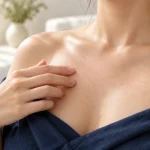
- Chest
- Shoulders
- Upper back
A Bangkok-based study of adult female acne found that cheek and perioral involvement were common, emphasizing that adult acne does not always follow the stereotypical jawline-only pattern.
Why Am I Suddenly Getting Acne as an Adult?
Adult acne rarely has one single cause.
The same biological processes involved in teenage acne are still important:
- Excess oil production
- Blockage of hair follicles
- Inflammation
- Changes involving Cutibacterium acnes, a bacterium normally present on the skin In adults, however, hormonal fluctuations, skincare products, medications, stress and other lifestyle factors may become particularly relevant.
Hormonal Changes
Hormonal changes can influence sebaceous glands and increase the tendency to develop acne.
Women may notice acne worsening:
- Before menstruation
- After starting or stopping hormonal contraception
- During pregnancy
- During perimenopause
- Around menopause
The American Academy of Dermatology identifies fluctuating hormone levels as an important contributor to adult acne, particularly in women.
Stress
Stress does not mean acne is “psychological.
”
The body responds to stress through hormonal and inflammatory pathways that can influence the sebaceous glands and hair follicles. Some patients notice predictable flares during periods of high work pressure, poor sleep or emotional stress.
Stress is therefore better viewed as a potential aggravating factor, not the sole cause of acne.
Genetics
A family history of acne can increase susceptibility.
If parents or close relatives experienced persistent or severe acne, an individual may also have a greater tendency to develop adult acne.
Skincare, Makeup and Hair Products
Products applied to the skin or hair can contribute to clogged pores in some people.
This may be particularly noticeable around the:
- Hairline
- Forehead
- Temples
- Cheeks
Oil-containing hair products can cause a form of acne sometimes called acne cosmetica. Choosing products labelled non-comedogenic or designed not to clog pores can be helpful for acne-prone skin.
Medications and Hormone Treatments
Some medications can trigger or worsen acne-like eruptions.
Hormonal treatments may also alter acne patterns. For example, testosterone therapy can increase the likelihood of acne in some patients.
If acne develops after starting a new medication, supplement or hormone treatment, do not discontinue prescribed medication without speaking with the clinician who prescribed it.
Is Adult Acne Always Hormonal?
No.
This is one of the most important misconceptions about adult acne.
Hormones play a role in normal acne biology even when hormone blood tests are completely normal. Some people’s sebaceous glands may simply be more sensitive to normal androgen levels.
Therefore, having acne on the jawline does not automatically mean that you have a hormone imbalance or PCOS.
Hormonal acne becomes more likely when the acne follows certain patterns, such as:
- Persistent lower-face or jawline acne
- Breakouts predictably worsening before menstruation
- Recurrence after stopping hormonal contraception
- Acne that responds poorly to conventional treatment
Hormonal therapies such as combined oral contraceptives or spironolactone can be appropriate for selected female patients, and both are included among treatment options in the current AAD acne guideline.
Adult Acne and PCOS
Polycystic ovary syndrome (PCOS) is one possible cause of androgen-related acne, but most adult acne should not automatically be labelled PCOS.
Evaluation becomes more important when acne occurs together with signs suggesting androgen excess or abnormal ovulation.
These may include:
- Irregular or infrequent periods
- Increased facial or body hair
- Scalp hair thinning
- Difficulty with ovulation or fertility
- Sudden worsening of androgen-related symptoms
PCOS is diagnosed using a combination of clinical history, examination and appropriate investigations rather than acne alone.
A study conducted in Bangkok also found an association between PCOS and factors including irregular menstruation and premenstrual acne flares in adult female acne patients, supporting the importance of asking about menstrual history rather than simply looking at where the acne appears.
Does Everyone With Adult Acne Need Hormone Tests?
Not necessarily.
For routine acne without other concerning features, dermatologists may be able to diagnose and treat the condition clinically.
Hormonal investigation may be considered when the history or examination suggests hyperandrogenism or an endocrine disorder.
This may include situations such as:
- Irregular menstruation
- Significant hirsutism
- Rapidly developing excessive hair growth
- Female-pattern hair loss with other androgenic signs
- Sudden severe adult acne
- Other symptoms suggesting PCOS or androgen excess
Different professional groups vary somewhat in how broadly they recommend hormonal testing in women with adult acne, so investigations should be individualized rather than ordered automatically for every patient.
Could It Be Something Other Than Adult Acne?
Yes.
A number of skin conditions can look like acne but require different treatment.
These include:
Rosacea
Rosacea can cause red bumps and pustules on the central face, often with persistent redness, flushing or visible blood vessels.
Unlike acne, classic rosacea does not usually produce blackheads and whiteheads.
Malassezia Folliculitis
Often called “fungal acne” online, Malassezia folliculitis is not actually acne vulgaris.
It may present as many small, similar-looking bumps, often with itching, particularly on the forehead, chest or back.
Bacterial Folliculitis
Inflammation or infection of hair follicles can produce pustules that resemble acne.
Perioral Dermatitis
Small red bumps may develop around the mouth, nose or eyes and can sometimes be mistaken for acne.
Acne Cosmetica
Products that block follicles may create clusters of small comedones or bumps.
If supposed “acne” repeatedly fails to respond to appropriate acne treatment, the diagnosis should be reconsidered.
How Does a Dermatologist Diagnose Adult Acne?
Adult acne is usually diagnosed clinically.
During consultation, a dermatologist may evaluate:
- Whether the eruption is truly acne
- Types of acne lesions
- Distribution of breakouts
- Severity
- Nodules or cysts
- Existing scars
- Dark or red marks
- Menstrual relationship
- Pregnancy plans
- Current contraception
- Medications and supplements
- Skincare and hair products
- Previous acne treatments
- Signs suggesting hormonal abnormalities
Laboratory tests are not necessary for every adult with acne.
The treatment plan should then be based on both the acne itself and relevant individual factors.
Adult Acne Treatment Options
The basic principles of acne treatment are similar in adults and adolescents, but adult patients often require additional consideration of skin sensitivity, hormonal factors, pregnancy plans and long-term maintenance.
Current acne guidelines support using treatments with different mechanisms together rather than relying on one medication alone.
Topical Retinoids
Topical retinoids such as adapalene or tretinoin help normalize cell turnover inside follicles and reduce the formation of new clogged pores.
They are useful for:
- Blackheads
- Whiteheads
- Mild inflammatory acne
- Prevention of new breakouts
- Long-term maintenance
Advantages
They treat the process that creates new comedones rather than simply drying existing pimples.
Limitations
Early treatment can cause:
- Dryness
- Peeling
- Stinging
- Irritation
Treatment often needs to be introduced gradually.
Topical retinoids are generally avoided during pregnancy, so pregnancy or pregnancy planning should always be discussed before treatment. NICE specifically advises against topical retinoids during pregnancy.
Benzoyl Peroxide
Benzoyl peroxide helps reduce acne-associated bacteria and inflammatory lesions.
It is particularly useful when antibiotics are prescribed because combining antibiotics with benzoyl peroxide helps reduce concerns about antimicrobial resistance.
Advantages
- Useful for inflammatory acne
- Does not create the same bacterial-resistance problem as antibiotic monotherapy
- Can be combined with other topical treatments
Limitations
Possible side effects include:
- Dryness
- Irritation
- Peeling
It can also bleach towels, clothing and pillowcases.
Azelaic Acid
Azelaic acid can be useful for acne and may also help with post-inflammatory pigmentation.
This can be particularly relevant in Asian skin, where dark marks may remain long after the inflamed pimple itself has healed.
AAD guidelines include azelaic acid among recommended topical options for acne.
Topical Antibiotics
Topical antibiotics can help inflammatory acne, but they should generally not be used alone for prolonged periods.
Combining them appropriately with other acne treatments, particularly benzoyl peroxide, helps reduce antibiotic resistance.
Oral Antibiotics for Adult Acne
Moderate to severe inflammatory acne may sometimes require an oral antibiotic such as doxycycline.
Oral antibiotics can be useful for reducing inflammation while topical treatment begins to work.
However, they are not intended as indefinite acne treatment.
Current AAD and NICE recommendations emphasize limiting antibiotic use and combining systemic antibiotics with appropriate topical therapy. NICE recommends reviewing first-line treatment at approximately 12 weeks.
Once the inflammatory acne is controlled, treatment often shifts toward a non-antibiotic maintenance strategy.
Hormonal Treatment for Adult Female Acne
Hormonal therapy can be particularly useful when acne is persistent, cyclical or concentrated around the lower face and jawline.
Two commonly considered options are:
Combined Oral Contraceptive Pills
Certain combined oral contraceptives can reduce androgen-related stimulation of the sebaceous glands.
They may be considered in appropriately selected women who also want contraception or whose acne has a hormonal pattern.
They are not suitable for everyone.
Medical history matters, including factors such as cardiovascular risk, smoking status, pregnancy and other contraindications.
Spironolactone
Spironolactone is an anti-androgen medication frequently used for persistent adult female acne.
It may be particularly useful for acne involving the:
- Chin
- Jawline
- Lower face
- Neck
and for acne that predictably worsens around menstruation.
Advantages
It can reduce hormonal stimulation involved in acne without relying on repeated antibiotic courses.
Limitations and Side Effects
Depending on the individual, possible effects can include:
- Increased urination
- Menstrual changes
- Breast tenderness
- Dizziness
Spironolactone is not appropriate during pregnancy. Patients who could become pregnant should discuss appropriate contraception and pregnancy planning with their doctor.
Suitability and the need for laboratory monitoring should be assessed individually.
Isotretinoin for Adult Acne
Isotretinoin is not only a medication for teenagers.
Adult patients may also be candidates when acne is:
- Severe
- Nodular or cystic
- Causing permanent scars
- Persisting despite appropriate standard treatment
- Having a major impact on quality of life
The AAD recommends isotretinoin for severe acne and for acne that has failed appropriate standard topical or oral treatment. NICE similarly recommends considering it for severe acne resistant to adequate standard therapy or acne at risk of permanent scarring.
Important Considerations
Isotretinoin requires medical supervision.
Common effects include:
- Dry lips
- Dry skin
- Increased skin sensitivity
Potential risks, drug interactions and monitoring should be discussed before treatment.
Most importantly, isotretinoin can cause serious fetal abnormalities and must not be taken during pregnancy. Pregnancy-prevention requirements are therefore essential for patients who can become pregnant.
Do Chemical Peels, Lasers or Facials Treat Adult Acne?
Procedures may have a role for selected patients, particularly for acne marks or scars, but they should not replace appropriate medical treatment for active inflammatory acne.
The 2024 AAD guideline concluded that evidence was insufficient to make recommendations for several procedural approaches—including chemical peels, lasers, light devices and microneedling—as general treatments for acne itself.
That does not mean these procedures never have a role.
Rather, the procedure should match the problem being treated.
For example:
- Active inflammatory acne requires control of the acne process.
- Persistent redness may require a different approach.
- Brown post-acne marks require pigmentation management.
- True acne scars require scar-specific assessment.
One device or procedure should not be expected to solve all four problems.
Adult Acne Marks vs Acne Scars
An important part of an adult acne consultation is distinguishing between temporary marks and permanent structural scars.
Post-Inflammatory Hyperpigmentation
These are flat brown or grey-brown marks that remain after acne heals.
They are especially common in patients with Asian or darker skin tones.
They are not true scars.
Sun protection, control of new acne and appropriate topical treatment may gradually help them fade.
Post-Inflammatory Redness
Some patients develop persistent red or pink marks after acne.
These are also different from true structural scars.
True Acne Scars
Scars represent structural changes in the skin and may include:
- Ice-pick scars
- Boxcar scars
- Rolling scars
- Raised hypertrophic or keloid scars
The scar type determines which procedures may be appropriate.
In most cases, controlling active acne should come before aggressive scar treatment.
Adult Acne in Bangkok’s Hot and Humid Climate
Bangkok’s warm, humid environment can create practical challenges for acne-prone skin.
Sweating itself does not mean the skin is dirty and does not automatically cause acne. However, sweat combined with:
- Heavy sunscreen
- Makeup
- Occlusive skincare
- Friction
- Tight masks or clothing
- Frequent touching of the face
can worsen breakouts in susceptible people.
For adult acne in Thailand, a simple routine is often more helpful than layering many active ingredients.
Consider:
- A gentle cleanser
- Appropriate prescribed acne medication
- Lightweight moisturizer when needed
- Broad-spectrum sunscreen
- Non-comedogenic makeup or skincare where possible
Avoid trying to “dry out” adult acne by washing repeatedly throughout the day.
Excessive cleansing can damage the skin barrier and make acne medication harder to tolerate.
What Should an Adult Acne Skincare Routine Look Like?
Adult skin can sometimes be less tolerant of aggressive acne products than teenage skin.
A useful routine often looks like this:
Morning
Gentle cleanser
Prescribed morning acne treatment if applicable
Moisturizer
Broad-spectrum sunscreen
Evening
Gentle cleanser
Prescribed acne treatment
Moisturizer as required
Avoid introducing multiple strong products at the same time.
Combining:
- Retinoids
- AHA
- BHA
- Scrubs
- Peels
- Strong acne cleansers
all at once can create significant irritation without necessarily improving acne faster.
How Long Does Adult Acne Treatment Take?
Adult acne treatment requires consistency.
Improvement is generally measured in weeks rather than days.
NICE recommends an initial 12-week treatment course for many first-line acne regimens, followed by reassessment of response and side effects.
Some medications take longer to show their full benefit, particularly hormonal therapies.
Patients should therefore avoid switching treatments every week because the acne has not disappeared immediately.
What Happens After Acne Clears?
Adult acne often has a tendency to recur.
For this reason, maintenance treatment can be important.
Maintenance may include selected non-antibiotic topical treatments such as a topical retinoid, depending on the patient’s skin and previous treatment.
The objective is to prevent new blocked follicles from forming rather than repeatedly treating each new pimple after it appears.
When Should You See a Dermatologist for Adult Acne?
Consider seeing a dermatologist if:
- Acne begins suddenly in adulthood
- You have painful nodules or cysts
- Acne is leaving permanent scars
- You have significant post-acne pigmentation
- Breakouts persist despite appropriate over-the-counter treatment
- Acne repeatedly recurs
- You think your acne may be hormonal
- Acne is associated with irregular menstruation
- You have new facial hair or scalp hair loss
- You are considering spironolactone, hormonal therapy or isotretinoin
- Acne significantly affects confidence, social life or emotional wellbeing
- You are not sure whether the eruption is actually acne
Rapidly developing severe acne together with obvious new signs of androgen excess deserves medical assessment rather than simply treating the skin cosmetically.
What to Expect During an Adult Acne Consultation in Bangkok
A useful adult acne consultation should go beyond simply counting pimples.
The dermatologist may assess:
- Whether the diagnosis is acne vulgaris
- Comedonal versus inflammatory acne
- Severity
- Distribution
- Presence of nodules or cysts
- Existing pigmentation and scars
- Previous treatment response
- Skincare and cosmetics
- Current medications
- Menstrual pattern when relevant
- Pregnancy or pregnancy plans
- Signs of an underlying hormonal condition
Treatment can then be selected according to the patient’s individual circumstances.
For expats and international patients receiving acne treatment in Bangkok, it is helpful to bring:
- Names and doses of current medication
- Previous prescriptions
- Photos of previous severe flares
- A list or photos of skincare products
- Relevant laboratory results if already performed
If you are visiting Thailand temporarily, tell the dermatologist how long you will remain in Bangkok so that medication quantities, monitoring and follow-up can be planned appropriately.
Adult Acne Treatment Should Start With the Diagnosis
Adult acne is common, but it should not automatically be dismissed as “hormonal acne.
”
Some patients have persistent acne from adolescence. Others develop acne later because of hormonal changes, medications, cosmetics or increased susceptibility of the follicles. Occasionally, adult acne may also be part of an underlying hormonal condition such as PCOS.
The most useful first step is therefore to establish:
Is this actually acne?
What type of acne is present?
How severe is it?
Is it causing scars?
Are there signs suggesting a hormonal disorder?
Treatment can then be matched to the patient’s skin and circumstances—from topical retinoids, benzoyl peroxide and azelaic acid to appropriately selected antibiotics, hormonal therapy or isotretinoin.
For adults with persistent, painful, scarring or recurrent acne, professional dermatologic assessment can help avoid months of trial-and-error treatment and focus on a long-term strategy for both controlling current acne and preventing future breakouts.
Frequently asked questions
Why am I getting acne in my 30s?
Acne can persist from adolescence or develop for the first time in adulthood. Hormonal changes, genetics, stress, medications and pore-clogging products can all contribute.
Developing acne in your 30s does not automatically mean you have a hormonal disease.
Why do I keep getting acne on my chin and jawline?
Lower-face acne is commonly associated with hormonally influenced adult female acne.
However, jawline acne alone cannot diagnose a hormonal imbalance.
If it is persistent or associated with menstrual irregularity or other signs of androgen excess, further assessment may be appropriate.
Is adult acne caused by hormones?
Hormones can play an important role, but adult acne is multifactorial.
Many patients with hormonally influenced acne have normal blood hormone levels.
Should I have a hormone test for adult acne?
Not every patient needs hormonal testing.
Testing is more likely to be useful when acne occurs with irregular periods, increased facial or body hair, scalp hair loss, sudden severe acne or other signs suggesting androgen excess or PCOS.
Can PCOS cause acne?
Yes.
PCOS can cause or contribute to acne through androgen excess, but acne alone does not establish a diagnosis of PCOS.
Other symptoms and appropriate medical evaluation are necessary.
Is spironolactone good for adult acne?
Spironolactone can be an effective treatment for selected women with persistent or hormonally influenced acne and is included in current AAD acne treatment recommendations.
It requires prescription and is not suitable for everyone.
Can men take spironolactone for acne?
Spironolactone is generally not routinely used to treat acne in men because its anti-androgen effects can cause unwanted hormonal side effects.
Other effective acne treatments are available.
Can adult acne be cured permanently?
Adult acne can often be controlled very well, but recurrence is possible.
Some patients require ongoing maintenance treatment, particularly when hormonal or genetic susceptibility persists.
Does adult acne mean I have oily skin?
No.
Adults can have acne while simultaneously experiencing dry or sensitive skin.
This is why an aggressive “oil-control” routine may actually make treatment more difficult by causing irritation.
Should I stop wearing makeup?
Not necessarily.
Many people with acne can continue wearing makeup. Products labelled non-comedogenic or non-acnegenic may be less likely to contribute to clogged pores.
Makeup should be gently removed before sleeping.
Can stress cause adult acne?
Stress can aggravate acne in some people, but it is usually one contributing factor rather than the sole cause.
Is adult acne different from teenage acne?
The underlying acne process is similar, but adult patients may have different hormonal influences, skincare needs and treatment considerations.
Pregnancy plans, contraception, sensitivity of adult skin and hormonal therapies are particularly relevant in adult acne management.
Can adult acne suddenly appear during perimenopause?
Yes.
Hormonal fluctuations around perimenopause and menopause can contribute to adult acne in some women.
Sudden severe acne or acne associated with other new hormonal symptoms should still be evaluated.
Should I treat active acne or acne scars first?
Usually, active acne should be controlled first.
Treating scars while new inflammatory acne continues to form can result in new scars appearing during the scar-treatment process.
Related conditions
-
Acne Acne Acne is one of the most common skin conditions and can affect teenagers and adults alike. It may appear as blackheads, whiteheads, inflamed pimples, or deeper painful nodules and cysts.
-
Acne Scar Treatment Acne Scar Treatment Acne scars are not all the same, and this is the most important thing to understand before choosing treatment.
-
Post-inflammatory Hyperpigmentation Post-inflammatory Hyperpigmentation Post-inflammatory hyperpigmentation (PIH) is the flat brown, dark brown, or grayish discoloration that remains after inflammation or injury to the skin. It commonly follows acne, eczema, insect bites, burns, scratching, irritation, and some dermatologic procedures.
-
Rosacea Rosacea Rosacea is a chronic inflammatory skin condition that mainly affects the central face. It may cause persistent redness, frequent flushing, visible blood vessels, acne-like bumps, burning or sensitive skin, and sometimes eye symptoms.