




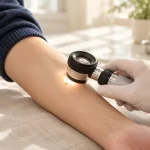



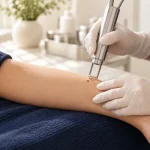



Vascular Laser / V-Beam
Persistent facial redness, visible small blood vessels and recurrent flushing are common reasons patients seek dermatologic care. Although these concerns are often grouped together as “redness,
” they can have very different causes—from rosacea and sun-related telangiectasia to vascular birthmarks or inflammatory skin disease.
Vascular lasers, including pulsed dye laser (PDL), commonly known through systems such as V-Beam, are designed to target blood vessels while limiting injury to surrounding tissue. They can be particularly useful for selected superficial vascular conditions, but laser treatment is not appropriate for every red lesion.
A dermatology assessment is therefore important before treatment, especially when redness is new, changing, symptomatic or has not responded to previous treatment.
What Causes Facial Redness?
Facial redness occurs when blood vessels near the surface of the skin become dilated, more visible or are associated with inflammation.
Some people experience temporary flushing after heat, exercise or alcohol. Others develop persistent redness or visible vessels that remain even when the skin is otherwise calm.
Common causes include:
- Rosacea
- Telangiectasia, or permanently visible small blood vessels
- Chronic sun exposure
- Post-inflammatory redness
- Vascular birthmarks
- Cherry angiomas and other benign vascular lesions
- Certain scars with persistent vascularity
- Long-term or inappropriate use of topical corticosteroids on the face
- Other inflammatory or medical skin conditions
The correct diagnosis matters because vascular laser treatment addresses the vascular component of redness. It does not automatically treat every underlying cause of red skin.
What Is Rosacea?
Rosacea is a chronic inflammatory skin condition that commonly affects the central face, particularly the cheeks, nose, chin and forehead.
It may present with:
- Persistent facial redness
- Frequent flushing
- Visible facial blood vessels
- Burning or stinging
- Sensitive skin
- Acne-like inflammatory bumps or pustules
- Eye irritation in some patients
Rosacea can contain several of these features at the same time.
Importantly, vascular laser primarily targets persistent redness and visible vessels. Patients with inflammatory papules or pustules may also require topical or oral medication. Current evidence supports laser and light-based treatments particularly for erythema and telangiectasia, while rosacea management overall should be tailored to the features present. (PubMed)
What Are Telangiectasias?
Telangiectasias are small dilated blood vessels visible through the surface of the skin.
They may look like:
- Fine red lines
- Branching vessels
- Small vascular networks around the nose
- Persistent red vessels across the cheeks
- Localized vessels within areas of rosacea
Unlike temporary flushing, these vessels usually remain visible.
They are among the vascular findings for which vascular lasers are commonly used. (PubMed)
What Is a Vascular Laser?
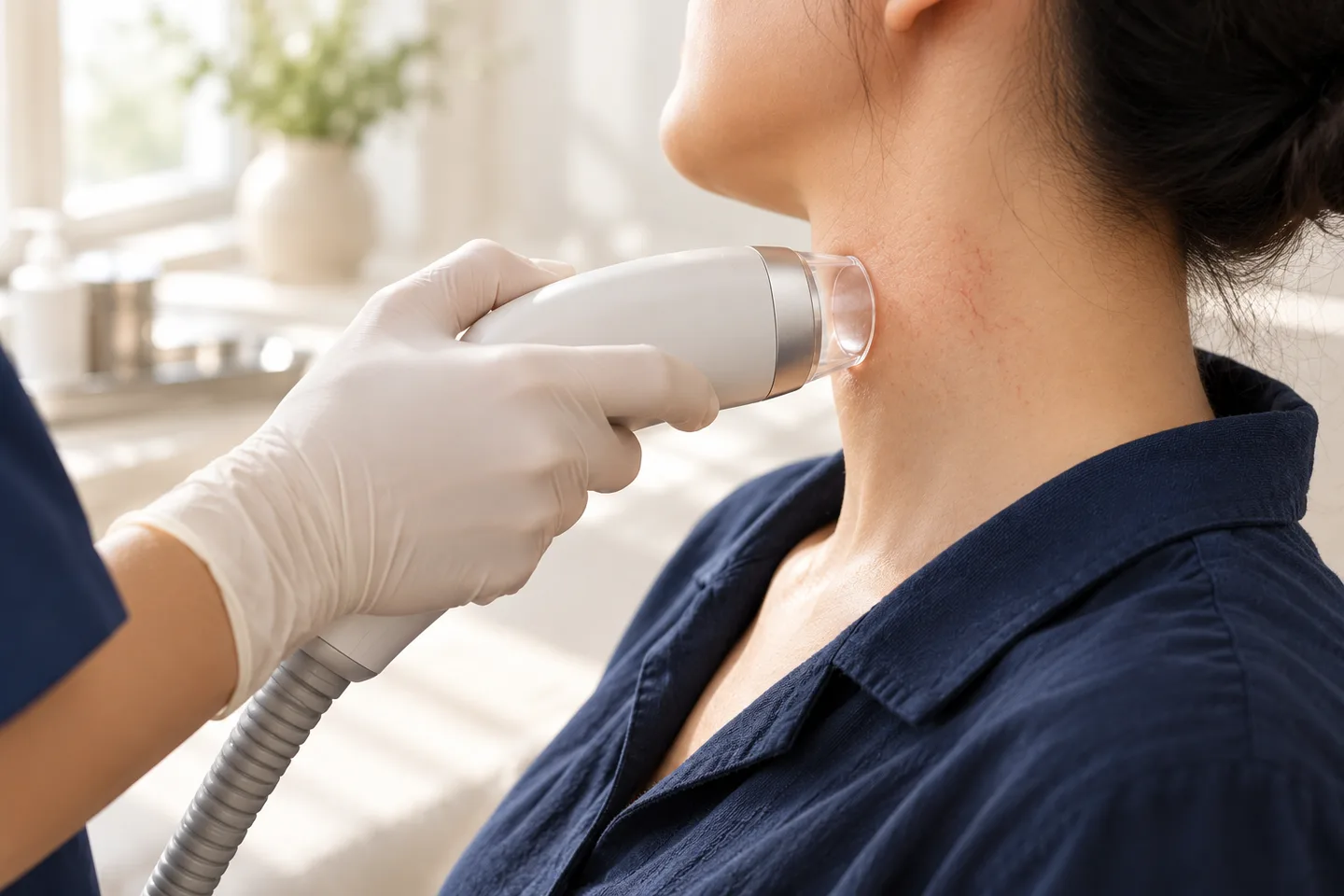
A vascular laser produces a wavelength of light selected to interact preferentially with blood within vessels.
The principle is called selective photothermolysis.
In simplified terms, hemoglobin within a blood vessel absorbs laser energy. That energy is converted into heat, which damages the targeted vessel while treatment parameters are selected to minimize unnecessary injury to surrounding skin.
Different vascular lasers penetrate to different depths and therefore are not interchangeable.
What Is V-Beam?
V-Beam is a well-known type of pulsed dye laser (PDL) technology used for vascular skin conditions.
Modern PDL systems commonly operate around 595 nm, a wavelength that is strongly absorbed by oxyhemoglobin within superficial blood vessels. PDL has an established role in treating superficial vascular lesions and has substantial clinical evidence for vascular manifestations of rosacea. (PubMed Central (PMC))
Rather than asking only whether V-Beam is “good,
” the more useful question is:
Is the redness caused by a vascular problem that PDL can effectively target?
That distinction is important.
What Can Vascular Laser Treat?
Depending on the diagnosis, vessel depth, vessel size and skin type, vascular laser may be considered for conditions such as:
Facial Telangiectasia
Fine visible blood vessels around the nose, cheeks and other facial areas may respond well when an appropriate vascular wavelength is selected.
Rosacea-Related Redness
PDL and other vascular/light-based systems can improve persistent erythema and telangiectasia associated with rosacea. Multiple treatments may be required, and rosacea itself remains a chronic condition even after visible vessels improve. (PubMed)
Cherry Angiomas
These are common benign red vascular growths that usually do not require treatment unless they are symptomatic, diagnostically uncertain or cosmetically bothersome.
Spider Angiomas
These typically consist of a central red vessel with smaller vessels radiating outward. Treatment depends on the clinical context and underlying cause.
Vascular Birthmarks
Some vascular birthmarks, including port-wine stains, can be treated with PDL. Treatment planning differs substantially from treating ordinary facial telangiectasia and often requires repeated sessions. PDL is extensively used for this indication. (PubMed)
Red Scars
Some relatively new scars remain red because of increased vascularity. Selected vascular lasers may be incorporated into scar treatment when persistent erythema is a significant component.
V-Beam for Rosacea: What Can It Actually Improve?
This is an important distinction for patients researching rosacea treatment.
Vascular laser is particularly directed toward:
Persistent redness → potentially treatable
Visible capillaries → potentially treatable
Flushing → improvement can be less predictable
Inflammatory papules and pustules → usually require medical rosacea treatment as well
Rhinophyma or substantial tissue thickening → requires a different treatment approach
Systematic reviews support PDL and IPL as options for rosacea-associated erythema and telangiectasia, but studies vary in methodology and no single device should be assumed to be optimal for every patient. (PubMed Central (PMC))
V-Beam vs IPL: What Is the Difference?
Patients frequently use the terms vascular laser and IPL interchangeably, but they are different technologies.
Pulsed dye laser (PDL/V-Beam) produces a specific wavelength designed to target vascular structures.
IPL (Intense Pulsed Light) is not technically a laser. It emits a broader range of wavelengths that can be filtered for different targets, including vascular and pigmented changes.
Both may be useful for facial redness and rosacea in appropriately selected patients.
Current comparative evidence suggests that both PDL and IPL can improve rosacea-related erythema, while available studies do not establish one technology as universally superior for every patient. (PubMed Central (PMC))
The choice should therefore depend on the vascular pattern, skin type, associated pigmentation, treatment goals and acceptable downtime rather than simply the device name.
Why Diagnosis Should Come Before Laser Treatment
Not every red patch is rosacea.
Facial redness can sometimes represent:
- Seborrheic dermatitis
- Contact dermatitis
- Atopic dermatitis
- Acne-related inflammation
- Photosensitive disorders
- Medication-related reactions
- Infection
- Autoimmune disease
- Precancerous or cancerous skin lesions
A laser may reduce visible redness without treating the underlying disease.
For this reason, persistent or unexplained redness should ideally be diagnosed before cosmetic laser treatment.
What Happens During a Dermatology Consultation?
A dermatologist will usually begin by examining the distribution and appearance of the redness.
The assessment may include:
Pattern of Redness
Diffuse redness behaves differently from isolated visible vessels.
Vessel Characteristics
The doctor may evaluate the vessel’s color, diameter and apparent depth.
Associated Symptoms
Burning, itching, scaling, acne-like lesions and eye symptoms can provide important diagnostic information.
Skin Type
Skin pigmentation affects laser selection and treatment planning.
Previous Treatments
Previous laser procedures, medication and skincare can influence both response and risk.
History of Pigmentation
This is especially relevant in Asian skin and patients who develop dark marks easily after inflammation.
Only after identifying the likely cause should the treatment plan be selected.
Vascular Laser Treatment in Asian Skin
Treating vascular conditions in Asian and more deeply pigmented skin requires particular attention to the interaction between laser energy and melanin.
Although vascular lasers are designed to target hemoglobin, epidermal melanin can also absorb light energy. This can increase the risk of pigmentary changes in some skin types.
Post-inflammatory hyperpigmentation, or PIH, means temporary or sometimes prolonged darkening of the skin following inflammation or injury.
Published literature on PDL in darker phototypes supports its usefulness for appropriate vascular lesions but also emphasizes increased attention to hyperpigmentation, hypopigmentation and other adverse effects. (PubMed)
This does not mean Asian patients cannot undergo vascular laser treatment. It means that skin type should be part of treatment planning rather than using identical parameters for every patient.
This is particularly relevant in Bangkok, where dermatology practices commonly see a broad range of Asian, mixed and international skin types.
What Does V-Beam Treatment Feel Like?
Patients commonly describe each laser pulse as a brief snapping, warm or stinging sensation.
The degree of discomfort depends on factors including:
- Treatment area
- Number of pulses
- Energy settings
- Vessel characteristics
- Individual pain sensitivity
Cooling systems may be used with modern vascular laser technology to protect the skin surface and improve comfort.
What Does the Skin Look Like After Vascular Laser?
The immediate reaction depends heavily on the treatment endpoint selected.
Patients may experience:
- Redness
- Mild swelling
- Warmth
- Temporary sensitivity
- Purpura or purple discoloration
- Occasionally temporary darkening of the treated area
Purpura occurs when treated vessels produce bruise-like purple spots. Some PDL approaches intentionally produce more purpura, while other settings may aim for a less purpuric endpoint. (PubMed Central (PMC))
Therefore, two patients receiving vascular laser treatment may have very different appearances immediately afterward.
Is There Downtime After V-Beam?
Downtime varies according to the condition and treatment intensity.
A gentle treatment may produce mainly temporary redness and swelling. More aggressive vascular treatment can produce visible purpura that takes longer to resolve.
Patients with work, travel or social commitments should discuss acceptable downtime before treatment so the treatment strategy can take this into account.
For international patients visiting Bangkok, it is sensible to avoid scheduling a first vascular laser treatment immediately before an important event or departure when the expected skin response is unknown.
Aftercare Following Vascular Laser
After treatment, the skin should generally be treated gently.
Patients are commonly advised to:
- Avoid unnecessary heat and irritation while the skin is reactive
- Avoid rubbing or picking the treated area
- Use gentle skincare
- Use appropriate moisturization
- Protect the skin carefully from sunlight
- Follow individualized post-treatment instructions
Sun protection is particularly important when there is a risk of post-inflammatory pigmentation.
Specific instructions may differ according to the laser settings and condition being treated.
How Many V-Beam Sessions Are Needed?
There is no medically meaningful universal number.
A tiny isolated vessel is very different from diffuse rosacea, and both are very different from a vascular birthmark.
The number of treatments can depend on:
- Diagnosis
- Number and size of vessels
- Vessel depth
- Treatment area
- Skin type
- Treatment intensity
- Response to previous sessions
Rosacea studies commonly evaluate improvement over multiple treatment sessions rather than assuming complete clearance after one procedure. (PubMed)
Patients should therefore be cautious of promises that a vascular condition will disappear permanently after a predetermined number of treatments.
Can Redness Come Back After Laser Treatment?
Yes.
A successfully treated vessel may disappear or become substantially less visible, but the biological tendency to develop vascular changes may remain.
For example, rosacea is a chronic condition. New telangiectasias can develop over time even after previous vessels have been treated.
Long-term management may therefore involve controlling rosacea triggers and inflammation, appropriate skincare and occasional additional vascular treatment when clinically appropriate. Recurrence over longer follow-up has been reported in rosacea laser literature. (PubMed)
Possible Side Effects of Vascular Laser
Expected temporary reactions and true complications should be distinguished.
Common short-term reactions can include redness, swelling and purpura.
Less common complications can include:
- Blistering or crusting
- Post-inflammatory hyperpigmentation
- Hypopigmentation
- Prolonged redness
- Infection
- Scarring
The actual risk varies substantially according to the condition, device, treatment settings and patient characteristics. For example, a systematic review of PDL treatment for port-wine stains found that acute reactions such as purpura and edema were common, whereas permanent scarring was uncommon; these figures should not be extrapolated directly to routine facial rosacea treatment because the indication and treatment parameters differ. (PubMed)
When Should Facial Redness Be Evaluated by a Dermatologist?
Medical assessment is particularly worthwhile when redness:
- Appears suddenly without a clear explanation
- Persists or progressively worsens
- Causes significant burning, pain or itching
- Is accompanied by scaling, pustules or swelling
- Involves the eyes
- Bleeds repeatedly
- Forms a growing bump or persistent non-healing area
- Changes despite previous treatment
- Has never been formally diagnosed
A persistent red lesion should not automatically be assumed to be a harmless blood vessel.
Vascular Laser Treatment in Bangkok
Bangkok attracts Thai patients as well as expats, tourists and international patients seeking dermatologic treatment.
For patients considering vascular laser treatment, the most useful consultation is not simply a question of whether a clinic has V-Beam or another device.
The clinically relevant questions are:
What is causing the redness?
Is the target superficial or deeper?
Is the main problem diffuse redness, visible vessels or inflammation?
What treatment is appropriate for the patient’s skin type?
How much downtime is acceptable?
A dermatologist can then determine whether vascular laser, medical treatment, another light-based technology or a combination approach is more appropriate.
Frequently asked questions
Is V-Beam the same as a vascular laser?
V-Beam is a specific commercial platform based on pulsed dye laser technology. PDL is one category of vascular laser; other wavelengths and light-based technologies can also target blood vessels.
Does V-Beam treat rosacea?
It can improve vascular manifestations of rosacea, particularly persistent erythema and visible telangiectasia. Rosacea is a chronic inflammatory condition, however, so laser does not necessarily replace topical or oral treatment when other features are present. (PubMed)
Can V-Beam permanently cure rosacea?
No. Rosacea is chronic. Laser may reduce existing redness and visible vessels, but symptoms or new vessels can recur.
Can vascular laser remove broken capillaries?
Visible superficial telangiectasias are an important indication for vascular laser treatment. Response depends on vessel size, depth, location and the selected technology.
Is V-Beam suitable for Asian skin?
It can be used in appropriately selected Asian patients, but pigmentation and skin phototype must be considered carefully because post-treatment pigment alteration can occur. (PubMed)
Does V-Beam cause bruising?
It can. PDL may produce purpura—temporary purple, bruise-like discoloration—depending on the treatment settings and desired clinical endpoint. (PubMed Central (PMC))
Which is better for rosacea: V-Beam or IPL?
Both PDL and IPL have evidence supporting improvement in rosacea-associated erythema and telangiectasia. Comparative studies have not established a single universally superior option, so treatment selection should be individualized. (PubMed Central (PMC))
Can V-Beam treat acne redness?
Some persistent post-inflammatory erythema has a vascular component and may be considered for vascular treatment. Active acne and residual redness are different problems, so active inflammation should also be assessed and treated appropriately.
Can I have V-Beam while visiting Bangkok?
Potentially, but international patients should consider expected downtime, sun exposure and whether follow-up will be available after returning home. A first treatment immediately before an important event or flight itinerary may not be ideal if significant swelling or purpura develops.
Why is my face still red even after treating visible vessels?
Facial redness may have multiple components. Persistent inflammation, flushing, skin-barrier dysfunction and newly developing vessels can coexist. Further dermatologic assessment may be needed rather than simply repeating laser treatment.
Related conditions
-
Facial Redness Facial Redness Facial redness can mean many different things.

-
Broken Capillaries Broken Capillaries Broken capillaries are small, visible red, pink, or purple blood vessels that commonly appear around the nose, cheeks, chin, and other areas of the face. The medical term is telangiectasia—small superficial blood vessels that have become permanently widened and visible through the skin.

-
Post-Acne Redness Post-Acne Redness Post-acne redness refers to flat red or pink marks that remain after an inflamed pimple has healed. Dermatologists often call this post-inflammatory erythema (PIE) or post-acne erythema (PAE).

-
Rosacea Rosacea Rosacea is a chronic inflammatory skin condition that mainly affects the central face. It may cause persistent redness, frequent flushing, visible blood vessels, acne-like bumps, burning or sensitive skin, and sometimes eye symptoms.