









Post-Acne Redness
Post-acne redness refers to flat red or pink marks that remain after an inflamed pimple has healed. Dermatologists often call this post-inflammatory erythema (PIE) or post-acne erythema (PAE).
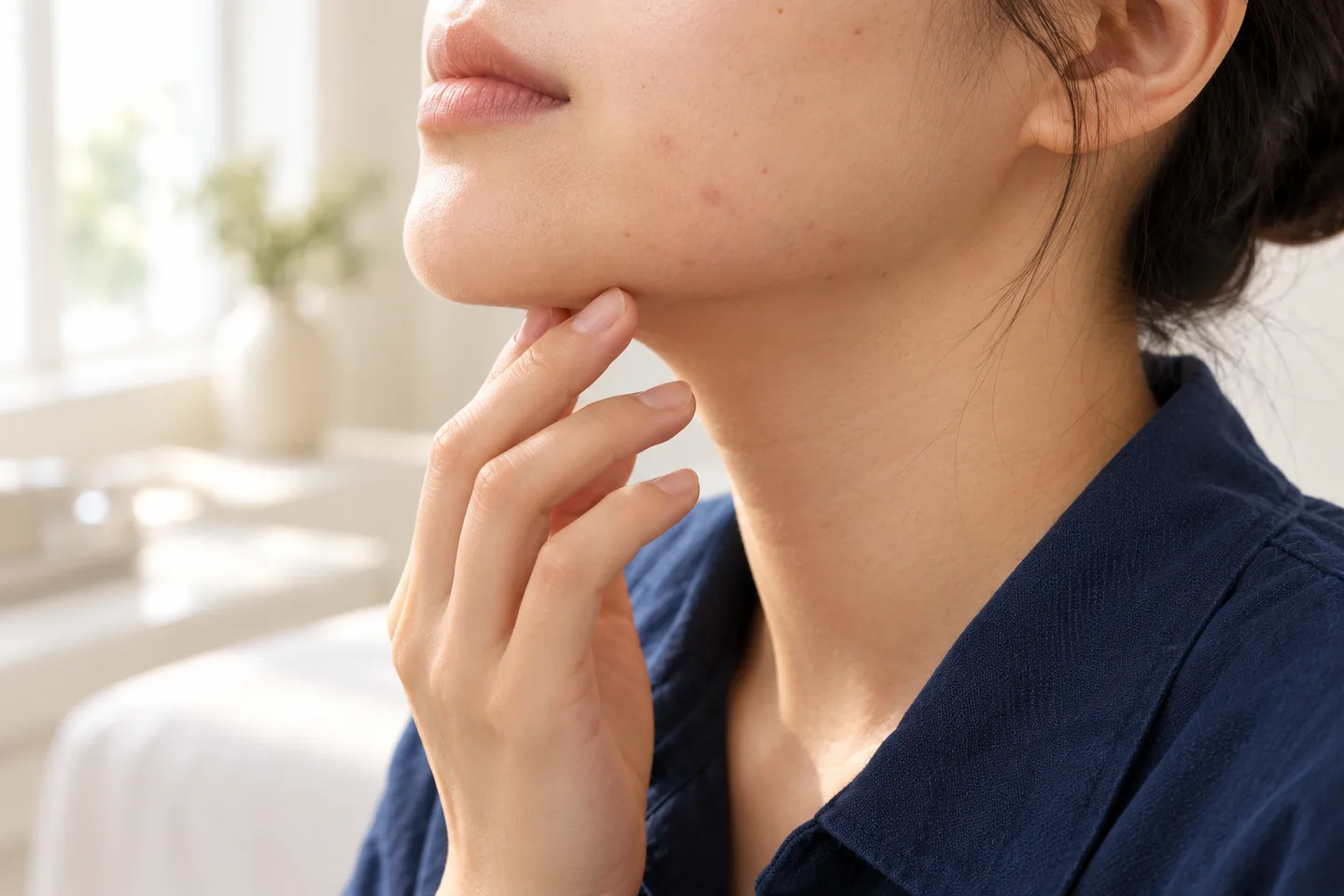
These marks are not necessarily acne scars. They are related mainly to persistent redness and changes in small blood vessels after inflammation. Some gradually fade without treatment, while others can remain visible for months.
The most important first step is determining what remains after the acne:
- Red or pink flat marks: more consistent with post-acne erythema
- Brown, gray, or dark marks: more consistent with post-inflammatory hyperpigmentation (PIH)
- Indented or raised areas: true acne scars
- New red pimples or pustules: active acne rather than simply residual redness
This distinction matters because red marks, brown marks, and acne scars require different treatment strategies.
For persistent post-acne redness, vascular-targeting treatments—particularly pulsed dye laser (PDL)—have the most established role among energy-based treatments, although there is currently no single gold-standard treatment for every patient.
What Is Post-Acne Redness?
After an inflammatory acne lesion settles, the skin does not always immediately return to its original color.
Inflammation around the acne lesion affects small blood vessels in the skin. Once the pimple itself disappears, residual vascular dilation and inflammation may leave a flat pink, red, or reddish-purple mark.
This is commonly referred to as:
- Post-acne redness
- Red acne marks
- Post-inflammatory erythema
- PIE
- Post-acne erythema
- PAE
A systematic review describes post-acne erythema as persistent erythematous lesions and vascular changes that remain after acne inflammation.
Is Post-Acne Redness an Acne Scar?
Usually, no.
This is one of the most common misunderstandings about acne.
A true acne scar involves a structural change in the skin. The skin may be depressed, uneven, tethered, or raised.
Post-acne redness is primarily a color change.
If you run your finger over a red mark and the skin is completely flat, the problem may be residual erythema rather than a structural scar.
However, the two can occur together.
For example, a patient may have a rolling acne scar that is also red. In this situation, treating only the redness may improve the color while the depression remains.
A good acne-scar assessment therefore examines both:
color + skin structure.
Post-Acne Redness vs PIE
These terms are often used interchangeably.
PIE stands for post-inflammatory erythema.
It describes persistent red or pink discoloration after skin inflammation. Acne is one of the most common causes.
The term was introduced into dermatology literature to distinguish post-inflammatory redness from post-inflammatory pigmentation and true scarring.
Therefore:
Post-acne redness is often a form of PIE.
Post-Acne Redness vs PIH: What Is the Difference?
This distinction is particularly important in Thai and Asian skin because patients can develop both redness and pigmentation after the same acne lesion.
PIE — Post-Inflammatory Erythema
Usually appears:
- Pink
- Red
- Reddish-purple
The main problem is vascular and inflammatory.
PIH — Post-Inflammatory Hyperpigmentation
Usually appears:
- Light brown
- Dark brown
- Gray-brown
- Occasionally blue-gray
The main problem is excess melanin produced following inflammation.
It is widely emphasized in dermatology that flat discoloration remaining after acne is not necessarily an acne scar and may fade over time.
Why does the difference matter?
Because treatment targets are different.
For predominantly red marks, treatment may focus on blood vessels.
For predominantly brown marks, treatment focuses more on abnormal pigmentation.
Trying to treat every post-acne mark with the same laser or cream can therefore produce disappointing results.
Can You Have PIE and PIH at the Same Time?
Yes.
This is very common clinically.
A single acne lesion can leave:
- Redness
- Brown pigmentation
- A depressed scar
- Or a combination of all three
A mark may therefore look red-brown rather than clearly red or brown.
This becomes especially important when choosing laser treatment.
A vascular laser may improve the red component without completely removing the brown component. Conversely, a pigmentation treatment may improve brown discoloration while leaving visible redness.
Treat what is actually present—not simply what the patient calls an “acne scar.
”
What Causes Red Marks After Acne?
Inflammatory acne produces an immune response in the skin.
During inflammation:
- Blood flow to the affected area increases.
- Small blood vessels dilate.
- Inflammatory mediators affect surrounding tissue.
- The pimple eventually resolves.
- Vascular changes and residual inflammation may remain visible.
The result is a flat red mark even though the active pimple has disappeared.
The more inflamed or traumatized a lesion becomes, the greater the possibility of prolonged discoloration and scarring.
Picking, squeezing, or scratching acne increases inflammation and can increase the risk of both discoloration and true acne scars.
Who Is More Likely to Develop Post-Acne Redness?
Post-acne redness can occur in any skin type.
It may be particularly noticeable following:
- Inflamed papules
- Pustules
- Nodules
- Cysts
- Repeated acne in the same location
- Picking or squeezing pimples
- Aggressive acne extraction
- Skin irritation
- Poorly controlled inflammatory acne
Skin tone also influences how post-acne marks appear.
In some patients, vascular redness is dominant. In others, particularly more pigment-prone skin, redness may coexist with significant PIH.
Why Does Acne Redness Last So Long?
A pimple may disappear much faster than the inflammatory changes surrounding it.
The visible mark can persist while the skin gradually repairs itself and vascular changes normalize.
Some lesions improve spontaneously with time. Persistent PAE, however, may remain cosmetically bothersome.
There is no reliable way to predict exactly how long an individual red mark will last.
Duration depends on factors including:
- Severity of the original inflammation
- Repeated acne in the area
- Skin sensitivity
- Picking or squeezing
- Coexisting pigmentation
- Ongoing acne
- Sun exposure
- Individual healing response
Does Post-Acne Redness Go Away on Its Own?
It can.
Many flat post-acne marks gradually become less noticeable as inflammation settles.
This is why immediate procedural treatment is not necessary for every new red acne mark.
However, some redness can persist and become a significant cosmetic concern.
Treatment becomes more reasonable when:
- Redness has persisted
- There are many visible red marks
- Acne is already reasonably controlled
- The redness is affecting the patient’s confidence
- Faster improvement is desired
- Redness coexists with acne scars requiring treatment planning
Does Sun Exposure Make Post-Acne Redness Worse?
Sun exposure can complicate recovery from acne inflammation.
In Bangkok and elsewhere in Thailand, consistent photoprotection is particularly practical because ultraviolet exposure can contribute to persistent post-inflammatory discoloration, especially when PIE and PIH coexist.
Sunscreen does not directly “erase” dilated blood vessels, but it is an important part of protecting healing skin and reducing additional pigmentation.
For acne-prone skin, choose a sunscreen that is comfortable enough to use consistently and does not aggravate acne.
How Is Post-Acne Redness Diagnosed?
Diagnosis is usually clinical.
A dermatologist examines:
- Color
- Distribution
- Whether the lesion is flat or depressed
- Presence of active acne
- Visible small blood vessels
- Brown pigmentation
- Acne-scar morphology
- Background facial redness
- Skin sensitivity
- Previous acne treatment
The goal is not merely to confirm that the face is “red.
”
The more useful question is:
What is producing the redness?
Is Every Red Mark After Acne PIE?
No.
Persistent facial redness can have other causes.
These include:
- Active inflammatory acne
- Rosacea
- Irritant dermatitis
- Allergic contact dermatitis
- Seborrheic dermatitis
- Steroid-related facial inflammation
- Telangiectasia
- Recent procedures
- Infection
- Other inflammatory skin diseases
If redness is associated with burning, itching, scaling, recurrent flushing, pustules, or visible vessels extending beyond previous acne sites, another diagnosis should be considered.
Post-Acne Redness vs Rosacea
Rosacea and post-acne redness can sometimes look similar.
Post-acne erythema usually corresponds to areas where inflammatory acne previously occurred.
Rosacea may instead produce:
- Persistent central facial redness
- Flushing
- Visible facial blood vessels
- Burning or stinging
- Acne-like inflammatory bumps
Importantly, rosacea does not typically produce comedones in the way acne does.
Some patients can have both acne and rosacea, making clinical assessment useful before treatment.
Post-Acne Redness vs Acne Scars
A simple practical distinction is:
| Finding | Main Problem |
|---|---|
| Flat red/pink mark | Post-acne erythema / PIE |
| Flat brown mark | PIH |
| Indented skin | Atrophic acne scar |
| Raised firm scar | Hypertrophic scar or keloid |
| Active red bump | Inflammatory acne |
If scars and redness coexist, combination treatment may eventually be appropriate.
But the treatment order matters.
Should Active Acne Be Treated Before Post-Acne Redness?
Usually, controlling active acne is a major priority.
Otherwise, new inflammatory lesions continue producing new red and brown marks while old ones are being treated.
An effective treatment plan may therefore involve two parallel goals:
Goal 1: Stop or reduce new acne
This may involve:
- Appropriate skincare
- Topical acne medication
- Oral treatment when indicated
- Avoiding comedogenic products
- Reducing picking and squeezing
Goal 2: Treat existing redness
Once acne is controlled or improving, persistent vascular marks can be assessed for targeted treatment.
Treating redness without adequately addressing ongoing inflammatory acne can become an endless cycle.
What Is the Best Treatment for Post-Acne Redness?
There is no single treatment that is best for everyone.
A systematic review of post-acne erythema found that laser and light-based treatments were the most frequently studied approaches, with pulsed dye laser (PDL) being the most commonly studied laser. Other approaches included Nd:YAG laser and topical medications. The authors concluded that more randomized clinical trials are still needed and that there is no established gold-standard treatment.
Treatment selection depends on:
- How red the marks are
- How long they have been present
- Skin tone
- Active acne
- PIH tendency
- Acne scars
- Rosacea
- Previous treatments
- Desired downtime
Pulsed Dye Laser for Post-Acne Redness
Pulsed dye laser (PDL) is one of the most established vascular laser approaches for persistent post-acne erythema.
A commonly studied wavelength is 595 nm.
The laser targets hemoglobin within blood vessels. Light energy is converted into heat, allowing abnormal or persistent vascular structures to be selectively treated.
PDL has been one of the most frequently studied devices for PAE in systematic reviews.
What can PDL help?
Depending on the patient and settings, it may help reduce:
- Flat red acne marks
- Persistent acne-related erythema
- Visible vascular redness
Clinical studies have demonstrated improvement in acne-related erythema after 595-nm PDL treatment.
What PDL does not do
PDL should not be expected to completely correct:
- Deep ice-pick scars
- Tethered rolling scars
- Deep boxcar scars
- Brown PIH
- Active comedonal acne
Those problems involve different structures or chromophores.
V-Beam for Post-Acne Redness
V-Beam is a commonly recognized brand/platform of pulsed dye laser.
Patients frequently search for “V-Beam for acne redness,
” but the clinically relevant concept is the underlying pulsed dye laser technology and treatment parameters, not simply the brand name.
PDL treatment can be performed using different settings depending on:
- Vessel size
- Degree of redness
- Skin type
- Desired endpoint
- Treatment area
- Whether bruising is acceptable
This is one reason comparing laser treatments solely by brand name can be misleading.
Will PDL Cause Bruising?
It can.
Some PDL settings intentionally produce purpura, or temporary purple bruising, while other settings may be used with less bruising.
Possible short-term effects include:
- Redness
- Swelling
- Warmth
- Tenderness
- Purpura
- Temporary darkening
The appropriate setting depends on the clinical goal, skin type, and acceptable downtime.
IPL for Post-Acne Redness
Intense pulsed light (IPL) uses a range of wavelengths rather than a single laser wavelength.
IPL can target hemoglobin and may be useful when redness is more diffuse or when vascular and pigment concerns coexist.
Clinical reviews of PAE include IPL among light-based treatments that have been investigated.
However:
IPL is not a laser.
Its effectiveness and safety depend heavily on device characteristics, filters, settings, skin tone, and operator experience.
PDL vs IPL for Post-Acne Redness
Neither is automatically best.
PDL may be particularly logical when:
- Redness is clearly vascular
- Individual red acne marks are prominent
- Visible vessels are present
- A vascular-specific approach is desired
IPL may be considered when:
- Redness is more diffuse
- There are mixed vascular and superficial pigment concerns
- Broader photorejuvenation goals are present
In darker or pigment-prone skin, device and parameter selection requires particular care because excessive epidermal heating can increase the risk of pigmentary changes.
Nd:YAG Laser for Post-Acne Redness
Nd:YAG lasers have also been investigated for acne-associated erythema.
A systematic review identified Nd:YAG as the second most commonly studied laser category after PDL for PAE.
Studies comparing 1064-nm Nd:YAG with 595-nm PDL have reported improvement in acne erythema with both approaches.
A more recent randomized split-face study also found improvement in PAE using both pulsed-light treatment and low-energy Q-switched 1064-nm Nd:YAG, although this was a relatively small study and should not be interpreted as proving one universal protocol for all patients.
Fractional Laser for Post-Acne Redness
Fractional lasers are primarily used for skin remodeling, particularly acne scars and texture.
They are not necessarily the first treatment to choose when the only problem is a flat red mark.
However, fractional treatment may make sense when a patient has:
acne scars + redness + textural irregularity.
A small randomized pilot study comparing non-ablative 1550-nm fractional laser with 595-nm PDL found improvement in acne-associated facial erythema with both treatments.
The important clinical principle is:
Choose treatment according to the dominant problem.
If the main problem is blood vessels, a vascular-targeting treatment may be more direct.
If the main problem is structural scarring, scar-remodeling treatments become more important.
RF Microneedling for Post-Acne Redness
Radiofrequency microneedling is mainly used for dermal remodeling and acne scarring rather than as a purely vascular treatment.
It has been investigated for acne-related post-inflammatory erythema and may be useful when redness coexists with textural acne scarring.
However, it should not automatically replace a vascular laser when the primary concern is uncomplicated flat vascular redness.
Microneedling for Post-Acne Redness
Traditional microneedling is primarily used to stimulate dermal remodeling.
It may be appropriate for selected acne scars, but creating additional inflammation solely to treat a vascular red mark is not necessarily the most direct strategy.
Patients with both acne scars and PIE require individualized planning rather than assuming one procedure will optimally treat both.
Can Chemical Peels Treat Post-Acne Redness?
Chemical peels may help:
- Active acne
- Comedones
- Some forms of pigmentation
- Surface texture
But they are not primarily vascular treatments.
An overly aggressive peel can itself produce inflammation and potentially worsen redness or PIH.
If the main problem is persistent vascular redness, a treatment targeting blood vessels may be more logical.
Can Skincare Remove Post-Acne Redness?
Skincare plays an important supportive role but may not eliminate established vascular redness quickly.
The priorities are:
Gentle cleansing
Avoid unnecessary scrubbing and aggressive cleansing.
Moisturizer
Maintaining the skin barrier can reduce irritation that makes redness appear worse.
Sunscreen
Daily photoprotection helps prevent additional discoloration, especially when PIH coexists.
Active acne treatment
Preventing new inflammatory lesions prevents new red marks.
The skincare routine should not become so complicated that it causes additional irritation.
Which Ingredients Help Red Acne Marks?
This area requires realistic expectations.
Topical treatments have been investigated for PAE, including agents that affect vascular tone and inflammation, but evidence is considerably less established than the marketing surrounding many “red mark” skincare products suggests.
A systematic review identified topical agents such as oxymetazoline, brimonidine, and tranexamic acid as promising approaches, while emphasizing the need for further controlled studies.
A 2025 randomized trial also reported improvement using PDL, topical brimonidine, and their combination, with combination treatment performing better on several study outcomes. This does not mean brimonidine should automatically be used by every patient with acne redness.
These are medications, not ordinary cosmetic skincare ingredients, and appropriate use should be medically assessed.
Does Niacinamide Help Post-Acne Redness?
Niacinamide may support the skin barrier and can be useful in skincare for acne-prone or sensitive skin.
However, it should not be presented as equivalent to vascular laser treatment for persistent PIE.
Think of it primarily as supportive skincare rather than a guaranteed treatment for established vascular lesions.
Does Azelaic Acid Help Post-Acne Redness?
Azelaic acid can be useful in acne and certain inflammatory and pigmentary conditions.
For someone who still has acne, it may therefore be valuable as part of the overall acne-management plan.
However, persistent post-acne erythema should not automatically be expected to disappear simply from using azelaic acid.
Its role depends on whether the patient also has:
- Active acne
- PIH
- Rosacea-like inflammation
- Sensitive skin
Do Retinoids Help Red Acne Marks?
Topical retinoids are important acne treatments because they help prevent comedones and new acne lesions.
By controlling acne, they indirectly reduce the development of future post-acne marks.
But retinoids can initially cause:
- Dryness
- Irritation
- Peeling
- Redness
Using too much can therefore make a red face look temporarily worse.
More is not always better.
Should You Use Vitamin C for Post-Acne Redness?
Vitamin C is commonly included in antioxidant and pigmentation skincare.
Some limited literature has investigated topical vitamin C for post-inflammatory acne discoloration, but it should not be presented as a proven replacement for vascular treatment in persistent PIE.
Why Scrubs Can Make Post-Acne Redness Worse
A red mark does not need to be physically scrubbed away.
Aggressive:
- Scrubs
- Brushes
- Exfoliation
- Picking
- Extraction
- Repeated acids
can increase skin irritation and inflammation.
This can create the rather frustrating situation where someone is trying harder and harder to “remove the marks” while making the face progressively redder.
Can Post-Acne Redness Become Permanent?
Some lesions can persist for a long time, but persistent redness should not automatically be described as permanent.
Many marks gradually fade.
The difficulty is that patients with ongoing acne continuously develop new lesions, so the overall amount of redness may appear unchanged even though individual older marks are improving.
This is another reason acne control is central to treatment.
How Many Laser Sessions Are Needed?
There is no correct universal number.
Studies have used different:
- Devices
- Wavelengths
- Fluences
- Pulse durations
- Treatment intervals
- Numbers of sessions
- Patient populations
This variability is one reason systematic reviews have not established a single gold-standard PAE protocol.
The number of treatments should therefore be determined according to clinical response rather than promising a fixed package to every patient.
How Quickly Will Post-Acne Redness Improve After Laser?
Improvement is usually assessed over the weeks following treatment rather than immediately.
Immediately after a vascular treatment, the skin may actually look:
- Redder
- Swollen
- Darker
- Bruised
before settling.
Treatment response depends on the type of redness, device, settings, skin type, and number of sessions.
What Is the Downtime After Vascular Laser?
Downtime varies considerably.
Depending on the laser and settings, temporary effects may include:
- Redness
- Swelling
- Warmth
- Tenderness
- Purpura
- Temporary darkening
Non-pharmacological acne treatment reviews have reported effects such as erythema, discomfort, purpura, edema, and occasional hyperpigmentation, generally transient in the included studies.
Patients should therefore avoid assuming that every vascular laser treatment is “no downtime.
”
Can Laser Cause Hyperpigmentation?
Yes.
Any procedure that produces sufficient inflammation can potentially trigger pigmentation, particularly in pigment-prone skin.
This is important for Thai and Asian patients.
Risk depends on:
- Skin tone
- Recent tanning
- Laser wavelength
- Energy
- Pulse characteristics
- Cooling
- Treatment technique
- Sun exposure
- Individual tendency to develop PIH
This does not mean patients with darker skin cannot receive laser treatment.
It means device and parameter selection matter.
Treating Post-Acne Redness in Thai and Asian Skin
There is no single “Asian skin protocol.
”
Thai patients vary considerably in skin tone, tanning, vascular visibility, and tendency toward pigmentation.
Treatment planning should consider both:
vascular redness + pigment response.
This is particularly important because a patient may have PIE and PIH in the same area.
Aggressively treating redness without considering pigmentation risk can trade one cosmetic problem for another.
Can PDL Be Used on Darker Skin?
PDL may be considered in appropriately selected darker skin types, but treatment parameters and epidermal protection require care.
Melanin in the epidermis can compete with vascular targets for light absorption, and excessive energy can increase the possibility of burns or pigmentary changes.
A dermatologist may therefore consider:
- Skin tone
- Recent sun exposure
- Degree of tanning
- Previous PIH
- Treatment endpoint
- Cooling
- Laser parameters
before treatment.
Post-Acne Redness and Bangkok’s Climate
Bangkok’s hot, humid, sunny environment does not cause PIE itself, but it can affect how redness looks and how comfortable recovery feels.
Heat can temporarily increase facial blood flow and make redness more noticeable.
For patients living in Bangkok:
- Use appropriate sun protection
- Avoid unnecessary prolonged heat immediately after procedures
- Keep skincare gentle
- Avoid picking acne
- Continue acne prevention
The goal is to reduce new inflammation while existing marks recover.
Post-Acne Redness Treatment for Tourists in Bangkok
International patients considering laser treatment during a trip to Bangkok should think beyond the treatment date.
Consider:
- How long you will remain in Thailand
- Whether follow-up is possible
- Whether bruising would interfere with travel plans
- Upcoming beach or outdoor activities
- Strong sun exposure
- Whether several sessions may be required
- What to do if a delayed reaction develops
A procedure with temporary redness or purpura may not be ideal immediately before wedding photographs, an important meeting, or a beach holiday.
Aftercare After Treatment for Post-Acne Redness
Exact aftercare depends on the procedure.
General principles include:
- Cleanse gently
- Use a suitable moisturizer
- Avoid picking treated areas
- Avoid aggressive exfoliation
- Avoid unnecessary irritating active ingredients until the skin settles
- Use appropriate sun protection
- Follow procedure-specific instructions regarding heat and exercise
- Contact the treating clinician if symptoms are worsening rather than improving
If crusting occurs, do not deliberately remove it.
When Should You See a Dermatologist for Post-Acne Redness?
Consider dermatologic assessment when:
- Redness persists despite acne resolving
- You cannot tell whether marks are red or brown
- Acne is still active
- Scars are developing
- Redness is widespread rather than limited to old pimples
- You have recurrent flushing
- Visible blood vessels are increasing
- Skin burns, stings, scales, or itches
- Previous treatments have worsened the condition
- You are considering laser treatment
Prompt evaluation is particularly appropriate if redness is associated with significant pain, warmth, swelling, pus, crusting, fever, rapidly spreading redness, or other signs suggesting infection rather than ordinary PIE.
What to Expect During a Dermatology Consultation
A useful consultation should not begin with:
“Which laser package do you want?”
It should begin with:
“What exactly is causing the red marks?”
The dermatologist may assess:
- Active inflammatory acne
- Comedones
- PIE
- PIH
- Acne-scar type
- Telangiectasia
- Rosacea
- Dermatitis
- Skin tone
- PIH tendency
- Current skincare
- Acne medication
- Previous laser treatments
- Recent tanning
- Treatment expectations
- Acceptable downtime
From there, treatment can be matched to the dominant problem.
Which Treatment Is Best? A Practical Comparison
| Treatment | Best suited to | Main limitation |
|---|---|---|
| Observation | Mild/new PIE | Improvement can be slow |
| Acne treatment | Ongoing active acne | Prevents new marks rather than instantly clearing old redness |
| Gentle skincare | Barrier support/irritation reduction | Limited effect on established vessels |
| PDL / Vascular laser | Persistent vascular redness | Swelling, redness or purpura; multiple sessions may be needed |
| IPL | Diffuse redness ± pigment | Not ideal for every skin type; operator/device dependent |
| Nd:YAG laser | Selected vascular/acne-related redness | Response depends on wavelength/settings and indication |
| Fractional laser | Redness with acne scars/texture | Not necessarily first choice for isolated flat redness |
| RF microneedling | Acne scars with associated erythema | More focused on dermal remodeling |
| Pigment treatment | Coexisting PIH | Does not directly treat the vascular component |
The key principle is simple:
Red acne marks, brown acne marks, and acne scars may occur together—but they are not the same problem.
Frequently asked questions
What is post-acne redness?
It is persistent red or pink discoloration remaining after inflammatory acne heals. It is commonly called post-inflammatory erythema or PIE.
Is PIE the same as post-acne redness?
PIE is one of the main medical terms used to describe persistent post-inflammatory redness after acne.
Is post-acne redness a scar?
Usually not. A flat red mark is a color/vascular change, while a true acne scar involves structural alteration of the skin.
How do I know if I have PIE or PIH?
PIE tends to look pink or red. PIH is usually brown, gray-brown, or darker than the surrounding skin. Both can coexist.
Can I have PIE and acne scars together?
Yes. A depressed acne scar can also have a red vascular component.
Does post-acne redness go away naturally?
Many marks gradually fade, although some remain visible for months or longer.
Why are my acne marks red?
Inflammation can leave persistent dilation and changes in small blood vessels after the acne lesion itself has healed.
Why do my acne marks turn red after exercise?
Heat and exercise increase skin blood flow, which can temporarily make vascular redness more noticeable.
Why are acne marks red after a hot shower?
Heat causes vasodilation and can temporarily intensify redness.
Does squeezing pimples cause more redness?
It can increase inflammation and increases the risk of discoloration and scarring.
What is the fastest treatment for PIE?
There is no guaranteed fastest treatment. Persistent vascular redness may respond to vascular-targeting procedures such as PDL, but treatment choice depends on the individual.
What is the best laser for post-acne redness?
PDL is among the most frequently studied vascular lasers for PAE, but there is no single gold-standard device for every patient.
Does V-Beam help red acne marks?
V-Beam is a PDL platform, and PDL has clinical evidence for improving acne-associated erythema.
Does IPL help post-acne redness?
IPL has been studied for PAE and may be useful in selected patients.
PDL vs IPL: which is better for acne redness?
It depends on whether redness is focal or diffuse, the patient's skin type, pigmentation, other concerns, and the specific device and settings.
Does Nd:YAG help post-acne redness?
Nd:YAG lasers have been investigated for PAE, and clinical studies have reported improvement.
Does fractional laser remove red acne marks?
Fractional lasers can improve acne scars and may improve associated erythema, but they are not necessarily the most direct treatment for isolated vascular redness.
Does RF microneedling treat PIE?
It has been investigated for acne-related erythema and may be particularly relevant when acne scars and redness coexist.
Does microneedling remove red acne marks?
Microneedling primarily targets dermal remodeling rather than blood vessels, so it is not automatically the first treatment for isolated PIE.
Does niacinamide remove PIE?
It may support the skin barrier but should not be expected to reliably remove established vascular lesions.
Does azelaic acid help red acne marks?
It may be useful when active acne, inflammation, PIH, or rosacea-like features coexist, but it is not a guaranteed treatment for persistent PIE.
Do retinoids help PIE?
Retinoids help prevent new acne, indirectly preventing future marks. Excessive use can irritate the skin and temporarily worsen redness.
Does vitamin C remove post-acne redness?
Evidence is limited. It should not be considered equivalent to a vascular treatment for established PIE.
Does sunscreen help PIE?
Sunscreen does not directly close dilated vessels but helps protect healing skin and reduce additional pigmentation.
Can post-acne redness become permanent?
Some redness can persist for a long time, but it should not automatically be considered permanent.
How many PDL sessions are needed?
There is no universal number. Treatment protocols and individual responses vary.
Does PDL hurt?
Patients may experience brief heat or stinging. Discomfort varies with treatment settings and individual sensitivity.
Does PDL cause bruising?
It can. Some treatment settings can produce temporary purpura.
Can laser make acne redness worse?
Temporary redness after treatment is expected with many vascular procedures. Excessive inflammation or inappropriate treatment can also cause complications, so correct diagnosis and parameter selection matter.
Can laser cause dark spots?
Yes. Post-inflammatory pigmentation is a possible complication, particularly in pigment-prone skin.
Is PDL suitable for Asian skin?
It may be used in appropriately selected Asian patients, but skin tone, tanning, PIH risk, cooling, and treatment settings must be considered.
Is post-acne redness common in Thai skin?
It can occur in Thai skin, although PIH may also be prominent and both conditions can coexist.
Should acne be controlled before treating PIE?
Usually, controlling ongoing inflammatory acne is an important part of the plan because otherwise new red marks continue to develop.
Can I treat acne and PIE at the same time?
Often yes, but the combination and timing depend on the acne treatment, procedure, and skin sensitivity.
Can PIE and PIH be treated together?
Sometimes, but the treatment must account for both vascular and pigment targets rather than assuming one procedure will optimally treat both.
Is redness after acne extraction PIE?
Temporary redness after extraction is common. Persistent redness may behave similarly to PAE; PDL has also been studied specifically for post-extraction erythema.
Why is my face red even where I never had acne?
That raises the possibility of another condition such as rosacea, dermatitis, flushing, or telangiectasia rather than purely post-acne erythema.
Can rosacea look like post-acne redness?
Yes. Persistent central facial redness and acne-like inflammatory lesions can sometimes be confused with acne-related erythema.
When should I see a dermatologist?
Seek assessment if redness persists, the diagnosis is uncertain, active acne is continuing, scars are developing, or you are considering procedural treatment.
Related conditions
-
Acne Acne Acne is one of the most common skin conditions and can affect teenagers and adults alike. It may appear as blackheads, whiteheads, inflamed pimples, or deeper painful nodules and cysts.
-
Acne Scar Treatment Acne Scar Treatment Acne scars are not all the same, and this is the most important thing to understand before choosing treatment.
-
Post-inflammatory Hyperpigmentation Post-inflammatory Hyperpigmentation Post-inflammatory hyperpigmentation (PIH) is the flat brown, dark brown, or grayish discoloration that remains after inflammation or injury to the skin. It commonly follows acne, eczema, insect bites, burns, scratching, irritation, and some dermatologic procedures.
-
Rosacea Rosacea Rosacea is a chronic inflammatory skin condition that mainly affects the central face. It may cause persistent redness, frequent flushing, visible blood vessels, acne-like bumps, burning or sensitive skin, and sometimes eye symptoms.