









Electrocautery
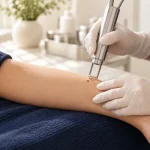
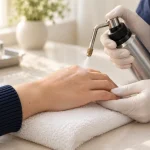
Electrocautery is a dermatologic procedure that uses heat to destroy selected tissue or control bleeding. In everyday clinical language, the term is often used broadly for several forms of Electrosurgery, although technically they are not identical.

In dermatology, electrical or thermal devices may be used for selected benign skin lesions, superficial growths, vascular lesions, hemostasis during minor surgery, and in some carefully selected malignant or premalignant lesions. The correct technique depends on the diagnosis, depth of the lesion, anatomical location, skin type, and whether tissue is needed for Histopathology.
For patients considering Electrocautery in Bangkok, the most important step is not choosing the device first. It is confirming what the skin lesion actually is and whether destruction is appropriate.
A practical approach is:
Skin lesion assessment → diagnosis → Dermoscopy or Biopsy when needed → choose the appropriate procedure → wound care → follow-up
What Is Electrocautery?
Strictly speaking, Electrocautery uses a heated metal tip to transfer thermal energy directly to tissue. Electrical current heats the instrument itself but does not necessarily pass through the patient’s body.
By contrast, Electrosurgery uses high-frequency electrical current to produce heat within the tissue.
The terms are frequently used interchangeably in everyday practice, but technically Electrosurgery includes several different methods:
- Electrodesiccation
- Electrofulguration
- Electrocoagulation
- Electrosection
- Thermocautery or true Electrocautery
- Radiofrequency Electrosurgery
Each technique produces a different depth and type of tissue effect.
How Does Electrocautery Work?
The aim is to create controlled thermal injury.
Depending on the technique, the heat may:
- dry and destroy superficial tissue
- coagulate small blood vessels
- reduce bleeding
- cut tissue
- destroy selected skin growths
The depth of treatment depends on factors such as:
- power setting
- duration of contact
- electrode type
- waveform
- whether the electrode touches the skin
- tissue moisture
- number of treatment passes
This is why Electrocautery should not be thought of as simply “burning off” a lesion. The technique must be matched to the diagnosis and required treatment depth.
Electrocautery vs Electrosurgery: What Is the Difference?
This distinction is often confusing.
Term Technical meaning
| Electrocautery | A metal tip is heated and thermal energy is transferred to tissue |
|---|---|
| Electrodesiccation | Electrical energy causes superficial dehydration and tissue destruction |
| Electrofulguration | Electrical sparks create superficial tissue destruction |
| Electrocoagulation | Electrical current causes deeper coagulation and helps control bleeding |
| Electrosection | Electrical current cuts through tissue |
| Radiofrequency Electrosurgery | Uses very high-frequency current for cutting or coagulation |
True heated-tip cautery is more accurately described as Thermocautery.
What Skin Conditions Can Be Treated With Electrocautery?
Electrocautery or related Electrosurgical techniques may be useful for selected skin lesions.
Examples may include:
- Seborrheic Keratosis
- Skin Tags
- Dermatosis Papulosa Nigra
- selected Warts
- Sebaceous Hyperplasia
- some small vascular lesions
- selected benign adnexal lesions
- hemostasis during skin surgery
Electrodesiccation and Electrofulguration are commonly used for superficial skin lesions, while deeper Electrocoagulation may be used when a stronger coagulating effect is needed.
However, not every lesion that is raised or brown is suitable for Electrocautery.
Electrocautery for Seborrheic Keratosis
Seborrheic Keratosis is a common benign skin growth that may be treated with Electrocautery or Electrosurgery in selected cases.
It may be used alone or together with Curettage.
A typical approach may involve:
- Local Anesthesia if required.
- Controlled Electrosurgical treatment.
- Curettage to remove loosened tissue.
- Additional coagulation if needed.
- Wound care during healing.
Curettage and cautery are established dermatologic techniques for selected benign lesions.
Electrocautery for Skin Tags
Small Skin Tags or Acrochordons can sometimes be treated with Electrosurgery.
The procedure may:
- destroy the attachment point;
- control minor bleeding;
- allow rapid treatment of small lesions.
However, larger lesions or lesions with an uncertain diagnosis may be better treated with another technique such as Snip Excision, Shave Removal, or Surgical Excision.
Electrocautery for Warts
Electrosurgery can be used for selected Warts, frequently in combination with Curettage.
The wart tissue may first be destroyed with electrical energy and then removed mechanically.
However, Warts are caused by HPV, meaning removing visible wart tissue does not guarantee that recurrence will not occur.
Electrosurgery and Curettage are among the standard treatment options for certain Warts.
Electrocautery for Dermatosis Papulosa Nigra
Dermatosis Papulosa Nigra or DPN consists of multiple small pigmented papules, commonly affecting the face and neck, particularly in darker skin types.
Very low-power Electrosurgery may be considered for selected lesions.
However, treatment requires caution because excessive thermal injury can lead to:
- Post-Inflammatory Hyperpigmentation
- Hypopigmentation
- scarring
For patients with darker skin, conservative treatment depth and careful lesion selection are particularly important.
Electrocautery for Sebaceous Hyperplasia
Sebaceous Hyperplasia produces small yellowish or skin-colored papules, often on the face.
Electrosurgical techniques may be used to reduce selected lesions.
However, recurrence or development of new lesions can occur because treatment removes the visible lesion but does not change the underlying tendency to develop Sebaceous Hyperplasia.
Electrocautery for Vascular Lesions
Fine Electrosurgical techniques can be used for selected small vascular lesions.
Examples may include:
- small Angiomas;
- fine Telangiectasia;
- minor bleeding vessels during surgery.
Very low settings may be used for superficial vascular targets, while Electrocoagulation may be used for hemostasis during surgical procedures.
Electrocautery for Pyogenic Granuloma
A Pyogenic Granuloma is a benign vascular growth that can bleed easily.
One treatment option may involve:
Shave Removal or Curettage → Electrocautery for hemostasis and destruction of residual tissue
However, Pyogenic Granuloma can occasionally resemble other vascular or malignant lesions, so tissue may need to be sent for Histopathology depending on the clinical situation.
Shave removal, Curettage, and Cautery represent one established approach to treatment.
Can Electrocautery Be Used for Skin Cancer?
Electrosurgery combined with Curettage can be used for carefully selected superficial or low-risk non-melanoma skin cancers in appropriate clinical circumstances.
Examples may include selected:
- basal cell carcinoma
- Squamous Cell Carcinoma in situ
- Bowen’s Disease
However, this is very different from cosmetic treatment of a benign lesion.
Factors such as tumor subtype, size, anatomical location, recurrence status, histological diagnosis, and patient risk profile must be considered.
Electrosurgery should therefore not be used casually on an undiagnosed lesion that might represent skin cancer.
Why Diagnosis Must Come Before Electrocautery
This is one of the most important safety principles.
Electrocautery destroys tissue.
Once tissue is destroyed, it may no longer be available for accurate Histopathology.
This matters particularly for:
- dark pigmented lesions;
- changing lesions;
- irregular lesions;
- ulcerated lesions;
- recurrent lesions;
- lesions suspicious for melanoma;
- lesions suspicious for basal cell carcinoma or SCC.
Electrosurgical destruction can make accurate histological examination impossible.
Therefore:
If diagnosis is uncertain, Biopsy should generally come before destructive treatment.
Which Lesions Should Not Simply Be Cauterized?
A lesion should not automatically be treated with Electrocautery merely because it is small or raised.
Further assessment may be needed if it:
- recently appeared and is growing rapidly;
- has irregular pigmentation;
- has asymmetric borders;
- repeatedly bleeds without clear trauma;
- ulcerates;
- forms a persistent non-healing wound;
- is unusually firm or fixed;
- recurs repeatedly after treatment;
- looks different from other lesions.
These features do not automatically mean cancer, but they make diagnosis more important than immediate cosmetic removal.
How Does a Dermatologist Decide Whether Electrocautery Is Appropriate?
The dermatologist may consider:
- clinical diagnosis;
- lesion depth;
- size;
- anatomical location;
- pigmentation;
- number of lesions;
- patient’s skin type;
- history of Keloid or Hypertrophic Scar;
- whether Histopathology is required;
- whether another treatment would provide a better cosmetic result.
For pigmented lesions, Dermoscopy may be appropriate before treatment.
If the diagnosis remains uncertain, Skin Biopsy may be preferable.
What Happens During Electrocautery?
The exact procedure varies according to the lesion.
A typical treatment may include:
1. Skin examination
The lesion is assessed to confirm whether Electrocautery is appropriate.
2. Local Anesthesia
Some very small superficial lesions may require little anesthesia, while many procedures are performed with Local Anesthesia.
3. Electrosurgical treatment
The physician applies controlled thermal or electrical energy to the lesion.
4. Curettage or removal if appropriate
Some lesions are scraped with a Curette after Electrosurgical treatment.
- Hemostasis
Electrocautery can also be used to control small areas of bleeding.
6. Dressing
A superficial wound may be covered with an appropriate Dressing while it heals.
Is Electrocautery Painful?
The sensation depends on:
- lesion size;
- location;
- depth;
- treatment technique.
Local Anesthesia is often used when deeper or more extensive treatment is required.
The anesthetic injection may sting briefly.
After the area becomes numb, the patient may still feel pressure or movement but should not normally experience sharp procedural pain.
After treatment, mild tenderness, burning, or soreness may occur temporarily.
Does Electrocautery Cause a Smell?
Yes, sometimes.
Thermal destruction of tissue can create a characteristic smoke or odor during treatment.
Electrosurgical smoke may also contain very small particles and chemical by-products, which is why appropriate smoke management is an important procedural consideration, as smoke plumes generated during treatment can create safety concerns.
Does Electrocautery Cause Bleeding?
Usually, one advantage of Electrocautery is that it can control small blood vessels while treating tissue.
This makes it useful for Hemostasis.
However, some bleeding can still occur, particularly when:
- Curettage is performed;
- the lesion is vascular;
- a larger surface is treated;
- the patient takes medications affecting bleeding.
Patients should inform the clinician about medications and relevant medical history before the procedure.
Electrocautery vs Cryotherapy
Both can treat selected superficial skin lesions, but they work differently.
| Electrocautery | Cryotherapy |
|---|---|
| Uses thermal or Electrosurgical energy | Uses extreme cold, usually Liquid Nitrogen |
| Treatment depth can be controlled with energy and duration | Depth depends on freeze time and tissue response |
| Often combined with Curettage | Usually performed without Curettage |
| May control bleeding during treatment | Blistering is relatively common |
| Can cause Hyperpigmentation or Hypopigmentation | Can also cause Hyperpigmentation or Hypopigmentation |
| Usually produces a superficial wound or crust | Often produces inflammation, blister, then crust |
The appropriate option depends on the diagnosis, lesion thickness, site, and skin type.
Electrocautery vs CO2 Laser
Both methods can destroy superficial tissue, but they use different energy sources.
Electrocautery / Electrosurgery uses thermal or electrical energy.
CO2 Laser uses light energy that is strongly absorbed by water in tissue and produces controlled vaporization.
Neither method is automatically superior.
Treatment selection should depend on:
- diagnosis;
- lesion size;
- depth;
- number;
- skin type;
- scar risk;
- pigment risk;
- need for Histopathology.
Electrocautery vs Shave Removal
Shave Removal physically removes a raised portion of a lesion using a surgical blade.
The advantage is that tissue can often be preserved for Histopathology.
Electrocautery destroys tissue and may not provide an adequate specimen.
Therefore, if diagnostic confirmation is important, Shave Biopsy or another Biopsy method may be preferable.
Electrocautery can still be used after Shave Removal to control bleeding in selected cases.
Electrocautery vs Curettage
These procedures are frequently used together.
Curettage physically scrapes tissue using a Curette.
Electrocautery or Electrosurgery destroys residual tissue or helps control bleeding.
A common sequence is:
Curettage → Electrosurgery → repeat if clinically appropriate
The exact sequence depends on the lesion being treated.
Electrocautery in Asian and Darker Skin
This is especially relevant for patients in Thailand.
Any procedure that creates inflammation can cause Post-Inflammatory Hyperpigmentation or PIH.
Electrocautery may also cause:
- Hypopigmentation;
- prolonged redness;
- visible texture change;
- Hypertrophic Scar;
- Keloid in susceptible individuals.
The risk depends on:
- treatment depth;
- energy used;
- body location;
- wound healing;
- patient’s natural skin tone;
- history of abnormal scarring.
For cosmetic lesions, removing the lesion is only one part of the outcome. The appearance of the healed skin is equally important.
Does Electrocautery Leave a Scar?
It can.
No destructive procedure can guarantee a scar-free result.
Superficial treatment may heal with minimal visible change, while deeper treatment may produce:
- depressed scar;
- raised scar;
- texture change;
- pigment change.
Excessive Electrosurgery can delay healing and lead to Hypertrophic Scarring.
Treatment depth therefore matters significantly.
What Does the Skin Look Like After Electrocautery?
Immediately after treatment, the site may appear:
- red;
- brown;
- superficially charred;
- slightly swollen.
Over the following days, a crust or scab may form.
The area then gradually heals underneath.
After the crust separates, new skin may initially look:
- pink;
- red;
- lighter than surrounding skin;
- darker than surrounding skin.
Final pigment changes may take considerably longer to settle than the wound itself.
How Long Does Electrocautery Take to Heal?
There is no single healing time for every lesion.
Healing depends on:
- treatment depth;
- lesion size;
- body location;
- number of lesions;
- patient’s health;
- wound care.
Superficial wounds often heal by Secondary Intention, meaning the skin gradually grows across the wound rather than being closed with stitches.
Curettage and Electrocautery wounds commonly heal without sutures, although healing and scar quality vary according to the lesion and site.
Aftercare Following Electrocautery
Specific instructions vary, but general principles may include:
- keep the wound clean;
- use the recommended Dressing;
- apply Petroleum Jelly or another wound-care product if advised;
- avoid picking the crust;
- avoid unnecessary friction;
- avoid irritating skincare products directly on the open wound;
- protect healed skin from excessive sun exposure;
- monitor for infection.
Aggressively drying the wound is not always necessary. Modern superficial wound care often aims to maintain an environment that supports re-epithelialization.
Can I Wash My Face After Electrocautery?
For facial treatment, gentle cleansing is generally possible according to the specific wound-care instructions provided.
Avoid:
- scrubbing;
- exfoliating acids directly on an open wound;
- Retinoids directly over the wound;
- picking or rubbing;
- potentially irritating cosmetic products until the skin has re-epithelialized.
The exact timing depends on treatment depth and location.
Can I Wear Makeup After Electrocautery?
Makeup should generally not be placed directly over an open or incompletely healed wound.
Once the area has sufficiently re-epithelialized, cosmetic products may be restarted according to the clinician’s advice.
Applying makeup too early may irritate the site or interfere with wound care.
Can I Exercise After Electrocautery?
Light daily activity may be possible after small superficial procedures.
However, excessive sweating, friction, or stretching may irritate treated areas.
More extensive treatment may require temporary modification of exercise.
Can I Swim After Electrocautery?
Swimming is generally avoided while the wound remains open.
This includes:
- swimming pools;
- sea water;
- hot tubs;
- natural bodies of water.
This is particularly relevant for tourists receiving dermatologic procedures in Bangkok before traveling to beach destinations in Thailand.
Can I Fly After Electrocautery?
Minor Electrocautery treatment generally does not automatically prevent air travel.
International patients should nevertheless consider:
- wound care during travel;
- sun exposure;
- swimming plans;
- whether follow-up is required;
- whether a Biopsy result is pending.
Possible Side Effects of Electrocautery
Potential side effects include:
- pain or burning;
- redness;
- swelling;
- crusting;
- bleeding;
- infection;
- delayed healing;
- Post-Inflammatory Hyperpigmentation;
- Hypopigmentation;
- texture change;
- depressed scar;
- Hypertrophic Scar;
- Keloid;
- incomplete removal;
- recurrence.
The probability of each complication varies according to the lesion, treatment depth, anatomical location, and patient’s skin characteristics.
Can a Lesion Return After Electrocautery?
Yes.
Recurrence depends mainly on the underlying diagnosis and whether the lesion was completely treated.
For example:
- Warts can recur because HPV may remain in surrounding tissue.
- Seborrheic Keratosis may persist if treatment is too superficial.
- Sebaceous Hyperplasia may recur or new lesions may appear.
- Skin Tags may recur in other locations.
A recurrent lesion should be reassessed rather than repeatedly destroyed without confirming the diagnosis.
Electrocautery and Pacemakers or Implantable Cardiac Devices
Patients with a Pacemaker or Implantable Cardioverter Defibrillator (ICD) should inform the dermatologist before Electrosurgery.
Some Electrosurgical currents can theoretically interfere with implanted cardiac devices.
Risk varies according to:
- type of Electrosurgery;
- device type;
- location of treatment;
- current pathway;
- duration and power used.
Bipolar techniques or true thermal Electrocautery may reduce the amount of electrical current passing through the body in selected situations. Appropriate precautions should be individualized.
What Medical History Should Be Mentioned Before Electrocautery?
Patients should tell the treating clinician about relevant medical issues, particularly:
- Pacemaker or ICD;
- bleeding disorders;
- anticoagulant or antiplatelet medications;
- history of Keloid;
- previous poor wound healing;
- allergies to Local Anesthetic or wound-care products;
- current skin infection;
- significant Immunosuppression.
Medication should not be stopped solely because Electrocautery is planned unless the prescribing or treating clinician specifically advises it.
When Is Electrocautery Not the Best Choice?
Another procedure may be preferable when:
- the lesion needs Histopathology;
- melanoma is in the Differential Diagnosis;
- the lesion is deep;
- complete Surgical Excision is required;
- scar risk outweighs the cosmetic benefit;
- pigmentation risk is unacceptable;
- the diagnosis is unclear.
Treatment should therefore be diagnosis-driven rather than device-driven.
What to Expect During a Dermatology Consultation in Bangkok
A useful consultation before Electrocautery should answer several questions.
What is the diagnosis?
The lesion should first be identified.
Is Dermoscopy needed?
Pigmented or clinically uncertain lesions may require Dermoscopy.
Is Biopsy needed?
If malignancy cannot be confidently excluded, Skin Biopsy may be more appropriate than destruction.
Is Electrocautery the best procedure?
Cryotherapy, Curettage, Shave Removal, Surgical Excision, Laser, or observation may be better depending on the lesion.
What cosmetic result should be expected?
Pigmentation and scarring should be discussed, particularly for facial lesions and darker skin types.
What follow-up will be needed?
This depends on the diagnosis and treatment depth.
Electrocautery for Tourists and International Patients in Bangkok
Electrocautery can be convenient for selected superficial lesions because many treatments are relatively limited in area and do not require sutures.
However, international patients should still consider their travel schedule.
Before treatment, discuss:
- planned departure date;
- beach or swimming plans;
- wound care during travel;
- sun exposure;
- whether Histopathology is required;
- how follow-up will be arranged.
If the diagnosis is uncertain, it is usually better to obtain an appropriate diagnosis rather than choosing a destructive procedure solely because the patient has limited time in Bangkok.
Frequently asked questions
What is Electrocautery?
Electrocautery is a technique that uses controlled heat to treat tissue or control bleeding. Technically, it differs from some forms of Electrosurgery in which current passes through tissue.
Is Electrocautery the same as Electrosurgery?
Not exactly. Electrocautery is one thermal technique, while Electrosurgery includes Electrodesiccation, Electrofulguration, Electrocoagulation, Electrosection, and related methods.
What skin lesions can be treated with Electrocautery?
Selected benign lesions such as Seborrheic Keratosis, Skin Tags, some Warts, DPN, Sebaceous Hyperplasia, and some vascular lesions may be appropriate.
Can Electrocautery remove Seborrheic Keratosis?
Yes, selected lesions may be treated with Electrocautery or Electrosurgery, sometimes together with Curettage.
Can Electrocautery remove Skin Tags?
Yes, small Skin Tags may be suitable for Electrosurgical treatment.
Can Electrocautery remove Warts?
It can be used for selected Warts, often together with Curettage, but recurrence remains possible.
Can Electrocautery treat DPN?
Low-power treatment may be used for selected DPN lesions, but pigment change is an important risk in darker skin.
Can Electrocautery remove Sebaceous Hyperplasia?
It may reduce selected lesions, although recurrence or development of new lesions is possible.
Can Electrocautery treat Pyogenic Granuloma?
Curettage or Shave Removal with Electrocautery may be used in selected cases, depending on the diagnosis.
Can Electrocautery treat skin cancer?
Electrosurgery with Curettage may be appropriate for selected low-risk non-melanoma skin cancers, but this requires proper diagnosis and clinical selection.
Can a mole be cauterized?
A pigmented lesion should not simply be destroyed if the diagnosis is uncertain. Melanocytic lesions may require Dermoscopy or Biopsy first.
Why should suspicious lesions not be cauterized immediately?
Electrocautery destroys tissue, which may prevent accurate Histopathology.
Is Electrocautery painful?
Local Anesthesia is frequently used. Mild soreness or burning may occur after treatment.
Does Electrocautery leave a scar?
It can. The risk increases with deeper treatment and varies by location and individual healing.
Can Electrocautery cause dark marks?
Yes. Post-Inflammatory Hyperpigmentation may occur, particularly in darker skin.
Can Electrocautery cause white marks?
Yes. Hypopigmentation can occur if melanocytes are damaged.
Is Electrocautery suitable for Asian skin?
It can be used, but treatment depth and pigment risk should be considered carefully.
How long does Electrocautery take to heal?
Healing varies according to lesion size, treatment depth, and location. There is no universal healing time.
Does Electrocautery require stitches?
Superficial Electrocautery or Curettage wounds often heal without sutures.
Can I shower after Electrocautery?
Usually yes according to specific wound-care instructions, but the wound should not be aggressively scrubbed.
Can I wear makeup after facial Electrocautery?
It is generally preferable to wait until the treated surface has healed sufficiently before applying makeup directly over it.
Can I exercise after Electrocautery?
Light activity may be possible after small treatments, but heavy sweating and friction may irritate the wound.
Can I swim after Electrocautery?
Usually not while the wound remains open.
Can I fly after Electrocautery?
Minor treatment generally does not prevent flying, although wound care should be planned.
Can Electrocautery be used if I have a Pacemaker?
Special precautions may be needed. Patients with a Pacemaker or ICD should always tell the dermatologist before Electrosurgery.
Can the lesion come back after Electrocautery?
Yes. Recurrence depends on the diagnosis and treatment depth.
Is Electrocautery better than Cryotherapy?
Neither is universally better. The most appropriate treatment depends on lesion type, depth, location, skin type, and diagnostic needs.
Is Electrocautery better than Laser?
Not necessarily. The diagnosis and desired tissue effect should determine the procedure.
Electrocautery or Shave Removal: which is better?
If tissue needs to be preserved for Histopathology, Shave Removal or Biopsy may be more appropriate. Electrocautery may be useful for tissue destruction or Hemostasis.
Can tourists have Electrocautery treatment in Bangkok?
Yes, when clinically appropriate, but travel, sun exposure, swimming, wound care, and possible follow-up should be considered.
Related conditions
-
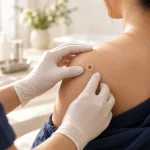
Mole Removal Mole Removal Many growths that patients call “moles” are benign and can be removed because they catch on clothing, become repeatedly irritated, or are cosmetically unwanted. Others may actually be Seborrheic Keratosis, Skin Tag, Wart, Actinic Keratosis, or another skin condition. Occasionally, a lesion that looks like an ordinary mole or growth can represent Melanoma, Basal Cell Carcinoma, SCC, or another skin cancer.
-
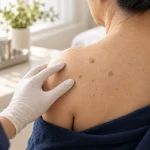
Seborrheic Keratosis Seborrheic Keratosis Seborrheic Keratosis is one of the most common benign skin growths seen by dermatologists. It often appears as a brown, black, or tan spot that looks as though it is "stuck onto the skin.
-
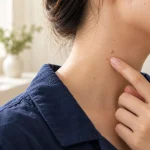
Skin Tags Skin Tags Skin tags, medically called acrochordons, are soft, benign skin growths that commonly develop on the neck, underarms, groin, eyelids, beneath the breasts, and other areas where skin or clothing repeatedly rubs.
-
Viral Warts Viral Warts Viral warts are common skin growths caused by infection with human papillomavirus (HPV). They can develop almost anywhere on the skin, but frequently affect the hands, fingers, feet, knees, face and genital area.