




























Skin Tightening in Bangkok: How to Choose Between HIFU (Ultraformer) and Monopolar RF (XERF)
If you are considering nonsurgical skin tightening in Bangkok, two technologies you may encounter are HIFU (Ultraformer) and monopolar radiofrequency (XERF).

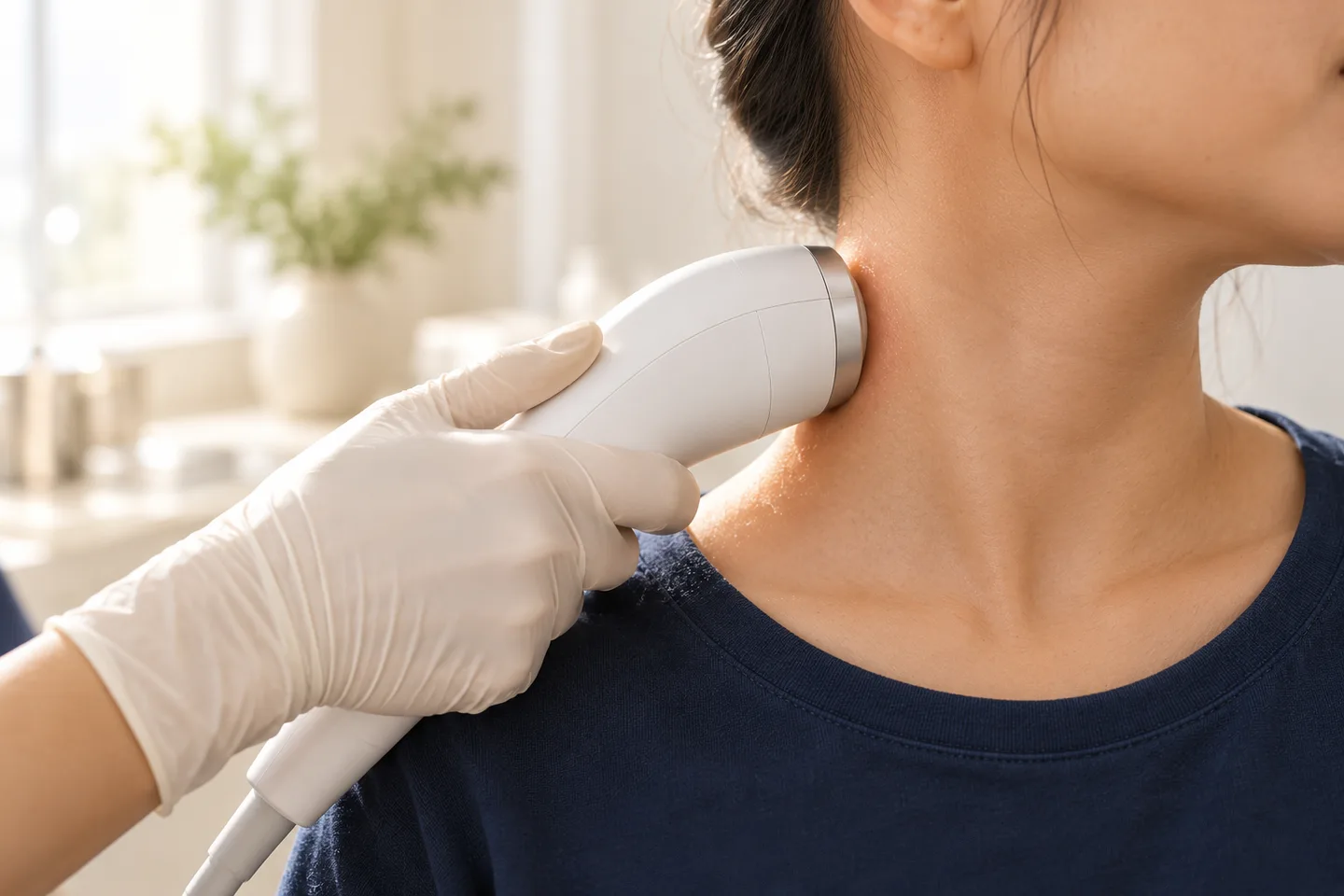
If you are considering nonsurgical skin tightening in Bangkok, two technologies you may encounter are HIFU (Ultraformer) and monopolar radiofrequency (XERF).
Both use controlled thermal energy to stimulate collagen remodeling and improve skin firmness, but they work differently.
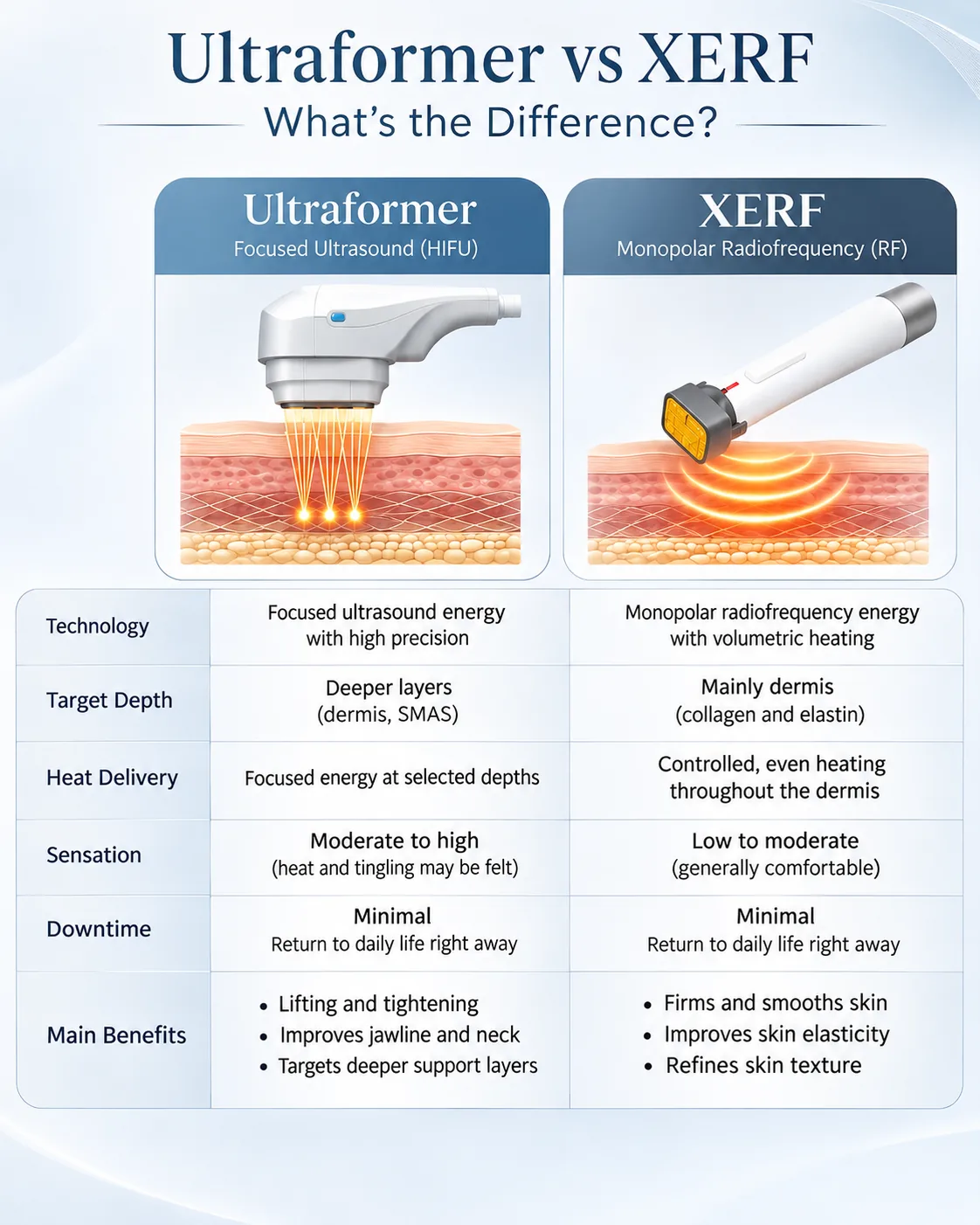
Which is better: HIFU or XERF? Neither is universally better. HIFU uses focused ultrasound to deliver energy to selected tissue depths, while XERF uses dual-frequency monopolar radiofrequency to produce distributed tissue heating.
For patients with mild to moderate skin laxity, either may be considered. The most appropriate choice depends on facial anatomy, skin thickness, fat distribution, treatment goals, previous procedures, and tolerance for discomfort.
Importantly, neither treatment reliably replaces a surgical facelift, and neither guarantees dramatic lifting.
At Clear Skin Dermatology in Asoke, Bangkok, we emphasize individualized assessment rather than choosing a procedure based solely on device popularity.
HIFU vs XERF: Quick Comparison
| Feature | HIFU / Ultraformer | Monopolar RF / XERF |
|---|---|---|
| Technology | Focused ultrasound | Dual-frequency monopolar radiofrequency |
| Energy delivery | Localized thermal zones at selected depths | Distributed tissue heating |
| Main goal | Modest lifting and tightening | Improved skin firmness and tightening |
| Suitable concerns | Early jowls, mild jawline and neck laxity | Mild facial laxity and reduced skin firmness |
| Pain | Can cause brief deep discomfort | Typically a warming sensation; discomfort varies |
| Downtime | Usually minimal | Usually minimal |
| Results | Develop over weeks to months | Develop over weeks to months |
| Treatment sessions | Often begins with one session | One or more sessions depending on protocol |
| Facial fat concerns | Consider depth and facial volume | Consider cumulative heating and facial volume |
| Proven superior option | Neither has been established as universally superior | Neither has been established as universally superior |
This comparison describes general treatment characteristics. Results from studies of one ultrasound or radiofrequency device cannot automatically be applied to every Ultraformer or XERF treatment setting.
Why Does Facial Skin Become Loose?
Facial aging involves several changes that occur together.
Loss of Collagen and Elasticity
Collagen provides structural support, while elastin contributes to the skin’s ability to return to its original shape.
Over time, changes in these proteins contribute to reduced firmness and elasticity.
Changes in Facial Fat
Facial fat is distributed in compartments that help determine the shape of the cheeks, temples, and lower face.
With aging, these compartments may lose volume or change position.
Changes in Supporting Tissues
Ligaments and connective tissues help maintain facial structure.
Age-related changes may contribute to tissue descent and the development of jowls.
Changes in Bone Structure
The underlying facial skeleton also changes with age, affecting the support of overlying tissues.
Sun Exposure
Long-term ultraviolet exposure accelerates collagen damage and skin aging.
This is particularly relevant for patients living in or visiting Thailand, where strong sun exposure can occur throughout the year.
Skin tightening primarily addresses certain aspects of laxity. It does not reverse every cause of facial aging.
How Does HIFU (Ultraformer) Work?
HIFU stands for High-Intensity Focused Ultrasound.
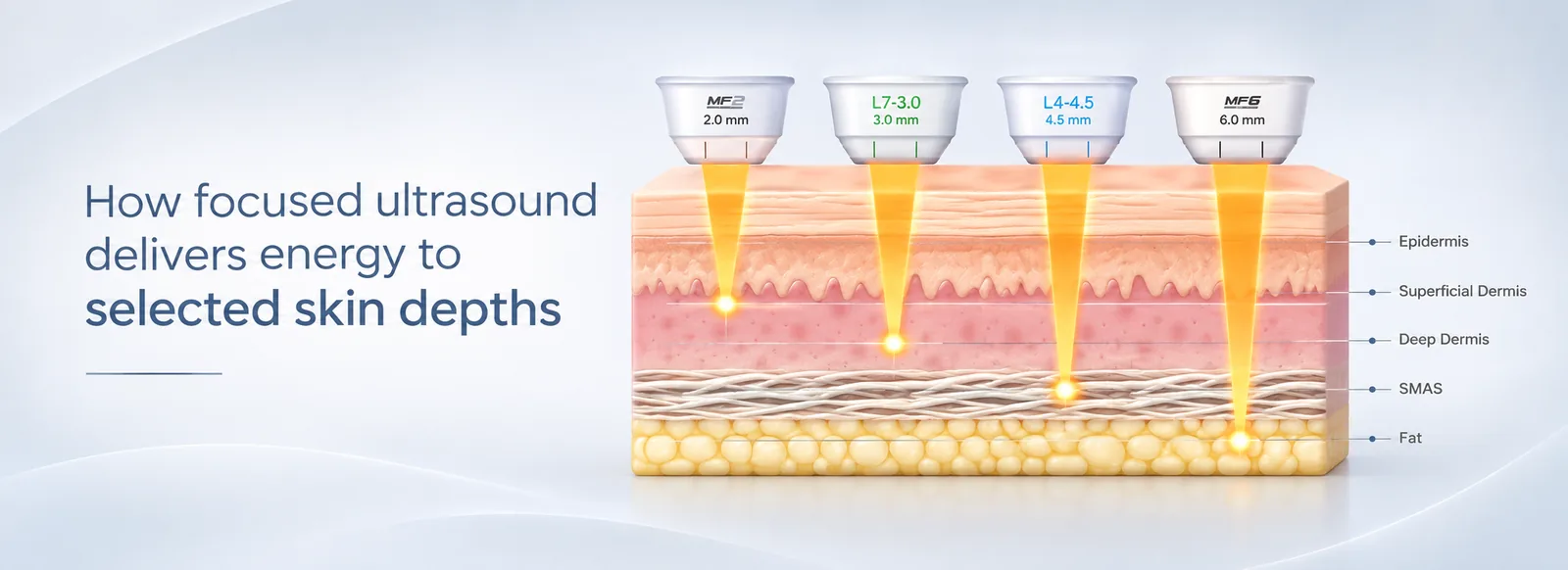
It uses focused ultrasound energy to create controlled thermal effects within targeted tissue zones.
Ultraformer devices have applicators designed to deliver energy at selected depths.
The resulting thermal effects may stimulate collagen contraction and subsequent remodeling.
Over time, some patients experience improved firmness and modest lifting.
What Can HIFU Help Treat?
HIFU may be considered for:
- Early jowls
- Mild lower-face laxity
- Reduced jawline definition
- Loose skin beneath the chin
- Mild neck laxity
- Selected areas of facial skin laxity
The improvement is generally more subtle than surgical lifting.
What Are the Limitations of HIFU?
HIFU may be less suitable when the main concern is:
- Significant excess skin
- Advanced jowling
- Severe tissue descent
- Pronounced facial volume loss
- A desire for dramatic facial reshaping
Results also depend on the specific device, applicator, energy settings, and treatment technique.
How Does XERF Monopolar RF Work?
XERF uses dual-frequency monopolar radiofrequency at 6.78 MHz and 2 MHz.
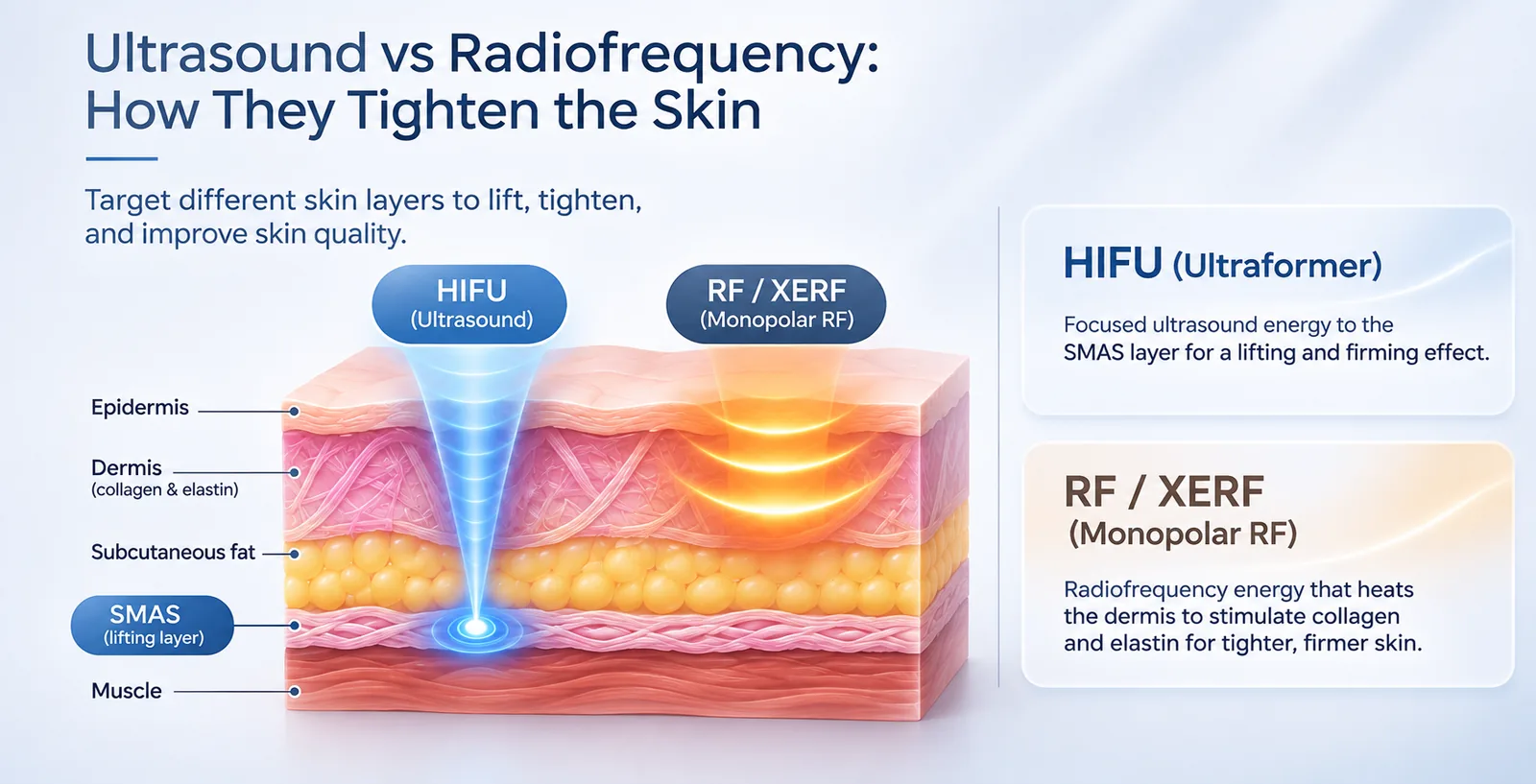
Radiofrequency energy generates heat through its interaction with tissue.
Unlike focused ultrasound, which creates localized thermal zones, monopolar radiofrequency produces a more distributed heating pattern.
XERF incorporates adjustable treatment settings and surface cooling to help manage tissue heating and patient comfort.
Thermal effects may stimulate collagen remodeling and improve skin firmness.
What Can XERF Help Treat?
Potential treatment goals include:
- Mild facial skin laxity
- Reduced skin firmness
- Early lower-face looseness
- Mild jawline laxity
- Selected concerns involving skin texture and wrinkles
What Are the Limitations of XERF?
XERF does not reliably correct severe sagging, major tissue descent, or substantial excess skin.
It should not be considered equivalent to surgical lifting.
Although early clinical studies are encouraging, the long-term evidence specific to XERF remains limited.
Which Is Better for Jowls: HIFU or XERF?
Jowls form when lower-face tissues become less supported and descend toward the jawline.
The most appropriate treatment depends on the severity and underlying anatomy.
Mild Jowls
Either HIFU or XERF may be considered for selected patients.
Focused ultrasound may be chosen when a clinician wants localized treatment at selected tissue depths.
Monopolar radiofrequency may be considered when improving overall skin firmness is a principal goal.
However, these are treatment-planning considerations rather than proof that one device is superior for jowls.
Moderate Jowls
Nonsurgical tightening may provide limited improvement.
A dermatologist should explain realistic expectations before treatment.
Severe Jowls
Patients with substantial tissue descent may benefit more from a surgical consultation.
Repeated energy-based treatments are unlikely to reproduce the results of a facelift.
Which Is Better for Jawline Definition?
A less-defined jawline may result from:
- Loose skin
- Early jowls
- Fat beneath the chin
- Facial volume changes
- Chin or jaw anatomy
HIFU and XERF may help when mild skin laxity is an important contributing factor.
However, neither is guaranteed to create a sharply defined jawline.
If the primary problem is excess fat or skeletal anatomy, a different treatment may be more appropriate.
Which Is Better for a Double Chin?
A double chin does not always mean excess fat.
Some patients have submental fat accumulation, while others have loose skin, a relatively small chin, or a combination of factors.
When Loose Skin Is the Main Concern
An energy-based tightening treatment may be considered.
When Fat Accumulation Is the Main Concern
A treatment specifically directed at the fat compartment may be more appropriate.
When Chin Anatomy Is the Main Concern
Skin tightening alone may provide little improvement.
A proper assessment is more useful than choosing HIFU or XERF based on the appearance of the double chin alone.
HIFU vs XERF for Thin Faces and Hollow Cheeks
Patients with naturally thin faces should be particularly careful when considering thermal skin-tightening treatments.
Facial fat helps maintain youthful contours.
If a patient already has hollow cheeks, sunken temples, or significant volume loss, additional energy-based tightening may not address the main problem.
Can HIFU Cause Facial Fat Loss?
Focused ultrasound can create thermal effects in fat-containing tissues, depending on treatment depth and settings.
Unwanted changes in facial contour are possible, although the frequency of clinically significant fat loss is not established for every Ultraformer model.
Can XERF Cause Facial Fat Loss?
Monopolar radiofrequency can heat tissue near or within subcutaneous fat.
The extent of any unwanted fat changes depends on the technology, settings, and patient anatomy.
Current evidence does not establish the rate of unwanted facial fat loss from XERF, particularly after repeated treatment courses.
Which Is Safer for Thin Faces?
There is insufficient direct comparative evidence to conclude that XERF is consistently safer than Ultraformer, or vice versa, for patients with thin faces.
In some patients, the safest decision may be to avoid additional energy-based tightening and consider a different treatment approach.
HIFU vs XERF: Which Is More Painful?
Treatment discomfort varies substantially between individuals.
HIFU Discomfort
HIFU may produce brief deep discomfort during energy delivery.
Some patients describe a sharp or aching sensation, particularly near bony areas.
XERF Discomfort
XERF typically produces a warming sensation.
Discomfort varies according to the settings, treatment area, cooling, and individual tolerance.
Is XERF Always Less Painful?
No. It would be misleading to guarantee that one technology is painless or always more comfortable.
Pain scores from separate studies cannot establish a reliable head-to-head comparison.
Discuss pain-management options with the treating clinician before the procedure.
Which Treatment Has Less Downtime?
Both treatments are generally considered nonsurgical procedures with relatively limited recovery time.
After HIFU
Possible temporary effects include:
- Redness
- Swelling
- Tenderness
- Sensitivity to touch
- Temporary altered sensation
After XERF
Possible temporary effects include:
- Redness
- Warmth
- Swelling
- Tenderness
- Temporary skin sensitivity
Most uncomplicated reactions resolve relatively quickly, although some symptoms can persist longer.
Less common complications may include burns, pigmentation changes, persistent sensory changes, or unwanted facial contour changes.
Neither treatment is completely risk-free.
How Long Does It Take to See Results?
HIFU Results
Some patients notice early changes within several weeks.
Collagen remodeling continues over subsequent months, and approximately three months is a useful time to assess the developing response.
XERF Results
Some patients notice temporary firmness soon after treatment.
More meaningful changes may develop gradually over the following weeks and months.
Recent XERF studies have evaluated outcomes at one and three months, but these short follow-up periods do not establish the long-term durability of treatment.
Which Works Faster?
There is insufficient high-quality direct comparative evidence to conclude that Ultraformer or XERF consistently produces faster visible results.
Early swelling or temporary tissue contraction should not be confused with the final result.
How Long Do HIFU and XERF Results Last?
Results vary according to patient characteristics and treatment settings.
Some focused ultrasound studies have documented improvement over several months and up to approximately one year.
However, those findings cannot establish a universal duration for every Ultraformer model.
For XERF, available studies provide encouraging early results, but long-term durability remains less certain.
Neither treatment should be advertised as producing guaranteed results lasting a specific number of years.
Normal skin aging continues after treatment.
How Often Should You Repeat HIFU or XERF?
HIFU Maintenance
For many patients, one initial treatment followed by reassessment after approximately three months is reasonable.
Maintenance may be considered later, depending on the clinical response.
Some focused ultrasound recommendations discuss intervals around twelve months or longer, but these are not mandatory schedules for every Ultraformer patient.
XERF Maintenance
XERF treatment schedules vary.
A prospective multicenter study of dual-frequency monopolar radiofrequency evaluated two treatments approximately four weeks apart.
A separate retrospective study assessed outcomes after a single session.
These different approaches illustrate why a universal treatment schedule has not been established.
Is More Frequent Treatment Better?
Not necessarily.
Repeated treatment may increase cumulative thermal exposure without a proven additional benefit.
A dermatologist should reassess the result before recommending another session.
Can You Combine HIFU and XERF?
Combination treatment may be considered in selected patients, but it is not automatically better.
Both technologies deliver thermal energy, and their effects may overlap.
There is insufficient evidence to establish a universally superior Ultraformer–XERF combination protocol.
There is also no validated treatment interval or same-day sequence that can be recommended for everyone.
Combination treatment should be based on a clear clinical rationale, careful review of previous energy exposure, and realistic expectations.
HIFU or XERF: Which Is Better in Your 30s, 40s, or 50s?
In Your 30s
Many patients have little clinically significant laxity.
They may not need either treatment.
If early laxity is present, one appropriately selected procedure may be sufficient.
In Your 40s
Early jowls, reduced skin firmness, and mild jawline laxity may become more noticeable.
Either technology may be considered after assessing the underlying anatomy.
In Your 50s and Beyond
Facial aging often involves a combination of laxity, tissue descent, and volume loss.
Skin tightening may provide modest improvement, but additional treatment approaches may be necessary.
Age alone should never determine the device or number of sessions.
Which Is Better for Asian Skin?
Both focused ultrasound and monopolar radiofrequency are nonablative energy-based approaches.
Unlike some treatments that directly target skin pigment, their principal mechanisms do not rely on melanin absorption.
This can make them relevant options for patients with a wide range of skin tones, including many Asian skin types.
However, skin color does not eliminate the risk of burns or post-inflammatory pigmentation.
Patients with darker skin tones may develop persistent discoloration after thermal injury.
Appropriate settings, technique, and skin assessment remain essential.
Is Skin Tightening Safe in Bangkok’s Hot Climate?
Bangkok’s warm, humid weather does not automatically make HIFU or XERF unsuitable.
However, heat, sweating, and sun exposure may make temporary redness or sensitivity more uncomfortable.
After treatment:
- Follow the clinician’s aftercare instructions.
- Avoid unnecessary heat exposure while the skin is irritated.
- Use gentle skin care.
- Protect the skin from excessive ultraviolet exposure.
- Report persistent or worsening symptoms.
Patients visiting Thailand for a short period should allow time for assessment and possible follow-up rather than arranging treatment immediately before an important event or departure.
Who Should Avoid or Postpone HIFU or XERF?
Treatment may need to be postponed or reconsidered in patients with:
- Active infection or significant inflammation in the treatment area
- Open wounds or damaged skin
- Unresolved complications from previous energy-based procedures
- Certain implanted electronic devices or metal implants, depending on device instructions
- Medical conditions affecting treatment safety
- Pregnancy, when safety information is insufficient
- Unrealistic expectations about the degree of lifting possible
Contraindications are device-specific.
Patients should disclose implanted devices, prior facial surgery, injectable treatments, medical conditions, and relevant medications before treatment.
How to Choose a Skin Tightening Clinic in Bangkok
The most important factor is not simply whether a clinic advertises Ultraformer or XERF.
Look for a clinic that provides a proper medical assessment and explains the limitations of treatment.
1. Confirm the Device and Model
Ask which device will be used.
Ultraformer III, Ultraformer MPT, and other focused ultrasound devices should not automatically be treated as interchangeable.
Similarly, monopolar radiofrequency devices differ in design and treatment protocols.
2. Ask Who Will Assess and Perform the Procedure
Understand the qualifications and responsibilities of the clinician involved.
The provider should be familiar with facial anatomy, device settings, contraindications, and the management of complications.
3. Request an Individualized Treatment Plan
A proper plan should consider:
- Degree of laxity
- Facial fat distribution
- Skin thickness
- Treatment area
- Previous procedures
- Expected improvement
- Possible risks
4. Be Cautious About Guaranteed Results
Claims such as permanent lifting, zero risk, or results equivalent to surgery should be treated cautiously.
5. Ask About Follow-Up Care
Find out how complications are managed and whether follow-up assessment is available.
This is especially important for international patients who may leave Thailand shortly after treatment.
6. Understand the Quoted Treatment Package
Ask what is included, which anatomical areas will be treated, and whether additional sessions are medically necessary.
More treatment shots or sessions do not automatically mean better results.
HIFU vs XERF: A Practical Decision Guide
| Your main concern | What to consider |
|---|---|
| Mild early jowls | Either treatment may be considered after assessment |
| General reduction in skin firmness | Monopolar RF may be considered, but superiority is not established |
| Mild jawline laxity | Either may be suitable depending on anatomy |
| Loose skin beneath the chin | Determine whether laxity or fat is the main cause |
| Thin face with hollow cheeks | Exercise caution with both; consider alternatives |
| Severe jowls or excess skin | Surgical assessment may be more appropriate |
| Desire for dramatic lifting | Neither reliably reproduces facelift results |
| Previous poor response to energy treatment | Reassess the diagnosis and treatment strategy |
| Unresolved side effects | Postpone further energy-based treatment and seek medical assessment |
Skin Tightening Consultation at Clear Skin Dermatology Bangkok
Clear Skin Dermatology is a medical dermatology and skin cancer clinic located in Asoke, Bangkok, Thailand.
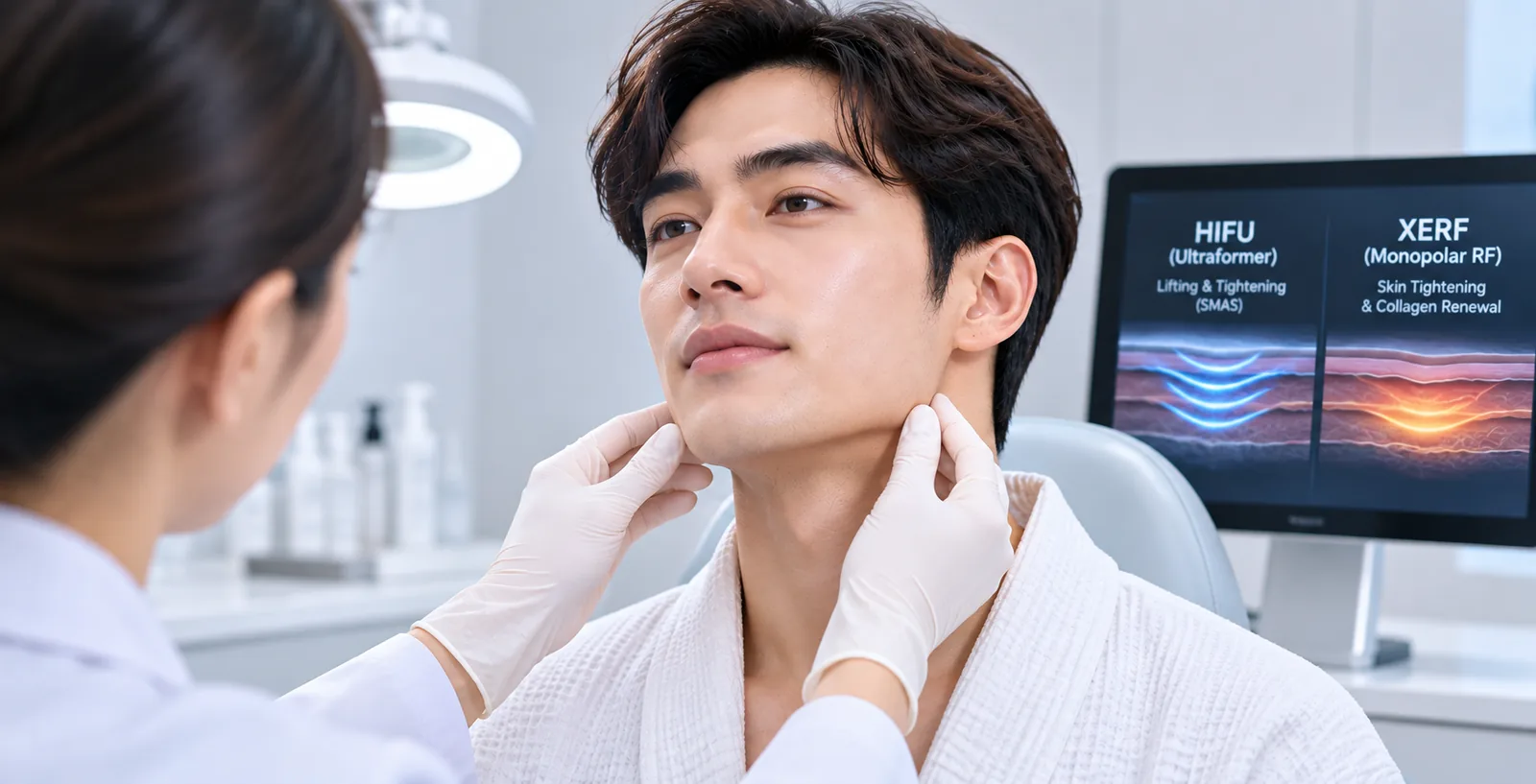
For Thai patients, expatriates, tourists, and international patients considering nonsurgical skin tightening, a dermatologist consultation can help identify the underlying causes of facial laxity and discuss appropriate treatment options.
Patients may seek advice about:
- HIFU and Ultraformer
- Monopolar radiofrequency and XERF
- Early jowls
- Reduced jawline definition
- Loose skin beneath the chin
- Neck laxity
- Facial fat loss
- Skin tightening after weight loss
- Concerns following previous energy-based treatments
During consultation, a dermatologist can assess facial anatomy, skin firmness, fat distribution, treatment history, and expectations.
The objective is to determine whether an energy-based treatment is appropriate and whether the anticipated benefit justifies the potential risks.
Patients specifically interested in Ultraformer III, Ultraformer MPT, or XERF should confirm device availability and treatment services directly with the clinic before booking.
Clear Skin Dermatology
Medical Dermatology & Skin Cancer Clinic
Asoke, Bangkok, Thailand
Frequently Asked Questions
1. Which is better for skin tightening, HIFU or XERF?
Neither is universally better. HIFU uses focused ultrasound, while XERF uses monopolar radiofrequency. The best choice depends on skin laxity, anatomy, and treatment goals.
2. Is Ultraformer better than XERF for lifting?
There is insufficient direct comparative evidence to establish that Ultraformer consistently produces greater lifting than XERF.
3. Is XERF better than HIFU for skin firmness?
XERF may be considered for reduced skin firmness, but superiority over HIFU has not been conclusively established.
4. Which treatment is better for jowls?
Either may be considered for mild jowls. More advanced jowling may require a different treatment approach.
5. Which is better for a double chin?
The choice depends on whether the main cause is excess fat, loose skin, or underlying anatomy.
6. Is HIFU more painful than XERF?
Discomfort varies by patient, settings, and treatment area. Separate studies cannot establish a reliable universal comparison.
7. Does XERF have less downtime than HIFU?
Both generally have limited downtime, but temporary redness, swelling, and tenderness can occur with either treatment.
8. Which treatment works faster?
There is insufficient direct evidence to establish a consistent winner. Both may produce gradual improvement over weeks to months.
9. Which lasts longer, HIFU or XERF?
There is no reliable head-to-head evidence proving that one consistently lasts longer.
10. Can HIFU or XERF cause facial fat loss?
Unwanted facial contour changes are possible with thermal energy-based procedures. Risk depends on device settings, anatomy, and treatment history.
11. Which is safer for thin faces?
Neither has been established as universally safer. Patients with hollow cheeks or limited facial fat require careful assessment.
12. Can I combine HIFU and XERF?
Combination treatment may be considered in selected patients, but better outcomes have not been conclusively demonstrated for the specific Ultraformer–XERF combination.
13. How often should I repeat treatment?
The schedule depends on the device and clinical response. Routine frequent treatment is not necessary for everyone.
14. Are HIFU and XERF suitable for Asian skin?
Both may be used in appropriately selected patients with different skin tones, but burns and pigmentation changes remain possible.
15. Can HIFU or XERF replace a facelift?
No. Neither reliably provides the degree of tissue repositioning or excess-skin removal achieved with surgery.
16. How do I choose a skin tightening clinic in Bangkok?
Choose a clinic that offers individualized medical assessment, explains realistic outcomes, identifies the device used, and provides appropriate follow-up care.
Final Thoughts: Choosing Between HIFU and XERF in Bangkok
HIFU (Ultraformer) and monopolar radiofrequency (XERF) are two nonsurgical approaches that may improve mild to moderate facial skin laxity.
HIFU delivers focused ultrasound energy to selected tissue depths. XERF uses dual-frequency monopolar radiofrequency to generate distributed tissue heating.
Both may stimulate collagen remodeling, but their treatment effects are not identical.
There is no convincing evidence that one is the best choice for every patient.
The decision should depend on the patient’s anatomy, degree of laxity, facial volume, previous treatments, and expectations.
For some patients, HIFU may be appropriate. For others, XERF may be considered. Some may benefit from a different treatment altogether.
If you are looking for skin tightening in Bangkok, Clear Skin Dermatology in Asoke offers a setting to discuss your concerns with a dermatologist and explore a treatment approach suited to your individual needs.
Medical disclaimer: This article provides general educational information and does not replace an individualized medical consultation. Device suitability, results, treatment schedules, and risks vary by patient and treatment protocol.
Medical References
- A 2023 systematic review of microfocused ultrasound found improvements in mild to moderate facial laxity, while emphasizing limitations in the available studies.
- A 2022 systematic review found evidence supporting radiofrequency skin tightening, while identifying adverse effects and differences between radiofrequency technologies.
- A 2025 systematic review and meta-analysis comparing focused ultrasound with radiofrequency for neck laxity found no statistically significant difference in the included comparisons, while noting the need for stronger studies. This does not establish equivalence between Ultraformer and XERF specifically.
- A 2026 prospective multicenter study evaluated short-term facial laxity outcomes with dual-frequency monopolar radiofrequency using XERF.
- A 2026 retrospective study of 16 patients evaluated a single XERF session, with follow-up through three months. Its findings are preliminary and require larger controlled studies.
Medically reviewed by
Reviewed on
Related articles
-
Aesthetic & Skin Rejuvenation Ultraformer for Face Lifting: Who Is It Best For and When Will You See Results? Facial sagging is one of the most common concerns associated with aging. As collagen and elastin change over time, the skin gradually loses firmness. Changes in facial fat, connective tissue, and bone support can also contribute to sagging cheeks, early jowls, and reduced jawline definition.

-
Aesthetic & Skin Rejuvenation Ultraformer vs XERF: What’s the Difference and Which One Should You Choose? If you are considering facial lifting or skin tightening without surgery, you may have heard of Ultraformer and XERF. Both are energy-based treatments designed to improve skin firmness and reduce the appearance of mild to moderate sagging, but they use different technologies.
-
Aesthetic & Skin Rejuvenation XERF (Monopolar RF) for Skin Tightening: Who Is It Best For and How Long Do Results Last? Facial skin gradually loses firmness as we age. Collagen and elastin undergo structural changes, while facial fat, connective tissues, and bone support also change over time. Together, these processes contribute to sagging cheeks, early jowls, a less defined jawline, and loose skin beneath the chin.