





























HIFU (Ultraformer) or XERF for People in Their 30s, 40s, and 50s: Which Treatment Fits Your Age?
Choosing a facial skin-tightening treatment can be confusing, especially when different technologies promise firmer skin, improved jawline definition, and a more youthful appearance without surgery.

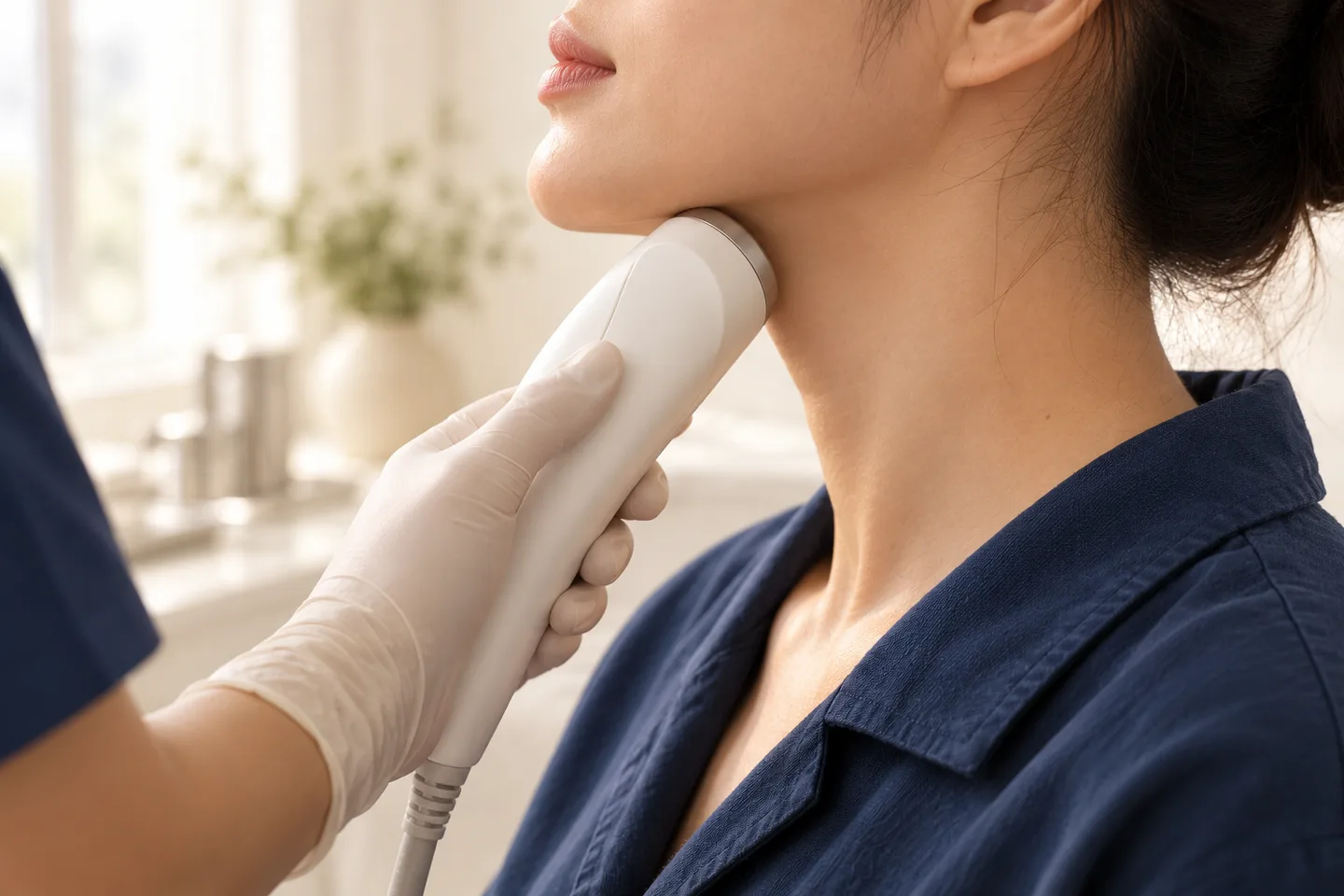
Choosing a facial skin-tightening treatment can be confusing, especially when different technologies promise firmer skin, improved jawline definition, and a more youthful appearance without surgery.
Two commonly discussed options are HIFU (High-Intensity Focused Ultrasound), including Ultraformer devices, and XERF, a dual-frequency monopolar radiofrequency treatment.
Both technologies use controlled thermal energy to stimulate changes in collagen-containing tissues. However, they deliver energy differently, and neither treatment is suitable for every type of facial aging.
A common question is whether HIFU or XERF is better for people in their 30s, 40s, or 50s.
Should someone in their 30s start with XERF? Is Ultraformer better for sagging skin in the 40s? And can either treatment provide meaningful lifting after age 50?
The answer is more complex than choosing a device based on age.
Facial anatomy, skin thickness, degree of laxity, facial fat distribution, and treatment goals are usually more important than chronological age alone.
At Clear Skin Dermatology in Asoke, Bangkok, we emphasize individualized facial assessment and realistic expectations when discussing nonsurgical skin tightening.
This guide compares Ultraformer and XERF across different age groups, explains how facial aging changes over time, and helps patients understand which approach may be appropriate for their concerns.
Understanding the Difference Between HIFU (Ultraformer) and XERF
Before comparing treatments by age, it is important to understand how each technology works.
What Is HIFU (Ultraformer)?
HIFU stands for High-Intensity Focused Ultrasound.
It uses focused ultrasound energy to create controlled thermal effects at selected depths beneath the skin.
Ultraformer is a family of HIFU devices manufactured by CLASSYS, including Ultraformer III and Ultraformer MPT.
Depending on the device and applicator, focused ultrasound can target different tissue depths.
The resulting thermal effects may stimulate collagen contraction and remodeling, potentially improving skin firmness and producing modest lifting in selected patients.
What Is XERF?
XERF is a monopolar radiofrequency device developed by Cynosure Lutronic.
It uses two radiofrequency frequencies:
- 6.78 MHz
- 2 MHz
The device delivers electrical energy that generates heat through tissue resistance.
This controlled heating may stimulate collagen remodeling and improve skin firmness over time.
XERF also incorporates surface cooling and adjustable treatment settings.
The use of two frequencies does not, by itself, establish a precise heating depth or prove that XERF produces superior lifting compared with other technologies.
HIFU vs XERF: Main Differences
| Feature | HIFU / Ultraformer | XERF |
|---|---|---|
| Technology | Focused ultrasound | Monopolar radiofrequency |
| Energy delivery | Focused thermal zones | Distributed tissue heating |
| Main goal | Improve skin firmness and modest lifting | Improve skin firmness and tightening |
| Early jowls | May improve | May improve |
| Jawline definition | May improve | May improve |
| Results | Gradual | Gradual |
| Downtime | Usually limited | Usually limited |
| Surgical facelift replacement | No | No |
There is insufficient high-quality direct comparative evidence to establish that one technology is consistently superior for every patient.
How Does Facial Aging Change in Your 30s, 40s, and 50s?
Facial aging does not occur at the same rate in everyone.
Genetics, sun exposure, smoking, weight changes, hormonal factors, and overall skin health all influence how the face changes.
In Your 30s: Early Changes in Skin Firmness
Some people in their 30s begin to notice:
- Mild reduction in skin elasticity
- Early fine lines
- Slightly less defined jawline
- Subtle cheek laxity
- Early changes in facial texture
However, many people in this age group do not have clinically meaningful skin laxity.
Preventive treatment is not automatically necessary simply because someone has reached their 30s.
In Your 40s: More Noticeable Skin Laxity
During the 40s, some people develop:
- Reduced skin firmness
- Early jowls
- Less defined jawline
- Mild neck laxity
- Changes in facial fat distribution
- More noticeable fine lines and wrinkles
At this stage, both skin quality and the position of facial tissues may contribute to an older appearance.
In Your 50s: Combined Skin and Structural Changes
In the 50s, facial aging may involve:
- More noticeable skin laxity
- Greater tissue descent
- Increased jowling
- Neck skin laxity
- Facial volume loss
- Changes in bone support
- More pronounced wrinkles
For some patients, nonsurgical treatments may still provide modest improvement.
However, more advanced tissue descent or substantial excess skin may require other approaches to achieve meaningful correction.
HIFU or XERF in Your 30s: Which Is Better?
For patients in their 30s, the most important question is whether there is enough skin laxity to justify treatment.
Many patients in this age group are more concerned about skin quality, early fine lines, or subtle changes in facial contour than significant sagging.
When XERF May Be Considered in Your 30s
XERF may be considered when the main concern is mild loss of skin firmness.
Potential goals include:
- Improving early skin laxity
- Supporting a firmer skin appearance
- Addressing subtle changes in the lower face
- Improving mild looseness around the jawline
However, evidence is insufficient to recommend routine XERF treatment for everyone in their 30s as a preventive measure against future aging.
When Ultraformer May Be Considered in Your 30s
Ultraformer may be considered for selected patients who already have mild, identifiable laxity around the cheeks, jawline, or beneath the chin.
Potential goals include:
- Modest improvement in early jawline laxity
- Tightening mild loose skin
- Improving the appearance of early lower-face sagging
For people with naturally thin faces, treatment depth and facial fat distribution deserve particular attention.
What If You Have No Skin Laxity?
If the skin is already firm, neither Ultraformer nor XERF is automatically necessary.
Daily sun protection, appropriate skin care, and treatment of specific concerns may be more useful than an energy-based procedure.
Recommendation for Patients in Their 30s
Neither treatment should be selected solely because of age.
For mild, diffuse skin laxity, monopolar RF may be one option.
For mild, localized laxity around the lower face, focused ultrasound may also be considered.
These are possible treatment approaches, not evidence-based age-specific rules.
HIFU or XERF in Your 40s: Which Is Better?
The 40s are a common period when patients begin noticing more obvious changes in facial firmness and contour.
Some develop early jowls, reduced jawline definition, or mild loose skin beneath the chin.
Both Ultraformer and XERF may be considered, depending on the underlying cause.
When Ultraformer May Be Considered in Your 40s
Ultraformer may be appropriate for selected patients with:
- Mild to moderate skin laxity
- Early jowls
- Reduced jawline definition
- Mild loose skin beneath the chin
- Early lower-face sagging
Focused ultrasound may provide modest lifting or tightening in appropriately selected patients.
However, it cannot reliably reposition substantially descended facial fat or remove excess skin.
When XERF May Be Considered in Your 40s
XERF may be considered for patients whose main concern is reduced skin firmness rather than substantial tissue descent.
Potential goals include:
- Improving mild to moderate skin laxity
- Increasing the appearance of skin firmness
- Addressing early lower-face looseness
- Improving mild jawline laxity
What If You Have Both Loose Skin and Early Jowls?
Both technologies may be reasonable options.
The decision should depend on:
- Skin thickness
- Facial fat distribution
- Location of laxity
- Previous aesthetic procedures
- Treatment tolerance
- Individual goals
There is no reliable evidence that everyone in their 40s should receive Ultraformer instead of XERF, or vice versa.
Recommendation for Patients in Their 40s
Choose treatment based on whether the main concern is skin looseness, tissue descent, or facial volume changes—not age alone.
HIFU or XERF in Your 50s: Which Is Better?
For patients in their 50s, the decision may become more complex because multiple facial aging processes often occur together.
Skin laxity, tissue descent, facial fat loss, and changes in bone support can all affect appearance.
When Ultraformer May Still Be Useful in Your 50s
Ultraformer may provide modest improvement for patients with:
- Mild to moderate residual skin laxity
- Early or moderate jawline changes
- Mild neck skin laxity
- Realistic expectations for nonsurgical treatment
However, results may be limited when significant tissue descent is present.
When XERF May Still Be Useful in Your 50s
XERF may be considered when the main concern is reduced skin firmness and the patient wants gradual, nonsurgical improvement.
Potential benefits may include modest improvement in:
- Skin firmness
- Mild lower-face laxity
- Early neck skin laxity
- Overall appearance of loose skin
However, XERF does not restore lost facial volume or remove substantial excess skin.
When Neither Treatment Is Enough
For patients with:
- Severe jowls
- Significant neck laxity
- Large amounts of excess skin
- Pronounced tissue descent
- Major facial volume loss
Neither Ultraformer nor XERF may provide the desired degree of correction.
A surgical consultation or other individualized treatment approach may be more appropriate.
Recommendation for Patients in Their 50s
Both treatments may still be considered, but expectations should reflect the degree of facial aging rather than assuming that one device is specifically designed for older patients.
Which Treatment Fits Your Age? Comparison Table
| Age group | Common concerns | Ultraformer | XERF |
|---|---|---|---|
| 30s | Early firmness changes, subtle laxity | Consider for selected localized laxity | Consider for selected mild skin laxity |
| 40s | Early jowls, jawline changes, reduced firmness | May improve mild to moderate laxity | May improve mild to moderate laxity |
| 50s | More noticeable sagging, neck laxity, volume loss | Modest benefit in suitable patients | Modest benefit in suitable patients |
| Any age with severe sagging | Significant tissue descent or excess skin | Limited correction | Limited correction |
This table describes common clinical considerations, not a rule that assigns a particular treatment to a specific age group.
Is Ultraformer Better for Lifting and XERF Better for Skin Tightening?
This is a common way of describing the two technologies, but it oversimplifies their effects.
Ultraformer uses focused ultrasound to produce thermal effects at selected focal depths.
XERF uses monopolar RF to produce distributed tissue heating.
Both may improve skin firmness and create a modest lifting appearance in suitable patients.
It is reasonable to discuss their different energy-delivery patterns, but not to claim that one always lifts while the other only tightens.
The clinical outcome depends on anatomy, treatment settings, and individual tissue response.
Which Treatment Is Better for Thin Faces?
Patients with naturally thin faces or hollow cheeks require careful assessment before any energy-based facial treatment.
Both focused ultrasound and radiofrequency can generate heat in tissues beneath the skin.
Depending on the device, treatment depth, settings, and technique, unwanted facial fat or contour changes may occur.
Neither treatment should automatically be described as risk-free for thin faces.
The practitioner should consider whether the main problem is truly skin laxity or facial volume loss.
Which Treatment Is Better for a Round Face or Double Chin?
A round face or double chin may result from:
- Submental fat
- Facial fat distribution
- Loose skin
- Chin projection
- Jawbone structure
- A combination of factors
If loose skin is the main concern, either treatment may be considered.
If significant fat accumulation is the main concern, skin tightening alone may be insufficient.
Neither standard Ultraformer skin-tightening treatment nor XERF should automatically be promoted as a reliable fat-reduction procedure.
When Will You See Results?
Both treatments generally produce gradual changes.
Ultraformer Results Timeline
Some patients may notice early changes within several weeks.
Further improvement may become noticeable over approximately two to three months as tissue remodeling progresses.
XERF Results Timeline
Some patients may notice temporary firmness immediately after treatment, with gradual improvement over subsequent weeks and months.
However, the precise response timeline for XERF specifically is not as well established as for some older monopolar RF devices.
Important Consideration
Early swelling or temporary firmness should not be mistaken for the final result.
Patients should allow sufficient time before evaluating treatment effectiveness.
How Long Do Results Last?
Results from both technologies are temporary.
Some patients may maintain improvements for many months.
However, durability varies according to:
- Age
- Degree of skin laxity
- Skin thickness
- Facial anatomy
- Treatment settings
- Individual collagen response
- Weight changes
- Sun exposure
- Continued aging
There is insufficient evidence to guarantee that Ultraformer or XERF will last a fixed number of months in every patient.
Long-term, device-specific evidence for XERF remains limited.
How Many Sessions Are Needed?
The appropriate number of sessions depends on the device, treatment protocol, and individual response.
Some focused ultrasound and monopolar RF protocols involve one treatment followed by reassessment after several months.
Other protocols may use multiple sessions.
More frequent treatments or higher energy settings do not necessarily produce better results.
Excessive heating may increase the risk of unwanted tissue effects.
Can You Combine Ultraformer and XERF?
Some aesthetic treatment plans may consider combining different energy-based technologies.
However, combining Ultraformer and XERF is not automatically more effective than using either treatment alone.
There is insufficient high-quality evidence to establish the ideal combination, treatment sequence, or interval for every patient.
Using multiple heat-based treatments in the same anatomical area may increase cumulative thermal exposure.
Combination treatment should therefore be considered only after individualized assessment, with appropriate attention to device instructions, treatment intervals, and tissue safety.
Are There Risks or Side Effects?
Potential Ultraformer Side Effects
- Redness
- Swelling
- Tenderness
- Tingling
- Temporary altered sensation
- Burns or blistering
- Nerve-related symptoms
- Unwanted facial contour changes
Potential XERF Side Effects
- Redness
- Swelling
- Tenderness
- Temporary skin sensitivity
- Burns or blistering
- Pigmentation changes
- Altered sensation
- Unwanted facial contour changes
The likelihood of complications depends on device settings, treatment technique, facial anatomy, and individual patient factors.
Patients with implanted electronic medical devices, active skin infections, recent procedures, or relevant medical conditions should undergo appropriate screening.
Contraindications differ between devices.
What Matters More Than Age When Choosing HIFU or XERF?
The most useful clinical questions are:
1. Is the Main Problem Skin Laxity or Facial Volume Loss?
Skin tightening cannot restore lost facial fat.
2. Is There Significant Tissue Descent?
Severe jowls or pronounced sagging may not respond adequately to nonsurgical treatment.
3. Is the Face Naturally Thin or Full?
Facial fat distribution may influence treatment planning and the risk of unwanted contour changes.
4. Where Is the Laxity Located?
The cheeks, jawline, submental area, and neck have different anatomical characteristics.
5. What Degree of Improvement Is Expected?
Patients seeking subtle tightening may be satisfied with nonsurgical treatment.
Patients expecting dramatic lifting may require another approach.
HIFU and XERF Consultation at Clear Skin Dermatology Bangkok
Clear Skin Dermatology is a medical dermatology clinic located in Asoke, Bangkok, Thailand.
Patients in their 30s, 40s, and 50s who are concerned about facial sagging, reduced skin firmness, or changes in jawline definition can consult a dermatologist for an individualized assessment.
Common concerns include:
- Early facial skin laxity
- Mild to moderate jowls
- Reduced jawline definition
- Loose skin beneath the chin
- Neck skin laxity
- Age-related changes in skin firmness
- Facial volume loss
During consultation, the dermatologist can assess:
- Skin thickness and elasticity
- Degree of facial laxity
- Facial fat distribution
- Tissue descent
- Jawline and chin anatomy
- Previous aesthetic procedures
- Individual treatment goals
Based on these findings, the dermatologist can explain whether focused ultrasound, monopolar radiofrequency, or another approach may be more appropriate.
Patients specifically interested in Ultraformer III, Ultraformer MPT, or XERF should confirm device availability and treatment indications with the clinic before booking.
Clear Skin Dermatology
Medical Dermatology & Skin Cancer Clinic
Asoke, Bangkok, Thailand
Frequently Asked Questions
1. Is HIFU or XERF better in your 30s?
Neither is automatically better. Treatment should be considered only when there is an appropriate concern, such as identifiable skin laxity.
2. Should I start skin tightening in my 30s to prevent aging?
There is insufficient evidence to recommend routine energy-based skin tightening for everyone in their 30s as a preventive measure.
3. Is Ultraformer better than XERF in your 40s?
Not necessarily. Both may improve mild to moderate laxity, and selection should depend on anatomy and treatment goals.
4. Can XERF still work in your 50s?
It may provide modest improvement in skin firmness for selected patients, but it cannot correct substantial excess skin or major tissue descent.
5. Is Ultraformer effective after age 50?
It may improve mild to moderate laxity in suitable patients. Age alone does not determine treatment success.
6. Which is better for sagging jowls?
Both may improve early jowls. Neither reliably corrects severe tissue descent.
7. Which is better for thin faces?
Neither is automatically safer. Facial fat distribution and treatment settings require careful consideration.
8. Which is better for a double chin?
If loose skin is the main concern, either may be considered. Significant fat accumulation may require a different approach.
9. Which treatment lasts longer?
There is insufficient direct evidence to conclude that one consistently provides longer-lasting results.
10. Can Ultraformer and XERF be combined?
Combination treatment may be considered in selected cases, but it is not automatically superior and requires careful planning.
11. Which treatment is less painful?
Discomfort varies by device, treatment settings, anatomical area, and individual sensitivity. Neither is guaranteed to be painless.
12. Is a surgical facelift better in your 50s?
For significant facial sagging or excess skin, surgery may provide greater correction. Age alone does not determine whether surgery is appropriate.
Final Thoughts: Choose Based on Your Skin, Not Just Your Age
HIFU (Ultraformer) and XERF are two nonsurgical technologies that may improve skin firmness and mild facial laxity through controlled thermal effects and collagen remodeling.
For patients in their 30s, treatment may not be necessary unless identifiable skin laxity is present.
For patients in their 40s, both technologies may be considered for early jowls, reduced jawline definition, or mild to moderate skin laxity.
For patients in their 50s, both may still provide modest improvement, although more advanced facial aging may require other treatment approaches.
There is no scientifically established rule that XERF is best for people in their 30s, Ultraformer is best for people in their 40s, or either device is automatically preferable after age 50.
The most appropriate choice depends on facial anatomy, degree of laxity, facial fat distribution, and realistic expectations.
For patients considering nonsurgical facial rejuvenation in Bangkok, a consultation at Clear Skin Dermatology in Asoke can help identify the main concern and determine whether focused ultrasound, monopolar radiofrequency, or another treatment approach is appropriate.
Medical disclaimer: This article is intended for general educational purposes and does not replace individualized medical advice. Treatment suitability, results, and risks vary between patients.
Medical References
Medically reviewed by
Reviewed on
Related articles
-
Aesthetic & Skin Rejuvenation Ultraformer for Face Lifting: Who Is It Best For and When Will You See Results? Facial sagging is one of the most common concerns associated with aging. As collagen and elastin change over time, the skin gradually loses firmness. Changes in facial fat, connective tissue, and bone support can also contribute to sagging cheeks, early jowls, and reduced jawline definition.

-
Aesthetic & Skin Rejuvenation Ultraformer vs XERF: What’s the Difference and Which One Should You Choose? If you are considering facial lifting or skin tightening without surgery, you may have heard of Ultraformer and XERF. Both are energy-based treatments designed to improve skin firmness and reduce the appearance of mild to moderate sagging, but they use different technologies.
-
Aesthetic & Skin Rejuvenation XERF (Monopolar RF) for Skin Tightening: Who Is It Best For and How Long Do Results Last? Facial skin gradually loses firmness as we age. Collagen and elastin undergo structural changes, while facial fat, connective tissues, and bone support also change over time. Together, these processes contribute to sagging cheeks, early jowls, a less defined jawline, and loose skin beneath the chin.