











Dandruff & Scalp Itch
Dandruff and scalp itching are extremely common, but not every flaky or itchy scalp is simply “dandruff.
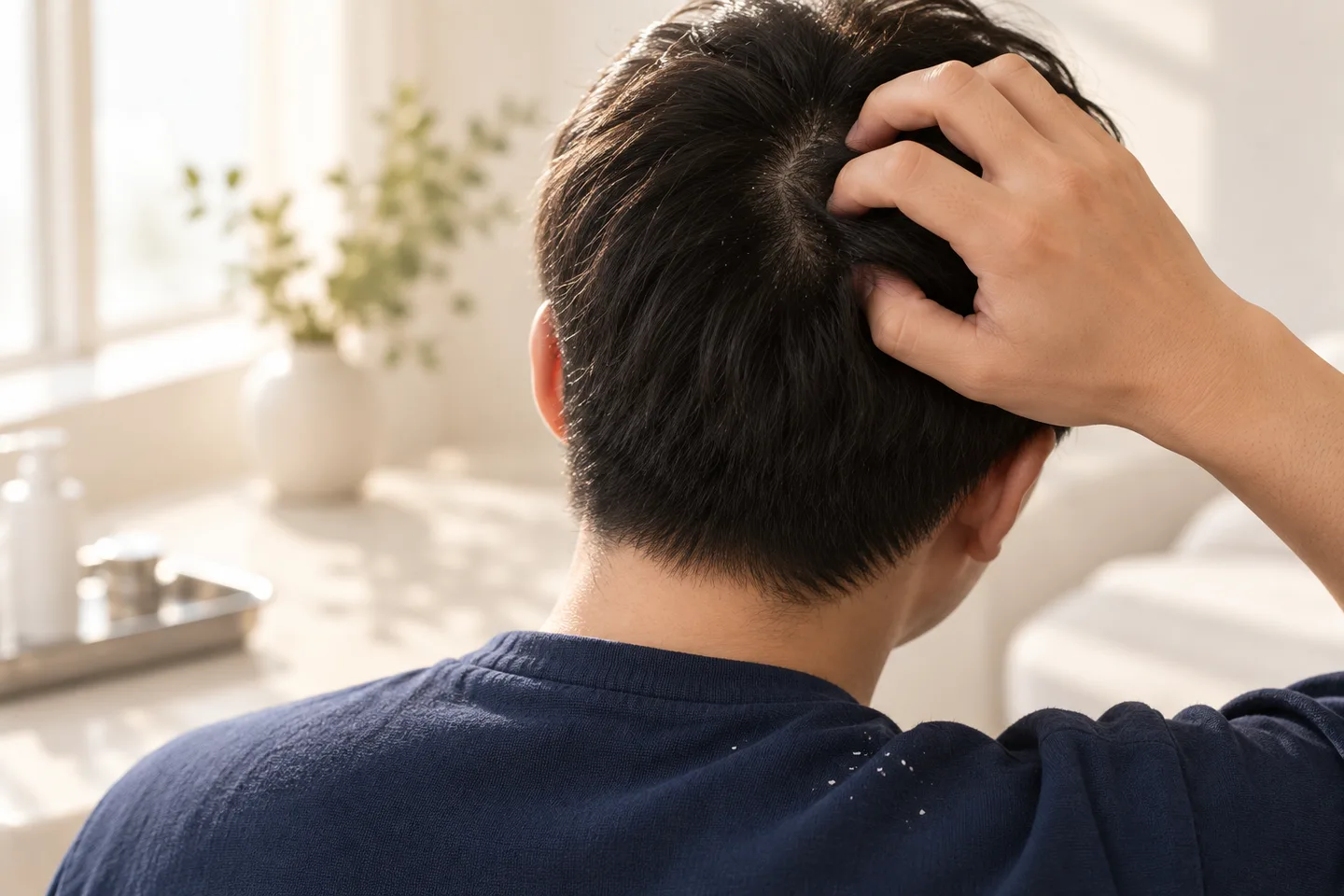
” Mild dandruff often causes loose white or yellowish flakes with itching and little inflammation. More persistent symptoms may be caused by seborrheic dermatitis, scalp psoriasis, eczema, contact dermatitis, folliculitis, fungal scalp infection, head lice, or irritation from hair products.
For many people, dandruff can be managed with appropriate medicated shampoo and scalp care. However, significant redness, thick scales, pustules, pain, broken hairs, patchy hair loss, crusting, or symptoms that persist despite treatment deserve dermatology evaluation because another scalp disorder may be present.
For patients living in or visiting Bangkok, heat, sweating, frequent shampooing, helmets, hair products and changes in hair-care routine may influence scalp symptoms, but these factors do not establish the diagnosis. The most useful approach is to identify the underlying cause before repeatedly changing shampoos or medications.
What Is Dandruff?
Dandruff is a common scalp condition that causes visible flakes of dead skin.
Typical symptoms include:
- White or yellowish flakes
- Flakes visible in the hair or on clothing
- Mild to moderate scalp itching
- Mild dryness or oiliness
- Little or no marked inflammation
Dandruff is generally considered part of the same spectrum as seborrheic dermatitis, with dandruff representing a milder form that primarily affects the scalp and causes less obvious inflammation.
Dandruff is not simply a sign of poor hygiene. Multiple factors can contribute, including scalp oil production, skin-barrier function, hair-care practices and interaction with yeasts that normally live on human skin.
Why Does Dandruff Make the Scalp Itch?
Itching develops when the scalp becomes irritated or inflamed.
In dandruff and seborrheic dermatitis, the interaction between scalp oil, skin-barrier function, naturally occurring yeast and an individual’s inflammatory response can produce:
- Flaking
- Irritation
- Redness
- Itching
Scratching may temporarily relieve the itch but can also damage the scalp, increase inflammation and produce small wounds or crusts.
Is Dandruff the Same as Seborrheic Dermatitis?
They are closely related, but they are not exactly the same.
Dandruff
Usually causes:
- Flaking
- Mild itching
- Minimal visible inflammation
- Symptoms mainly limited to the scalp
Seborrheic Dermatitis
May cause:
- More obvious redness or discoloration
- Greasy or yellowish scales
- More persistent itching
- Broader areas of inflammation
- Seborrheic dermatitis can also affect other oil-rich areas, including:
- Eyebrows
- Sides of the nose
- Behind the ears
- Beard
- Chest
Seborrheic dermatitis often follows a chronic, relapsing course. Treatment aims to control the current flare and reduce future flare-ups rather than promise permanent elimination of the condition.
What Causes an Itchy Scalp?
Dandruff is only one possible explanation.
Common causes of scalp itching include:
- Dandruff
- Seborrheic dermatitis
- Scalp psoriasis
- Eczema
- Allergic contact dermatitis
- Irritant dermatitis
- Folliculitis
- Fungal scalp infection
- Head lice
- Dry or irritated scalp
- Reaction to hair-care products
Clinical guidelines emphasize that effective treatment of scalp itch depends on determining the cause rather than treating the symptom alone.
Dandruff vs Dry Scalp
Patients often use these terms interchangeably, but they are not always the same problem.
A truly dry or irritated scalp may develop from:
- Excessive washing
- Harsh cleansers
- Drying hair products
- Chemical treatments
- Irritant dermatitis
- Eczema
Dandruff may occur even when the scalp is oily.
If the scalp is both oily and flaky, seborrheic dermatitis may be more likely than simple dryness.
Dandruff vs Scalp Psoriasis
Scalp psoriasis can easily be mistaken for severe dandruff.
Typical scalp psoriasis may cause:
- Well-defined patches or plaques
- Thick scale
- White or silvery scale
- Significant itching
- Red, purple, brown or darker inflamed areas depending on skin tone
- Scaling that extends beyond the hairline
- Involvement behind the ears or at the back of the scalp
Scalp psoriasis is a chronic immune-mediated inflammatory disease and can fluctuate between periods of improvement and flare.
Clues that suggest psoriasis rather than dandruff
Psoriasis is more likely when there are:
- Thick rather than fine scales
- Clearly defined plaques
- Scaling extending beyond the scalp
- Psoriasis on the elbows, knees or other body areas
- Nail pitting or other nail changes
Psoriasis and seborrheic dermatitis can also overlap, sometimes producing a condition with features of both.
Dandruff vs Fungal Scalp Infection
A true fungal infection of the scalp is different from dandruff.
Fungal scalp infection can cause:
- Scaling
- Itching
- Broken hairs
- Patchy hair loss
- Black dots where hairs have broken
- Crusting
- Tenderness
- Significant inflammation in severe cases
This distinction matters because fungal infection involving scalp hair follicles generally requires systemic antifungal treatment rather than dandruff shampoo alone.
If an itchy, scaly patch is associated with broken hairs or localized hair loss, it should not automatically be treated as dandruff.
Can Hair Products Cause an Itchy, Flaky Scalp?
Yes.
Hair-care products may cause either irritation or allergy.
Possible triggers include:
- Shampoo
- Conditioner
- Hair dye
- Hair bleach
- Hair straightening chemicals
- Styling products
- Hair sprays
- Pomades
- Fragrances
- Preservatives
Even shampoo residue that is not adequately rinsed from the scalp may contribute to itching and irritation.
Allergic Contact Dermatitis of the Scalp
An allergic reaction to hair products may cause:
- Intense itching
- Burning
- Redness
- Swelling
- Scaling
- Oozing
- Rash around the hairline
- Rash behind the ears
- Eyelid or facial rash
Symptoms occurring soon after changing hair dye, shampoo, conditioner or styling products should raise suspicion for a product-related reaction.
Persistent or recurrent suspected allergy may require formal allergy testing of the skin.
Irritant Scalp Dermatitis
Not every product reaction is an allergy.
Strong chemicals can directly damage or irritate the skin.
Possible triggers include:
- Hair bleaching
- Strong hair dyes
- Chemical straightening
- Repeated harsh shampooing
- Acidic scalp treatments
- Alcohol-containing products
Burning and pain are often more prominent than itch in significant irritant reactions.
Blistering, open wounds or marked swelling after chemical hair treatment warrants medical assessment.
Can Folliculitis Cause Scalp Itching?
Yes.
Folliculitis is inflammation around hair follicles and may produce:
- Small red bumps
- Pustules
- Itching
- Tenderness
- Crusting
The cause may be bacterial, yeast-related or inflammatory.
This is important because not every scalp pustule needs antibiotics. Recurrent folliculitis should be diagnosed correctly before repeatedly prescribing antibacterial treatment.
Can Head Lice Look Like Dandruff?
Sometimes.
Both can cause scalp itching, but lice eggs are attached firmly to individual hairs and usually do not brush away easily like dandruff flakes.
Head lice may cause:
- Intense itching
- Scratching
- Excoriations
- Visible lice
- Eggs attached to hairs
The area behind the ears and around the back of the scalp may be particularly affected.
Can Dandruff Cause Hair Loss?
Ordinary dandruff does not usually destroy hair follicles.
However, severe inflammation and repeated scratching may contribute to temporary hair shedding.
Scalp psoriasis can also be associated with temporary localized hair loss when inflammation and scaling are severe. Permanent hair loss from uncomplicated scalp psoriasis is uncommon.
Significant hair loss should prompt evaluation because another condition may be present, particularly if there are:
- Bald patches
- Broken hairs
- Pustules
- Pain
- Thick crusts
- Loss of follicular openings
- Shiny scar-like areas
Why Does My Dandruff Keep Coming Back?
Dandruff and seborrheic dermatitis frequently recur.
This does not necessarily mean that treatment has failed.
Patients may improve during active treatment and then flare again after stopping treatment.
Potential contributing factors include:
- Individual skin susceptibility
- Scalp oil production
- Inflammatory tendency
- Hair-care routine
- Heat and sweating
- Irritating products
- Stress in some patients
Maintenance treatment with medicated shampoo may be useful for patients who experience recurrent seborrheic dermatitis. Clinical guidelines note that some patients continue medicated dandruff shampoo periodically after symptoms improve to help prevent flare-ups.
Does Bangkok’s Hot and Humid Climate Affect Dandruff?
Climate can influence symptoms, but there is no simple rule that humidity always causes dandruff.
In Bangkok, patients may experience:
- More sweating
- More frequent hair washing
- Oilier scalp
- More use of air conditioning
- Frequent helmet or hat use
- Increased use of styling products
Heat can aggravate seborrheic dermatitis in some people, and individual routines may change after moving to a tropical climate.
However, persistent scalp scaling should not simply be blamed on Thailand’s weather. Psoriasis, fungal infection, eczema and contact dermatitis can occur in any climate.
How Does a Dermatologist Diagnose Dandruff and Scalp Itch?
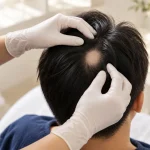
Most cases begin with a careful scalp examination.
A dermatologist may assess:
- Type of flakes or scales
- Whether scales are oily or dry
- Degree of inflammation
- Distribution across the scalp
- Hairline involvement
- Areas behind the ears
- Eyebrows and facial skin
- Hair shafts
- Broken hairs
- Pustules
- Crusting
- Areas of hair loss
Seborrheic dermatitis is usually diagnosed clinically from its appearance, distribution and behavior.
Does Dandruff Need Laboratory Testing?
Usually not.
Typical dandruff or seborrheic dermatitis can generally be diagnosed from examination.
Testing may become useful when the diagnosis is uncertain.
Fungal testing
May be appropriate when there is:
- Patchy hair loss
- Broken hairs
- Significant scaling
- Suspicion of fungal scalp infection
Bacterial culture
- May be considered when there are:
- Recurrent pustules
- Significant drainage
- Suspected bacterial infection
- Failure of previous antibiotic treatment
Skin biopsy
Rarely necessary for ordinary dandruff.
It may be considered when:
The diagnosis remains unclear
Psoriasis and another inflammatory condition are difficult to distinguish
An unusual inflammatory scalp disease is suspected
Clinical guidelines note that biopsy can occasionally be helpful when seborrheic dermatitis overlaps with another skin disorder.
How Is Dandruff Treated?
The treatment goal is to control:
- Flaking
- Itching
- Irritation
- Inflammation
For mild dandruff, medicated shampoo is often sufficient.
Clinical guidelines list commonly used dandruff-shampoo ingredients such as:
- Ketoconazole
- Selenium sulfide
- Zinc pyrithione
- Salicylic acid
- Sulfur
- Coal tar
Different ingredients work in different ways, so a shampoo that is effective for one patient may not be ideal for another.
How to Use Dandruff Shampoo Correctly
One common reason dandruff shampoo seems ineffective is that it is not used correctly.
General principles include:
Apply the shampoo primarily to the scalp rather than only to the hair.
Massage gently into affected areas.
Leave it on for the time recommended for that particular product.
Rinse thoroughly.
Use it at the recommended frequency.
Reduce frequency once symptoms are controlled if maintenance treatment is appropriate.
Some medicated shampoos require several minutes of contact with the scalp before rinsing. Instructions vary by ingredient, so patients should follow the product directions or their dermatologist’s recommendation.
How Often Should You Wash Your Hair?
There is no universal schedule.
Washing frequency should be adjusted for:
- Scalp oiliness
- Hair texture
- Hair-care routine
- Severity of dandruff
- Type of medicated shampoo
Patients with oily, straight or fine hair may tolerate or benefit from more frequent shampooing.
People with curly, tightly coiled or dry hair may need less frequent washing because excessive shampooing can dry the hair shaft.
The treatment should fit the patient’s hair type rather than forcing everyone into the same washing schedule.
What If Dandruff Shampoo Is Not Enough?
If seborrheic dermatitis causes significant inflammation or itching, a dermatologist may add prescription scalp medication.
Options can include:
- Prescription antifungal shampoo
- Antifungal scalp treatment
- Short courses of topical corticosteroids
- Other anti-inflammatory treatments
Topical corticosteroids can reduce itching and inflammation relatively quickly but should be used appropriately because prolonged or excessive use may cause skin thinning and other side effects.
Treatment of Scalp Psoriasis
If the problem is psoriasis rather than dandruff, treatment may include:
- Scale-softening treatment
- Topical corticosteroids
- Vitamin D-related topical medications
- Medicated shampoos
- Other anti-inflammatory treatments
- Systemic treatment for more extensive psoriasis
Topical therapy is commonly used for mild to moderate scalp psoriasis.
This is why severe “dandruff” that never responds to ordinary dandruff treatment should be reassessed.
Treatment of Fungal Scalp Infection
If fungal infection of the hair follicles is diagnosed, oral antifungal treatment is usually required.
Dandruff shampoo alone is generally insufficient because the infection involves the hair and follicle more deeply.
This is especially important when itching and scaling are accompanied by:
- Broken hairs
- Patchy hair loss
- Significant inflammation
What Should You Avoid When Your Scalp Is Itchy?
Try to avoid:
- Aggressive scratching
- Picking thick scales
- Very hot water
- Strongly fragranced products if they irritate the scalp
- Repeatedly changing multiple products at once
- Applying harsh acids or chemicals without medical guidance
- Repeated antibiotic use without a diagnosis
- Sharing combs or brushes when infection or lice is possible
Rinsing shampoo thoroughly is also important because residual cleanser can irritate the scalp.
How Long Does Dandruff Treatment Take?
Improvement is generally gradual rather than immediate.
Itching may improve before all visible scales disappear.
If an appropriate treatment has been used correctly but symptoms remain persistent, the next step should usually be reconsidering the diagnosis, rather than simply using stronger and stronger dandruff products.
Can Dandruff Be Permanently Cured?
Dandruff can often be controlled very effectively, but recurrent dandruff and seborrheic dermatitis may return.
The goal is therefore usually:
- Control current symptoms
- Reduce itching and inflammation
- Clear excess scale
- Identify useful maintenance treatment
- Minimize future flare-ups
A claim of a guaranteed permanent cure would not be medically appropriate.
When Should You See a Dermatologist?
Consider dermatology evaluation if you have:
- Severe dandruff
- Persistent itching despite treatment
- Significant scalp redness
- Thick plaques or scales
- Symptoms extending beyond the hairline
- Pustules
- Pain or tenderness
- Crusting or drainage
- Patchy hair loss
- Broken hairs
- Significant hair shedding
- Symptoms after hair dye or chemical treatment
- Recurrent scalp inflammation
- Uncertainty about whether the problem is dandruff
Clinical guidelines recommend assessment when dandruff remains persistent or becomes severe, because other medical conditions may be responsible.
Warning Signs That May Indicate Something More Than Dandruff
Seek medical evaluation promptly if you develop:
- Rapidly progressive hair loss
- Painful scalp swelling
- Large pustules or pus
- Fever with scalp inflammation
- Marked tenderness
- Extensive crusting
- Open wounds
- Significant facial swelling after hair dye
- Smooth shiny areas with loss of follicular openings
- Rapidly spreading inflammation
These findings are not typical of uncomplicated dandruff and may indicate infection, severe allergic reaction or an inflammatory hair-loss disorder.
What to Expect During a Dermatology Consultation in Bangkok
A dermatologist may ask about:
How long the itching or flaking has been present
Whether symptoms are continuous or intermittent
Whether the scalp is oily or dry
Which shampoos have been tried
How frequently you wash your hair
Hair dye or chemical treatments
Styling products
Previous prescription treatments
Hair loss or broken hairs
Similar skin problems elsewhere
Psoriasis or eczema history
Recent exposure to people with scalp infection or lice
The examination may include the scalp, hairline, ears, eyebrows, face, hair shafts and sometimes other areas of skin or nails.
Most cases can be diagnosed clinically. Fungal testing, bacterial culture, allergy testing or biopsy is reserved for situations where the clinical findings justify it.
For tourists, expatriates and international patients in Bangkok, photographs of previous flare-ups and a list of shampoos or medications already tried can be helpful, especially if symptoms have changed during travel.
Frequently asked questions
What causes dandruff?
Dandruff results from a combination of scalp oil, skin-barrier factors, naturally occurring microorganisms and individual susceptibility. It is not simply caused by poor hygiene.
Why does dandruff itch?
Inflammation and irritation of the scalp can stimulate itching. Scratching can then worsen the irritation.
Is dandruff a fungal infection?
Not in the same sense as a contagious fungal infection of the scalp. Yeasts normally present on human skin are associated with dandruff and seborrheic dermatitis, but simply detecting these organisms does not diagnose the condition.
Is dandruff contagious?
No. Ordinary dandruff and seborrheic dermatitis are not contagious.
Is dandruff caused by poor hygiene?
No. Hair-care habits can influence symptoms, but poor hygiene is not the underlying explanation for all dandruff.
Is dandruff the same as seborrheic dermatitis?
They belong to the same disease spectrum, but seborrheic dermatitis generally causes more obvious inflammation and can affect areas outside the scalp.
What is the difference between dandruff and dry scalp?
Dry scalp may result from irritation, eczema or excessive cleansing. Dandruff can occur even in people with oily scalps.
How do I know if I have dandruff or psoriasis?
Psoriasis more often causes thicker, sharply defined plaques and heavier scaling, sometimes extending beyond the hairline or appearing elsewhere on the body.
How do I know if my itchy scalp is fungal?
Broken hairs, patchy hair loss, scaling and significant inflammation can suggest fungal infection, but testing may be needed to confirm it.
Why does my scalp itch after shampooing?
Possible reasons include irritation, incomplete rinsing or sensitivity to an ingredient in the shampoo.
Can hair dye cause scalp itching?
Yes. Hair dye can cause either allergic or irritant reactions.
Why is my scalp oily and itchy?
Seborrheic dermatitis is one common possibility, but folliculitis, psoriasis and product-related irritation can also cause these symptoms.
Why is my scalp itchy with no dandruff?
Possible causes include contact dermatitis, lice, folliculitis, eczema and other inflammatory scalp disorders.
Why does my dandruff keep coming back?
Dandruff and seborrheic dermatitis are often recurrent conditions. Maintenance shampoo may be appropriate after a flare has been controlled.
Can stress make dandruff worse?
Stress may contribute to flare-ups in some patients, but persistent scalp disease should not automatically be attributed to stress.
Does sweating make dandruff worse?
Sweat and heat can aggravate scalp irritation or seborrheic dermatitis in some patients, although responses vary between individuals.
Does Bangkok weather make dandruff worse?
Bangkok's heat, sweating and changes in hair-care routine may influence symptoms, but climate alone does not diagnose or explain persistent dandruff.
Can dandruff cause hair loss?
Dandruff itself usually does not permanently damage follicles. Severe inflammation and scratching may contribute to temporary shedding.
Why do I have scalp pimples with dandruff?
Folliculitis or another inflammatory condition may be present in addition to scaling.
Do scalp pimples need antibiotics?
Not necessarily. Treatment depends on whether the cause is bacterial, yeast-related or inflammatory.
What dandruff shampoo should I use?
Different active ingredients target different aspects of dandruff. Common options include ketoconazole, selenium sulfide, zinc pyrithione, salicylic acid, sulfur and coal tar.
How long should dandruff shampoo stay on the scalp?
It depends on the product. Some shampoos need several minutes of contact time before rinsing. Follow the specific instructions for the shampoo being used.
Should I wash my hair every day if I have dandruff?
It depends on scalp oiliness, hair texture and treatment. Some people benefit from frequent washing, while people with dry or tightly coiled hair may require less frequent shampooing.
Should I scratch dandruff off my scalp?
No. Aggressive scratching or picking can increase inflammation, cause wounds and contribute to temporary hair shedding.
Can dandruff be cured permanently?
It can often be controlled very well, but recurrence is common, particularly when dandruff is part of seborrheic dermatitis.
When should I see a dermatologist for dandruff?
Seek evaluation when symptoms are severe, persistent, recurrent, associated with marked redness, pain, pustules, thick scales or hair loss, or do not respond to appropriate treatment.
Related conditions
-
Scalp Disorders Scalp Disorders Scalp disorders are a common reason people seek dermatology care. Symptoms may include itching, flaking, redness, scaling, pimples, pustules, scalp pain, crusting, hair shedding or patchy hair loss.
-
Seborrheic Dermatitis Seborrheic Dermatitis Seborrheic dermatitis is a common inflammatory skin condition that causes redness, flaking, greasy or dry scales, and sometimes itching. It most often affects areas with many oil glands, including the scalp, eyebrows, sides of the nose, ears, beard area and upper chest.
-
Psoriasis Psoriasis Psoriasis is a chronic immune-mediated inflammatory disease that most commonly affects the skin, but it can also involve the nails and joints.
-
Contact Dermatitis Contact Dermatitis Contact dermatitis is a type of eczema caused by something that touches the skin. It can result from direct irritation or from a delayed allergic reaction to a substance such as fragrance, preservatives, metals, hair dye, rubber, cosmetics, cleaning products or workplace chemicals.