











Scalp Disorders
Scalp disorders are a common reason people seek dermatology care. Symptoms may include itching, flaking, redness, scaling, pimples, pustules, scalp pain, crusting, hair shedding or patchy hair loss.
Some scalp problems are mild and mainly cause discomfort or dandruff. Others, such as fungal scalp infection, significant bacterial folliculitis or inflammatory scarring alopecia, may require medical treatment to prevent complications or permanent hair loss.
The challenge is that many scalp conditions look similar. Dandruff, seborrheic dermatitis, scalp psoriasis, eczema, fungal infection and folliculitis may all cause itching and scaling, while several different diseases can cause hair loss. A dermatologist can often distinguish them by examining the scalp and hair, sometimes with magnification, fungal testing, bacterial culture or scalp biopsy when necessary.
For patients in Bangkok, Thailand, persistent scalp symptoms should not automatically be treated as “dandruff.
” Identifying the underlying disorder is the most useful first step because treatment differs substantially depending on the cause.
What Are Scalp Disorders?
“Scalp disorder” is a broad term rather than a single diagnosis.
The scalp contains:
- Skin
- Hair follicles
- Sebaceous glands
- Sweat glands
- Blood vessels
- Nerves
- Disease can affect one or several of these structures.
- Scalp problems can broadly involve:
- Inflammation
- Excess scaling
- Infection
- Hair-follicle inflammation
- Autoimmune disease
- Allergic or irritant reactions
- Hair loss
- Scarring of hair follicles
The appearance of the scalp often provides clues, but symptoms alone are not always enough to identify the cause.
Common Symptoms of Scalp Disorders
Patients may notice one or more of the following:
- Dandruff
- White or yellow flakes
- Itchy scalp
- Red scalp
- Oily scaling
- Thick scales
- Crusting
- Pimples or pustules
- Pain or tenderness
- Burning
- Bleeding from scratching
- Hair shedding
- Broken hairs
- Patchy hair loss
- Thinning hair
- Scalp odor
- Open sores
- Smooth bald patches
- Areas that look shiny or scarred
The combination of symptoms matters.
For example, diffuse fine flakes with mild itching suggest a different group of conditions from a painful pustular scalp with hair loss.
Common Scalp Disorders
1. Dandruff
Dandruff is one of the most common scalp complaints.
It usually causes:
- White or yellowish flakes
- Mild itching
- Flaking throughout the scalp
- Little or no significant redness
Dandruff is generally considered a mild, non-inflammatory form of seborrheic dermatitis.
It is usually harmless, although persistent dandruff may be uncomfortable or embarrassing.
What causes dandruff?
Dandruff is associated with several factors, including:
- Sebum production
- Skin-barrier function
- Yeasts that normally live on the skin
- Individual susceptibility
- Weather and environmental conditions
It is not simply caused by poor hygiene.
How is dandruff treated?
Treatment often includes medicated shampoos containing ingredients that reduce yeast, scaling or inflammation.
The specific product and washing frequency depend on scalp type and severity.
Persistent or severe dandruff deserves evaluation because scalp psoriasis, eczema and fungal infection can resemble dandruff. Dermatology assessment is recommended when dandruff does not improve with appropriate self-care or becomes severe.
2. Seborrheic Dermatitis
Seborrheic dermatitis is a common chronic or relapsing inflammatory skin condition affecting areas rich in sebaceous glands.
On the scalp, it may cause:
- Flaking
- Yellow or white scales
- Redness
- Mild to moderate itching
- Oily or dry-looking areas
It can also affect:
- Eyebrows
- Sides of the nose
- Beard
- Behind the ears
- Ear canals
- Chest
Seborrheic dermatitis frequently improves and worsens over time rather than being permanently cured.
Is seborrheic dermatitis the same as dandruff?
They are related but not identical.
Dandruff generally describes scaling without significant underlying inflammation.
Seborrheic dermatitis usually has more visible inflammation, redness or broader involvement beyond the scalp.
Treatment of seborrheic dermatitis
Depending on severity, treatment may include:
- Antifungal shampoos
- Anti-inflammatory scalp medications
- Scale-reducing products
- Gentle scalp care
Because the condition often recurs, maintenance treatment may be necessary for some patients.
3. Scalp Psoriasis
Scalp psoriasis is an inflammatory immune-mediated disorder.
Typical findings include:
- Well-defined red or darker plaques
- Thick scaling
- White or silvery scales
- Significant itching in some patients
- Scaling extending beyond the hairline
- Involvement behind the ears or at the back of the scalp
Scalp psoriasis may affect only part of the scalp or nearly the entire scalp.
In darker skin tones, inflammation may appear purple, brown or darker rather than bright red.
Scalp psoriasis versus dandruff
Scalp psoriasis typically has:
- Thicker scales
- Better-defined plaques
- More obvious inflammation
Possible psoriasis elsewhere on the body
A dermatologist may also look at:
- Elbows
- Knees
- Nails
- Behind the ears
- Other skin folds
because psoriasis may be present outside the scalp.
Treatment of scalp psoriasis
Treatment may include:
- Topical corticosteroids
- Vitamin D-related medications
- Medicated shampoos
- Scale-softening preparations
- Other topical medications
- Light-based treatment in selected cases
- Systemic treatment when psoriasis is more extensive or severe
Topical treatment is generally first-line for mild to moderate scalp psoriasis.
Hair can make scalp medication difficult to apply, so lotions, solutions, foams or shampoos may be easier to use than thick ointments.
4. Scalp Folliculitis
Scalp folliculitis is inflammation involving hair follicles.
It may cause:
- Small red bumps
- Pustules
- Itching
- Tenderness
- Crusting
- Scratched areas
Scalp folliculitis may be bacterial, yeast-related or inflammatory depending on the individual case.
Scalp folliculitis typically produces itchy or painful follicular pustules and erosions.
Does every scalp pimple need antibiotics?
No.
Not every follicular bump is bacterial.
Possible causes include:
- Bacterial folliculitis
- Yeast-associated folliculitis
- Acne-like inflammation
- Irritant reactions
Other inflammatory follicular disorders
Repeated antibiotic treatment without establishing the cause may be unnecessary.
If pustules are recurrent, widespread, painful or associated with hair loss, a dermatologist may consider bacterial culture or additional testing.
5. Fungal Scalp Infection
Fungal infection of the scalp is known as tinea capitis.
It is especially common in children but can occur in adults.
Possible signs include:
- Scaly patches
- Broken hairs
- Patchy hair loss
- Black dots where hairs have broken
- Itching
- Inflammation
- Crusting
A severe inflammatory form can produce a swollen, tender mass called a kerion.
Tinea capitis may resemble alopecia areata, seborrheic dermatitis, psoriasis or bacterial infection.
How is fungal scalp infection diagnosed?
Testing may include:
- Microscopic examination
- Fungal culture
- Examination of plucked hairs
- Scalp scrapings
Occasionally ultraviolet-light examination for certain organisms
It is recommended to confirm the diagnosis with mycological testing because several scalp disorders can look similar.
Can fungal scalp infection be treated with shampoo alone?
Usually not.
Tinea capitis affects hair follicles deeply enough that topical medication alone generally does not reach the infection adequately. Systemic antifungal treatment is usually required.
Shampoos may sometimes be used as an adjunct to reduce surface fungal spread but are not usually sufficient as the main treatment.
6. Scalp Eczema and Atopic Dermatitis
Eczema can affect the scalp and cause:
- Itching
- Redness
- Dryness
- Scaling
- Scratching
- Thickened skin from chronic rubbing
Patients may also have eczema elsewhere, such as:
- Face
- Neck
- Arms
- Legs
- Body folds
Persistent scratching can damage the skin barrier and increase the risk of secondary bacterial infection.
Treatment generally focuses on controlling inflammation, restoring the skin barrier and identifying irritants or triggers when relevant.
7. Allergic Contact Dermatitis of the Scalp
Hair products can sometimes cause allergic contact dermatitis.
Possible triggers include:
- Hair dye
- Fragrances
- Preservatives
- Hair straightening products
- Styling products
- Shampoos
- Conditioners
Symptoms may include:
- Severe itching
- Redness
- Swelling
- Burning
- Oozing
- Rash around the hairline
- Rash behind the ears
- Facial or eyelid involvement
Interestingly, the scalp itself can sometimes appear less inflamed than the ears, forehead, neck or eyelids because scalp skin is relatively thick.
Patch testing may be considered when allergy is suspected.
8. Irritant Scalp Dermatitis
Not every reaction to hair products is an allergy.
Chemical treatments may directly irritate the scalp.
Possible causes include:
- Hair bleach
- Strong dyes
- Chemical straighteners
- Repeated shampooing
- Harsh detergents
- Scalp treatments containing irritating acids or alcohols
Symptoms may include burning, tenderness, redness or scaling.
If blistering, significant pain or open wounds develop after a chemical hair treatment, medical assessment is appropriate.
9. Alopecia Areata
Alopecia areata causes smooth, nonscarring patches of hair loss.
Typical features include:
- Sudden round or oval bald patches
- Smooth scalp surface
- Little or no scaling
- Minimal inflammation
- Short broken hairs around active borders in some patients
The absence of scaling helps distinguish classic alopecia areata from many fungal scalp infections, although not every case is obvious.
Alopecia areata is an autoimmune hair disorder rather than primarily a scalp infection.
10. Pattern Hair Loss
Male and female pattern hair loss can cause progressive thinning without major scalp inflammation.
Typical features include:
- Gradual thinning
- Receding temples in many men
- Crown thinning
- Wider central parting in many women
- Miniaturization of hairs
It usually does not cause:
- Heavy scaling
- Pus
- Crusting
- Severe pain
If significant inflammation accompanies hair loss, another condition should be considered.
11. Telogen Effluvium
Telogen effluvium causes increased hair shedding throughout the scalp.
Common triggers include:
- Fever
- Major illness
- Surgery
- Childbirth
- Rapid weight loss
- Nutritional deficiency
- Significant physical stress
- Certain medications
The scalp itself often looks normal.
Hair shedding generally occurs diffusely rather than as clearly defined bald patches.
12. Scarring Alopecia
Scarring alopecia refers to a group of disorders that permanently damage hair follicles.
This distinction is important because hair loss may become permanent once follicles are destroyed.
Possible warning signs include:
- Loss of visible follicular openings
- Smooth shiny areas
- Burning
- Pain
- Significant redness
- Scaling around individual follicles
- Pustules
- Progressive hairline recession
- Permanent-looking patches
Examples include inflammatory disorders such as lichen planopilaris and discoid lupus erythematosus.
Early diagnosis is particularly important.
13. Head Lice
Head lice can cause intense scalp itching.
Typical clues include:
- Persistent itching
- Scratch marks
- Lice visible in the hair
- Eggs attached firmly to hair shafts
Greater involvement around the back of the neck and behind the ears
Unlike dandruff, lice eggs remain attached to individual hairs rather than easily flaking away.
Why Is My Scalp Itchy?
An itchy scalp has many possible causes.
Common possibilities include:
- Dandruff
- Seborrheic dermatitis
- Psoriasis
- Eczema
- Contact dermatitis
- Fungal infection
- Head lice
- Folliculitis
- Dryness
Itch alone cannot reliably identify the diagnosis. Itching accompanies many scalp diseases, whereas soreness is less common.
Why Is My Scalp Flaking?
Flaking can result from:
- Dandruff
- Seborrheic dermatitis
- Scalp psoriasis
- Eczema
- Fungal infection
- Irritation from hair products
The type of scale can provide useful clues.
Fine, loose flakes may favor dandruff, whereas thick sharply defined scaling can suggest psoriasis. Broken hairs within scaly patches can raise concern for fungal infection.
Why Do I Have Pimples on My Scalp?
Scalp “pimples” may represent several different conditions.
Possible causes include:
- Folliculitis
- Acne-related inflammation
- Bacterial infection
- Yeast-related folliculitis
- Inflamed cysts
- Irritation from hair products
If the lesions are painful, repeatedly filled with pus or leave areas of hair loss, evaluation is advisable.
Can Scalp Disorders Cause Hair Loss?
Yes, but the mechanism varies.
Hair loss may occur because of:
- Inflammation
- Scratching
- Infection
- Autoimmune disease
- Hair-cycle disruption
- Direct destruction of follicles
Seborrheic dermatitis and psoriasis usually do not cause permanent hair loss, although temporary shedding can occur with significant inflammation or scratching. Scalp psoriasis can occasionally be associated with temporary localized hair loss.
Fungal scalp infection can cause patchy hair loss.
Scarring alopecia can permanently destroy follicles.
This is why hair loss combined with scalp inflammation deserves careful evaluation.
How Does a Dermatologist Diagnose Scalp Disorders?
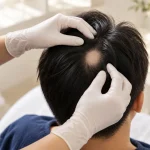
A scalp consultation usually begins with a detailed history and examination.
The dermatologist may examine:
- Distribution of scaling
- Color of the scalp
- Thickness of plaques
- Hair shafts
- Hair density
- Follicular openings
- Pustules
- Crusting
- Areas of hair loss
- Eyebrows and facial skin
- Nails
- Other areas of skin
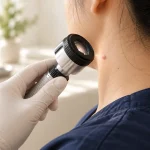
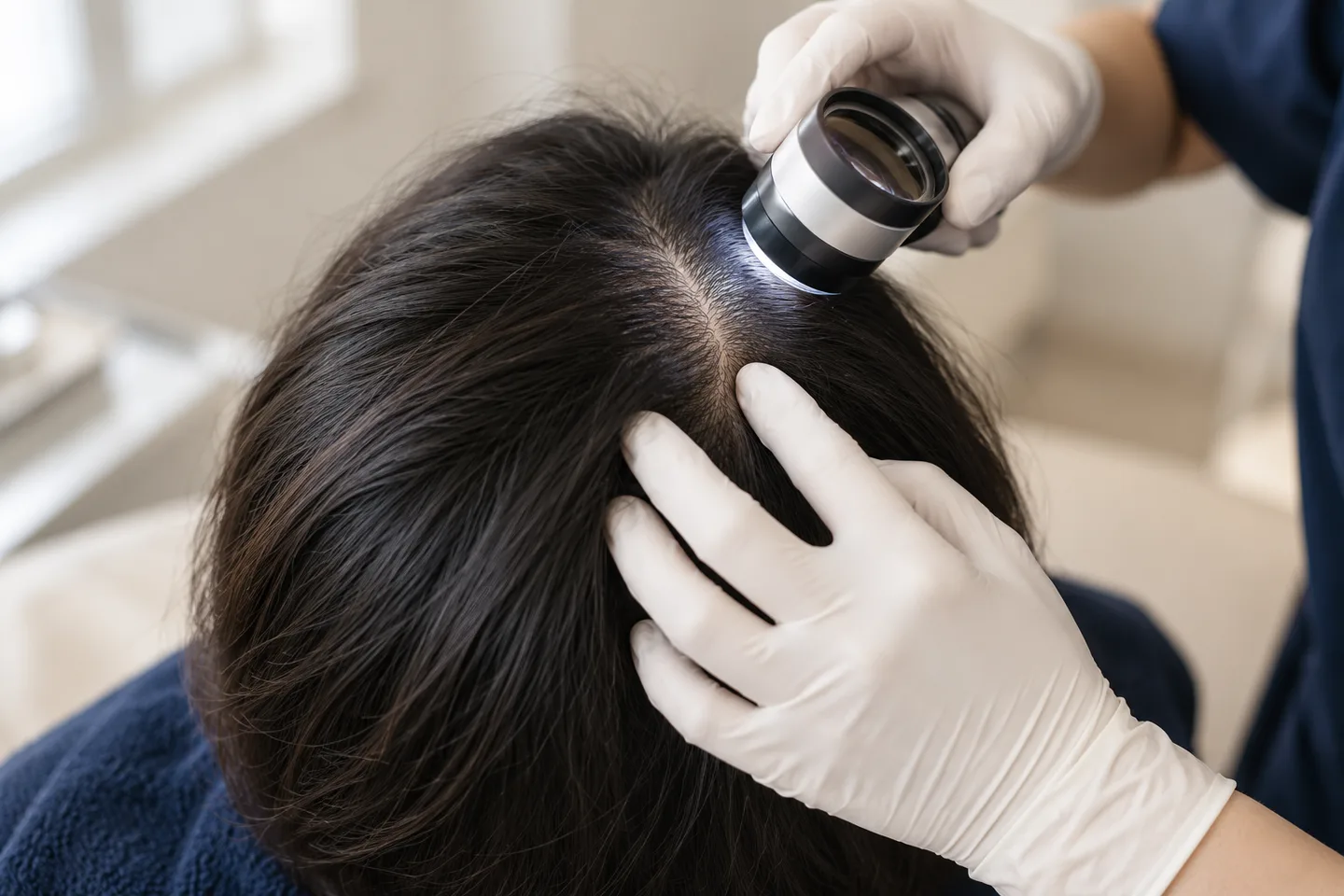
A magnifying instrument may be used to examine scalp and hair structures more closely.
This can help distinguish conditions such as psoriasis, alopecia areata, fungal infection and inflammatory hair disorders.
What Tests May Be Needed?
Not every patient requires laboratory testing.
Depending on the findings, a dermatologist may consider:
Fungal testing
Useful when fungal infection is suspected.
Testing may include microscopy, fungal culture or samples of scale and hair.
Bacterial culture
May be considered when:
- Pustules are present
- Infection repeatedly returns
- There is significant drainage
- Previous antibiotics failed
- Resistant bacteria are suspected
Scalp biopsy
May be considered when:
- Diagnosis is uncertain
- Scarring alopecia is suspected
- Hair loss is progressive
- Inflammation is unusual
- Treatment response is unexpected
A small skin sample is examined under a microscope.
Blood tests
Blood tests are generally used for hair-loss evaluation rather than routine dandruff or psoriasis.
Depending on the history, testing may investigate:
- Iron deficiency
- Thyroid disease
- Nutritional abnormalities
- Other systemic conditions
Treatment of Scalp Disorders
There is no single treatment for all scalp problems.
Treatment depends on the diagnosis.
Medicated Shampoos
Medicated shampoos are useful for several scaling disorders.
Different ingredients may target:
- Yeast
- Excess scale
- Inflammation
- Oiliness
They can be useful for dandruff and seborrheic dermatitis and sometimes form part of psoriasis management.
One limitation is that shampoo may not adequately treat thick plaques, deeper infection or inflammatory hair loss.
Topical Anti-Inflammatory Medication
Topical corticosteroids can reduce inflammation in conditions such as:
- Seborrheic dermatitis
- Scalp psoriasis
- Eczema
- Scalp formulations may include:
- Lotion
- Solution
- Foam
- Gel
- Shampoo
These are often easier to apply through hair than heavy ointments.
Prolonged or inappropriate use can produce side effects such as skin thinning, so treatment strength and duration should be appropriate.
Antifungal Treatment
Antifungal shampoos can help control dandruff and seborrheic dermatitis.
True fungal infection of the hair follicles, such as tinea capitis, usually requires oral antifungal medication because topical therapy alone does not adequately penetrate the infected hair root.
Antibiotics
Antibiotics are appropriate only when bacterial infection is likely.
They should not automatically be used for every pustule or itchy scalp.
Depending on severity, treatment may include:
- Topical antibiotics
- Oral antibiotics
- Culture-guided treatment
Repeated antibiotic use without diagnosis may contribute to resistance and may not help if the disorder is inflammatory or fungal.
Treatment of Scalp Psoriasis
Management depends on severity and whether psoriasis also affects the rest of the body.
Options may include:
- Scale-removing treatments
- Topical corticosteroids
- Vitamin D-related medication
- Medicated shampoo
- Other topical therapies
- Light-based treatments
- Systemic medications for more extensive disease
Topical therapy is generally first-line for mild to moderate disease.
Treatment of Hair-Loss Disorders
Hair-loss treatment depends entirely on the diagnosis.
Alopecia areata, hereditary pattern hair loss, telogen effluvium and scarring alopecia all require different approaches.
For example:
Alopecia areata may require immune-directed treatment
Pattern hair loss may be treated with hair-growth medications
Telogen effluvium requires identification of the trigger
Scarring alopecia usually requires treatment to control inflammation and prevent further follicular destruction
This is why identifying the type of alopecia is more important than simply choosing a “hair-growth treatment.
”
How Should You Care for Your Scalp?
General measures that can help include:
- Wash the scalp according to your hair type and condition
- Avoid aggressive scratching
- Avoid picking thick scales
- Rinse shampoo thoroughly
- Avoid unnecessary harsh chemicals
- Stop products that clearly trigger irritation
- Do not repeatedly squeeze scalp pustules
- Avoid sharing combs when fungal infection or lice is suspected
- Protect exposed scalp from strong sunlight if hair is thin
- Follow treatment instructions carefully
For scalp psoriasis, vigorous scratching or removal of scale can worsen inflammation and contribute to hair shedding.
Does Bangkok’s Climate Affect Scalp Problems?
Bangkok’s hot and humid climate can influence symptoms for some patients.
Heat, sweating, frequent washing, helmets, hats and occlusive environments may contribute to:
- Scalp irritation
- Folliculitis
- Oiliness
- Itching
- Product buildup
However, climate alone does not identify the diagnosis.
A flaky scalp in Bangkok could still represent dandruff, psoriasis, fungal infection, eczema or another condition.
Patients who have recently moved to Thailand may also change shampoos, water exposure, hair-care products or washing frequency, which can alter scalp symptoms.
When Should You See a Dermatologist?
Consider seeing a dermatologist if you have:
Persistent scalp itching
Severe or recurrent dandruff
Thick scalp scales
Pustules or painful bumps
Persistent redness
Crusting
Hair loss
Broken hairs
Bald patches
Symptoms that do not improve with over-the-counter treatments
Repeated scalp infections
Rash spreading beyond the scalp
Uncertainty about the diagnosis
Warning Signs That Need Prompt Medical Evaluation
Seek medical assessment promptly if you develop:
Rapidly progressing hair loss
Painful swollen scalp
Large inflamed lump with pus
Fever with scalp infection
Extensive crusting or drainage
Severe tenderness
Open wounds
Significant swelling of the face
Hair loss with shiny scar-like skin
Loss of visible follicular openings
Rapidly progressing scalp inflammation
A swollen inflammatory fungal infection can occasionally lead to scarring if treatment is delayed, while inflammatory scarring alopecia can cause permanent follicular destruction.
What to Expect During a Scalp Consultation in Bangkok
A dermatologist will usually begin by asking about:
When symptoms started
Main symptom: itching, scale, pain or hair loss
Whether symptoms are constant or recurrent
Hair-care routine
Shampoo and styling products
Hair dye or chemical treatments
Previous medications
Previous infections
Hair-loss pattern
Family history of hair loss
Recent illness
Medication history
Other skin diseases
The scalp examination may look for:
Type of scale
Distribution
Follicular changes
Broken hairs
Pustules
Redness
Signs of infection
Areas of hair thinning
Signs of scarring
Additional testing is selected only when necessary.
For tourists, expatriates and international patients in Bangkok, bringing photographs from earlier stages can be useful, particularly when symptoms have changed after starting treatment or travelling.
Frequently asked questions
What are the most common scalp disorders?
Common conditions include dandruff, seborrheic dermatitis, scalp psoriasis, eczema, folliculitis, fungal scalp infection and several forms of hair loss.
Why is my scalp constantly itchy?
Common causes include dandruff, seborrheic dermatitis, psoriasis, eczema, contact dermatitis, folliculitis, lice and fungal infection.
Is dandruff a fungal infection?
Dandruff is associated with yeasts that naturally live on the skin, but it is not the same as a contagious fungal infection such as tinea capitis.
Is dandruff the same as seborrheic dermatitis?
They are related. Dandruff is generally a milder, non-inflammatory scalp form, while seborrheic dermatitis causes more visible inflammation and may affect the face and ears.
How can I tell dandruff from scalp psoriasis?
Psoriasis typically causes thicker, better-defined plaques with heavier scale. It may also affect the elbows, knees, ears or nails. Dandruff tends to cause finer, more diffuse flakes.
Can scalp psoriasis cause hair loss?
Temporary hair loss can occur, particularly with severe inflammation, thick scaling or repeated scratching. Permanent hair loss is unusual.
Why do I have pimples on my scalp?
They may represent folliculitis, acne-like inflammation, yeast-related disease, bacterial infection or another follicular condition.
Does scalp folliculitis need antibiotics?
Not always. Treatment depends on whether the cause is bacterial, fungal, inflammatory or another process.
What does scalp fungal infection look like?
It may cause scaling, broken hairs, patchy hair loss, black dots, itching or inflamed swollen areas.
Can fungal scalp infection be treated with shampoo?
Shampoo alone is generally not sufficient for tinea capitis. Oral antifungal treatment is usually required.
Is scalp fungus contagious?
Yes. Tinea capitis can spread between people and sometimes through contaminated items.
Can adults get scalp fungal infections?
Yes, although the condition is more common in children.
Why is my scalp oily and flaky?
Seborrheic dermatitis is a common cause, but psoriasis and other inflammatory conditions should also be considered.
Why is my scalp dry and flaky?
Possible causes include dandruff, eczema, psoriasis, irritation and excessive washing.
Can hair dye cause scalp problems?
Yes. Hair dye can cause allergic or irritant contact dermatitis in susceptible people.
Can stress cause scalp problems?
Stress may worsen some inflammatory conditions such as psoriasis or seborrheic dermatitis, but it is rarely the only explanation for persistent scalp disease.
Why am I losing hair with dandruff?
Severe inflammation or scratching may contribute to temporary shedding, but significant hair loss should prompt evaluation for another disorder.
What scalp diseases cause permanent hair loss?
Scarring alopecia can permanently destroy hair follicles. Severe untreated inflammation or infection can occasionally also result in scarring.
How do I know if hair loss is scarring?
Warning signs include loss of follicular openings, smooth shiny skin, persistent redness, scaling around follicles, burning, pain or pustules.
Does every scalp problem need a biopsy?
No. Most scalp disorders can be diagnosed clinically. Biopsy is generally reserved for uncertain diagnoses or suspected scarring/inflammatory alopecia.
Should I stop washing my hair if my scalp is irritated?
Not necessarily. Washing frequency should be adjusted according to the condition and hair type. Completely avoiding scalp cleansing can sometimes worsen scale or oil buildup.
When should I see a dermatologist for dandruff?
Seek evaluation if dandruff is severe, persistent, painful, associated with significant redness or hair loss, or fails to improve with appropriate treatment.
Related conditions
-
Dandruff & Scalp Itch Dandruff & Scalp Itch Dandruff and scalp itching are extremely common, but not every flaky or itchy scalp is simply “dandruff.
-
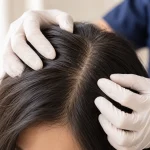
Seborrheic Dermatitis Seborrheic Dermatitis Seborrheic dermatitis is a common inflammatory skin condition that causes redness, flaking, greasy or dry scales, and sometimes itching. It most often affects areas with many oil glands, including the scalp, eyebrows, sides of the nose, ears, beard area and upper chest.
-
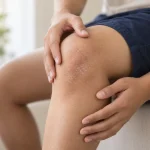
Psoriasis Psoriasis Psoriasis is a chronic immune-mediated inflammatory disease that most commonly affects the skin, but it can also involve the nails and joints.
-
Fungal Skin Infections Fungal Skin Infections Fungal skin infections are common causes of itchy, scaly, discolored or persistent rashes. They can affect almost any part of the body, including the feet, groin, trunk, scalp and nails.