














Dermatology Clinic in Bangkok: Dermatologist in Asoke & Sukhumvit at Clear Skin Dermatology
If you are searching for a dermatology clinic or skin clinic in Bangkok, especially around Asoke or Sukhumvit, the most useful first step is not simply finding the nearest clinic. It is finding a place where your concern can be properly assessed, diagnosed, and treated by a dermatologist.

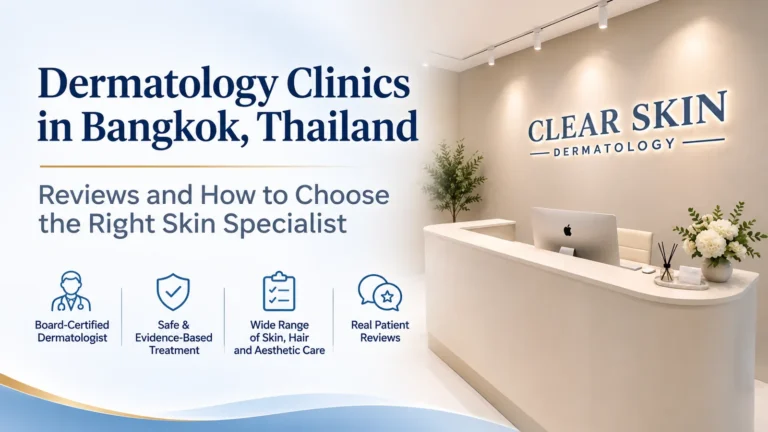
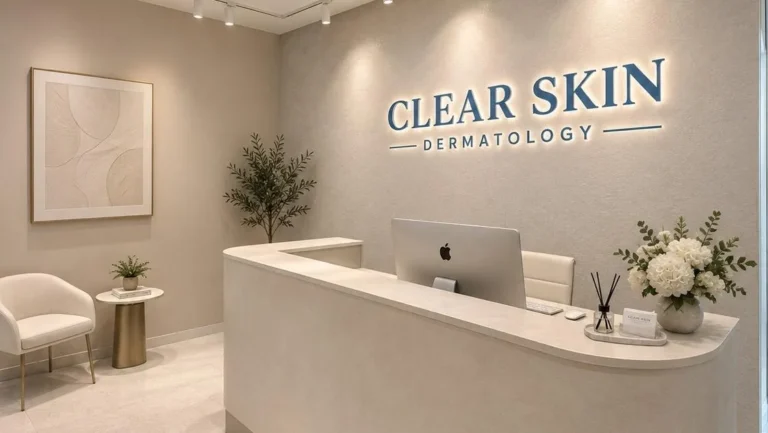
Clear Skin Dermatology, located at Times Square, Asoke, Bangkok, provides dermatologist-led care for concerns involving the skin, hair and nails, together with selected aesthetic dermatology treatments.
A dermatologist is a medical doctor who specializes in conditions affecting the skin, hair and nails. Dermatology therefore covers far more than acne or cosmetic procedures; it includes inflammatory skin disease, infections, hair loss, nail disease, suspicious moles, skin cancer evaluation and dermatologic procedures.
For patients living, working or staying around Sukhumvit, the practical question is not only:
“Where is a skin clinic near Asoke?”
It is also:
“Will my problem be properly diagnosed before treatment is recommended?”
That distinction matters because many skin conditions look similar but require very different treatments.
Why Patients Search for a Dermatology Clinic in Asoke or Sukhumvit
Asoke and Sukhumvit are major residential, business and travel areas in central Bangkok. Patients searching locally may include:
- Thai patients living or working nearby
- Expats based in Bangkok
- International patients
- Business travelers
- Tourists staying along Sukhumvit
- Patients looking for an English-speaking dermatologist
- Patients needing follow-up while living in Thailand
For many patients, convenience matters—but it should come after medical appropriateness.
A nearby clinic is useful only if the doctor can determine whether you have:
- A condition that needs medication
- A condition that needs a procedure
- A harmless skin growth
- An infection
- An inflammatory skin disease
- A lesion that requires biopsy
- A cosmetic concern rather than a medical disease
- A problem that needs hospital referral
Clear Skin Dermatology at Times Square Asoke
Clear Skin Dermatology is located at Times Square, Asoke, Bangkok, in the Sukhumvit area.
The clinic is designed around dermatologist-led assessment rather than approaching every skin concern as a cosmetic treatment.
Patients may seek evaluation for problems involving:
- Skin
- Hair
- Scalp
- Nails
- Moles and skin growths
- Skin cancer concerns
- Acne and acne-related problems
- Selected aesthetic dermatology concerns
For international patients, being able to discuss symptoms, medications, previous diagnoses and follow-up clearly is especially important.
Dermatology Clinic vs Skin Clinic: Are They the Same?
Not necessarily.
The term “skin clinic” is used broadly in Bangkok and may refer to very different types of businesses.
Some focus mainly on:
- Facials
- Laser packages
- Injectables
- Skin-brightening treatments
- Cosmetic procedures
A medical dermatology clinic, by contrast, should be able to assess and manage actual diseases of the skin, hair and nails.
If you have:
- A rash
- Infection
- Hair loss
- Nail changes
- Psoriasis
- Eczema
- A changing mole
- An unusual growth
- Possible skin cancer
you should prioritize evaluation by a dermatologist rather than choosing a clinic solely because it offers a particular machine or promotion.
What Can a Dermatologist Treat?
Dermatologists diagnose and treat a wide range of conditions affecting the skin, hair and nails.
Common reasons patients seek a dermatology clinic in Bangkok include:
- Acne
- Adult acne
- Eczema and dermatitis
- Psoriasis
- Rosacea
- Urticaria
- Chronic itching
- Fungal skin infections
- Bacterial skin infections
- Viral warts
- Genital warts
- Molluscum contagiosum
- Herpes and shingles
- Hair loss
- Alopecia areata
- Scalp disorders
- Nail disorders
- Pigmentation
- Suspicious moles
- Skin cancer concerns
- Benign skin growths
- Acne scars
- Post-acne redness
- Post-inflammatory pigmentation
- Enlarged pores
- Selected aesthetic concerns
Not every condition requires a procedure.
Often, the most valuable part of the visit is simply determining what the condition actually is.
When Should You See a Dermatologist?
Consider seeing a dermatologist if your skin problem:
- Persists despite basic treatment
- Keeps returning
- Is spreading
- Becomes painful
- Is intensely itchy
- Causes hair loss
- Changes your nails
- Leaves scars or persistent pigmentation
- May be contagious
- Requires prescription medication
- Is difficult to diagnose
- Appears as a new or changing growth
A lesion also deserves medical evaluation if it:
- Continues to grow
- Bleeds without a clear reason
- Repeatedly crusts
- Does not heal
- Changes color
- Changes shape
- Looks different from your other moles
Skin cancer can appear as a growing bump, a rough patch, a sore that does not heal, or a mole showing suspicious changes.
Acne Treatment at a Dermatology Clinic
Acne may present as:
- Blackheads
- Whiteheads
- Inflamed red bumps
- Pustules
- Deep nodules
- Cysts
- Post-acne redness
- Brown or gray pigmentation
- Acne scars
Different acne problems require different approaches.
For example:
Active inflammatory acne needs acne treatment.
Red post-acne marks are often related to persistent inflammation and superficial blood vessels.
Brown post-acne marks are caused by excess pigment after inflammation.
Indented acne scars represent structural changes in the skin.
A useful consultation should distinguish these problems before selecting treatment.
Depending on the acne type and severity, treatment may include topical medication, oral medication, hormonal approaches in selected patients, isotretinoin when appropriate, and procedures for scars or persistent marks.
Eczema, Dermatitis and Itchy Rashes
A rash is not a diagnosis.
Red, itchy or irritated skin may be caused by:
- Atopic dermatitis
- Allergic contact dermatitis
- Irritant dermatitis
- Seborrheic dermatitis
- Fungal infection
- Psoriasis
- Urticaria
- Drug reactions
- Insect reactions
- Bacterial or viral infection
This matters because treatments can differ considerably.
For example, steroid creams may temporarily reduce inflammation but can also alter the appearance of certain fungal infections, which can make diagnosis more difficult.
If a rash continues to return, the more useful question is:
What is causing the rash?
rather than simply trying stronger creams.
Fungal Infections
Fungal infection may affect:
- Feet
- Groin
- Body
- Scalp
- Nails
Some fungal infections resemble eczema or other inflammatory diseases.
A dermatologist may diagnose typical cases clinically, while uncertain or persistent cases may require testing.
Treatment may involve topical antifungal medication or oral treatment depending on the diagnosis, extent and location.
If a rash has repeatedly failed to improve with steroid treatment, reassessment can be particularly useful.
Warts and Other Viral Skin Conditions
Common viral conditions include:
- Common warts
- Plantar warts
- Genital warts
- Molluscum contagiosum
Treatment depends on the type, size, location and number of lesions.
Depending on the diagnosis, options may include:
- Topical medication
- Cryotherapy
- Curettage
- Electrosurgery
- Laser treatment
- Observation
However, not every bump is a wart.
A lesion that is unusual, pigmented, bleeding, ulcerated or changing should be properly diagnosed before destructive treatment.
Genital Skin Conditions
Patients may attend a dermatology clinic for bumps, itching, irritation or rashes affecting the genital area.
Possible causes include:
- Genital warts
- Molluscum contagiosum
- Herpes
- Fungal infection
- Folliculitis
- Dermatitis
- Benign anatomical variants
- Other inflammatory skin conditions
Not every genital lesion represents a sexually transmitted infection.
Examination can be important because several conditions can look similar.
Testing or referral to another medical specialty may be appropriate when a sexually transmitted infection is suspected.
Psoriasis
Psoriasis is a chronic inflammatory condition that may affect:
- Skin
- Scalp
- Nails
- Joints in some patients
Treatment varies according to severity, affected areas, medical history and previous treatment.
Options may include:
- Topical medication
- Phototherapy
- Oral systemic medication
- Injectable biologic treatment
Patients moving to Bangkok or staying in Thailand long term should bring previous medication names, doses, blood-test results and treatment history when possible.
Hair Loss and Scalp Disorders
Dermatologists also diagnose hair and scalp conditions.
Common causes of hair loss include:
- Male-pattern hair loss
- Female-pattern hair loss
- Excessive shedding
- Alopecia areata
- Scalp inflammation
- Scarring hair loss
Scalp symptoms may also result from:
- Seborrheic dermatitis
- Psoriasis
- Fungal infection
- Contact dermatitis
Hair loss should not automatically be treated with supplements or procedures before understanding the diagnosis.
Some inflammatory forms of hair loss can damage hair follicles permanently, making timely diagnosis important.
Nail Disorders
Dermatologists may evaluate:
- Nail fungus
- Nail psoriasis
- Inflammation around the nail
- Trauma
- Abnormal nail pigmentation
- Nail tumors
- Nail changes related to other diseases
A dark line beneath a nail should not automatically be assumed to be fungus or trauma.
Melanoma can occasionally develop beneath a nail, and new or changing pigmentation may require dermatological evaluation. Melanoma can occur in people of all skin colors.
Mole Checks and Skin Cancer Evaluation
Most moles and skin growths are benign.
However, a new or changing lesion should not automatically be dismissed as cosmetic.
Warning signs include:
- Rapid or progressive growth
- Irregular shape
- Irregular borders
- Multiple colors
- Change in color
- Bleeding
- Persistent itching
- Recurrent crusting
- A sore that does not heal
- A lesion that looks different from the patient’s other moles
The ABCDE rule can help identify features of possible melanoma:
A — Asymmetry
One half differs from the other.
B — Border
The border is irregular or poorly defined.
C — Color
The lesion contains uneven or multiple colors.
D — Diameter
Melanomas are often larger than approximately 6 mm when diagnosed, but they can be smaller.
E — Evolving
The lesion changes in size, shape, color or overall appearance.
A changing lesion should be evaluated even if it does not meet every ABCDE feature.
How Dermatologists Evaluate Suspicious Skin Lesions
Assessment usually starts with clinical examination.
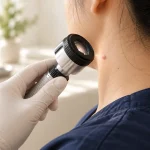
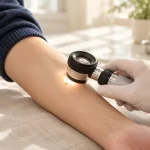
Depending on the lesion, a dermatologist may use dermoscopy, which is a magnified examination of structures beneath the skin surface.
If the diagnosis remains uncertain or cancer is suspected, a skin biopsy may be recommended.
The tissue is then examined microscopically by pathology.
Not every mole requires biopsy.
However:
A suspicious lesion should be diagnosed before it is destroyed.
This is especially relevant before laser or other destructive treatment because those techniques may remove tissue that would otherwise be useful for diagnosis.
Benign Skin Growths
Patients frequently seek removal of harmless lesions such as:
- Skin tags
- Seborrheic keratoses
- Warts
- Other selected benign skin growths
Possible treatment methods include:
- Cryotherapy
- Electrosurgery
- Curettage
- CO₂ laser
- Surgical excision
The appropriate technique depends on the diagnosis, location, size and characteristics of the lesion.
A brown growth should not be treated purely because it appears cosmetically unwanted if there is uncertainty about the diagnosis.
Aesthetic Dermatology in Asoke and Sukhumvit
Patients searching for a skin clinic in Bangkok may also be looking for aesthetic treatment.
Common concerns include:
- Acne scars
- Enlarged pores
- Post-acne redness
- Post-inflammatory pigmentation
- Melasma
- Sun spots
- Facial redness
- Visible blood vessels
- Uneven skin texture
- Fine lines
- Skin laxity
- Injectable skin treatments
A dermatologist-led approach remains useful because cosmetic concerns frequently overlap with medical diagnoses.
For example:
- Persistent facial redness may be rosacea.
- Brown pigmentation may be melasma, sun damage or post-inflammatory pigmentation.
- An apparent “dark spot” may actually be a skin growth.
- Tethered acne scars may require subcision rather than simply stronger laser treatment.
- Melasma can worsen if treatments are too aggressive.
This is why treatment should begin with the biological problem rather than the machine name.
Medical Dermatology and Aesthetic Dermatology Under One Approach
Medical and aesthetic dermatology are often presented as separate categories, but real patients frequently have both.
Someone with acne may also have:
- Post-acne redness
- Pigmentation
- Acne scars
- Enlarged pores
Someone with rosacea may also be concerned about:
- Persistent redness
- Visible blood vessels
- Skin sensitivity
Someone requesting laser for a brown spot may first require assessment to confirm that the lesion is benign.
A dermatologist-led clinic can therefore evaluate whether the priority should be:
- Medical treatment
- A procedure
- Cosmetic treatment
- Biopsy
- Observation
- Referral
rather than automatically performing the treatment the patient initially requested.
What Happens During a Dermatology Consultation?
A typical consultation starts with history-taking.
The dermatologist may ask:
- When did the problem begin?
- Where did it start?
- Is it spreading?
- Does it itch?
- Does it hurt?
- Does it bleed?
- What treatments have you already tried?
- Have you used steroid creams?
- What medications do you take?
- Do you have medication allergies?
- Have you had this problem before?
- Have you recently traveled?
- Have you changed skincare products?
- Have you previously had laser, filler or injectable treatment?
The dermatologist then examines the affected area.
Further tests are not necessary for every patient.
When appropriate, investigations may include:
- Dermoscopy
- Skin scraping
- Fungal testing
- Microbiological testing
- Blood tests
- Skin biopsy
- Histopathological examination
The investigation should be selected because it answers a clinical question—not simply because a test is available.
Can Treatment Start at the First Appointment?
Often, yes.
Many common dermatological conditions can be diagnosed and treatment started during the first visit.
However, additional appointments may be required when:
- The diagnosis is uncertain
- A biopsy is needed
- Blood tests are required
- Surgery needs planning
- A medication requires baseline testing
- Previous pathology needs review
- Another specialty needs to be involved
For international patients or tourists, it is helpful to tell the clinic your departure date before procedures that may require follow-up.
For Expats Living in Asoke or Sukhumvit
Expats often need continuity of care rather than one-time treatment.
Conditions that may require ongoing follow-up include:
- Acne
- Rosacea
- Eczema
- Psoriasis
- Chronic urticaria
- Pattern hair loss
- Alopecia areata
- Chronic scalp conditions
- Recurrent infections
- Pigmentation disorders
Follow-up allows the dermatologist to assess:
- Whether treatment is working
- Whether side effects have occurred
- Whether medication should be adjusted
- Whether further investigation is needed
A conveniently located dermatology clinic can make ongoing care easier, but consistency and appropriate medical follow-up remain more important than location alone.
For Tourists Staying Around Sukhumvit
Travelers may seek a skin clinic because a new problem develops during their stay.
Examples include:
- Heat-related rashes
- Fungal infections
- Folliculitis
- Insect reactions
- Eczema flares
- Acne flares
- Sun-related skin problems
- New rashes
- Skin infections
If the patient is leaving Bangkok soon, the treatment plan should account for:
- Number of days remaining
- Whether laboratory results will return in time
- Whether stitches require removal
- Whether a biopsy result will be pending
- Whether medication requires monitoring
- Whether a procedure has visible downtime
- How follow-up will occur after leaving Thailand
Sometimes the safest plan is to diagnose and stabilize the problem in Bangkok, then continue treatment at home.
What Should International Patients Bring?
If available, bring:
- A list of current medications
- Medication allergies
- Previous diagnoses
- Previous blood-test results
- Pathology reports
- Previous biopsy reports
- Photographs showing how the condition changed
- Previous prescriptions
- Photographs of medication packaging
- Details of previous laser procedures
- Details of previous injections
- Relevant medical history
Medication brand names vary between countries, so generic drug names are particularly useful.
For example:
Medication: tretinoin Strength: 0.025% Use: once nightly
This is more informative than simply saying “the acne cream I used back home.”
When Is a Hospital More Appropriate Than a Dermatology Clinic?
Many dermatological problems can be managed as outpatient conditions.
A hospital may be more appropriate if the patient:
- Is severely unwell
- Needs emergency care
- Requires hospital admission
- Has a severe systemic medication reaction
- Has a rapidly progressive serious infection
- Requires major surgery
- Needs several medical specialties urgently
The correct setting depends on severity, not on whether a hospital or clinic is inherently “better.”
Warning Signs Requiring Urgent Medical Care
Seek urgent medical attention for:
- Difficulty breathing
- Tongue or throat swelling
- Severe generalized allergic reaction
- Extensive blistering or skin peeling
- A painful widespread rash with fever
- Rapidly spreading painful redness with fever
- Severe swelling around the eye
- Significant infection with systemic symptoms
- Severe suspected drug reaction
- Uncontrolled bleeding
These situations should not wait for a routine aesthetic appointment.
How to Choose a Dermatology Clinic in Bangkok
If you are comparing clinics around Asoke or Sukhumvit, ask:
- Is the consultation provided by a dermatologist?
- Does the clinic manage medical dermatology or mainly cosmetic treatment?
- Does the dermatologist treat my type of condition?
- Can the diagnosis be explained clearly?
- Can appropriate investigations be arranged if needed?
- Can suspicious lesions be evaluated before removal?
- Is biopsy available or appropriately arranged when indicated?
- Are treatment options and limitations explained?
- Are side effects discussed?
- Is there a follow-up plan?
- Can international patients communicate clearly with the clinic after leaving Thailand?
A long treatment menu is not a substitute for appropriate diagnosis.
Why Choose a Dermatologist-Led Skin Clinic?
The advantage of dermatologist-led care is not simply access to prescription medication.
It is the ability to distinguish between conditions that may look similar.
For example:
A red rash could be eczema, fungal infection, psoriasis or contact dermatitis.
A brown spot could be pigmentation, seborrheic keratosis, a mole or a potentially concerning lesion.
Hair shedding could be pattern hair loss, telogen effluvium or an inflammatory scalp disorder.
A genital bump could be a wart, molluscum, folliculitis or a benign anatomical feature.
This diagnostic step determines whether the correct treatment is:
- Medication
- Laser
- Cryotherapy
- Surgery
- Biopsy
- Observation
- No treatment at all
Clear Skin Dermatology: Dermatologist in Asoke and Sukhumvit
For patients looking for a dermatology clinic in Bangkok, particularly around Asoke and Sukhumvit, Clear Skin Dermatology at Times Square Asoke provides dermatologist-led care for medical and selected aesthetic dermatology concerns.
Patients can seek assessment for problems involving:
- Skin diseases
- Acne
- Eczema and dermatitis
- Psoriasis
- Infections
- Hair and scalp disorders
- Nail disease
- Moles and skin growths
- Skin cancer concerns
- Acne scars
- Pigmentation
- Redness
- Selected aesthetic dermatology concerns
For foreign patients, useful information to provide when booking includes:
- Main concern
- Duration of symptoms
- Previous diagnosis
- Current medications
- Previous treatment
- Medication allergies
- Previous biopsy or pathology history
- How long you will remain in Bangkok
The central principle remains simple:
The correct treatment starts with the correct diagnosis.
Frequently Asked Questions
Is there a dermatologist in Asoke?
Patients looking for dermatologist-led care in Asoke can consider Clear Skin Dermatology at Times Square Asoke for medical and selected aesthetic dermatology concerns.
Is there a dermatology clinic near Sukhumvit?
Clear Skin Dermatology is located at Times Square in Asoke, within the Sukhumvit area of central Bangkok.
What is the difference between a dermatology clinic and a skin clinic?
The term “skin clinic” can refer to many different types of businesses. A dermatology clinic provides medical assessment and treatment of diseases affecting the skin, hair and nails by a dermatologist.
Should I see a dermatologist or an aesthetic clinic?
If you have a rash, infection, hair loss, nail problem, unusual growth, changing mole or possible skin cancer, start with a dermatologist. Cosmetic concerns can also benefit from dermatological assessment when diagnosis affects treatment choice.
Can a dermatologist treat acne?
Yes. Dermatologists can treat active acne and also evaluate related problems such as pigmentation, post-acne redness and acne scars.
Can a dermatologist treat eczema?
Yes. A dermatologist can assess whether the rash represents eczema, contact dermatitis, psoriasis, fungal infection or another condition.
Can a dermatologist treat fungal infection?
Yes. Depending on the condition, diagnosis may be clinical or supported by testing, and treatment may be topical or oral.
Can a dermatologist treat hair loss?
Yes. The first step is identifying the type and cause of hair loss before selecting treatment.
Can a dermatologist check moles?
Yes. Moles and other skin lesions can be assessed clinically, and dermoscopy or biopsy may be used when needed.
What signs of a mole should concern me?
A lesion that is new, changing, growing, bleeding, itching or looking different from your other moles deserves assessment. The ABCDE warning signs can also help identify possible melanoma.
Can Asian patients get skin cancer?
Yes. Skin cancer, including melanoma, can occur in people of every skin color. Can a suspicious mole be removed with laser?
A suspicious lesion should be assessed before destructive treatment. If tissue diagnosis is required, biopsy may be more appropriate.
Can tourists see a dermatologist in Asoke?
Yes. Tourists can seek outpatient dermatology care. Tell the clinic when you are leaving Thailand if testing, biopsy, stitches or follow-up may be needed.
Can expats receive ongoing dermatology care?
Yes. Chronic conditions such as acne, eczema, psoriasis, rosacea and hair loss may require ongoing follow-up.
Can treatment begin on the first visit?
Often yes, but conditions requiring biopsy, laboratory testing, surgery planning or medication monitoring may need additional appointments.
What should I bring to the appointment?
Bring medication names, allergies, previous diagnoses, photographs, laboratory results, pathology reports and previous treatment information when available.
When should I go to a hospital instead of a dermatology clinic?
Go to a hospital or seek urgent medical care if you have a severe allergic reaction, breathing difficulty, widespread blistering, rapidly spreading infection with fever or another serious systemic illness.
Medically reviewed by
Reviewed on
Related articles
-
International Patient Guides Visiting a Dermatologist in Thailand: What International Patients Should Know If you are living in Thailand or visiting Bangkok, you may need to see a dermatologist for acne, a persistent rash, hair loss, a changing mole, or another skin concern. Understanding how dermatology consultations work in Thailand can help you choose an appropriate clinic and avoid unexpected difficulties with treatment or follow-up.
-
International Patient Guides Skin Clinic in Bangkok for Foreigners & Expats Finding a reliable skin clinic in Bangkok can be challenging, particularly if you are visiting Thailand or living here as an expatriate. Whether you need treatment for acne, eczema, hair loss, a persistent rash, or a suspicious mole, choosing a clinic that focuses on medical dermatology can make a meaningful difference.
-
International Patient Guides Dermatology Clinics in Bangkok, Thailand: Reviews and How to Choose the Right Skin Specialist Looking for a reliable dermatology clinic in Bangkok? The right choice depends on your skin concern, the doctor's qualifications, the treatments available, and how clearly the clinic explains diagnosis, costs, and follow-up care.