



















Contact Dermatitis
Contact dermatitis is a type of eczema caused by something that touches the skin. It can result from direct irritation or from a delayed allergic reaction to a substance such as fragrance, preservatives, metals, hair dye, rubber, cosmetics, cleaning products or workplace chemicals.
The two main types are:
- Irritant contact dermatitis — caused by direct damage to the skin barrier
- Allergic contact dermatitis — caused by an immune reaction to a specific allergen
The distinction matters because the best long-term treatment is not simply stronger cream. It is identifying what is causing the problem, repairing the damaged skin barrier, controlling inflammation, and reducing future exposure.
Contact dermatitis is not contagious. Many cases improve significantly once the responsible irritant or allergen is identified and avoided. However, persistent, recurrent or unexplained dermatitis may require assessment by a dermatologist and, when allergy is suspected, patch testing.
For patients living in Bangkok, including Thai patients, expats, tourists and international visitors, relevant exposures may include frequent handwashing, sanitizers, cosmetics, skincare, hair products, cleaning agents, humid weather, occupational chemicals and personal protective equipment.
What Is Contact Dermatitis?
Contact dermatitis is inflammation of the skin caused by contact with a substance.
It belongs to the eczema family of conditions and commonly causes:
- Itching
- Redness or discoloration
- Dryness
- Scaling
- Cracking
- Burning
- Stinging
- Swelling
- Small bumps
- Blisters
- Oozing or crusting in more severe cases
The hands and face are common locations, but any part of the skin can be affected.
The appearance may vary with skin tone. In lighter skin, inflammation may look red or pink. In Asian and darker skin, affected areas may appear brown, purple, gray or simply darker than the surrounding skin.
What Are the Two Main Types of Contact Dermatitis?
Irritant Contact Dermatitis
Irritant contact dermatitis occurs when a substance directly damages the outer layer of the skin.
No allergy is required.
The skin barrier becomes damaged through either:
- Repeated exposure to mild irritants, or
- Short exposure to a stronger chemical
Common irritants include:
- Soap
- Detergent
- Hand sanitizer
- Disinfectant
- Solvents
- Cleaning products
- Acids and alkalis
- Cement
- Dust
- Oils
- Frequent contact with water
- Repeated handwashing
People who already have atopic dermatitis are more vulnerable because their skin barrier is already less resistant to irritation.
Allergic Contact Dermatitis
Allergic contact dermatitis occurs when the immune system becomes sensitized to a specific substance.
The first exposure may not cause a noticeable rash. After sensitization develops, future contact can trigger an inflammatory reaction.
Common allergens include:
- Nickel
- Cobalt
- Chromium
- Fragrance
- Preservatives
- Hair dye ingredients
- Rubber accelerators
- Adhesives
- Cosmetic ingredients
- Some topical medications
- Certain plants
Allergic contact dermatitis is a delayed hypersensitivity reaction, which is why the rash may not appear immediately after contact.
Irritant vs Allergic Contact Dermatitis: What Is the Difference?
The symptoms can look very similar. A few patterns can provide clues.
Irritant dermatitis often causes:
- Burning
- Stinging
- Dryness
- Cracking
- Soreness
- Rash limited closely to the exposed area
It may appear quickly after a strong chemical exposure or gradually after repeated exposure to soap, water or detergent.
Allergic contact dermatitis often causes:
- Significant itching
- Redness or discoloration
- Swelling
- Small blisters
- Oozing
- Scaling
The rash may appear hours to several days after exposure and can sometimes spread slightly beyond the exact area of contact.
However, appearance alone does not always distinguish the two.
A patient can also have both irritant and allergic contact dermatitis at the same time.
What Does Contact Dermatitis Look Like?
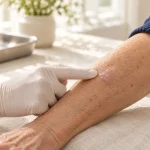
Contact dermatitis can range from very mild dryness to severe blistering inflammation.
Common appearances include:
- Dry rough patches
- Red or darker patches
- Flaky skin
- Cracked fingertips
- Swollen eyelids
- Itchy neck rash
- Facial rash after skincare
- Blisters on hands or fingers
- Oozing dermatitis
- Thickened skin from chronic rubbing
- Dark marks after the rash settles
A strong irritant can sometimes produce painful blistering rather than just itching.
Where Does Contact Dermatitis Commonly Occur?
Hands
The hands are one of the most common sites because they are constantly exposed to:
- Water
- Soap
- Sanitizer
- Cleaning products
- Gloves
- Food
- Chemicals
- Workplace materials
Hand dermatitis may involve:
- Fingertips
- Palms
- Backs of hands
- Finger webs
- Wrists
Persistent hand eczema should not automatically be assumed to be “dry hands.
”
Face
Facial contact dermatitis may result from:
- Skincare
- Sunscreen
- Makeup
- Fragrance
- Hair products
- Hair dye
- Nail products transferred from fingers
- Topical medications
Because facial skin is sensitive, even small amounts of allergen can produce significant symptoms.
Eyelids
Eyelid dermatitis is particularly important because the trigger is often not applied directly to the eyelid.
Possible sources include:
- Nail polish
- Gel nails
- Hair dye
- Fragrance
- Shampoo
- Eye cosmetics
- Eye drops
- Facial skincare
- Airborne allergens
The eyelid skin is thin and reacts easily.
Recurrent eyelid dermatitis is one of the situations where allergic contact dermatitis should be strongly considered.
Neck
Common causes include:
- Fragrance
- Hair products
- Jewelry
- Clothing
- Textile dyes
- Sunscreen
Lips
Contact cheilitis may affect the lips due to products such as:
- Lip balm
- Lipstick
- Toothpaste
- Mouthwash
- Dental products
- Flavorings
- Fragrance
- Preservatives
Feet
Shoe dermatitis can be caused by:
- Rubber
- Adhesives
- Leather chemicals
- Dyes
- Metals
The distribution may provide clues about which shoe component is responsible.
What Causes Irritant Contact Dermatitis?
Anything that repeatedly damages the skin barrier can contribute.
Common examples include:
- Frequent handwashing
- Soap
- Alcohol-based sanitizer
- Detergent
- Cleaning chemicals
- Solvents
- Shampoo
- Repeated wet work
- Chlorinated water
- Friction
- Heat
- Dust
- Cement
- Industrial oils
The strength of the irritant, frequency of exposure and length of contact all matter.
Someone may tolerate a product occasionally but develop dermatitis after using it many times every day.
What Causes Allergic Contact Dermatitis?
Nickel
Nickel is a common contact allergen.
Potential sources include:
- Earrings
- Necklaces
- Watches
- Belt buckles
- Metal buttons
- Eyeglass frames
- Electronic devices
- Tools
Someone may wear a piece of jewelry for years before becoming allergic.
Fragrance
Fragrance is found in many products, including:
- Perfume
- Moisturizer
- Shampoo
- Conditioner
- Body wash
- Makeup
- Essential oils
- Air fresheners
“Natural fragrance” does not mean allergy-free.
Preservatives
Preservatives prevent cosmetic and personal-care products from becoming contaminated.
However, some can trigger allergic contact dermatitis.
They can be present in:
- Skincare
- Shampoo
- Wet wipes
- Makeup
- Sunscreen
- Household products
Patch testing can sometimes identify the specific preservative involved.
Hair Dye
Hair dye allergy is an important cause of:
- Scalp dermatitis
- Ear dermatitis
- Eyelid swelling
- Facial dermatitis
- Neck rash
A well-known hair dye allergen is paraphenylenediamine (PPD).
Significant facial swelling after hair dye exposure requires medical evaluation.
Rubber and Gloves
Gloves can cause more than one type of reaction.
Problems may arise from:
- Irritation from sweating and occlusion
- Latex-related immediate allergy
- Delayed allergy to rubber accelerators used in glove manufacturing
This distinction is important because simply switching glove brands may not solve the problem if the underlying allergen remains the same.
Cosmetics and Skincare
Contact dermatitis can occur even with products labeled:
- Hypoallergenic
- Sensitive
- Organic
- Natural
- Dermatologist-tested
These descriptions do not guarantee that an individual patient cannot become allergic to an ingredient.
Can You Suddenly Become Allergic to a Product You Have Used for Years?
Yes.
Allergic contact dermatitis requires sensitization.
A person can use a product repeatedly without a problem and later develop allergy to one of its ingredients.
Therefore, the statement:
“I have used this for ten years, so it cannot be the cause”
does not reliably exclude allergic contact dermatitis. AAD specifically notes that even long-used items such as jewelry can later become relevant allergens.
Is Contact Dermatitis Contagious?
No.
Contact dermatitis is not transmitted from person to person.
It is caused by irritation or an allergic reaction to something touching the skin.
However, other diseases that resemble dermatitis—such as scabies, fungal infection or impetigo—can be contagious.
Correct diagnosis is therefore important when several family members or household contacts develop a rash.
Is Contact Dermatitis the Same as an Allergy?
Not always.
Allergic contact dermatitis is an allergy.
Irritant contact dermatitis is not.
This is one of the most important distinctions for patients.
A patient can develop severe irritant dermatitis from repeated hand sanitizer or detergent exposure without being allergic to the product.
Does Bangkok’s Climate Affect Contact Dermatitis?
Bangkok’s climate does not directly cause contact dermatitis, but it can influence symptoms.
Heat and sweating can increase irritation, particularly under:
- Gloves
- Masks
- Tight clothing
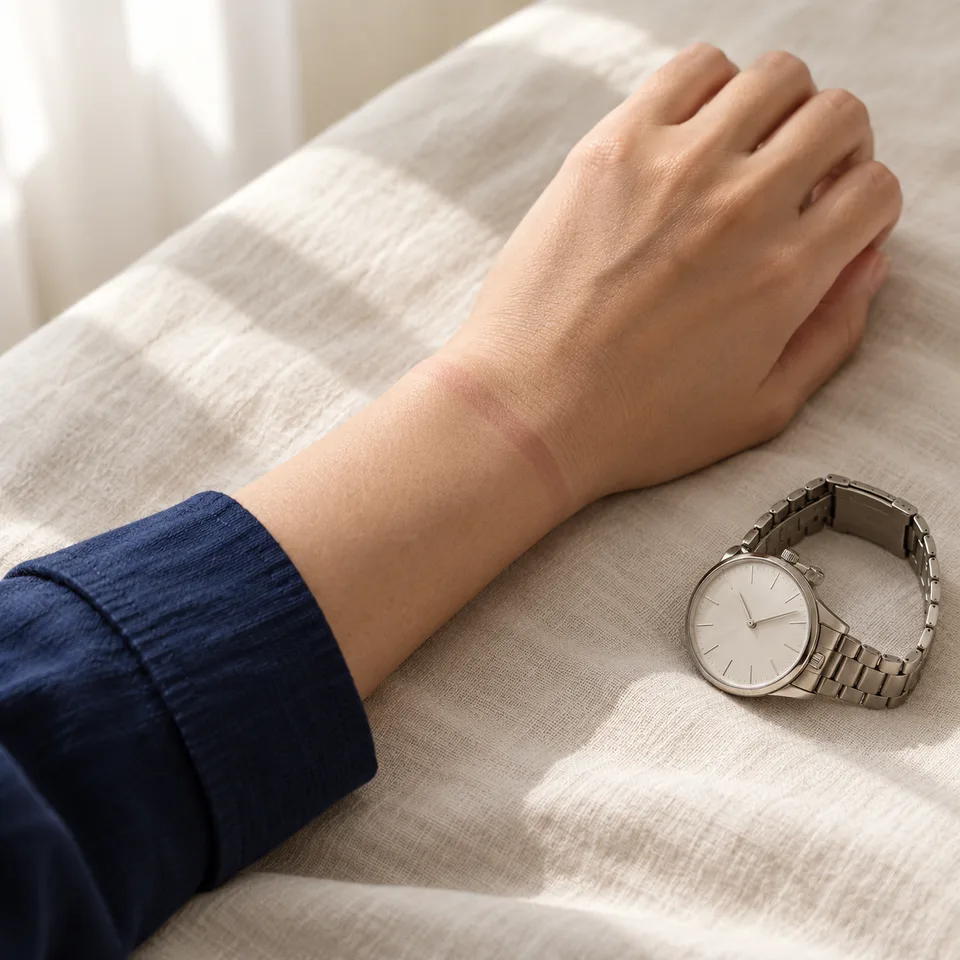
- Watches
- Jewelry
- Protective equipment
Sweating can also increase penetration of certain substances and increase friction.
At the same time, frequent washing due to heat and sweating can worsen hand dermatitis if soap and cleanser are overused.
Practical measures in Thailand may include:
- Changing out of sweaty clothing
- Keeping skin folds dry without aggressive rubbing
- Using gentle cleanser
- Moisturizing after handwashing
- Choosing breathable protective equipment where appropriate
- Washing off workplace chemicals promptly
- Avoiding prolonged wet work when possible
Occupational Contact Dermatitis
Occupation is one of the most important parts of the history.
Jobs involving frequent wet work or chemical exposure carry greater risk of irritant dermatitis.
Examples include:
- Healthcare workers
- Hairdressers
- Beauticians
- Cleaners
- Chefs
- Food handlers
- Mechanics
- Construction workers
- Factory workers
- Laboratory staff
- Agricultural workers
- Hospitality workers
Occupational dermatitis can become difficult to control if exposure occurs every working day.
The goal is not always to stop working.
A dermatologist may help identify ways to reduce exposure through:
- Appropriate gloves
- Barrier protection
- Changes in work technique
- Moisturizer
- Substituting products
- Identifying a specific allergy
Can Gloves Make Hand Dermatitis Worse?
Yes.
Gloves may protect against irritants but can also create problems.
Long periods inside waterproof gloves can cause:
- Sweating
- Occlusion
- Friction
- Irritant dermatitis
Some patients can also become allergic to chemicals used in rubber gloves.
Depending on the situation, strategies may include:
- Changing glove material
- Using cotton liners
- Changing wet gloves regularly
- Avoiding prolonged occlusion
- Patch testing for rubber allergens when appropriate
Contact Dermatitis vs Atopic Dermatitis
Atopic dermatitis results from an underlying tendency toward skin-barrier dysfunction and inflammation.
Contact dermatitis is caused by something touching the skin.
The two can overlap.
People with atopic dermatitis are particularly vulnerable to irritant contact dermatitis because their skin barrier is already impaired.
They can also develop true allergic contact dermatitis.
If long-standing eczema suddenly changes pattern or becomes difficult to control, contact allergy should be considered.
Contact Dermatitis vs Fungal Infection
Tinea can sometimes resemble dermatitis.
Fungal infection is more likely to show:
- A progressively expanding border
- Scale concentrated around the edge
- Relative clearing toward the center
- Asymmetrical distribution in some cases
Steroid treatment can partially suppress the appearance of fungal infection while allowing it to spread, producing tinea incognito.
If a rash gets larger despite steroid treatment, fungal infection should be reconsidered.
Contact Dermatitis vs Psoriasis
Psoriasis usually has:
- Sharper borders
- Thicker plaques
- More persistent scaling
- Typical lesions elsewhere
- Nail changes in some patients
However, psoriasis of the hands can sometimes closely resemble chronic hand dermatitis.
Contact Dermatitis vs Scabies
Scabies commonly causes intense nighttime itching.
Typical locations include:
- Finger webs
- Wrists
- Waist
- Armpits
- Genital region
Several people living together may develop itching.
Unlike contact dermatitis, scabies is contagious.
Contact Dermatitis vs Urticaria
Urticaria or hives usually produces raised itchy welts that appear and disappear relatively quickly, often within hours.
Contact dermatitis usually persists longer and causes:
- Dryness
- Scaling
- Blisters
- Cracking
There is also a different condition called contact urticaria, which can occur rapidly after exposure and is different from delayed allergic contact dermatitis.
How Is Contact Dermatitis Diagnosed?
Diagnosis begins with a detailed history and examination.
A dermatologist may ask about:
- When the rash started
- Location
- Products used
- Soap
- Hand sanitizer
- Skincare
- Sunscreen
- Makeup
- Shampoo
- Hair dye
- Fragrance
- Jewelry
- Gloves
- Nail products
- Medications applied to the skin
- Occupation
- Hobbies
- Cleaning products
- Chemical exposure
The pattern and distribution of the rash often provide important clues.
For example:
- Eyelid dermatitis may suggest cosmetics, nail products or airborne allergens
- Wrist dermatitis may suggest a watch or bracelet
- Earlobe dermatitis may suggest nickel
- Hand dermatitis may relate to wet work or gloves
- Neck dermatitis may relate to fragrance
- Scalp and facial dermatitis after hair coloring may suggest hair dye allergy
What Is Patch Testing?
Patch testing is the standard test used to investigate allergic contact dermatitis.
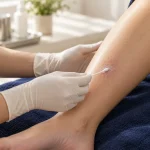
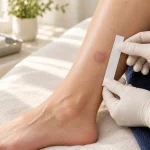
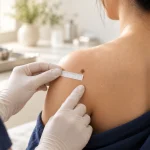
Small amounts of selected allergens are applied to the skin, usually on the back, under special patches.
The patches generally remain in place for around 48 hours, and the skin is examined after removal and again later because allergic contact reactions develop slowly.
Patch testing is widely recognized as the gold-standard investigation for allergic contact dermatitis
What Does Patch Testing Test For?
Depending on the panel used, patch testing may investigate substances such as:
- Nickel
- Cobalt
- Chromium
- Fragrance
- Preservatives
- Rubber accelerators
- Hair dye chemicals
- Resins
- Adhesives
- Topical medication ingredients
Additional allergens may be selected according to:
- Occupation
- Cosmetics
- Hair products
- Personal products
- Hobbies
- Previous exposures
A standard series alone may not always answer every patient’s question.
Patch Test vs Skin Prick Test: What Is the Difference?
These are different tests.
Patch testing investigates delayed allergic contact dermatitis.
Skin prick testing investigates immediate allergic reactions such as certain environmental or food allergies.
Patch testing is not primarily a test for:
- Hay fever
- Asthma
- Most food allergy
- Immediate anaphylaxis
This distinction prevents patients from undergoing the wrong allergy test for their skin problem.
Does Patch Testing Diagnose Irritant Contact Dermatitis?
No.
There is no specific diagnostic test that proves irritant contact dermatitis.
Diagnosis is based mainly on:
- Exposure history
- Distribution
- Timing
- Skin examination
Patch testing may still be useful when a dermatologist needs to determine whether allergic contact dermatitis is occurring in addition to irritation.
Does a Positive Patch Test Always Mean That Allergen Is Causing the Rash?
No.
This is a crucial point.
Patch testing can show that a patient is allergic to a substance, but the dermatologist must still determine whether that allergy is clinically relevant to the current dermatitis.
For example, a patient may test positive to nickel but have facial dermatitis caused by a different ingredient.
Patch-test interpretation therefore requires both the test result and a detailed exposure history.
Do You Need Blood Tests for Contact Dermatitis?
Usually not.
Routine blood testing does not diagnose allergic contact dermatitis.
Selected investigations may be used when another condition is suspected.
Examples include:
- Fungal scraping for suspected tinea
- Bacterial culture if infection is suspected
- Skin biopsy in unusual cases
How Is Contact Dermatitis Treated?
The most important treatment is:
Identify and reduce exposure to the irritant or allergen.
Creams can suppress inflammation, but if the same trigger repeatedly touches the skin, the dermatitis often returns.
The dermatology experts emphasize avoidance of the causative exposure as the cornerstone of treatment.
Treatment may also involve:
- Moisturizer
- Barrier protection
- Topical corticosteroids
- Non-steroid anti-inflammatory treatment in selected cases
- Treatment of secondary infection
- Workplace modifications
- Patch testing
- Phototherapy or systemic treatment for selected severe chronic disease
Avoiding the Trigger
Avoidance sounds simple but can be challenging.
The responsible chemical may appear in several different products under different names.
Once an allergen is identified, patients should learn:
- Where it is found
- Alternative names
- Which products contain it
- Which related substances may cross-react
- Which products are safe alternatives
This is one of the most useful outcomes of patch testing.
Moisturizer and Skin-Barrier Repair
Moisturizer is important because contact dermatitis damages the skin barrier.
Regular use can help reduce:
- Dryness
- Cracking
- Stinging
- Further penetration of irritants
For hand dermatitis, moisturizer is especially useful after:
- Handwashing
- Showering
- Work involving water
- Removal of protective gloves
Fragrance-free creams or ointments are generally preferable for reactive skin.
Topical Corticosteroids
Topical corticosteroids are commonly used to reduce active inflammation.
They may help with:
- Itching
- Redness
- Swelling
- Blistering
- Scaling
The appropriate strength depends on:
- Body location
- Severity
- Skin thickness
- Patient age
For example, treatment suitable for thick hand dermatitis may be too strong for prolonged use on the eyelids or face.
Potential adverse effects from inappropriate prolonged use include:
- Skin thinning
- Visible blood vessels
- Stretch marks
- Acne-like eruptions
- Perioral dermatitis
Topical corticosteroids are established treatments for active contact dermatitis when used appropriately.
Tacrolimus and Pimecrolimus
Topical calcineurin inhibitors such as:
- Tacrolimus
- Pimecrolimus
may be considered in selected patients, particularly when dermatitis affects sensitive areas such as:
- Eyelids
- Face
- Skin folds
They reduce inflammation without causing steroid-related skin thinning.
Temporary burning or stinging can occur when treatment is started.
Severe Contact Dermatitis
Severe acute dermatitis may occasionally require more intensive treatment.
Depending on the clinical situation, a dermatologist may consider:
- Short-course systemic corticosteroids
- Treatment for secondary infection
- Wet dressings
- Phototherapy
- Other systemic anti-inflammatory treatment for chronic severe disease
Oral steroids are not usually necessary for uncomplicated mild contact dermatitis and should not become a repeated long-term solution.
Treatment of Infected Contact Dermatitis
Dermatitis-damaged skin can become secondarily infected.
Possible warning signs include:
- Increasing pain
- Pus
- Yellow crusting
- Rapid worsening
- Spreading redness
- Fever
- Feeling unwell
Antibiotics are not routinely required for dermatitis without infection.
When infection is suspected, the patient should be assessed to determine whether antimicrobial treatment is necessary.
How Long Does Contact Dermatitis Take to Heal?
The timeline depends on:
- Severity
- Whether exposure has stopped
- Skin location
- Duration of disease
- Whether the skin continues to encounter irritants
- Presence of infection
Once the trigger is successfully avoided, many acute episodes improve over the following weeks.
The rash itself may settle before:
- Dryness
- Skin thickening
- Pigmentation
fully return to normal.
If the same substance continues touching the skin, treatment may provide only temporary improvement.
Why Does Contact Dermatitis Keep Coming Back?
Recurrence usually suggests one of several possibilities:
- The allergen is still present
- Exposure is occurring through an unexpected source
- There are multiple allergens
- Irritant exposure is continuing
- Work exposure continues
- The skin barrier has not recovered
- The diagnosis is incorrect
- Another eczema type is present
- Infection or fungal disease is complicating the picture
Recurrent dermatitis should not automatically lead to progressively stronger steroid creams without reassessing the cause.
Hand Contact Dermatitis: Practical Prevention
Hand dermatitis is particularly challenging because complete avoidance of water and work is unrealistic.
A practical plan may involve:
- Use lukewarm water rather than very hot water
- Use gentle fragrance-free cleanser
- Avoid unnecessary handwashing
- Apply moisturizer after washing
- Use appropriate protective gloves
- Change gloves when wet inside
- Consider cotton liners for prolonged glove use
- Minimize direct contact with cleaning chemicals
- Use tools rather than bare hands where possible
- Avoid unnecessary sanitizer when handwashing is sufficient and vice versa depending on context
The exact strategy should match the patient’s work and exposure pattern.
Facial Contact Dermatitis: Should You Stop All Skincare?
Sometimes temporarily simplifying the routine is useful.
During a facial dermatitis flare, a dermatologist may recommend reducing the routine to:
- Gentle cleanser
- Prescribed treatment
- Simple moisturizer
- Tolerated sunscreen
Temporarily stopping:
- Multiple serums
- Fragrance
- Essential oils
- Acids
- Retinoids
- Scrubs
- New cosmetics
can make it easier to identify the problem.
However, permanently avoiding every skincare ingredient is rarely necessary.
Eyelid Contact Dermatitis: Why Is the Cause So Difficult to Find?
The eyelids are particularly sensitive.
The trigger may come indirectly from:
- Fingernails
- Hair
- Shampoo
- Aerosolized fragrance
- Eye drops
- Cosmetics
- Nail products
This is why recurrent eyelid dermatitis often requires a detailed exposure history rather than simply switching eye cream.
Patch testing can be particularly helpful when eyelid dermatitis is chronic or recurrent.
Can Sunscreen Cause Contact Dermatitis?
Yes, in selected individuals.
Possible issues include:
- Irritant reaction
- Fragrance allergy
- Preservative allergy
- Allergy to sunscreen ingredients
- Photocontact allergy in uncommon cases
However, this does not mean people with contact dermatitis should permanently stop sun protection.
If sunscreen is suspected, a dermatologist may help identify a tolerated alternative or consider patch or photopatch testing in selected cases.
Can Hair Dye Cause Contact Dermatitis?
Yes.
Hair dye is an important cause of allergic contact dermatitis.
The reaction may involve:
- Scalp
- Hairline
- Ears
- Eyelids
- Face
- Neck
If significant facial swelling or a severe reaction occurs after hair dye, medical evaluation is appropriate.
Patients should not repeatedly challenge themselves with a product that previously caused a strong reaction.
Can Nail Products Cause Facial or Eyelid Dermatitis?
Yes.
Acrylates used in:
- Gel nails
- Acrylic nails
- Nail adhesives
can cause allergic contact dermatitis.
Because people frequently touch their face, the dermatitis may appear on the:
- Eyelids
- Face
- Neck
rather than only around the nails.
This pattern can be missed unless nail products are specifically discussed during the consultation.
Can Contact Dermatitis Leave Dark Marks?
Yes.
After inflammation improves, the skin may remain darker or occasionally lighter than before.
Post-inflammatory pigmentation is particularly noticeable in Asian and darker skin tones.
Repeated scratching and ongoing inflammation increase the likelihood of persistent discoloration.
The priority is controlling the active dermatitis and preventing further exposure.
When Should You See a Dermatologist for Contact Dermatitis?
Consider a dermatology consultation when:
- The rash keeps returning
- Symptoms persist despite self-care
- The cause is unknown
- Facial dermatitis keeps recurring
- Eyelid dermatitis persists
- Hand dermatitis interferes with work
- You suspect allergy to skincare or cosmetics
- Hair dye causes repeated reactions
- You may be allergic to gloves or workplace materials
- You need steroid cream repeatedly
- The rash has become widespread
- You are unsure whether the problem is eczema, fungus, psoriasis or scabies
- Patch testing may be helpful
Persistent, recurrent or severe contact dermatitis is a reasonable indication for medical assessment.
When Should Contact Dermatitis Be Assessed Urgently?
Seek prompt medical assessment if you develop:
- Rapidly worsening rash
- Severe pain
- Extensive blistering
- Significant facial swelling
- Pus or rapidly spreading redness
- Fever or chills
- Rash involving the eyes
- Significant genital involvement
- Extensive chemical exposure
Difficulty breathing, throat swelling or symptoms of an immediate severe allergic reaction are not typical delayed contact dermatitis and require urgent emergency assessment.
What to Expect During a Contact Dermatitis Consultation in Bangkok
A useful consultation often resembles detective work.
The dermatologist may examine:
- Distribution of the rash
- Borders
- Blisters
- Scaling
- Cracking
- Hands and nails
- Face and eyelids
- Neck
- Areas in contact with jewelry, clothing or equipment
- Signs of infection
- Clues to fungal infection, psoriasis, scabies or another diagnosis You may be asked about:
- Occupation
- Hobbies
- Cleaning products
- Handwashing
- Gloves
- Cosmetics
- Sunscreen
- Skincare
- Shampoo and conditioner
- Hair dye
- Fragrance
- Nail products
- Jewelry
- Eye drops
- Topical medication
- Workplace chemicals
For expats, tourists and international patients visiting Bangkok, it can be especially helpful to bring:
- Photos of previous flares
- Photos of product ingredient lists
- Actual skincare products if practical
- Photos of creams previously prescribed
- Hair dye or cosmetic product names
- Workplace safety information if chemical exposure is suspected
- Previous patch-test results
The most useful clue is often hidden in a product that seems unrelated to the location of the rash.
Successful Contact Dermatitis Treatment Starts With Finding the Cause
Contact dermatitis is not simply “sensitive skin.
”
The central question is:
- What is repeatedly touching the skin and causing inflammation?
For some patients, the answer is obvious—frequent detergent, sanitizer or chemical exposure.
For others, the culprit may be less obvious, such as a preservative in skincare, fragrance in shampoo, rubber accelerator in gloves, nickel in jewelry, hair dye, nail products or a topical medication.
The most useful treatment plan therefore asks:
Is this irritant or allergic contact dermatitis?
Could the patient have both?
What exposures fit the distribution?
Does the patient need patch testing?
Could the rash actually be atopic dermatitis, psoriasis, fungal infection or scabies?
What can realistically be changed at home or work?
Which treatment will calm the current inflammation while the trigger is being identified?
Once the relevant exposure is reduced and the skin barrier is allowed to recover, many patients can achieve substantial improvement. For chronic or recurrent disease, identifying the cause is often more valuable than repeatedly treating the rash after it returns.
Frequently asked questions
Is contact dermatitis contagious?
No.
Contact dermatitis cannot spread from one person to another.
What is the difference between irritant and allergic contact dermatitis?
Irritant contact dermatitis results from direct skin damage.
Allergic contact dermatitis results from a delayed immune reaction to a specific allergen.
Can you develop an allergy to something you have used for years?
Yes.
Sensitization can develop after repeated exposure, so a previously tolerated product can later cause allergic contact dermatitis.
How do I know what is causing my contact dermatitis?
The distribution, exposure history and timing can provide clues.
If allergic contact dermatitis is suspected and the cause remains unclear, patch testing may be recommended.
What is patch testing?
Patch testing places small amounts of potential allergens on the skin to look for delayed allergic reactions.
It is the standard test for allergic contact dermatitis.
Is patch testing the same as allergy skin-prick testing?
No.
Patch testing investigates delayed contact allergy.
Skin-prick testing investigates immediate allergic reactions such as some environmental and food allergies.
Can a blood test diagnose contact dermatitis?
Usually not.
Blood tests do not routinely identify allergic contact dermatitis.
Does patch testing diagnose irritant contact dermatitis?
No.
There is no specific test for irritant contact dermatitis.
Patch testing may help determine whether an allergic component is also present.
What is the best treatment for contact dermatitis?
The most important treatment is identifying and avoiding the responsible irritant or allergen.
Moisturizer and anti-inflammatory medication may then help the skin recover.
How long does contact dermatitis take to clear?
Many cases improve over several weeks once exposure stops, although chronic hand dermatitis or severe disease can take longer.
Why does my contact dermatitis keep returning?
The trigger may still be present, exposure may be coming from an unexpected source, or there may be multiple irritants or allergens.
Can steroid cream treat contact dermatitis?
Yes.
Topical steroids are commonly used to reduce active inflammation, but they do not eliminate the underlying trigger.
Can I use steroid cream on my eyelids?
The eyelids require caution because the skin is very thin.
A dermatologist may select a mild steroid for a limited period or a non-steroid option such as tacrolimus or pimecrolimus depending on the situation.
Can skincare cause contact dermatitis?
Yes.
Possible triggers include fragrance, preservatives and other cosmetic ingredients.
Can sunscreen cause contact dermatitis?
Yes, in some people, although not all sunscreen reactions are true allergy.
Can hair dye cause allergic contact dermatitis?
Yes.
Hair dye is an important cause of allergic contact dermatitis and may produce scalp, face, ear, neck or eyelid symptoms.
Can gel nails cause eyelid dermatitis?
Yes.
Acrylates from nail products can be transferred to the face through touching and may cause eyelid or facial allergic contact dermatitis.
Can gloves cause hand dermatitis?
Yes.
Gloves can cause sweating and irritation, while chemicals used in some rubber gloves can cause allergic contact dermatitis.
Can contact dermatitis cause dark marks?
Yes.
Post-inflammatory hyperpigmentation can remain after the active rash settles, particularly in Asian and darker skin tones.
Does contact dermatitis mean I have sensitive skin?
Not necessarily.
Anyone can develop irritant contact dermatitis after sufficient exposure, and allergic contact dermatitis can develop to a specific allergen regardless of whether someone previously considered their skin sensitive.
Related conditions
-
Atopic Dermatitis / Eczema Atopic Dermatitis / Eczema Atopic dermatitis, commonly called eczema or atopic eczema, is a chronic inflammatory skin condition that causes dry, itchy and easily irritated skin. It can affect children and adults and often goes through cycles of improvement and flare-ups.
-
Seborrheic Dermatitis Seborrheic Dermatitis Seborrheic dermatitis is a common inflammatory skin condition that causes redness, flaking, greasy or dry scales, and sometimes itching. It most often affects areas with many oil glands, including the scalp, eyebrows, sides of the nose, ears, beard area and upper chest.
-
Perioral Dermatitis Perioral Dermatitis Perioral dermatitis is a facial rash that typically causes clusters of small red or skin-colored bumps around the mouth. It can also affect the nose and eyes, which is why dermatologists often use the broader term periorificial dermatitis.

-
Rosacea Rosacea Rosacea is a chronic inflammatory skin condition that mainly affects the central face. It may cause persistent redness, frequent flushing, visible blood vessels, acne-like bumps, burning or sensitive skin, and sometimes eye symptoms.