







Seborrheic Dermatitis
Seborrheic dermatitis is a common inflammatory skin condition that causes redness, flaking, greasy or dry scales, and sometimes itching. It most often affects areas with many oil glands, including the scalp, eyebrows, sides of the nose, ears, beard area and upper chest.
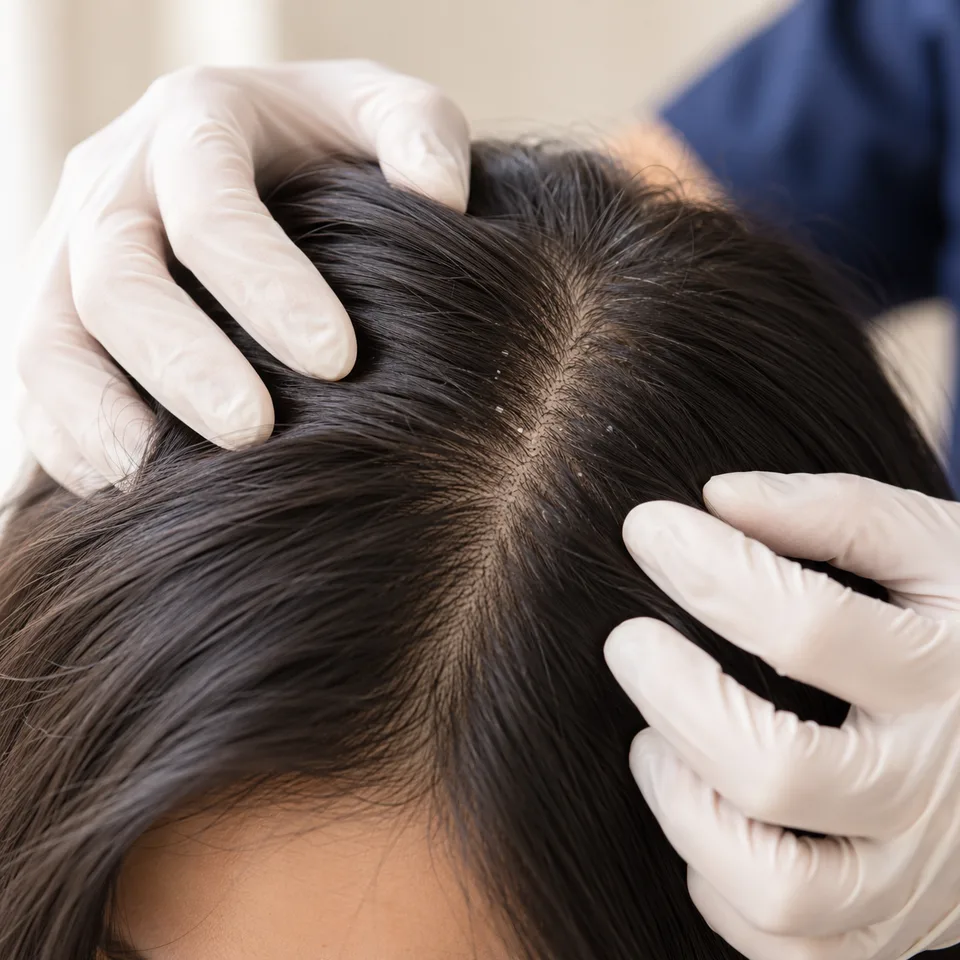
On the scalp, mild seborrheic dermatitis is commonly recognized as dandruff.
The condition is not contagious and is not caused by poor hygiene. It tends to behave as a chronic or recurrent condition, meaning symptoms may improve with treatment and later flare again. Treatment usually focuses on controlling inflammation, reducing scale and managing the role of Malassezia yeast on the skin.
For patients living in Bangkok, including Thai patients, expats, tourists and international visitors, seborrheic dermatitis can sometimes be confused with fungal infection, psoriasis, eczema, rosacea or an allergic reaction. Getting the diagnosis right is particularly important when a facial or scalp rash keeps returning despite self-treatment.
What Is Seborrheic Dermatitis?
Seborrheic dermatitis is an inflammatory skin condition that usually develops in areas where the skin produces more oil.
Common locations include:
- Scalp
- Hairline
- Eyebrows
- Between the eyebrows
- Sides of the nose
- Behind and inside the ears
- Beard and moustache area
- Eyelids
- Upper chest
More extensive disease can occasionally involve skin folds or other parts of the body. The condition can occur at different ages.
In babies, seborrheic dermatitis affecting the scalp is commonly known as cradle cap.
In teenagers and adults, scalp involvement usually appears as dandruff, itching or more obvious areas of inflammation and scale.
What Does Seborrheic Dermatitis Look Like?
Seborrheic dermatitis does not always look the same in every patient.
Typical features include:
- White or yellowish flakes
- Dry or greasy scaling
- Red or inflamed patches
- Itchy scalp
- Flaking around the eyebrows
- Scaling beside the nose
- Flaking behind the ears
- Rash in the beard area
- Mild burning or sensitivity
- Recurrent dandruff
Some patients have very little itching and mainly notice persistent flakes.
Others develop obvious inflammation, redness and thick scale during a flare.
In darker skin tones, inflammation may look pink, purple, brown or lighter than the surrounding skin rather than bright red. Pigment changes may occasionally remain after the inflammation improves.
Where Does Seborrheic Dermatitis Usually Occur?
Scalp
The scalp is one of the most common locations.
Symptoms may range from mild dandruff to:
- Significant flaking
- Greasy scales
- Itching
- Redness
- Thick patches of scale
Eyebrows and Between the Eyebrows
Fine white or yellowish scaling around the eyebrows is common.
Patients sometimes mistake this for dry skin and repeatedly apply heavy moisturizers without addressing the underlying inflammation.
Sides of the Nose
The folds beside the nose are another characteristic location.
Seborrheic dermatitis here may produce redness with fine greasy scale.
Ears
The rash may appear:
- Behind the ears
- Around the opening of the ear
- Within external ear folds
Persistent scaling inside the ear should be assessed carefully because eczema, psoriasis and other conditions may look similar.
Beard Area
Men may develop redness and scale beneath a beard or moustache.
Medicated shampoo or topical antifungal treatment may sometimes be used in this area depending on the diagnosis and severity.
Chest
Seborrheic dermatitis can occasionally affect the central upper chest, particularly over areas with more sebaceous glands.
What Causes Seborrheic Dermatitis?
The exact cause is not completely understood.
One important factor is a yeast called Malassezia.
Malassezia normally lives on human skin and is not usually harmful. In people who develop seborrheic dermatitis, the interaction between this yeast, skin oils, inflammation and the skin barrier appears to contribute to symptoms.
This is an important distinction:
Seborrheic dermatitis is not simply a fungal infection caught from another person.
Malassezia is part of the normal skin environment.
The condition likely develops because certain people’s skin reacts differently to it.
Other contributing factors may include:
- Naturally oily skin
- Individual susceptibility
- Skin-barrier dysfunction
- Stress
- Lack of sleep
- Certain medical conditions
- Some medications
Is Seborrheic Dermatitis Contagious?
No.
Seborrheic dermatitis does not spread from one person to another.
You cannot catch it by:
- Touching someone’s scalp
- Sharing a home
- Hugging
- Using the same chair
- Ordinary social contact
It is an inflammatory skin condition rather than a contagious infection.
Is Seborrheic Dermatitis Caused by Poor Hygiene?
No.
Having dandruff or seborrheic dermatitis does not mean someone has poor hygiene.
Washing can help remove accumulated scale and allow medicated shampoo to work, but the underlying condition is related to inflammation and the interaction between the skin, sebum and Malassezia.
In fact, washing or scrubbing too aggressively can irritate the skin and make inflammation worse.
Is Seborrheic Dermatitis the Same as Dandruff?
They are closely related.
Dandruff is generally considered a mild form of scalp seborrheic dermatitis in which flaking is prominent and inflammation may be minimal.
More obvious seborrheic dermatitis may include:
- Redness
- Itching
- Greasy scale
- Thick scaling
- Rash extending beyond the scalp
A patient with persistent or severe dandruff that does not respond to normal shampoo may benefit from dermatology assessment.
What Can Trigger Seborrheic Dermatitis?
Seborrheic dermatitis often follows a pattern of improvement and flare-ups.
Possible aggravating factors include:
- Emotional stress
- Lack of sleep
- Illness
- Irritating skin or hair products
- Harsh cleansers
- Changes in weather
- Excessive scratching
- Some medications
Not every patient has identifiable triggers.
Rather than trying to eliminate everything, it is more practical to notice patterns that repeatedly precede a flare.
Does Bangkok’s Hot and Humid Weather Cause Seborrheic Dermatitis?
Bangkok’s climate does not directly cause seborrheic dermatitis.
However, heat, sweating, frequent washing and occlusive hair or skincare products may irritate already inflamed skin in some patients.
Practical measures in Thailand may include:
- Washing sweat away gently
- Avoiding prolonged scratching
- Choosing lightweight facial products
- Avoiding heavy oils on areas that repeatedly flare
- Using medicated shampoo correctly rather than simply shampooing more often
- Protecting inflamed skin from excessive sun exposure
Humidity itself should not automatically be blamed for every flare.
Is Seborrheic Dermatitis a Fungal Infection?
Not in the same sense as ringworm or tinea.
Malassezia yeast is involved in the disease process, which is why antifungal medicines such as ketoconazole or ciclopirox can be useful.
However, the yeast normally lives on healthy human skin.
Seborrheic dermatitis therefore represents an inflammatory condition associated with Malassezia rather than a contagious fungal infection acquired from another person.
Seborrheic Dermatitis vs Psoriasis
Scalp psoriasis can look similar to seborrheic dermatitis.
Psoriasis is more likely to produce:
- Sharply defined plaques
- Thicker scale
- Silvery or white scale
- Lesions extending beyond the hairline
- Psoriasis elsewhere on the body
- Nail changes in some patients
Sometimes patients show features of both conditions.
This overlap is sometimes called sebopsoriasis. AAD notes that seborrheic dermatitis and psoriasis can coexist, which may make diagnosis more difficult.
Seborrheic Dermatitis vs Tinea Capitis
Tinea capitis is a fungal infection of the scalp and is different from seborrheic dermatitis.
It may cause:
- Localized scaling
- Broken hairs
- Areas of hair loss
- Black dots where hairs have broken
- Significant inflammation
- Occasionally painful swollen lesions
Tinea capitis generally requires systemic antifungal treatment and should not simply be treated as dandruff.
Children with scalp scaling and hair loss in particular should be medically assessed.
Seborrheic Dermatitis vs Atopic Dermatitis
Atopic dermatitis or eczema can also cause itchy, inflamed and flaky skin.
The distribution, personal history and appearance help distinguish the conditions.
Atopic dermatitis may be associated with:
- Very dry skin
- Strong itching
- Flexural eczema
- Personal or family history of atopic disease
However, the two conditions can sometimes coexist.
Seborrheic Dermatitis vs Contact Dermatitis
Contact dermatitis may occur after exposure to:
- Hair dye
- Shampoo
- Fragrance
- Cosmetics
- Hair styling products
- Other chemicals
Itching can be prominent, and the distribution may correspond to where the product touched the skin.
If a rash repeatedly appears after certain products, allergic or irritant contact dermatitis may need to be considered.
Seborrheic Dermatitis vs Rosacea
Both conditions may cause facial redness.
Seborrheic dermatitis usually causes scaling around the:
- Eyebrows
- Nose
- Hairline
- Ears
Rosacea more commonly causes:
- Persistent central facial redness
- Flushing
- Visible blood vessels
- Inflammatory papules or pustules
- Burning or sensitive skin
Importantly, rosacea and seborrheic dermatitis can occur in the same patient.
Does Seborrheic Dermatitis Cause Hair Loss?
Seborrheic dermatitis itself generally does not cause permanent hair loss.
However, severe inflammation or repeated scratching may increase temporary hair shedding or cause hairs to break. Cleveland Clinic notes that scratching affected scalp areas can contribute to shedding but does not typically result in permanent hair loss.
If you have:
- Clear bald patches
- Progressive thinning
- Scarring
- Broken hairs
- Significant scalp pain
another diagnosis should be considered.
How Is Seborrheic Dermatitis Diagnosed?
Seborrheic dermatitis is usually diagnosed clinically.
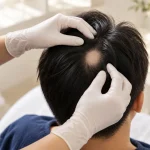
A dermatologist will examine the skin and scalp and may ask about:
- When symptoms started
- Areas affected
- Itching
- How often the condition recurs
- Previous dandruff treatments
- Shampoos and skincare products
- Other skin conditions
- Medications
- Medical history
Most patients do not need blood tests.
If the appearance is unusual or another condition is suspected, additional testing may occasionally be considered.
For example:
- Fungal examination when tinea is suspected
- Patch testing when contact allergy is suspected
- Skin biopsy when psoriasis or another inflammatory condition is difficult to distinguish AAD notes that biopsy is occasionally used when another skin condition may be present.
How Is Seborrheic Dermatitis Treated?
The goals of treatment are to:
- Reduce scale
- Reduce inflammation
- Control itching
- Reduce Malassezia activity
- Improve skin comfort
- Prevent or reduce future flare-ups
Because seborrheic dermatitis tends to recur, treatment often has two stages:
- Control the active flare
- Use maintenance treatment to reduce recurrence
AAD specifically describes treatment as initially bringing the disease under control and then modifying therapy to maintain the improvement.
Antifungal Shampoo for Scalp Seborrheic Dermatitis
Medicated shampoos are a mainstay of scalp treatment.
Common active ingredients include:
- Ketoconazole
- Ciclopirox
- Selenium sulfide
- Zinc pyrithione
- Salicylic acid
- Coal tar
Different ingredients work in different ways.
Antifungal shampoos reduce Malassezia activity, while ingredients such as salicylic acid help loosen scale.
Ketoconazole and ciclopirox are commonly used antifungal options.
How to Use Medicated Shampoo Properly
One common reason dandruff shampoo appears not to work is that it is washed off immediately.
Medicated shampoo usually needs contact time with the scalp.
General technique:
- Wet the scalp and hair.
- Apply the shampoo primarily to the scalp rather than only the hair.
- Massage gently.
- Leave it on for the recommended contact time.
- Rinse thoroughly.
Follow the instructions for the particular medication, because frequency and contact time vary by product.
AAD specifically emphasizes allowing dandruff shampoo sufficient contact time to work.
Ketoconazole for Seborrheic Dermatitis
Ketoconazole is an antifungal medicine commonly used for seborrheic dermatitis.
It may be prescribed as:
- Shampoo for the scalp
- Cream for the face or body
It reduces Malassezia yeast and can help decrease:
- Scaling
- Flaking
- Inflammation
- Itching
Possible side effects include:
- Burning
- Stinging
- Dryness
- Irritation
Topical ketoconazole is widely used for seborrheic dermatitis.
Ciclopirox
Ciclopirox is another topical antifungal used for seborrheic dermatitis.
It may be available in shampoo or topical formulations depending on the country.
Like ketoconazole, it targets Malassezia and can help control scaling and inflammation.
Selenium Sulfide and Zinc-Based Shampoos
Selenium sulfide and zinc-containing dandruff shampoos may help some patients with scalp seborrheic dermatitis.
Not every shampoo works equally well for every person.
Some patients benefit from alternating between different medicated shampoos if one treatment becomes less effective or if different symptoms need to be addressed.
Salicylic Acid
Salicylic acid is a keratolytic, meaning it helps loosen and remove accumulated scale.
It may be useful when thick scaling is a major problem.
However, excessive use can cause:
- Dryness
- Irritation
- Burning
It usually treats the scale rather than the inflammatory process by itself.
Topical Steroids for Seborrheic Dermatitis
Short courses of topical corticosteroids can be useful during an inflammatory flare.
They can quickly reduce:
- Redness
- Itching
- Inflammation
For facial seborrheic dermatitis, relatively mild steroids are generally preferred when appropriate because facial skin is more vulnerable to steroid-related adverse effects.
Mild topical corticosteroids are typically used for short courses, often around 1–3 weeks, to control acute inflammation.
Why Should Steroid Cream Not Be Overused?
Long-term or inappropriate use of steroids on facial skin may lead to problems such as:
- Skin thinning
- Visible blood vessels
- Steroid acne
- Perioral dermatitis
- Rosacea-like eruptions
- Rebound inflammation
The stronger the steroid and the longer it is used, the greater the concern.
Patients should not repeatedly restart strong facial steroids without knowing the diagnosis.
Tacrolimus and Pimecrolimus
Topical calcineurin inhibitors such as:
- Tacrolimus
- Pimecrolimus
are non-steroid anti-inflammatory medications.
They may be useful for selected patients with facial seborrheic dermatitis, particularly when repeated steroid use would otherwise be necessary.
Unlike corticosteroids, they do not cause skin thinning in the same way.
A common early side effect is temporary:
- Burning
- Warmth
- Stinging
These medications are often used as steroid alternatives when frequent anti-inflammatory treatment is needed on facial skin.
Newer Treatment Options
Additional non-steroid therapies have been developed for seborrheic dermatitis.
For example, topical roflumilast foam, a phosphodiesterase-4 inhibitor, has been approved in the United States for seborrheic dermatitis in appropriate age groups.
Availability and approved indications vary between countries.
Patients in Thailand should discuss locally available treatment options with their doctor rather than assuming that every medication approved overseas is available in Bangkok.
Treatment for Facial Seborrheic Dermatitis
Treatment for facial seborrheic dermatitis commonly involves a combination of:
- Gentle cleansing
- Topical antifungal treatment
- Short courses of anti-inflammatory medication when necessary
- Maintenance treatment for recurrent disease
Common areas such as the sides of the nose, eyebrows and beard require particular care because facial skin is more sensitive than scalp skin.
Common treatment options include topical ketoconazole or ciclopirox and short courses of mild topical corticosteroids, while calcineurin inhibitors are used as steroid alternatives.
Should You Moisturize Seborrheic Dermatitis?
Yes, if the skin is dry or irritated, but the moisturizer should suit the individual skin.
A simple, non-irritating moisturizer can support the skin barrier.
Very heavy or greasy products may feel uncomfortable on oily seborrheic areas in some patients.
The goal is to reduce irritation without overloading the skin with multiple products.
Skincare for Facial Seborrheic Dermatitis
A practical routine can be simple.
Morning
- Gentle cleanser
- Prescribed treatment if required
- Lightweight moisturizer if needed
- Sunscreen
Evening
- Gentle cleanser
- Antifungal or prescribed anti-inflammatory treatment
- Moisturizer if needed
Avoid excessive use of:
- Scrubs
- Strong exfoliating acids
- Alcohol-heavy toners
- Fragranced products
- Multiple active ingredients at the same time
When the skin is inflamed, simplifying the routine usually makes it easier to determine what is helping and what is irritating the skin.
Should You Remove the Scale?
Loose scale can be gently removed during cleansing or shampooing.
Avoid:
- Scratching
- Picking
- Aggressive scalp brushes
- Scraping scales off
- Repeated vigorous shampooing
Scratching can damage the skin and increase inflammation.
If scale is very thick, a dermatologist may recommend a keratolytic product such as salicylic acid, urea or another scale-softening treatment.
Can Seborrheic Dermatitis Be Cured Permanently?
Adult seborrheic dermatitis is generally considered a chronic, relapsing condition.
Treatment can control symptoms very effectively in many patients, but recurrence is common.
This does not mean treatment has failed.
The realistic goals are:
- Control active inflammation
- Reduce dandruff
- Reduce itching
- Reduce visible scale
- Maintain comfortable skin
- Reduce the frequency and severity of flare-ups
Maintenance treatment is often more realistic than expecting a permanent one-time cure.
Why Does Seborrheic Dermatitis Keep Coming Back?
The tendency to develop seborrheic dermatitis remains even after the visible rash clears.
Flare-ups may occur when:
- Antifungal maintenance treatment is stopped
- Stress increases
- Sleep is poor
- Skin becomes irritated
- Weather or environment changes
- The scalp accumulates more scale
Some patients therefore continue medicated shampoo periodically even after symptoms improve.
AAD notes that dandruff shampoo is often continued intermittently to help prevent future flares.
How Long Does Treatment Take?
The timeline varies depending on location and severity.
Mild dandruff may improve relatively quickly with appropriate shampoo.
More inflamed facial or scalp disease may require several weeks of treatment before achieving good control.
If a correctly used treatment has produced no meaningful improvement after several weeks, the diagnosis should be reconsidered rather than automatically using stronger medication.
Possible alternative diagnoses include:
- Psoriasis
- Tinea
- Contact dermatitis
- Atopic dermatitis
- Rosacea
- Other inflammatory scalp conditions
Does Stress Make Seborrheic Dermatitis Worse?
It can.
Stressful events and lack of sleep are recognized as potential aggravating factors in some patients.
This does not mean seborrheic dermatitis is a psychological condition.
Stress may influence inflammation and disease activity, but the skin condition itself is real and requires appropriate dermatologic treatment.
Does Diet Cause Seborrheic Dermatitis?
There is no established universal “seborrheic dermatitis diet.
”
Routine elimination of:
- Gluten
- Dairy
- Sugar
- Eggs
- Coffee
is generally not necessary without another medical reason.
Patients may notice individual relationships between foods and symptoms, but broad restrictive diets should not replace evidence-based treatment.
Is Seborrheic Dermatitis Related to HIV or Parkinson’s Disease?
Most people with seborrheic dermatitis are otherwise healthy.
However, unusually severe or widespread seborrheic dermatitis can occur more frequently in people with certain neurological or immune conditions, including Parkinson’s disease and HIV infection.
This does not mean that having seborrheic dermatitis suggests someone has HIV or Parkinson’s disease.
These conditions are simply recognized associations.
If seborrheic dermatitis suddenly becomes unusually severe, widespread or treatment-resistant, particularly when other symptoms are present, a doctor may consider whether further medical evaluation is appropriate.
Seborrheic Dermatitis in Asian and Darker Skin
Seborrheic dermatitis affects all skin tones.
In Asian and darker skin, obvious redness may be less noticeable.
Instead, patients may see:
- Pink-brown patches
- Purple-toned inflammation
- Lighter areas of skin
- Darker patches after inflammation
- White or yellow scaling
Diagnosis should therefore consider both color change and the characteristic distribution of scale.
Can Seborrheic Dermatitis Leave Dark Marks?
Inflammation may temporarily alter skin pigmentation.
In darker and Asian skin, this can appear as:
- Post-inflammatory hyperpigmentation
- Lighter areas after inflammation
The first priority is controlling the active dermatitis.
Pigment changes often improve gradually once inflammation is controlled, although recovery can take longer than the rash itself.
When Should You See a Dermatologist?
Consider seeing a dermatologist if:
- Dandruff is severe or persistent
- Medicated shampoo is not helping
- The scalp is very itchy or inflamed
- The rash repeatedly returns despite appropriate treatment
- Facial redness and scaling are significant
- The rash spreads beyond typical areas
- You are unsure whether it is seborrheic dermatitis or psoriasis
- You develop areas of hair loss
- There are broken hairs or painful scalp lesions
- Strong steroid creams have been used repeatedly
- The condition is affecting sleep or quality of life
Seek medical evaluation more promptly if you develop:
- Significant pain
- Swelling
- Pus or drainage
- Crusting suggesting secondary infection
- Fever
- Rapidly spreading inflammation
These are not typical features of uncomplicated seborrheic dermatitis and may indicate infection or another condition.
What to Expect During a Seborrheic Dermatitis Consultation in Bangkok
A dermatology consultation should first confirm the diagnosis.
The dermatologist may examine:
- Scalp
- Hairline
- Eyebrows
- Sides of the nose
- Ears
- Beard area
- Chest if affected
- Other skin lesions that could suggest psoriasis or eczema
You may be asked about:
- How long the rash has been present
- Frequency of flare-ups
- Itching
- Hair loss
- Products already tried
- Medicated shampoos
- Steroid creams
- Hair products
- Facial skincare
- Other medical conditions
- Medications
For expats, tourists or international patients visiting Bangkok, it can be helpful to bring:
- Photographs from previous severe flares
- Names or photos of shampoos already used
- Names of prescription medications
- Photos of creams used on the face
- Previous dermatology diagnoses if available
This can prevent unnecessary repetition of treatments that have already failed.
Effective Treatment Starts With the Correct Diagnosis
Flaking around the scalp, eyebrows and nose does not automatically mean the skin is simply “dry.
”
Seborrheic dermatitis is a chronic inflammatory condition involving characteristic oily areas of the skin and is associated with the skin’s response to Malassezia yeast.
The most useful questions are:
Is this actually seborrheic dermatitis?
Could it be psoriasis, tinea, eczema or contact dermatitis instead?
Is the main problem dandruff, inflammation, itching or thick scale?
Which treatments have already been used correctly?
Is maintenance treatment needed to prevent recurrence?
Once the diagnosis is established, treatment can be tailored using medicated shampoos, topical antifungal treatment, short-term anti-inflammatory medications and an appropriate skincare routine.
Seborrheic dermatitis often returns, but recurrence does not mean the condition cannot be managed. A realistic treatment plan focuses on controlling active symptoms and maintaining the improvement over time.
Frequently asked questions
Is seborrheic dermatitis the same as dandruff?
Dandruff is generally considered a mild form of scalp seborrheic dermatitis.
Seborrheic dermatitis may cause more obvious inflammation, redness, itching and scaling and may also affect the face or body.
Is seborrheic dermatitis a fungal infection?
Not exactly.
Malassezia yeast is involved, but it normally lives on everyone's skin.
Seborrheic dermatitis is an inflammatory reaction influenced by the relationship between Malassezia, skin oil and the skin barrier.
Is seborrheic dermatitis contagious?
No.
It cannot spread from person to person.
Can seborrheic dermatitis be cured permanently?
Adult seborrheic dermatitis tends to be chronic and recurrent.
Treatment can keep it under good control, but flare-ups may return.
What is the best shampoo for seborrheic dermatitis?
There is no single best shampoo for everyone.
Options include shampoos containing ketoconazole, ciclopirox, selenium sulfide, zinc-based ingredients, salicylic acid and other medicated ingredients.
Selection depends on whether the main problem is yeast, scale, inflammation or a combination.
How often should I use ketoconazole shampoo?
Frequency depends on the formulation and treatment plan.
Ketoconazole shampoo is often used more frequently during active treatment and less frequently for maintenance.
Follow the product instructions or your doctor's recommendation rather than using it every day automatically.
Why does my dandruff keep coming back?
Seborrheic dermatitis has a tendency to recur.
Once controlled, occasional maintenance treatment may be needed to reduce future flares.
Can seborrheic dermatitis cause hair loss?
It generally does not cause permanent hair loss.
Severe inflammation and scratching can contribute to temporary shedding.
Clear bald patches or progressive hair loss should be evaluated for another cause.
Can I use steroid cream on seborrheic dermatitis?
A mild topical steroid may sometimes be used for a short period during a flare.
Long-term or repeated use, especially on the face, can cause side effects and should be medically supervised.
Can I use ketoconazole cream on my face?
Topical ketoconazole is commonly used for facial seborrheic dermatitis.
The exact frequency and duration depend on the formulation and severity of the condition.
Is facial seborrheic dermatitis the same as rosacea?
No.
Seborrheic dermatitis usually causes scaling around oily areas such as the eyebrows and sides of the nose.
Rosacea more commonly causes flushing, persistent facial redness and visible blood vessels.
Both conditions can occur together.
Is seborrheic dermatitis caused by oily skin?
Oily skin may increase susceptibility, but having oily skin alone does not cause seborrheic dermatitis.
Inflammation, Malassezia, sebum and individual skin response all contribute.
Should I wash my hair every day?
Not necessarily.
Washing frequency should depend on scalp oiliness, hair type, severity and the treatment being used.
The important point is correct use of medicated shampoo rather than simply increasing shampoo frequency.
Does stress make seborrheic dermatitis worse?
Stress and lack of sleep may trigger or aggravate flares in some people.
Does hot weather in Bangkok make seborrheic dermatitis worse?
Heat itself is not the sole cause.
However, sweating, irritation and frequent washing may aggravate symptoms in some people.
Should I avoid moisturizer?
Not necessarily.
A lightweight, non-irritating moisturizer can be useful when facial skin is dry.
Very heavy or greasy products may feel uncomfortable on seborrheic areas for some people.
Can seborrheic dermatitis be confused with psoriasis?
Yes.
Scalp psoriasis and seborrheic dermatitis can look very similar, and some people have overlapping features known as sebopsoriasis.
Related conditions
-
Dandruff & Scalp Itch Dandruff & Scalp Itch Dandruff and scalp itching are extremely common, but not every flaky or itchy scalp is simply “dandruff.
-
Scalp Disorders Scalp Disorders Scalp disorders are a common reason people seek dermatology care. Symptoms may include itching, flaking, redness, scaling, pimples, pustules, scalp pain, crusting, hair shedding or patchy hair loss.
-
Psoriasis Psoriasis Psoriasis is a chronic immune-mediated inflammatory disease that most commonly affects the skin, but it can also involve the nails and joints.
-
Rosacea Rosacea Rosacea is a chronic inflammatory skin condition that mainly affects the central face. It may cause persistent redness, frequent flushing, visible blood vessels, acne-like bumps, burning or sensitive skin, and sometimes eye symptoms.