



















Heat Rash in Thailand: Causes, Treatment & Prevention
Developing small, itchy bumps while traveling in Thailand is common, particularly during hot and humid weather. You may notice a prickling sensation on your neck, red bumps across your chest, or an irritating rash on your back after spending time outdoors.
Developing small, itchy bumps while traveling in Thailand is common, particularly during hot and humid weather. You may notice a prickling sensation on your neck, red bumps across your chest, or an irritating rash on your back after spending time outdoors.
Heat rash, also called prickly heat or miliaria, occurs when sweat becomes trapped within the skin because sweat ducts are blocked or disrupted. It commonly affects areas where sweating, heat, and friction occur together.
Most cases are mild and improve after the skin is cooled and sweating is reduced. However, not every rash that appears in hot weather is heat rash. Fungal infections, folliculitis, contact dermatitis, and other skin conditions can look similar.
This guide explains how to recognize heat rash, what helps it improve, which treatments may be appropriate, and when to see a dermatologist in Bangkok.
What Is Heat Rash?
Heat rash is a skin condition caused by the retention of sweat within the skin.
Normally, sweat travels through small ducts to the skin surface, where evaporation helps regulate body temperature.
When sweat ducts become obstructed or damaged, sweat may leak into the surrounding skin and cause irritation or inflammation.
Heat rash can affect adults, children, and infants.
It is particularly associated with:
- Hot, humid weather
- Excessive sweating
- Tight or non-breathable clothing
- Skin folds
- Prolonged physical activity
- Occlusive skincare products
Heat rash is not contagious and is not caused by poor hygiene.
What Does Heat Rash Look Like?
The appearance depends on the depth at which sweat becomes trapped.
Common symptoms include:
- Small red, pink, or skin-colored bumps
- Itching
- A prickling or stinging sensation
- Mild burning or irritation
- Tiny superficial blisters
- Clusters of bumps in sweaty areas
On darker skin, the rash may appear less red and more skin-colored, brown, or darker than the surrounding skin.
Common locations include the neck, chest, upper back, abdomen, underarms, groin, and areas beneath tight clothing.
Types of Heat Rash
Miliaria Crystallina
This is a superficial form of heat rash.
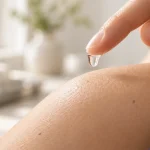
It causes tiny, clear, fluid-filled blisters that resemble droplets of water.
The lesions are usually not inflamed and may cause little or no itching.
They often resolve after cooling.
Miliaria Rubra
Miliaria rubra is commonly called prickly heat.
It causes small inflamed bumps accompanied by itching, stinging, or a prickling sensation.
It is one of the forms most often noticed by adults during hot weather.
Miliaria Profunda
This is a less common, deeper form of heat rash.
It may cause firm, skin-colored bumps after repeated or severe episodes of miliaria rubra.
Because sweating can be impaired in affected areas, extensive disease may interfere with the body’s ability to regulate temperature.
Patients with suspected extensive miliaria profunda should receive medical assessment.
Why Is Heat Rash Common in Thailand?
Thailand’s tropical climate creates conditions that can promote sweat retention.
High Humidity
When humidity is high, sweat evaporates less efficiently.
The skin may remain damp for longer periods, particularly beneath clothing.
Excessive Sweating
Walking outdoors, sightseeing, exercising, or spending time at the beach can increase sweat production.
Travelers who are not accustomed to the climate may notice symptoms after a sudden increase in heat exposure.
Tight or Occlusive Clothing
Tight clothing can trap moisture and increase friction.
Synthetic fabrics that do not allow adequate ventilation may worsen discomfort in some individuals.
Heavy Skincare Products
Thick ointments and greasy products may increase occlusion, particularly in hot environments.
They are not always the primary cause of heat rash, but they may contribute to worsening symptoms in susceptible areas.
Skin Folds and Friction
Heat rash frequently develops in areas where skin surfaces rub together or sweat accumulates.
These include the neck, underarms, beneath the breasts, groin, and waistline.
Heat Rash vs. Fungal Infection vs. Folliculitis
Several conditions can cause bumps or itching during Thailand’s hot weather.
| Feature | Heat rash | Fungal infection | Folliculitis |
|---|---|---|---|
| Typical appearance | Small, fairly uniform bumps or tiny blisters | Scaly patches, sometimes with a defined border | Bumps or pustules centered on hair follicles |
| Main symptom | Prickling, itching | Itching, sometimes burning | Itching or tenderness |
| Common trigger | Heat and sweating | Fungal growth favored by moisture | Follicular inflammation or infection |
| Common locations | Neck, chest, back, skin folds | Groin, feet, trunk, skin folds | Chest, back, buttocks, thighs |
| Treatment | Cooling and reducing sweat | Antifungal treatment when indicated | Depends on cause; sometimes antimicrobial treatment |
These differences are useful clues but cannot always confirm the diagnosis.
If the rash contains pus, develops expanding scaly borders, or persists despite cooling, it may not be simple heat rash.
Heat Rash vs. Sun Allergy
Heat rash and sun allergy are different conditions.
Heat rash results from trapped sweat. It can occur in covered areas, including beneath clothing.
Sun-related rashes are triggered by ultraviolet or other light exposure and often affect exposed skin.
For example, polymorphous light eruption may produce itchy bumps several hours after sun exposure, while solar urticaria can cause raised welts within minutes.
A rash appearing after a day at the beach may be caused by heat, sunlight, sunscreen, or another exposure. The timing and distribution help distinguish the cause.
How to Treat Heat Rash in Thailand
The most important treatment is to cool the skin and reduce sweating.
For mild cases, this is often sufficient.
1. Move to a Cooler Environment
Spend time in an air-conditioned or well-ventilated room.
Avoid unnecessary outdoor activities until the rash improves.
Reducing sweating allows the affected sweat ducts to recover.
2. Wear Loose, Breathable Clothing
Choose lightweight clothing that allows ventilation and reduces friction.
Change out of sweaty clothes promptly.
Avoid tight garments rubbing against the affected areas.
3. Use Cool Compresses
Apply a clean, cool, damp cloth to the affected skin for approximately 10–15 minutes at a time.
Repeat as needed for comfort.
Avoid applying ice directly to the skin.
4. Keep the Skin Clean and Dry
Use lukewarm or cool water and a gentle cleanser when needed.
Pat the skin dry rather than rubbing vigorously.
Avoid excessive scrubbing, which can worsen irritation.
5. Avoid Heavy or Greasy Products
Temporarily avoid thick, occlusive creams and ointments on areas affected by heat rash.
If the skin is dry, choose a lightweight, non-irritating product that does not worsen sweating or occlusion.
6. Consider Medication for Significant Itching
Some patients may benefit from calamine lotion or another soothing preparation.
A clinician may recommend a short course of a mild topical corticosteroid for selected inflamed cases.
Oral antihistamines may sometimes help with itching, although they do not correct the underlying sweat duct obstruction.
Medication is not routinely required for uncomplicated heat rash.
Avoid using strong topical corticosteroids or combination antibiotic-antifungal-steroid creams without a confirmed diagnosis.
What Should You Avoid When You Have Heat Rash?
Certain practices may prolong irritation.
Avoid:
- Continuing strenuous exercise in excessive heat
- Wearing tight, sweaty clothing for long periods
- Scratching or picking the bumps
- Applying thick, greasy products to the affected areas
- Taking very hot showers
- Using harsh exfoliating products
- Self-treating with multiple prescription creams
Antibiotics and antifungal medications do not treat uncomplicated heat rash.
They should be used only when another diagnosis or a secondary infection warrants treatment.
How Long Does Heat Rash Last?
Mild heat rash often begins to improve within a day or two after cooling and reducing sweating.
Some cases may take several days to resolve.
The duration depends on the type of heat rash, its severity, and whether the patient continues to experience excessive sweating.
If symptoms persist beyond several days, worsen, or repeatedly return despite avoiding heat, medical evaluation is appropriate.
Persistent bumps may represent folliculitis, eczema, fungal infection, or another skin condition.
Can Heat Rash Become Infected?
Heat rash itself is not an infection.
However, repeated scratching can damage the skin and occasionally lead to secondary bacterial infection.
Warning signs include:
- Increasing pain
- Spreading redness or swelling
- Warmth around the affected area
- Pus or yellowish crusting
- Fever
These symptoms should not be assumed to be ordinary heat rash.
A clinician may need to evaluate for folliculitis, impetigo, cellulitis, or another condition.
Heat Rash in Babies and Children
Infants and young children can develop heat rash because their sweat ducts are still developing and they may be more vulnerable to overheating.
Heat rash may appear on the neck, chest, back, or skin folds.
How to Care for a Child With Heat Rash
Helpful measures include:
- Moving the child to a comfortably cool environment
- Dressing them in lightweight clothing
- Avoiding excessive wrapping or blankets
- Keeping skin folds clean and dry
- Avoiding heavy ointments on the rash
Do not apply medicated creams to an infant without appropriate medical advice.
A baby with fever, poor feeding, unusual sleepiness, or signs of dehydration needs prompt medical assessment. Fever in a young infant should never be attributed to heat rash without evaluation.
Can Heat Rash Cause Fever?
Uncomplicated heat rash does not usually cause fever.
If a patient has a rash with fever, clinicians should consider other causes, including infection or heat-related illness.
Heat exhaustion and heatstroke are different from heat rash.
Heatstroke is a medical emergency and may cause altered mental status, collapse, or dangerously high body temperature.
If someone exposed to heat develops confusion, fainting, seizures, or severe illness, seek emergency medical care immediately.
How Does a Dermatologist Diagnose Heat Rash?
Heat rash is usually diagnosed through the history and examination of the skin.
A dermatologist may ask:
- When did the rash start?
- Were you sweating heavily before symptoms appeared?
- Does the rash improve in air conditioning?
- Is it itchy, painful, or prickly?
- Have you used new skincare products?
- Have you recently taken new medications?
- Are there pustules, scaling, or other unusual features?
The doctor will examine the rash’s appearance and distribution.
Most cases do not require blood tests or a skin biopsy.
If the diagnosis is uncertain, the dermatologist may consider tests to exclude fungal infection, bacterial folliculitis, or another skin disease.
How to Prevent Heat Rash While Traveling in Thailand
Stay Cool During Outdoor Activities
Take breaks in shaded or air-conditioned areas.
Plan strenuous activities during cooler parts of the day when possible.
Wear Breathable Clothing
Choose lightweight, loose-fitting garments.
Change out of wet or sweaty clothes promptly.
Reduce Prolonged Skin Occlusion
Avoid keeping damp clothing against the skin for extended periods.
Consider how backpacks, tight waistbands, and protective equipment may trap heat and moisture.
Shower After Heavy Sweating
A gentle shower after exercise or outdoor activities can remove sweat and reduce irritation.
Dry skin folds carefully without vigorous rubbing.
Avoid Overheating During Sleep
A comfortably cool sleeping environment and breathable bedding may reduce nighttime sweating.
Maintain Hydration
Drink adequate fluids during hot weather.
Hydration helps support normal temperature regulation, although drinking more water alone does not prevent blocked sweat ducts.
When Should You See a Dermatologist for Heat Rash?
Arrange a dermatology consultation if:
- The rash does not improve after several days of cooling
- It repeatedly returns
- Itching interferes with sleep
- The rash becomes painful
- You develop pustules or crusting
- The rash spreads or changes appearance
- You are unsure whether it is heat rash, fungal infection, or folliculitis
- You have an underlying skin condition that may be worsening
When Should You Seek Urgent Medical Care?
Seek urgent assessment if you experience:
- Fever with a worsening rash
- Rapidly spreading painful redness
- Significant swelling or suspected infection
- Severe dehydration
- Confusion, collapse, or other signs of heat-related illness
A person with suspected heatstroke requires emergency medical treatment.
Heat Rash Treatment at Clear Skin Dermatology in Bangkok
Clear Skin Dermatology is a medical dermatology clinic located in Asoke, Bangkok, Thailand.
Patients can seek assessment for:
- Persistent heat-related rashes
- Itchy bumps on the chest, back, or neck
- Suspected folliculitis
- Fungal skin infections
- Eczema and contact dermatitis
- Other unexplained inflammatory skin conditions
During the consultation, the dermatologist will assess the appearance of the rash, review possible triggers, and recommend treatment based on the diagnosis.
If the condition is uncomplicated heat rash, treatment may primarily involve practical measures to reduce heat, sweating, and irritation.
If another skin disease is identified, the treatment plan will be adjusted accordingly.
For international visitors, it can be helpful to mention how long you will remain in Bangkok so that any necessary follow-up can be planned.
Clear Skin Dermatology
Medical Dermatology & Skin Cancer Clinic
Asoke, Bangkok, Thailand
Website: https://clearskinbangkok.com
Frequently Asked Questions About Heat Rash in Thailand
1. Why do I get heat rash in Thailand?
Thailand’s hot and humid weather can increase sweating and reduce sweat evaporation. When sweat becomes trapped in the skin, heat rash may develop.
2. What is the fastest way to get rid of heat rash?
Move to a cool environment, reduce sweating, wear loose clothing, and use cool compresses. Most mild cases improve without prescription medication.
3. Is heat rash contagious?
No. Heat rash results from trapped sweat and is not spread from person to person.
4. How long does heat rash last?
Mild cases often improve within one or two days after cooling, although complete resolution may take several days.
5. Can I use hydrocortisone cream for heat rash?
A mild topical corticosteroid may be appropriate for selected inflamed cases, but it is not necessary for everyone. Seek medical advice if the diagnosis is uncertain.
6. Is heat rash the same as a fungal infection?
No. Heat rash is caused by sweat retention, while fungal infections involve fungal organisms and may require antifungal treatment.
7. Can heat rash appear on the face?
Yes, although it more commonly affects the neck, chest, back, and skin folds. Facial bumps may also be caused by acne, folliculitis, or other conditions.
8. Can heat rash become infected?
Heat rash itself is not infectious, but scratching can damage the skin and increase the risk of secondary bacterial infection.
9. Does sunscreen cause heat rash?
Some heavy or occlusive formulations may worsen sweat retention in susceptible individuals. However, sunscreen remains important for ultraviolet protection. Choosing a lightweight formulation may help.
10. When should I see a dermatologist for heat rash in Bangkok?
Seek assessment if the rash persists, repeatedly returns, becomes painful, develops pus, or does not improve after reducing heat exposure.
Book a Dermatology Consultation in Bangkok
Heat rash is usually a mild condition that improves with cooling, breathable clothing, and reduced sweating.
However, persistent or unusual rashes may be caused by fungal infections, folliculitis, eczema, or other skin diseases that require different treatment.
If you are living in Bangkok or traveling in Thailand, Clear Skin Dermatology in Asoke provides medical dermatology consultations for persistent heat-related rashes and other skin concerns.
Contact the clinic to discuss your symptoms and arrange an appointment.
Website: https://clearskinbangkok.com
This article is intended for general medical education and does not replace an individual diagnosis or treatment recommendation from a qualified healthcare professional.
Medical References
For medical review and supporting links on the published page:
- DermNet — Miliaria (Heat Rash) — Types, clinical features, causes, and management.
- NHS — Heat Rash — Patient-oriented symptoms and self-care.
- CDC — Heat and Health — Heat-related illness prevention and warning signs.
- American Academy of Dermatology — Patient Education — General dermatological care and differential diagnoses.
Related articles
-
Skin Conditions & Rashes Sun Rash and Sun Allergy in Thailand: Symptoms, Causes and Treatment Developing an itchy rash after spending time outdoors in Thailand can be confusing. You may notice small red bumps on your arms, an itchy rash across your chest, or raised welts that appear shortly after exposure to sunlight.
-
Skin Conditions & Rashes Developed a Skin Rash While Traveling in Thailand? Common Causes and What to Do Developing a skin rash while traveling in Thailand can be uncomfortable and sometimes worrying, especially when you are unfamiliar with the local climate, insects, plants, or potential infections.
-
Skin Conditions & Rashes Olumiant for Alopecia Areata in Bangkok, Thailand: A Guide to Treatment, Hair Regrowth and Safety Alopecia areata is an autoimmune condition that causes hair loss, often appearing as round or oval bald patches on the scalp. In more severe cases, it can lead to extensive scalp hair loss or complete loss of scalp and body hair.