
























Sun Rash and Sun Allergy in Thailand: Symptoms, Causes and Treatment
Developing an itchy rash after spending time outdoors in Thailand can be confusing. You may notice small red bumps on your arms, an itchy rash across your chest, or raised welts that appear shortly after exposure to sunlight.
Developing an itchy rash after spending time outdoors in Thailand can be confusing. You may notice small red bumps on your arms, an itchy rash across your chest, or raised welts that appear shortly after exposure to sunlight.
A sun rash is an inflammatory skin reaction triggered or worsened by sunlight. The term sun allergy is commonly used to describe several different conditions, including polymorphous light eruption, solar urticaria, and photoallergic dermatitis. These conditions are not all true allergies, and their treatments differ.
Thailand’s strong ultraviolet radiation can trigger symptoms in susceptible people, particularly travelers who are suddenly exposed to more sunlight than usual.
Most mild sun-related rashes are not dangerous. However, recurrent reactions, severe blistering, or a rash accompanied by systemic symptoms may require medical evaluation.
At Clear Skin Dermatology in Asoke, Bangkok, patients can seek dermatological assessment for unexplained rashes and suspected sun-related skin conditions.
What Is a Sun Rash or Sun Allergy?
A sun rash develops when exposure to sunlight triggers an abnormal inflammatory response in the skin or aggravates an existing skin condition.
The reaction may be caused by ultraviolet radiation itself, an interaction between sunlight and a medication or chemical, or an underlying medical condition that increases sensitivity to light.
The most important distinction is that sun rash is a description of a symptom, not a single diagnosis.
Different conditions can cause similar symptoms but require different approaches to treatment.
What Does a Sun Allergy Look Like?
Common symptoms include:
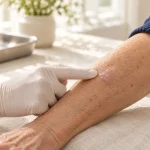
- Small red, pink, or skin-colored bumps
- Itchy patches or raised areas
- Burning or stinging sensations
- Swelling or temporary welts
- Dry, scaly patches
- Small blisters in some cases
On darker skin, inflammation may appear brown, purple, or darker than the surrounding skin rather than bright red.
Sun-related rashes often affect exposed areas such as the forearms, upper chest, neck, shoulders, and legs.
A clue is that the rash appears on exposed skin while areas covered by clothing remain unaffected.
However, the distribution and timing vary according to the underlying condition.
Common Causes of Sun Rash in Thailand
1. Polymorphous Light Eruption (PMLE)
Polymorphous light eruption is one of the most common conditions described as a sun allergy.
It is an abnormal inflammatory reaction to ultraviolet radiation, often occurring after a sudden increase in sun exposure.
Travelers from cooler climates may notice symptoms after arriving in Thailand and spending time at the beach, sightseeing, or participating in outdoor activities.
Symptoms of PMLE
Typical findings include:
- Small itchy bumps
- Red or inflamed patches
- Occasionally small blisters
- A burning or prickling sensation
- A rash on the arms, chest, shoulders, or legs
The rash generally develops several hours to one or two days after sun exposure.
It may persist for several days and can worsen with repeated exposure.
PMLE often affects skin that is not regularly exposed to sunlight.
Is PMLE Dangerous?
PMLE is usually not life-threatening and generally resolves without scarring.
However, it can be uncomfortable and may recur after future sun exposure.
Some patients experience fewer episodes as their skin becomes accustomed to seasonal sunlight, but this does not mean deliberate unprotected sun exposure is advisable.
Treatment
Treatment focuses on reducing inflammation and preventing additional exposure.
Options include:
- Broad-spectrum sunscreen
- Protective clothing
- Avoiding intense sunlight
- Cool compresses
- Topical corticosteroids when prescribed
- Medication for itching when appropriate
Severe or recurrent cases may require specialist-directed treatment.
For selected patients, medically supervised light therapy may be considered before periods of anticipated high sun exposure. This should not be confused with tanning or unsupervised ultraviolet exposure.
2. Solar Urticaria: Hives Triggered by Sunlight
Solar urticaria is a relatively uncommon condition in which sunlight triggers hives.
Unlike PMLE, which usually develops hours later, solar urticaria typically appears within minutes of exposure.
Symptoms
Patients may develop:
- Raised, itchy welts
- Redness or swelling
- A burning or stinging sensation
- Symptoms limited mainly to exposed skin
The welts often improve relatively quickly after the person moves out of sunlight.
In rare cases, extensive exposure can produce systemic symptoms.
Treatment
Management includes strict avoidance of triggering light exposure, protective clothing, and appropriate medication.
Second-generation oral antihistamines are commonly used.
Patients with severe or persistent solar urticaria may need specialist assessment and additional treatment.
If sunlight exposure causes dizziness, faintness, breathing difficulty, or widespread severe symptoms, seek emergency medical care.
3. Photoallergic Contact Dermatitis
Photoallergic contact dermatitis occurs when a substance on the skin interacts with light and triggers a delayed immune reaction.
Potential triggers include certain sunscreen ingredients, fragrances, and topical medications.
The reaction does not necessarily mean that all sunscreens are unsuitable.
Symptoms
Photoallergic dermatitis may cause:
- Itchy, inflamed patches
- Redness or darker discoloration
- Scaling
- Small blisters
- A rash that may extend beyond directly exposed skin
Symptoms generally develop after a delay rather than immediately.
Treatment
The main approach is to identify and avoid the responsible substance.
A dermatologist may recommend anti-inflammatory treatment and suitable alternative skincare products.
If sunscreen allergy is suspected, mineral-based products containing zinc oxide or titanium dioxide may be considered, depending on the patient’s individual tolerance.
Specialized testing, including photopatch testing, may be useful in selected cases.
4. Phototoxic Reactions From Medications or Plants
A phototoxic reaction occurs when sunlight interacts with a substance and causes direct skin injury.
Unlike a photoallergic reaction, this does not require an allergic immune response.
Phototoxic reactions often resemble an unusually severe sunburn.
Common Triggers
Certain medications can increase sensitivity to sunlight, including some:
- Antibiotics, such as doxycycline
- Anti-inflammatory medications
- Diuretics
- Antifungal medications
The degree of risk depends on the specific medication and individual circumstances.
Some plants and fruits also contain substances that can cause phototoxic reactions.
For example, contact with lime juice followed by sun exposure may cause a condition called phytophotodermatitis.
Symptoms
Possible findings include:
- Burning or painful redness
- Swelling
- Blisters
- Sharply defined areas of inflammation
- Dark pigmentation after healing
Lime-associated reactions may produce streaks or irregular patches corresponding to where the juice contacted the skin.
Treatment
Management involves avoiding further exposure to the triggering substance and sunlight, providing appropriate skin care, and treating inflammation when necessary.
Do not stop prescribed medication without consulting the prescribing clinician.
Severe blistering or extensive skin involvement requires medical assessment.
5. Sun-Aggravated Eczema and Other Skin Diseases
Some existing skin diseases may worsen with sun exposure.
These include certain forms of eczema and autoimmune skin diseases.
In some patients, photosensitivity may be associated with lupus erythematosus, a condition in which the immune system can affect the skin and other organs.
Features that may suggest an underlying medical condition include:
- Recurrent or persistent sun-sensitive rashes
- Unusual facial or widespread skin lesions
- Joint pain
- Mouth ulcers
- Unexplained fatigue or other systemic symptoms
These symptoms do not establish a diagnosis of lupus, but they may justify further evaluation.
A dermatologist may recommend targeted investigations when the history and examination suggest an underlying disorder.
Sun Rash vs. Sunburn vs. Heat Rash
These conditions are often confused, especially during travel in Thailand.
| Feature | Sun allergy or sun rash | Sunburn | Heat rash |
|---|---|---|---|
| Main trigger | Abnormal reaction to sunlight | Excessive ultraviolet exposure | Sweat duct obstruction |
| Typical appearance | Itchy bumps, patches, hives, or blisters | Painful redness or discoloration, sometimes blisters | Tiny prickly bumps |
| Timing | Minutes to days, depending on the condition | Usually develops within hours | During or after heat and sweating |
| Main symptom | Often itching | Pain, warmth, tenderness | Prickling or itching |
| Common locations | Sun-exposed skin | Exposed skin | Sweaty or covered areas |
| Recurrence | Possible with repeated light exposure | Depends on exposure | Possible in hot, humid conditions |
This comparison provides general clues, not a definitive diagnosis.
A patient may also experience more than one condition at the same time.
Why Might Sun Allergy Appear During a Holiday in Thailand?
A person who normally spends much of the day indoors or lives in a cooler climate may experience a sudden increase in ultraviolet exposure during a tropical holiday.
Activities that increase exposure include:
- Beach holidays
- Swimming and boat trips
- Walking tours
- Outdoor sports
- Extended sightseeing
- Driving or sitting near windows
Ultraviolet A radiation can pass through ordinary window glass, so some photosensitive conditions may be triggered even without direct outdoor exposure.
Cloud cover also does not eliminate ultraviolet exposure.
For patients who already have a tendency toward photosensitivity, these environmental changes can be enough to trigger a rash.
How Does a Dermatologist Diagnose Sun Allergy?
Diagnosis begins with the history and physical examination.
One of the most useful details is how soon the rash appears after sun exposure.
Important Questions During Consultation
The dermatologist may ask:
- Did the rash appear within minutes or several hours?
- Does it occur every time you are exposed to sunlight?
- How long does each episode last?
- Does the rash affect areas covered by clothing?
- Have you started any new medications?
- Have you changed sunscreen or skincare products?
- Have you experienced similar episodes before?
- Do you have fever, joint pain, or other symptoms?
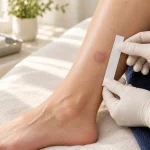
Photographs of the rash can be particularly helpful if the lesions disappear before the appointment.
Examination and Additional Tests
The dermatologist will assess the appearance, distribution, and pattern of the rash.
Additional investigations are not required for every patient.
Depending on the suspected condition, investigations may include:
- Blood tests to evaluate possible autoimmune disease
- Skin biopsy
- Specialized light sensitivity testing
- Photopatch testing for suspected photoallergic contact dermatitis
Specialized testing may require referral to a center with appropriate facilities.
How to Treat a Sun Rash in Thailand
Treatment depends on the underlying diagnosis and severity.
Immediate Self-Care for a Mild Rash
If you otherwise feel well and the rash is mild:
- Move indoors or into the shade.
- Avoid additional sun exposure until the rash improves.
- Apply a cool compress to relieve discomfort.
- Wear loose, protective clothing.
- Use a gentle, fragrance-free moisturizer if the skin is dry or irritated.
- Avoid scratching, exfoliating, or applying irritating skincare products.
Do not deliberately expose the rash to more sunlight in an attempt to build tolerance.
Topical Corticosteroids
For selected inflammatory sun rashes, a dermatologist may prescribe a topical corticosteroid.
The appropriate strength and duration depend on the diagnosis, affected body area, and patient factors.
Prolonged or inappropriate use can cause adverse effects such as skin thinning.
Topical corticosteroids are not the correct treatment for every rash.
Oral Antihistamines
Oral antihistamines may help relieve itching, particularly in solar urticaria.
Their benefit is less predictable for other types of sun rash.
Medication should be selected according to the diagnosis and individual health considerations.
Treatment for Severe or Recurrent Photosensitivity
Patients with frequent or disabling episodes may require specialist treatment.
Depending on the condition, options may include medically supervised light therapy or prescription medications.
These approaches have specific risks, limitations, and monitoring requirements and are not routinely necessary for mild episodes.
How Long Does a Sun Rash Last?
The duration depends on the cause.
- PMLE: Often lasts several days and sometimes longer, particularly with continued sun exposure.
- Solar urticaria: Individual welts often resolve within a relatively short period after exposure stops.
- Photoallergic dermatitis: May persist for days or longer, especially if the trigger remains present.
- Phototoxic reactions: Healing time varies with the severity of injury, and pigmentation may persist after inflammation resolves.
A recurrent rash should be evaluated rather than repeatedly treated without a confirmed diagnosis.
How to Prevent Sun Rash While Traveling in Thailand
Choose Broad-Spectrum Sunscreen
Use a sunscreen labeled broad-spectrum, offering protection against both ultraviolet A and ultraviolet B radiation.
For patients prone to photosensitivity, a product with SPF 50 or higher and strong ultraviolet A protection is often appropriate.
Apply generously before outdoor exposure and reapply approximately every two hours while outdoors, or sooner after swimming, sweating, or towel drying according to the product instructions.
Sunscreen reduces ultraviolet exposure but does not provide complete protection.
Wear Sun-Protective Clothing
Protective measures include:
- Long-sleeved clothing
- Wide-brimmed hats
- Sunglasses
- Tightly woven or ultraviolet-protective fabrics
- Seeking shade during periods of strong sunlight
Clothing can provide more consistent coverage than sunscreen alone.
Avoid Peak Ultraviolet Exposure
Limit unnecessary outdoor exposure when ultraviolet radiation is strongest, commonly around the middle of the day.
For patients with significant photosensitivity, protection may also be needed during shorter periods outdoors.
Review Medications and Skincare Products
If a rash started after beginning a new medication or skincare product, discuss the timing with a dermatologist.
Do not stop prescribed medication independently.
If a sunscreen ingredient is suspected, a clinician can help identify an appropriate alternative.
When Should You See a Dermatologist for Sun Rash?
Arrange a dermatology consultation if:
- The rash repeatedly occurs after sunlight exposure
- Symptoms are severe or interfere with daily activities
- The rash persists despite avoiding sunlight
- You develop blisters or marked swelling
- The reaction began after starting a new medication
- You suspect an allergy to sunscreen
- The rash has an unusual appearance
- You have joint pain, mouth ulcers, or other unexplained symptoms
When Is Emergency Medical Care Necessary?
Seek urgent medical attention if you experience:
- Difficulty breathing
- Fainting or severe dizziness
- Significant facial or throat swelling
- Extensive blistering or skin peeling
- A widespread rash with fever or severe illness
- Painful skin lesions with mouth or eye involvement
These findings may indicate a serious allergic reaction, severe medication reaction, or another condition requiring immediate assessment.
Sun Rash and Sun Allergy Treatment in Bangkok
Clear Skin Dermatology is a medical dermatology clinic located in Asoke, Bangkok, Thailand.
Patients with unexplained skin rashes, suspected sun allergy, eczema, contact dermatitis, or medication-related skin reactions can seek dermatological assessment.
The consultation focuses on identifying the likely cause, reviewing possible triggers, and developing an appropriate treatment and prevention plan.
For international patients visiting Thailand, it is helpful to bring photographs of the rash, a list of medications, and details of recent sun exposure.
If additional specialized investigations are necessary, the dermatologist can discuss appropriate testing or referral options.
Clear Skin Dermatology
Medical Dermatology & Skin Cancer Clinic
Asoke, Bangkok, Thailand
Website: https://clearskinbangkok.com
Frequently Asked Questions
1. Can you suddenly develop a sun allergy in Thailand?
Yes. Some people first notice photosensitive skin reactions after a sudden increase in sun exposure, such as during a holiday in Thailand. However, a new rash should be evaluated if the cause is uncertain.
2. Why do I get itchy red bumps after being in the sun?
Possible causes include polymorphous light eruption, heat rash, contact dermatitis, or another inflammatory skin condition. The timing and location of the rash help distinguish these conditions.
3. Is sun allergy the same as sunburn?
No. Sunburn is caused by excessive ultraviolet exposure, while conditions described as sun allergy involve abnormal reactions to sunlight or substances activated by light.
4. How long does sun allergy last?
PMLE may last several days, while solar urticaria often improves relatively quickly after sunlight exposure ends. Other photosensitive reactions may last longer.
5. Can sunscreen cause a sun allergy?
Certain sunscreen ingredients can occasionally cause allergic or photoallergic contact dermatitis. However, sunscreen remains an important part of sun protection, and alternative formulations are available.
6. Can I use hydrocortisone cream for sun rash?
A mild topical corticosteroid may help some inflammatory rashes, but treatment depends on the diagnosis and location. Seek medical advice before using corticosteroids on an unexplained or severe rash.
7. Does sun allergy go away permanently?
Some patients experience improvement over time, but recurrent photosensitivity can persist. There is no guaranteed permanent cure for all conditions described as sun allergy.
8. Can medication cause a rash after sun exposure?
Yes. Some medications increase photosensitivity and may cause exaggerated sunburn-like reactions or other skin inflammation. A doctor should review suspected medications.
9. Can sun allergy occur through windows?
Yes. Ultraviolet A radiation can pass through ordinary window glass and trigger symptoms in some photosensitive patients.
10. When should I see a dermatologist for a sun rash in Bangkok?
Seek assessment if the rash is recurrent, persistent, severe, blistering, or associated with medication use or other unexplained symptoms. Emergency symptoms require immediate medical care.
Book a Dermatology Consultation in Bangkok
An itchy rash after sun exposure may be caused by polymorphous light eruption, solar urticaria, contact dermatitis, medication-related photosensitivity, or another skin condition.
Identifying the correct diagnosis is important because treatment and prevention strategies differ.
If you are living in Bangkok or visiting Thailand, Clear Skin Dermatology in Asoke provides medical dermatology consultations for suspected sun-related rashes and other inflammatory skin conditions.
Contact the clinic to discuss your symptoms and arrange an appointment.
Website: https://clearskinbangkok.com
This article provides general medical information and does not replace individual diagnosis or treatment by a qualified healthcare professional.
Medical References
The following sources support the clinical distinctions and management guidance in this article:
- DermNet — Polymorphic Light Eruption. Clinical presentation, diagnosis, treatment, and recurrence.
- British Association of Dermatologists — Polymorphic Light Eruption. Patient guidance on symptoms, sun protection, and management.
- DermNet — Photosensitivity. Classification of photosensitive skin disorders and ultraviolet exposure.
- DermNet — Drug-Induced Photosensitivity. Medication-associated reactions and their management.
- NCBI Bookshelf — Photosensitivity and Photodermatoses. Diagnostic assessment and specialized testing.
Related articles
-
Skin Conditions & Rashes Heat Rash in Thailand: Causes, Treatment & Prevention Developing small, itchy bumps while traveling in Thailand is common, particularly during hot and humid weather. You may notice a prickling sensation on your neck, red bumps across your chest, or an irritating rash on your back after spending time outdoors.

-
Skin Conditions & Rashes Developed a Skin Rash While Traveling in Thailand? Common Causes and What to Do Developing a skin rash while traveling in Thailand can be uncomfortable and sometimes worrying, especially when you are unfamiliar with the local climate, insects, plants, or potential infections.

-
Skin Conditions & Rashes Olumiant for Alopecia Areata in Bangkok, Thailand: A Guide to Treatment, Hair Regrowth and Safety Alopecia areata is an autoimmune condition that causes hair loss, often appearing as round or oval bald patches on the scalp. In more severe cases, it can lead to extensive scalp hair loss or complete loss of scalp and body hair.